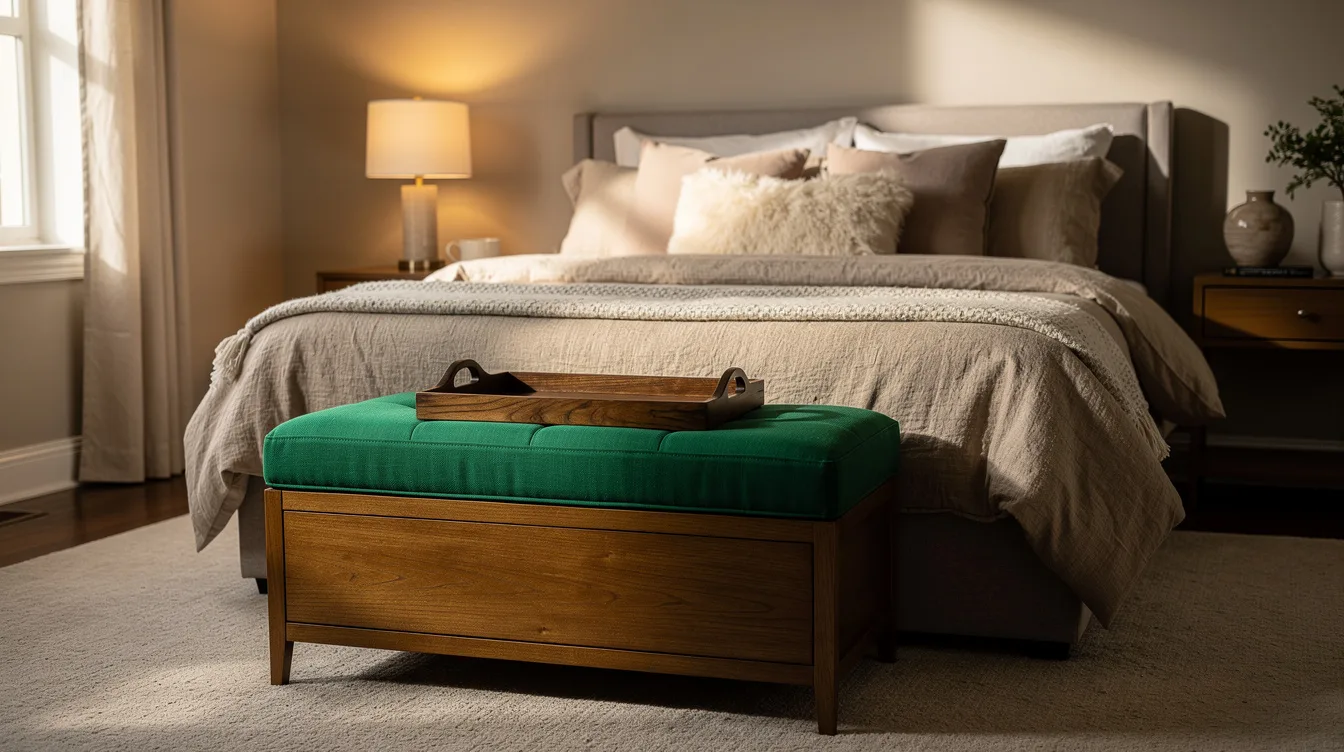
The foot of a small bed often becomes a traffic jam first: laundry basket, shoes, and a chair all competing for the same few inches. A storage ottoman about 40 to 48 inches long can organize that edge while leaving roughly 18 inches of walking space in front.
The right layout depends on the room’s window, door swing, and bed height. Start with the passage, then choose the ottoman shape, material, and price that fit the way you actually use the room.
Center a Narrow Bench on the Bed Frame
In a rectangular room, center a storage bench on the bed frame so its length echoes the mattress instead of fighting it. A linen storage bench measuring about 40 to 48 inches long and roughly 18 inches deep usually gives a full or twin bed useful balance.
Keep roughly 18 inches or more between the bench and the next wall or furniture. That passage matters more than squeezing in a longer seat, especially when the bed already occupies most of the floor.
The typical price range runs from about $40 to $300 or more. For a budget version, check IKEA or Target first, then spend more on upholstery only when the bench will get daily use.
Tuck the Ottoman Beneath a Window
A deep window ledge can give the storage ottoman a second home and free the foot of the bed for walking. Place a boucle ottoman beneath the window when the sill sits high enough for the lid to open fully.
This layout works best when the window wall has unused floor space and the bed faces a clear route to the door. Leave enough room to lift the lid without bumping the frame, radiator, or curtains.
Choose a firm top rather than a soft cushion if you want a perch for shoes or folded laundry. A performance-linen cover softens the room while resisting the everyday marks that collect near a window seat.
Shrink the Bench When Space Runs Out
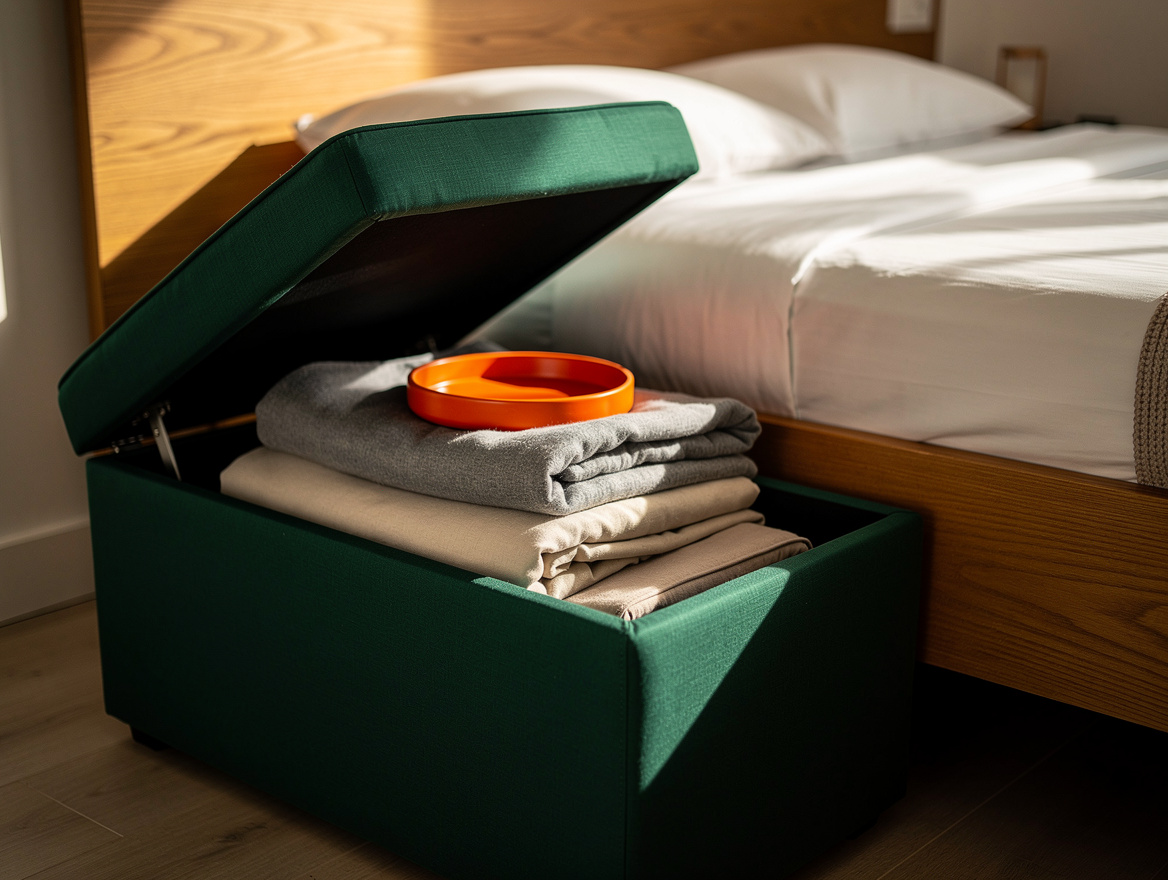
When the bed foot is the only open zone, use a compact folding bench instead of forcing a full-size chest into the room. A 30-inch folding ottoman can provide a seat, spare-blanket storage, and a movable surface without blocking the walkway.
Look for about 15 inches of depth and height when the room is especially tight. A MDF frame keeps the shape stable, while a padded lid makes the piece comfortable enough for putting on shoes.
This is also the easiest layout to repurpose later: move the ottoman to an entryway, closet, or guest room when the bedroom changes. Target often carries compact storage seating in the entry-level range of roughly $40 to $80.
Slide Two Cubes Between Uses
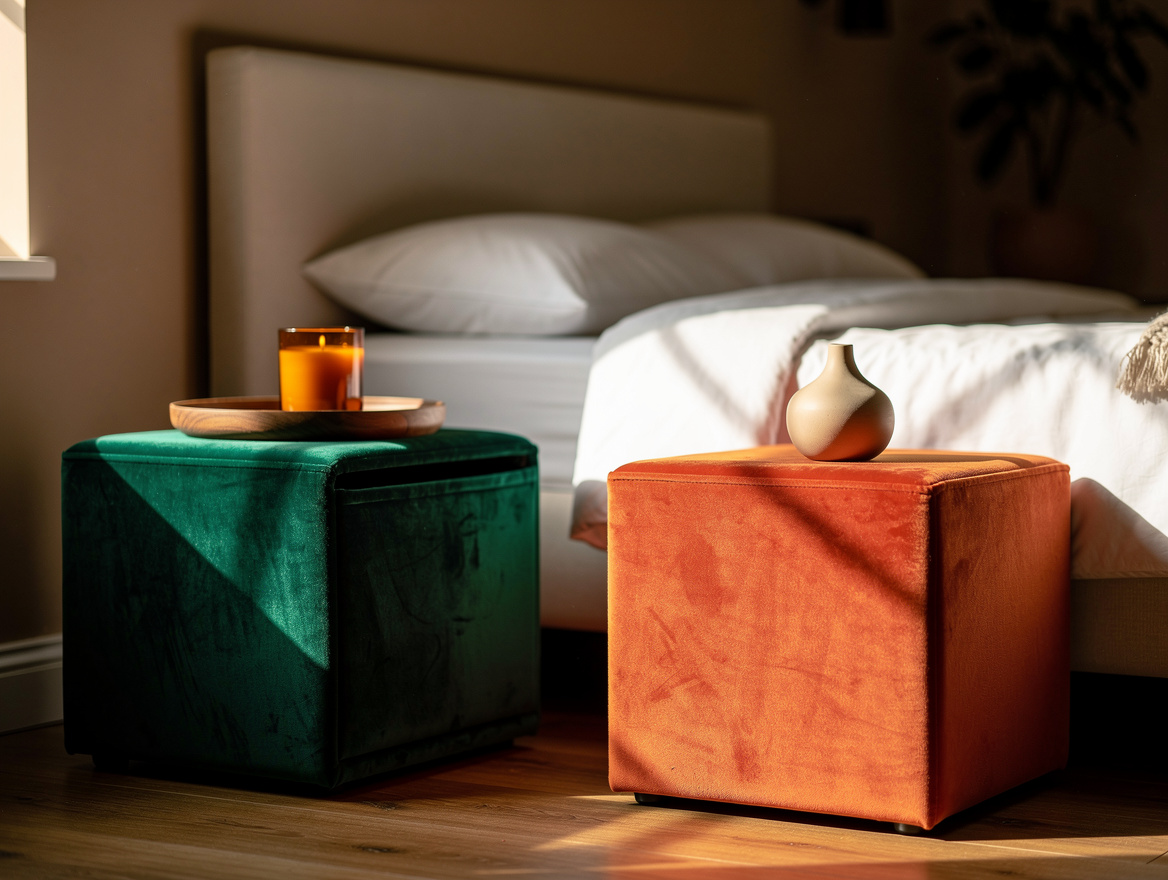
Two small cube ottomans can work as movable nightstands and temporary seating at the bed foot. Pull them beside the bed for a lamp and a book, then slide them together when you need a longer surface.
A velvet ottoman cube around 22 to 26 inches high will sit near the top of a standard mattress, whose surface is typically about 25 inches from the floor. Keep the cubes light enough to move with one hand.
The Target Threshold cube is a practical reference point, with a typical price around $35 to $45 and a capacity of about 1 cubic foot. Use one for extra linens and the other for shoes, chargers, or off-season accessories.
Turn a Storage Cube Into a Nightstand
In a bedroom of roughly 80 to 100 square feet, a 24-inch cube can replace a separate nightstand and préservé valuable floor area. Set a lamp on the firm upholstered cube and keep sheets or pillows inside.
Choose a lid that stays open while you load it, and avoid a deep cube if the bed already leaves a narrow walking lane. A faux-leather finish gives the room a cleaner outline and wipes down easily beside the bed.
For a warmer look, choose a removable acacia wood tray that turns the ottoman into a laptop surface or breakfast table. The tray also gives drinks a stable landing spot when the cube moves to the foot of the bed.
Use Lift-Top Storage When Sides Are Tight
If drawers cannot open beside the bed, choose storage that lifts from the foot instead. A gas-lift bed or storage bed frame with a foot-opening mechanism lets you reach the compartment without reserving side clearance.
A compartment around 13 inches deep can hold bulky bedding while the room keeps a slimmer profile. Pair it with a narrow rattan bench only if the remaining passage still feels comfortable.
For the ottoman itself, inspect the hinge, lid support, and interior base before focusing on color. A sturdy metal hinge and a firm top are worth more than decorative tufting when the piece opens every morning.

Measure the clear path from the bed to the door before shopping, then tape the ottoman’s footprint on the floor for a full day. That simple test will tell you whether a narrow bench, a movable cube, or lift-top storage deserves the spot.
Mia Carter writes about small-space living and budget home makeovers. She has restyled three rentals and tests most ideas in her own 45 sqm flat.