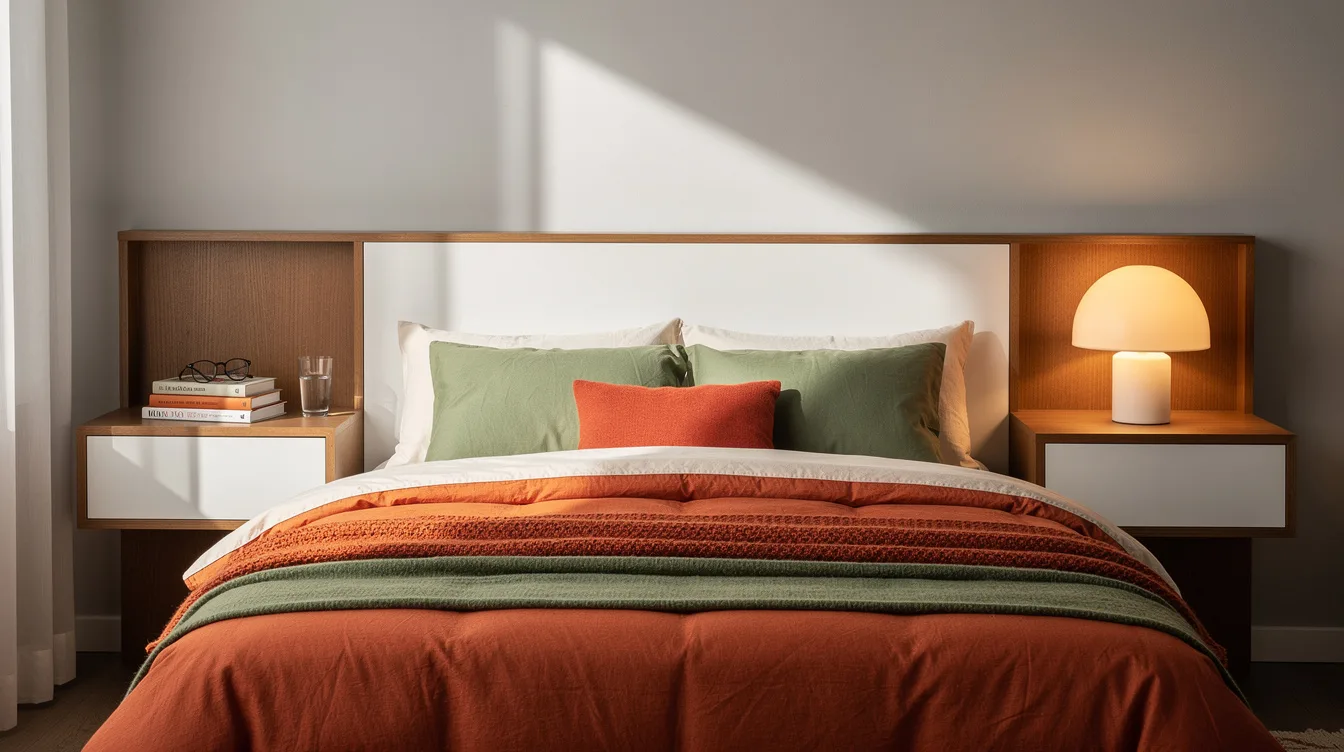
At 11 inches deep, a shelf headboard can solve a narrow-bedroom problem, then create a new one when the bed blocks the storage you need.
I learned to judge the layout by reach, cable paths, and wall clearance before admiring the finish.
A typical starting price is around $150 for an IKEA BRIMNES, which can replace separate nightstands when its side compartments open into usable space.
The goal is a calm bed wall where your phone, glasses, and water have a home without turning the headboard into a catchall.
Measure the Bed Wall Before Buying
At 11 inches deep, a shelf headboard can solve a narrow-bedroom problem, then create a new one when the bed blocks the storage you need.
I begin by measuring the mattress width, the wall width, and the space between the bed and each side wall, because built-in storage needs a clear opening to function.
The queen IKEA BRIMNES is listed at about 62¼ inches wide and 11 inches deep, a compact footprint that can work where a conventional nightstand would pinch the walkway.
Leave room for bedding, outlets, and your hand to reach the compartment; a few inches saved on paper can disappear once pillows and blankets spread across the frame.
For a full bed, check the headboard width against the actual frame rather than assuming a standard fit, especially if baseboards or outlets sit behind it.
Choose Shelf Access Around Your Bed
I choose the opening direction from the bed position: side-access compartments suit a tight room, while front-facing cubbies make books easier to browse from a seated position.
The BRIMNES layout includes an adjustable shelf, so I would place the current book and glasses at hand level and reserve the lower compartment for cables, tissues, or a spare reading light.
When the bed sits close to one wall, I prefer a shelf that opens toward the clear side, since reaching across a mattress every night turns a smart idea into a daily irritation.
A front-facing bookcase compartment belongs to readers who want titles visible, while closed or side-facing storage suits anyone who wants the bed wall to look quieter.
My rule is simple: choose access for the person lying in the bed, not for the room photographed from the doorway.
Route Cables Before Filling Compartments
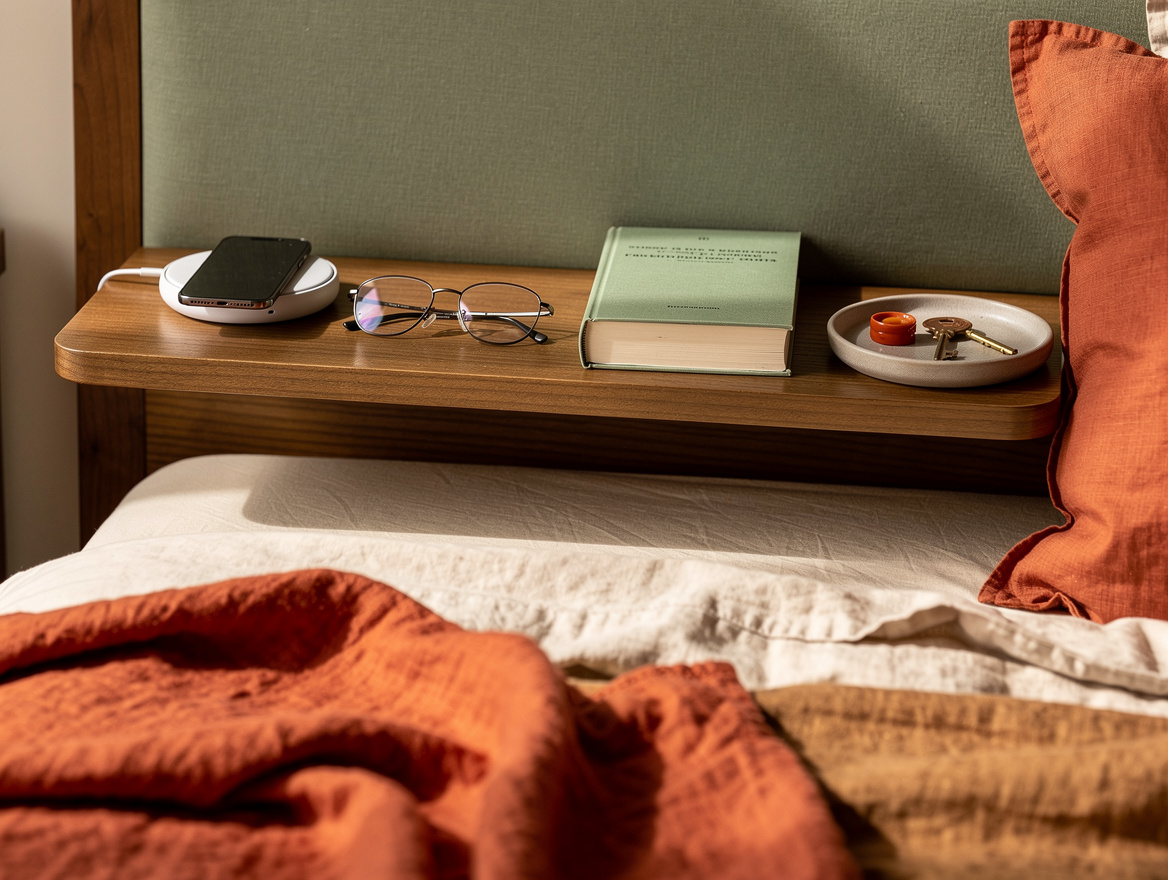
I plan the charging route before styling, using the headboard’s cable holes to keep a phone cord from crossing the top surface or dangling beside the pillow.
The BRIMNES includes cable-routing openings, and I would run one charger to the side where I sleep instead of building a nest of cords behind both lamps.
For a wall-mounted setup, the IKEA NORDLI queen panel is listed around $200 and about 33⅛ inches high, with shelves that project farther than the slim BRIMNES body.
That deeper shelf arrangement can feel more like a small hotel ledge, but it also brings the storage closer to outlets, switches, and the top edge of the mattress.
Hide the power strip low, keep switches reachable, and test every cable with the mattress dressed, because a bare-bed measurement gives false confidence.
Assign Each Shelf a Bedtime Job
I give every compartment one job before adding decoration: sleep essentials near the pillow, reading material where a seated hand can reach it, and backup supplies lower down.
A small ceramic tray can corral glasses and lip balm, while a lidded box holds spare cords without making the shelf look like a charging station.
Keep the top surface to one useful object and one soft lamp; an oversized fixture or tall vase steals the landing zone that makes this storage valuable.
I like powder-coated steel shelves when the room needs a lighter visual line, but I would keep heavy books low and distribute them across the span.
Storage works best when the items you touch every night sit closest to the pillow and everything else has a defined place farther away.
Match the Finish to the Room
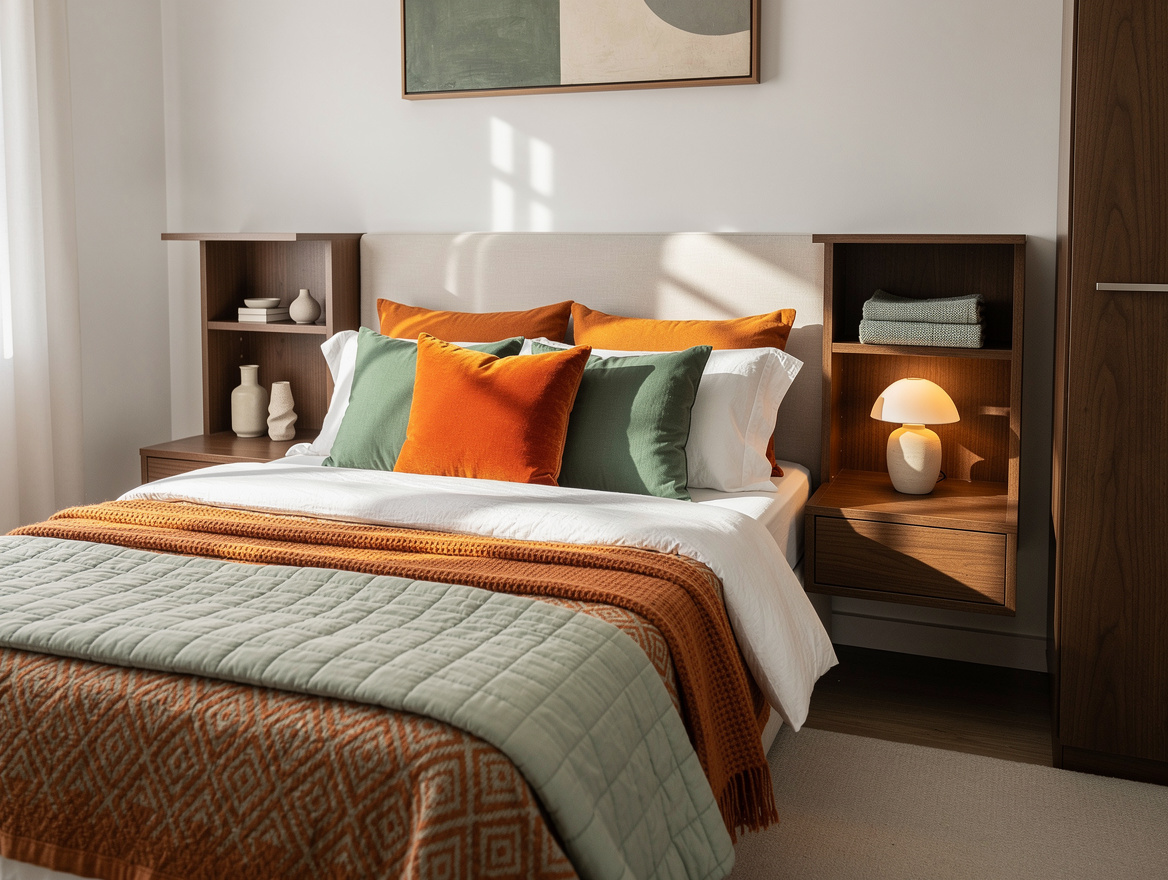
The finish changes how much storage the wall appears to carry, and I would choose a pale surface when the bed already fills most of a small room.
White laminate reflects more light and wipes clean easily, while a walnut-look surface brings warmth but can make a shallow headboard read heavier.
A typical starting price is around $150 for an IKEA BRIMNES headboard, and that lower cost reflects its paper-foil-covered particleboard and fiberboard construction.
That is perfectly reasonable for a rental or a first bedroom, and I would spend the saved money on dependable hardware instead of pretending the finish is solid hardwood.
If you want a richer look, repeat the headboard tone in one picture frame or a small box, then stop before the wall becomes a matching furniture display.
Anchor the Headboard and Test It
I anchor the wall-mounted headboard exactly as the instructions require, especially when the design is tall or likely to hold books within a child’s reach.
IKEA specifies wall anchoring for BRIMNES, and I treat that step as part of the furniture purchase, not an optional finishing touch.
Before loading it, I press each shelf, open every compartment, and sit on the bed to check that the phone, glasses, and water glass land where my hand expects them.
If the frame shifts, the storage plan is unfinished; tighten the hardware, confirm the wall type, and use a rated anchor from Home Depot that matches the installation.
That short test catches the annoying failures early, from a blocked compartment to a shelf that sits just beyond comfortable reach.
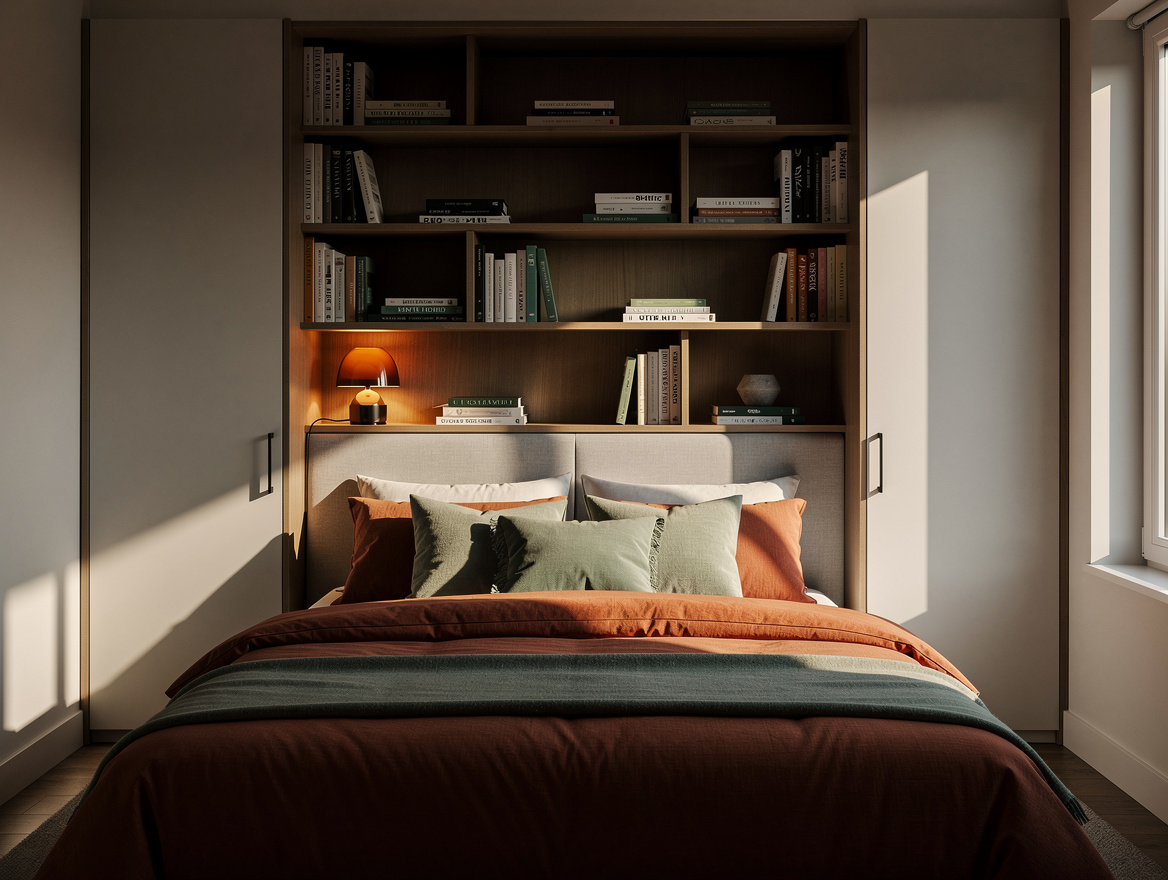
Start by measuring the clear space on your preferred side of the bed, then choose the shelf direction and cable route before buying anything.
That small bit of planning determines whether your headboard feels like useful bedside storage or another surface that needs constant cleanup.
Mia Carter writes about small-space living and budget home makeovers. She has restyled three rentals and tests most ideas in her own 45 sqm flat.