Small farmhouse front porch ideas for cozy country charm work best when every element earns its footprint. A sage door, narrow runner, or single chair can shift the entry without crowding the walkway. The common mistake is adding more before fixing scale. Your porch needs breathing room first, then texture, color, and light.
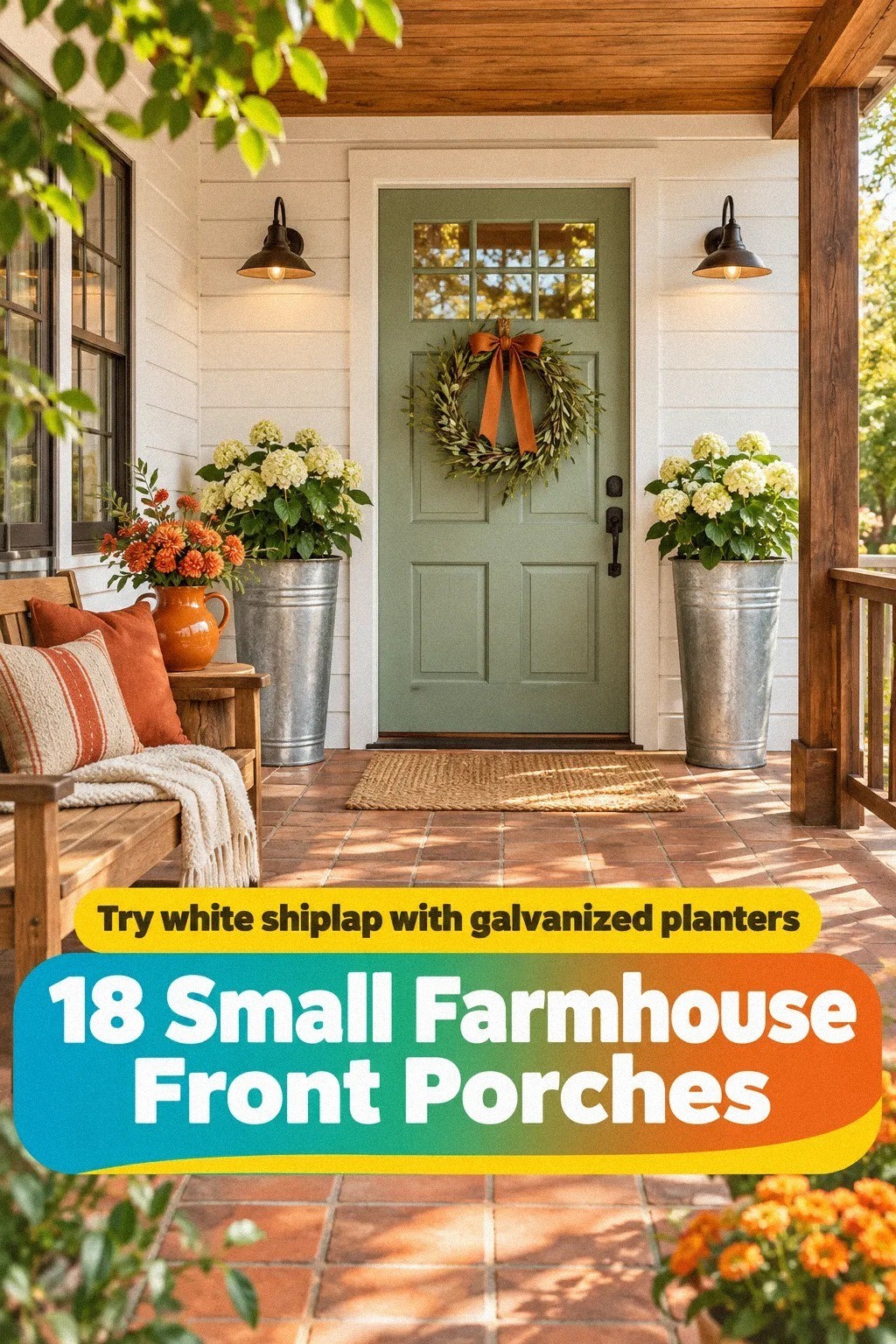
- Paint the front door a soft sage green (The Sage Threshold Rule)
- Frame the entrance with whitewashed shutters (The Two-Wood Rule)
- Layer a jute runner beneath the doormat (The Grounding Layer)
- Hang a woven pendant under the porch ceiling (The Three-Texture Light Stack)
- Tuck a bistro set into one corner (The Corner Conversation Plan)
- Mount a slim shelf beneath the window (The Five-Inch Landing)
- Style galvanized planters with trailing cottage blooms (The Soft-Edge Container)
- Add striped cushions to a petite bench (The Narrow-Seat Test)
- Wrap the railing with climbing jasmine (The Living Handrail)
- Lean a vintage ladder for blanket storage (The Vertical Basket Rule)
- Repeat black metal accents across the porch (The Three-Point Anchor)
- Build height with stacked terracotta pots (The Three-Height Plant Stack)
- Soften the steps with a faded runner (The Step-to-Door Bridge)
- Display a farmhouse sign above the door (The One-Line Welcome)
- Pair rattan seating with crisp white cushions (The Airy Frame)
- Brighten narrow corners using antique mirrors (The Reflection Pocket)
- Install wall hooks for seasonal porch baskets (The Seasonal Swap Rail)
- Mix checked textiles with natural wood textures (The Pattern-to-Grain Balance)
1Paint the front door a soft sage green (The Sage Threshold Rule)
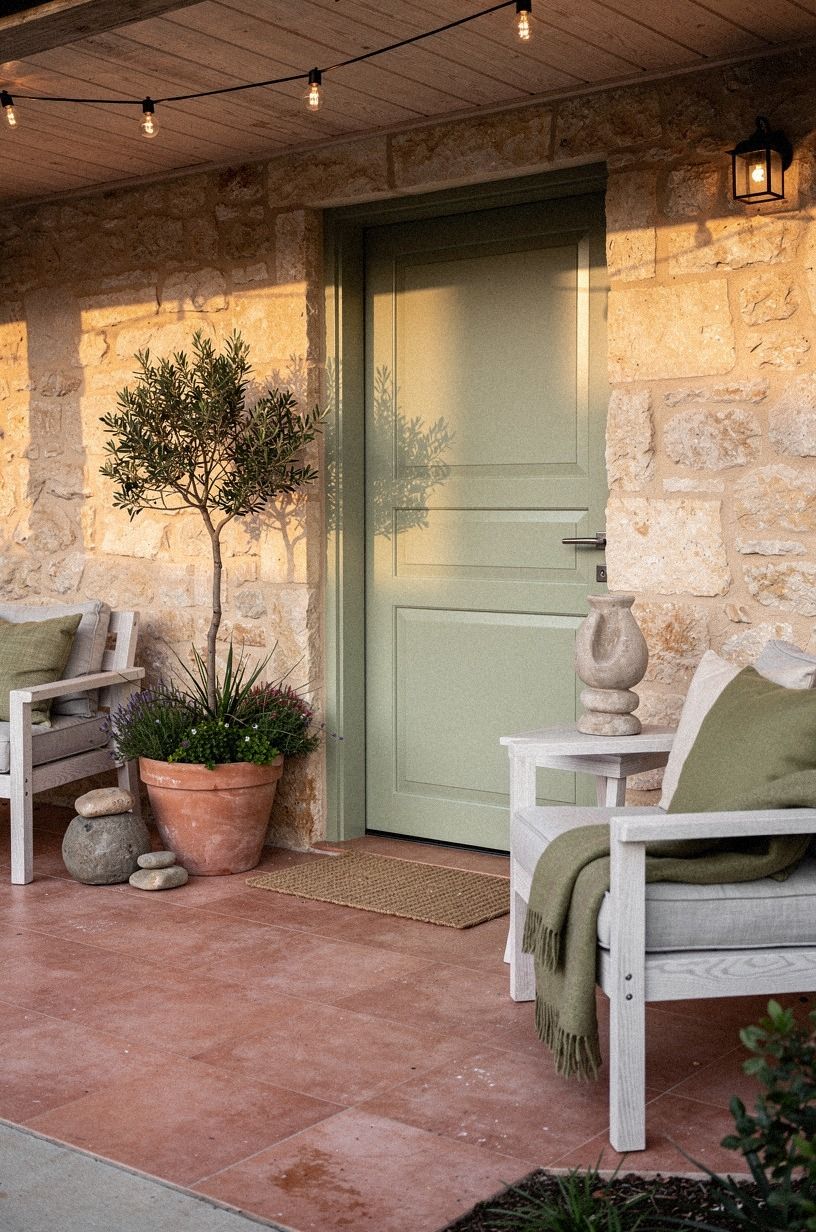
A soft green door gives a small entry a calm focal point without making the facade feel heavy. Benjamin Moore October Mist 1495 works especially well with terracotta, olive foliage, and cerused white oak because its gray undertone stays quiet in changing daylight. You’ll want the door color to connect with at least one porch object, such as a planter or cushion.
And don’t ignore the finish. A satin exterior coating reflects enough light to show the panels, while a flat finish can look dusty around the handle.
Keep the trim warm white rather than stark blue-white, and your farmhouse palette will feel more settled. The sage door should lead the eye inward, not compete with the roofline.
2Frame the entrance with whitewashed shutters (The Two-Wood Rule)
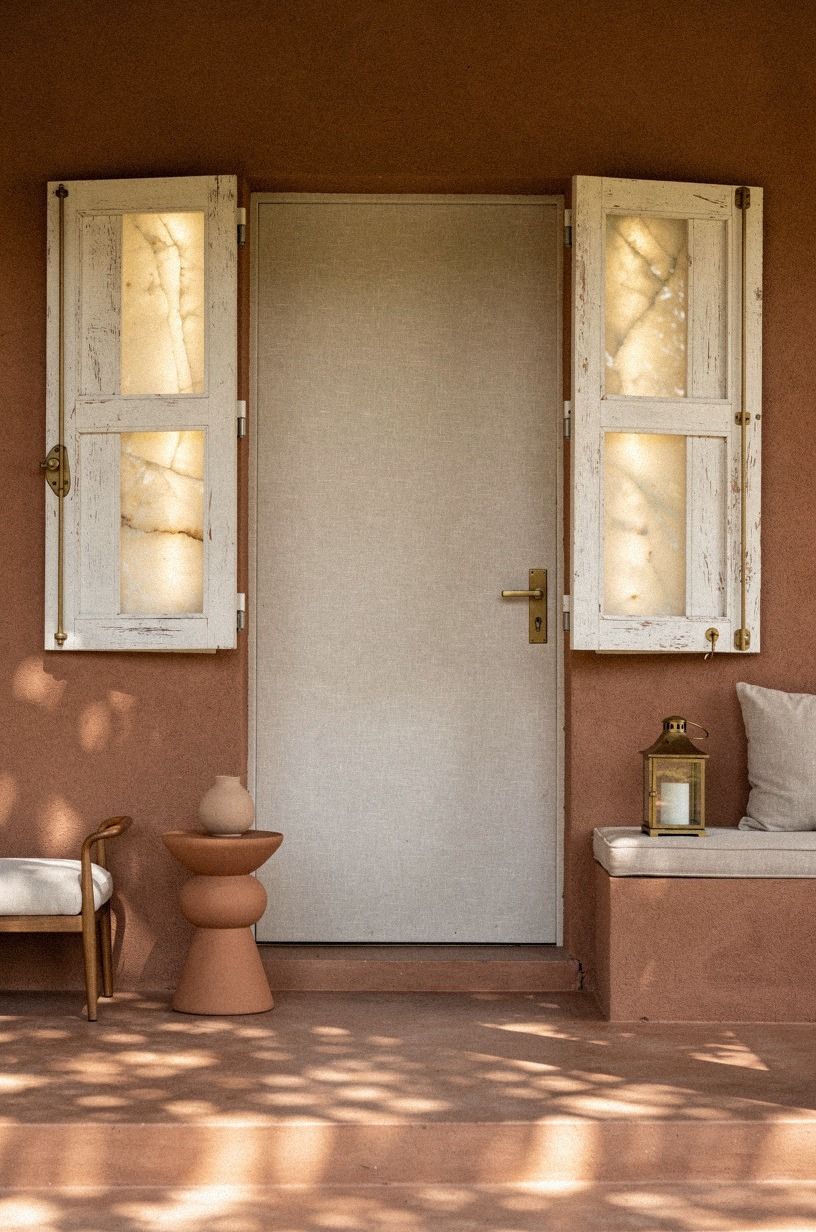
Whitewashed shutters make a narrow porch feel taller because they create vertical edges around the doorway. Use aged brass hardware and touches of clay and linen to keep the entry warm rather than stark. A backlit translucent onyx panel near the doorway can add a gentle glow without filling the narrow wall with decoration.
3Layer a jute runner beneath the doormat (The Grounding Layer)
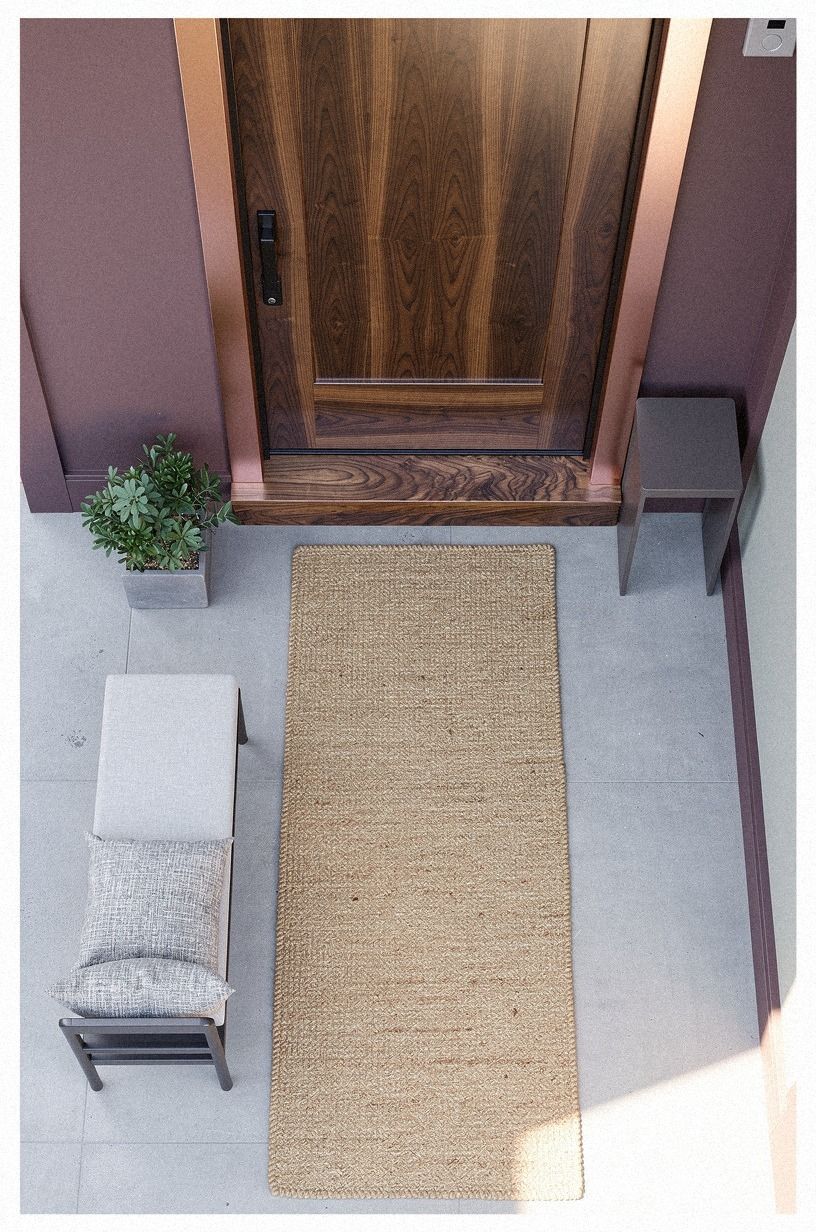
A runner in plum, gray, and rose-gold tones gives the entry a long horizontal line, which helps a small porch feel more connected from steps to door. Choose a low-profile weave so the door won’t catch when it opens. A book-matched walnut threshold or nearby door detail adds warmth beside the richer textile palette.
The runner should extend beyond the doormat without reaching into the main walking route. You’ll want enough border to frame the threshold, but don’t let loose edges become a tripping hazard. A restrained stripe can echo the porch railing without introducing another dominant pattern.
4Hang a woven pendant under the porch ceiling (The Three-Texture Light Stack)
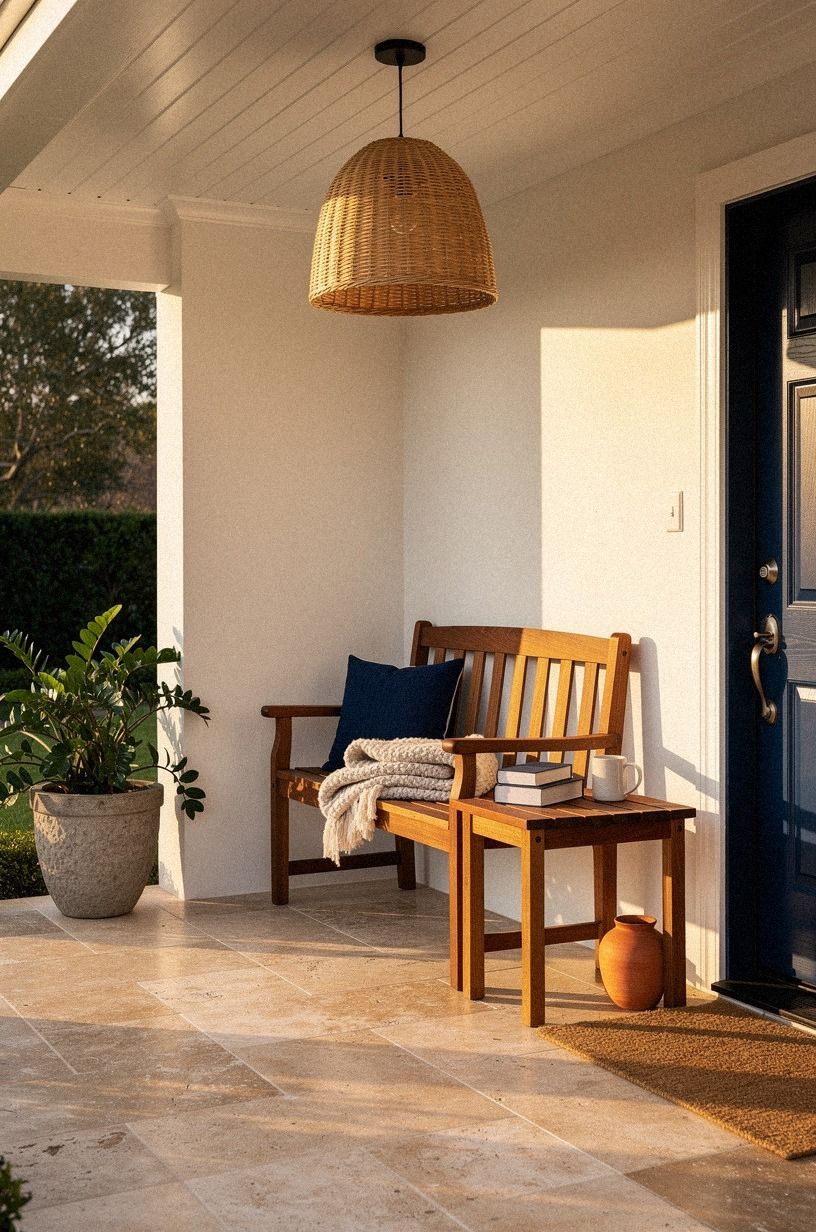
A woven pendant softens a porch ceiling that might otherwise read as plain white board. Choose a medium-scale shade, then pair it with warm light, walnut details, and a touch of warm travertine nearby. The stone brings a grounded note to a navy, white, and walnut palette without taking over the entrance.
Where should the light sit? Center it over the area where guests pause, not automatically over the door.
Your porch will feel more balanced when the pendant illuminates the threshold and one nearby seating spot. Use an exterior-rated fixture and a warm bulb, because cool light can make white paint look blue after sunset. You’ll notice the difference immediately!
For ceiling and shade ideas, see these small porch pergola roof details.
5Tuck a bistro set into one corner (The Corner Conversation Plan)
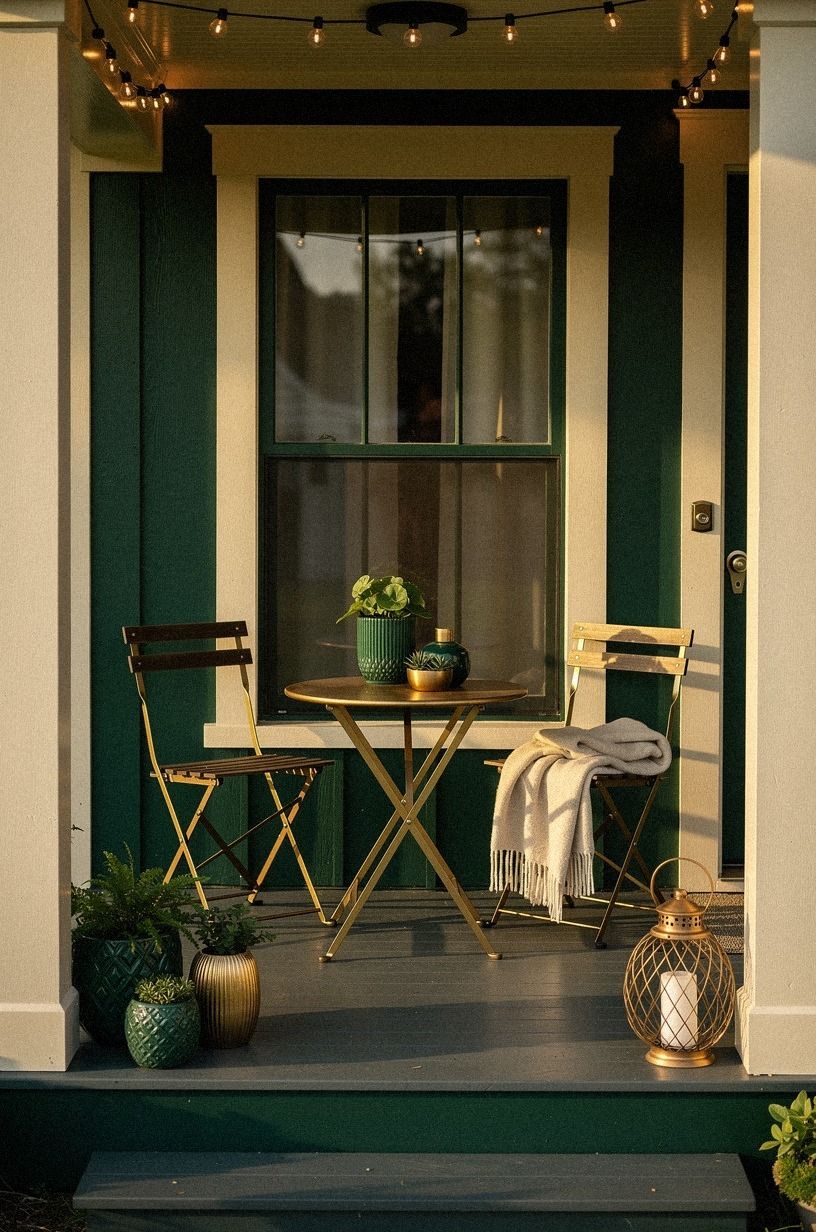
A petite bistro set turns an unused corner into a useful pause point without blocking the path. Choose a round table when the porch has tight circulation, since curved edges are easier to move around than square corners. Unlacquered brass brings a warm patina to an emerald, gold, and cream palette.
You’ll want the chairs to remain light enough for quick repositioning. Don’t place the table directly beside the door, where swinging panels and passing bags can create awkward contact. A small rug under the set can define the corner, but it shouldn’t compete with the main runner.
These compact porch seating layouts can help with spacing and chair placement.
6Mount a slim shelf beneath the window (The Five-Inch Landing)
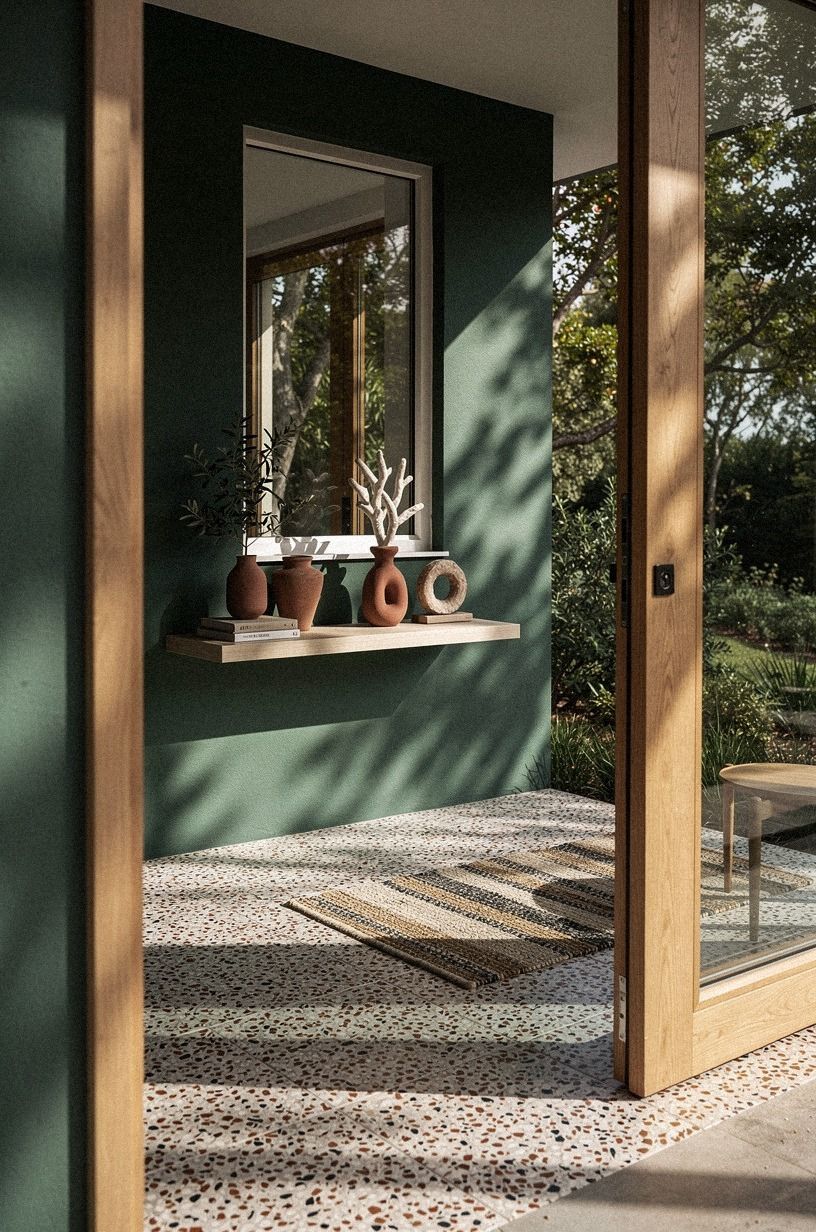
A narrow shelf beneath a porch window creates a useful landing for small objects while preserving floor space. Choose oversized-chip terrazzo for a durable surface, and keep its depth modest so shoulders and bags won’t catch it. The material adds texture to a forest green, rust, and natural oak palette without making the window wall feel busy.
Use the shelf for a few sturdy objects rather than a row of fragile decor. A galvanized cup of rosemary, one rust-colored lantern, and a small ceramic bird can carry the color story. And if the porch is exposed to rain, protect the shelf with exterior sealant and avoid porous ceramics.
Your eye needs one quiet horizontal line, not a miniature collection.
7Style galvanized planters with trailing cottage blooms (The Soft-Edge Container)
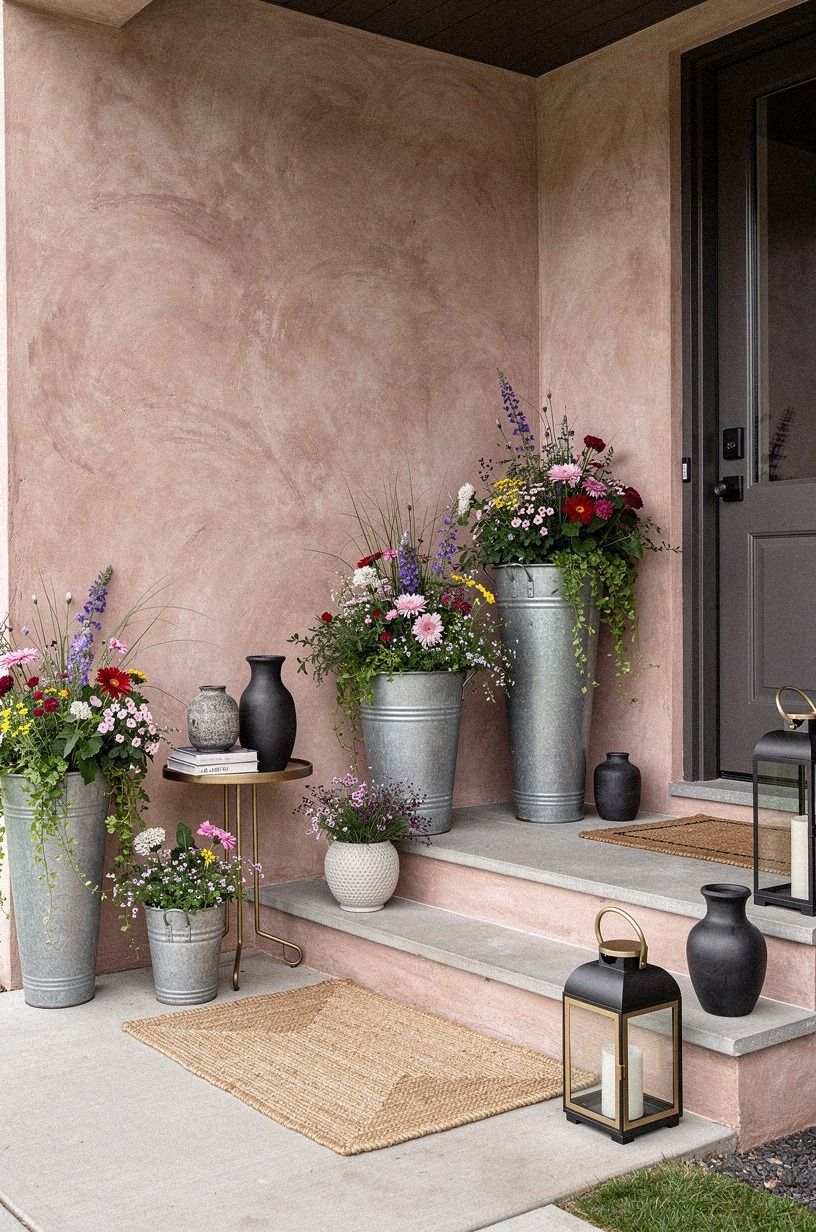
Galvanized planters bring a practical farm reference, but their cool metal can feel harsh without soft foliage. Trailing cottage blooms in dusty rose can soften the container, while charcoal and brass accents give the arrangement a more finished edge. Against hand-applied Venetian plaster, the mix gains warmth without losing its simple country character.
Keep the tallest stems toward the back and let the trailing growth fall toward the walkway. A small brass plant label or hook can repeat the warmer metal without turning the planter into a display piece. Leave enough clearance for watering and sweeping around the base.
8Add striped cushions to a petite bench (The Narrow-Seat Test)
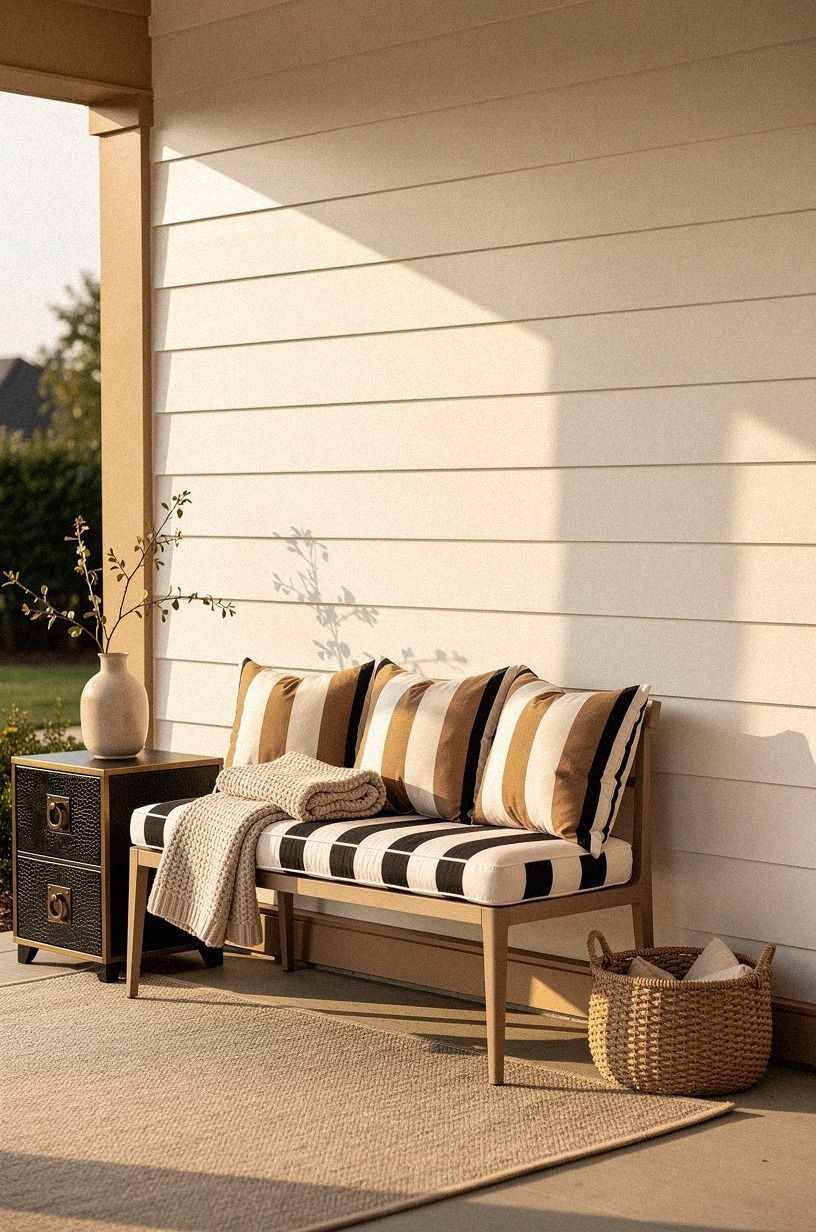
Striped cushions give a petite bench a clear farmhouse signal while keeping the palette crisp. Choose warm white and camel with a narrow black stripe rather than a high-contrast pattern that dominates the small space. Shagreen accents on a small lumbar cushion or nearby tray can add texture without competing with the stripes.
Your bench should still show some of its frame, especially if it has black metal or natural oak details. Don’t overfill the seat with pillows, because guests need room to sit and remove shoes.
A single lumbar cushion may be enough. You’ll get a more relaxed look when the textiles feel useful rather than arranged only for display.
For more seating layouts, explore these small porch seating ideas for cozy conversation.
9Wrap the railing with climbing jasmine (The Living Handrail)
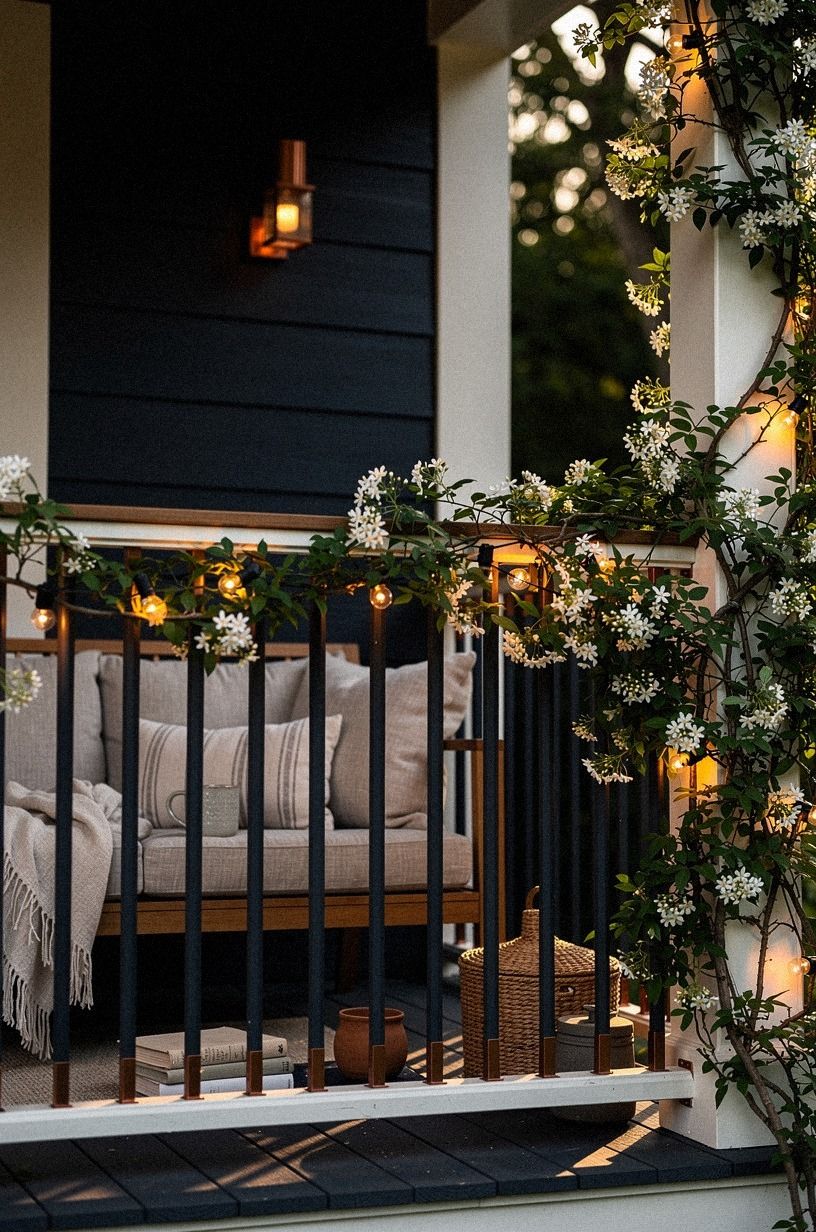
Climbing jasmine adds movement to a porch railing, especially when the rest of the architecture is square and still. Let the greenery work against midnight blue, copper, and ivory accents so the planting feels layered rather than random.
A washed Belgian linen cushion or seat cover can bring lived-in texture to the nearby seating area. Keep the vines tied loosely to the railing, and guide them away from the door latch and walking route. The goal is a soft vertical edge, not a tangled barrier.
10Lean a vintage ladder for blanket storage (The Vertical Basket Rule)
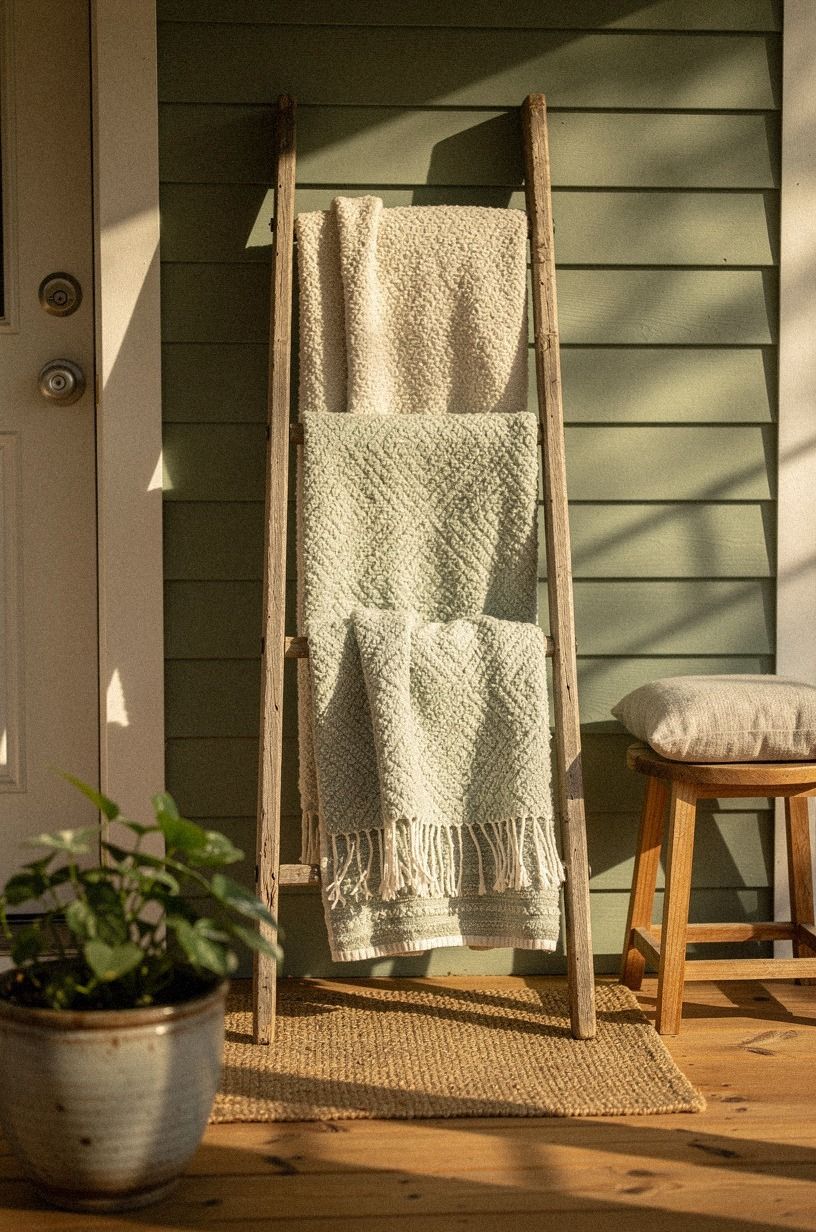
A vintage ladder uses wall height instead of floor depth, making it useful on a narrow porch. Lean it against a protected wall and hang one or two baskets from the rungs. Organic bouclé throws add softness to sage green, warm cream, and natural wood, but the fabric should stay in a covered basket when rain is likely.
Your ladder needs a stable base and enough clearance from the walkway. Avoid stacking every rung with blankets, wreaths, and hats because the useful object will quickly become visual clutter.
One folded throw, one basket, and one small seasonal accent are enough. You’ll get stronger farmhouse character from worn wood and restraint than from a ladder covered in accessories. Keep the setup easy to clear when the weather changes.
11Repeat black metal accents across the porch (The Three-Point Anchor)
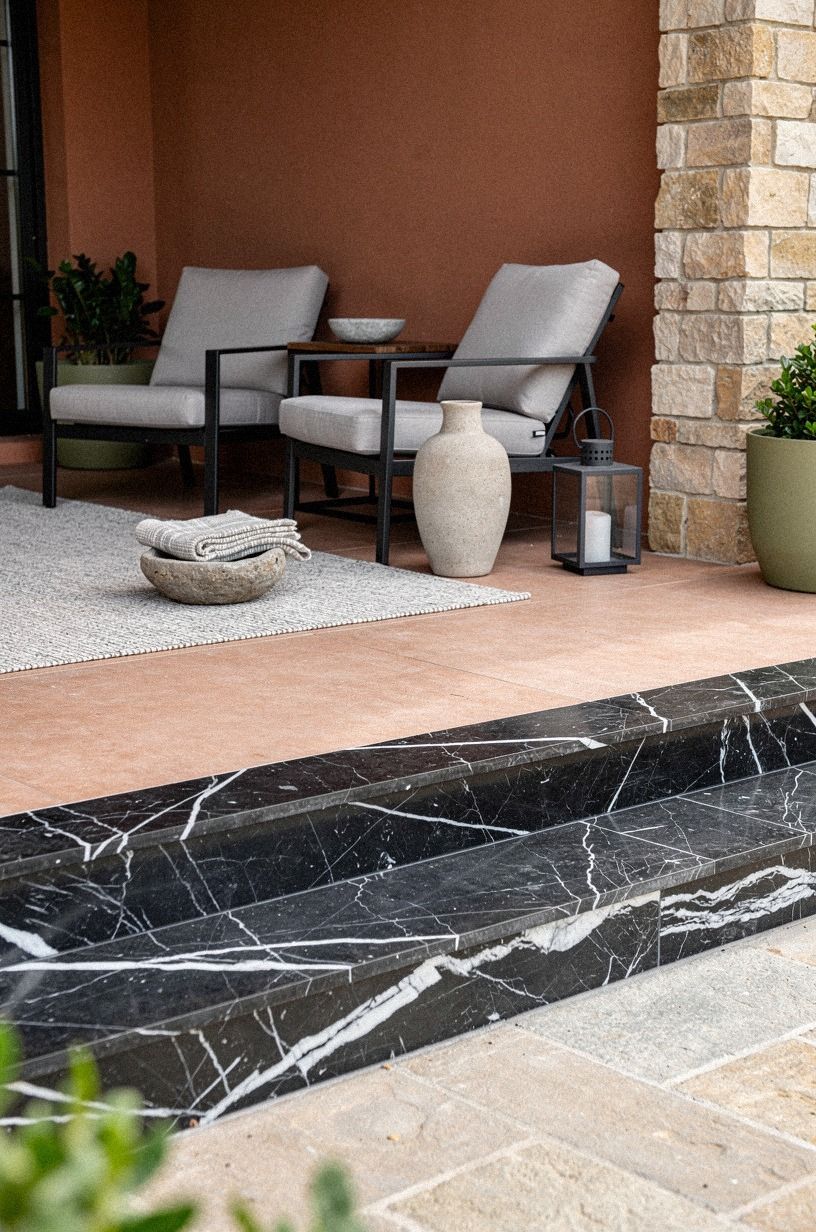
Black metal can connect a door handle, light fixture, planter stand, and bench frame into one visual system. Use it at three or four points so your eye notices repetition without seeing a matching set. Nero Marquina black marble can appear in a small table accent or tray, bringing a sharper note to terracotta, stone, and olive tones.
But don’t make every object black. Too much dark metal can flatten a small porch, particularly beneath a deep roof overhang.
Your best balance comes from pairing black with warm wood, soft textiles, and aged clay. You’ll want the accents to outline the architecture, not create a heavy border around it.
For a broader seasonal palette, consider these small porch fall decor layers.
12Build height with stacked terracotta pots (The Three-Height Plant Stack)
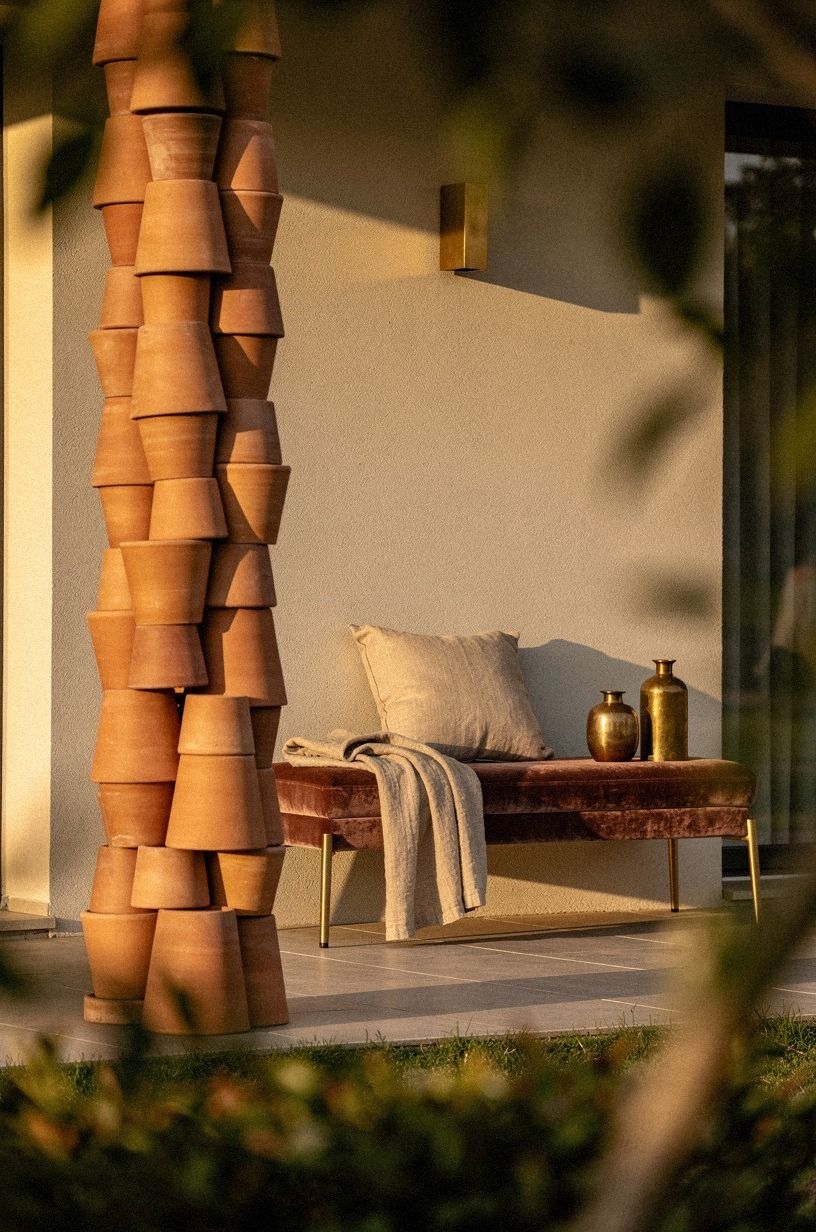
Stacked terracotta pots give a compact porch height, warmth, and a distinctly earthy farmhouse note. Use one large pot as the base, a medium pot above or beside it, and a small pot for trailing growth. Hand-thrown terracotta works with clay, linen, aged brass, and deep-pile mohair velvet because its surface has natural color variation.
Your arrangement should rise toward a corner rather than block the door. Keep the heaviest pot on the ground and check that every piece sits level.
A trailing plant can soften the stack, while rosemary or thyme adds a pleasant scent near the entrance. You’ll want the clay to look weathered but not broken, so avoid unstable pieces with hairline cracks.
A gentle, organic silhouette will make the porch feel inviting.
For autumn styling, repeat the earthy palette with these small porch fall decor layers.
13Soften the steps with a faded runner (The Step-to-Door Bridge)
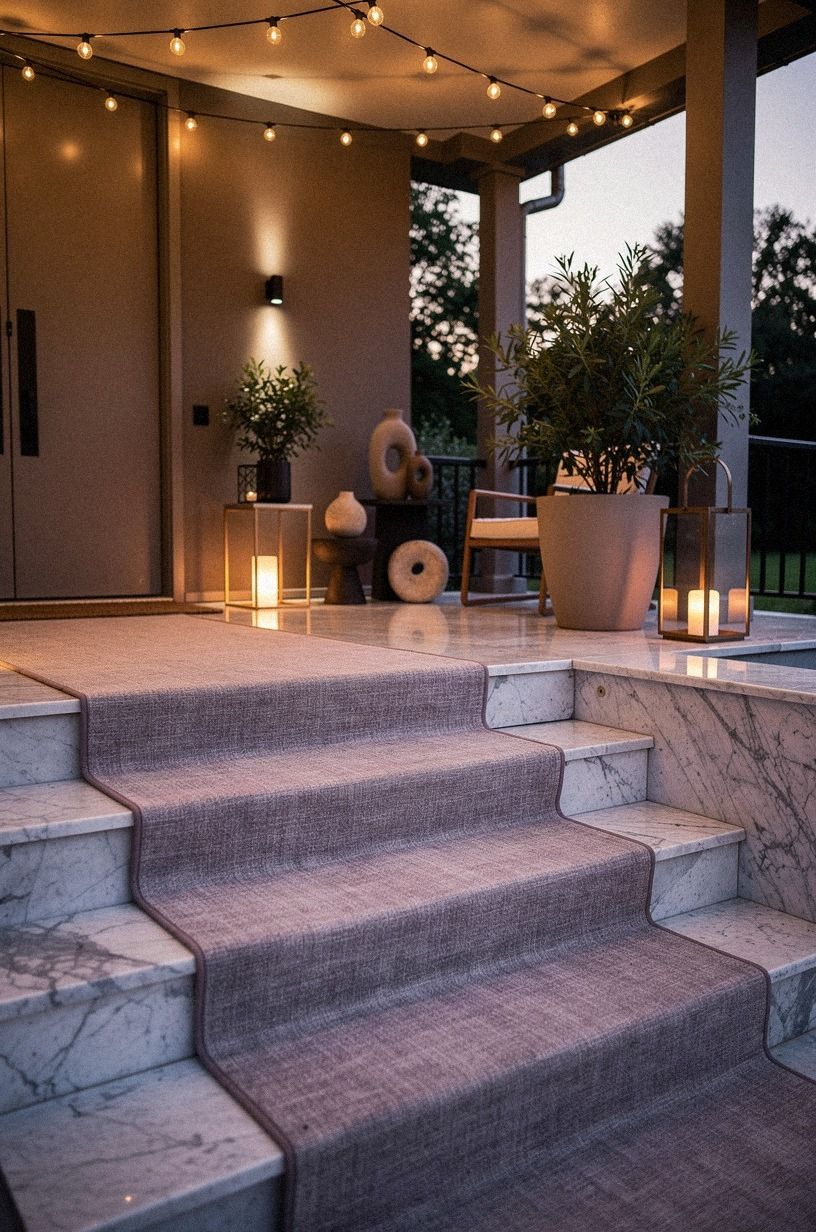
A faded runner can connect the sidewalk to the threshold, especially when Carrara marble steps and the landing feel visually separate. Choose plum, gray, and rose-gold notes in a flat weave rather than a dense pattern that competes with the door.
The runner should sit flat on every step and leave the edges visible. Don’t force a long textile into a narrow landing if it curls near the threshold. You’ll create more continuity by matching one runner color to a planter, cushion, or trim detail.
A washable outdoor fabric keeps seasonal maintenance manageable.
14Display a farmhouse sign above the door (The One-Line Welcome)
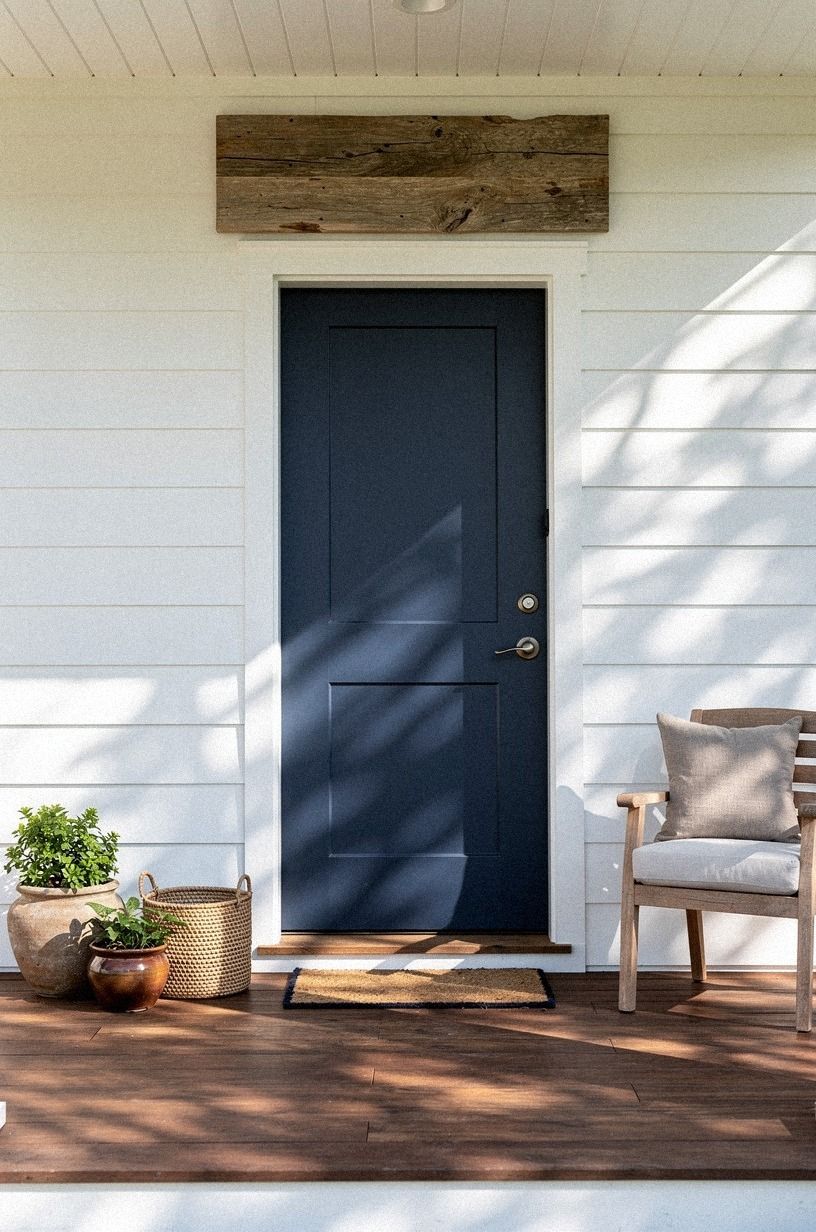
A simple farmhouse sign above the door can add personality without filling the porch with small decorations. Choose one short word or phrase in a restrained serif, then give it enough empty space around the frame. Reclaimed weathered teak brings depth to a navy, white, and walnut palette, especially when the sign has visible knots and uneven grain.
Your sign should be sized for the wall, not for the message alone. A narrow plaque may disappear above a wide doorway, while an oversized board can make the entrance feel low.
Avoid overly distressed lettering because it can look manufactured rather than collected. You’ll get more charm from honest wood, clean spacing, and one warm finish.
A small brass hook or lantern nearby can repeat the sign’s age without competing with it.
15Pair rattan seating with crisp white cushions (The Airy Frame)
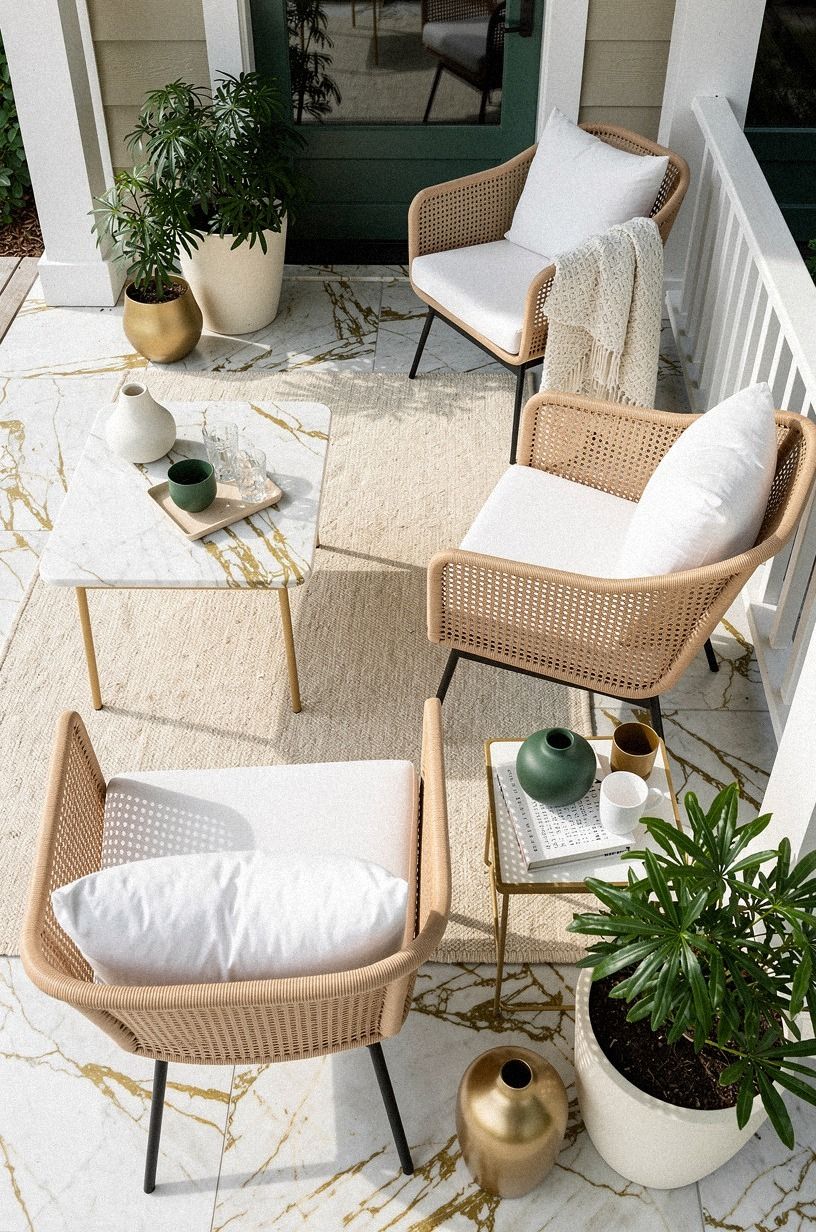
Rattan seating keeps a small porch visually open because its woven frame has more breathing room than solid upholstered furniture. Pair one chair or loveseat with crisp white cushions and a few emerald or cream accents. Calacatta Gold marble can appear on a tiny side table, adding polish without changing the relaxed farmhouse direction.
Your seating should face the yard or angle toward the door, depending on how the porch is used. Leave the central walking route clear, and keep cushions removable for weather changes.
You’ll want the rattan to remain the main texture, so skip several competing woven baskets nearby. For cost context, outdoor projects often fall into these typical US ranges:
16Brighten narrow corners using antique mirrors (The Reflection Pocket)
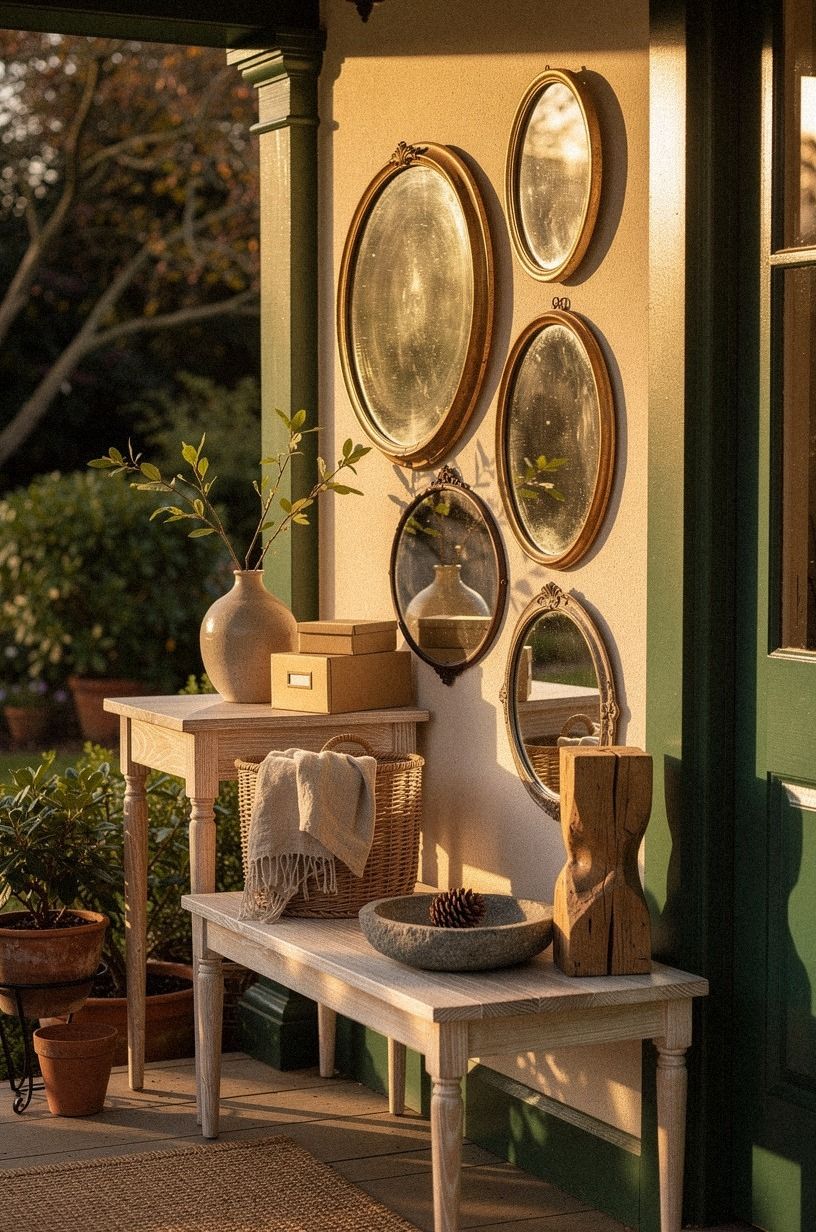
An antique mirror can send daylight into a shaded porch corner and add depth without taking up floor space. Choose a modest rectangular frame with softened silvering rather than a flawless modern surface. Cerused white oak frames work with forest green, rust, and natural oak, while the worn reflection keeps the look relaxed.
Your mirror should face a bright garden view or open sky, not a blank wall if possible. Use hardware rated for the mirror’s weight and keep the frame away from direct rain.
Don’t cover the mirror with wreaths, baskets, and signs, because reflected light needs room to work. You’ll find that one reflective surface often does more than several pale accessories.
For another small-entry direction, see these welcoming porch nook arrangements.
17Install wall hooks for seasonal porch baskets (The Seasonal Swap Rail)
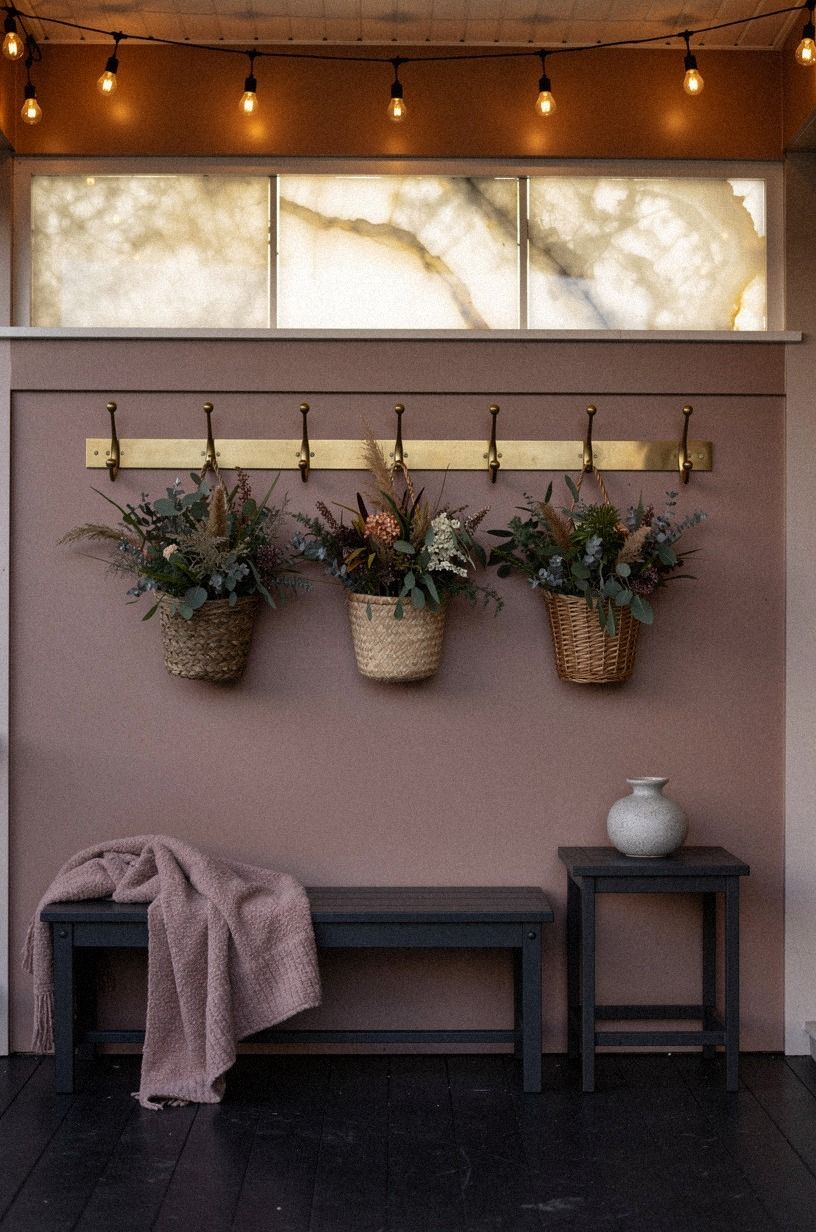
Wall hooks make seasonal storage visible and convenient, especially when baskets hold gloves, market bags, or small gardening tools. Choose aged brass hooks against dusty rose and charcoal accents, and place the rail near a backlit translucent onyx panel when the entry includes one.
Your hook rail should sit outside the main shoulder path. Don’t mount baskets where they can strike the door or catch coats as guests pass.
A short row of three hooks often works better than a long rack. You’ll keep the porch more flexible when the baskets can come down quickly between seasons.
For reversible entry updates, these welcoming porch nook arrangements show how hooks, baskets, and seating can share a compact wall.
18Mix checked textiles with natural wood textures (The Pattern-to-Grain Balance)
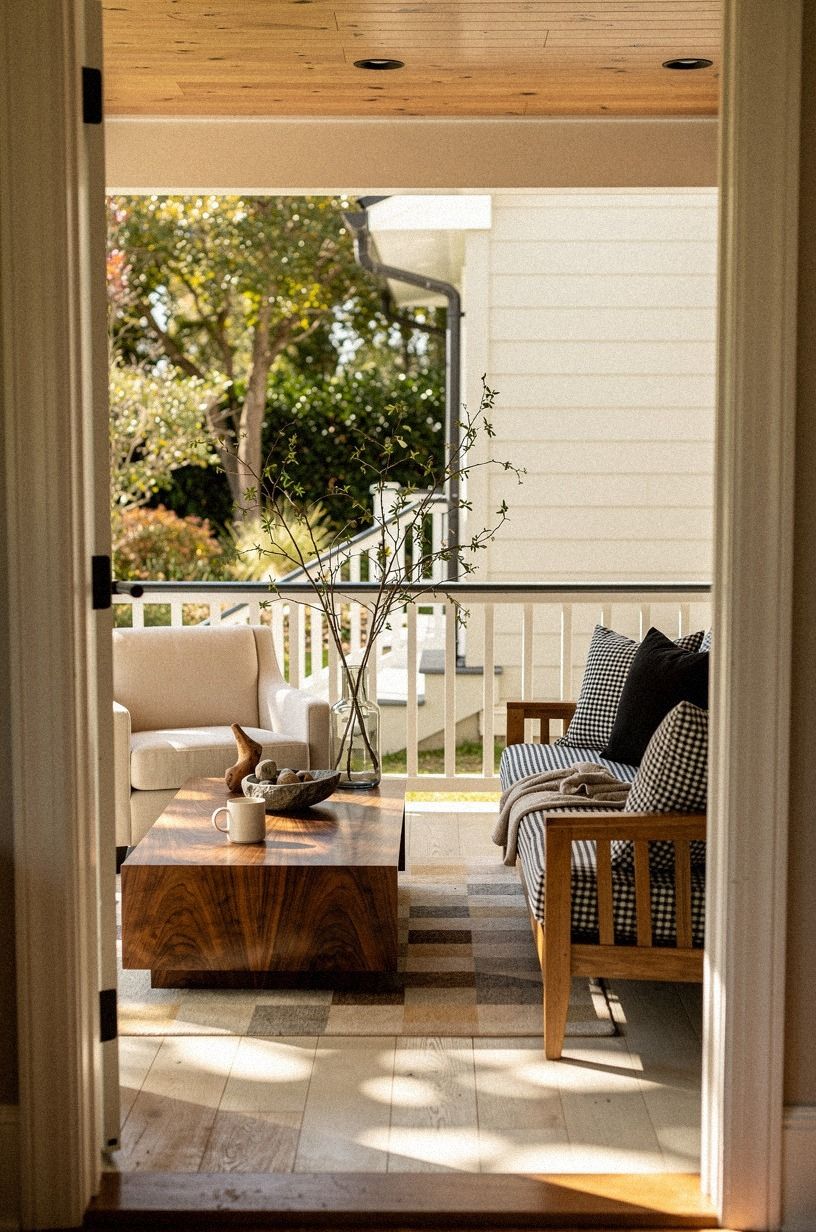
Checked textiles bring country charm, while natural wood prevents the pattern from feeling overly sweet. Use warm white, camel, and black in the fabric, then balance it with book-matched walnut on a bench, shelf, or narrow side table.
Keep the check visible on one major textile and repeat the walnut in one smaller object. Too many patterns can make a small porch feel restless, while too much wood can darken the entry. A restrained mix gives the space texture without clutter.
The Small Porch Editing Rule
Small farmhouse porches work best when charm comes from editing rather than accumulation. Every object has a job: the runner guides movement, the pendant defines the ceiling, the chair creates a pause, and the plant softens a hard edge. When several pieces perform the same job, your porch starts to feel crowded even if the floor remains technically clear.
Scale matters more than quantity. A narrow bench with one cushion can feel generous, while a deep chair can make the whole entry awkward.
Your eye should find the door first, then move toward texture and greenery. That order keeps the facade welcoming instead of busy.
Material contrast also matters. Smooth paint beside rough terracotta, woven rattan beside aged brass, and visible wood grain beside crisp linen create the kind of quiet variation that makes a small space feel considered.
Too many distressed finishes can make the porch look themed. One weathered object is often stronger than five.
The most useful test is practical. Can you open the door without moving a planter?
Can two people pass without turning sideways? Can cushions come inside quickly before rain?
If the answer is no, remove one item before adding another. A porch should support arrival, conversation, and seasonal changes. The best farmhouse look feels warm because it remains easy to use.
The Questions Worth Answering First
What are the best small farmhouse front porch ideas for a small front porch?
The strongest starting points are a sage door, a slim bench, and one tall planter because they add color, seating, and height without consuming the walkway. Narrow seating or a compact wood bench can work well when the porch has limited depth. You’ll gain more balance by editing the layout before buying additional decor.
Where can you buy small farmhouse front porch pieces on a budget?
Wayfair and Target offer accessible porch furniture and textiles, while Facebook Marketplace and local thrift shops can provide older wood pieces. You’ll often find better character in second-hand stools, ladders, and planters than in matching new sets. Check these small porch seating layouts for scale ideas before shopping.
How much does a small farmhouse front porch makeover cost?
A focused refresh can cost about $100 to $300 when paint, second-hand furniture, and existing planters do most of the work. A larger outdoor update may reach the budget, mid, or high ranges shown above. Free rearranging, pruning, and cleaning can change the porch before any purchase.
Can you create a small farmhouse front porch look on a budget?
Yes, and the strongest low-cost moves are repainting the door, rearranging existing pots, and using a second-hand ladder for blanket storage. You can also sew or repurpose a cushion cover, then add one warm bulb rather than replacing every fixture. Small changes compound quickly!
Is a small farmhouse front porch style worth using in a small space?
Yes, because a small porch benefits from a clear focal point and fewer competing objects. Choose one seating piece, one vertical plant grouping, and a runner that respects the walkway. You’ll gain stronger curb appeal without sacrificing daily movement or door clearance.
Is a small farmhouse front porch style a good idea for a rental?
Yes. Use removable hooks, a tension rod for lightweight textiles, peel-and-stick exterior-safe accents where permitted, and freestanding planters.
Your landlord’s rules still matter, so check mounting limits before installing shelves, signs, or lights. These small front porch renter-friendly ideas can help with reversible changes.
Where to Start First
If choosing one upgrade, start with the soft sage front door. It changes the porch from the street, costs less than a furniture overhaul, and gives every later texture a color to answer. Pair it with a slim runner once the paint is dry, then add only the elements that support the walkway.