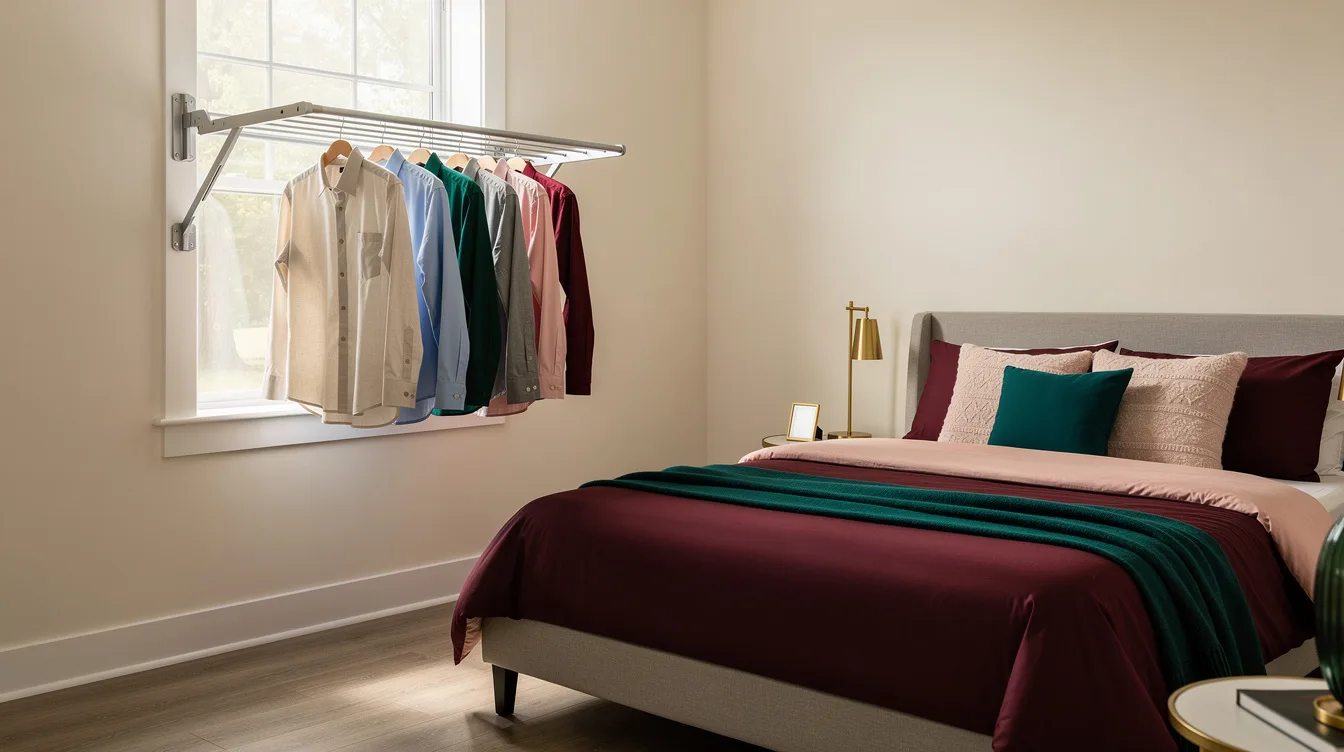
A small bedroom can spare a wall rack, but it may not spare a bad projection. In a 100 cm gap beside the bed, a rack that opens 37 cm deep leaves about 63 cm before wet fabric takes more space.
Place the wall beside the window, outside the window’s swing and away from the main route. Compact retractable options sit around €25 to €40 in the supplied listings, while hinged aluminum models cost about €80.
The key measurement is how far the loaded rack enters the room, not how slim it looks when closed. These layouts keep that reality visible before the first hole reaches the wall.
Claim the Wall Beside the Window
The strongest layout starts with the wall beside the window, outside the sash’s swing and away from the main path around the bed. This position keeps laundry close to fresh air while protecting the room’s most valuable walking space.
A compact retractable rack usually costs about €25 to €40 in the supplied listings, while a hinged aluminum version runs around €80. Those euro prices are useful benchmarks, but they are not installed costs or a US market average.
Use an Amazon search as a starting point, then compare the open footprint, mounting method, and drying length. The closed profile matters for appearance, but the loaded projection controls whether the layout feels comfortable.
Tape the Loaded Footprint
Before drilling, mark the rack’s full width and open depth with painter’s tape. Add the space occupied by hanging fabric, because wet clothing often projects beyond the frame and changes the route around the bed.
In a 100 cm gap between the wall and bed, a rack that opens 37 cm deep leaves about 63 cm before fabric overhang. That is workable for occasional drying, though a bulky load can still make the passage feel tight.
Hold up one shirt on a hanger and place a folded towel across the taped area. This quick test reveals more than measuring the rack closed, especially when the room also contains a desk, hamper, or wardrobe.
Reserve the Foot of the Bed for Hinged Frames
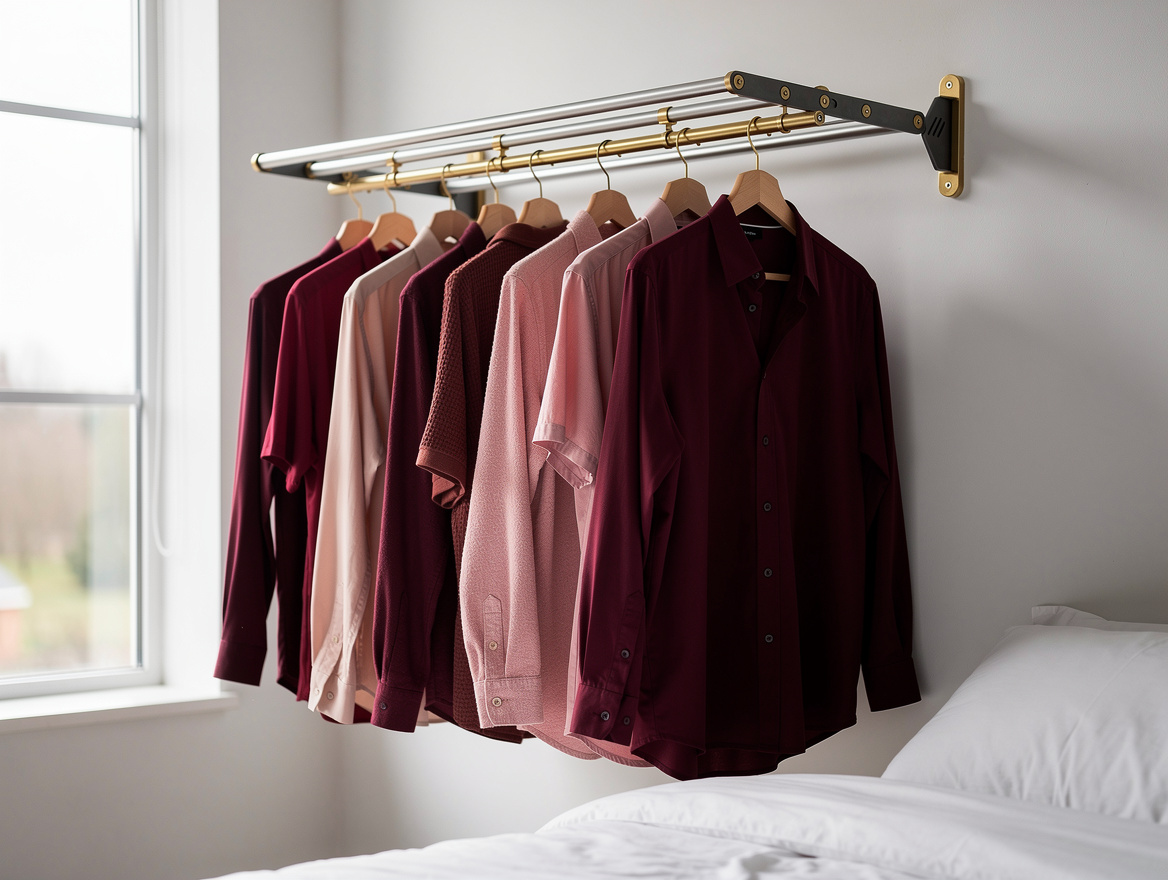
The foot of the bed can handle a hinged aluminum frame when the gap is generous and the rack folds flat afterward. A compact option around 60 cm wide may suit this layout, but its frame depth deserves more attention than its width.
A listed fold-down version with roughly a 50 cm frame depth leaves about 60 cm in a 110 cm gap. In an 80 cm gap, only around 30 cm remains, so opening the rack there can block the route completely.
That is why the roughly €80 price for an aluminum rack makes sense only when the location works every day. The finish can look more furniture-like than a plastic cassette, but a polished appearance cannot rescue a bad clearance.
Keep Dresser Walls for Short Loads
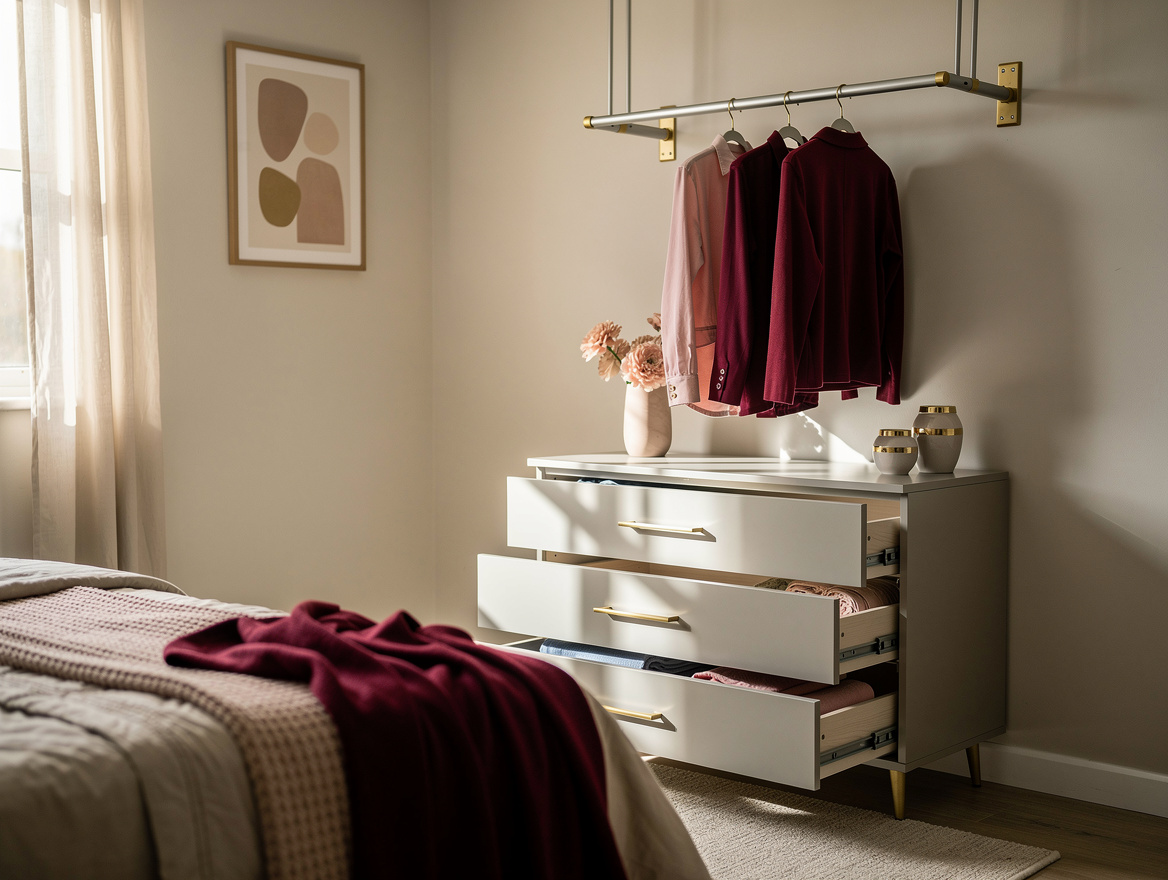
A wall above a low dresser works when floor space is already occupied. Set the rack high enough for the longest shirt, then confirm that loaded fabric will not brush the dresser surface or interfere with open drawers.
A wider retractable design can measure about 103.5 cm across, with a listed closed depth of roughly 6 cm and around 8.1 m of drying length. Its coated stainless-steel rods suit small garments, workout clothes, and a few tops.
Mock up the height with the drawer fully open and a shirt hanging from the furthest bar. This layout is efficient for light loads, but it is a poor choice for long dresses, towels, or anything that needs generous air circulation.
Match Drying Length to the Laundry
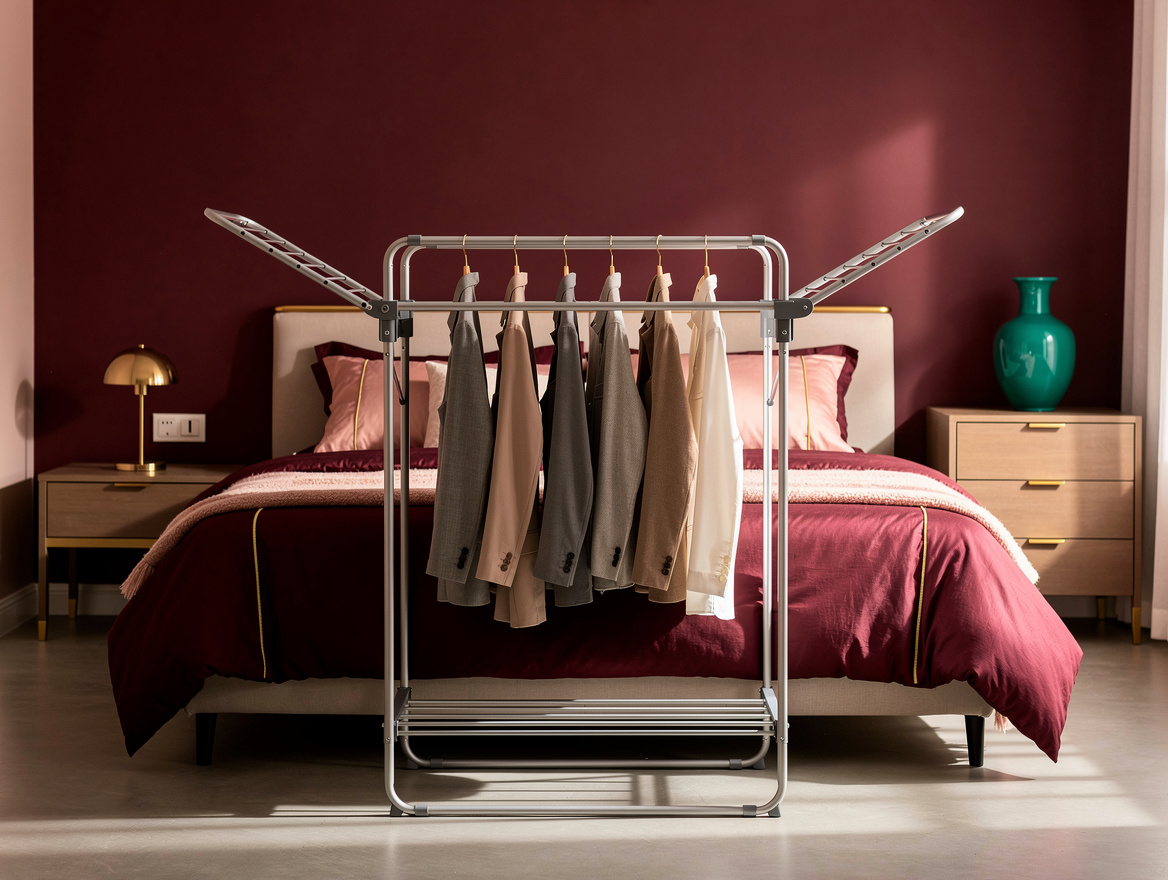
Read drying length as the combined length of all bars, not as one uninterrupted span for a sheet. A compact rack with about 3 m of drying length is useful for underwear, sportswear, and a few tops.
A wider unit with roughly 8.1 m of drying length holds more small pieces, yet the extra capacity can encourage overloading. Leave space between items so damp fabric has a chance to dry instead of creating a heavy, humid bundle.
For bed linen, choose a different drying plan or a larger dedicated rack. A compact wall-mounted model belongs in a small bedroom as an occasional drying station, not as the only solution for every weekly wash.
Drill for the Wall You Actually Have
Identify whether the mounting point is masonry, a stud, or plasterboard before choosing hardware. Follow the instructions for the exact rack, because the weight of wet clothes places more stress on the fixings than the empty product suggests.
Set the height so you can reach the furthest bar without stretching or standing on furniture. A rack that is technically secure can still be impractical when every load requires awkward lifting.
Buy suitable anchors and a small level from Home Depot or another US hardware retailer, then test the frame before adding a full load. Tighten the fittings after the first use if the wall material allows it, and watch for any movement around the mounting points.
Start with painter’s tape, a shirt on a hanger, and the window fully open. If the loaded footprint still leaves a relaxed path around the bed, you have found the right wall for the rack.
Mia Carter writes about small-space living and budget home makeovers. She has restyled three rentals and tests most ideas in her own 45 sqm flat.