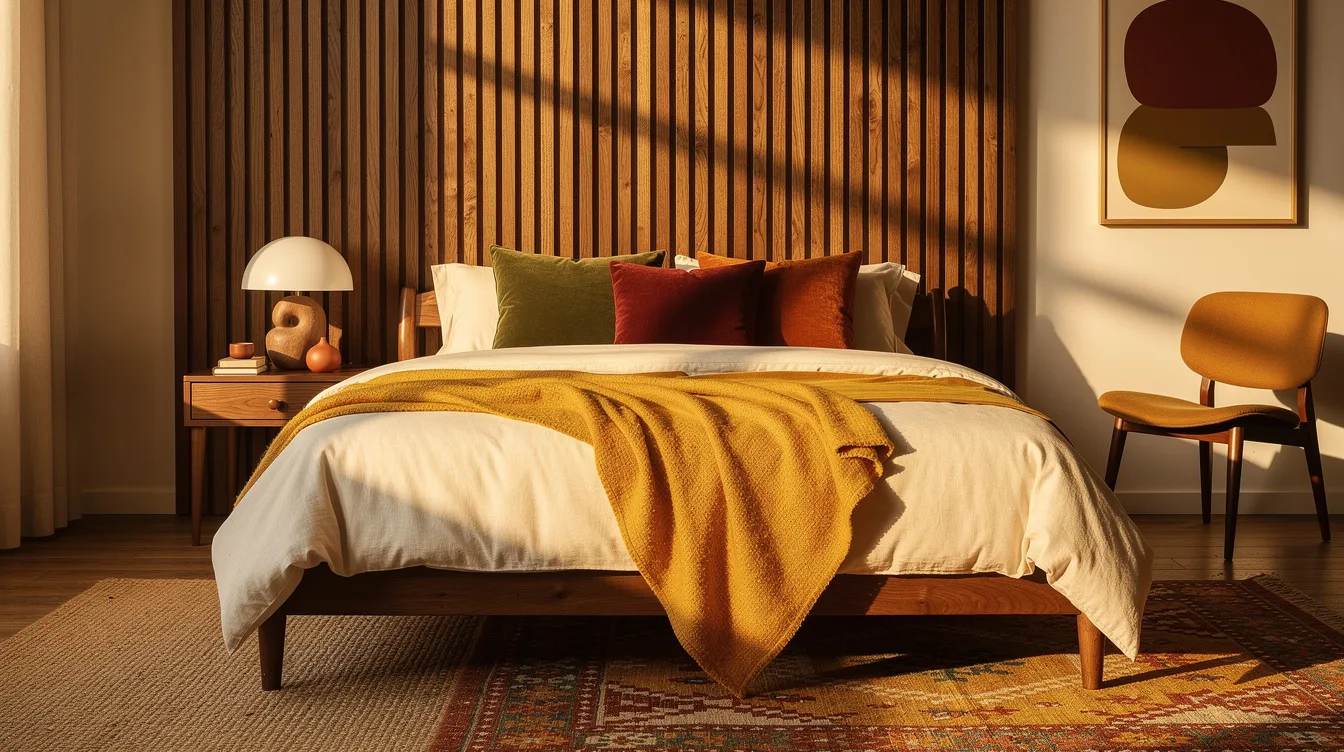
A walnut-toned bed wall, a simple wooden frame, and cream bedding can carry a convincing ’70s mood without turning the bedroom into a time capsule. For a 2026 refresh, plan on roughly $1,500 to $2,500 for a DIY, budget-to-midrange update before the mattress, installation labor, and major flooring work.
The winning palette is restrained: warm wood first, then harvest gold, with only small touches of olive or rust. The room should feel earthy at a glance and comfortable after the novelty wears off.
Panel the Bed Wall
The period reads fastest when the wall behind the bed carries the wood. Use walnut-toned slat paneling on one wall, then leave the ceiling and remaining walls warm cream so the room keeps some visual air.
A regular-size panel reference costs about $235 and measures roughly 94 by 25 inches, enough to create a strong backdrop without wrapping the entire room. Check whether the selected panel uses engineered wood, real wood veneer, or an oiled finish because “walnut” describes the tone, not necessarily the construction.
Keep the panel height aligned with the bed and nightstands rather than stopping at an arbitrary midpoint. That simple alignment makes the wall feel intentional, while a full-room treatment can quickly make a compact bedroom feel dark.
Choose a Quiet Pine Bed
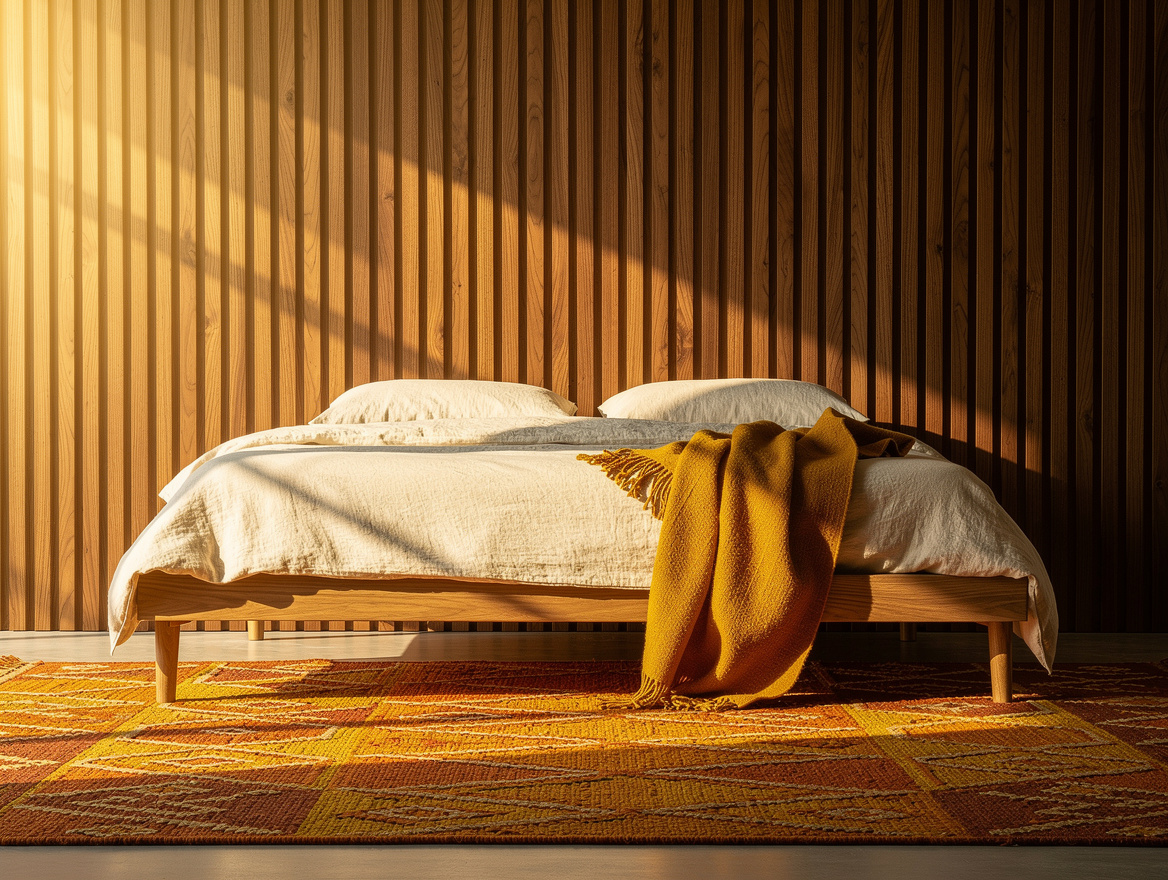
A simple wooden frame gives the color scheme somewhere to land. The IKEA TARVA queen bed is currently listed at $159 compared with a stated regular price of $199, and its footprint is roughly 82 by 63 inches with a headboard about 36 inches high.
Its solid-pine construction is practical for a budget refresh, though it is a supporting piece rather than a historic ’70s reproduction. I would let the wall and textiles carry the era while the bed stays visually calm.
Pair it with cream cotton bedding in a relaxed weave, then make the bed generously rather than tightly staged. A low-profile duvet, one folded throw, and a pair of oversized pillows feel more current than a room packed with decorative cushions.
Set Cream as the Main Field
Warm color works best when it has a large quiet surface around it. Choose warm cream paint for the walls outside the panel, the ceiling, or both, using the shade to soften walnut and keep the room from becoming visually heavy.
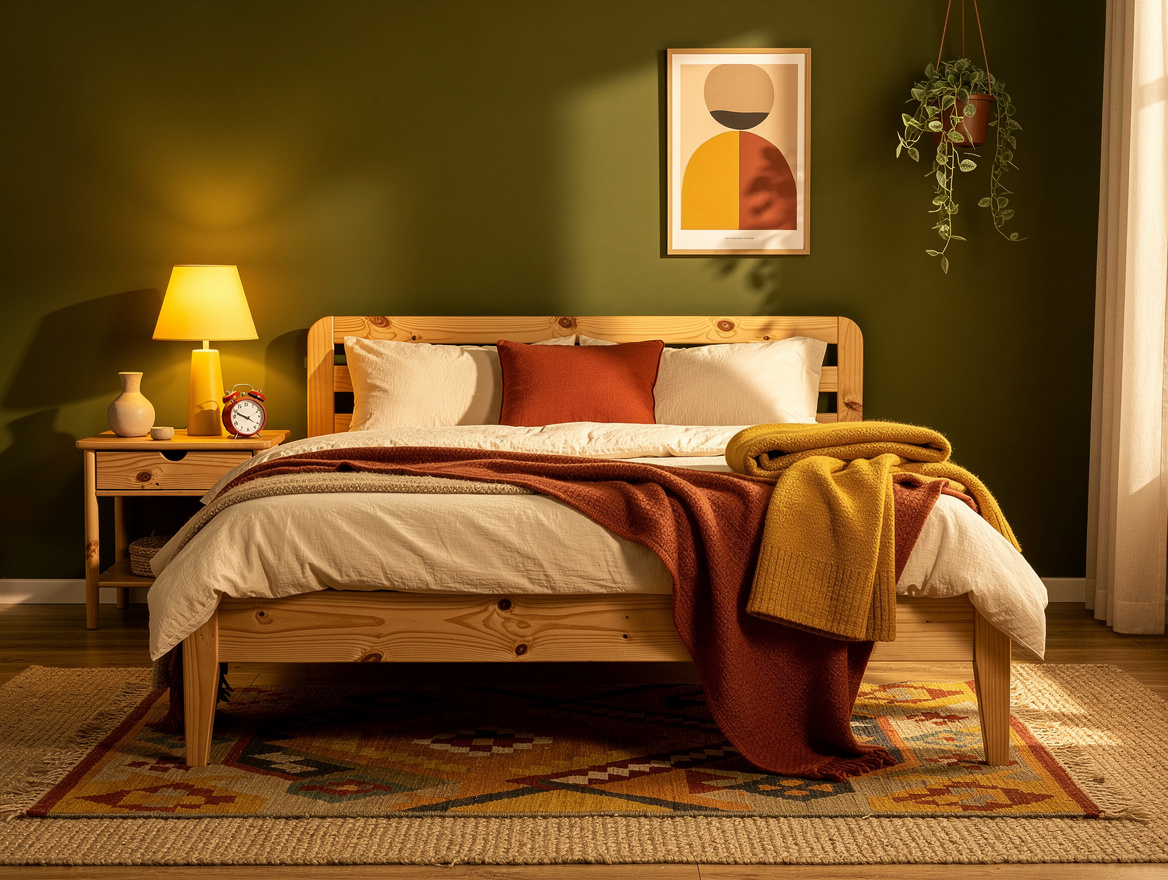
Use olive or avocado on one secondary surface, such as the wall beside the bed or a narrow alcove. An olive-green wall color works because it shares the earthy character of wood and mustard without competing with the bed wall.
Skip bright white, which can make walnut and harvest gold look disconnected. Chocolate brown belongs in smaller pieces, such as a stool, frame, or nightstand, where it adds depth without swallowing the room.
Place Harvest Gold With Restraint
Harvest gold should appear as a deliberate note, not a wall-to-wall demand. Start with a harvest-gold throw folded across the lower third of the bed, then repeat the color once in a lampshade or small artwork.
Add ochre through one cushion or a narrow bench cushion, and let the rest of the bedding remain cream. This gives the room the recognizable brown-and-gold connection without creating a dated color block.
For warmth, bring in one burnt-orange cushion or a rust-colored textile. Chocolate, olive, harvest gold, and burnt orange already establish the period vocabulary, so psychedelic wallpaper would only make the room feel themed.
Warm the Floor and Light
Texture keeps the earthy palette from looking flat. A natural jute rug beside or beneath the bed adds a rougher surface against smooth bedding and visually connects the wood panel to the floor.
Choose a rug large enough to extend beyond the sides of the bed, but measure first so doors and drawers still open freely. A smaller rug can work beside the bed when the floor plan is tight, especially if the panel wall already supplies enough visual weight.
Use a yellow-shaded lamp for a low, warm glow instead of relying on a single bright ceiling fixture. A ceramic base, rattan shade, or aged-brass stem gives the room tactile interest while keeping the lighting simple.
Edit the Room Before It Turns Themed
The strongest version has one dominant wood tone, one large light surface, and a controlled amount of color. Keep the furniture simple around the panel, perhaps with a chocolate-brown nightstand or natural wood stool that repeats the palette without adding another competing finish.
Use a sculptural shape for one object, such as a ceramic table lamp, then leave the remaining surfaces useful and quiet. A few books, a small framed print, and one woven basket are enough to make the room feel lived in.
Finally, repeat a small brushed-brass detail in the lamp, drawer pull, or frame. The total DIY refresh typically runs about $1,500 to $2,500 for the bed frame and one paneled wall, excluding the mattress, installation labor, and major flooring changes.
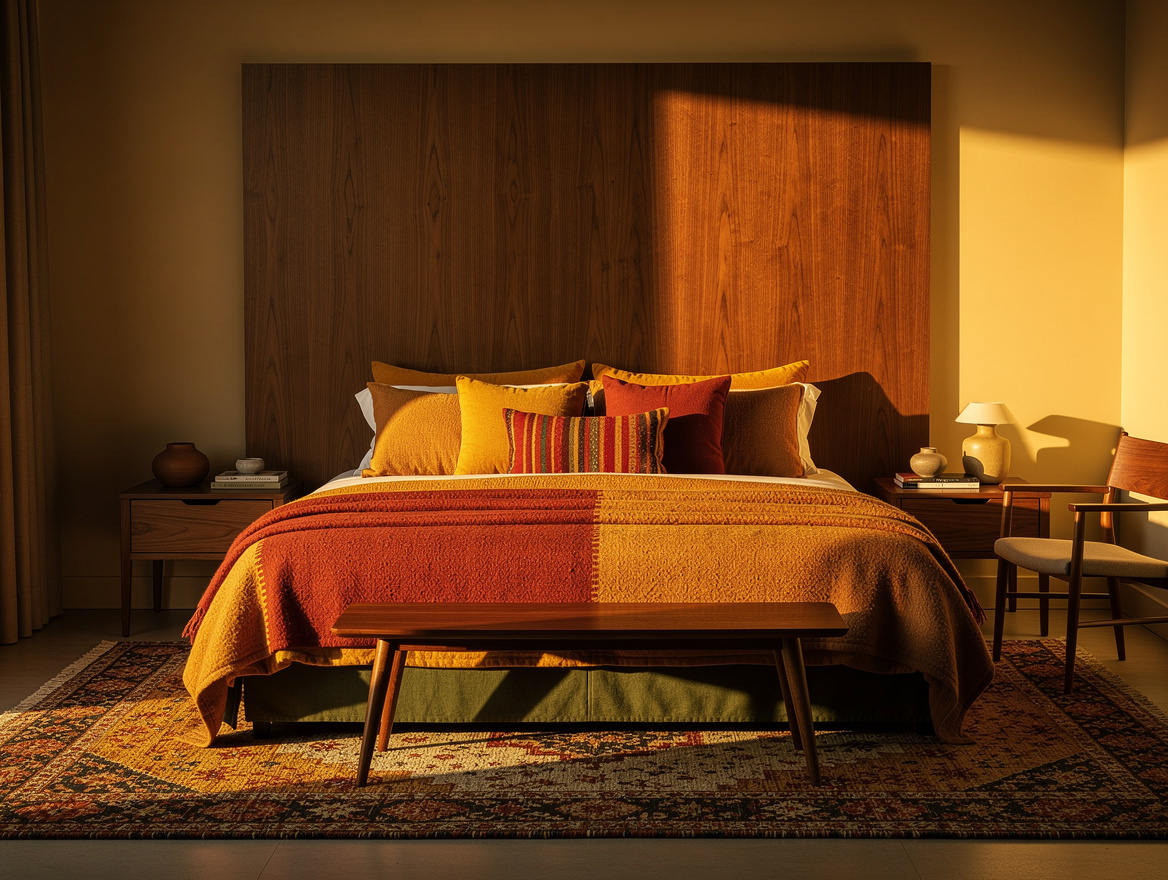
Start with the bed wall, then buy the bedding and lighting around it. That order keeps the palette focused and leaves enough budget for the textures that make the room feel finished.
Mia Carter writes about small-space living and budget home makeovers. She has restyled three rentals and tests most ideas in her own 45 sqm flat.