
Cortisol belly concerns often call for daily routine changes, not just food rules. Small cues around light, movement, sleep, and hydration may support a calmer rhythm without promising a specific body change. The most useful upgrades are simple, visible, and easy to repeat. No overhaul required.
- Anchor mornings with sunlight beside the bedroom window
- Schedule evening walks beneath softly lit pathways
- Dim overhead lights after your final meal
- Stage calming tea beside a favorite reading chair
- Block blue light with amber bedside lamps
- Display a visible bedtime routine on the wall
- Create a phone-free charging station outside the bedroom
- Layer breathable bedding for cooler overnight sleep
- Arrange gentle stretching space beside the sofa
- Use blackout curtains for deeper nighttime rest
- Place walking shoes beside the entryway bench
- Set a consistent breakfast tray each morning
- Keep water visible on an open kitchen shelf
- Build a quiet breathing corner with floor cushions
- Hang a weekly movement calendar near the mirror
- Swap harsh bathroom lighting for warm sconces
- Position a clock away from direct bedside view
- Prepare tomorrow’s outfit on a dedicated valet hook
- Frame restful reminders above the nightly wind-down chair
1Anchor mornings with sunlight beside the bedroom window
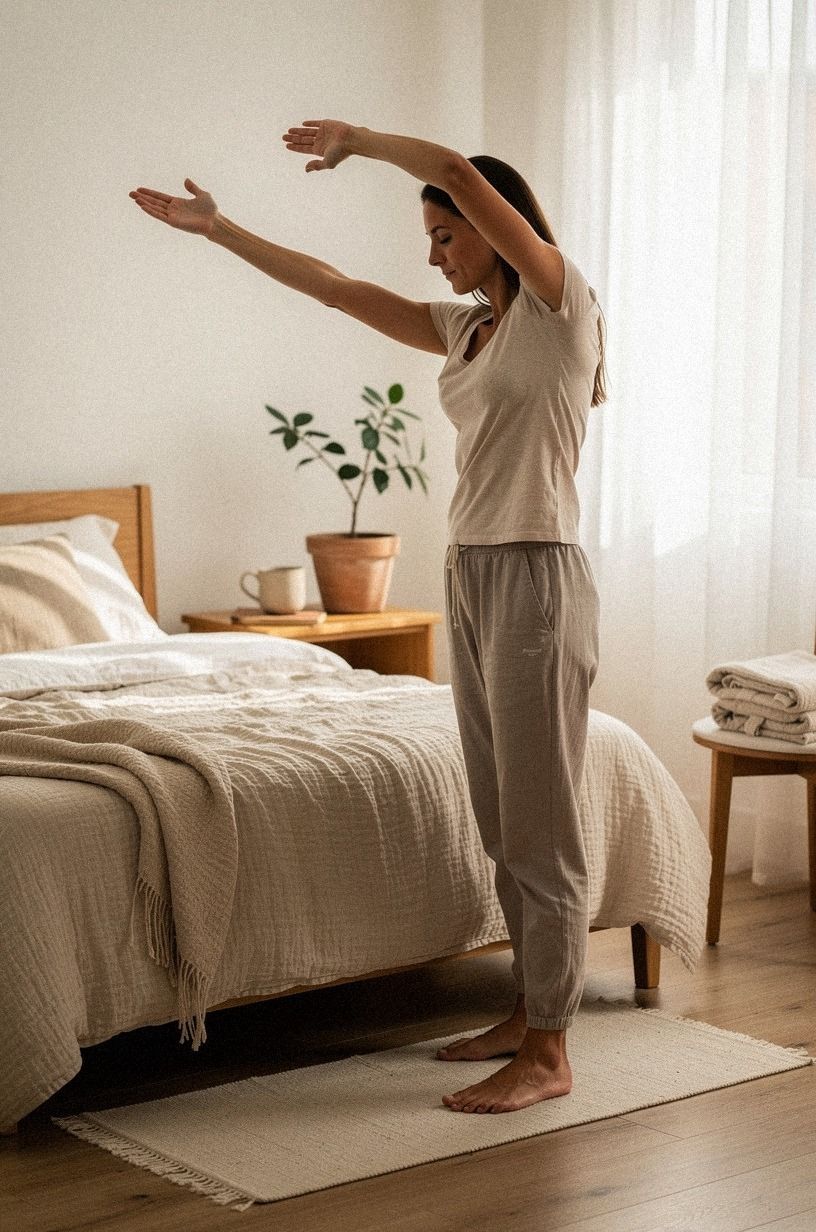
Morning light gives your routine a clear first cue, especially when a bedroom uses earthy terracotta, pale stone, olive textiles, and cerused white oak. Open the window covering soon after waking, then sit or stand nearby while drinking water. You’ll want the light to reach the room, not just a narrow strip beside the bed.
A low bench, linen curtain, and small ceramic bowl keep the setup practical. If you’re styling a darker room, Benjamin Moore White Dove on the trim can bounce daylight without making the space feel stark.
Don’t turn the area into a storage pile. Clear floor space makes the morning step feel gentle rather than demanding.
The best version costs nothing. A thrifted wood stool works as well as a designer bench if it keeps your phone away from the first few minutes of the day.
If mornings feel rushed, start with two quiet minutes beside the window. That small cue matters.
For related routine context, read this menopausal belly fat habit insight.
2Schedule evening walks beneath softly lit pathways
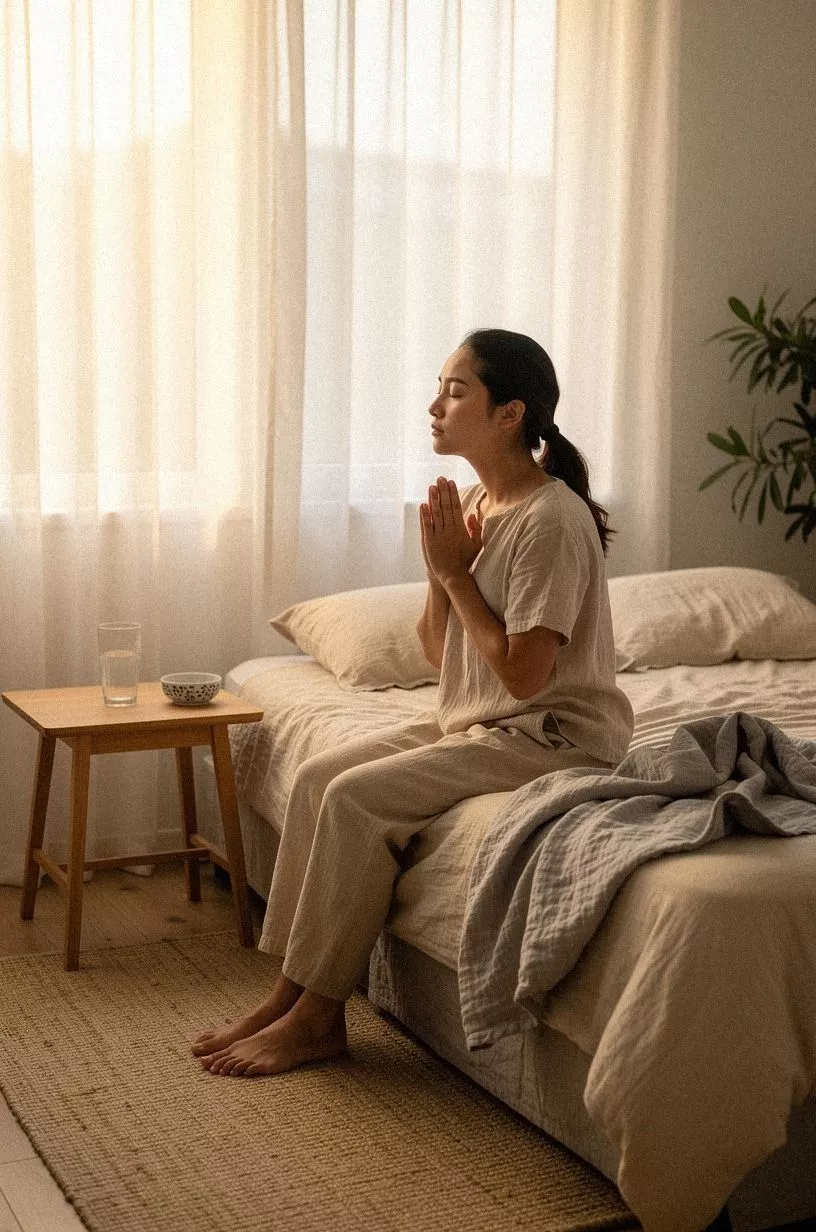
An evening walk can become easier to repeat when the exit feels inviting. Use clay pots, Belgian flax linen cushions, aged brass details, and a soft pathway light to create a visual transition from indoors to outdoors. You’ll notice the routine feels less like a task when shoes and a light layer are already waiting.
Keep the route modest and familiar. A short loop around the block may be enough for a consistent wind-down cue, while a longer path can suit nights with more energy.
The point isn’t intensity. It’s the repeated shift from screens, chores, and bright rooms toward quieter movement.
That’s why harsh floodlights aren’t a good choice here.
A backlit translucent onyx panel near the entry can cast a soft glow without shining directly into your eyes. Pair it with a linen overshirt on a hook and a washable clay-toned runner.
You won’t need expensive outdoor furniture, and you don’t need a dramatic fitness plan. A visible pair of walking shoes can do more for follow-through than a complicated schedule.
3Dim overhead lights after your final meal
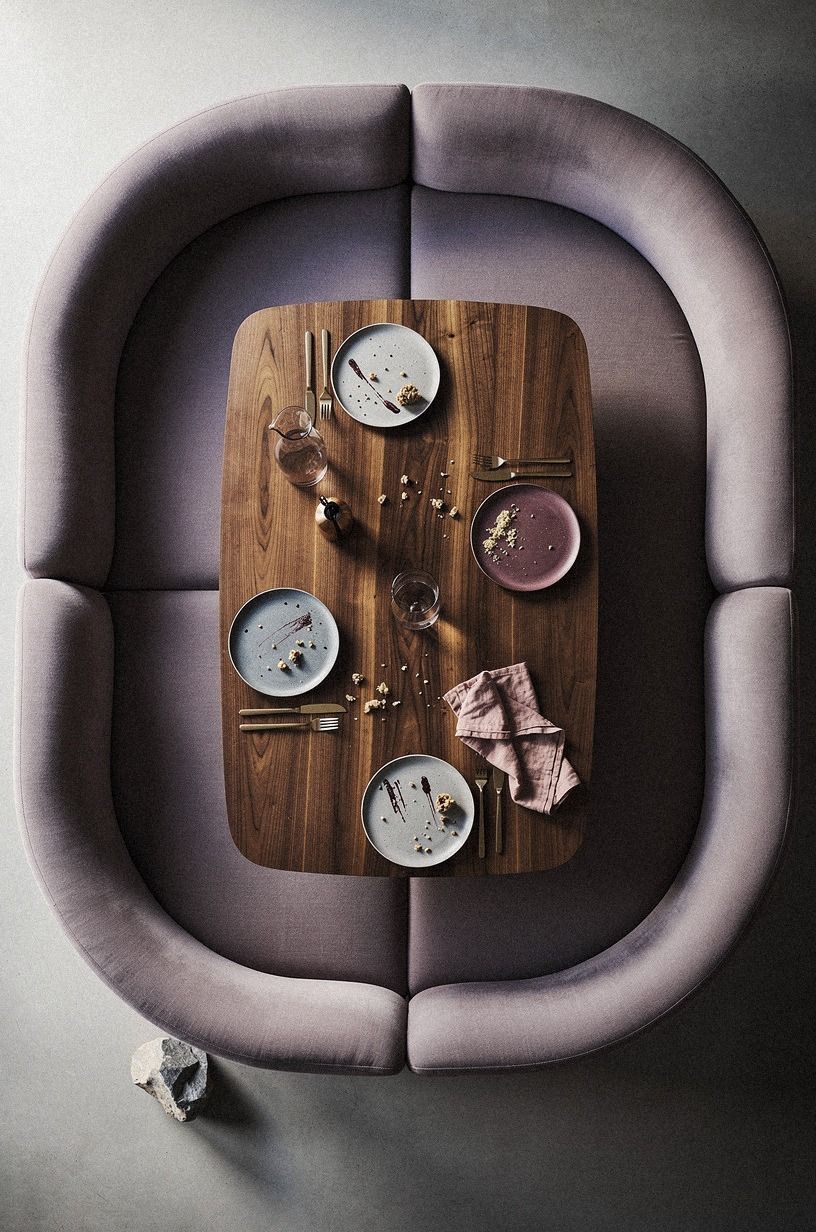
Bright overhead lighting after dinner can keep a room feeling active when your body wants a softer signal. Switch to table lamps, wall sconces, or a shaded floor lamp in a palette of plum, grey, and rose gold. A book-matched walnut console gives the lighting a rich surface to land on.
You’ll want at least one lamp below eye level. That lower pool of light makes the room feel intimate without forcing the entire space into darkness.
Farrow & Ball Pigeon No.25 works well with grey upholstery and aged wood, while a rose gold ceramic base adds a restrained glint. Don’t choose a blue-white bulb for this corner, because it can make the evening feel like office hours.
A complete lighting replacement isn’t necessary. Turn off one overhead fixture after the final meal and leave a single shaded lamp on for ten minutes.
Notice what changes in your attention. One switch can create a calmer cue.
4Stage calming tea beside a favorite reading chair
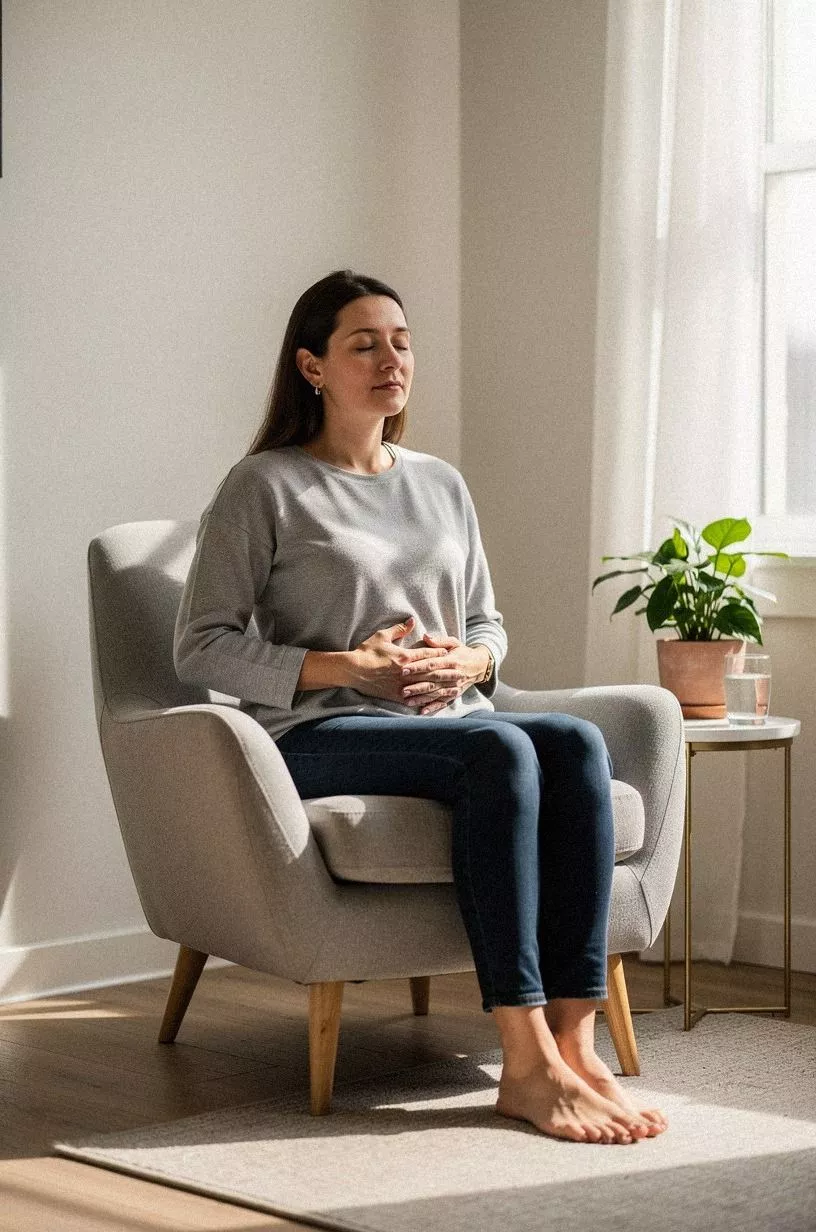
A reading chair becomes more useful when the next action is already prepared.
5Block blue light with amber bedside lamps
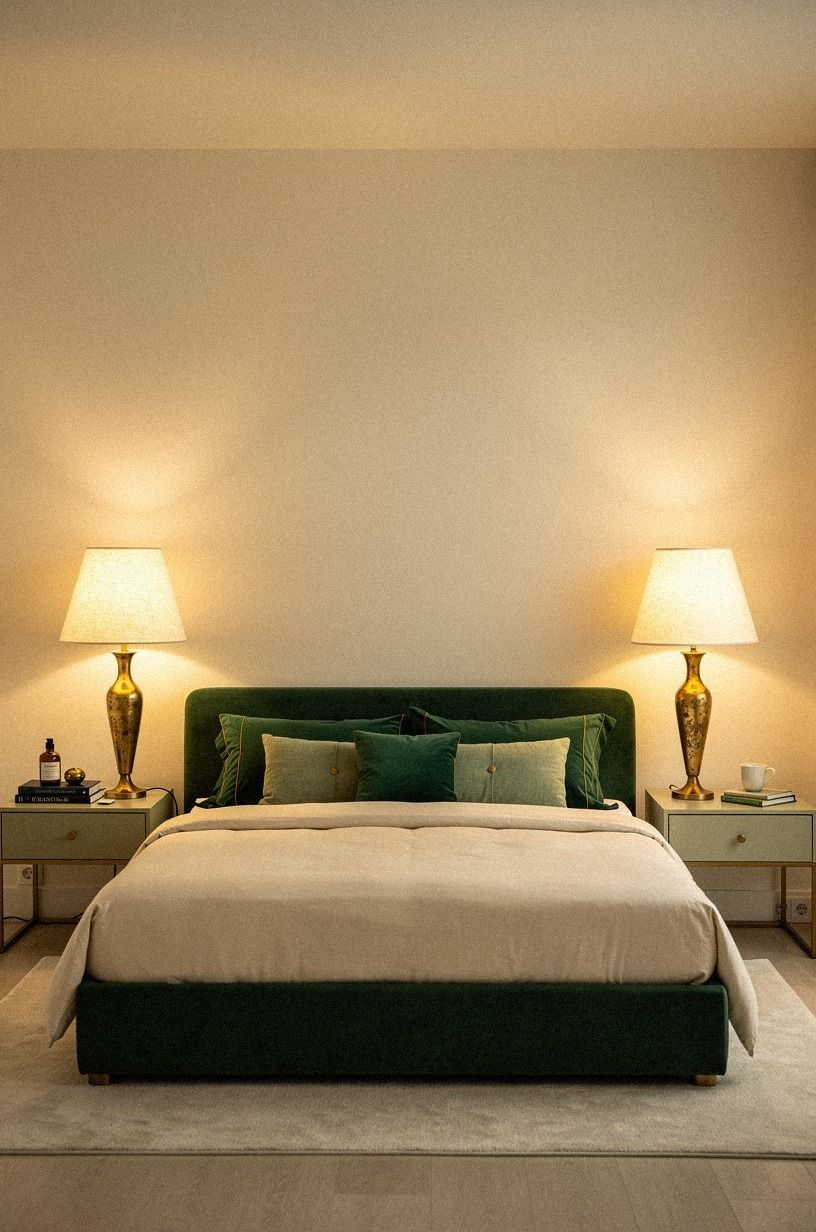
A bedside lamp with an amber shade can make the final part of the evening feel softer. Use emerald, gold, and cream around the bed, then bring in unlacquered brass developing soft patina for a warm material note. You’ll want the lamp positioned low enough that the bulb isn’t visible from the pillow.
Choose a shaded fixture rather than a bare decorative bulb. Bare bulbs can create sharp glare across the ceiling, especially in a small room.
An amber glass lamp or fabric shade may feel more relaxing, while a dimmer gives you control when reading. Don’t rely on a phone’s night setting as the entire plan, because notifications still pull attention.
The most effective arrangement has one bedside lamp, one softer source across the room, and no bright ceiling light after the final meal. That creates three points of glow without turning the bedroom into a showroom. For broader routine ideas, browse these daily mindset shifts for weight-related habits.
6Display a visible bedtime routine on the wall
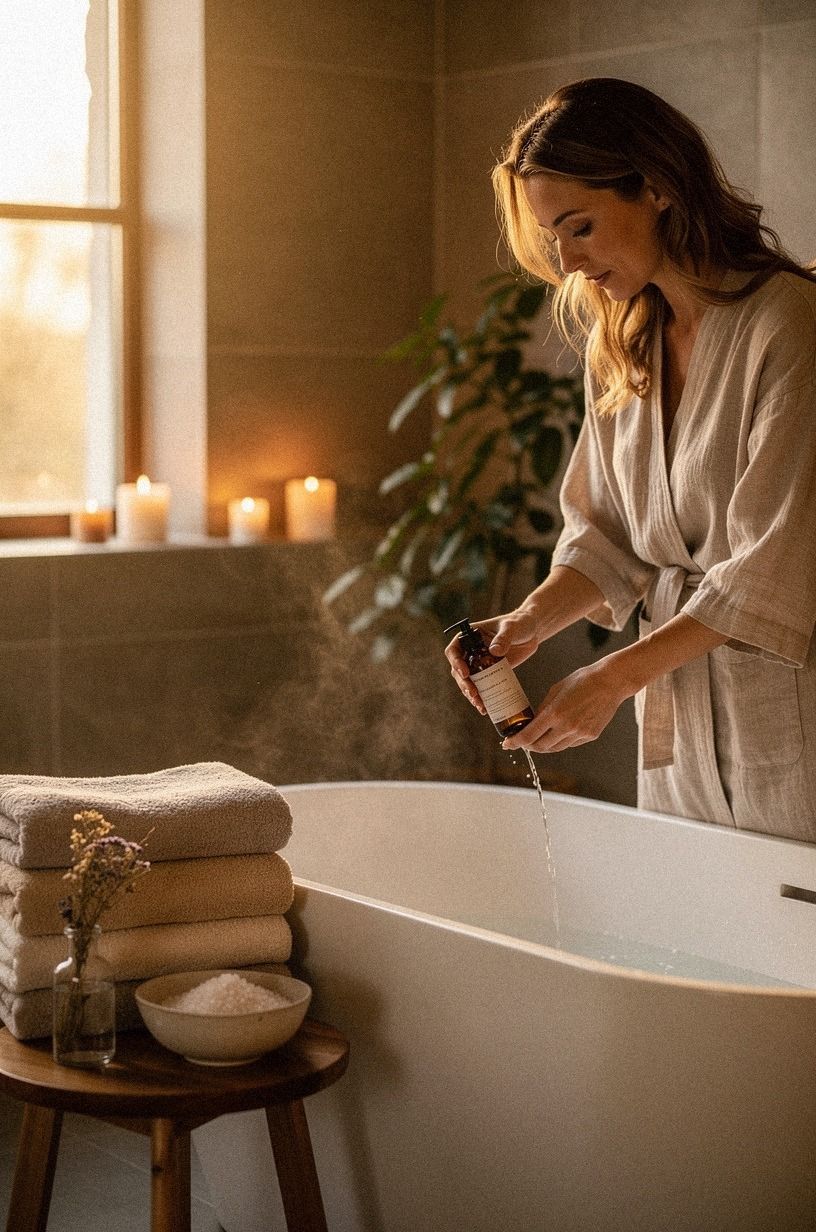
A visible sequence can remove several small decisions from the end of the day. Hang a simple board near the bedroom door with four short cues, such as wash, stretch, read, and lights low. Use forest green, rust, and natural oak so the piece feels like part of the room instead of a clinical checklist.
An oversized chip-terrazzo frame can hold a printed card, while small brass clips keep the language changeable. You’ll want the board at eye level, not hidden behind a door. If the center of nearby artwork sits around 57 to 60 inches from the floor, the whole arrangement will feel balanced.
The board should show actions that can happen in under a few minutes each. Avoid a long routine that turns bedtime into another project. A visible cue can be surprisingly powerful when fatigue makes planning harder.
7Create a phone-free charging station outside the bedroom
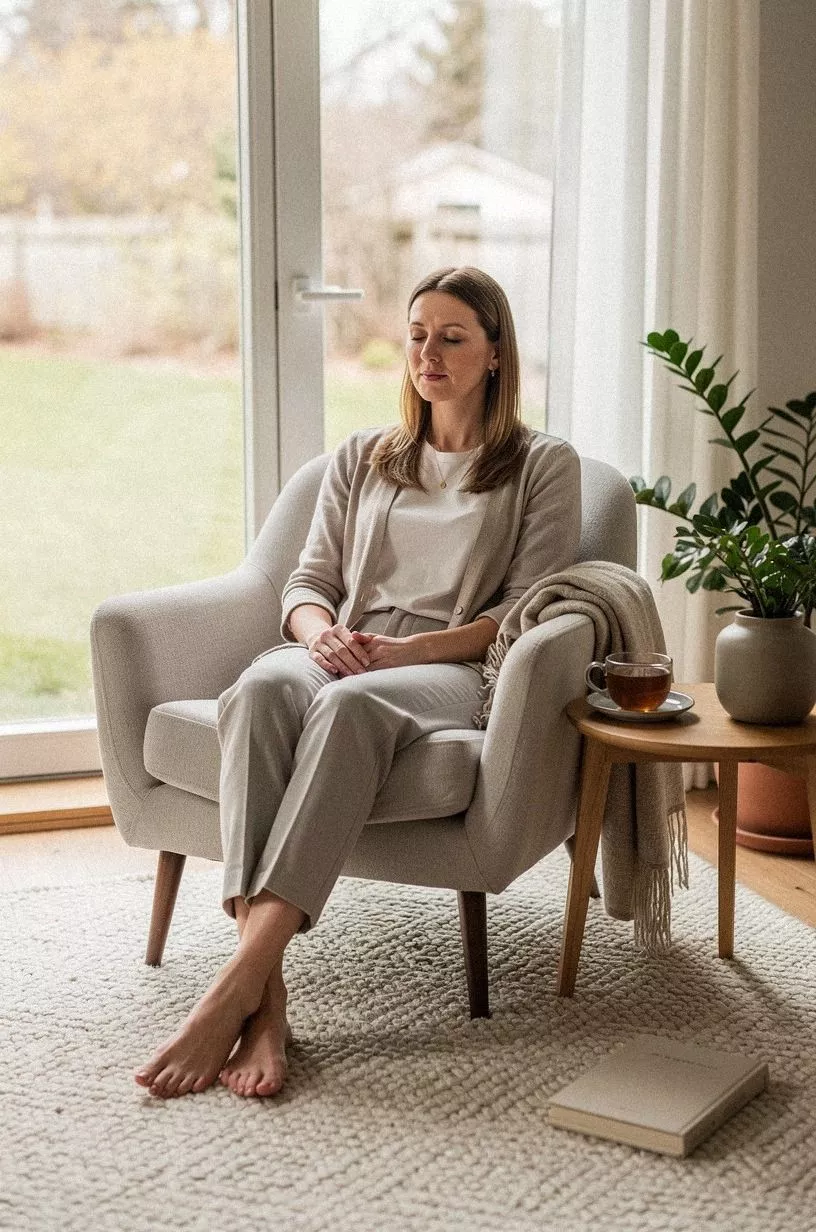
Moving the phone away from the bed creates a physical boundary between rest and constant checking.
8Layer breathable bedding for cooler overnight sleep
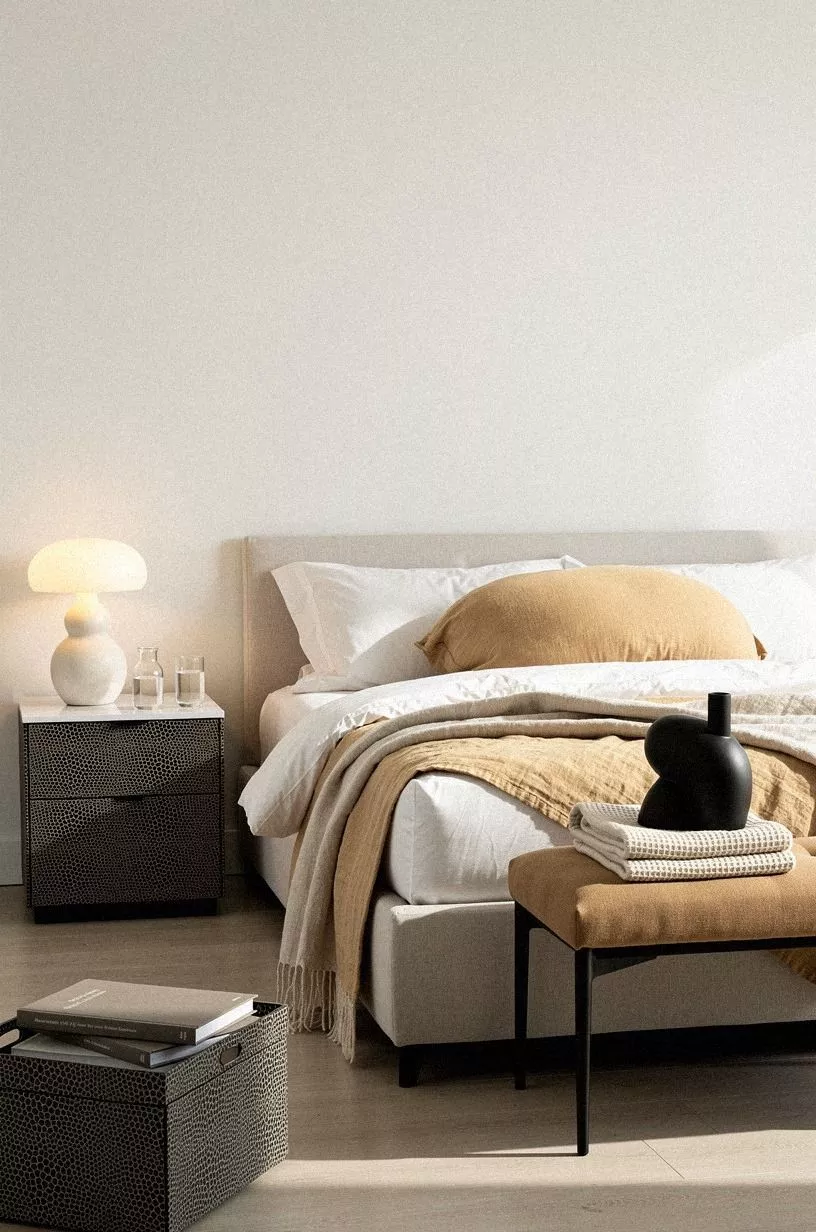
Overheating can make a bedroom feel restless, so build the bed with breathable layers rather than one heavy blanket. Use warm white sheets, camel accents, black trim, and shagreen accents through a small bedside box or bench detail. You’ll want enough texture to feel inviting without trapping unnecessary heat.
A lightweight coverlet can sit beneath a looser blanket that folds at the foot of the bed. Linen, cotton, and light wool each behave differently, so choose according to the room and personal comfort. Don’t pile several dense synthetic throws over the mattress, because the bed can become visually and physically heavy.
Benjamin Moore White Dove on the walls will keep the palette soft, while a camel lumbar cushion adds warmth. A black timber stool gives the room definition without adding bulk.
The best bedding arrangement is the one you can adjust quickly when the room changes temperature. Gentle flexibility beats a dramatic layered display.
9Arrange gentle stretching space beside the sofa
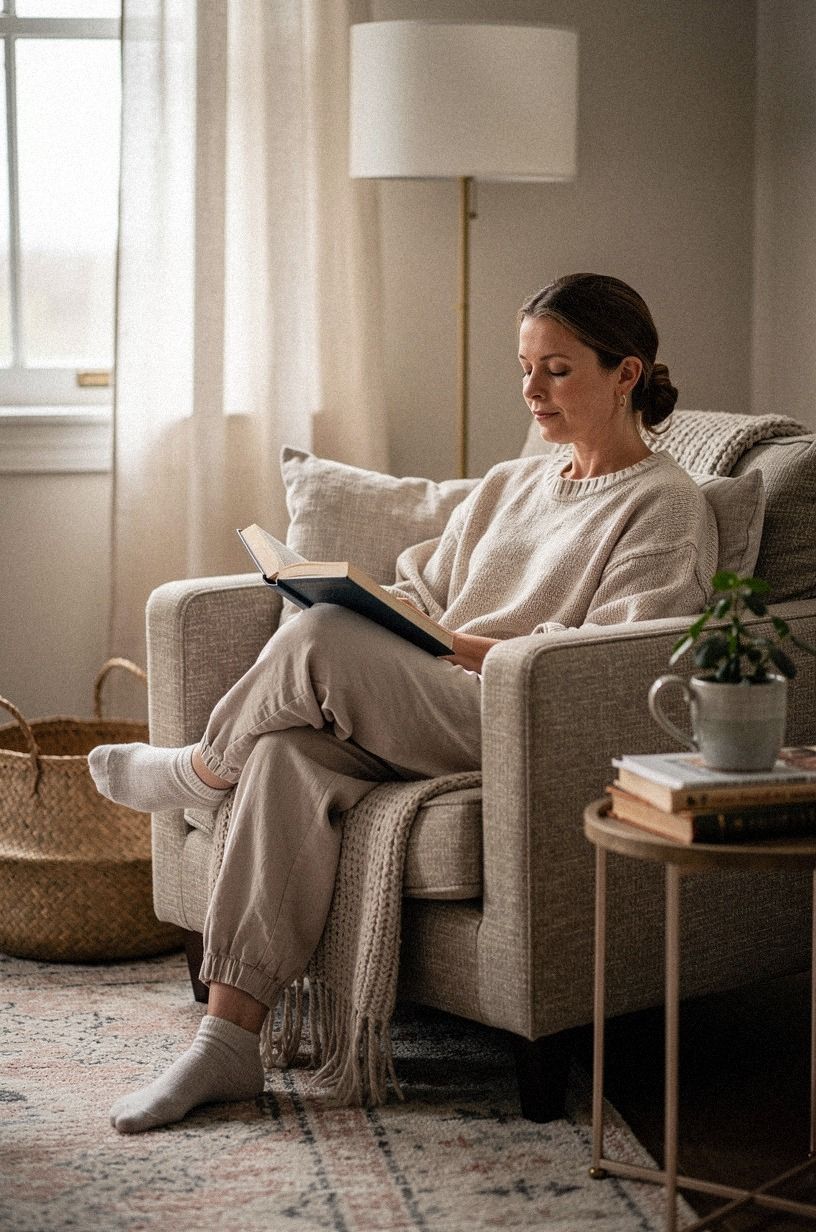
A small floor zone can make evening movement more approachable.
10Use blackout curtains for deeper nighttime rest

Blackout curtains can reduce visual interruptions from streetlights, early summer sun, or passing headlights. Choose sage green fabric with warm cream lining and an organic bouclé bench cushion or nearby accent for a softer bedroom palette. You’ll want the rod installed 4 to 6 inches above the window frame and the panels dropping to the floor.
A lined curtain will usually look fuller than a thin panel, especially when the fabric reaches beyond the window width. Don’t stop the hem at the sill if the goal is a restful, finished appearance. Floor-length panels create a cleaner vertical line and block more stray light around the edges.
Sherwin-Williams Agreeable Gray SW 7029 can support the sage and cream palette without competing with it. The room should still have a gentle morning transition, so open the curtains when daylight arrives.
You won’t need to keep the bedroom sealed all day. Darkness at night and natural light in the morning work best as a pair.
11Place walking shoes beside the entryway bench

A pair of walking shoes beside the door turns movement into a visible option. Use a terracotta runner, pale stone wall, olive accents, and a Nero Marquina black marble catchall to make the entry feel intentional. You’ll want the shoes positioned neatly, with a small bench nearby for easy access.
Keep only the pair most likely to be worn. Several pairs create visual noise and make the choice less direct.
A woven basket can hold socks, while a stoneware bowl catches keys. Don’t place the shoes behind a closed cabinet if the routine depends on remembering them.
The bench doesn’t need to be expensive. A secondhand wood seat, cleaned and sealed, can provide enough structure.
If you’re working with a narrow entry, a wall hook and slim stool may be all that fits. The arrangement should remove friction, not create another area to maintain.
12Set a consistent breakfast tray each morning
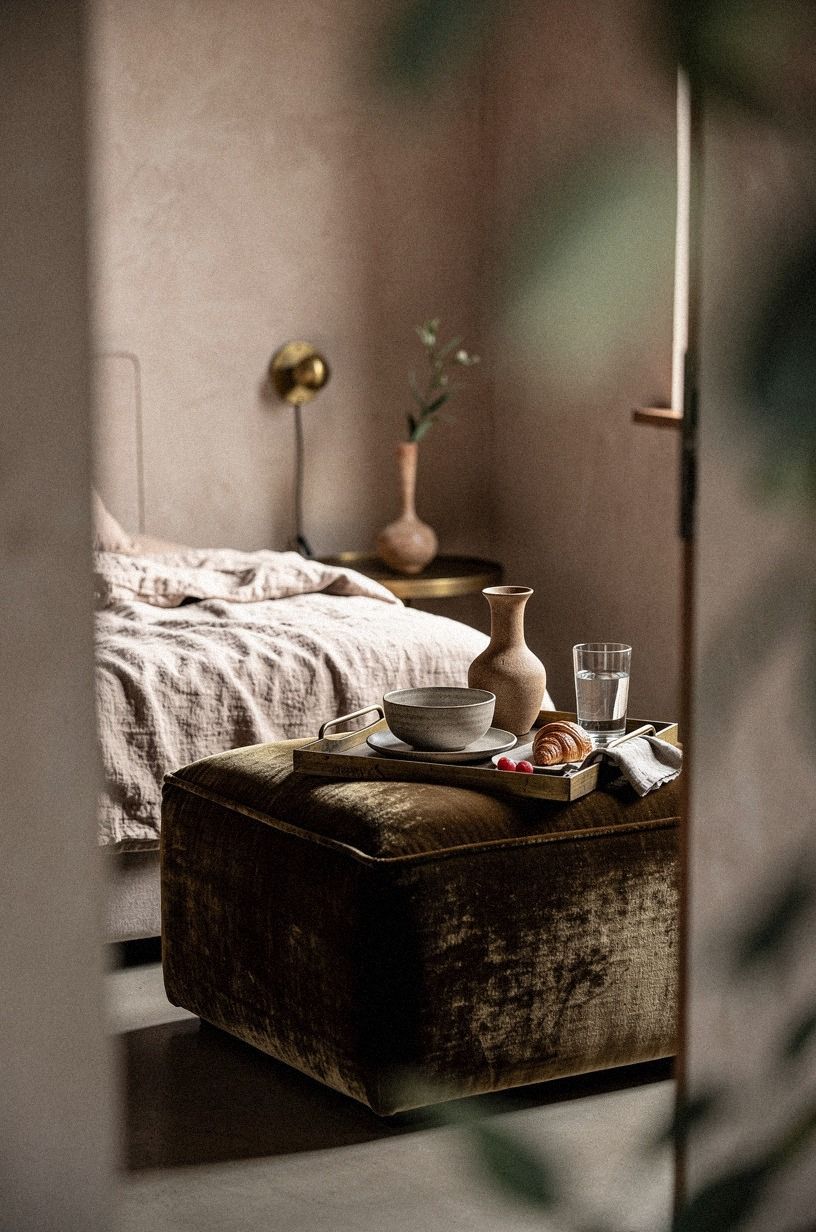
A breakfast tray can keep the first meal visible and orderly without turning food into a rigid rule. Use clay ceramics, linen napkins, aged brass, and deep-pile mohair velvet on a nearby chair for texture. You’ll want the tray to hold only the items used regularly, such as a mug, water glass, and bowl.
The tray can stay on an open shelf or counter corner, but it shouldn’t crowd food preparation. A simple setup makes it easier to notice whether the morning has become rushed.
Don’t attach body promises to one meal or one ingredient. A consistent routine may support steadier days, while individual needs vary.
Typical room upgrades can range widely, so use the following figures as planning markers rather than promises. The table includes common US reference ranges supplied for this editorial theme.
13Keep water visible on an open kitchen shelf

Water is easier to remember when the glass or bottle is visible. Style an open shelf with plum ceramics, grey stoneware, rose gold details, and Carrara marble with subtle grey veining. You’ll want one attractive glass or bottle within reach, not a crowded display that disappears into clutter.
A clear carafe can sit beside a small tumbler, while a shallow tray protects the shelf from drips. Don’t make hydration a competitive target. Thirst, climate, activity, and medical needs differ, so a clinician’s advice should guide any specific amount.
The shelf should support a natural pause before coffee, errands, or screen time. A plum bowl for citrus can add color without adding much work.
For more routine-related reading, explore this daily movement story. The strongest design keeps the useful item easy to reach.
14Build a quiet breathing corner with floor cushions
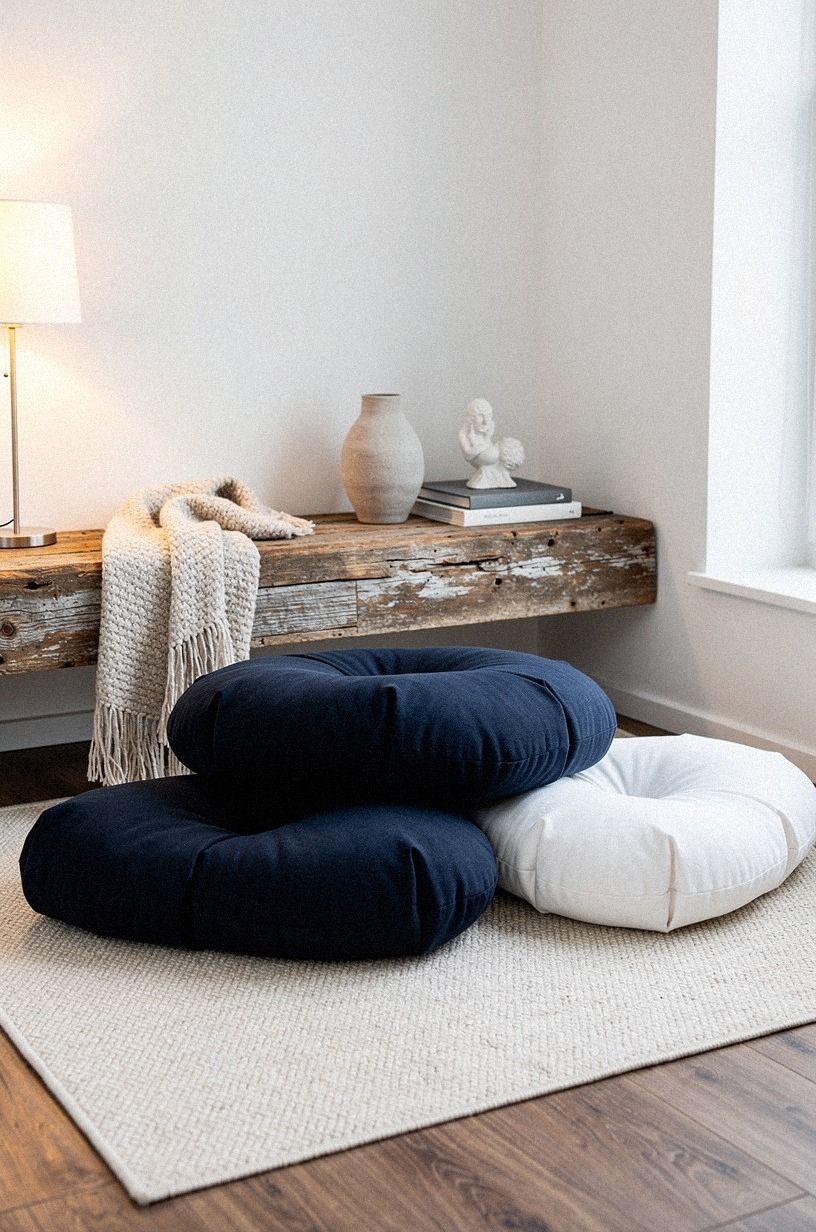
A breathing corner needs very little space. Place two floor cushions beside a low table, then use navy, white, walnut, and reclaimed weathered teak to create a grounded palette. You’ll want the cushions near a wall or sofa edge, where the body feels supported rather than exposed.
A folded cotton blanket can add softness, while a small lamp keeps the corner usable after sunset. Gentle breathing may feel calming for some people, but it should never be forced through discomfort. If breathlessness or dizziness appears, stop and seek appropriate medical guidance.
Avoid filling the corner with motivational signs and too many objects. One framed print, one cushion, and one warm light are enough.
The space should remain available for ordinary sitting, reading, or quiet conversation. A flexible corner is easier to keep than a single-purpose display.
15Hang a weekly movement calendar near the mirror
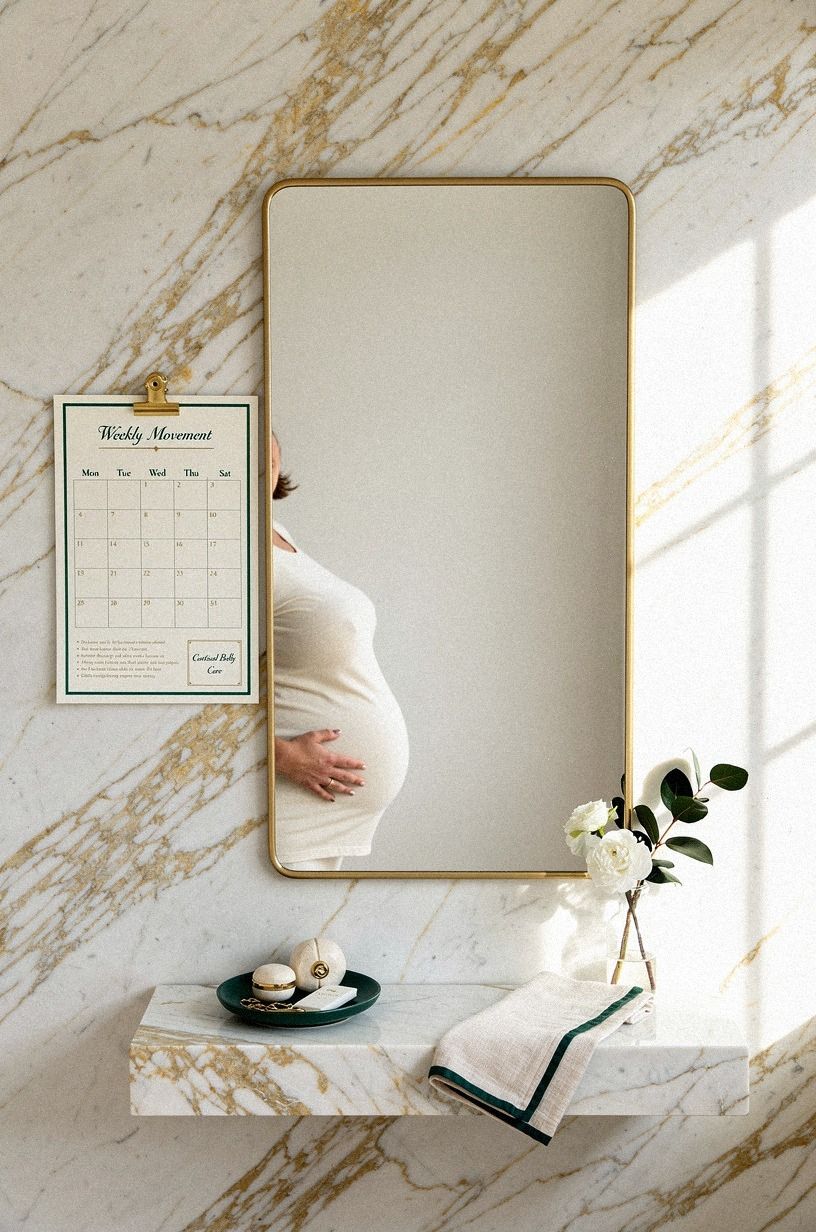
A weekly calendar can help you see movement as part of ordinary life rather than a separate project. Hang it near a mirror with emerald, gold, and cream accents, then frame it with Calacatta marble with gold veining for a refined but approachable look.
Keep the calendar broad. A walk, stretch, garden task, or gentle household activity can count as movement. You’ll want enough room to write short notes, not a rigid schedule that creates guilt.
If the calendar becomes another source of pressure, simplify it to three visible options.
Hang the center of the calendar around 57 to 60 inches from the floor so it’s easy to read. A slim gold frame can work with a rental-friendly removable strip. For another daily routine reference, browse these habit changes around daily routines.
The best calendar is the one you’ll keep seeing.
16Swap harsh bathroom lighting for warm sconces
Bathroom lighting can shape the first and last minutes of the day. Replace a single harsh overhead source with warm sconces beside the mirror, using forest green, rust, natural oak, and cerused white oak. You’ll want the light to reach the face from both sides rather than cast one strong shadow from above.
A dimmable fixture gives you more control during a late-night bathroom visit. Choose a shade that softens the bulb, and keep reflective surfaces from bouncing glare across the room. Don’t install electrical fixtures without qualified help when wiring is involved.
Rental-friendly plug-in options can work when hardwiring isn’t possible.
The wider room should have three sources when practical: overhead, task, and ambient. That combination feels more balanced than one bright fixture.
A small oak stool and rust-colored hand towel can connect the lighting change to the rest of the home. The room doesn’t need a spa makeover to feel less abrupt.
17Position a clock away from direct bedside view
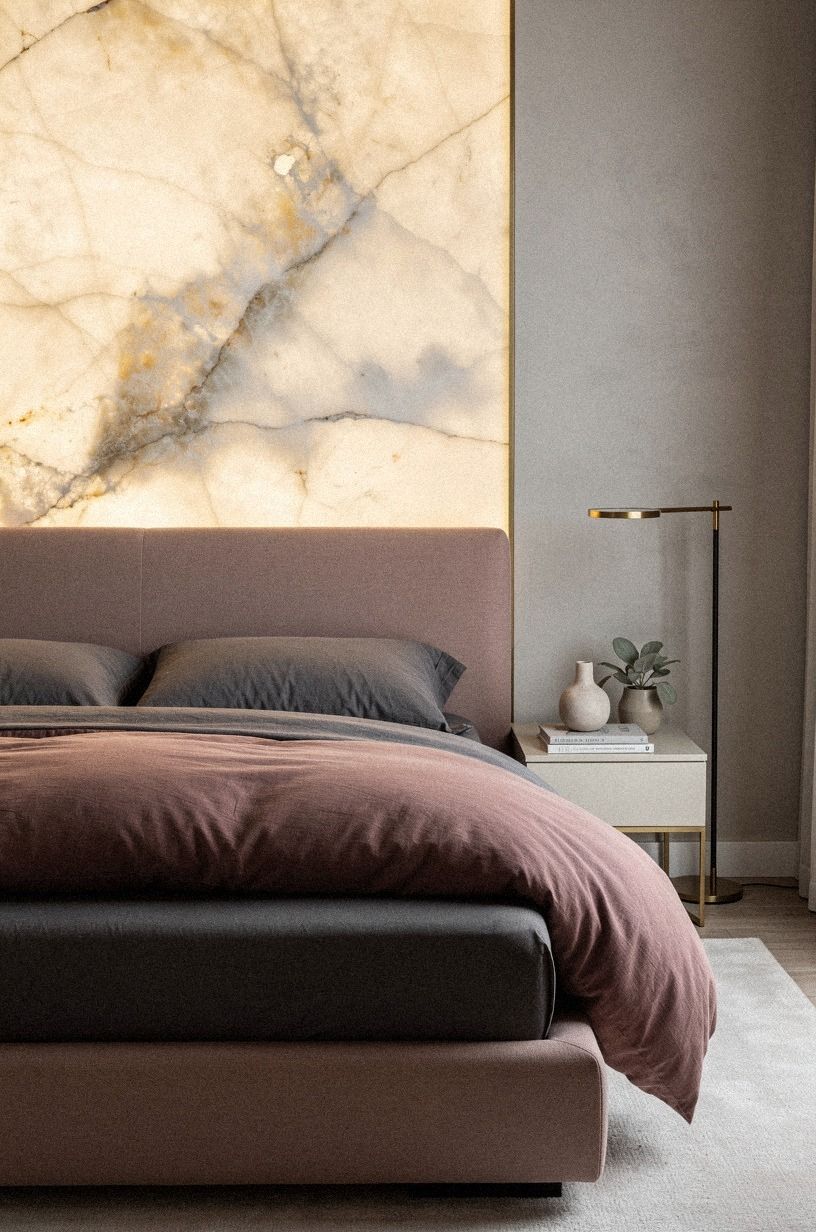
A bedside clock doesn’t need to face the pillow. Place it on a dresser or side table across the room, framed by dusty rose, charcoal, brass, and backlit translucent onyx. You’ll still be able to check the time when needed, but the display won’t become the first thing seen during every wake-up.
Choose a clock with a dim display or cover the numbers during the night. Don’t use a phone as the only clock if checking messages tends to follow. A small analog face can add a quieter visual detail, especially in a room with charcoal textiles.
The distance creates a pause before reaching for anything. That pause may help the night feel less interrupted, though no clock arrangement can solve every sleep concern.
If the clock itself creates worry, remove it from the room for a few nights. The right solution should feel lighter, not more controlled.
18Prepare tomorrow’s outfit on a dedicated valet hook
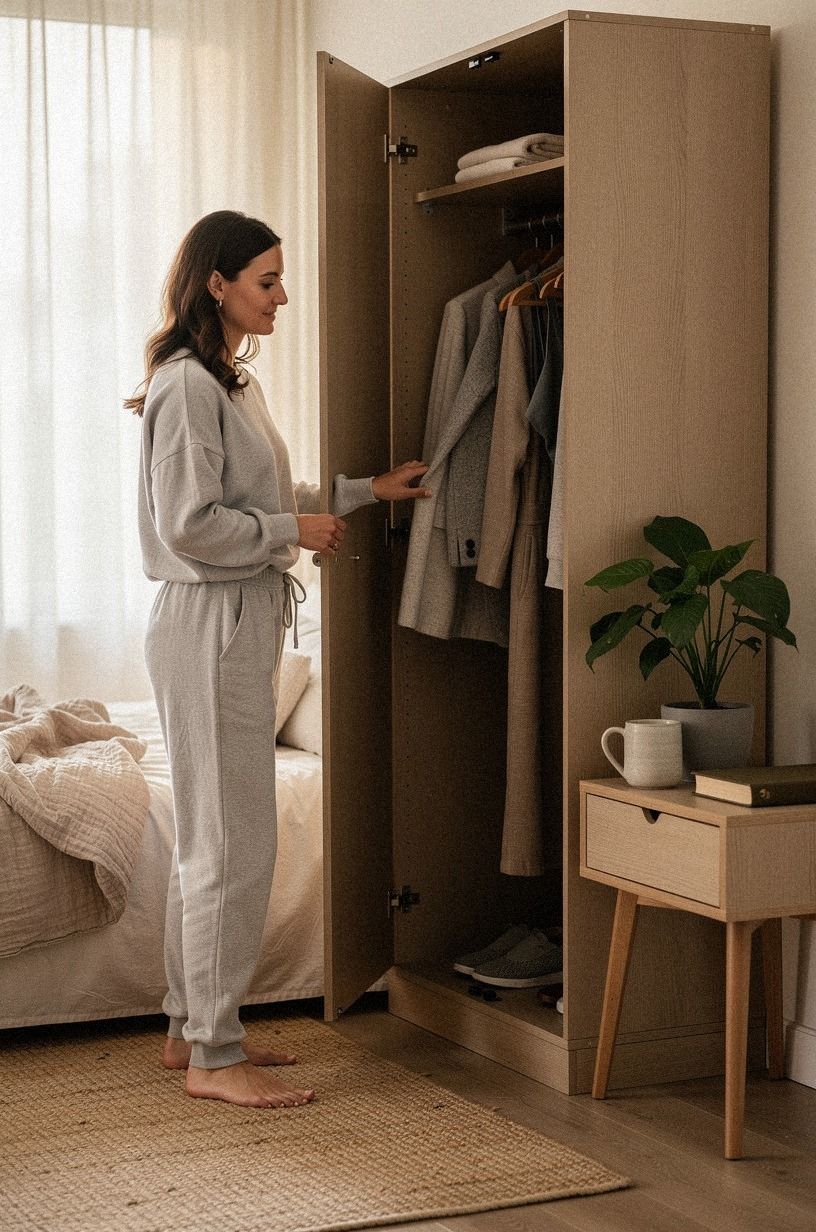
A dedicated hook can reduce late-night decisions and keep the bedroom visually calm. Hang tomorrow’s outfit against warm white walls, camel textiles, black accents, and book-matched walnut. You’ll want the hook close enough to use but far enough from the bed that clothing doesn’t create clutter beside the pillow.
One hook can hold a shirt, trousers, and lightweight layer. A small basket below can hold shoes or accessories, while a slim walnut ledge keeps jewelry contained.
Don’t prepare a complicated outfit system that requires several steps. The routine should take less than a few minutes.
Benjamin Moore White Dove OC-17 pairs well with camel and walnut, while a black metal hook keeps the setup from feeling too pale. A prepared outfit can make the morning feel more spacious, especially when the first decision is already handled. The room stays tidy because the action has a home.
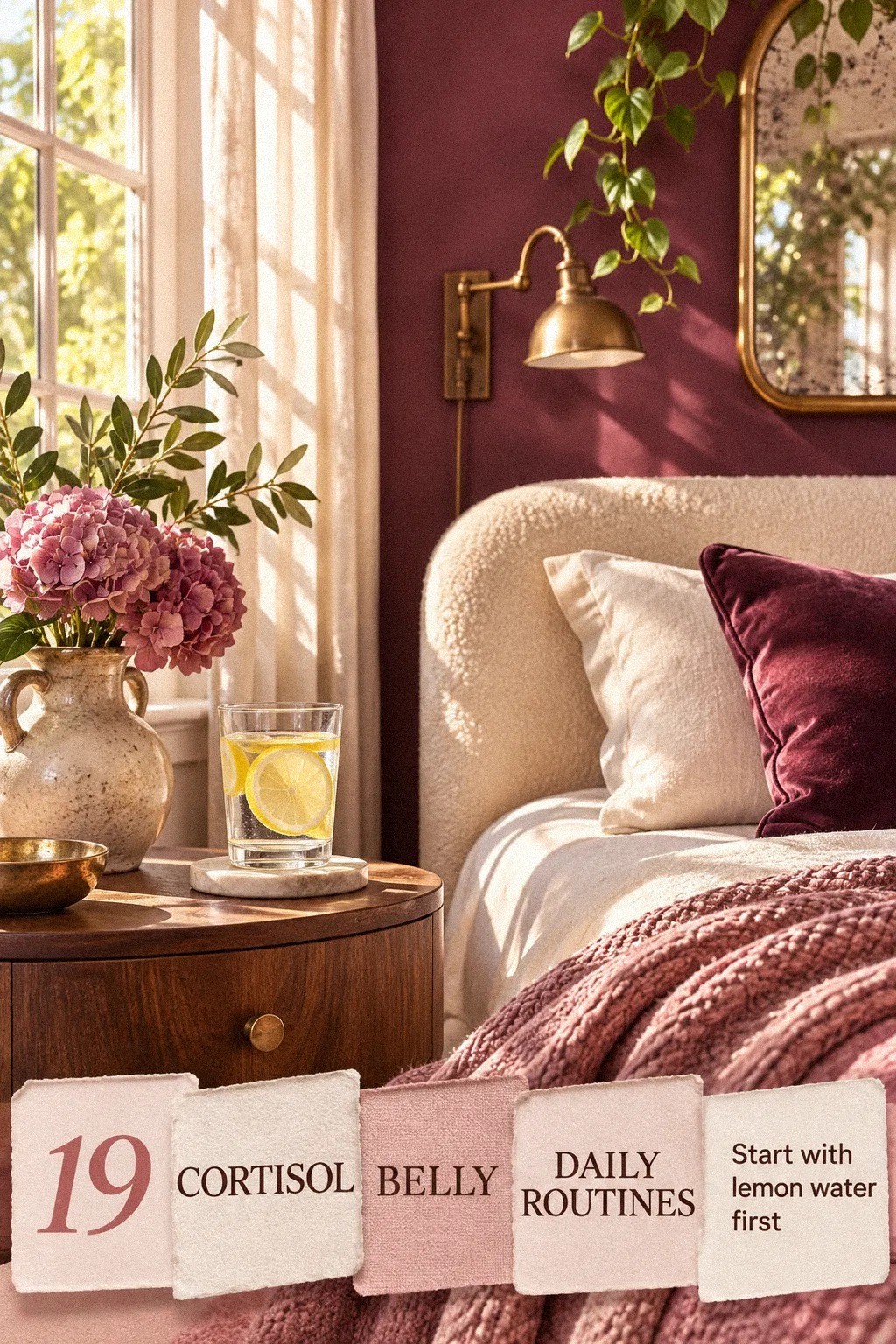
19Frame restful reminders above the nightly wind-down chair

A wind-down chair becomes more inviting when the wall above it carries a short, useful reminder. Frame a simple phrase or evening sequence in midnight blue, copper, and ivory, then add warm travertine on a nearby side table. You’ll want the message to be readable without turning the wall into a motivational gallery.
Keep art centered around 57 to 60 inches from the floor, depending on the chair height. One framed print, one shaded lamp, and a folded blanket are enough.
Don’t use language that promises a body outcome. Choose reminders such as “slow the room,” “water first,” or “lights low.”
A copper frame can echo the lamp base, while ivory paper keeps the corner soft. The chair should remain comfortable for ordinary reading, not just a scheduled ritual. The strongest reminder is one that blends into the room and still works when the day has gone differently than planned.
Why These Routine Changes Deserve a Place in the Room
A cortisol belly is often discussed as if one food, supplement, or workout could explain every change around the middle. Bodies are more complicated than that. Daily rhythm, stress, sleep quality, medication, hormones, digestion, and medical conditions can all matter.
A room cannot diagnose the cause, and a decorating routine doesn’t replace professional care.
The useful design question is simpler: what makes the next supportive action easier to notice? Morning light beside the window, shoes near the entry, water on an open shelf, and a phone charging away from the bed all answer that question.
They reduce the number of steps between intention and action. That’s practical design, not a promise.
The strongest changes also respect energy limits. A three-minute walk cue may be more realistic than a full exercise corner.
A single amber lamp may be more useful than a complete bedroom renovation. If a routine feels punishing, it probably needs fewer parts.
Visual invitations work better than rules that demand perfection.
There’s also a financial advantage. Paint, secondhand furniture, removable hooks, existing lamps, and rearranged textiles can change the rhythm of a room without a major purchase.
The goal is a warm, calming environment that supports ordinary choices. When the space makes those choices visible, consistency becomes less dependent on motivation.
The Questions Worth Answering First
What is the best cortisol belly routine for a small space?
The best small-space combination is morning sunlight near a window, a phone-free charging point, and walking shoes beside the entry. Visible cues take little floor area and don’t require major furniture. IKEA stools, narrow shelves, and removable hooks can support the setup without crowding the room.
Where can you buy routine-supporting pieces on a budget?
IKEA, Wayfair, and Target offer simple lamps, trays, hooks, and textiles at several price points. Facebook Marketplace and local thrift shops can provide benches, frames, and side tables. Secondhand wood furniture often adds more character than a matching new set, and no commission links are used here.
How much does a cortisol belly routine makeover cost?
A small refresh may cost about $100 to $300 when existing furniture is reused. Paint, lighting, textiles, and storage can move the project toward the $200-$800 budget tier. Free changes include opening curtains, moving the phone, placing shoes by the door, and clearing one calm corner.
Can you create this routine on a budget?
Yes, and the first steps can be free. Move one lamp, place water where it’s visible, and set walking shoes beside the entry.
A removable hook, thrifted tray, or secondhand frame can add structure for very little. Small repeated cues matter more than a complete room purchase.
Is a cortisol belly routine worth it in a small space?
Yes, because a small room can make cues easier to see. Keep the arrangement compact: one lamp, one basket, and one open surface.
Clear visual pathways reduce clutter and make the next action obvious. Choose a narrow shelf or wall hook instead of adding another piece of floor furniture.
Is this routine a good idea for a rental?
Yes. Use peel-and-stick hooks, tension rods, removable picture strips, plug-in sconces, and freestanding lamps.
No-damage adjustments can support light, movement, and evening cues without permanent changes. Check lease rules before installing hardware, and remove adhesive products according to their instructions.
Where to Start First
Start with morning sunlight beside the bedroom window. It costs nothing, changes the first visual cue of the day, and works with any palette. Pin this morning routine idea collection for later, then keep the setup simple enough to repeat tomorrow.