
Senior dog care can make nighttime calmer with a supportive bed, clear footing, gentle lighting, and an easy route to the door. Older joints often need better surroundings instead of extra commands. These practical changes keep the room warm, peaceful, and welcoming without making it feel clinical.
Start here: Clear the route first, then check the bed height, floor traction, water placement, and lighting. You’ll spot the most useful adjustment quickly.
- Place an orthopedic bed beside your bedside table (The Bedside Landing Zone)
- Raise the sleeping surface for easier standing (The Low-Lift Rule)
- Why Layer a Washable Rug Beneath the Bed? (The Soft Landing Grid)
- Three Heights for Night Lighting (The Light Stack)
- Create a Clear, Slip-Free Path to the Door (The Open Route Principle)
- The Gentle Corner Method for Aging Joints
- Warm the Bed with a Removable Fleece Layer (The Wash-and-Return Layer)
- Where Should Water Sit? (The One-Reach Rule)
- Anchor the Bed Away from Nighttime Drafts (The Warm Wall Strategy)
- Contrast Makes Bed Edges Readable (The Quiet Border)
- Build a Low Ramp Beside the Mattress (The Gentle Incline)
- A Camera for Quiet Overnight Checks (The Quiet Watch Point)
1Place an orthopedic bed beside your bedside table (The Bedside Landing Zone)
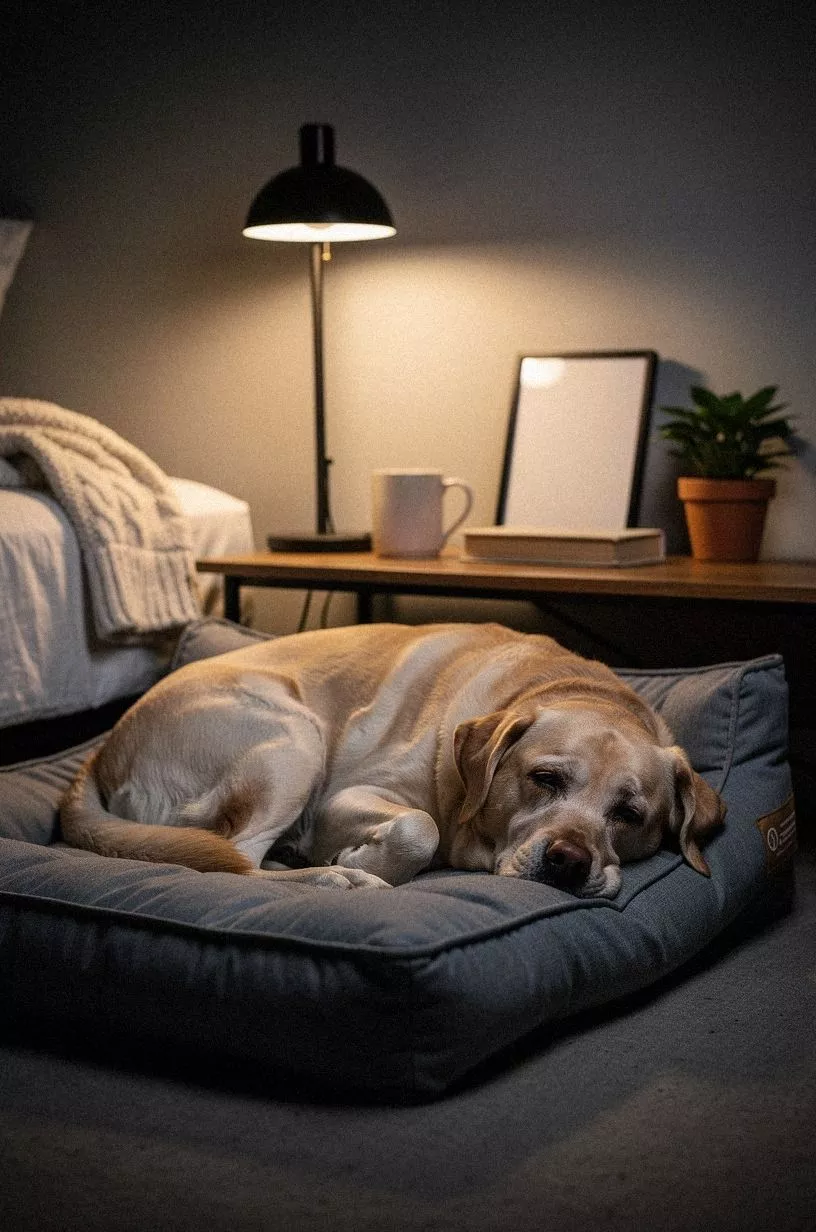
A supportive orthopedic dog bed belongs beside your bedside table when nighttime reassurance matters. Keep the entry low enough for your Lab to step onto without hopping, and leave generous floor space for a slow turn. You’ll want the bed close enough for your dog to hear you, but not so close that paws or bedding block the walkway.
A bedside table in cerused white oak can make the landing zone feel warm and grounded against terracotta, stone, and olive accents. Look for dense foam, a washable cover, and a non-slip base that won’t slide across the floor. A thin cotton sheet over the washable cover makes laundry easier, and you can remove it quickly after outdoor trips.
Don’t choose a tall-sided bed simply because it looks plush. A senior dog may find a deep wall difficult to cross when stiffness is strongest. The best setup feels inviting, soft, and stable.
A bed with a low opening may be worth the cost when standing and turning are daily challenges.
2Raise the sleeping surface for easier standing (The Low-Lift Rule)
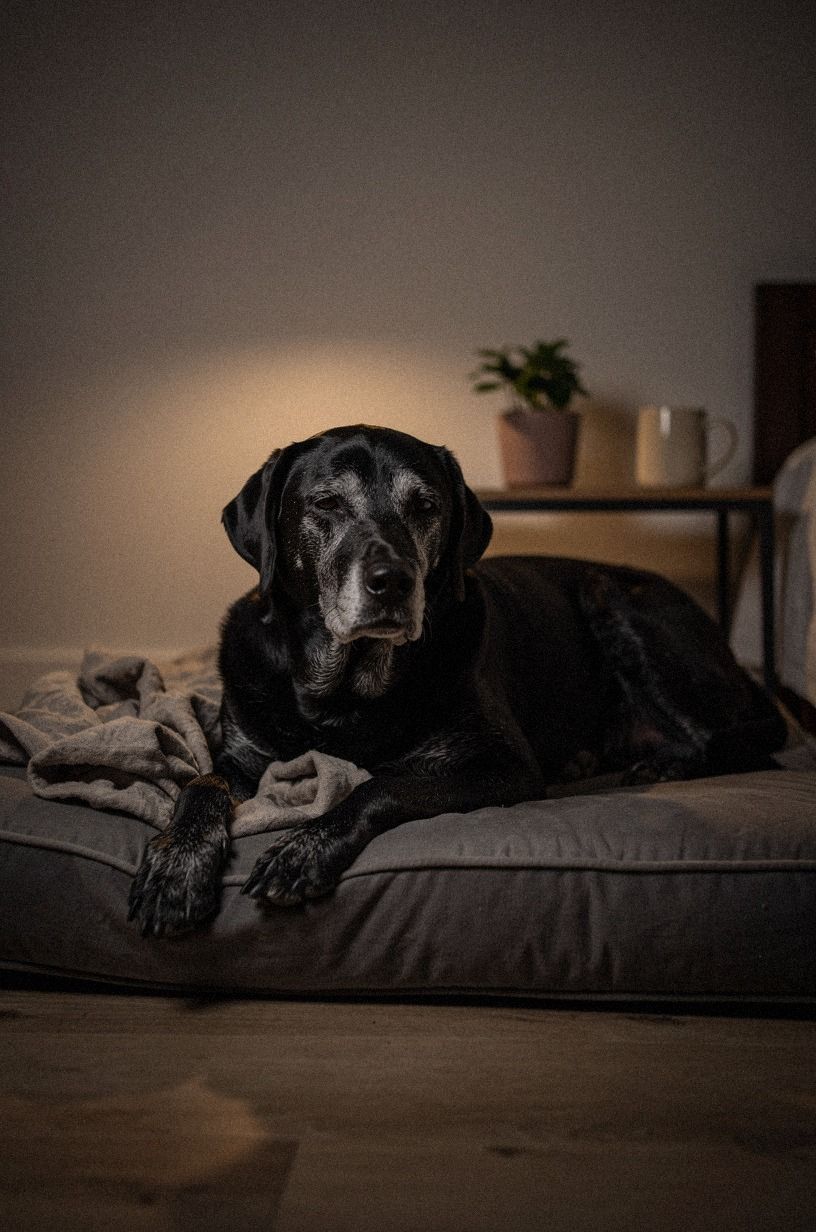
A slightly raised sleeping surface can help your dog stand without pressing directly from a cold floor, but the platform should stay low and exceptionally stable. You’ll want a solid base with no rocking, sharp corners, or loose legs.
The goal isn’t height for its own sake. It’s a predictable transition from lying down to standing.
A low solid platform beneath a firm bed can offer better value than a high frame that looks impressive but wobbles. Don’t stack loose cushions beneath the mattress, because they can shift during the first push upward.
A linen-blend cover keeps the surface breathable and soft against older skin. Clay fabric, aged brass, and a backlit translucent onyx accent can give the arrangement a warm, softly layered finish without making the sleeping area feel heavy.
If your dog hesitates, give the setup several quiet evenings before changing it again. Familiarity matters, and a stable arrangement can save money compared with replacing unsuitable beds.
3Why Layer a Washable Rug Beneath the Bed? (The Soft Landing Grid)
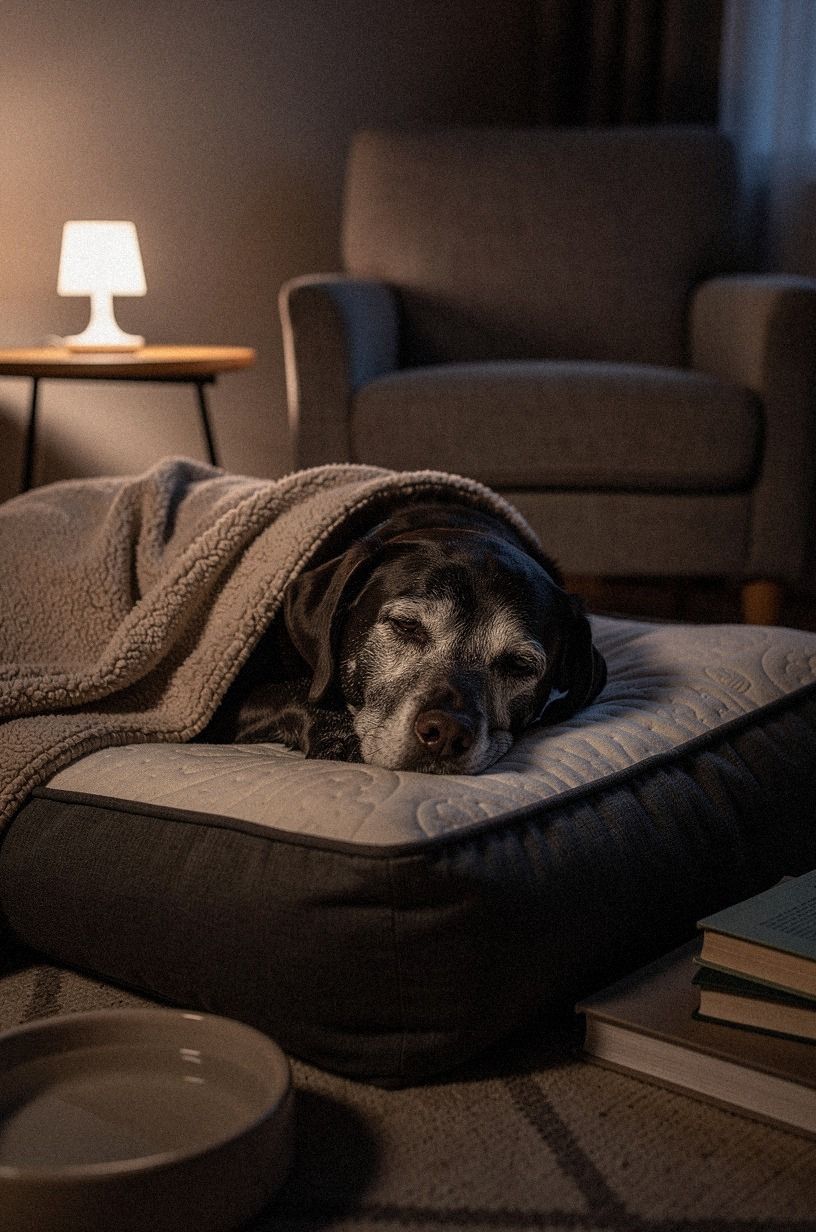
A washable rug beneath the bed creates a warmer landing zone and gives your dog more traction beside the mattress. Choose a low, dense pile that won’t catch claws or fold beneath a turning body. Your dog should be able to step off the bed and find a steady surface immediately.
The rug should extend beyond the bed on every side where movement happens. If the bed sits beside a wall, extend the rug toward the open path rather than wasting material behind furniture. A low-pile cotton rug is easier to lift, clean, and dry than a thick shag style.
You’ll want a non-slip pad beneath it, especially on polished wood or stone. Don’t use a loose corner as a visual accent.
That corner can become a nighttime hazard. A rug with a low purchase price may still have poor value if it curls or slides.
Muted plum works well with book-matched walnut, warm grey, and small rose-gold details, while Benjamin Moore Chestertown Buff can add a soft painted backdrop. Bright white shows every paw mark and may make the area feel clinical. The best choice balances traction, comfort, and a forgiving color.
4Three Heights for Night Lighting (The Light Stack)
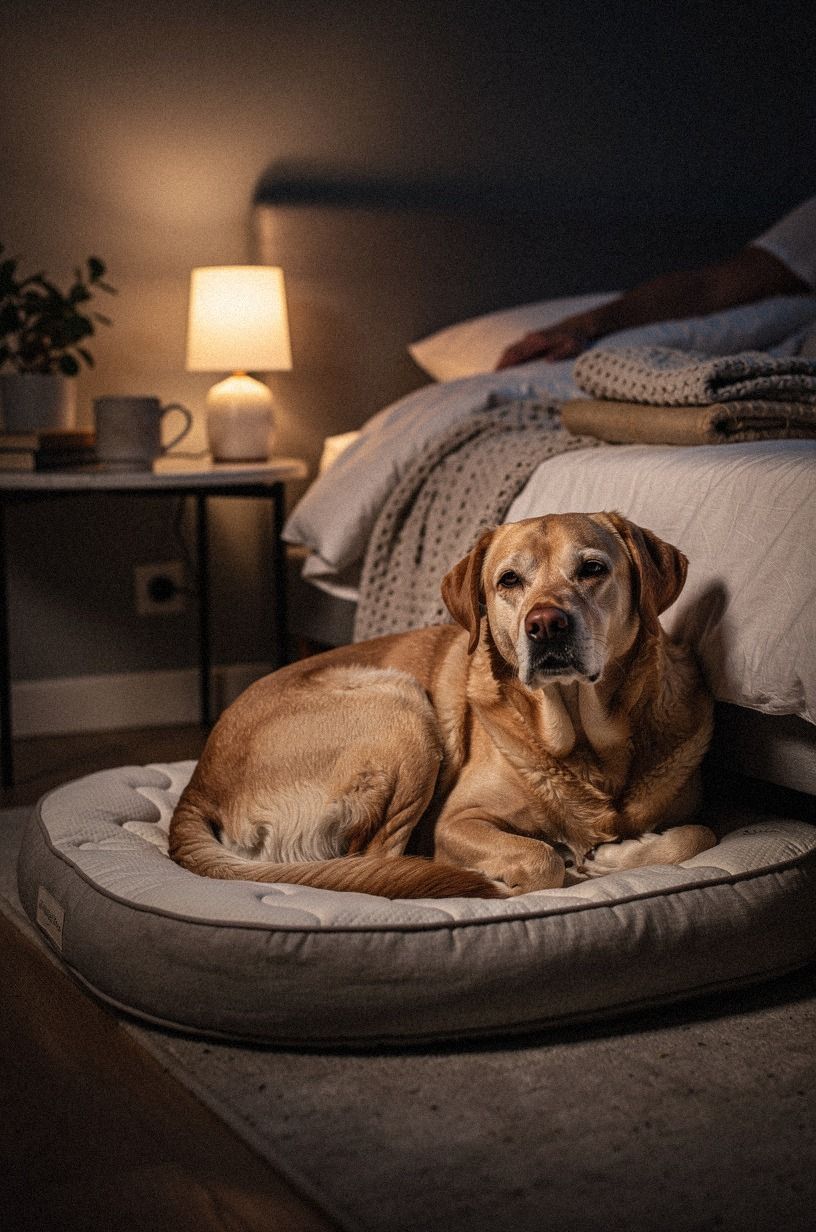
A low night-light helps define the route from bed to door without flooding the room with glare. You’ll want the light placed near the floor, not at eye level, so your dog can read the edge of the bed and the beginning of the walkway.
Use three lighting levels across the room: an overhead fixture for cleaning, a task lamp for human needs, and ambient light for nighttime movement. A dimmable warm LED bulb is a better choice than a blue-white bulb, which can feel harsh against warm travertine and walnut.
Don’t hide the light behind a basket or thick curtain. The glow should reach the first few steps clearly without shining directly into your dog’s face. A reasonably priced plug-in light can deliver strong value when the existing room has safe wiring.
The safest placement follows the floor line rather than creating isolated bright spots. If your dog startles easily, keep the brightness low enough that shadows remain soft. A calm room needs useful visual information, not dramatic glare.
5Create a Clear, Slip-Free Path to the Door (The Open Route Principle)
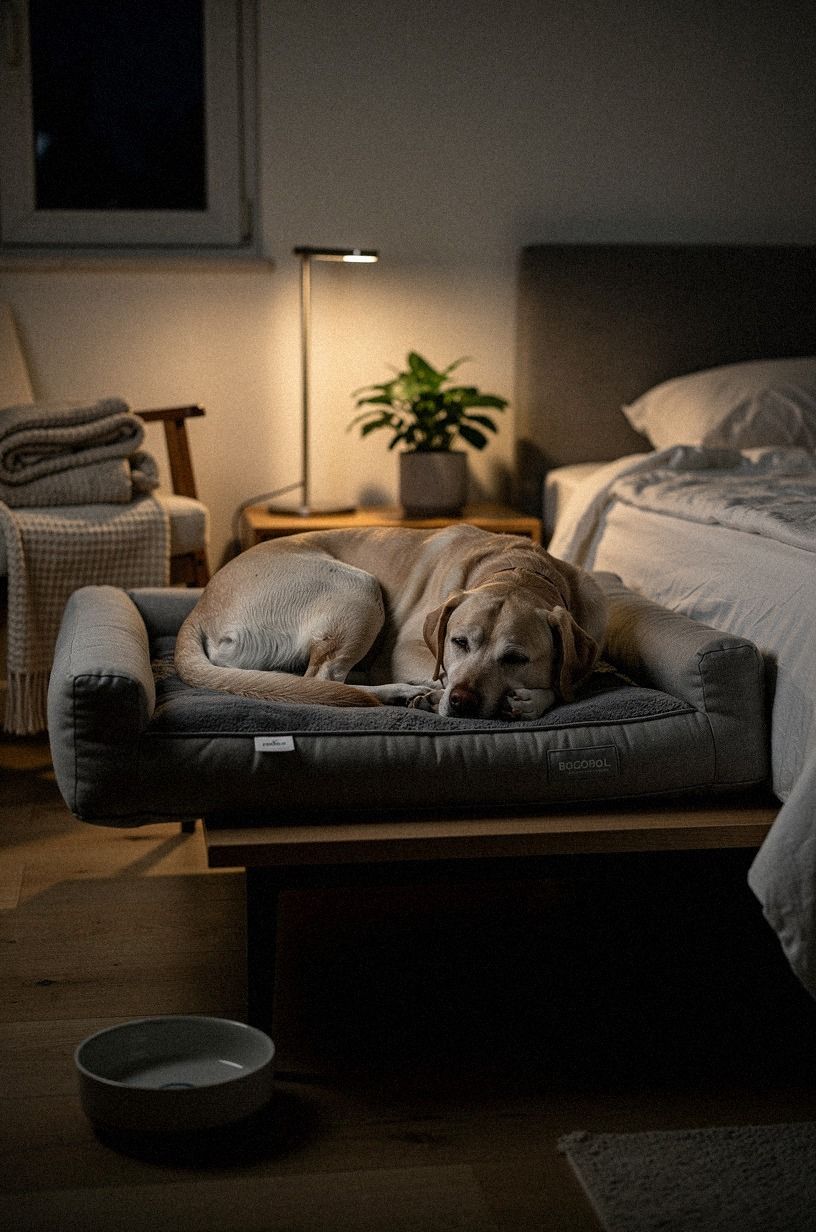
A clear route gives your dog fewer things to navigate during a sleepy, stiff, or uncertain walk. Remove baskets, shoes, low stools, and decorative objects from the direct line between bed and door. Your dog shouldn’t need to weave around furniture.
Use a runner only when it lies flat and stays fixed. A continuous flat-weave runner is better than several small mats that create gaps. An emerald runner with cream edging can add quiet contrast while keeping the route easy to read.
You’ll want the door area to remain open even when the room is styled for guests. Don’t place a water bowl directly beside the turning point, because spilled water can create the very slip risk the rug was meant to solve. A low-profile runner may be a smarter buy than several decorative mats.
Mark the path with quiet contrast instead: a cream weave on dark flooring, or a muted green border against pale stone. Unlacquered brass nearby can add a warm accent as it develops a natural patina. Avoid glossy finishes that reflect light and make the floor look wet.
6The Gentle Corner Method for Aging Joints
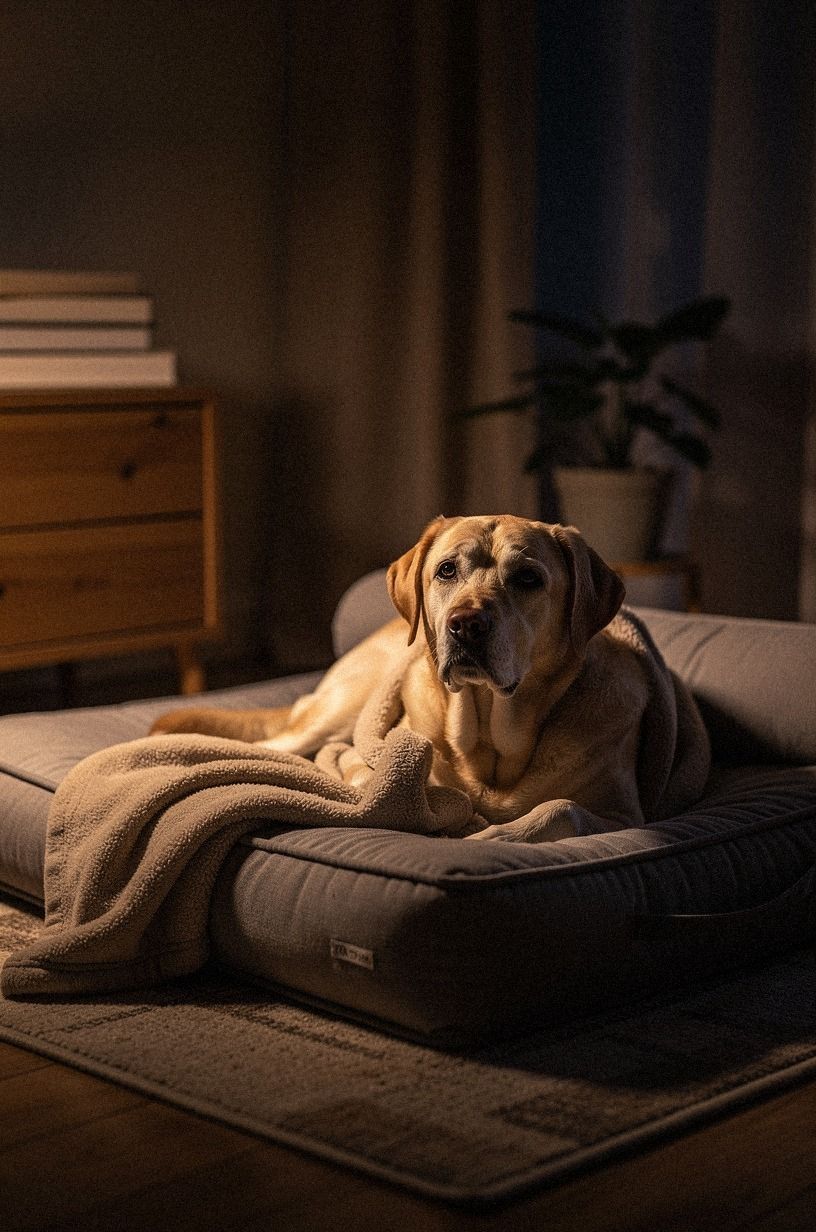
Bolsters can give older joints a soft boundary without forcing your dog into one position. Place one cotton chenille bolster along the back edge and another beside the open side, leaving a clear entrance. Your dog should be able to enter, turn, stretch, and leave without climbing over a wall.
Choose a cover that can come off for washing, and avoid loose ties that could tangle around paws. You’ll want enough support to create a nest-like edge, but not so much that the bed becomes narrow. A broad, obvious exit is essential.
Don’t surround the entire mattress with high cushions. A senior dog may need room to shift position or step away quickly. The best arrangement follows the body rather than a decorating rule.
A rust fabric against forest green adds warmth, while natural oak keeps the area from feeling padded and crowded. Oversized-chip terrazzo can add a durable textural note on a nearby table or ledge. If the bed feels too enclosed, remove one piece before buying another.
7Warm the Bed with a Removable Fleece Layer (The Wash-and-Return Layer)
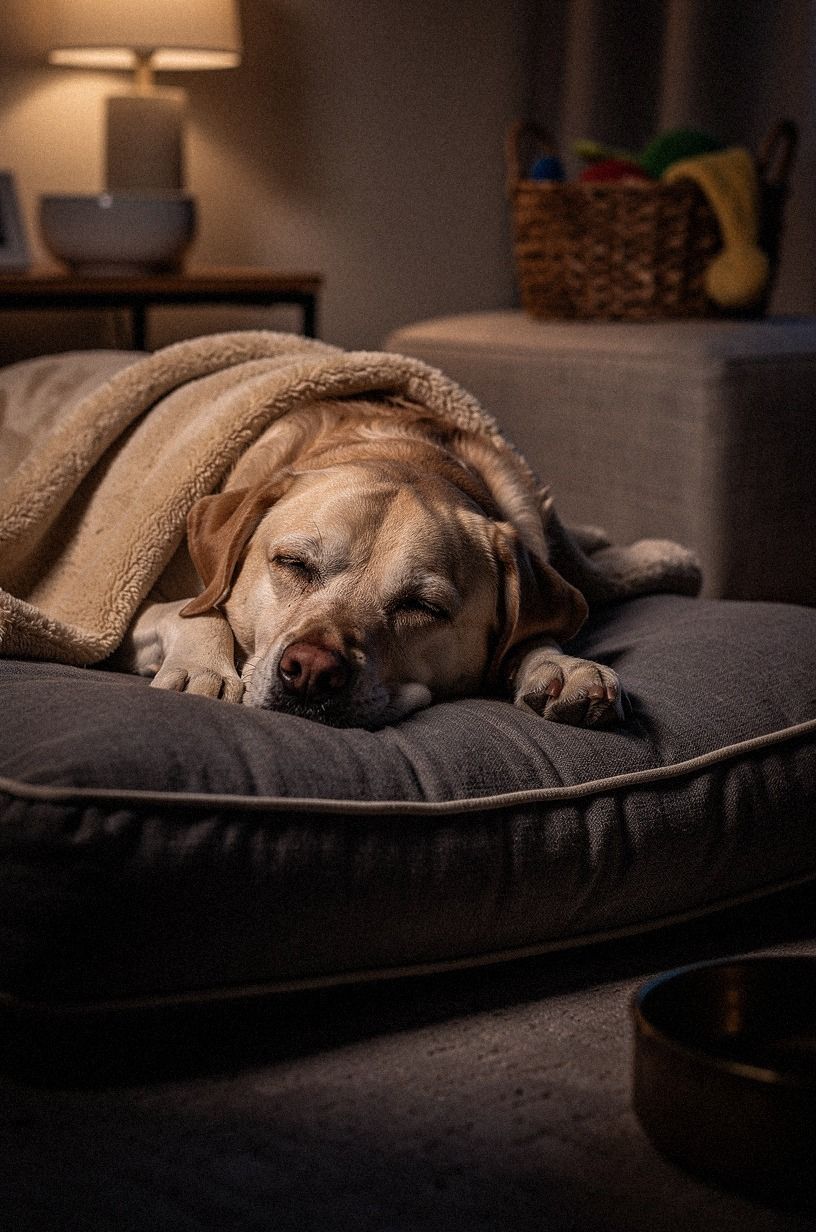
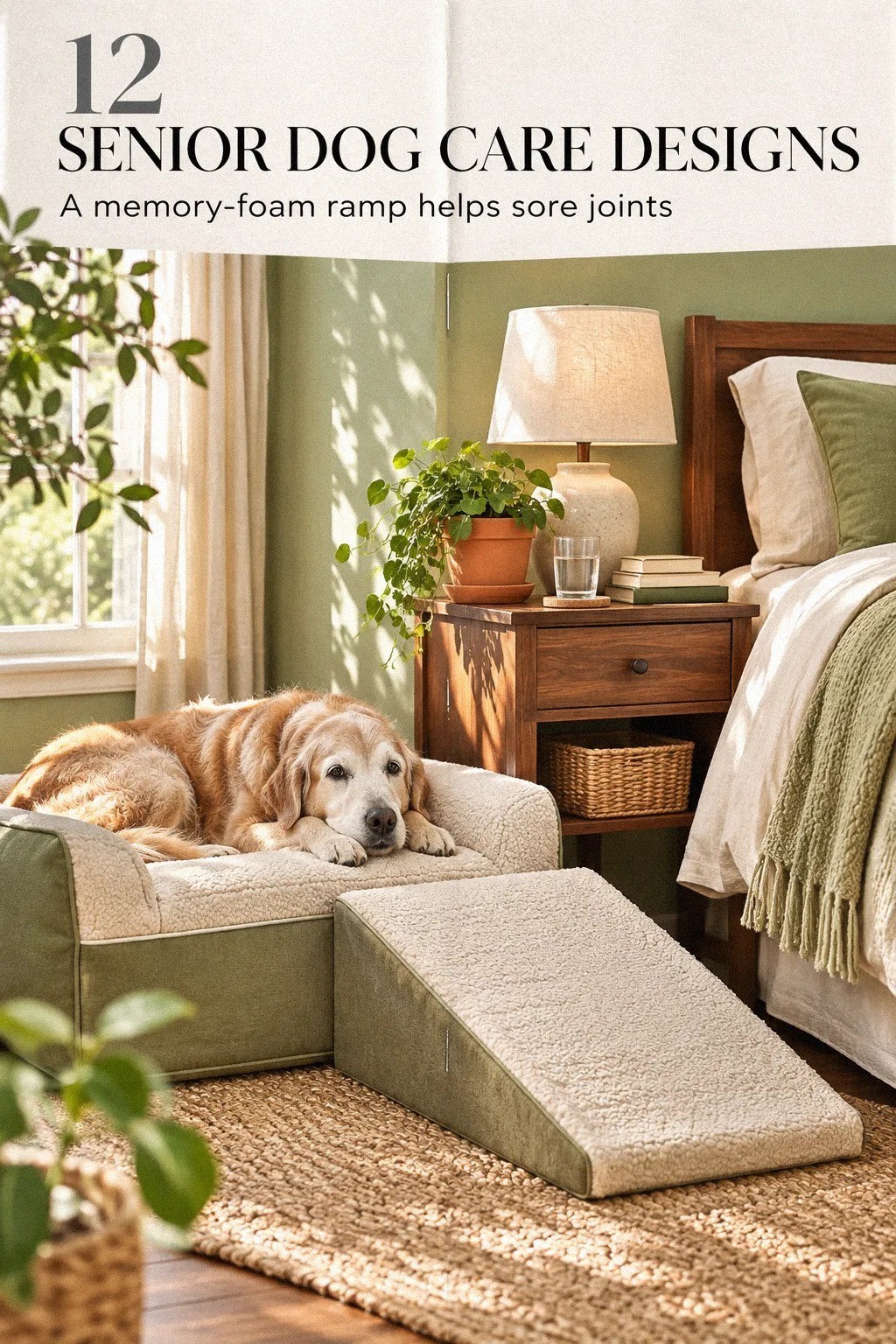
A removable fleece layer adds warmth without requiring a heavy replacement bed. Dusty rose fleece over charcoal upholstery creates gentle contrast, while brass details keep the corner from feeling flat.
Choose a machine-washable layer with a secure fit and a surface that stays smooth under your dog’s weight. Avoid thick folds near the entrance, where paws can catch during a nighttime step.
A hand-applied Venetian plaster wall can provide soft texture behind the bed without adding loose objects to the floor. Keep the fleece easy to remove, wash, dry, and return.
8Where Should Water Sit? (The One-Reach Rule)
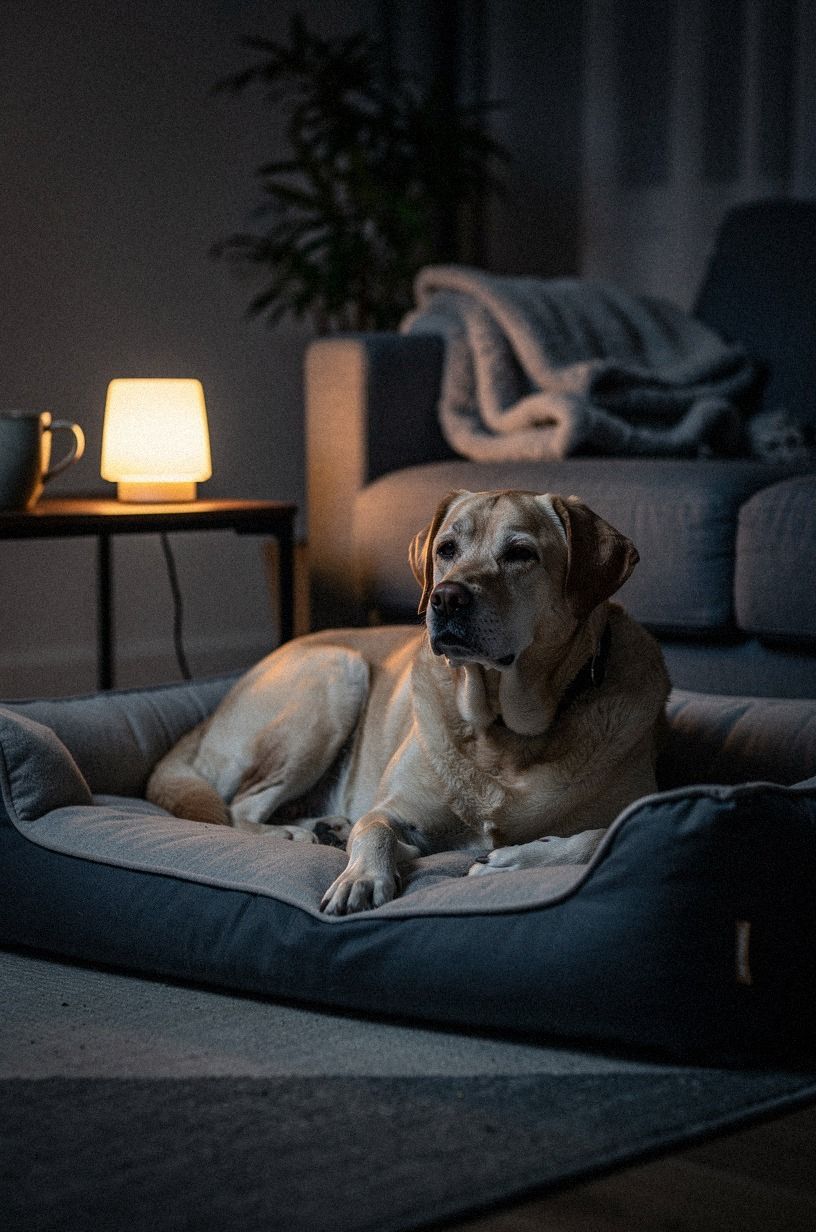
Water should sit close enough for your dog to reach without crossing the room, while remaining far enough from the bed to protect the sleeping surface. Your dog should be able to stand, drink, and turn away without bumping into a wall or table leg.
Choose a heavy black ceramic water bowl with a broad base. Stainless steel can also work when a cooler, simpler look suits the room. A small shagreen tray or accent can add texture nearby without taking space from the turning zone.
You’ll want the bowl on a washable mat with a low edge, not a raised pedestal that adds another step. Don’t place water directly on a rug with an absorbent backing, because trapped moisture can create odor and damage the floor.
A camel textile against warm white upholstery looks intentional and makes spills easier to spot. If the water area becomes crowded with toys, baskets, or storage, move those objects elsewhere before adjusting the bowl. Your dog needs a generous turning zone, not a crowded service station.
9Anchor the Bed Away from Nighttime Drafts (The Warm Wall Strategy)
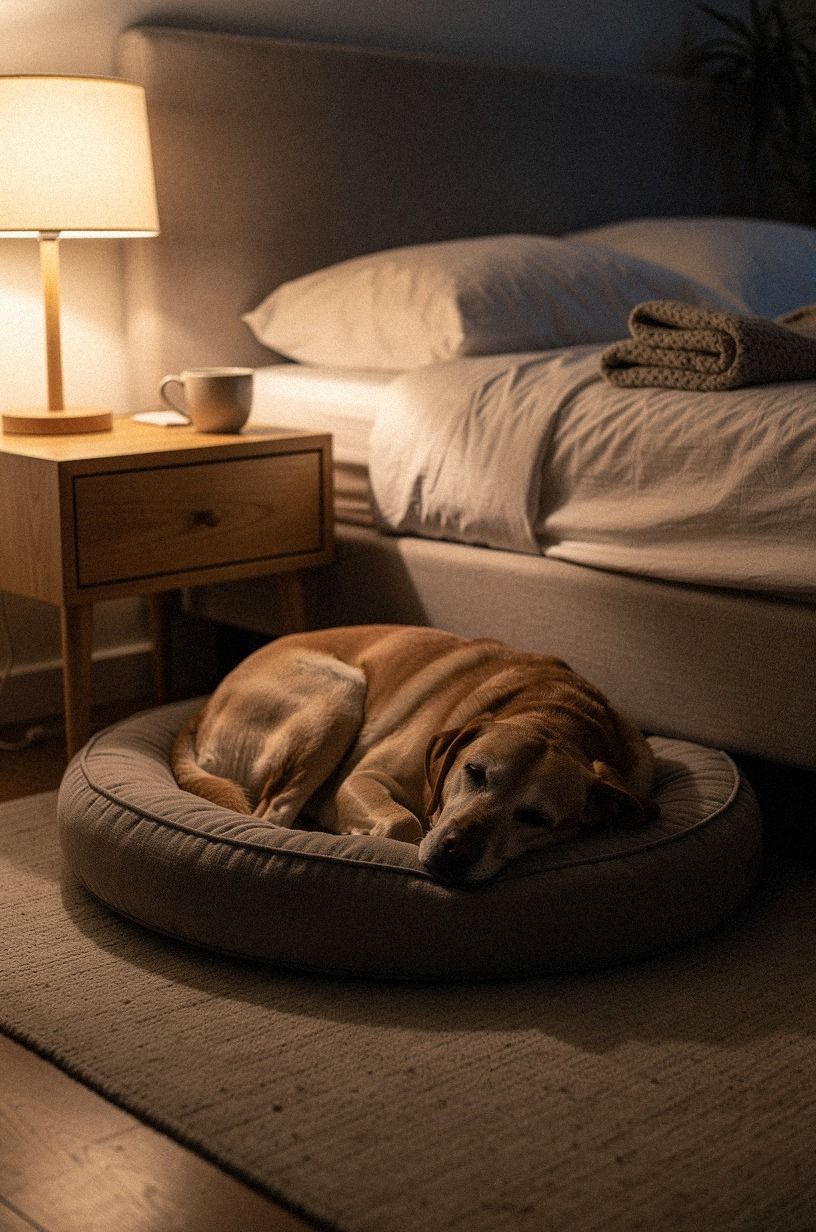
Position the bed away from direct drafts from windows, exterior doors, vents, and fans. Your dog may settle more easily when the sleeping surface feels consistent rather than alternately warm and chilly. Keep enough distance from radiators and heaters to avoid overheating or fabric contact.
A washed Belgian linen panel can soften a drafty visual zone without blocking a vent. Midnight blue curtains, copper hardware, and ivory textiles create a warm contrast while keeping the wall treatment calm. Use floor-length curtains when the window treatment needs a finished look, and keep the fabric clear of paws, cords, and the bed entrance.
Don’t seal a vent behind furniture, and don’t put the bed in a narrow pocket that limits airflow. The room should feel protected, not closed in. A small textile change can deliver strong value when the existing layout already works.
For a broader household refresh, these typical US planning bands can help separate a small textile purchase from a full room project:
The dog-care changes themselves can stay modest when the existing room already has a stable floor and good lighting. Your budget can stay focused on traction, warmth, visibility, and access.
10Contrast Makes Bed Edges Readable (The Quiet Border)
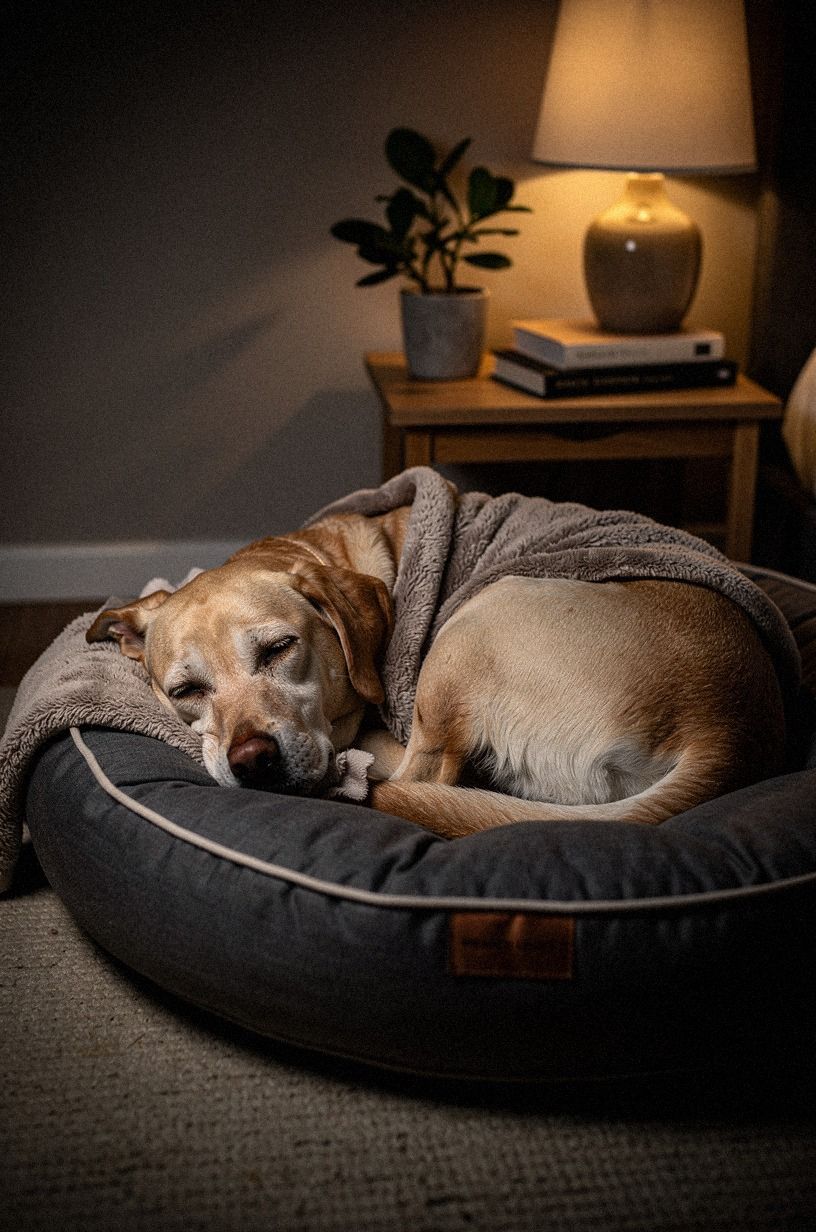
Contrasting trim makes the bed easier to locate when the room is dim. Your dog can read the edge through color and texture instead of relying on perfect vision. Keep the contrast soft but clear: cream organic bouclé piping on sage fabric, or a dark green border around a warm ivory cushion.
A defined border can outline the mattress without adding bulk. If sewing isn’t practical, a removable cover with a clear edge can create the same visual benefit. You’ll want the trim to stay flat, with no raised cord that catches claws.
Don’t use a busy pattern across the whole bed. A simple border is easier for the eye and less distracting for your dog. A replacement cover may cost less than a new bed while delivering much of the same visual effect.
Use the same border color on a nearby woven mat or small blanket to connect the pieces. Natural wood can soften the sage and warm-cream palette. Avoid matching every textile exactly, because the corner can start looking staged rather than restful.
11Build a Low Ramp Beside the Mattress (The Gentle Incline)
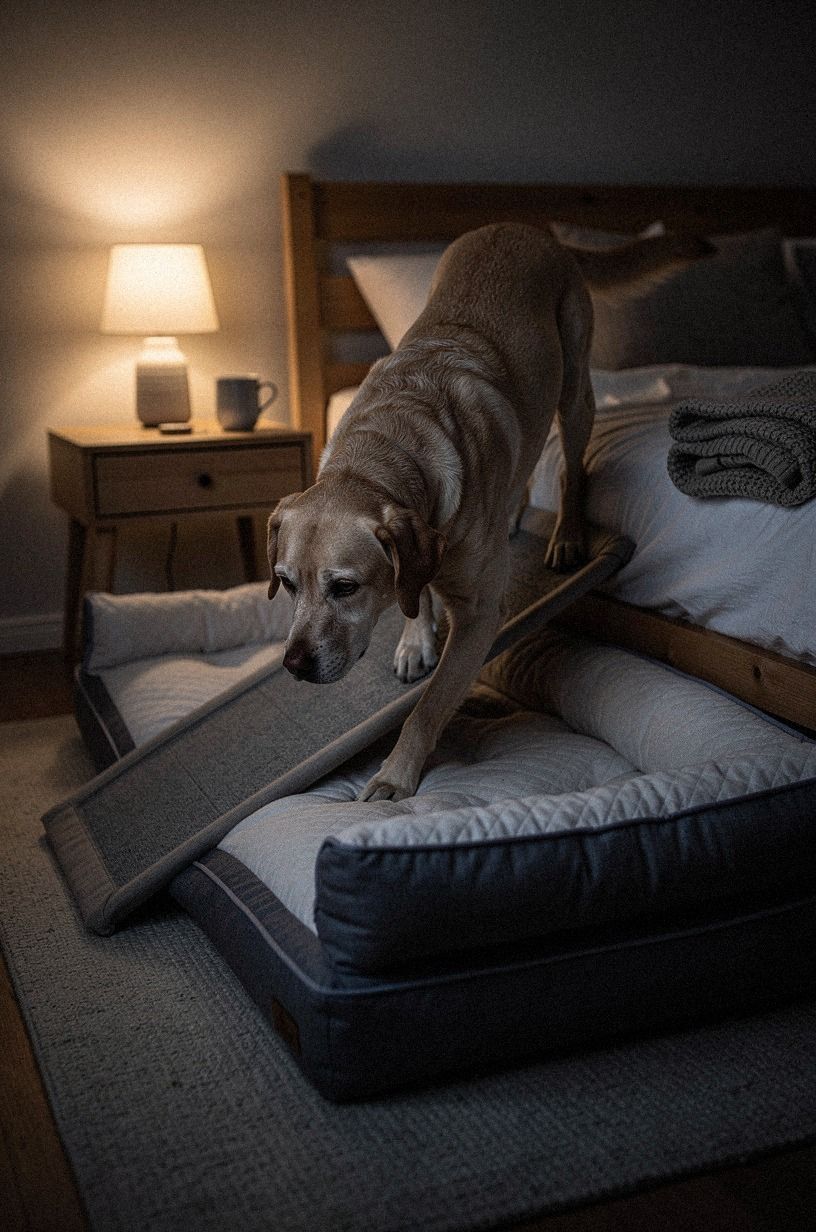
A low dog ramp can help when stepping onto the bed becomes difficult, provided the ramp is wide, firm, and covered with a material that offers traction.
Keep polished stone away from the walking surface. Nero Marquina black marble with white veins works better as a nearby trim or side ledge, while a textured ramp covering protects footing. Terracotta, stone, and olive accents can connect the ramp to the rest of the room without making it look like medical equipment.
Test the incline for wobble before adding decorative details. The ramp should meet the mattress cleanly, stay fixed at both ends, and leave enough room for a slow turn beside it.
12A Camera for Quiet Overnight Checks (The Quiet Watch Point)
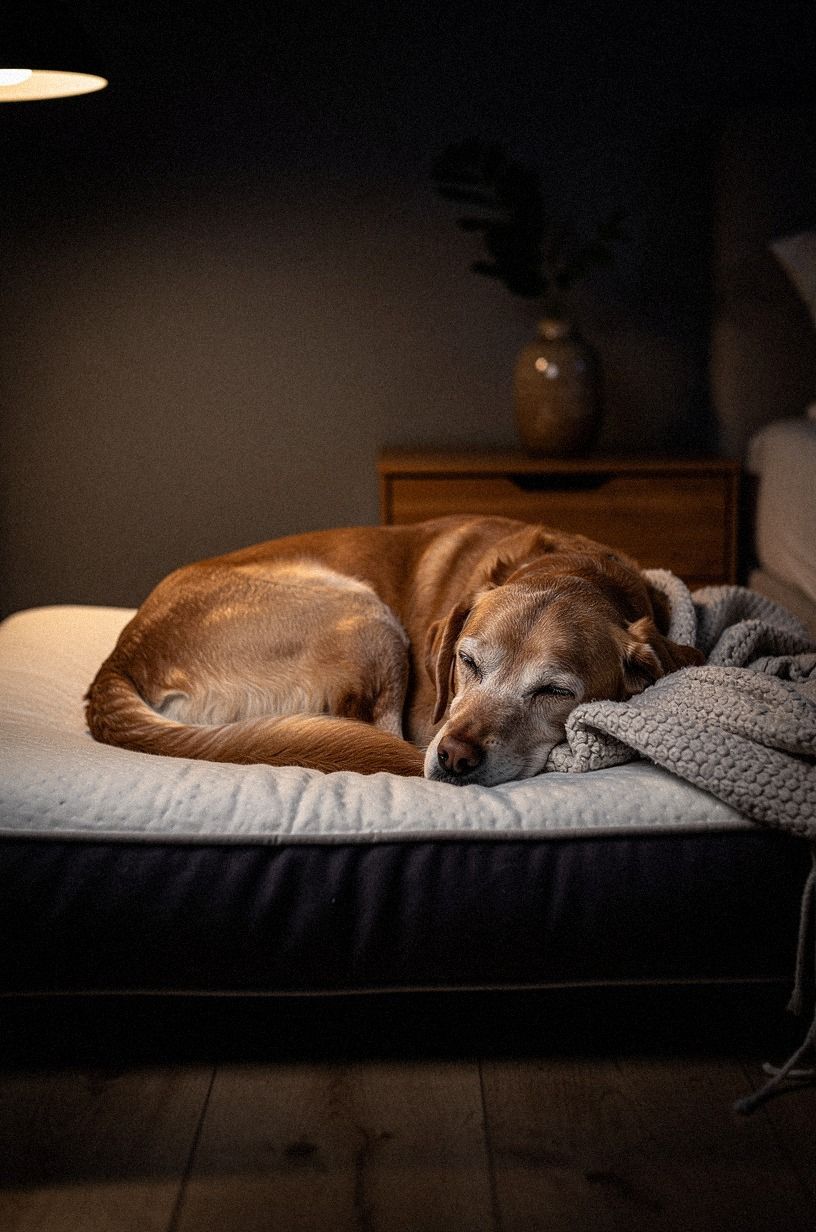
A camera can reduce repeated door opening and help you check whether your dog is resting, standing, or moving toward the exit. Your dog should still have privacy, darkness, and room to settle without a lens pointed directly at the face.
Mount the compact indoor camera high enough to show the bed and route, but not so high that the image loses floor detail. A clay, linen, and aged-brass palette can keep the equipment visually quiet. Deep-pile mohair velvet works well as a nearby upholstered accent, not as a covering for the device or its ventilation openings.
Test the view during daylight and after the lights are dimmed. You’ll want to see the bed edge, water area, and doorway without capturing unnecessary parts of the room.
Don’t use loud alerts for every movement. Gentle notifications are less disruptive. A budget camera can be useful when overnight checks are the main goal, while premium models may add features that aren’t necessary for a simple room setup.
A camera can support observation, but it can’t replace veterinary advice when nighttime restlessness is sudden, intense, or accompanied by pain, confusion, breathing changes, or repeated distress. If the device has a bright status light, cover it according to the manufacturer’s instructions so the room stays restful.
The Editorial Case for Softer Senior-Dog Rooms
Senior dog care works best when the room supports ordinary movement instead of demanding extra effort. A bed can be expensive, but the more important design choice is the route around it. Clear flooring, gentle contrast, stable textiles, and a nearby water source often matter more than decorative extras.
The strongest setup doesn’t copy a pet-store display. It borrows the logic of good hospitality: a clear path, readable edges, comfortable layers, and lighting that helps without demanding attention. Your dog doesn’t need a perfect room.
Your dog needs a predictable one.
That’s why cerused oak, washed linen, muted green, and warm clay work so well together. They create definition without visual noise. A Farrow & Ball Green Smoke wall can support the palette, while lighter flooring keeps the route readable.
A useful design test is simple. Walk the route with the overhead lights off.
Notice where the floor disappears, where a rug curls, and where furniture forces a sharp turn. Then fix the largest obstacle first.
You’ll often find that a $200-$800 room-level refresh isn’t necessary when one loose mat, one dark corner, or one crowded walkway is causing the real difficulty. That’s a worthwhile design decision because it places the budget where daily comfort begins.
The room should also remain comfortable for humans. A bedside table still needs usable storage, curtains should open normally, and a camera shouldn’t dominate the view. But the senior dog’s path deserves priority because every overnight journey repeats the same small demands.
For additional household planning, senior pet health tips can sit alongside the room changes. Keep the design calm, the route open, and the shopping list focused on genuine needs.
A Few Things Worth Answering
What is the best senior dog care setup for a small senior dog?
The best setup combines a low-entry orthopedic bed, stable footing, soft lighting, and a clear route to the door. A freestanding storage unit can hold blankets away from the walkway, while a washable mat defines the bed edge. You’ll want comfort without crowding, so remove furniture before adding accessories.
Where can you buy senior dog care pieces on a budget?
Look at large home retailers, resale marketplaces, local thrift shops, and pet-supply stores for washable textiles, lamps, baskets, and small tables. Your best value may be a secondhand wood side table paired with a new washable cover. Don’t buy a used bed without checking odors, seams, foam condition, and cleaning options.
How much does a senior dog care makeover cost?
A modest setup can cost about $100 to $300 when the room already has a usable bed and flooring. Free changes include clearing the route, moving the bed away from drafts, and repositioning water. You’ll spend more when replacing flooring, lighting, or the main sleeping surface.
Can you create senior dog care improvements on a budget?
Yes, and the first steps can be free. Move clutter from the route, place the bed beside the sleeping area, and use an existing cotton blanket as a removable layer. A low-cost non-slip mat and warm bulb can add practical comfort without changing the whole room.
Is senior dog care worth it in a small space?
Yes, because a small room can make the route easier to control. Place the bed near the wall, keep the center path open, and use one defined mat instead of several loose pieces. Your dog gets fewer turns, while your room keeps more usable floor area.
Is senior dog care a good idea for a rental?
Yes. Choose removable mats, a tension-mounted curtain rod, freestanding lighting, and furniture that doesn’t require drilling. A removable bouclé cover can soften a bed without changing the property.
You’ll want every adjustment to leave walls and floors intact when the lease ends.
Where to Start First
Start with the orthopedic bed beside your bedside table. It creates a predictable landing zone, keeps the route short, and gives every later change a clear anchor.
Check the floor path tonight before buying another accessory. Keep the path open!