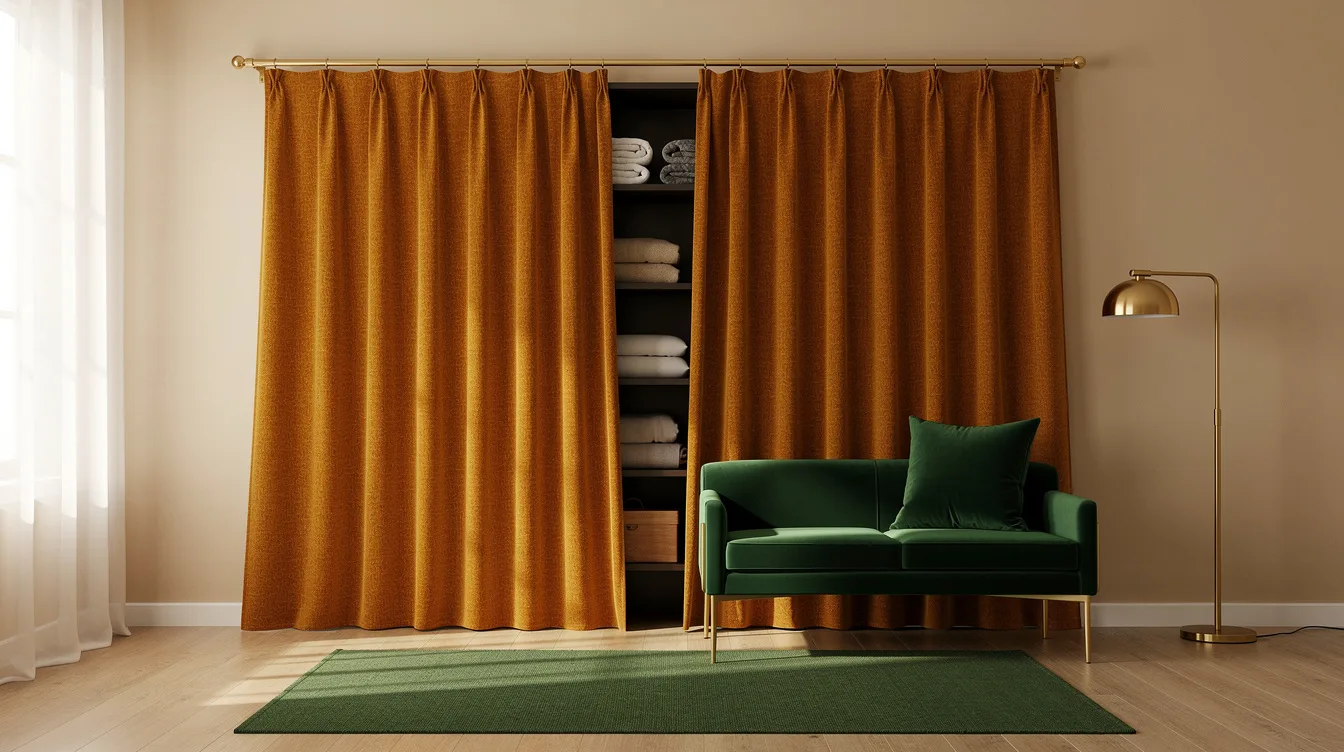
The first thing you see from the bed should not be a row of hangers and a leaning stack of storage bins. For a typical 48- to 60-inch open bedroom closet, an opaque curtain can create a calmer view for about $65 to $150, including basic hardware.
The finish depends on more than picking a pretty panel. You need enough fullness, a practical mounting point, and a hem that clears the floor when the curtain moves.
These choices make the difference between a soft room divider and fabric that looks like it was added in a rush.
Measure the Opening Before Buying Panels
An open closet needs enough fabric to cover the storage and still look relaxed when closed. For a typical 48- to 60-inch reach-in opening, plan on fabric totaling roughly 1.5 to 2 times the hanging width.
Opaque fabric gives the cleanest visual barrier, especially when shelves hold colorful bins or clothing. One standard panel often looks stretched and skimpy, so a pair usually creates better folds and easier daily access.
Measure the opening, then add enough width for the curtain to overlap slightly at the center. Check the full drop as well, because a panel that stops several inches above the floor can make the closet feel unfinished.
Hang an Opaque Pair Above the Closet
The most practical setup is a rod mounted above the opening, with the curtain extending a little past both sides. IKEA MAJGULL blackout curtains are a strong budget starting point because they are sold as a pair and provide a solid screen.
The pair is available in sizes of about 57 by 84 inches for roughly $44.99, or about 57 by 98 inches for roughly $49.99. The shorter option works well when the opening sits beneath a standard bedroom ceiling, while the longer option allows more room for a careful hem.
Pair them with the IKEA RÄCKA rod combination, which adjusts from roughly 47 1/4 to 82 5/8 inches and is listed at about $15. The basic setup lands around $60 to $65 before rings, wall anchors, or hemming, making it one of the simplest ways to hide an open wardrobe.
Match Wall-Colored Linen to the Room
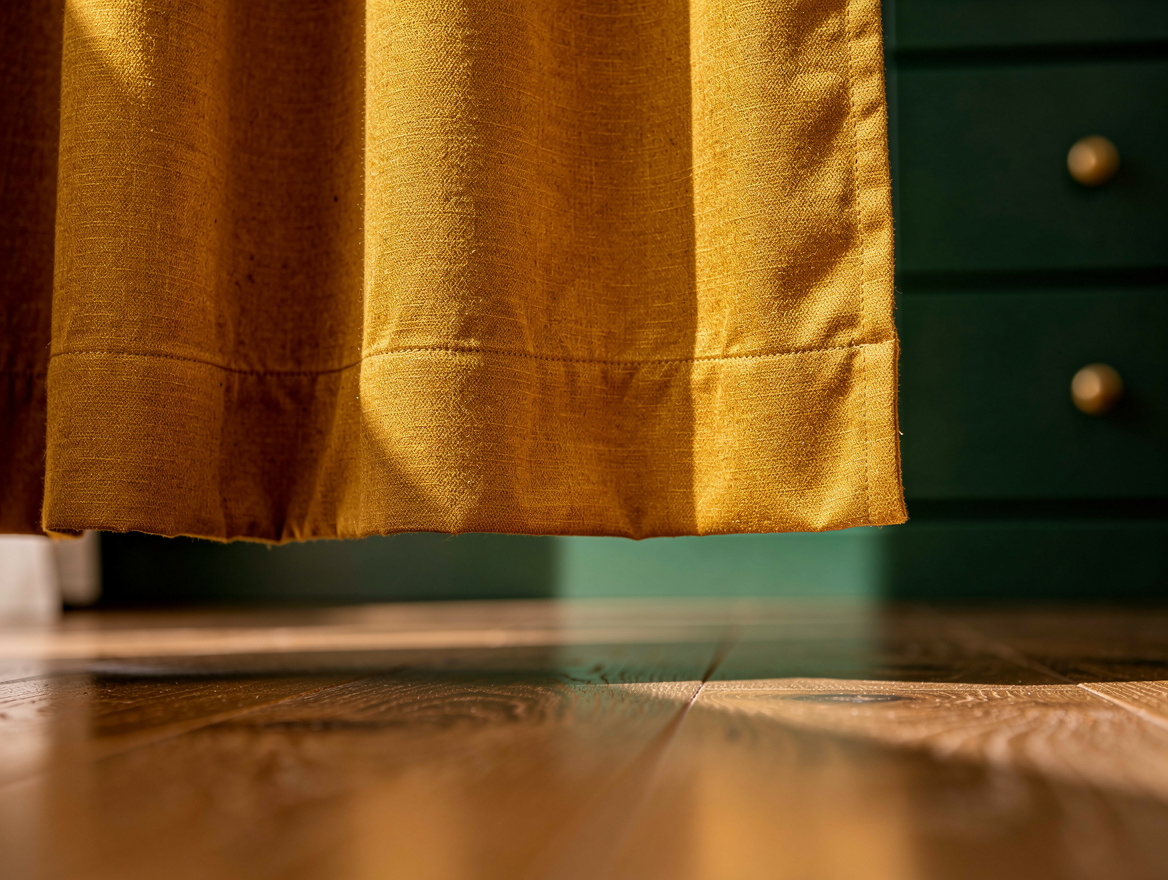
When blackout fabric feels too heavy, choose a curtain close to the bedroom wall color so the storage recedes visually. Linen in beige, white, or gray-green gives the opening a softer appearance without turning it into a focal point.
IKEA DYTÅG is a 100% linen option sold as a pair of about 57 by 98-inch panels for roughly $99.99. With the RÄCKA hardware, the total is around $115 before extra fixings or alterations.
This fabric is light-filtering rather than blackout, so it works best when the closet does not need complete darkness. If a light inside the closet shows through, switch to a lined or blackout option instead of expecting pale linen to conceal every outline.
Use Pinch Pleats for a Tailored Finish
Pinch pleats make a closet curtain read as intentional bedroom drapery rather than a temporary cover. A linen-polyester blend can provide a structured fall while remaining easier to handle than very heavy upholstery fabric.
A pair of about 40 by 80-inch panels can cost around $60, while a pair measuring about 40 by 92 inches may run just under $80. The pair offers roughly 80 inches of total fabric width, so this format suits a narrow opening better than a closet approaching six feet wide.
Use rings or track hooks that match the pleat style, and confirm the curtain hardware can support the finished weight. A tension rod may be convenient, but its span, load rating, and wall contact matter more than its low price.
Move the Hardware to the Ceiling
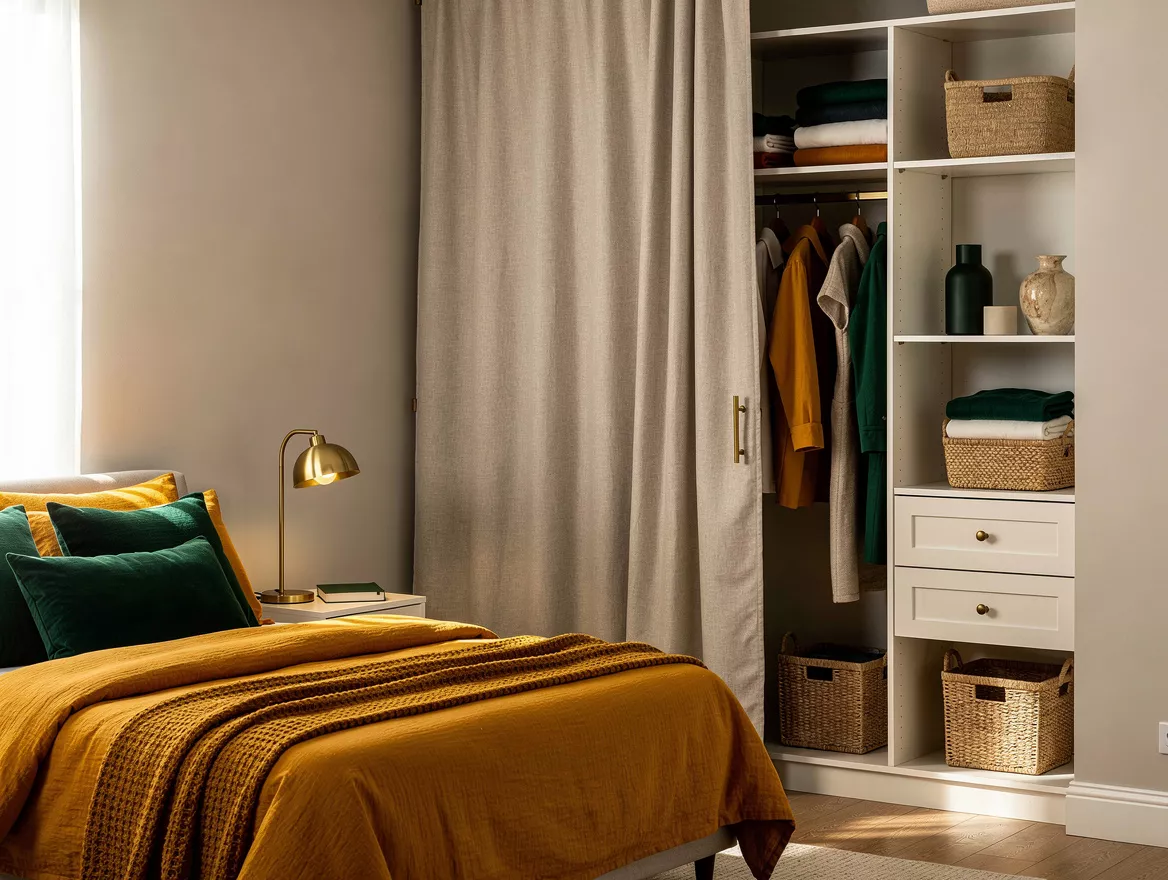
A ceiling track creates the most built-in appearance, especially when the closet has no convenient wall space above it. Ceiling-mounted hardware also lets the curtain stack farther to the side, which can keep the outer shelves accessible.
Choose a track that runs wider than the closet opening and select panels with enough fullness to glide without pulling tight. An opaque cotton or lined polyester curtain can work well here, provided the track and anchors are rated for its weight.
This approach usually costs more than a basic rod because installation and stronger mounting may be required. It is worth considering when the closet sits in a rental bedroom where a freestanding wardrobe would consume valuable floor space.
Hem the Curtain for Easy Daily Access
The bottom edge should finish just above the floor, leaving enough clearance for the curtain to move without catching on flooring or clothing baskets. Blackout fabric often has enough body to hang neatly after a simple hem, while lighter linen may need careful pressing to keep the edge straight.
Before finalizing the length, hang the curtain and open it several times. Mark the hem after the panels have settled, then keep the center overlap modest so the closet opens quickly without bunching.
Keep the area in front of the opening clear enough for the panels to travel. A small basket or narrow bench can sit nearby, but bulky furniture defeats the purpose of using a curtain to save space.
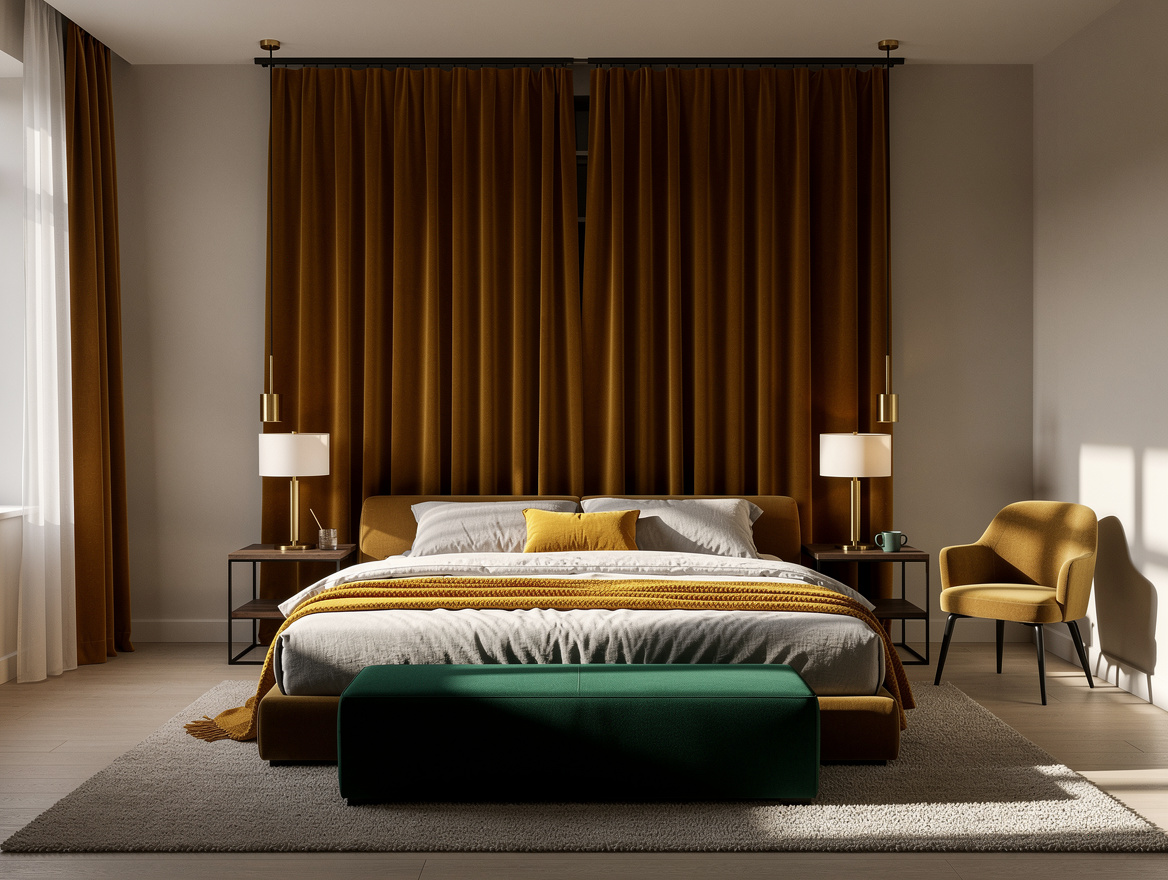
Start by measuring the opening and buying a pair with roughly 1.5 to 2 times its width in total fabric. Then mount the hardware securely and hem the panels just above the floor, because those two details determine whether the closet disappears or remains the room’s visual distraction.
Mia Carter writes about small-space living and budget home makeovers. She has restyled three rentals and tests most ideas in her own 45 sqm flat.