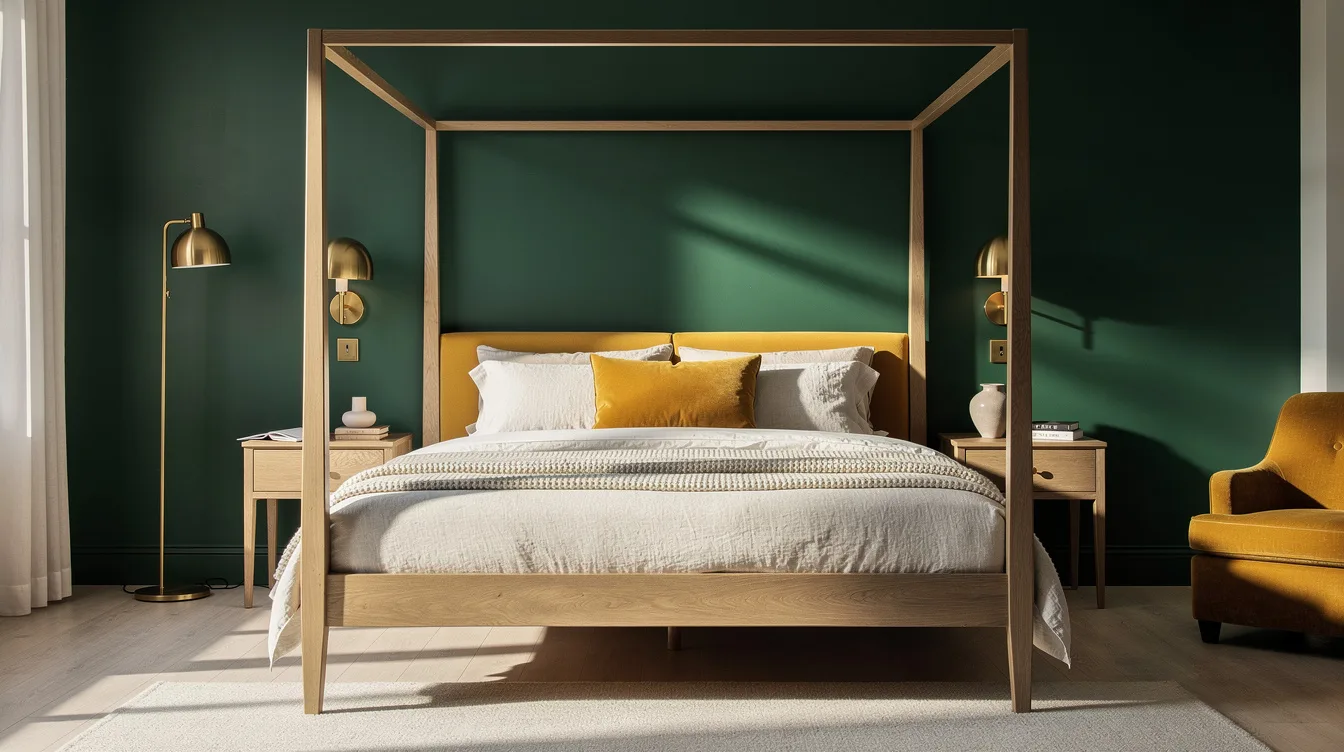
A four-poster bed can make a bedroom feel grand before you add a single decorative layer. The placement rule is breathing room: start with about 24 to 36 inches of clearance on each side and at the foot, then keep every post visible.
The bed should read as a piece of architecture, not a large object pushed into leftover space. Center it on the clearest wall, measure the finished frame, and let the room determine how much drama it can carry.
Center the Frame on the Clearest Wall
A four-poster bed needs a strong visual anchor, and the main uninterrupted wall usually provides it. Center the headboard so the posts have balanced space on both sides, even when the rest of the room feels slightly asymmetrical.
Use the bed’s outer frame as your guide, including projecting posts and side rails. A solid-pine frame such as the IKEA YTTERVÅG reads as furniture with architectural weight, so pushing it into a corner weakens the effect.
Before moving anything heavy, mark the headboard width on the wall with painter’s tape. That quick outline shows whether a centered placement leaves room for a wood nightstand, a door swing, or a heating vent.
Measure the Posts Instead of the Mattress
A queen mattress can fit where the finished bed cannot. Measure from the farthest edge of one post to the farthest edge of the opposite post, then repeat the measurement from the headboard to the footboard.
For planning, begin with about 24 to 36 inches of clearance on each side and at the foot. A typical outer frame measuring about 64 by 85 inches creates a compact planning envelope of roughly 9 feet 4 inches by 9 feet 1 inch when that smaller clearance is used.
For a more relaxed layout, allow about 30 inches around the frame, creating an envelope near 10 feet 4 inches by 9 feet 7 inches. A 36-inch buffer produces an airier plan of roughly 11 feet 4 inches by 10 feet 1 inch, before adding a dresser or wardrobe.
Protect Access on Both Sides
The grandeur comes from circulation as much as from the frame itself. Leave both sides accessible so the bed feels placed within the room rather than wedged against one boundary.
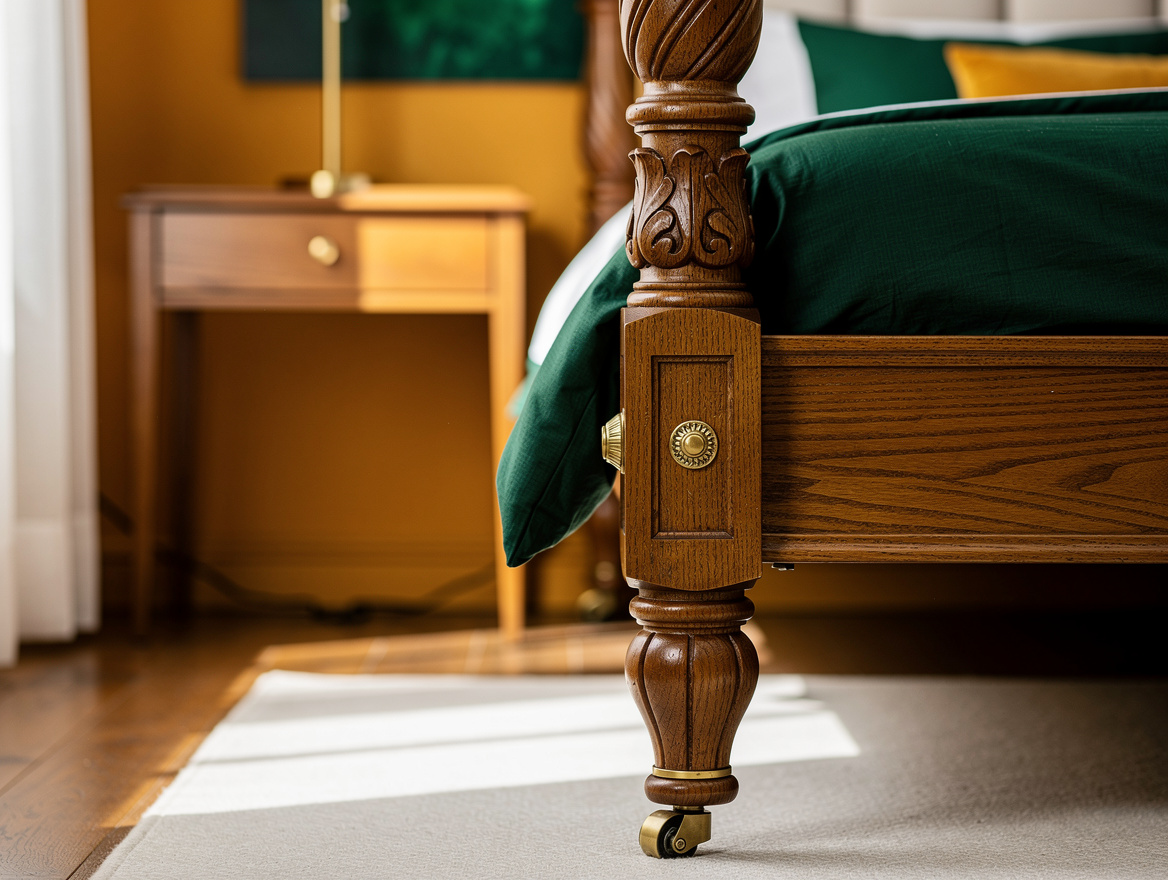
That open route matters in a smaller bedroom, where a thick upholstered headboard or broad oak side rail can consume more floor space than expected. Keep the walkway clear from the bedroom door to the bed, and measure around the room’s actual obstacles.
A compact layout can still work when the posts remain visible and the side clearances stay usable. Choose a narrow black-metal lamp or a shallow wood nightstand instead of forcing oversized furniture into the passage.
Check the Ceiling Before Choosing Height
Vertical scale decides whether a four-poster feels commanding or cramped. Look at ceiling slopes, pendant lights, ceiling fans, crown molding, and every other element that competes with the top rails.
The IKEA YTTERVÅG is listed at 82 5/8 inches tall. Beneath a roughly 96-inch ceiling, that leaves about 13 3/8 inches above the frame, which can work physically while still feeling tight beside a low glass pendant.
Mock up the height with painter’s tape or a temporary cardboard line before ordering. A simple white ceiling gives the top rail more visual breathing room, while a dark ceiling can make a tall frame feel heavier than its measurements suggest.
Keep the Posts Visible and Light
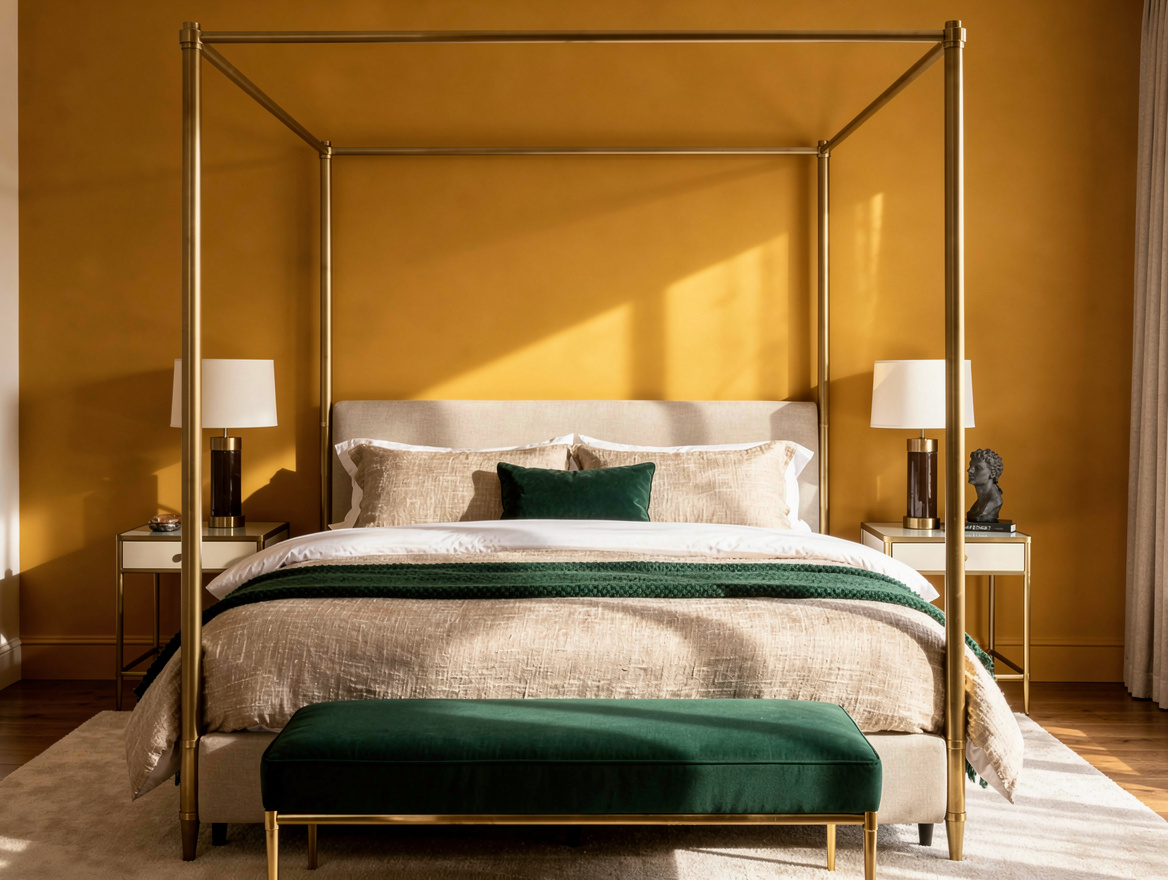
Open sightlines help a four-poster bed feel grand without overwhelming the bedroom. Slim posts and a simple top frame reveal the bed’s shape from the doorway, while bulky curtains can blur the structure.
Use drapery only when the room benefits from softness or privacy. White linen curtains can add volume around a generous frame, but a smaller bedroom often looks sharper with the posts exposed and the bedding kept restrained.
Texture should support the architecture. A cotton quilt, a low-profile wool throw, and calm bedding préservé the frame’s outline better than a crowded canopy filled with competing patterns.
Float the Bed Only in a Generous Room
In a larger bedroom, floating the bed away from the wall can turn its finished headboard into a room divider. The arrangement creates a sleeping zone while allowing the bed to be seen from more than one direction.
IKEA specifically suggests this approach for the solid-pine YTTERVÅG, but the layout needs generous space on every side. Leave room behind the headboard for circulation, and remember that the planning envelope excludes dressers, inward-opening doors, and wardrobes.
Use the floating position when the room already has enough floor area to support it. A substantial wood headboard can define the zone, while an open-backed frame keeps light moving through the bedroom.
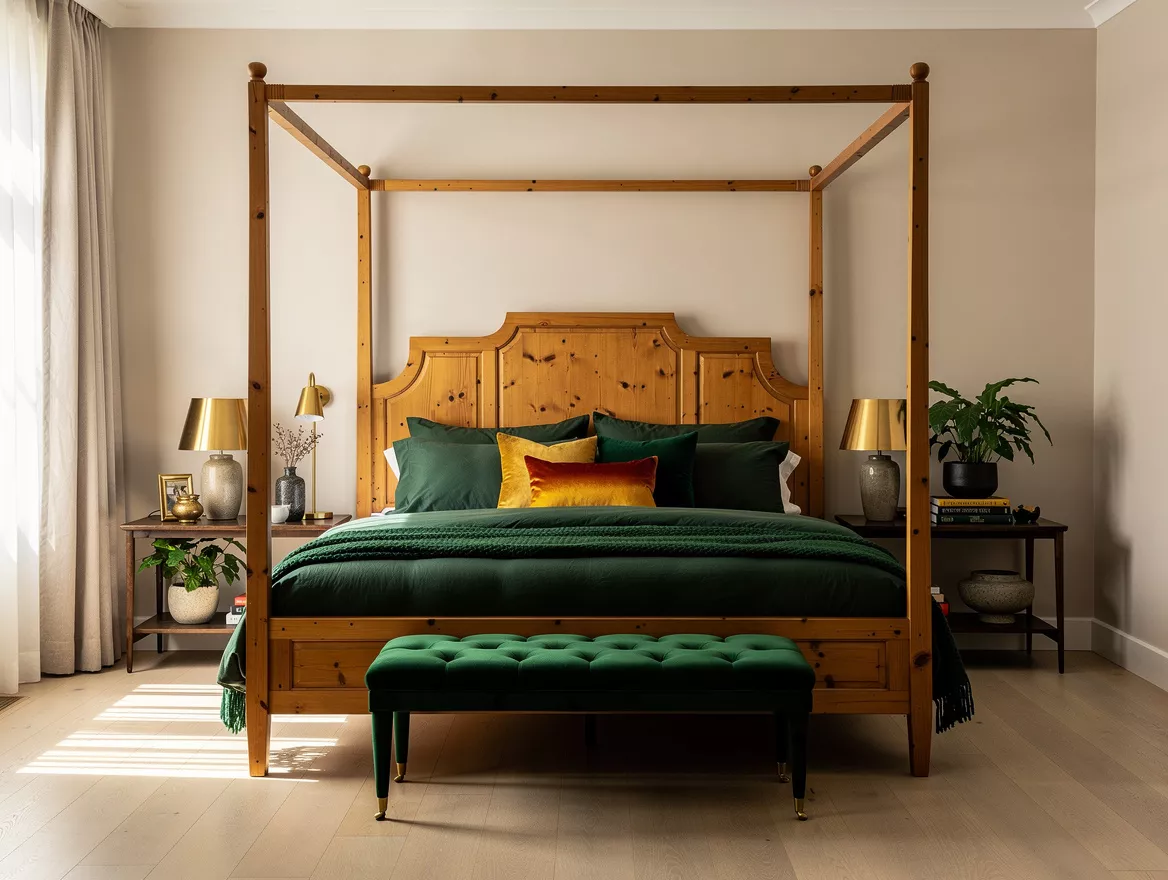
Begin with painter’s tape, marking the outer frame and the side clearances before you shop for bedding or lighting. If the taped outline leaves both walkways comfortable, the four-poster already has the space it needs to command the room.
Mia Carter writes about small-space living and budget home makeovers. She has restyled three rentals and tests most ideas in her own 45 sqm flat.