
The crib does not need to swallow the bedroom. A Babyletto Gelato occupies about 39¾ by 26 inches, giving a small room a real chance to keep an adult bed and a usable walking route.
Its full-size cousin, the Babyletto Hudson, measures about 53¾ by 29¾ inches, so the smaller option uses roughly 35% less floor area. The smartest layouts remove one nightstand, relocate clothing, or shorten the crib footprint before adding nursery furniture.
Replace One Nightstand With a Mini Crib
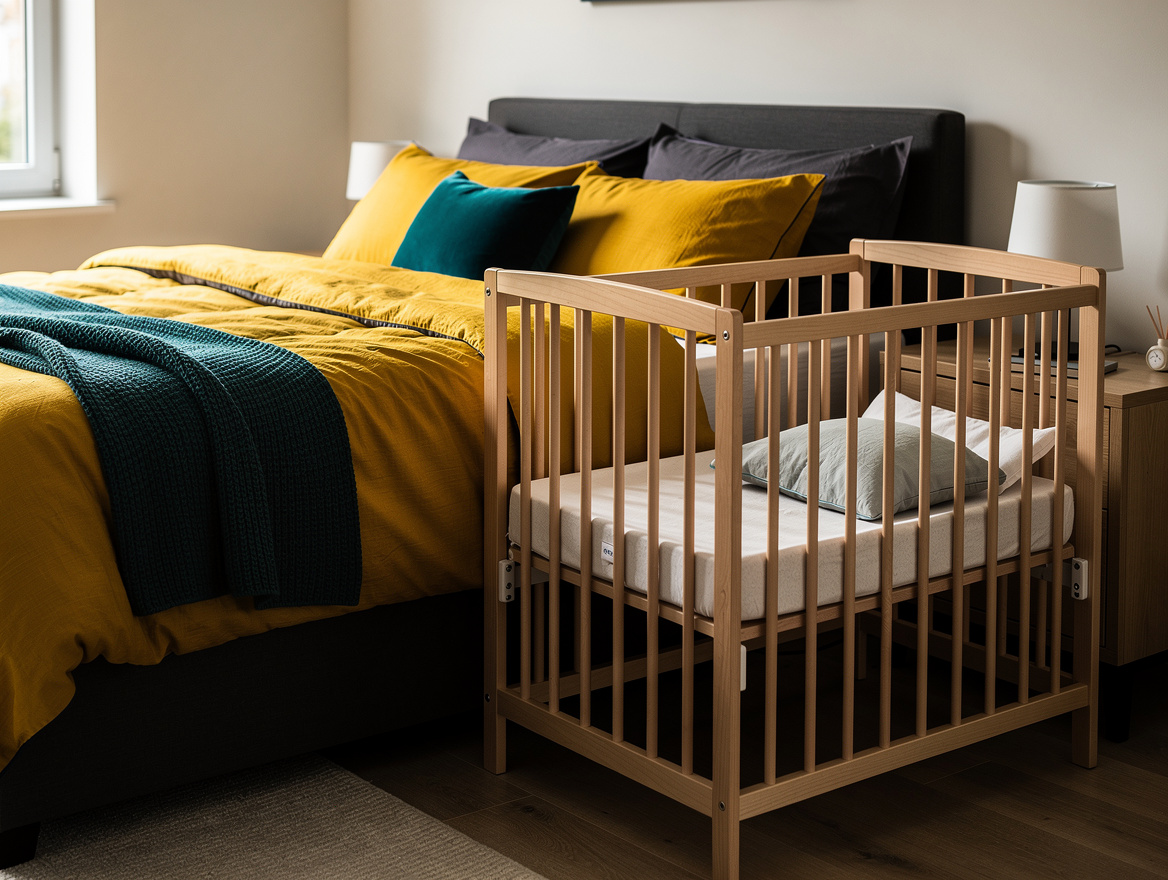
Keep the adult headboard on its existing wall, remove the nightstand on the baby’s side, and place a Babyletto Gelato mini crib lengthwise beside the bed. Its footprint is about 39¾ by 26 inches, and the listed price is $349.
In a hypothetical 10-foot-wide room, the crib and an IKEA SLATTUM queen frame use about 87⅜ inches of the available 120-inch width. That leaves roughly 32⅝ inches to distribute between the bed-crib gap and the walking route on the opposite side.
This arrangement works only when one route receives priority, so keep adult bedding from spilling toward the crib. The Gelato uses a solid New Zealand pine frame, but its separate sleep space still needs to remain fully assembled and unobstructed.
Set the Crib Beyond the Foot of the Bed
A rectangular bedroom with more length than width can keep both sides of the adult bed accessible. Place the headboard against one short wall and a Babyletto Hudson full-size crib against the opposite short wall, leaving the middle open.
In a 10-by-12-foot planning example, the queen bed projects about 81⅞ inches into the room and the crib projects about 29¾ inches from the opposite wall. That leaves roughly 32⅜ inches between them before accounting for baseboards, door swings, or other clearances.
The Hudson is listed at $399, measures 53¾ by 29¾ by 35 inches, and uses a solid pine frame. This is the stronger choice when a mini crib feels too cramped beside the bed, though a door that swings into the center gap can eliminate the layout.
Move Clothing Under the Adult Bed
When a freestanding chest occupies the only useful crib wall, move clothing, spare linens, and seasonal items underneath the adult bed. A low wood lift-up storage base can release the dresser’s footprint, but the plan works only when every drawer’s contents genuinely fit below.
Use under-bed fabric bins for folded clothing and linens, then label the bins by frequency of use. Daily items should stay reachable from the bed, while off-season pieces can move to the least convenient space.
Once the chest is gone, place the crib on that cleared wall and keep its long side parallel to the wall rather than angling it into the room. This layout saves more usable floor area than squeezing a narrow dresser between the crib and the adult bed.
Turn the Quiet Corner Into the Crib Zone
In a room where the doorway cuts across the best wall, use the farthest safe corner for a compact crib and rotate the adult bed toward the opposite wall. A Babyletto Gelato leaves more room for an adult to walk around the bed than the brand’s full-size option.
Keep the corner away from the door swing, windows, cords, and radiators, then place a wall-mounted metal shelf outside the crib’s reach for diapers and nighttime supplies. Avoid putting loose storage, hanging fabric, or decorative objects above the sleep space.
The opinionated part is simple: the crib corner should hold the crib alone. A basket, pouf, or nursery chair can wait elsewhere, because one extra floor object can turn the only clear route into a sideways shuffle.
Map the Sleep Zone Before Adding Anything
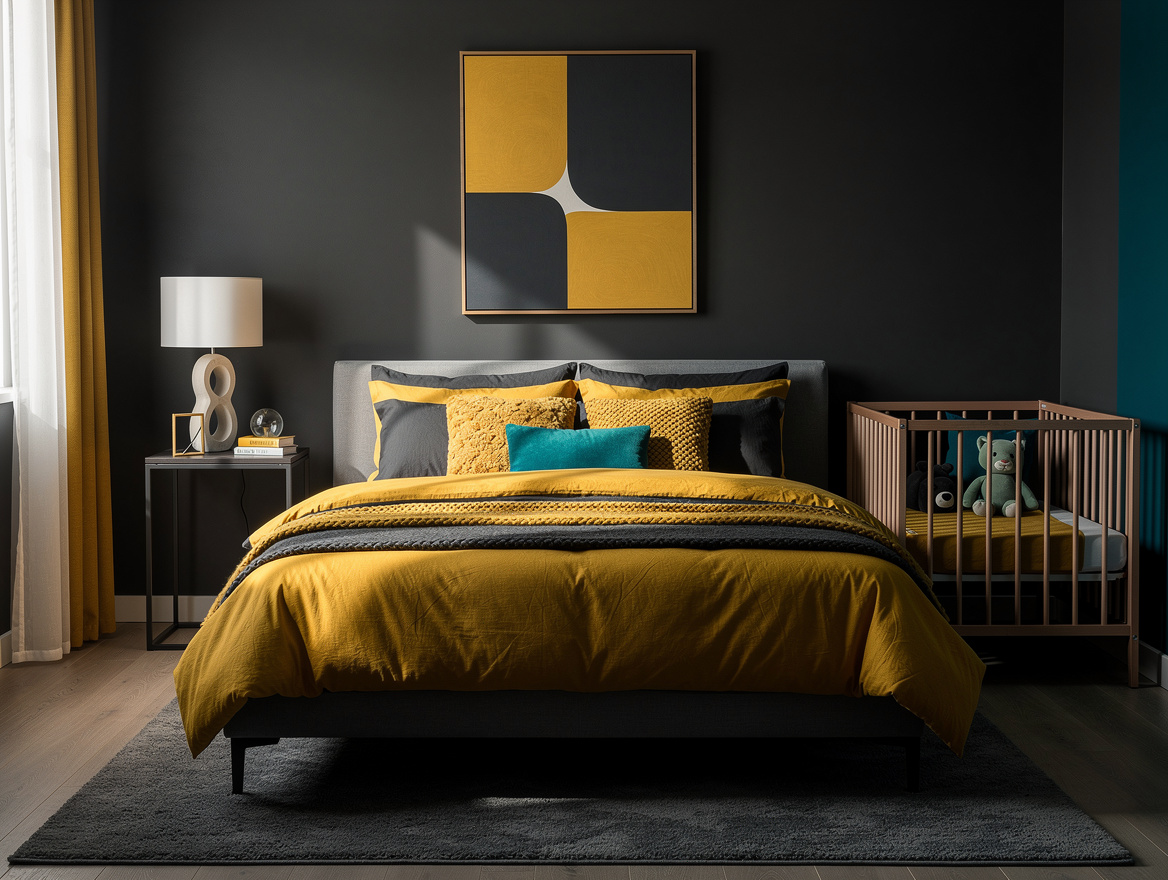
Before buying another nursery item, mark the adult bed and crib footprints on the floor with painter’s tape. Include the full assembled dimensions, then open the bedroom door and walk the route while carrying a laundry basket.
Test the arrangement with the IKEA SLATTUM dark gray upholstered frame in place, rather than measuring only the mattress. The frame is listed at 81⅞ by 61⅜ inches, and its outer edges determine whether a drawer, door, or crib rail can function.
Room-sharing without bed-sharing is recommended by the American Academy of Pediatrics for at least the first six months. Keep the crib as a separate sleep space, and let the crib mattress occupy the approved position without pillows, loose blankets, or improvised attachments.
Start with painter’s tape and the two largest footprints: the adult bed and the crib. Once the walking route survives a door-swing test, add only the storage that earns its space.
Mia Carter writes about small-space living and budget home makeovers. She has restyled three rentals and tests most ideas in her own 45 sqm flat.