
Rustic luxury freestanding tub ideas work best when the tub has something grounded beneath it, usually stone, warm wood, or both. I once chose the tub first and treated the floor as an afterthought. Big mistake. Your bathroom needs texture before decoration. These 18 ideas show how to make the soak feel earthy, refined, and lived-in.
Don’t overthink: Pair a white tub with cerused oak.
- Anchor the tub on honed travertine
- Pair a white tub with cerused oak
- Paint the walls Farrow & Ball Hague Blue
- Float the tub between double vanities
- Layer the Two-Wood Rule
- Swap a standard faucet for aged bronze
- Build a Three-Height Light Stack
- Frame the tub with hand-glazed zellige
- Hang Belgian flax linen at the window
- Choose black over another white tub
- Add a narrow stone ledge
- Price the room before choosing finishes
- Keep the tub centered on the 60-by-30 footprint
- Mix the tub with a leather stool
- Bring in one oversized plant
- Paint the ceiling a warmer shade
- Hang the Three-Textile Towel System
- Let the tub breathe beside a plaster wall
1Anchor the tub on honed travertine
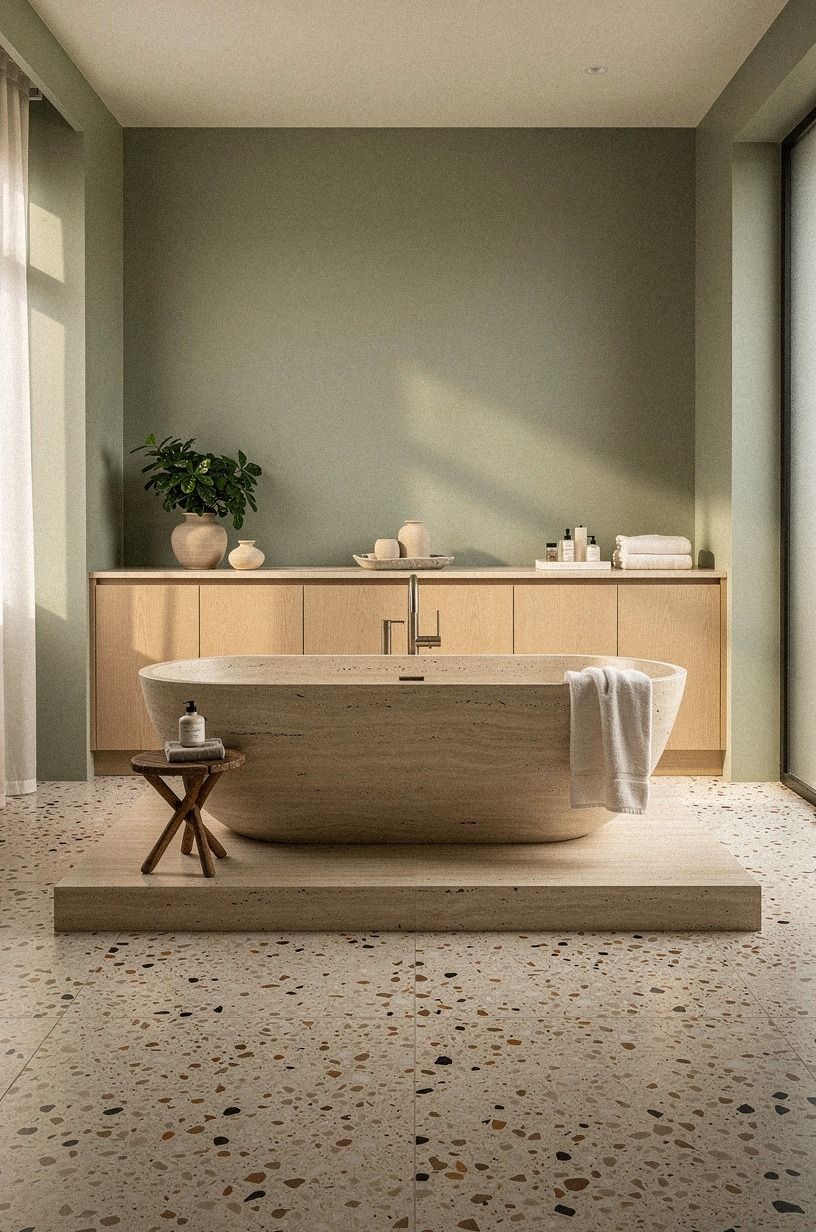
Set your tub on a floor of oversized-chip terrazzo in warm cream with soft sage-green notes, and the room gains weight without looking heavy. The large aggregate catches water droplets and candlelight, so your floor feels tactile under bare feet. I’d choose this over a uniform polished surface because it feels more relaxed and grounded.
Keep the rest of your palette quiet. A white tub, natural wood, and one woven stool are enough. If you’re planning the whole room, these organic modern travertine bathroom ideas will help you judge the stone against wood and lighting.
Your tub should sit where the terrazzo can support the room visually. That small pause makes the bathroom feel inviting, and you won’t need a crowded shelf to make it feel finished.
Typical cost by tier (US averages):
2Pair a white tub with cerused oak
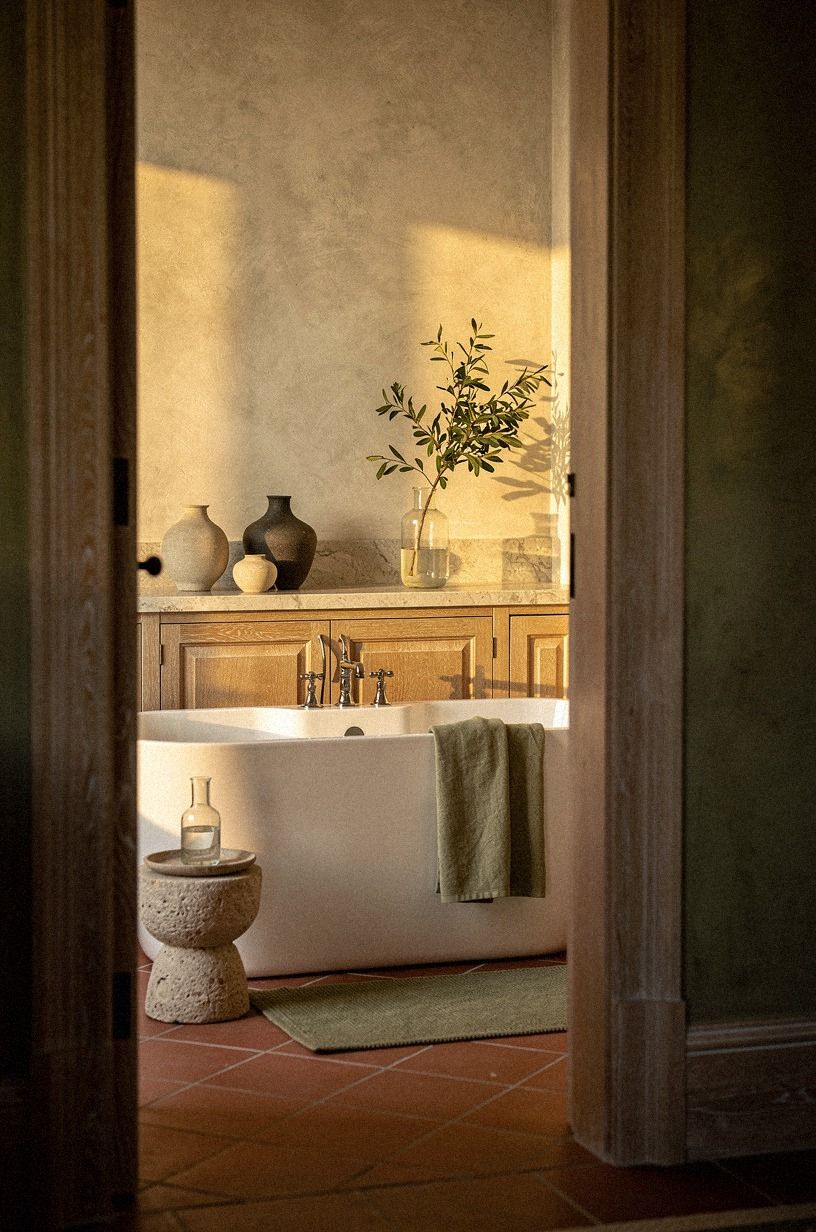
A bright tub can still feel rustic if you bring in hand-applied Venetian plaster with terracotta, stone, and olive tones. Use it behind the tub or across the main walls, where its soft variation adds warmth without making the room feel busy. The finish feels handmade, and the earthy palette stops white porcelain from looking clinical.
I’d skip orange-stained pine here. It can turn yellow beside a white acrylic tub, and you’ll spend your time fighting the color instead of enjoying the room. A birch-effect IKEA KALLAX unit can work as open storage if you soften it with baskets and folded towels.
If you’re building a white and plaster bathroom design, keep one earthy tone dominant. Your eye needs somewhere to rest, and too many finishes will make the room feel busy rather than rustic and calm.
3Paint the walls Farrow & Ball Hague Blue
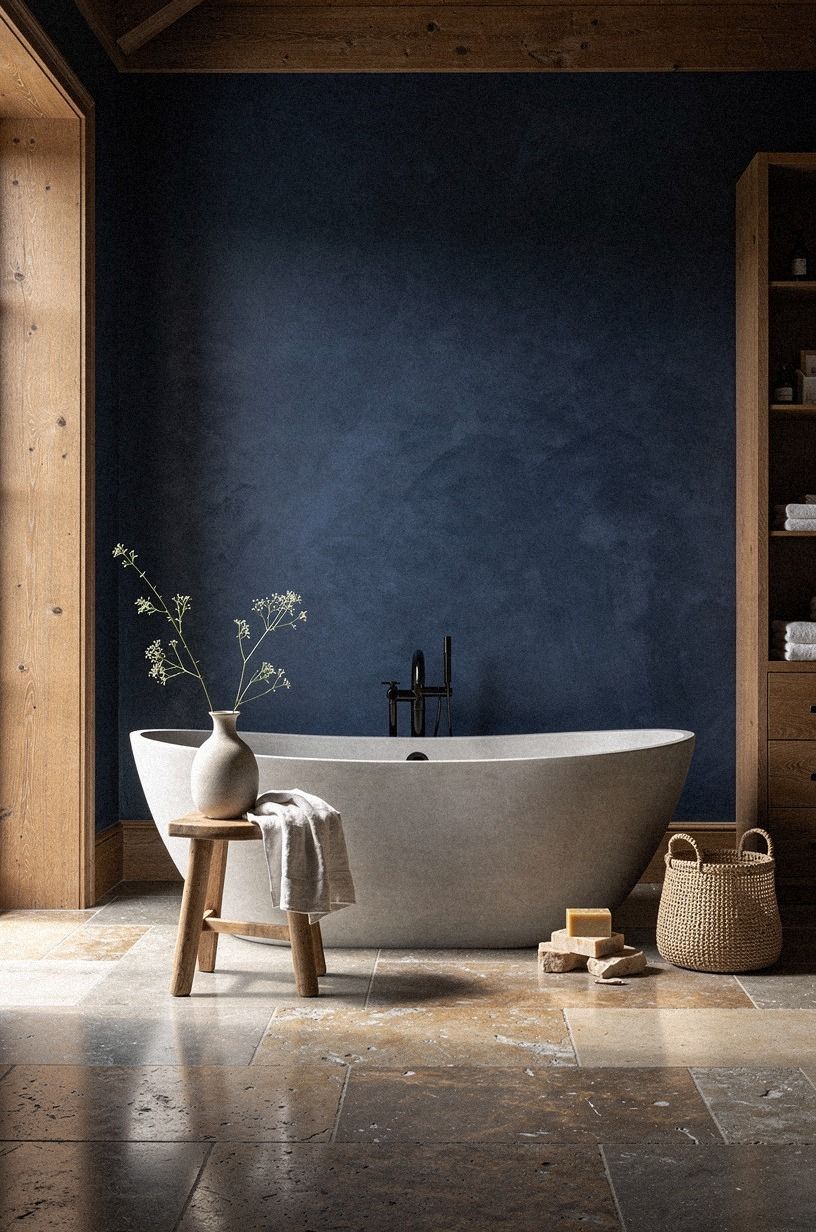
A clay-toned matte wall with shagreen accents gives a freestanding tub the moody backdrop it deserves. The earthy color makes white porcelain look crisp, while the textured material keeps your room from feeling flat.
I’d use the tone on every wall in a small bathroom instead of creating one dark accent wall. The color feels more intentional when it wraps around you.
And don’t drown the room in matching accessories. Choose warm linen, an aged brass mirror, and one restrained accent in the shagreen finish. If you’re styling a smaller layout, this black freestanding tub upgrade shows how dark finishes can create drama without adding more objects.
You’ll get the best result with warm bulbs. Cool white light can make clay paint look flat, while amber light lets the color feel elegant, earthy, and quietly dramatic.
4Float the tub between double vanities
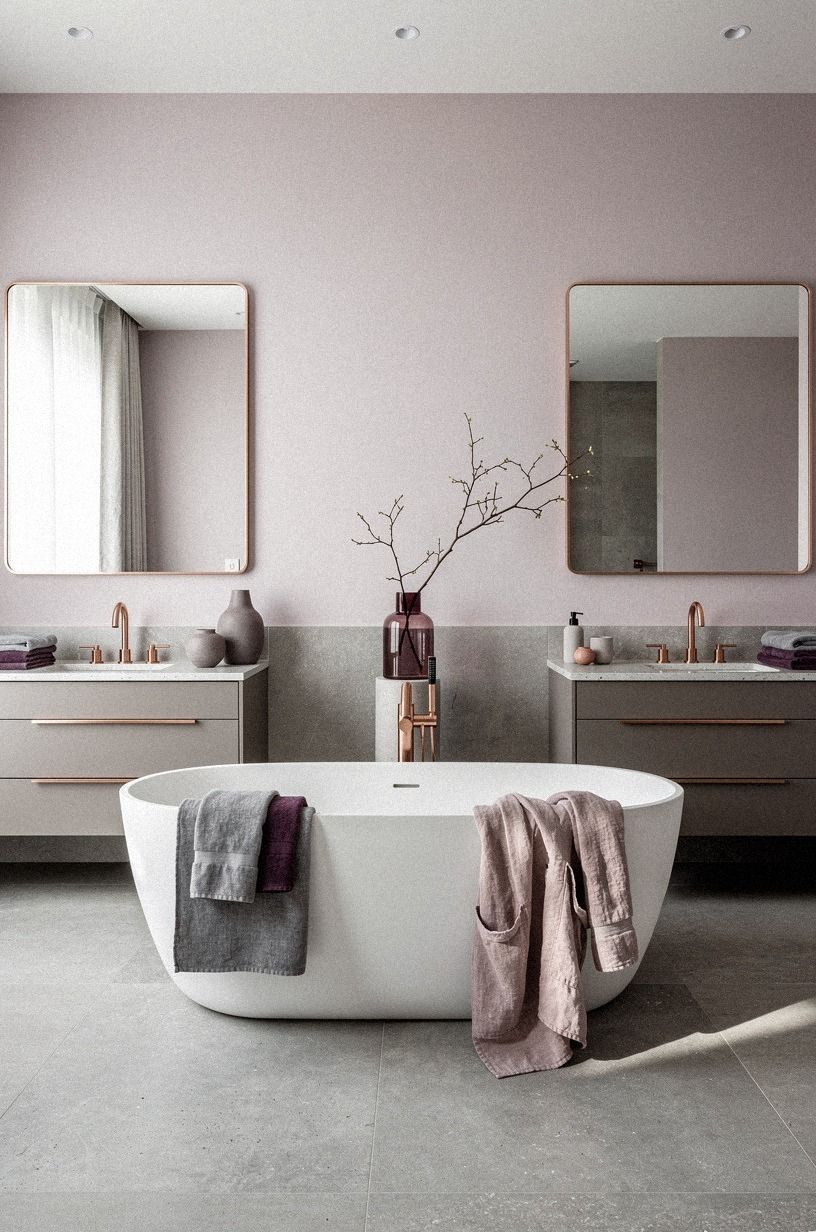
Place your tub between two vanities if your bathroom has the width for it.
5Layer the Two-Wood Rule
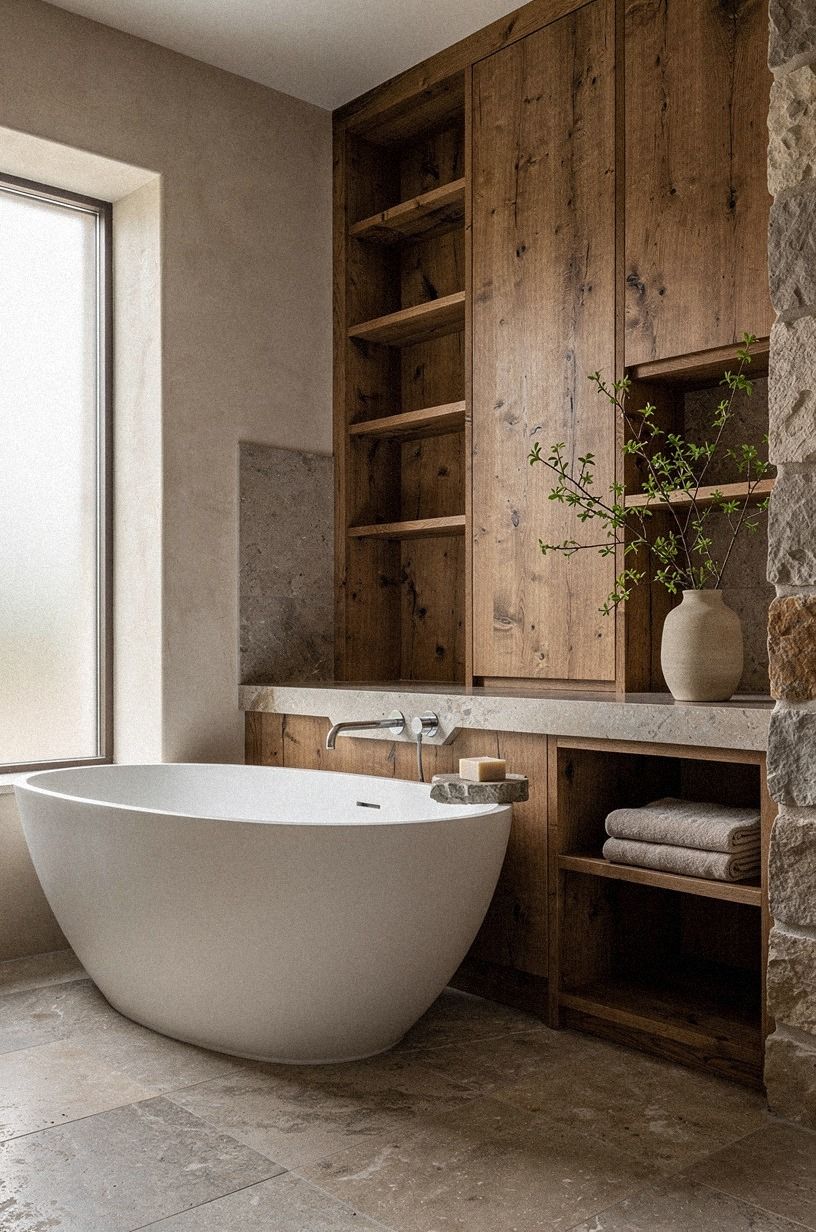
Use two wood finishes, not five. My Two-Wood Rule pairs one pale, grainy wood with one darker, smoother finish so your bathroom feels gathered but not themed.
Try a white-painted vanity with walnut on a stool or framed mirror, then add an organic bouclé cushion for softness. The contrast adds depth without stealing attention from your soak.
I made the mistake of mixing reclaimed pine, bamboo, and dark walnut in one room. It looked accidental. You’ll get a more refined result if the lighter finish covers the larger surface and the darker wood appears in smaller pieces.
Your rustic bathroom decor can stay simple after that. A navy linen curtain, a stone tray, and one ceramic vessel are enough. If you’re unsure where the tub should face, start with this guide to where to put the faucet on a freestanding tub.
6Swap a standard faucet for aged bronze
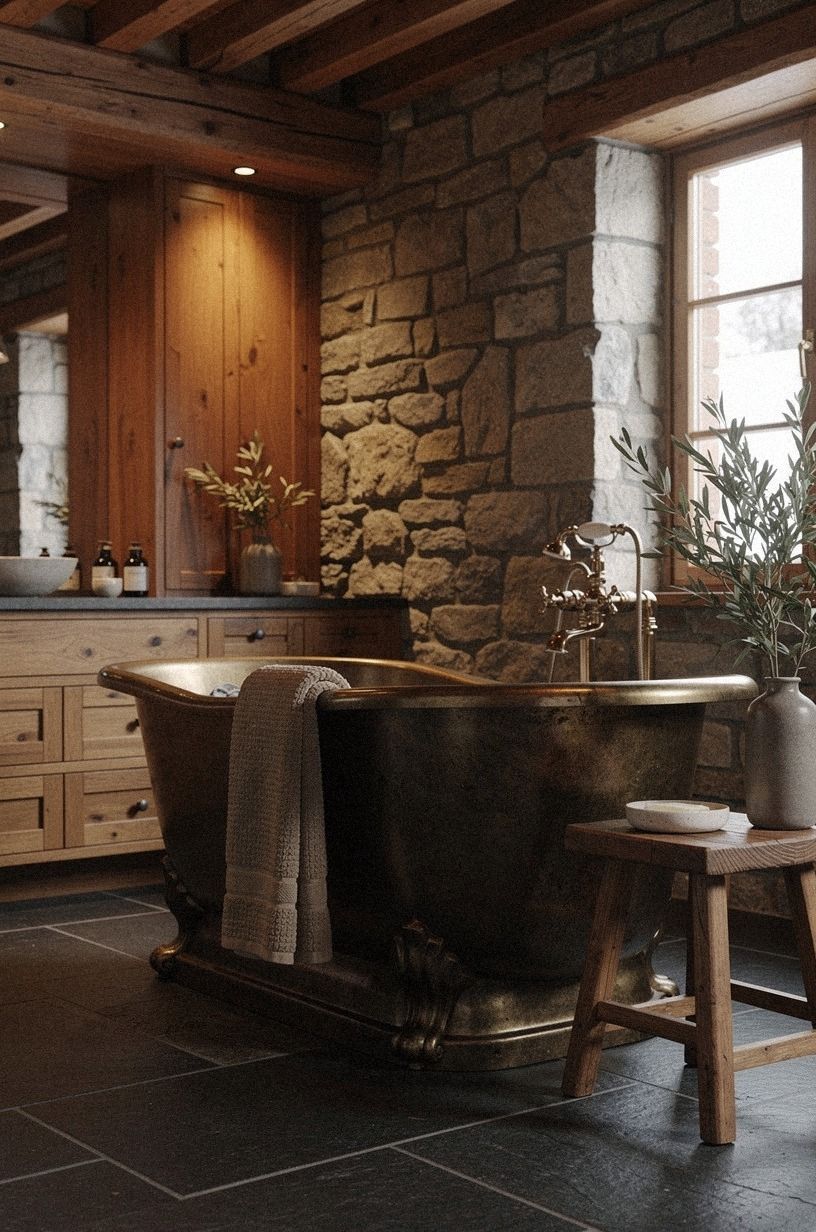
A tall faucet set against Nero Marquina black marble with white veins gives your tub an old-house feeling without requiring an old house. The marble has a soft, dramatic depth that works with emerald, gold, and cream. Your hand will notice the difference, too, because a honed stone surround feels less bright and slippery than polished tile.
I’d choose a simple gooseneck profile over an ornate traditional fixture. Too much decoration makes a freestanding tub feel like a hotel prop. A clean silhouette lets your materials do the work, and you won’t tire of it after a season.
And measure the faucet placement before the tub arrives. You’ll need the spout to clear the rim comfortably, with controls you can reach from outside the water. The plumbing details matter more than a decorative finish, especially if you’re working with a compact bathroom.
7Build a Three-Height Light Stack
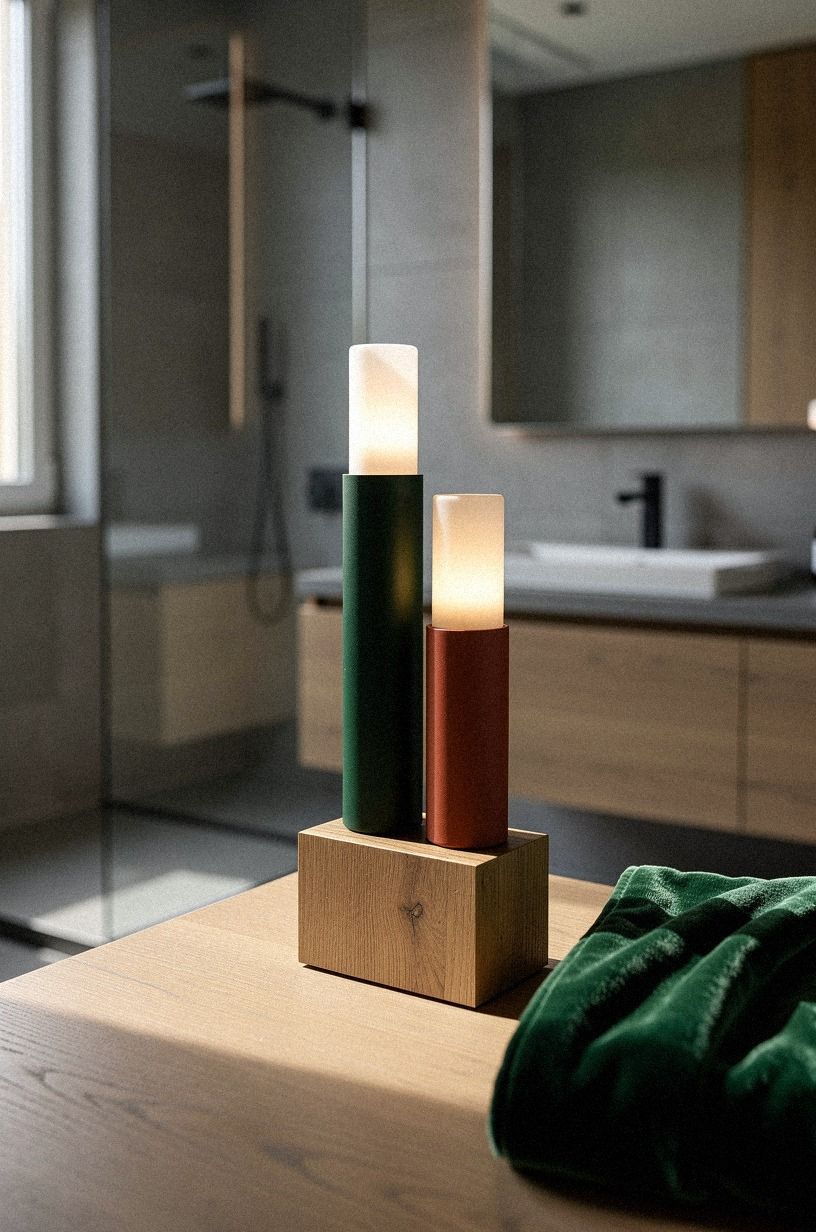
Your tub needs light at three heights: overhead, eye level, and near the floor.
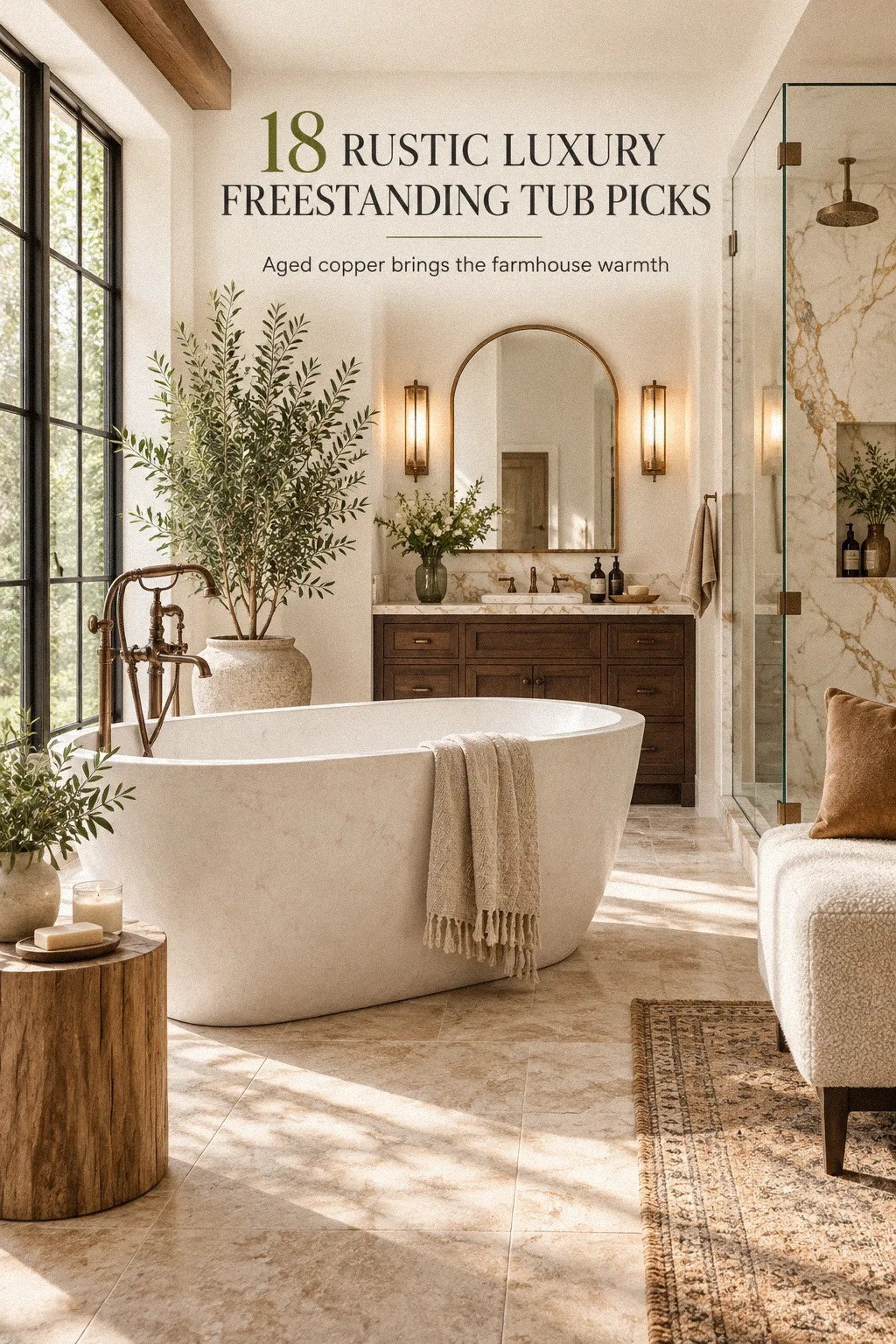
8Frame the tub with hand-glazed zellige
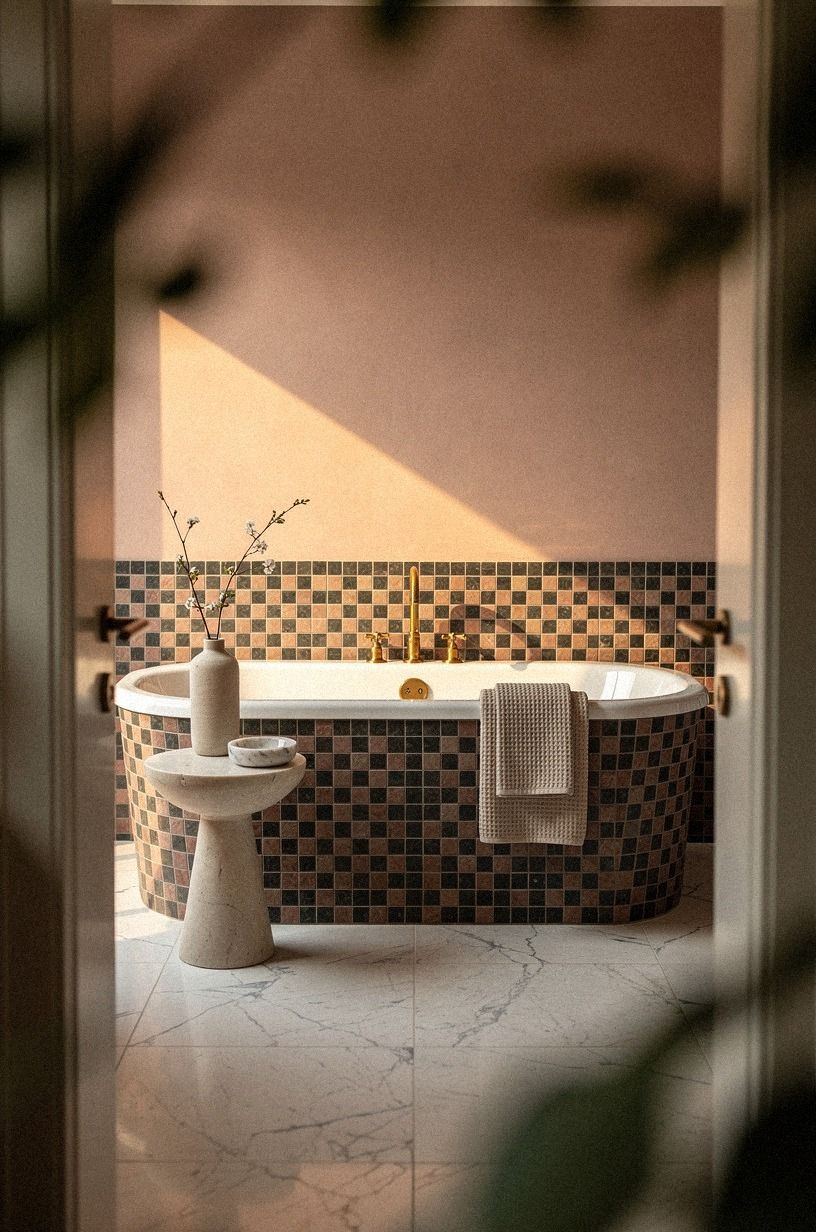
Install Carrara marble with subtle grey veining behind the tub if you want a rustic luxury bathroom with quiet movement. Pair it with dusty rose, charcoal, and brass so the stone feels warm rather than formal. The gentle veining adds interest without competing with the tub.
Keep the floor quieter if your wall stone has visible markings. I’d pair it with charcoal-toned paint and a simple white tub instead of adding patterned flooring. Too many competing surfaces will make your eye work harder than it should.
Your finish choice matters here. A honed surface keeps the marble relaxed, while a high polish can make it feel too formal. If you’re comparing wall treatments, this guide to tile behind a freestanding tub gives you useful direction before you order samples.
9Hang Belgian flax linen at the window
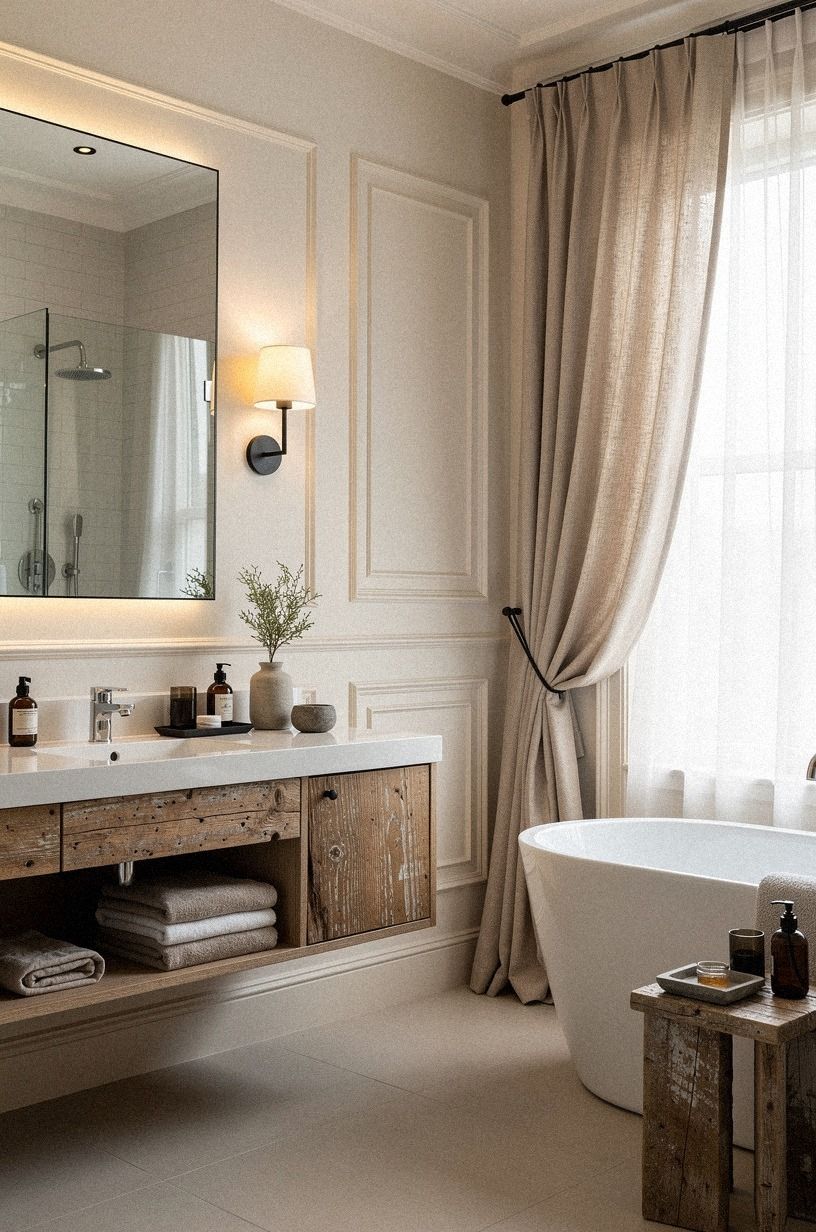
Use reclaimed weathered teak around the bathroom window if you want privacy details with warmth and character. Its worn grain sits naturally beside warm white walls, camel textiles, and black accents. You’ll get texture without adding another bold color.
Use a simple teak rod or shallow teak trim, depending on your space. I’d avoid heavy velvet curtains near a tub because the moisture can make them feel damp and oversized. A light warm-white panel keeps the room practical and lets the wood do the visual work.
Your curtain doesn’t need to touch the floor. A sill-length panel can feel more practical, especially if the tub is close to the window. And if you’re creating a rental-friendly room, removable hardware lets you test the look before making a permanent change.
10Choose black over another white tub
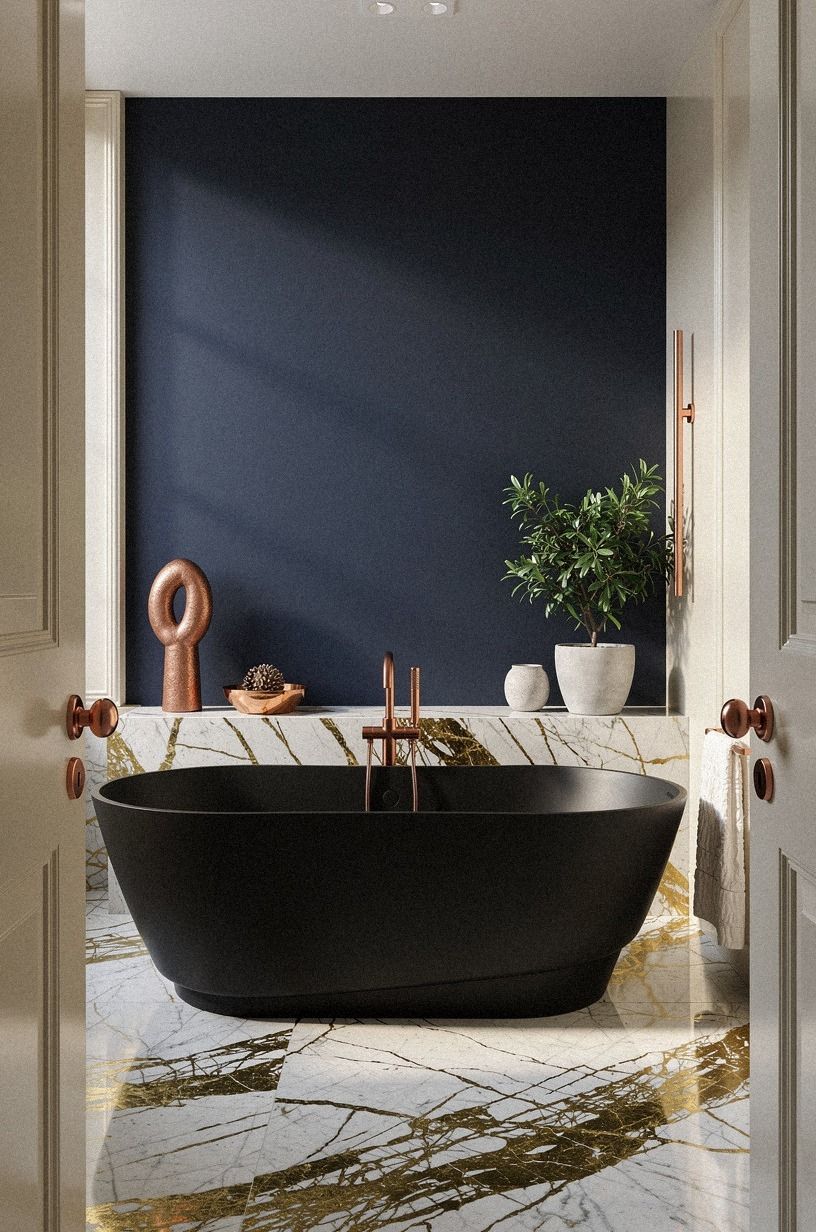
A tub in deep midnight blue can be the strongest choice in a rustic bathroom, especially if your walls and flooring are ivory. The rich finish gives the curved body presence without needing decoration. I’d choose it over another white fixture if your room already has pale tile and cabinetry.
Pair it with Calacatta marble with gold veining and copper-toned hardware. Don’t match every finish to the tub, because the room can become severe. One dark mirror frame or a navy stool is enough to echo the color without turning your bathroom into a monochrome box.
Would a dark tub work in your small space? Yes, if you keep the surrounding surfaces bright and let the tub stand alone. This bold black freestanding tub idea shows how contrast can make a small room feel more deliberate.
11Add a narrow stone ledge
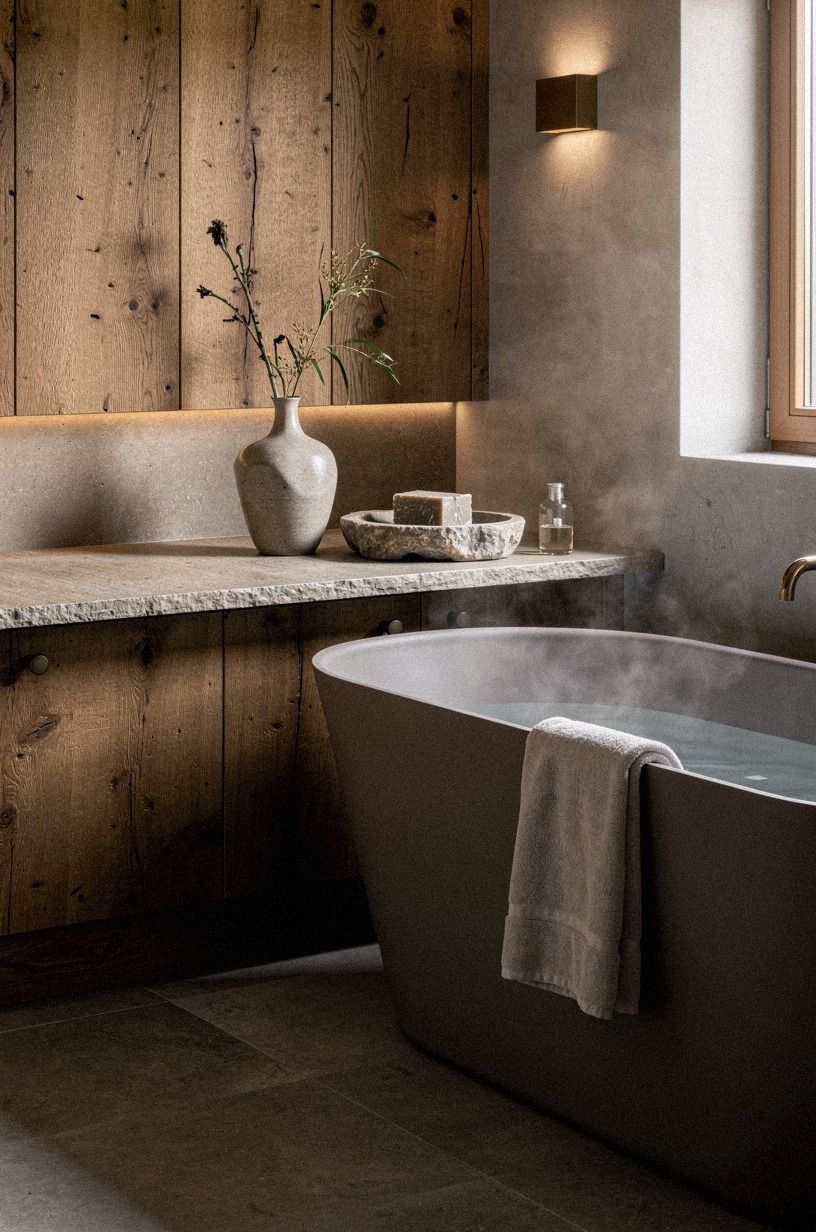
Give your tub a slim ledge in cerused white oak for soap, a book, and one glass of water. The ledge should look useful, not staged. You’ll appreciate it the first time you settle into the bath and realize you don’t have to reach across the floor.
I’d keep the ledge narrow enough that it doesn’t become a storage shelf. A few inches of depth is plenty for a ceramic cup and a folded washcloth. More surface area usually means more bottles, and your quiet room will start looking like a supply closet.
Use a softened wood finish beside sage green and warm cream surfaces. Your eye will still catch the grain, but the overall effect will stay natural and relaxed.
12Price the room before choosing finishes
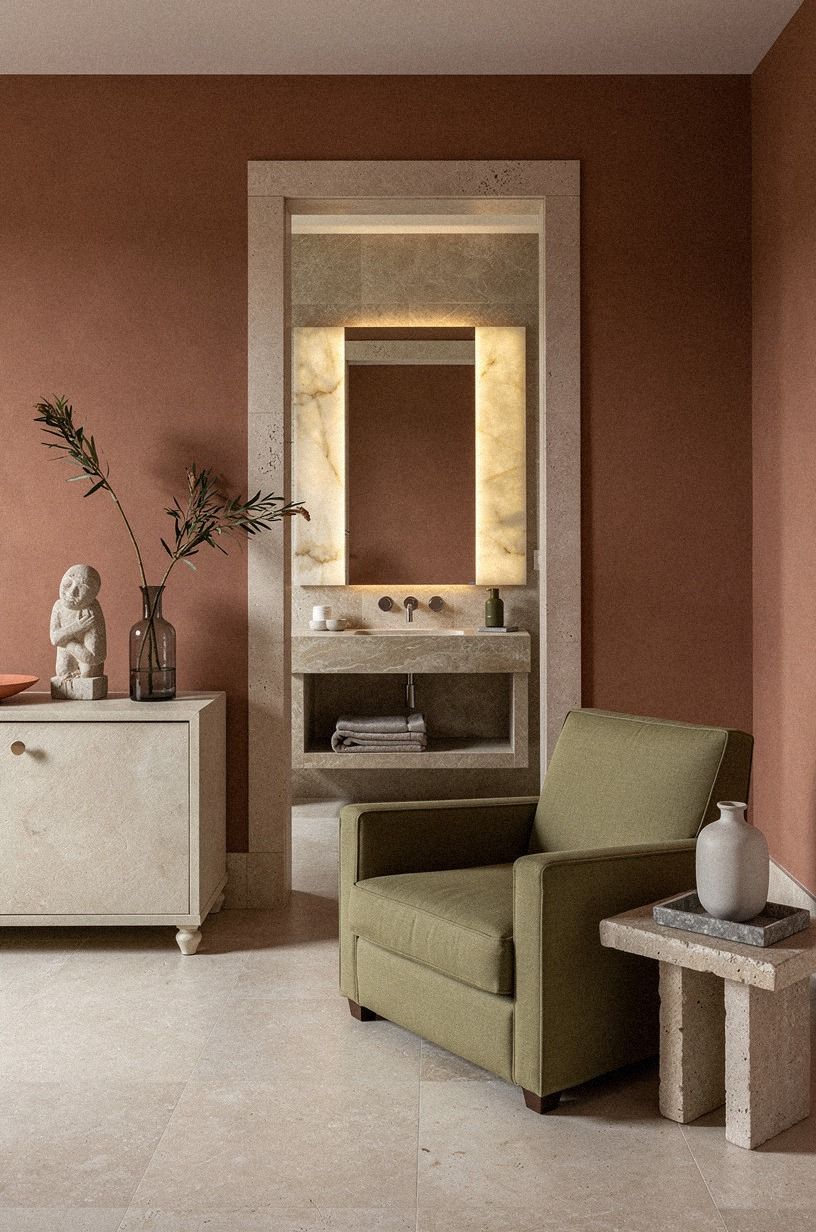
A rustic luxury bathroom can mean a new tub, or it can mean changing the surfaces around the tub.
13Keep the tub centered on the 60-by-30 footprint
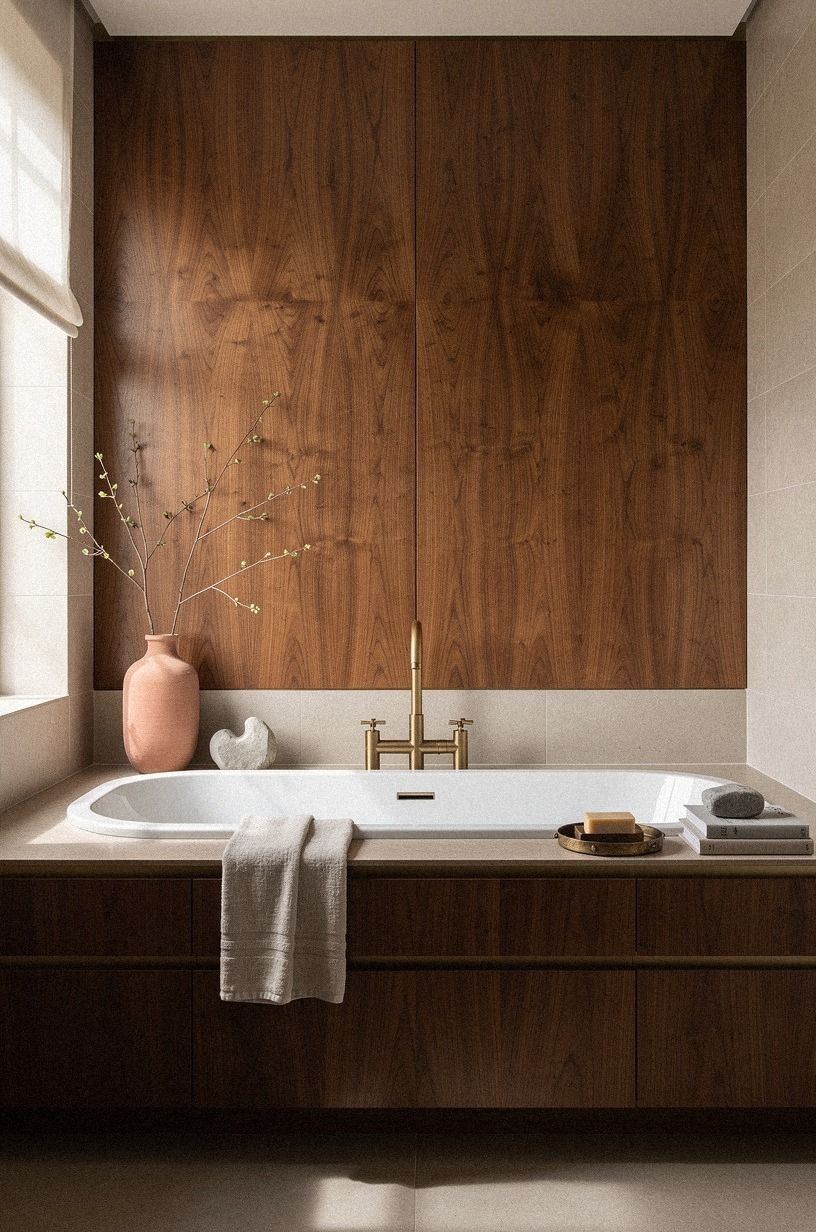
Start your layout with the standard tub footprint, 60×30 inches, before you choose furniture or accessories. That simple rectangle tells you how much room your body and plumbing will need. You’ll make better choices when the plan begins with movement instead of a mood board.
Keep your vanity around 32 to 36 inches high so the room feels comfortable for daily use. If you’re adding a shower, a comfortable minimum is 36×36 inches. Your toilet also needs at least 21 inches of clearance in front, so don’t let a pretty stool steal the passage.
I’d rather see a simple tub with generous space than a luxury fixture wedged into a crowded plan. Your bathroom should let you turn, dry off, and open a drawer without negotiating with every object.
14Mix the tub with a leather stool
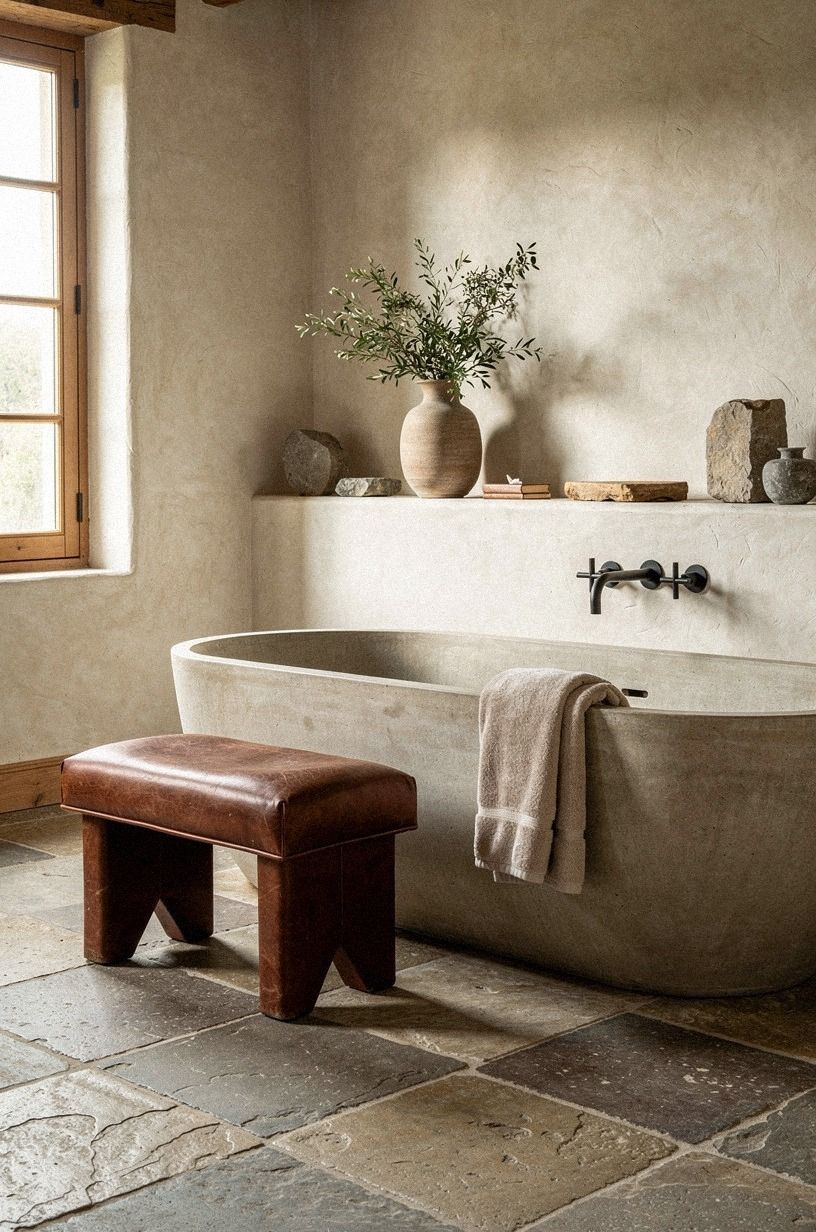
Add a small stool in warm travertine beside the tub for a warm, slightly unexpected note. Its earthy surface works beautifully with plum, grey, and rose-gold accents.
15Bring in one oversized plant
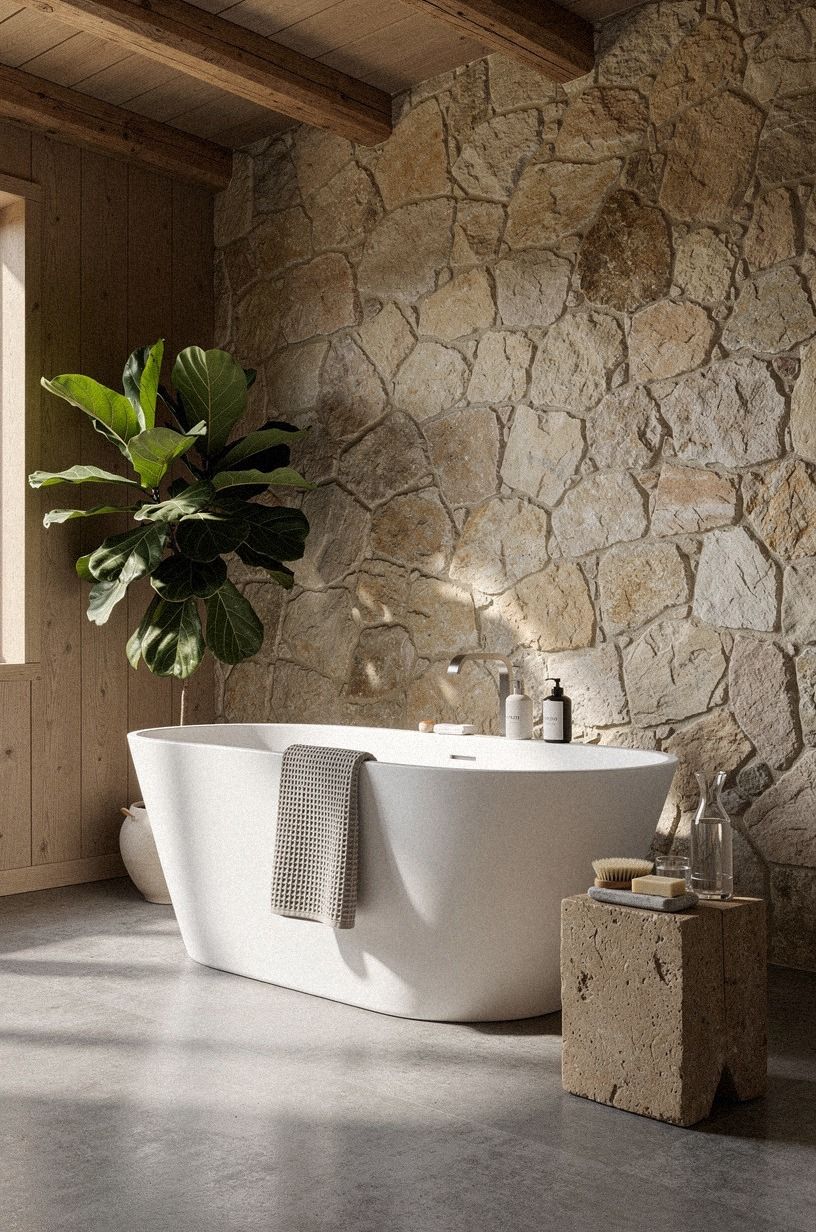
Place one plant in an unlacquered brass planter beside the tub rather than filling every corner with greenery. A tall, leafy plant gives your bathroom an organic silhouette, and the metal develops a gentle patina beside navy, white, and walnut surfaces. You’ll feel the room soften immediately.
Choose a plant that tolerates the light and humidity your bathroom already has. I’d avoid collecting several small pots because they create visual clutter and need constant rearranging. One generous plant has more presence than six neglected ones.
If your room is dim, use a realistic faux stem or move a real plant in when you’re bathing. Your goal is the shape and color, not a greenhouse. A single green leaf against Benjamin Moore Chestertown Buff HC-9 can look relaxed, warm, and quietly luxurious.
16Paint the ceiling a warmer shade
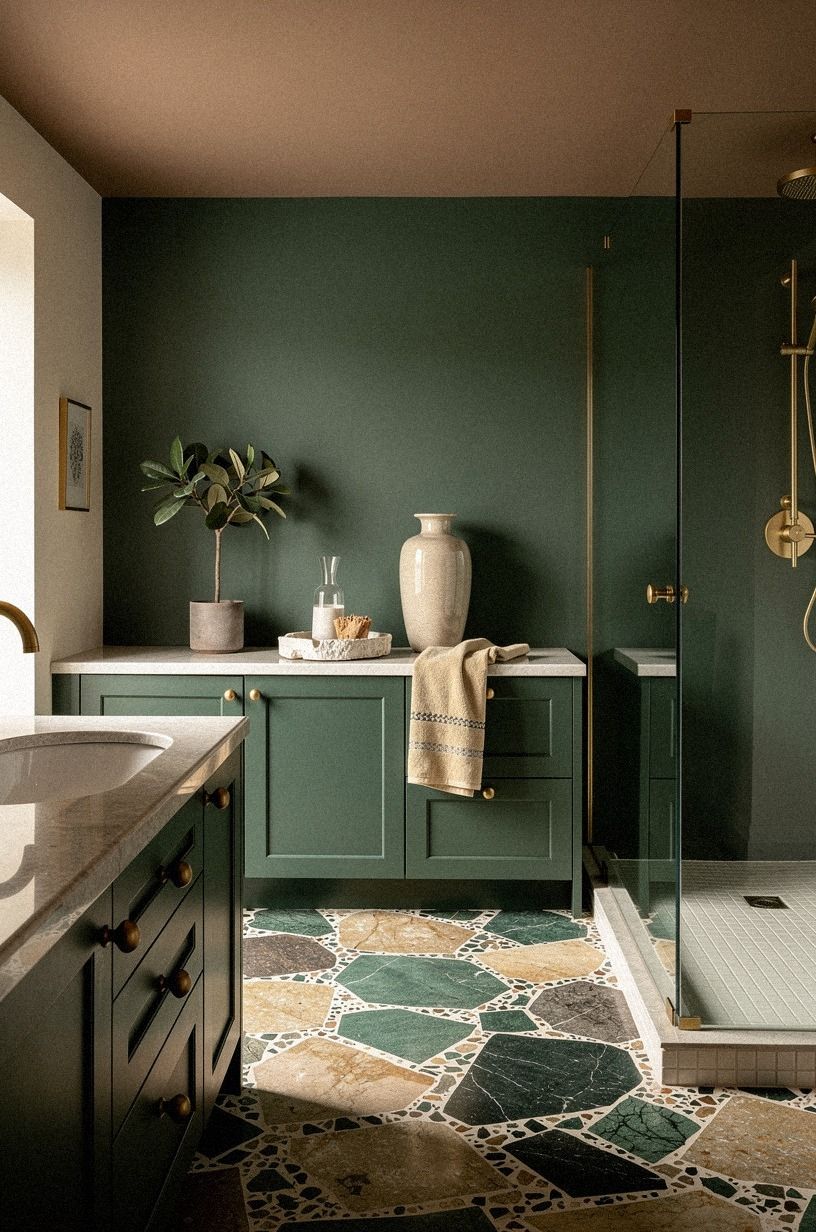
Carry a warm cream color above the tub if your walls feel stark. Pair it with oversized-chip terrazzo and aged metal for a room that feels layered without becoming busy. The soft palette gives the ceiling a calming lift without becoming sugary.
I’d avoid a bright optic ceiling beside deep wall color because the contrast can make the room feel chopped into separate planes. Let the ceiling participate in the palette, even if it’s only a shade warmer than the walls.
Your lighting will change the paint throughout the day. Test a sample near the tub, beside the mirror, and under the evening bulb. And don’t trust a tiny store card alone.
A full sample board will show you whether the color feels serene or gray in your own room.
17Hang the Three-Textile Towel System
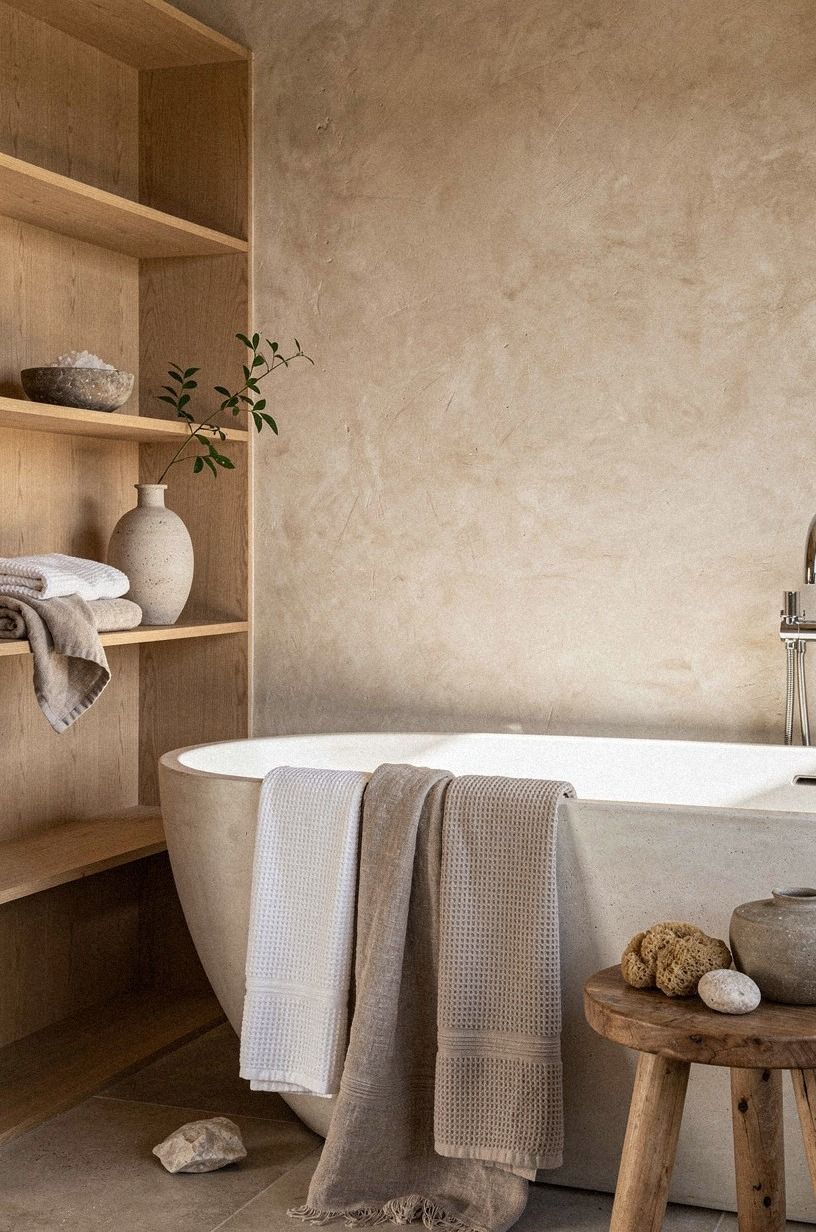
Use three towel textures: 600gsm Turkish cotton for the bath sheet, waffle weave for the hand towel, and washed linen for the face cloth.
18Let the tub breathe beside a plaster wall
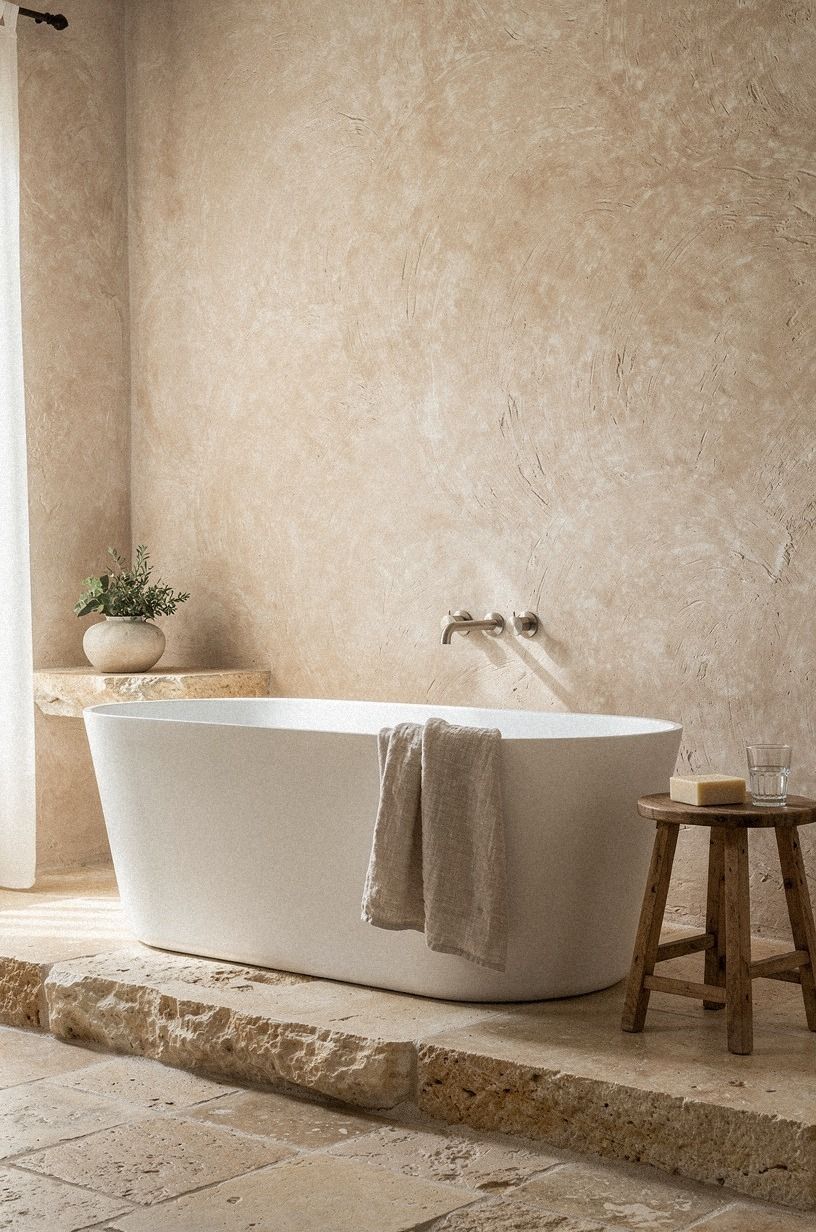
Leave one wall intentionally calm and finish it with shagreen accents or a restrained textured panel. The subtle surface gives your tub a soft backdrop, and the blank area lets the curved fixture stand out. I’d choose this over another busy tile if your room already has strong stone markings.
Place one low stool, one towel, and a small ceramic cup nearby. That’s enough. Your room will feel more sophisticated when every object has a reason to be there, and you won’t have to keep styling it after every bath.
If you’re drawn to European character, compare this restrained approach with these Parisian freestanding tub ideas. The difference is useful: rustic luxury should feel collected and comfortable, not like a showroom that nobody’s allowed to touch.
The Rustic Luxury Rule I’d Keep
I’ve designed enough bathroom corners to know that the tub rarely carries the whole room. The surrounding surfaces decide whether it feels grounded or merely expensive.
A glossy tub beside glossy tile and bright chrome can look polished, but it doesn’t give you much to feel. Add one rough surface, one warm surface, and one finish that changes with age, and the room starts to have a memory.
My favorite combination is a simple white tub, honed travertine, and cerused oak. It isn’t the most dramatic pairing, and that’s why I trust it.
The stone has tiny pits, the oak catches afternoon light, and the porcelain gives your eye a clean place to rest. I’ve tried darker combinations, too.
They’re dramatic at first, but some become tiring once the novelty fades.
You should also decide where you want the room to be quiet. If the floor has strong veining, keep the wall calm.
If the tile is hand-glazed and irregular, let the tub stay plain. I went too far once, pairing patterned tile with a carved vanity and a dark ceiling.
It felt rich in a sample board and fussy in real life. Your bathroom needs a pause.
And don’t confuse rustic with rough. A comfortable towel, a faucet that reaches the water correctly, and enough clearance to move around your tub matter more than a reclaimed beam. That’s the part that lasts.
You’ll enjoy the room longer when the beauty is attached to how easily you use it.
The Questions Worth Answering First
What is the best rustic luxury freestanding tub idea for a small bathroom?
A white tub with pale wood and one dark wall is the strongest small-space choice because it keeps the room bright while giving your eye contrast. Try an IKEA KALLAX birch-effect unit for storage, then keep your floor visually quiet. You’ll get a warm, calming result without crowding your footprint.
Where can I buy rustic bathroom decor on a budget?
Look at IKEA, Wayfair, and Target first, then check Facebook Marketplace or a local thrift shop for stools, mirrors, and baskets. Your best finds may already have the right wear. Search for ceramic vessels and solid wood pieces, not matching bathroom sets, so the room feels gathered.
How much does a rustic luxury freestanding tub makeover cost?
A cosmetic bathroom refresh can fit within the budget tier of $200 to $1,200 when you focus on paint, a mirror, a faucet, and textiles. Your existing tub can stay. A full renovation with plumbing and tile belongs in the higher ranges shown in the cost table.
Can I create this look on a budget?
Yes, and you can begin with three low-cost moves: repaint the walls, replace cool bulbs with warm dimmable bulbs, and bring in one wood stool or woven basket. Your room will feel more inviting before you change the tub. Save the largest expense for waterproofing or plumbing.
Is a rustic luxury freestanding tub worth it in a small space?
Yes, if the tub fits your circulation plan and you protect the walking path. A small room can make one strong fixture feel intentional. Keep your accessories narrow, respect the 21-inch toilet clearance, and choose a pale wall color so your tub doesn’t visually close in the space.
Is this style a good idea for a rental?
Yes, especially when you use removable changes. Try peel-and-stick wall treatment, a tension rod, a freestanding wood stool, and a removable mirror. Your existing tub can look warmer without permanent work.
I’d skip anything that traps moisture behind the wall, even if the pattern looks tempting.
Where I’d Start First
If I had to pick one, I’d start with honed travertine beneath the tub. Its pitted surface catches water and candlelight, so the room feels grounded before you add decor. Pin this idea for later and compare it with our freestanding tub wall treatment guide.