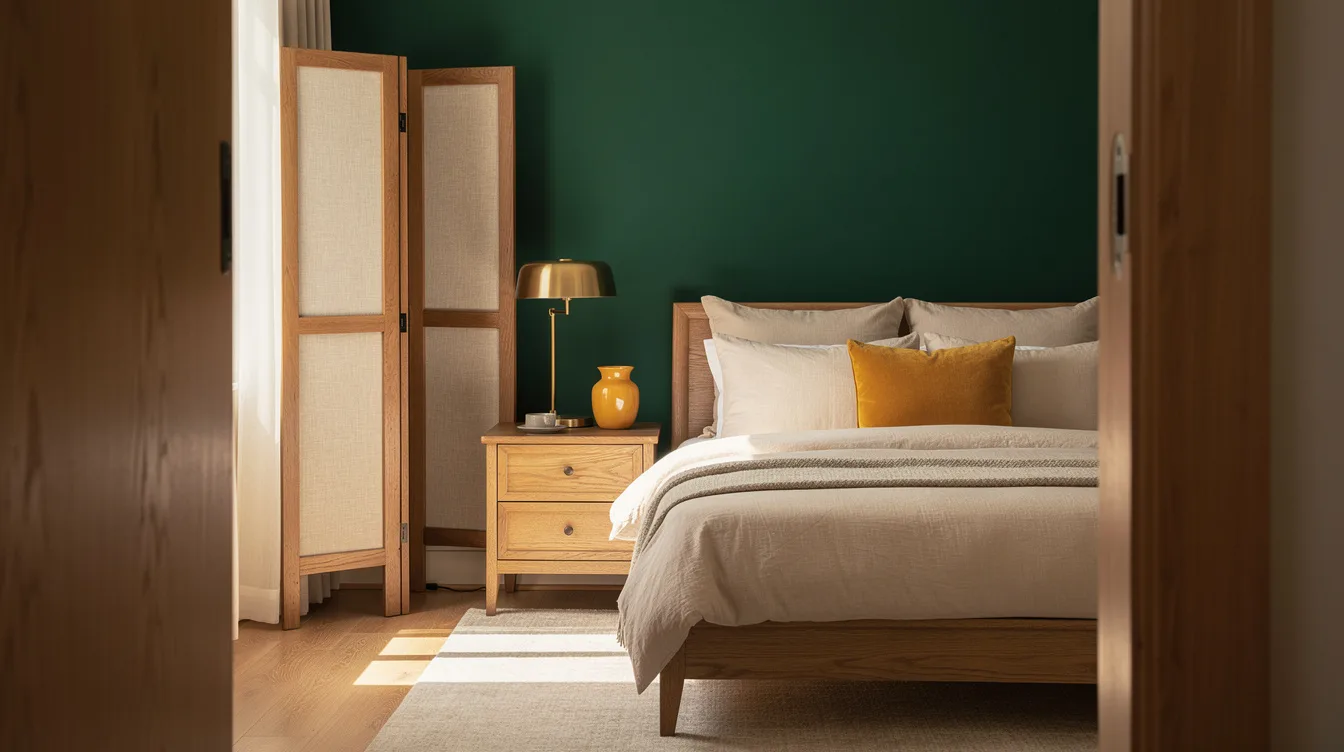
A folding screen can protect bedroom privacy without turning a small room into a maze. Start with a screen about 150 to 180 cm wide and 170 to 180 cm high, then check the usable width once it is angled.
The most useful position is beside the bed, across the doorway’s sightline, or around a dressing corner. IKEA GRÅFJÄLLET gives you a concrete starting point at a US price of $79.99 in 2026.
Choose fabric when you need to block a direct view, and choose rattan when you want a lighter visual boundary that keeps daylight moving through the room.
Block the Doorway Sightline
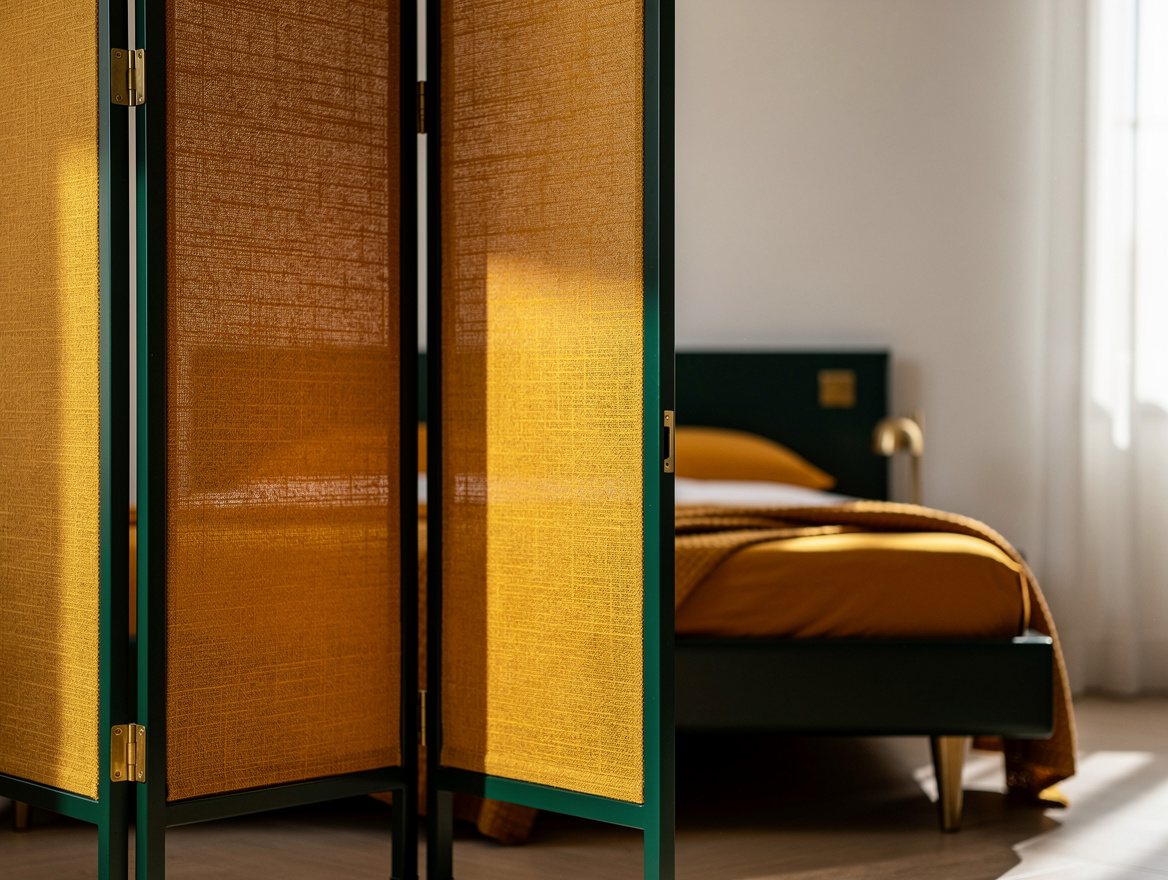
Keep the bed against its existing wall, then place the screen perpendicular to that wall near the foot or exposed side. With a 140 × 200 cm bed, the goal is to hide the pillows from the doorway while preserving a clear route around the bed.
In a room of roughly 9 to 12 square meters, a screen measuring about 150 × 175 cm gives useful coverage without creating a second wall. IKEA GRÅFJÄLLET fits this plan, with removable fabric panels and a US price of $79.99.
Leave approximately 75 to 90 cm for passage where the floor allows it, and fold the screen against a wall when privacy is unnecessary. Its powder-coated steel frame needs the sections angled for stability, so test the position before treating it as a permanent boundary.
Carve Out a Foldaway Dressing Corner
Place the screen beside the wardrobe or dresser, forming the open side of a temporary changing area. Allow roughly 90 × 90 cm for a compact standing zone, while about 100 × 120 cm feels easier to use.
Keep wardrobe doors and drawers outside the folding arc, then choose a screen with panels that block direct views. GRÅFJÄLLET’s removable polyester cover is washable and more private than an open weave, but test it with a lamp behind the panel before relying on it for changing.
Height matters as much as width here, especially for taller occupants, so aim for about 170 to 180 cm when the room can handle it. Fold the screen back after dressing to return the corner to everyday storage or circulation.
Separate the Desk From the Bed
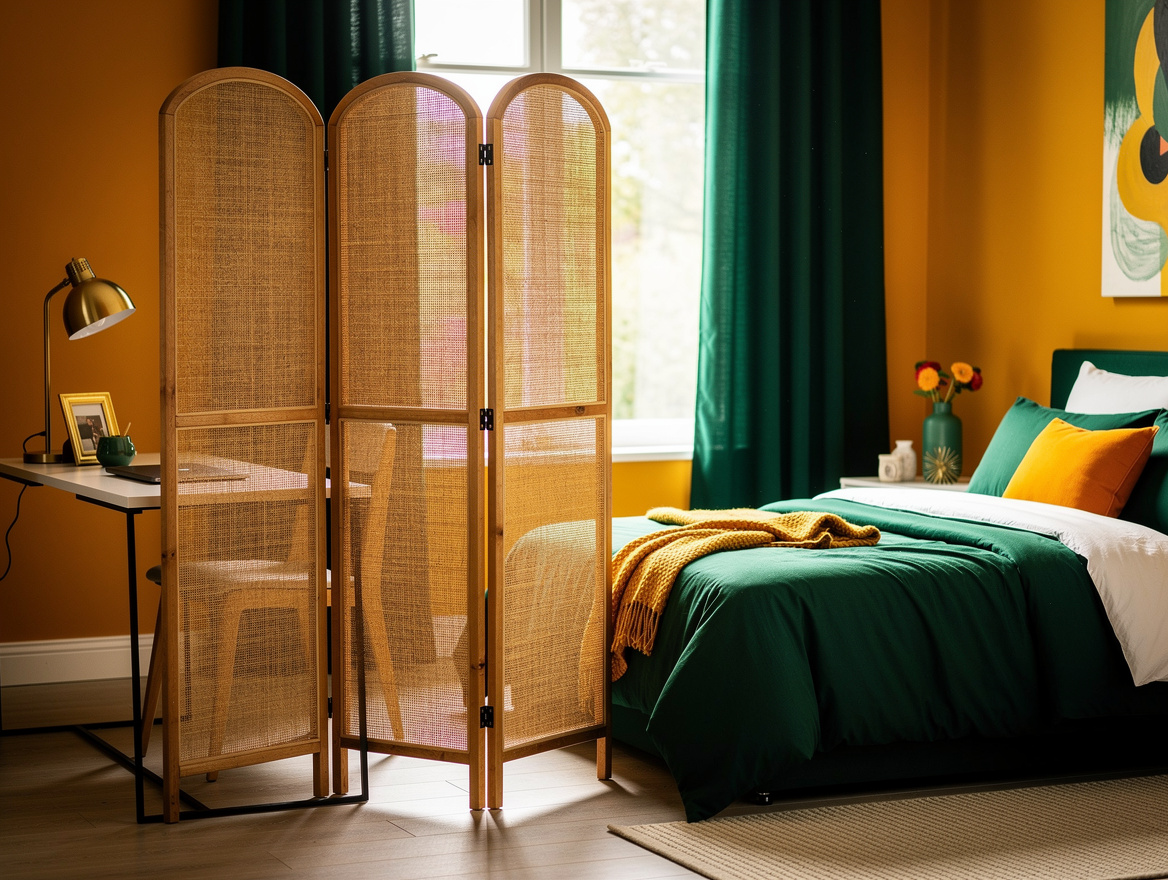
Set a compact desk against a wall and place the screen between the chair and the bed, leaving the window on the shared open side. A desk around 80 to 100 × 45 to 50 cm can fit this arrangement while keeping the screen short enough to move.
IKEA TOLKNING measures 150 × 170 cm and uses handwoven rattan over a steel frame, with a US benchmark price of $179.99. IKEA describes the weave as allowing light through, which makes it better for gentle zoning than for dependable dressing privacy.
Use this layout to soften the bed-and-work area relationship and hide visual clutter from the pillow side. The screen should stop at the edge of the desk zone, because enclosing the whole workstation will make a small bedroom feel tighter.
Frame the Foot of the Bed
A short screen at the foot of the bed creates a visual pause without dividing the bedroom into narrow lanes. Position it across only the exposed end, leaving the sides open enough for bedding changes, cleaning, and a comfortable walk around the room.
For a standard small-room bed, start with a screen around 150 to 180 cm wide and check its usable coverage once the panels are angled. GRÅFJÄLLET’s fabric surface works when the screen needs to interrupt a direct view, while its folding form lets the room open up during the day.
This arrangement is especially useful when the doorway faces the bed but the bed cannot move to another wall. Keep the screen slightly off the mattress line so it frames the bed instead of pressing the sleeping area against a rigid visual edge.
Test the Angle Before You Buy
Mark the proposed footprint on the floor with painter’s tape, then walk from the doorway, the bed, and the wardrobe to see where the screen interrupts movement. Mark both the nominal width and the wider footprint created when the panels turn toward the room.
For a light-preserving divider, IKEA TOLKNING is a sensible choice when daylight matters more than full visual coverage. For stronger direct-view control, IKEA GRÅFJÄLLET offers fabric panels, but the sections must remain folded at angles for stability.
Compare the taped layout with the two current benchmarks: $79.99 for GRÅFJÄLLET and $179.99 for TOLKNING in the US. That quick floor test tells you whether the screen is solving a sightline problem or merely adding another object to a crowded room.
Begin with the doorway test: tape the screen’s footprint, walk the room, and adjust the angle before buying. A folding screen earns its place when it solves one privacy problem while leaving the rest of the bedroom easy to use.
Keep the screen short, movable, and tied to a specific sightline. That simple decision usually matters more than adding a larger divider.
Mia Carter writes about small-space living and budget home makeovers. She has restyled three rentals and tests most ideas in her own 45 sqm flat.