
The fastest way to lose the wabi-sabi feeling is to buy a complete rustic bedroom set. A more convincing room begins with a bed for about 160 by 200 centimeters, relaxed linen, and one imperfect ceramic object.
Think pale pine or oak, chalky warm-white walls, oatmeal bedding, and a dark brown vessel. The goal is a bedroom where texture does the talking and every object has room to breathe.
Anchor the Room With Untreated Wood
The bed sets the room’s honesty, so start with untreated pine rather than a matching rustic furniture set. An IKEA TARVA listing used for this plan was about €169 without slats or about €219 with LURÖY slats, while the mattress and bedding cost extra.
Its listed mattress size is about 160 by 200 centimeters, with a frame roughly 168 centimeters wide and 209 centimeters long. Check the current IKEA configuration before buying, then let the visible knots and grain remain the main decoration.
Keep the Bed Linen Relaxed
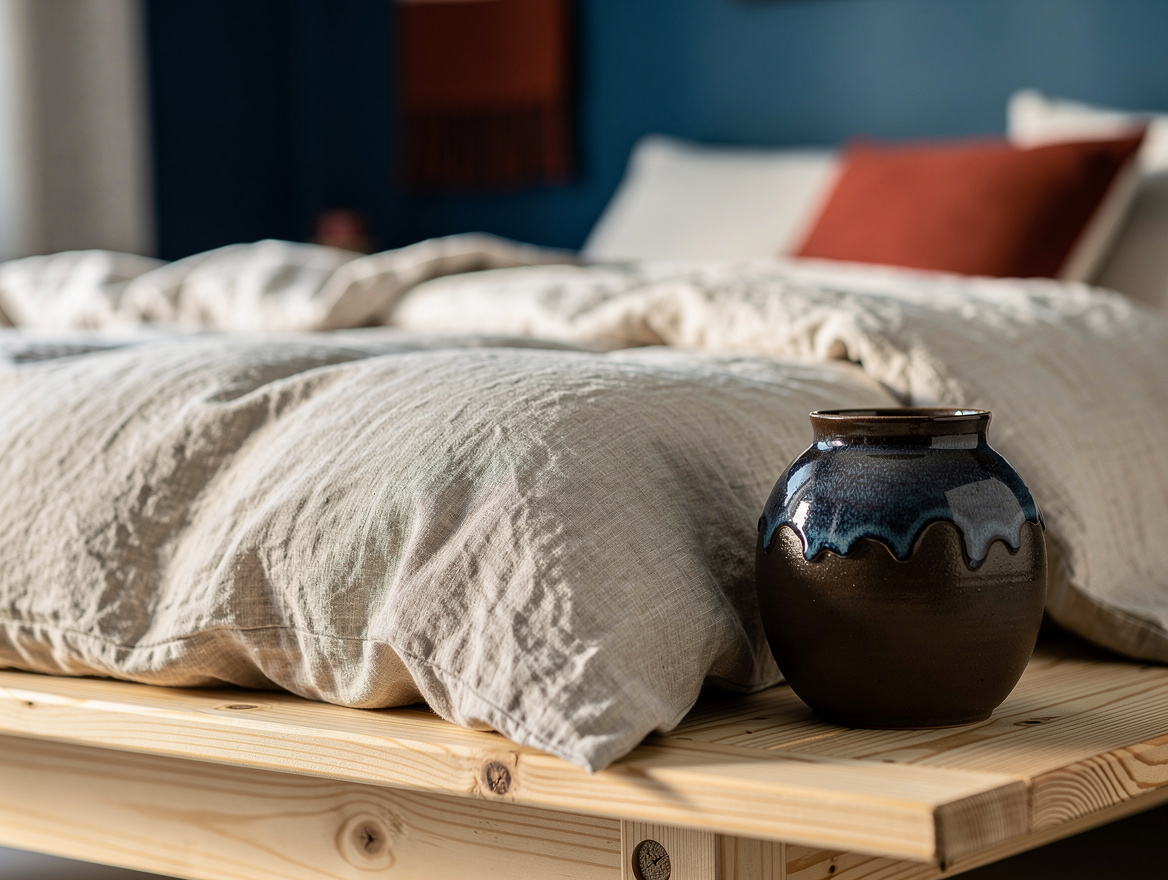
Washed linen gives the bed the rumpled surface that makes wabi-sabi feel lived-in instead of staged. Choose oatmeal, flax, or soft clay, and let the duvet fall unevenly over the sides.
One folded blanket at the foot is enough; adding several coordinated layers can make the bed look overly arranged. I prefer a plain duvet cover with one heavier throw because the texture carries the design without extra pattern.
Let One Ceramic Carry the Imperfection
Place a single dark brown ceramic vessel on the nightstand, preferably with an irregular opening, uneven glaze, or slightly squat profile. Its small flaws should be visible from the doorway, so avoid tiny decorative pieces that disappear into clutter.
Amazon and Wayfair offer broad ceramic selections, but the finish matters more than the label. Leave the vessel empty or add one dry branch; a full bouquet would shift the room toward polished farmhouse styling.
Warm Chalky Walls With Dark Contrast
Chalky warm-white paint keeps pale pine and oatmeal bedding from becoming washed out. Look for a soft undertone rather than a sharp blue white, especially if the room receives cool morning light.
Add contrast through the ceramic, a dark wood stool, or a simple brown picture frame. The room needs one grounded note, and dark brown works better here than black because it keeps the natural materials feeling connected.

Leave Breathing Room Around the Bed
A solid-wood bed needs visual space around it, so measure the walking paths before bringing home a dresser or bench. A low frame generally feels calmer than a tall, heavily carved headboard, particularly in a smaller bedroom.
Keep one bedside surface clear except for the ceramic and a warm reading light. If the bed fills most of the room, skip matching nightstands and use one small stool instead.
Edit the Room Until Texture Wins
Wabi-sabi depends on visible timber grain, crumpled fabric, and uneven ceramic finishes working together. Each object should add a different surface, while repeated colors keep the composition quiet.
Remove artificial distressing, glossy accessories, and decorative clutter before adding anything new. Begin with the bed, linen, and one vessel, then live with the arrangement for a few days before deciding whether the room needs another piece.
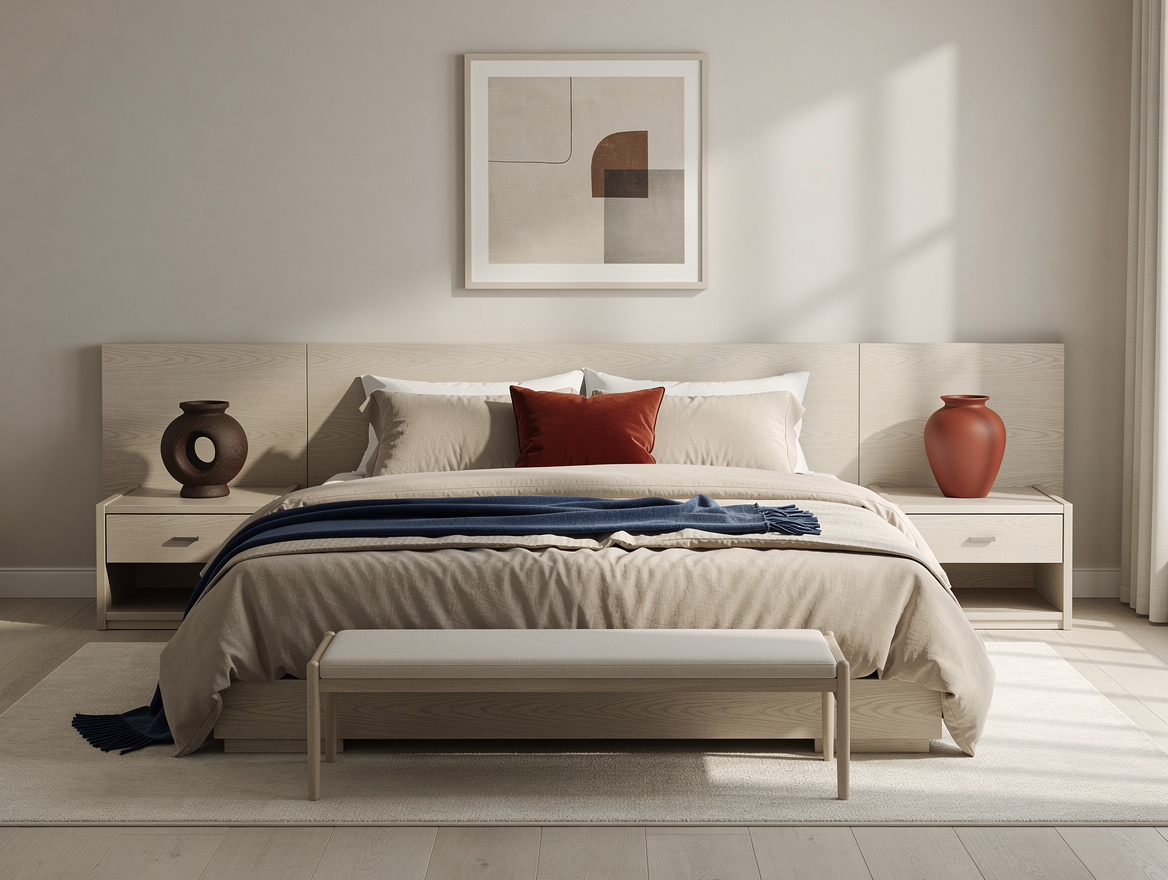
Start with the bed and remove anything that competes with its grain. Once the linen and one dark ceramic feel right, stop shopping and let the room remain slightly unfinished.
Mia Carter writes about small-space living and budget home makeovers. She has restyled three rentals and tests most ideas in her own 45 sqm flat.