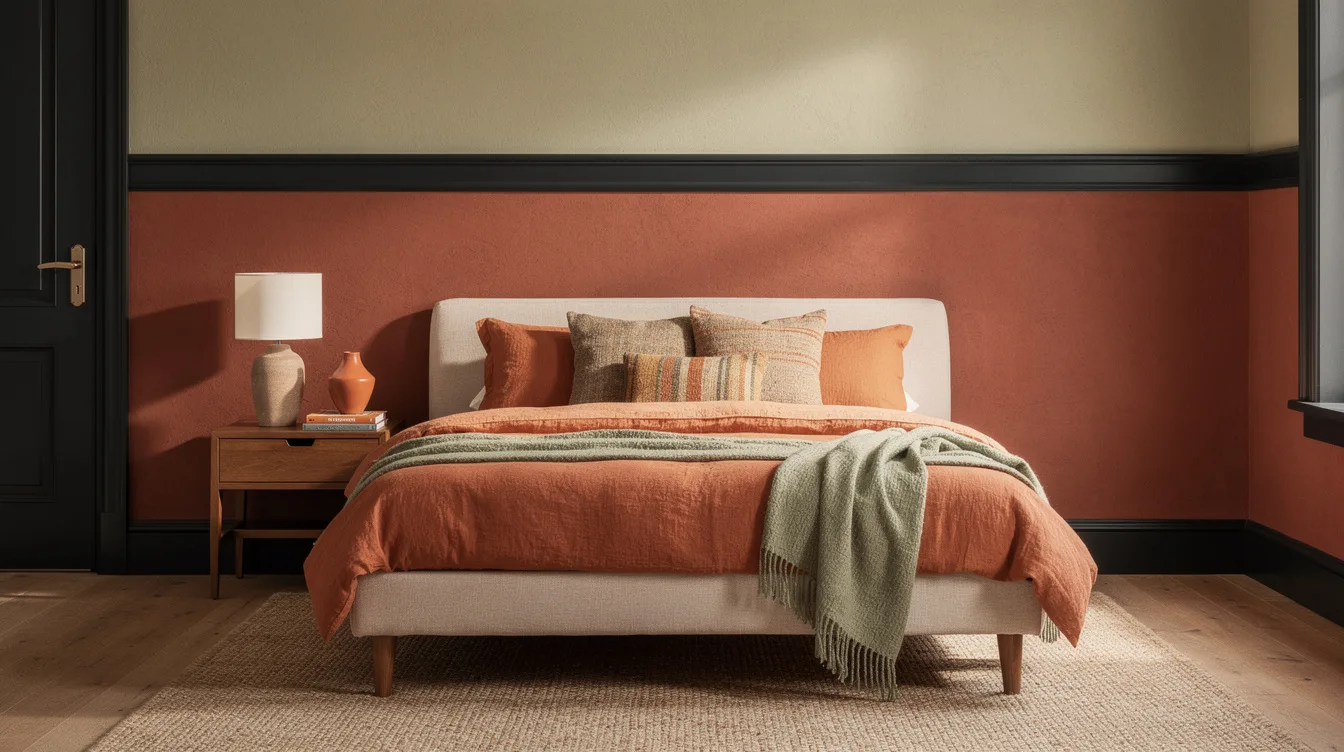
A color-blocked bedroom can lose its nerve at the ceiling, especially when the trim is left as an afterthought. The most convincing plan uses three colors, with the wall split roughly 42 to 48 inches above the floor.
That structure gives the room a graphic edge without requiring new molding or expensive furniture. The key is to make the ceiling, trim, and bed work from the same visual map.
Start With a Three-Color Map
Build the room around three jobs: one main wall color, one ceiling or upper-wall color, and one deliberate trim color. That limit keeps a painted ceiling from becoming a random accent, and it gives every surface a clear role.
For a grounded scheme, borrow the earthy pairing from Claire Thomas’s documented Mamrie Project: Dunn-Edwards Greenland DE6286 on the lower walls and Dunn-Edwards Tan Plan DE6137 above. Add a dark brown to existing baseboards, doors, and casings for the third color.
Carry the Upper Color Across the Ceiling
Let the upper-wall color continue across the ceiling so the room reads as one composition. This move is especially convincing in a small bedroom because the overhead surface feels connected to the walls instead of floating above them.
A saturated ceiling can work just as well. Dunn-Edwards Chartreuse DEA123 appears in Jessica Whitaker’s bedroom reference, and my preferred adaptation pairs it with warm off-white walls and deep olive casings.
Place the Split Above the Headboard
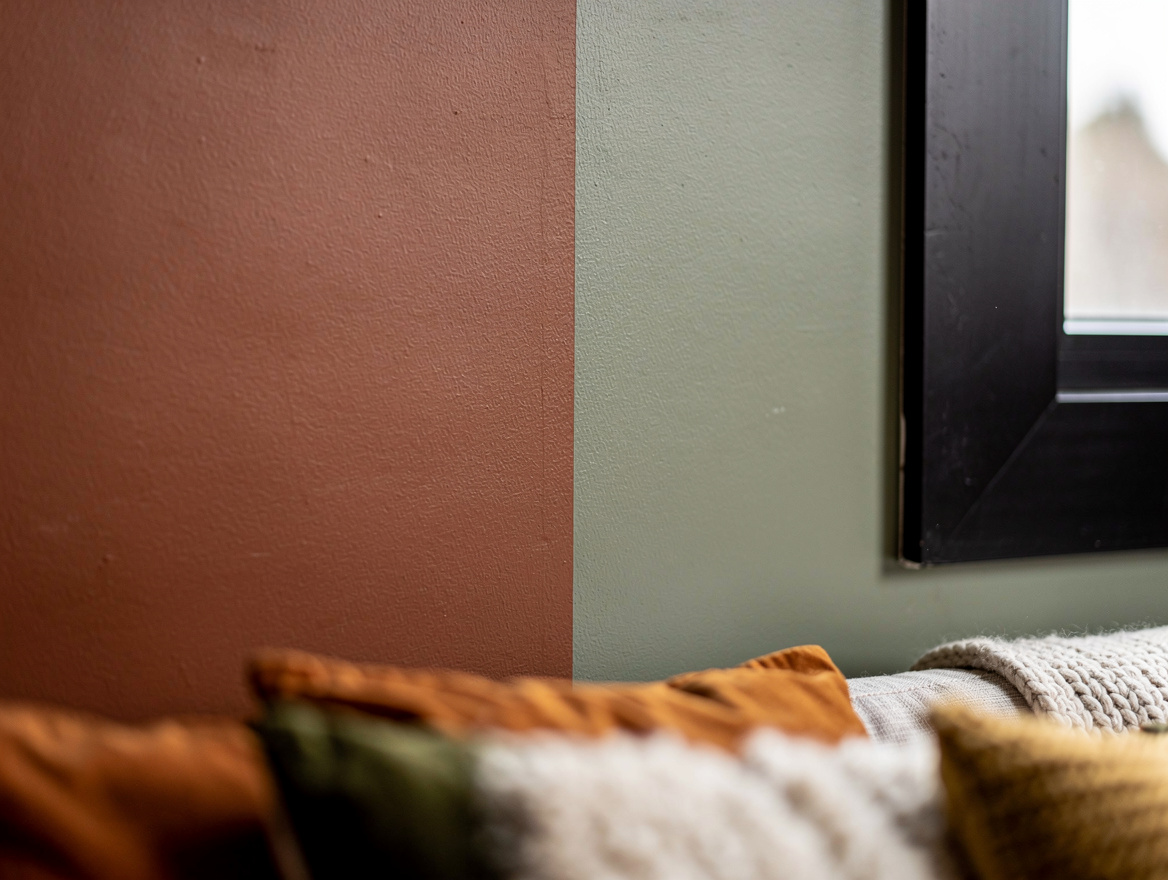
Set a horizontal division roughly 42 to 48 inches above the floor, or about 107 to 122 centimeters, then check it against the bed before taping. The line should sit clearly above or below a tall headboard, never almost touching its top edge.
Keep existing baseboards if they measure around 4 to 6 inches tall. Replacing them only to create contrast wastes money; a careful coat of Home Depot Behr paint can make the original molding feel intentional.
Frame the Room With Existing Trim
Use the door, window casings, baseboards, and door as a visual frame, then repeat one trim color across those pieces. Deep olive, charcoal, or dark brown will give a pale lower wall enough structure without adding new architectural details.
For a softer outline, paint the baseboards the same color as the walls and reserve the contrast for casings and doors. A satin finish from Benjamin Moore Aura is a practical reference for trim because it adds gentle definition beside an eggshell wall finish.
Choose Finish Before You Tape
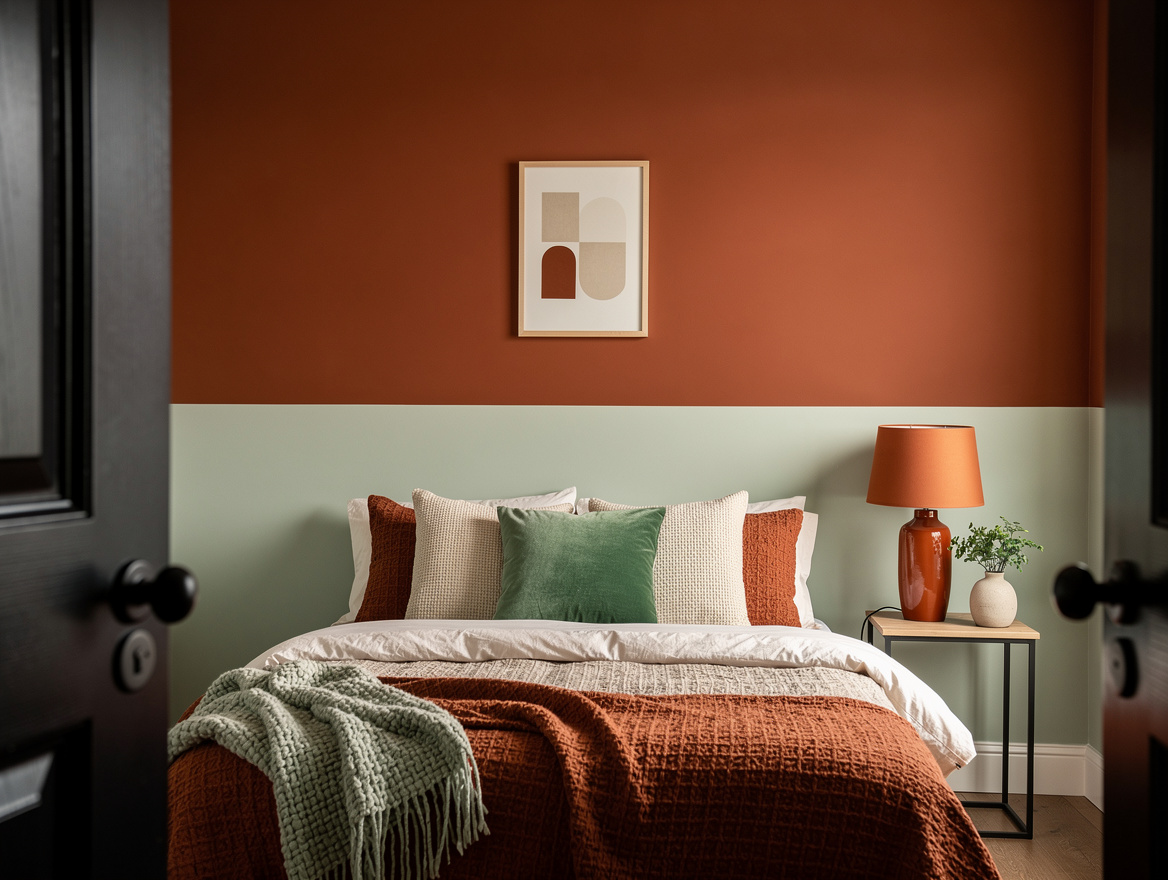
Finish changes how sharply the blocks read, so decide it before masking. The DIY Playbook’s Boothbay Gray bedroom uses Aura eggshell on the walls and ceiling with Aura satin on trim, a useful combination even when you introduce a pale lower-wall block.
Use a small sample board to test the colors in morning and evening light. Lowe’s FrogTape can help create a crisp edge, but the tape cannot rescue dusty walls, loose paint, or a damp surface.
Budget the Masking and Repairs
A straightforward DIY repaint of a small bedroom will typically cost about $200 to $450, depending on paint quantity, repairs, tools, and the condition of the walls. Professional work will usually run approximately $800 to $1,600, with intricate masking and patching pushing the total higher.
Protect the budget by keeping the existing trim and using sample pots before buying full gallons. A simple IKEA MALM bed can sit comfortably inside the scheme, while the paint geometry provides the visual interest.
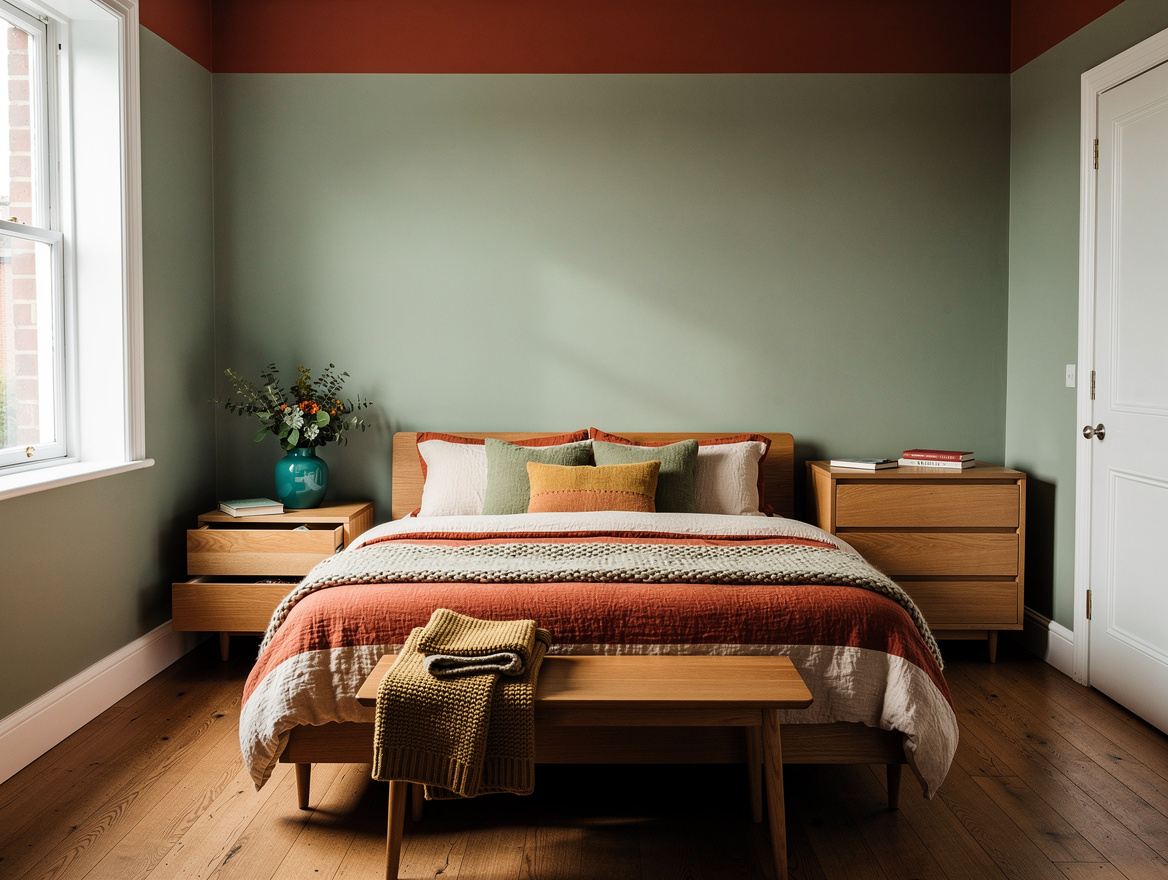
Begin with sample boards, mark the split beside the bed, and paint the upper color across the ceiling before touching the trim. That order reveals whether the room feels balanced while the fixes are still inexpensive.
Mia Carter writes about small-space living and budget home makeovers. She has restyled three rentals and tests most ideas in her own 45 sqm flat.