Travertine and black bathroom ideas can feel warm, modern, and bold without turning your room into a cave. I learned that after pairing dark grout with pale stone and regretting the heavy look for months. The fix was softer texture, better spacing, and one warm metal. These 17 ideas show where each choice works best.
- Layer travertine with matte black bathroom interior design modern
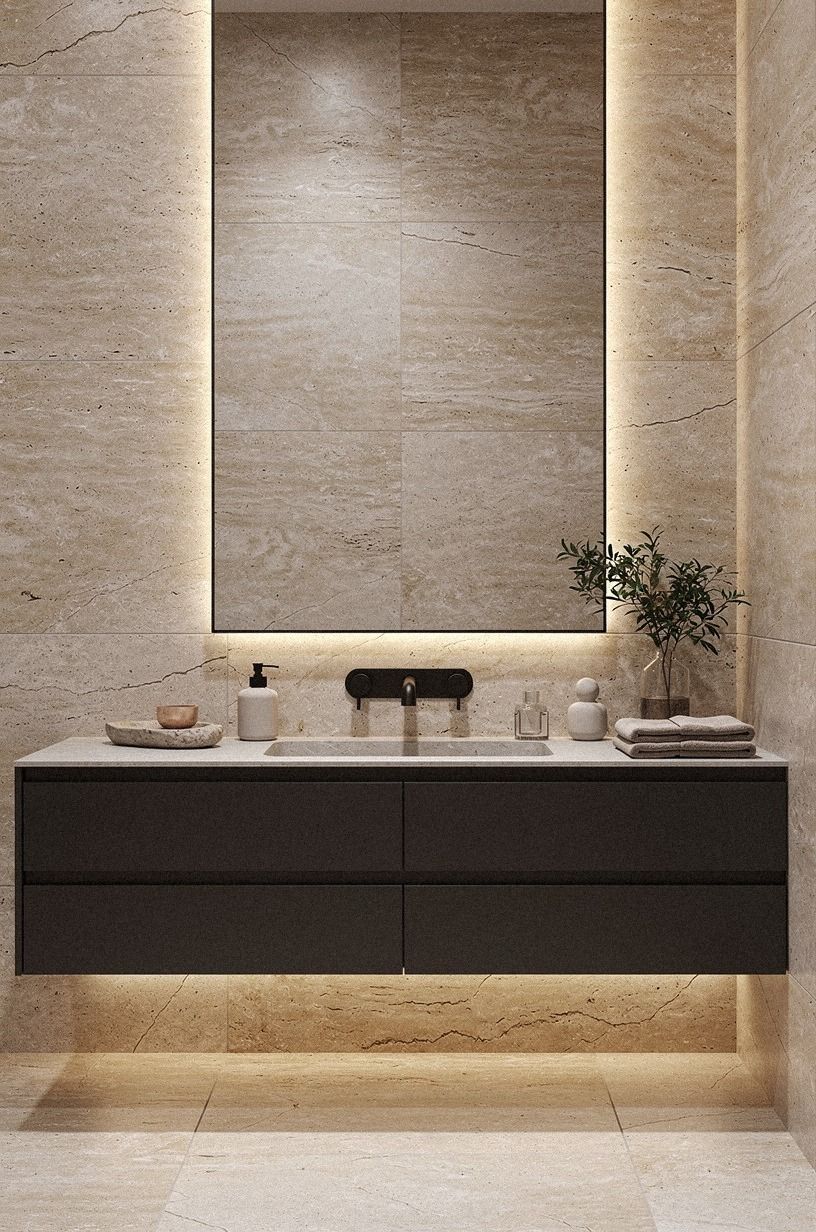
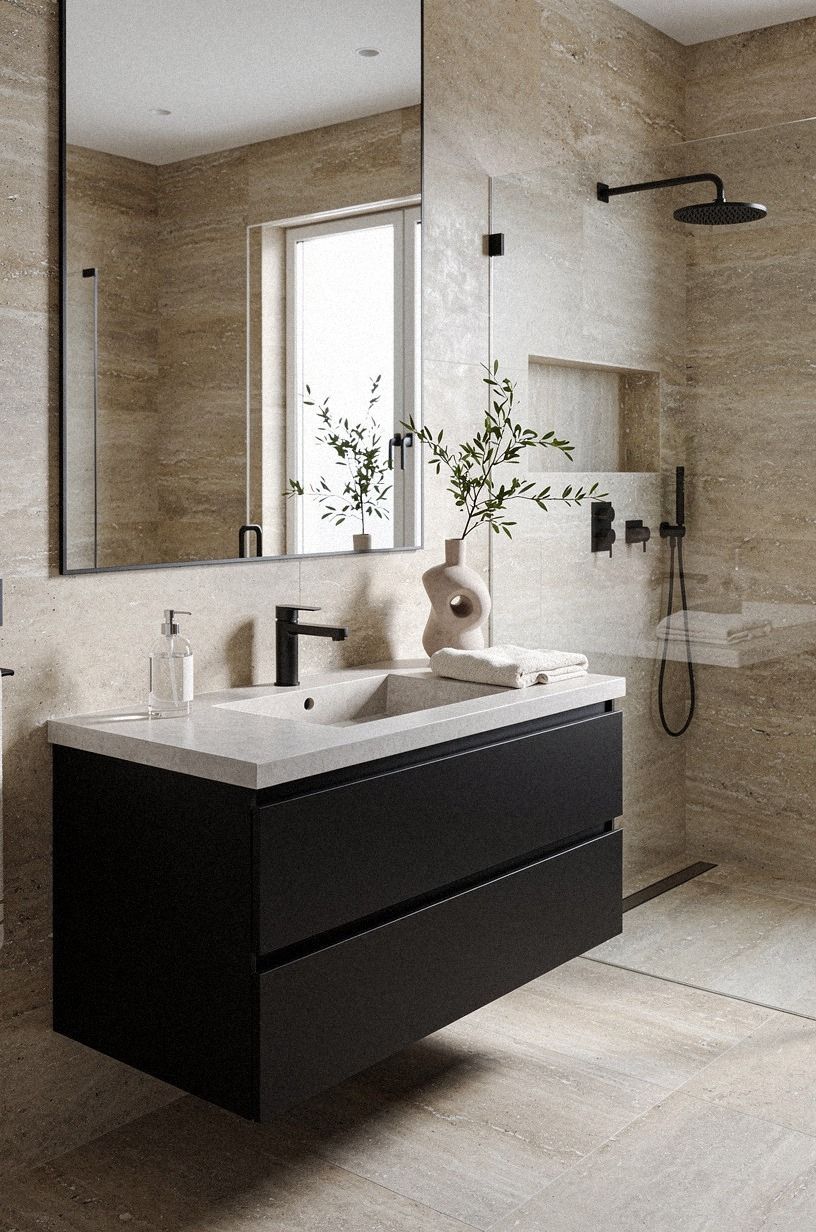
- Float a chunky vanity over warm stone
- What does the Two-Wood Rule change in a stone bathroom?
- Frame the mirror with aged black metal
- Farrow & Ball Hague Blue: when should it lead?
- Build the Three-Height Light Stack
- Swap a black tub for a black faucet
- Black border or pale travertine field?
- Hang linen beside a warm stone bathroom
- Mix black tile with brushed brass
- Benjamin Moore Chestertown Buff and the warm wall
- Choose costs before you choose tile
- Above black tile, a floating travertine shelf
- Place a black vanity over warm floor tile
- Use the Edge-Softening Ratio instead of more decor
- Sherwin-Williams Sea Salt for a softer contrast
- Frame a compact shower with black glass
1Layer travertine with matte black bathroom interior design modern
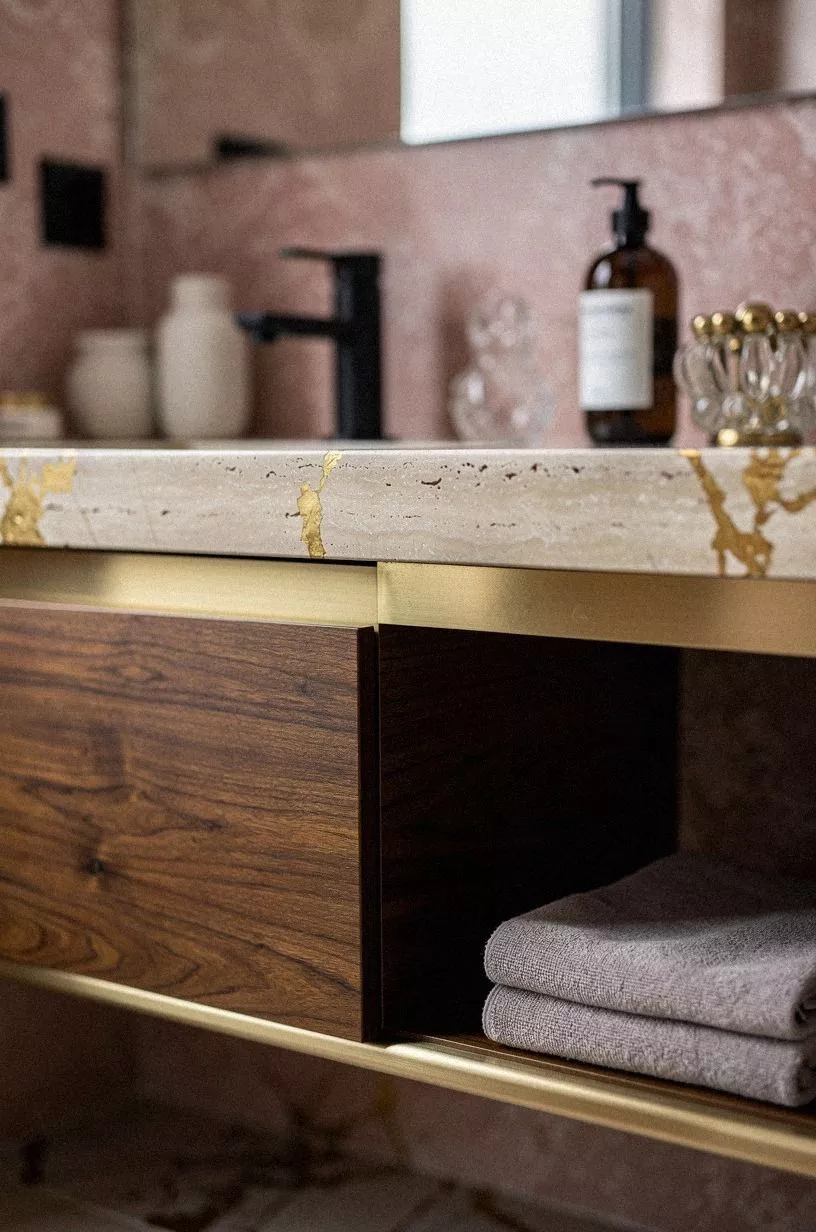
Start with Calacatta marble with gold veining on the floor or vanity wall, then let charcoal tile handle the strongest contrast. The marble’s veining catches the light, while the charcoal surface absorbs it. If your bathroom is narrow, keep the dark material below eye level so you’ll get drama without losing visual height.
I’d skip glossy charcoal tile here. It reflects every water mark and makes the marble look busy instead of grounded. Choose a marble-look porcelain tile if you need easier care, then pair it with charcoal grout in the shower and warm white grout elsewhere.
You’ll get a calmer transition. See these organic modern travertine bathroom ideas if your room needs more wood and less contrast.
You can also reverse the ratio. Let the marble cover most of the room, then use charcoal around the niche and vanity with aged brass at the faucet. That approach gives you a room you’ll still enjoy when the trend cycle moves on.
2Float a chunky vanity over warm stone
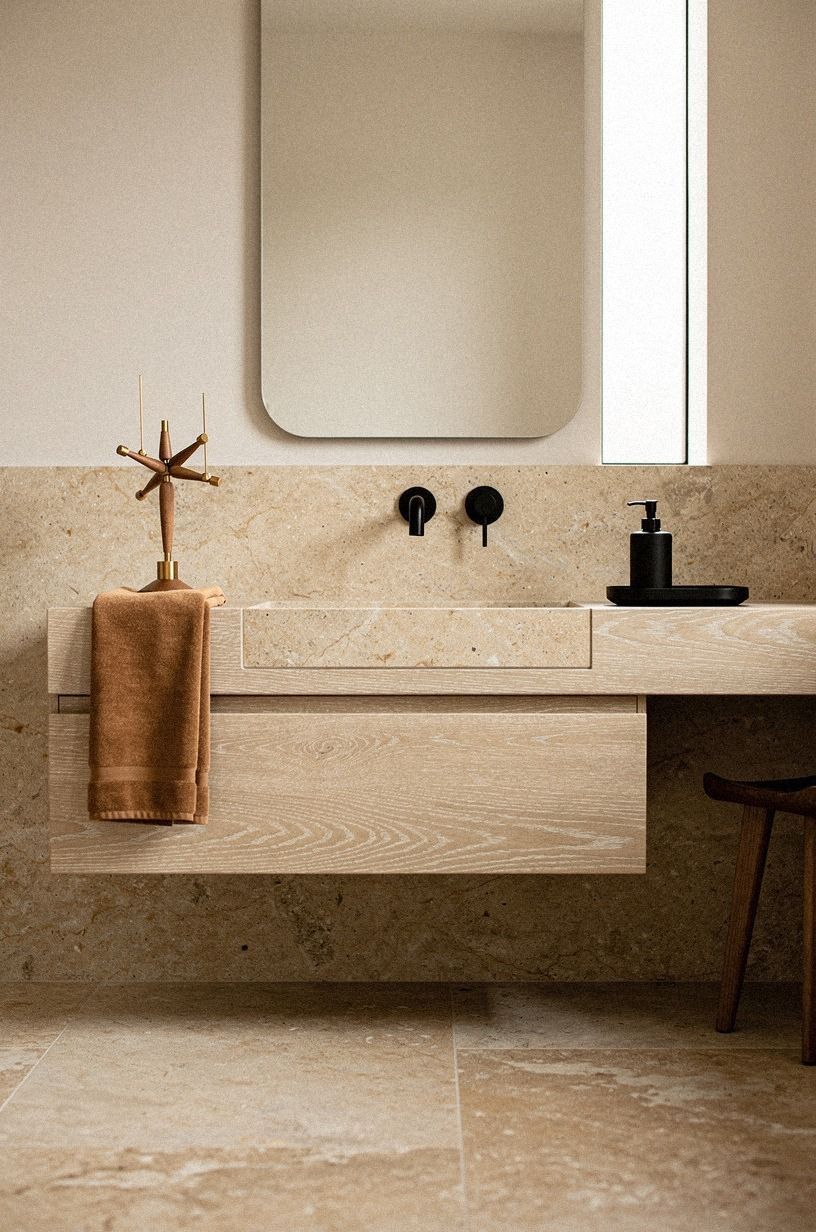
A wall-mounted vanity in cerused white oak gives warm stone room to breathe beneath it, especially if your floor has a warm white or camel tone.
3What does the Two-Wood Rule change in a stone bathroom?
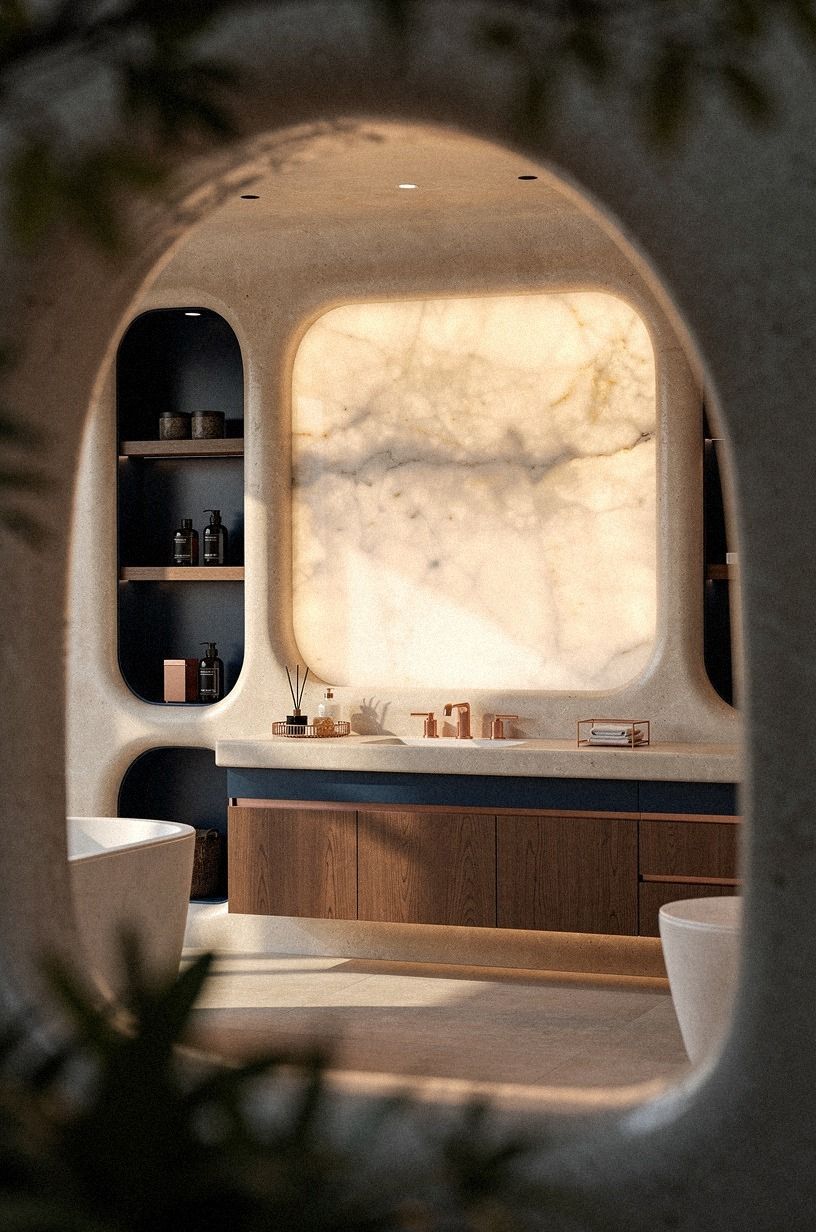
The Two-Wood Rule keeps a backlit translucent onyx bathroom from becoming a pile of unrelated beige samples. Let midnight blue carry the deepest value, then use copper and ivory to keep the stone luminous.
You don’t need three competing warm tones to make the space feel collected. In fact, I’d avoid a reddish brown that fights the copper and dark blue.
Try copper hardware with an ivory stool or shelf instead. You’ll have enough variation, but the room will still feel intentional.
An ivory towel, a copper edge, and the glow of the onyx can do more than another decorative object. That restraint is useful when your stone already has movement. You’re giving the eye somewhere to rest.
4Frame the mirror with aged black metal
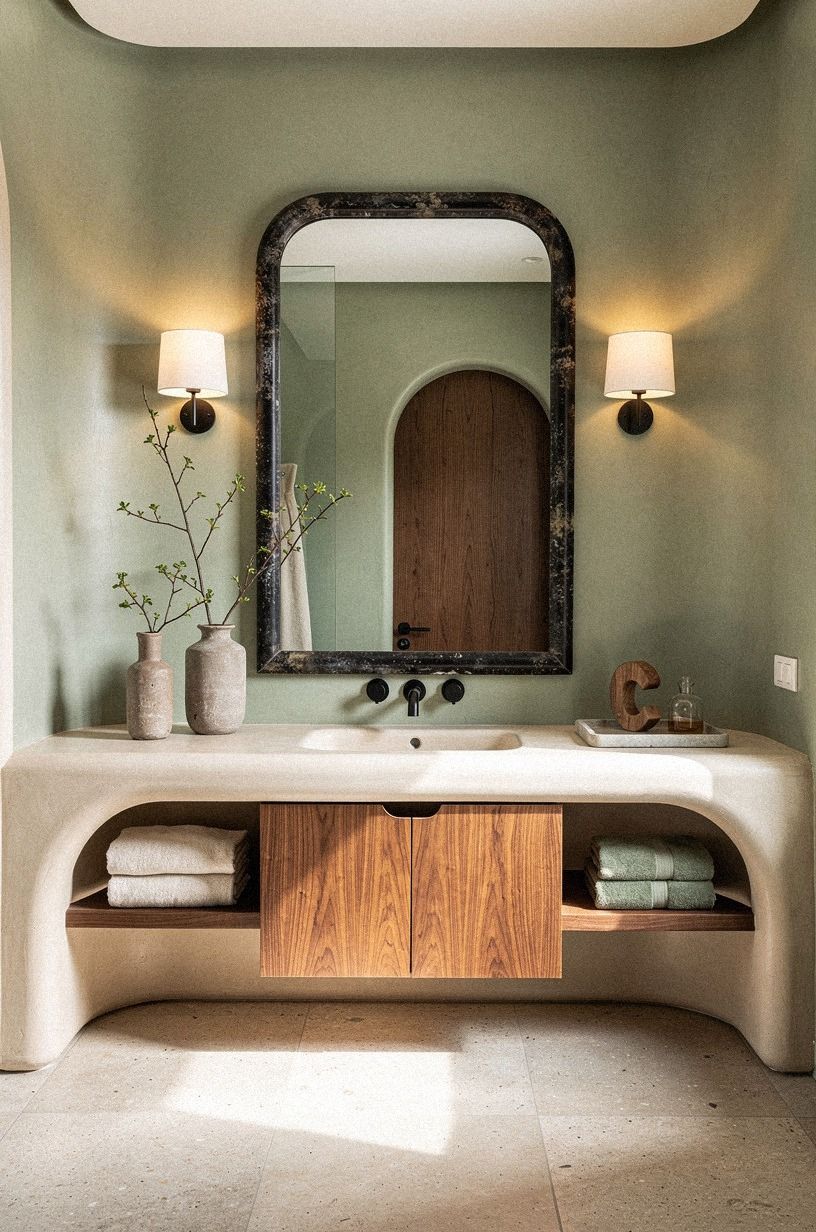
A mirror with a book-matched walnut surround is an easy way to repeat the dark warmth without covering another wall in tile. Choose natural wood if your room uses sage green and warm cream, or a deeper walnut if the room feels too pale. The mirrored surface doubles the room’s light, so you’ll want the wall behind it to stay quiet.
For a compact bathroom, a rounded rectangle softens all the hard corners. A 24-by-36-inch mirror above a single vanity can feel generous without crowding the faucet. I’d pass on a heavy industrial surround because it makes the walnut look rustic in a forced way.
If your room needs a cooler companion, browse these silver travertine bathroom ideas before choosing the stone. You may find that pale cream feels too sharp beside gray surfaces, while sage green gives you a quieter transition.
5Farrow & Ball Hague Blue: when should it lead?
Black hardware doesn’t require black walls. Paint the ceiling or one vanity wall a muted terracotta, then keep the warm travertine pale and the trim soft stone. The terracotta pulls warmth into the room, while olive gives the darker value a sophisticated edge.
You’ll want to test this color beside your actual tile because artificial light can turn terracotta nearly brown after sunset. I’d use it in a powder room or a bathroom with a window, not a windowless space with one overhead bulb. Add warm travertine for a gentle transition.
If the terracotta feels too dramatic, a pale stone tone on the other walls will keep your eye from getting tired. You can also use olive inside a recessed niche, where the color feels deliberate rather than overwhelming. That small move can change the entire room!
6Build the Three-Height Light Stack
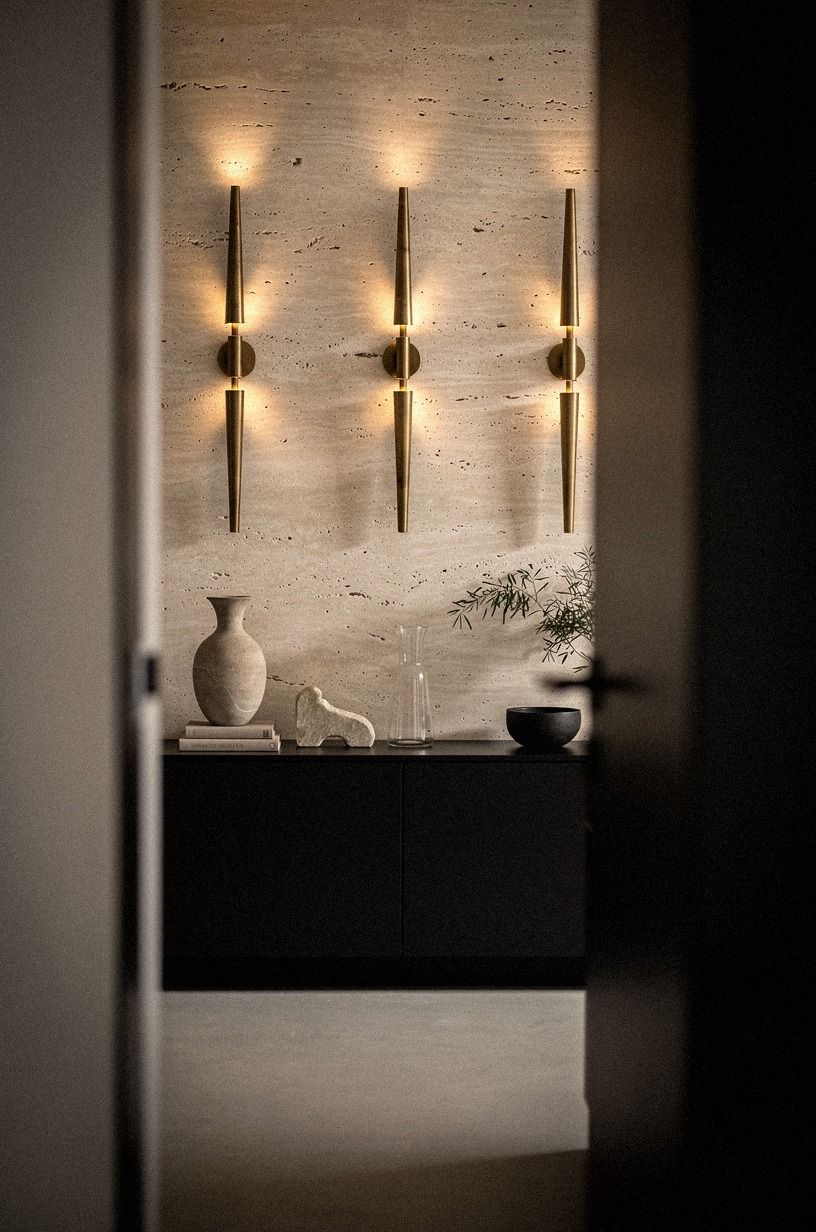
The Three-Height Light Stack uses light at the ceiling, mirror, and waist level. Start with a soft ceiling fixture, add sconces beside the mirror, then place a tiny rechargeable lamp on a shelf or vanity ledge. Linen shades spread a gentle glow across clay-toned surfaces and make the aged brass details look less severe.
Your sconces should sit close to eye level, and you’ll want dimmable bulbs so the room can shift from morning brightness to evening calm. I’d skip a single pendant over the sink because it casts shadows under your eyes. A warm 2700K bulb, aged brass canopy, and unlacquered brass stem will look inviting without turning the bathroom yellow.
For more lighting direction, see these black and beige bathroom ideas. You don’t need three statement fixtures. You need three useful levels of light.
7Swap a black tub for a black faucet
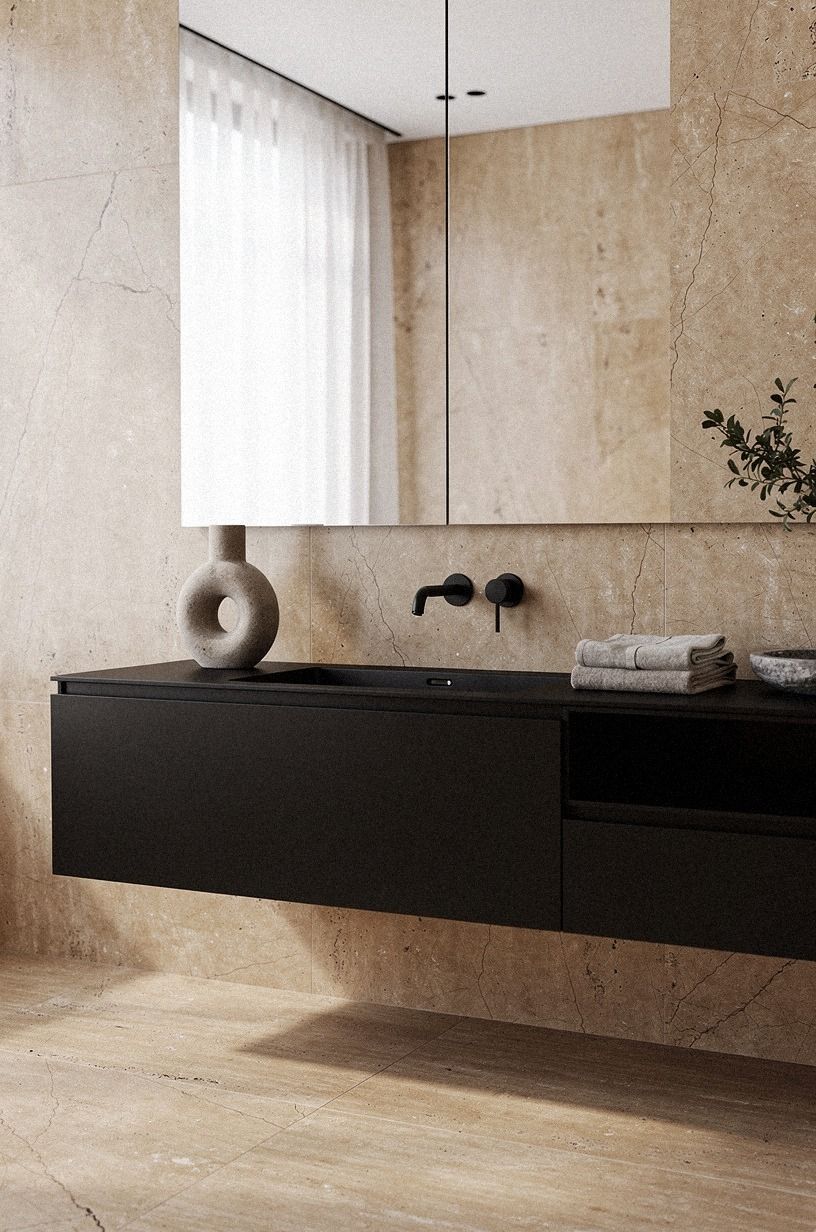
A rose-gold faucet gives you contrast in a smaller dose, which is useful when your bathroom already has strong oversized-chip terrazzo. Pick a clean widespread faucet and repeat the finish on the drain, cabinet pulls, and towel ring. You’ll create a rhythm instead of scattering random metallic accents.
The faucet should relate to the sink, not compete with it. A shallow vessel sink can look dramatic, but it steals counter space and sends water farther than you’d expect. I’d choose an undermount basin with a terrazzo counter for daily use.
You don’t need to replace every fixture at once. Start with the faucet, then live with it for a week before deciding whether the mirror surround needs to match. If you prefer a softer palette, compare this restrained approach with these black and pink bathroom ideas.
8Black border or pale travertine field?
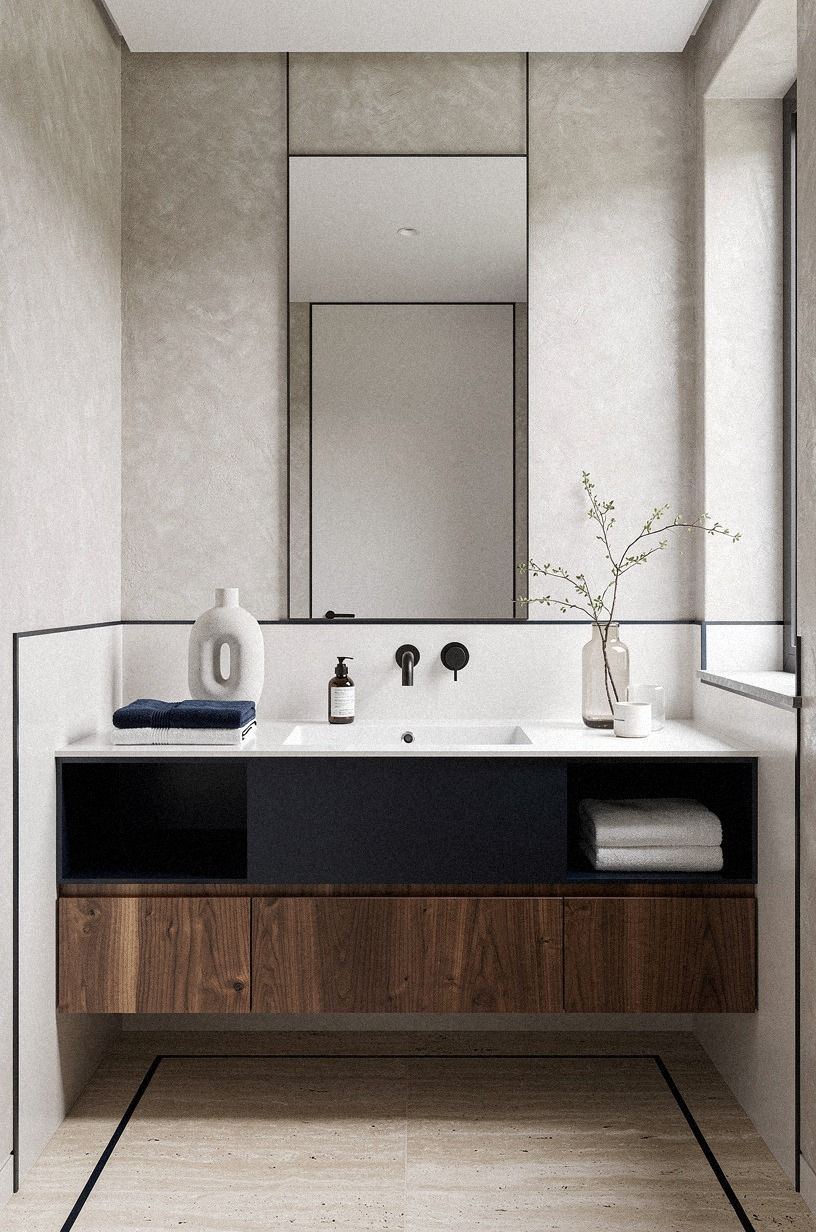
A thin navy border can make a pale hand-applied Venetian plaster field feel architectural without overwhelming the floor. Add a small walnut detail to keep the contrast warm.
9Hang linen beside a warm stone bathroom
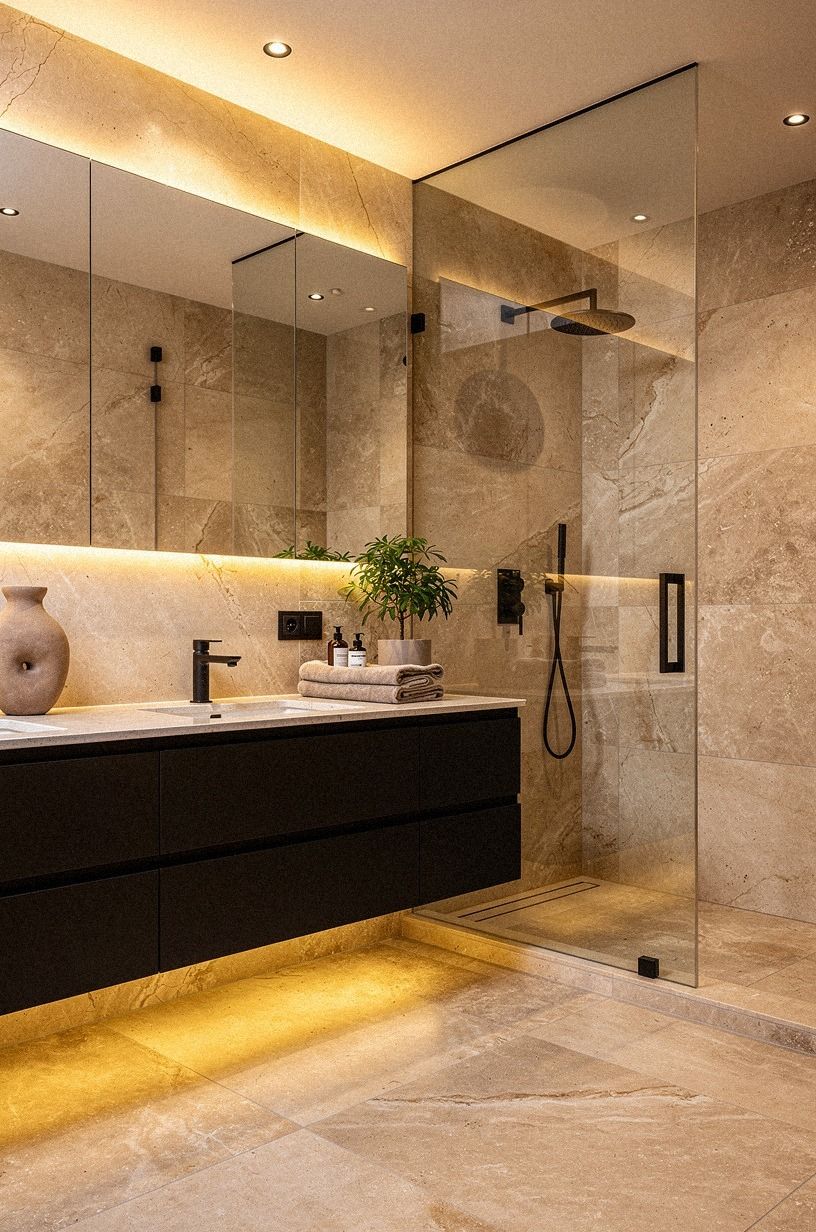
Textiles keep a stone bathroom from feeling cold, particularly when the emerald and gold elements are crisp and polished. Hang cream Belgian flax linen curtains or a linen-blend shower panel in oatmeal, then repeat that tone in the bath mat. The fabric’s wrinkles soften the hard surfaces without introducing a new pattern.
You’ll want washable fabric near the sink, and a 600gsm Turkish cotton towel can bring enough weight to feel generous. I’d skip bright white towels if your palette already includes warm cream because the contrast can make the room look flat. Choose mushroom, clay, or soft gray instead.
A small stool with a shagreen accent gives you a place for folded towels, and the room will feel lived-in rather than staged. If your stone is especially pale, use one emerald linen piece so you don’t lose the connection to the darker details. A little tension helps!
10Mix black tile with brushed brass
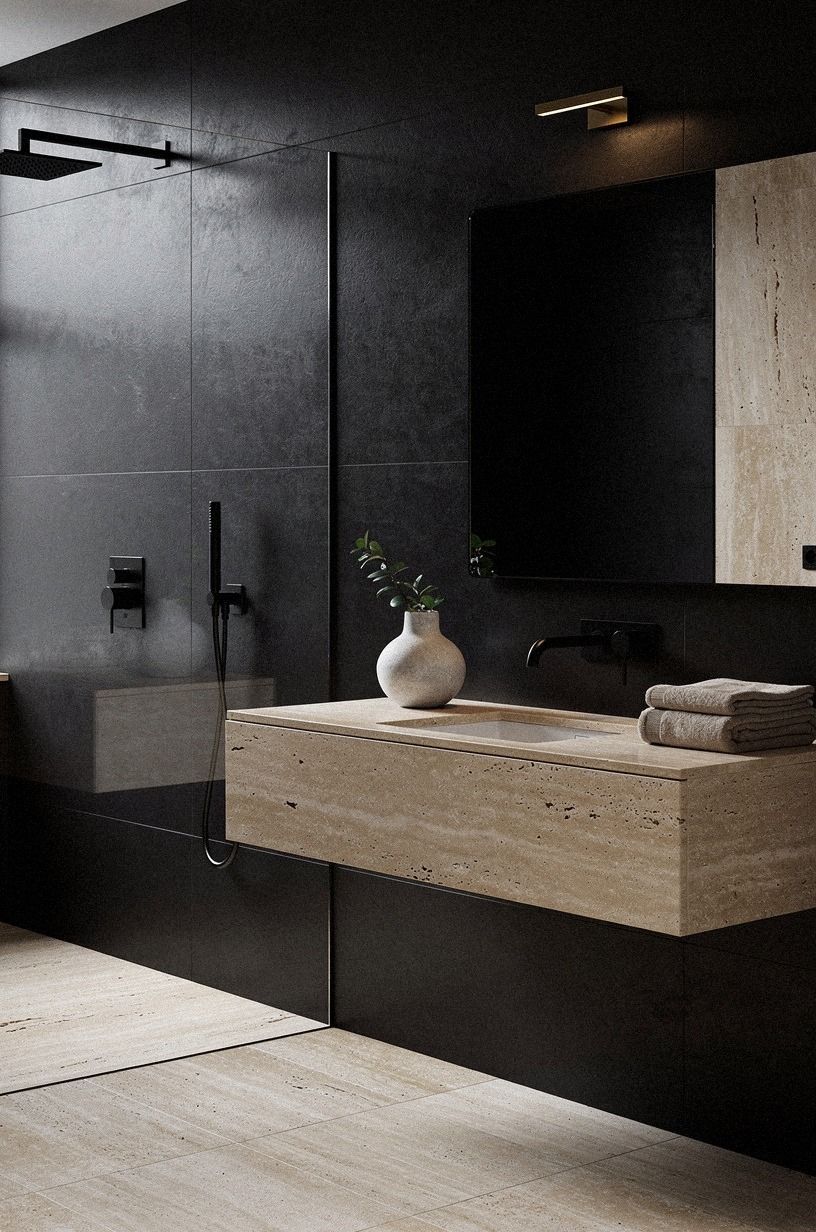
Forest green and rust can look elegant when the darker surface is matte and the metal is slightly muted. Pair washed Belgian linen with natural oak, then let forest green appear on the wall or tile. The linen softens the palette, while the oak keeps the room earthy.
The oak doesn’t have to match perfectly across every piece. Your vanity can be warmer than the shelf, but you’ll want the undertones to stay close. I’d avoid mirror-polished gold because it makes the room feel more theatrical than comfortable.
A rust-colored hook, a natural oak shelf, and one linen tray are enough. Why add five finishes when three can give your eye a cleaner path? If you want to see the palette softened further, compare these black and beige bathroom ideas.
11Benjamin Moore Chestertown Buff and the warm wall
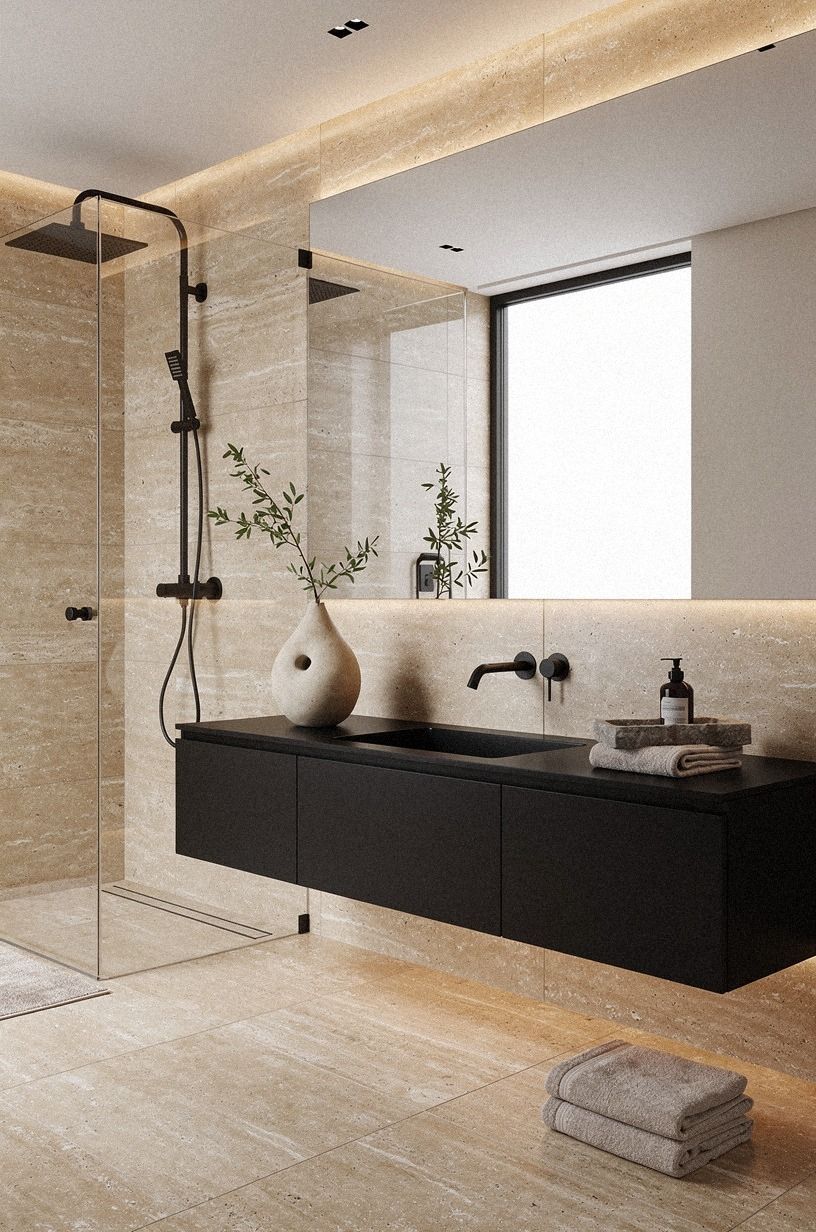
A palette of dusty rose, charcoal, and brass can keep a bathroom warm without making it look yellow. Use dusty rose behind a charcoal vanity, and you’ll get contrast that feels earthy instead of graphic.
Use samples at breakfast, noon, and after the lights come on. I went back and forth on this color because it looked flat beside a cool white sample, but it came alive next to organic bouclé and warm stone. Your trim can stay in a soft cream, which is gentle enough to avoid a stark edge.
Add a charcoal mirror and a small brass shelf, then stop. The wall already has enough personality. If you want a slightly livelier companion, these black and pink bathroom ideas show how a muted color can keep the room from feeling overly beige.
12Choose costs before you choose tile
A bathroom makeover feels easier when you decide whether you’re changing surfaces or rebuilding the room. Paint, a mirror, a faucet, and textiles can shift the mood without touching plumbing. A new vanity or partial wall tile costs more, while a re-tiled shower and new plumbing can change the entire budget.
Use these typical US ranges as planning markers, not promises. Your labor market, room size, and existing conditions will move the number, so you’ll want quotes before demolition.
For a smaller materials reference, zellige tile typically runs $15-$35 per square foot, subway tile $2-$10 per square foot, Nero Marquina black marble $50-$100 per square foot, and a dark faucet $120-$450. I’d spend first on waterproofing and installation. A cheaper tile with excellent prep will outlast expensive stone laid badly.
If you’re still deciding between warm and cool contrast, compare the practical details in these black and white tile bathroom ideas.
13Above black tile, a floating travertine shelf
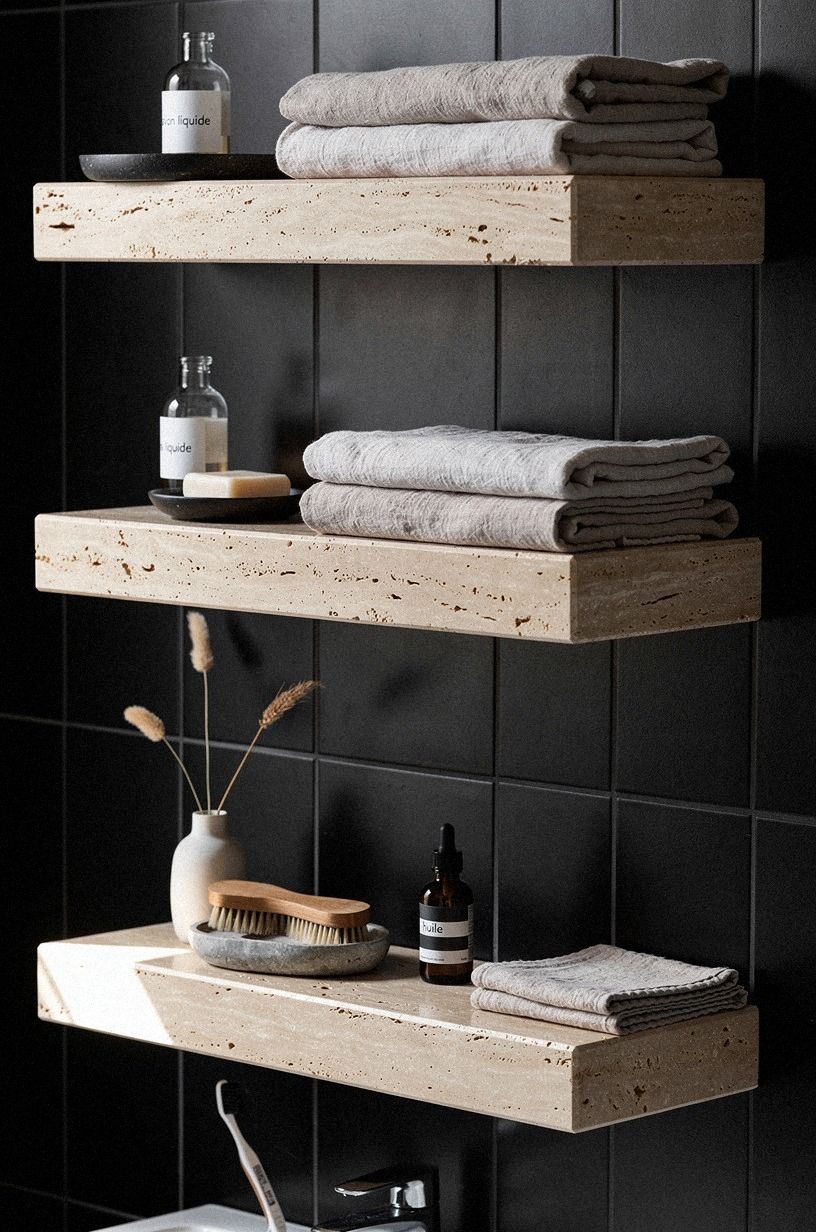
A floating ivory shelf adds warmth where a bathroom usually has a hard, empty wall. Pair it with a deep-pile mohair velvet stool or storage accent to soften the midnight-blue and copper palette.
14Place a black vanity over warm floor tile
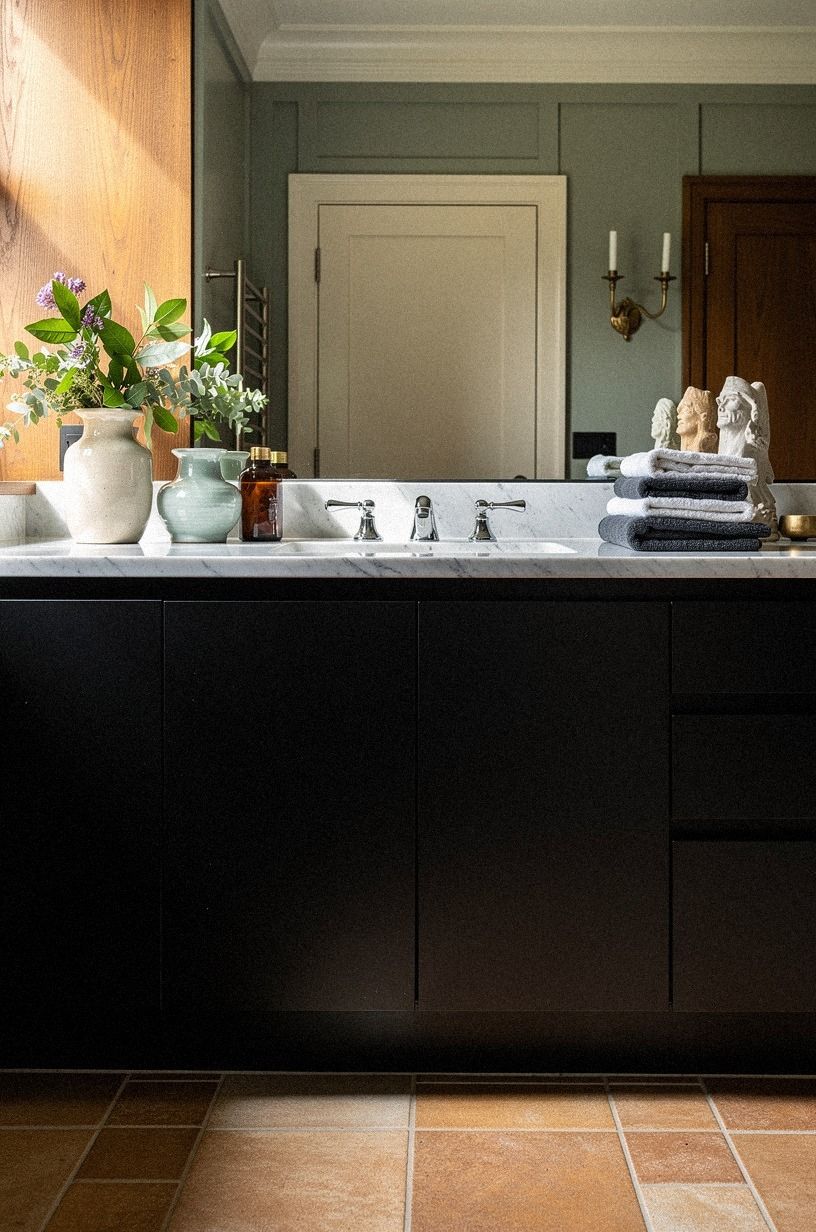
A black vanity can anchor the room when Carrara marble with subtle gray veining carries the warmer material. Choose a cabinet with a natural wood interior or trim rather than a flat lacquered finish. The slight texture keeps the dark block from looking heavy, while the marble catches light around it.
Your vanity should leave enough clearance for comfortable movement, especially in front of the toilet. Keep at least 21 inches in front of the toilet as a practical minimum, then check local code before installation.
I’d choose open legs only if you’re willing to dust beneath them. A wall-mounted cabinet gives a cleaner line and makes the floor appear longer. Add one warm cream runner, not three competing mats.
If you’re unsure whether the black cabinet will dominate, place a dark sample beside your actual marble for two days. You’ll notice the answer faster in changing light than you will in a showroom. These organic modern travertine bathroom ideas offer another way to balance the cabinet with natural wood.
15Use the Edge-Softening Ratio instead of more decor
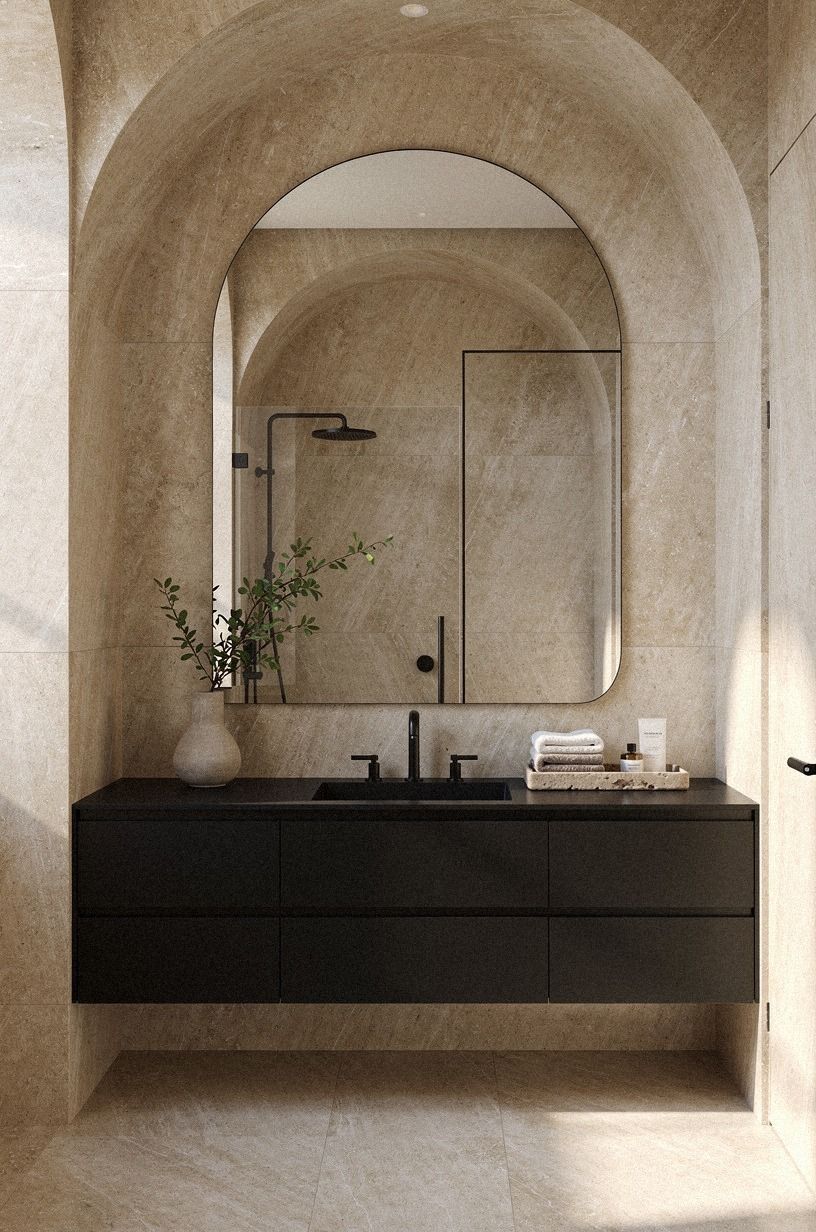
The Edge-Softening Ratio means every strong black edge gets one softer counterpoint nearby. A black rectangular mirror can sit above a rounded vessel sink.
A sharp black vanity can meet a woven basket. Reclaimed weathered teak can soften a stone-heavy room without making it feel fluffy.
This approach works because you’ll notice shape before color. I’d skip extra wall art if your tile already has a strong pattern. Instead, use one rounded object, one weathered teak surface, and one pale stone textile.
The room will feel calmer, but it won’t lose the bold contrast you wanted. And honestly, the smallest bathrooms benefit most because every hard corner is visible from the doorway. You’ll feel the difference as soon as you walk in!
16Sherwin-Williams Sea Salt for a softer contrast
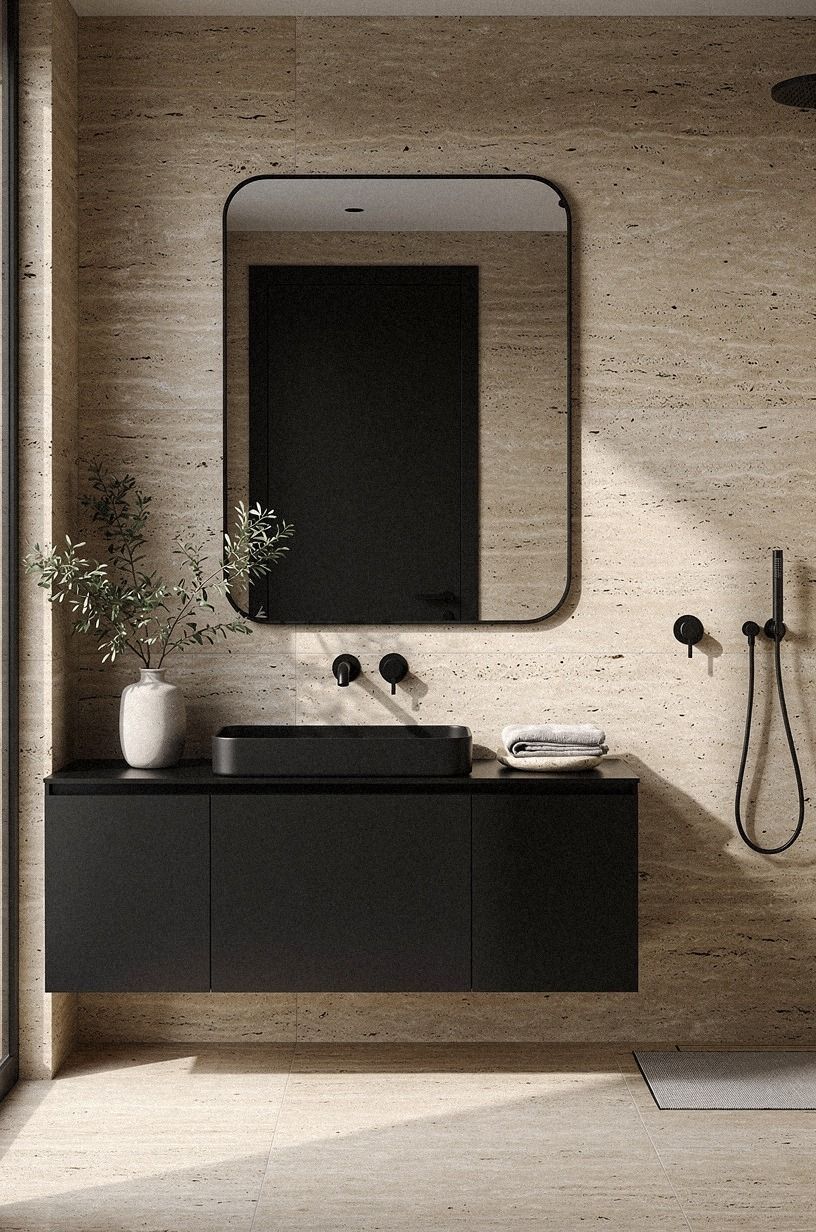
If your Calacatta marble has gold veining, a clay-toned wall can make the room feel grounded and serene. Use it on the walls, then add aged brass through the mirror, faucet, and lighting rather than the whole shower. The result feels softer than a black-and-white scheme and still looks modern.
You’ll want to check the paint beside your marble because clay changes noticeably in different light. I’d avoid pairing it with a cold blue-gray, which can make the brass look harsh. Choose washed linen, pale stone, or matte ceramic instead.
An aged brass towel hook beside the shower, a warm cream towel, and a Calacatta marble soap ledge can finish the palette without adding visual noise. If the room needs a softer note, use linen in one location rather than scattering texture across every fixture.
17Frame a compact shower with black glass
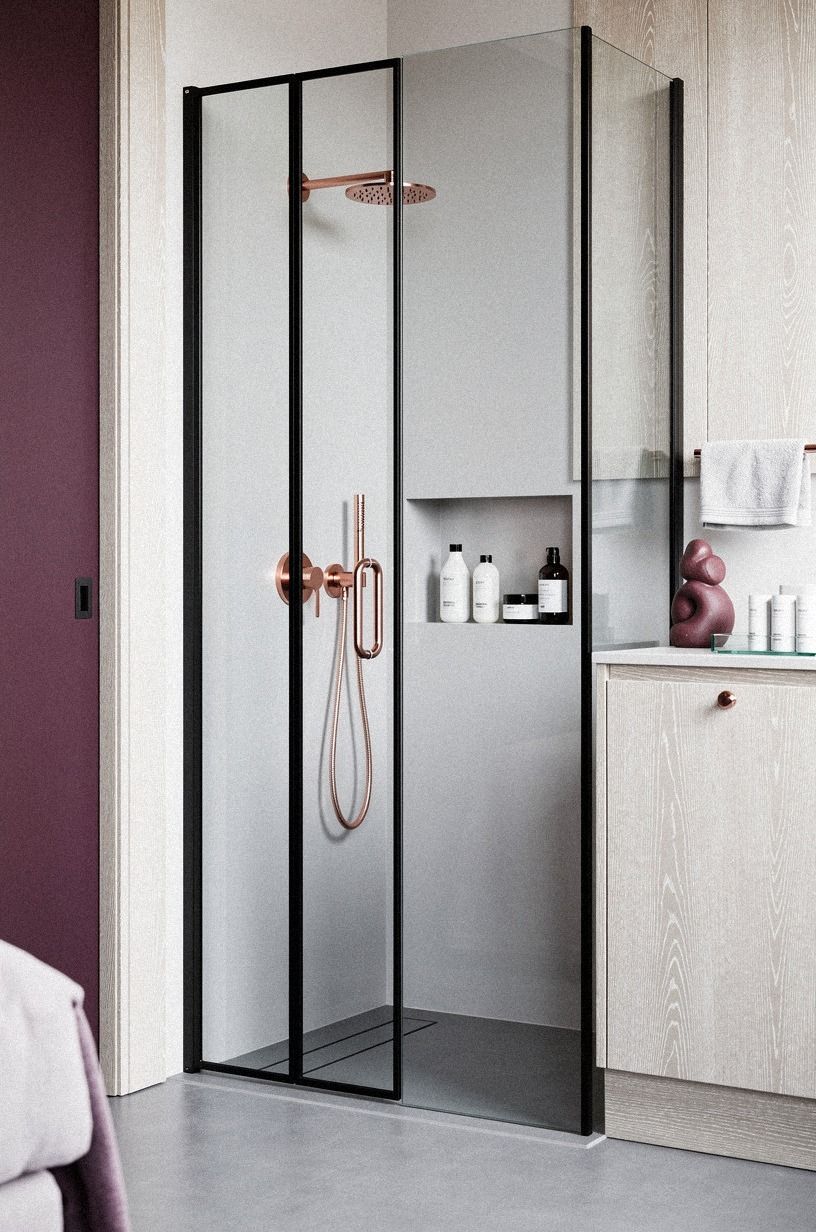
A rose-gold shower enclosure gives you the strongest metallic contrast, so use it when the rest of the room can stay restrained. Pair clear glass with slim metal lines and let cerused white oak bring warmth into the plum, gray, and rose-gold palette. The continuous wood note will make the room feel more cohesive.
A comfortable shower is 36 by 36 inches at minimum, so measure before you commit to thick framing. You’ll want the door swing to clear the vanity and toilet, too. I’d choose a simple enclosure with fewer panes instead of a busy industrial pattern.
The glass should support the oak and metal, not turn the shower into a separate box. For another high-contrast direction, compare these black and white tile bathroom ideas. You’ll see how much calmer the room feels when one surface leads.
The Design Choice I’d Make Before Shopping
I used to think contrast meant choosing the darkest possible tile against the palest possible stone. That approach looked bold in a sample board, but it felt stiff once the room had mirrors, towels, plumbing, and shadows.
Travertine has movement, and black has weight. You need a third quality, usually texture or warmth, to keep them from fighting.
That’s why I’d start with the room’s fixed surfaces before buying decorative pieces. Look at the travertine in morning light, then check its undertone beside black tile, wood, and metal.
If the stone reads peachy, bring in walnut or aged brass. If it reads gray, try pale oak and soft green.
Your bathroom will tell you which direction works if you stop judging each sample alone.
I also believe most people overspend on the visible finish and underspend on the parts that protect it. Waterproofing, grout, ventilation, and careful installation aren’t exciting, but you’ll notice them every day if they fail. I once chose a beautiful porous stone for a wet ledge without sealing it properly.
The first dark soap ring stayed there like a little map. I wouldn’t repeat that choice.
For a small room, let one surface lead. Maybe it’s the travertine floor, a dark vanity, or a framed shower.
The other elements should support it with repetition, not compete with it. That restraint is what makes the contrast feel sophisticated and inviting.
And if you’re unsure, spend your first evening testing samples instead of ordering five finishes. A few quiet hours can save you a very expensive Saturday.
The Questions Worth Answering First
What is the best Travertine and Black Bathroom Look for a small bathroom?
A pale travertine floor with a floating black vanity works best because it keeps the floor visible and adds visual lift. IKEA GODMORGON can provide a simple starting point, while a rounded mirror softens the narrow proportions. You’ll want one dark anchor, not black on every surface.
See these black and beige bathroom ideas for a gentler palette.
Where can I buy Travertine and Black Bathroom pieces on a budget?
Look at IKEA, Wayfair, and Target for vanities, mirrors, and hardware, then check Facebook Marketplace or local thrift shops for stools and frames. Secondhand wood can add warmth for less, but you’ll want to inspect it for swelling before bringing it into a humid bathroom. I’d save money on accessories before cutting the waterproofing budget.
How much does a Travertine and Black Bathroom makeover cost?
A smaller refresh usually falls within the typical $200-$1,200 budget tier for paint, a mirror, a faucet, and textiles. Free changes include rearranging storage, removing clutter, and repainting with leftover material. A new vanity or partial tile project generally moves toward the $3,000-$9,000 mid tier.
Can I create a Travertine and Black Bathroom on a budget?
Yes, and you can start without touching plumbing. Paint the vanity wall, replace the mirror, and add black hardware or a dark towel.
A focused refresh can stay near the lower budget range, while Marketplace shelving and existing baskets can keep spending down. You might also borrow the softer color balance from these black and pink bathroom ideas.
Is Travertine and Black Bathroom style worth it in a small space?
Yes, because a small room gives the contrast a clear boundary. Keep the floor light, use one black vanity or shower frame, and choose a mirror that reflects the brightest wall.
A continuous floor surface can make the room feel longer than a chopped-up pattern. I’d choose fewer finishes so your eye can read the room quickly.
Is Travertine and Black Bathroom style a good idea for a rental?
Yes. Use removable black-and-white art, a tension shower rod, peel-and-stick stone-look accents, and non-permanent cabinet pulls.
No-damage swaps let you test the palette without changing tile or plumbing. You’ll want to save the original hardware and reinstall it before moving.
Where I’d Start First
If I had to pick one, I’d start with the floating black vanity. It gives travertine a clean shadow line, hides daily clutter, and leaves more floor visible, which matters in a small bathroom. Pin the black vanity idea for later and compare it with our black and pink bathroom ideas.