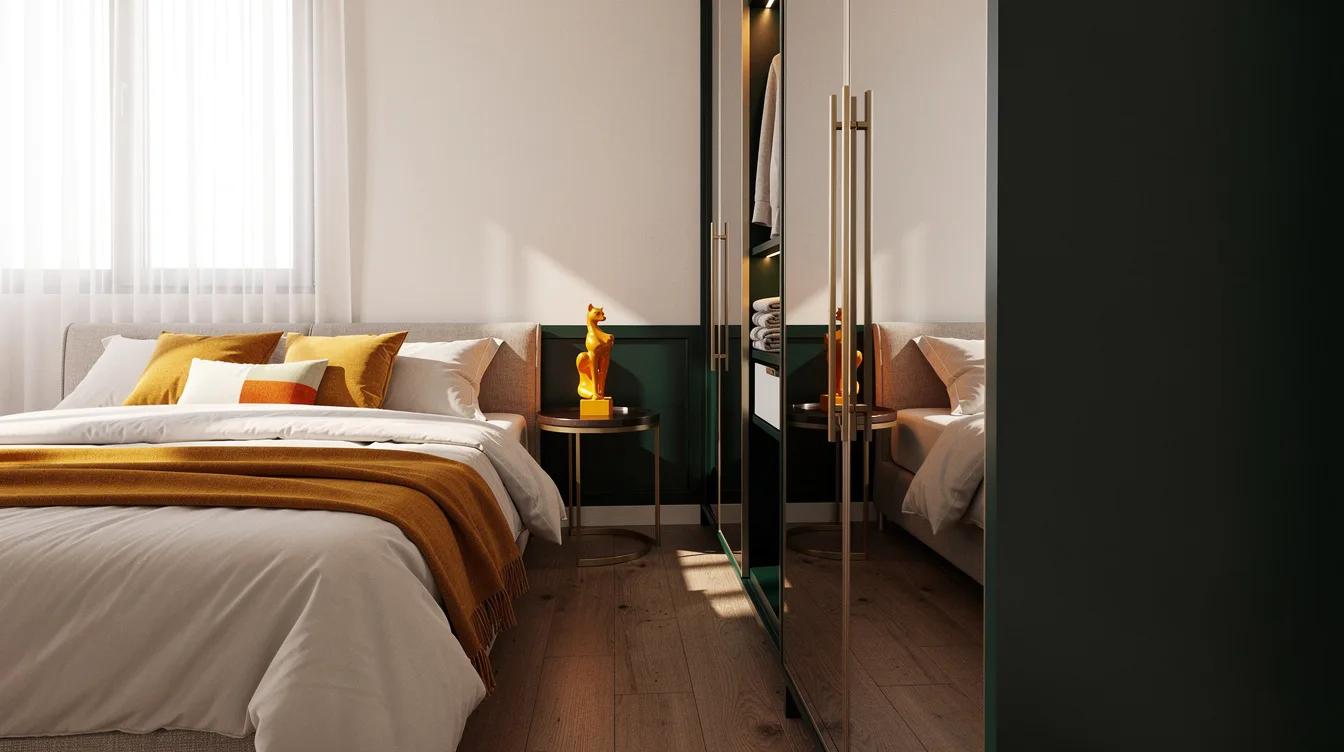
The mirror in a small bedroom can do double duty, but only when the cabinet behind it is designed for folded clothing. A shallow mirrored wardrobe about 19⅝ inches wide gives T-shirts, knitwear, and trousers a real home without adding another bulky dresser.
The common mistake is buying a mirror with a rail and assuming it has shelves hidden behind the glass. For everyday stacks, the difference between a wardrobe and a rotating tower is the difference between useful storage and a clever-looking compromise.
Start With a Shallow Wardrobe
A full mirrored door works best when it covers a real cabinet. The IKEA PAX / ÅHEIM wardrobe is the strongest starting point because its shallow US configuration is listed at about $442.98, with interior accessories sold separately.
The listed size is approximately 19⅝ inches wide, 15 inches deep, and 79¼ inches high. That footprint gives folded clothes a proper enclosure, while a mirror with hooks simply hides garments from one angle.
Choose shelves first, then consider whether you need a short hanging section. For T-shirts, knitwear, trousers, and underwear, a shelf-led interior is the clear winner.
Build Shelves Around Folded Stacks
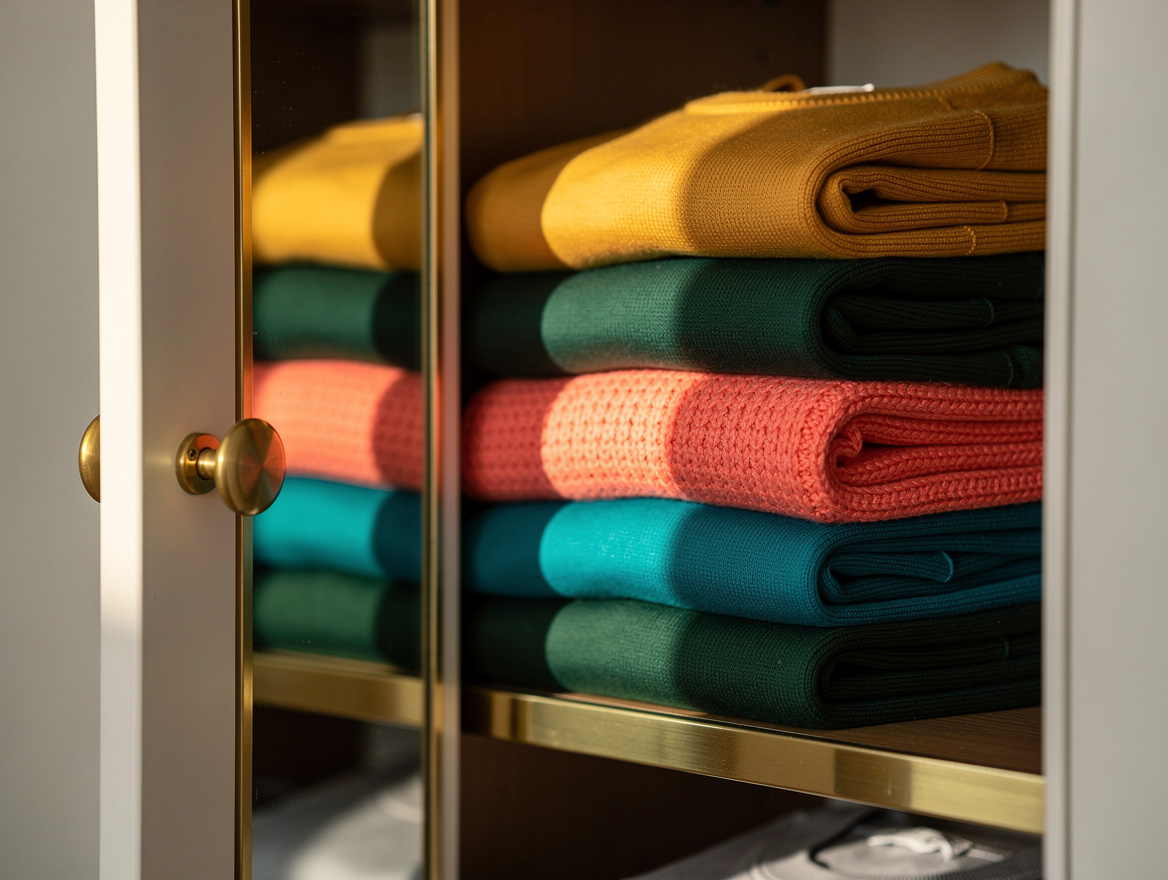
Use the upper shelf for seasonal pieces, the middle shelves for daily clothes, and the lowest area for smaller items. One stack deep is easier to maintain than two piles that disappear behind each other.
The PAX storage frame lets you plan the interior around the clothes you actually fold, but the shelf inserts and bins cost extra. Treat the advertised cabinet price as the starting point, not the finished storage budget.
For a cleaner look, keep each stack low enough to lift out without disturbing the shelf above it. A folded cotton shirt, a wool sweater, and a pair of trousers should each have room to come out in one motion.
Keep the Mirror Door Fully Closed
The visual appeal comes from one uninterrupted reflective surface. An ÅHEIM mirror-glass door makes the cabinet read like a dressing mirror, so the bedroom keeps a calmer sightline even when the shelves are full.
Place the most frequently used clothes at chest height, then close the door after every use. Open shelves may be convenient, but they turn folded laundry into part of the room’s decoration.
Check the swing clearance before installation, especially beside a bed or nightstand. A mirrored door needs enough space to open comfortably, or the cabinet will become an attractive storage problem.
Match Cabinet Depth to the Room
In a narrow bedroom, depth matters more than the mirror itself. The shallow PAX cabinet is listed at about 15 inches deep, while a freestanding IKEA KNAPPER mirror has a listed floor depth of approximately 20⅞ inches.
KNAPPER is useful for hooks and a rear rail, but it has no built-in shelving for folded clothing. Its US roundup price is about $130, which makes it lighter on the budget but unsuitable as a true clothes cabinet.
Measure the walking path with the wardrobe door open, not just the empty wall. Leave enough room to stand in front of the mirror and reach the rear of every shelf.
Reserve Rotating Towers for Small Items
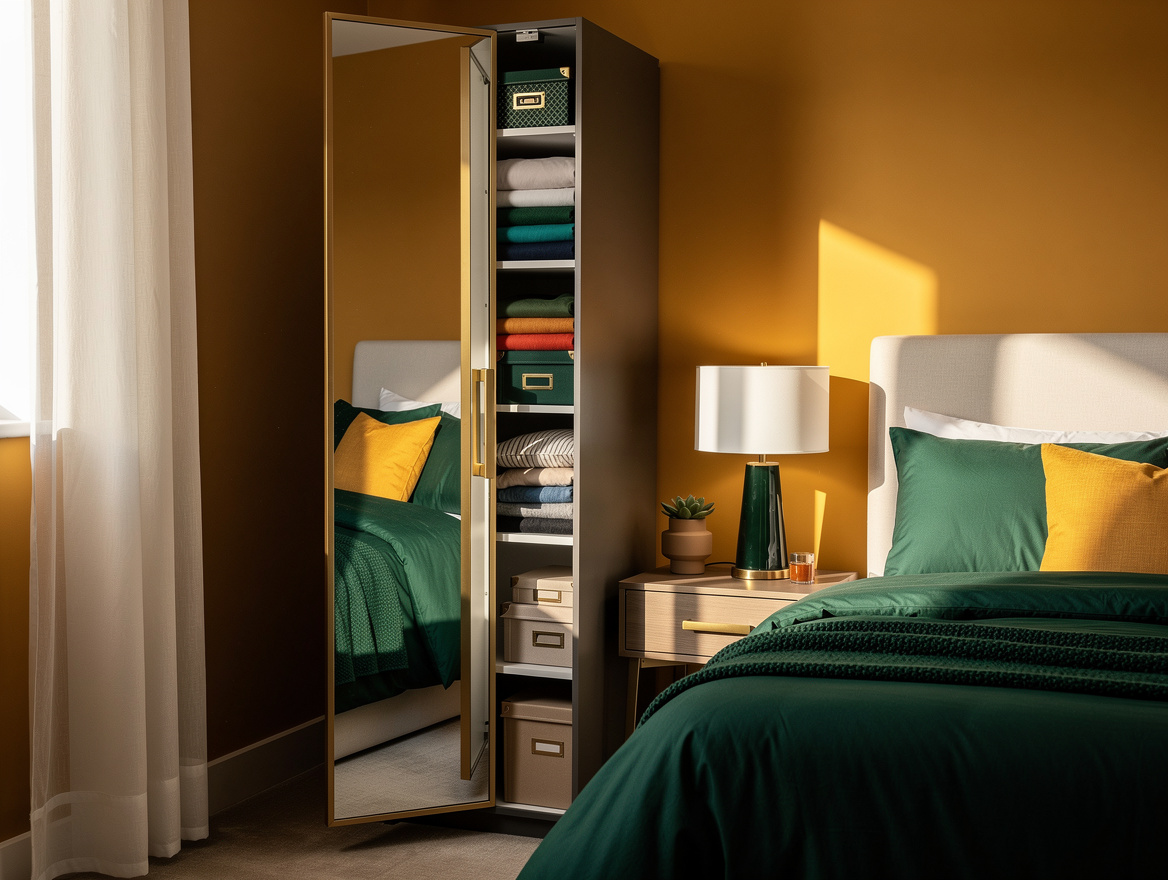
A rotating mirror tower can work in a compact dressing corner, especially for underwear, socks, and small accessories. A typical listed example costs about $309 to $356 and measures roughly 12 inches wide, 14½ inches deep, and 66 inches high including its base.
Its cabinet body is only about 7¼ inches deep, with six open shelves and retaining rails. That shallow format suits compact folds, but it won’t handle a deep sweater stack without bending or overfilling the shelves.
Look for an MDF cabinet with a glass mirror when you need a narrow footprint and easy rotation. My opinion is firm: use this style as a secondary station, not the main wardrobe for everyday clothes.
Test the Layout Before Buying
Before ordering, measure your tallest folded garment and the depth of your preferred stack. A rotating mirror listing around $220 may include a rear rack and shelves, but dimensions can vary by model, so confirm the exact listing before paying.
Check whether the interior uses stainless-steel retaining rails, fixed shelves, or a hanging bar. The product name alone tells you very little, and several storage mirrors marketed for clothing provide hanging space without any shelf for folded pieces.
Make a paper outline on the floor using the listed width and depth, then place a stack of clothes inside it. If you can’t remove the pile without scraping the wall or blocking the bed, choose the shallow wardrobe instead.
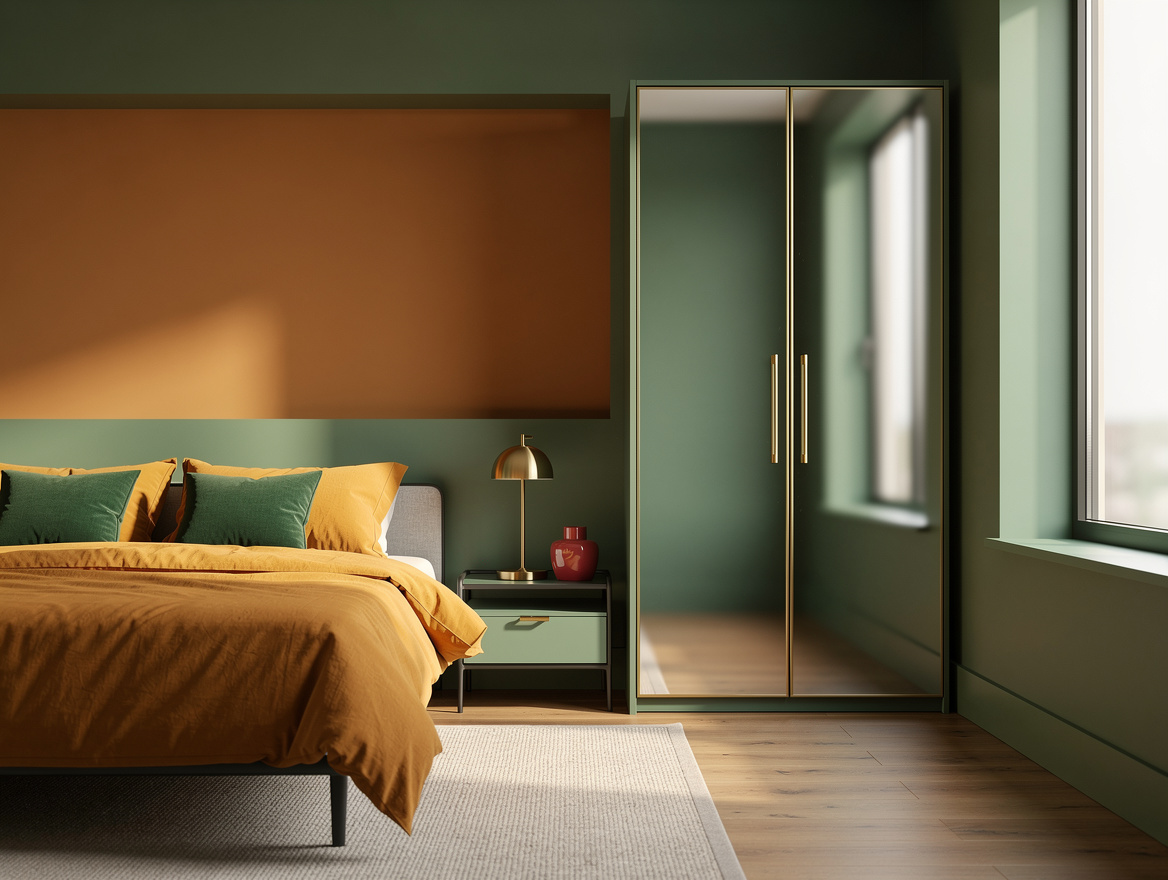
Start by measuring your deepest folded stack, then compare it with the cabinet’s interior depth. Spend the budget on shelves and a properly sized mirrored wardrobe first, because the reflection only matters when the storage works behind it.
Mia Carter writes about small-space living and budget home makeovers. She has restyled three rentals and tests most ideas in her own 45 sqm flat.