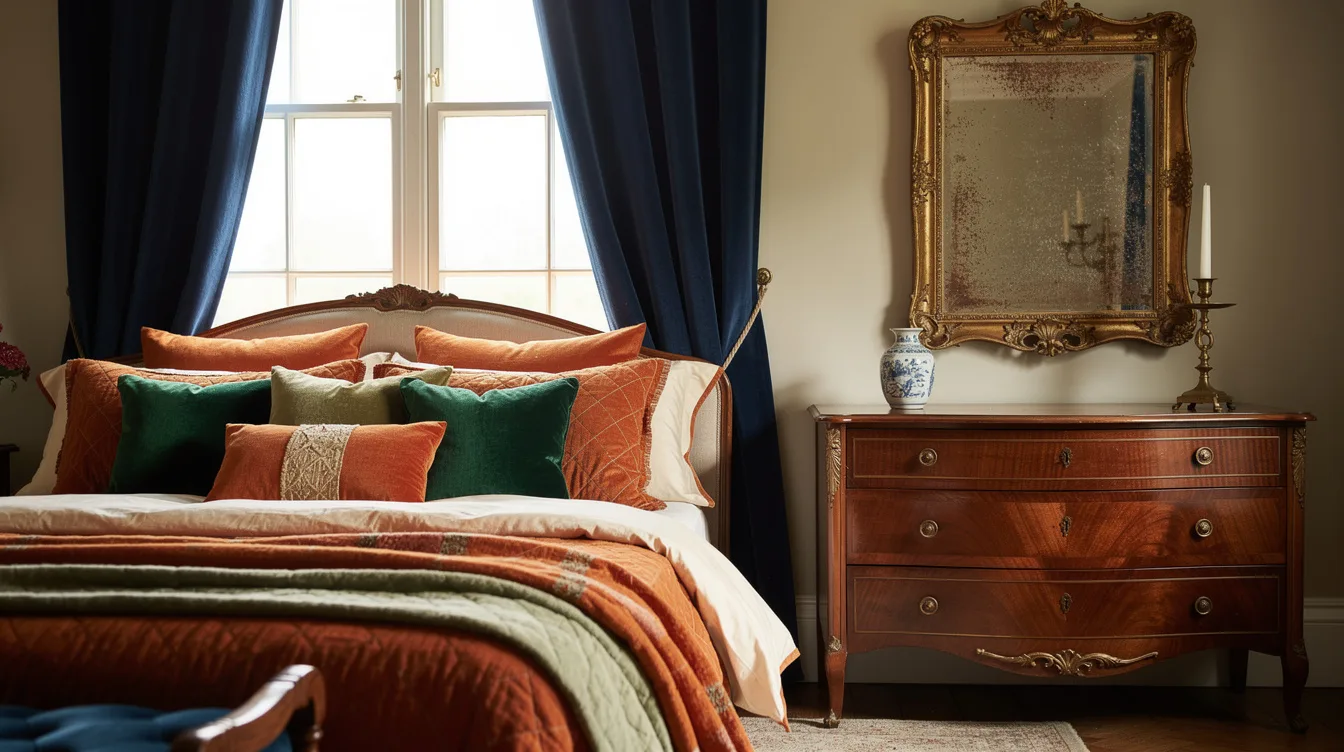
My first test began with a 20-by-20-inch cushion cover, not a full room makeover. I wanted a Regencycore bedroom with ornate mirrors and jewel-toned accents that could still handle laundry, early light, and a normal weeknight.
The answer was a warm ivory base, emerald velvet in a controlled dose, and one gold mirror with enough personality to carry the room. Everything else had to support that relationship.
Here is what worked: decorative period-inspired pieces paired with simpler furniture, so the bedroom feels collected rather than dressed for a costume drama.
Start With Warm Ivory
I began with warm ivory bedding because every jewel tone looks sharper against a quiet base. Ivory keeps the room comfortable on ordinary mornings, when a fully saturated bedroom can feel theatrical before coffee.
Most of the walls stayed warm ivory too, with the color carried through the duvet, pillowcases, and one upholstered accent. That repetition makes the ornate details feel intentional instead of scattered.
A plain bed frame gives the scheme breathing room, especially if the mirror, curtains, or headboard already carry decorative weight. I prefer a simple silhouette with visible wood or a muted painted finish.
The restraint matters here. Regencycore works best when the room suggests a period interior through shape, texture, and color rather than recreating a matching suite of gilded furniture.
Control the Velvet
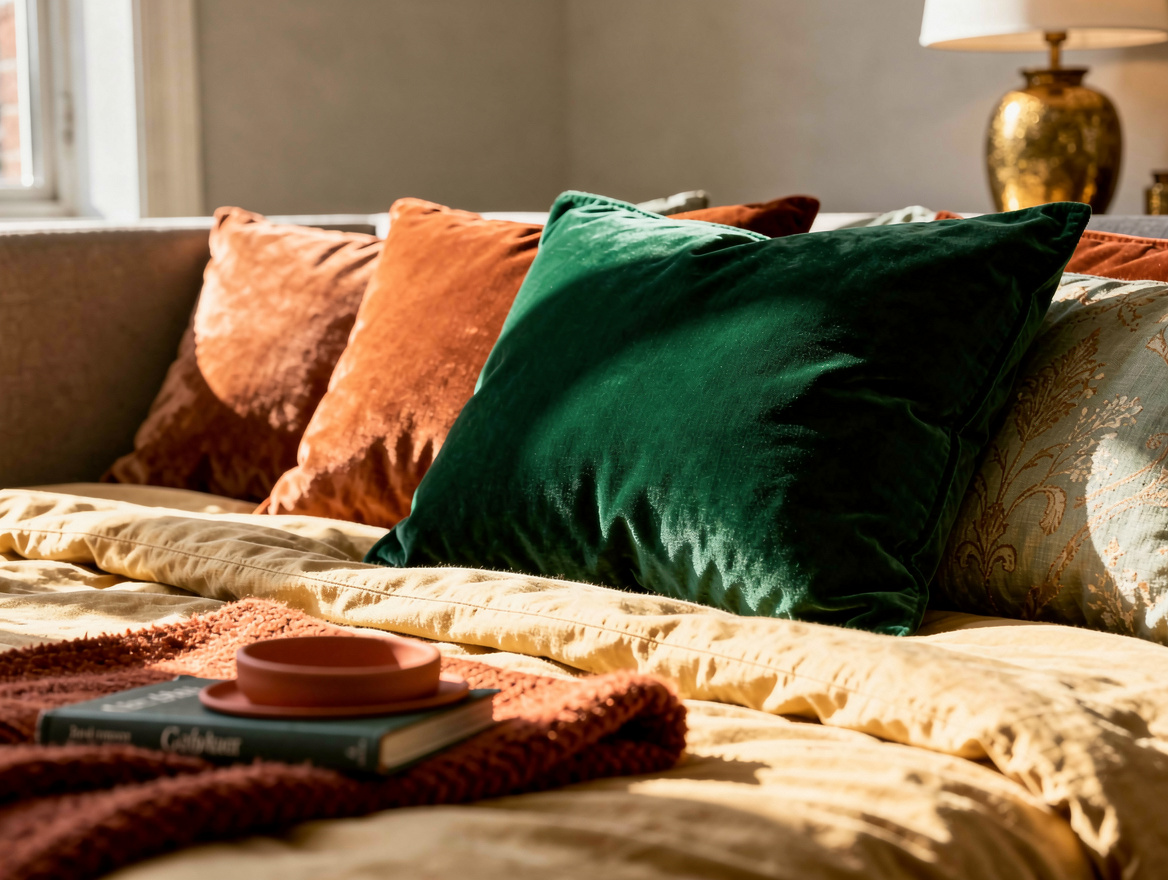
I used IKEA SANELA dark-green cushion covers as the easiest entry point for emerald velvet. The cotton-velvet range offers a convincing texture, and the dark green has enough depth to read as polished rather than bright.
The covers measure about 20 by 20 inches in the U.S. Listing and cost roughly $10 each, with the insert sold separately. An IKEA Germany listing shows the dark-green cover at about €7 each, so the displayed price depends on the market.
Two emerald velvet cushions are enough on a standard bed, particularly when the curtains or headboard already introduce another strong surface. I would stop there before adding a matching bench, throw, and upholstered wall.
Skip equally saturated colors on every surface. Muted jewel tones are easier to live with because they leave room for the eye to rest on ivory bedding and aged metallic details.
Give One Mirror the Lead
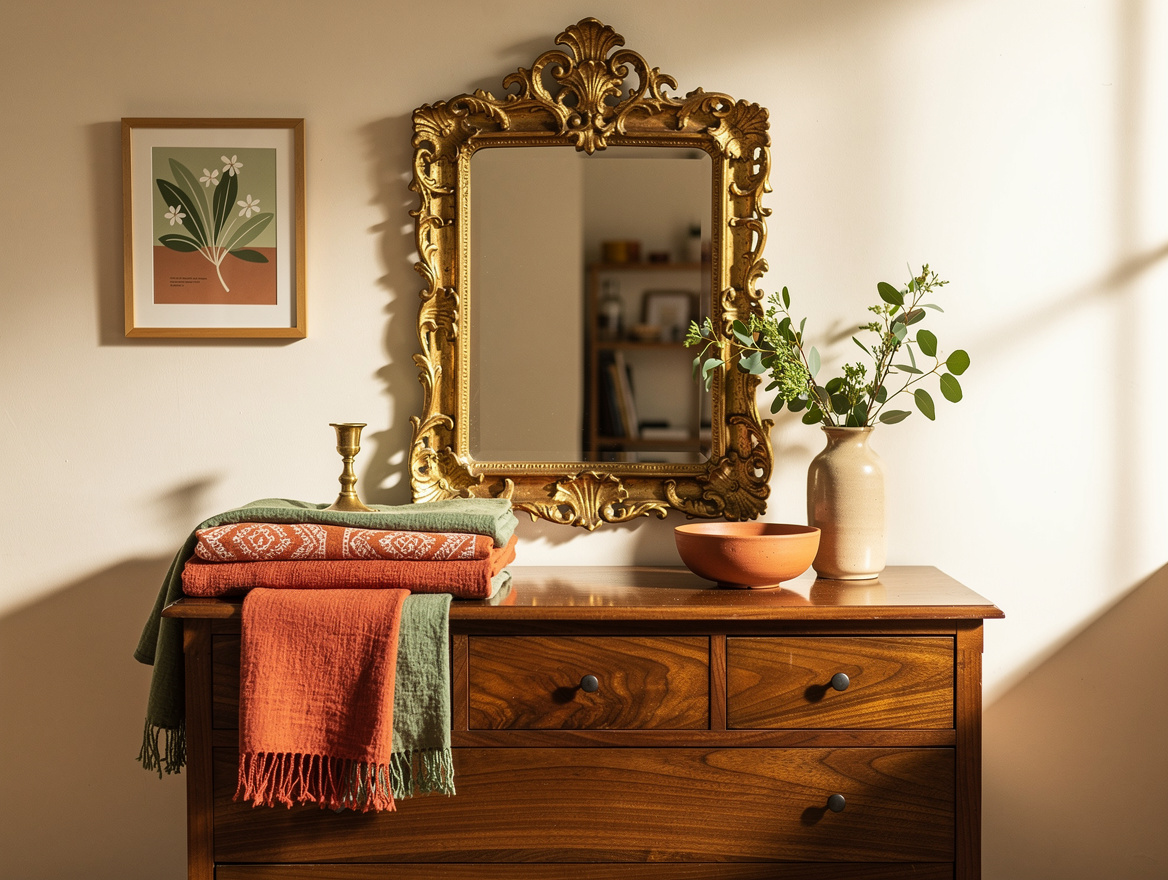
The room needed one clear focal point, so I gave an ornate gold mirror the decorative lead. A scroll frame or botanical edge supplies the old-world character while the rest of the furniture stays comparatively plain.
I placed the mirror above a walnut-toned dresser, where the dark wood grounds the gold and keeps the arrangement from looking like a stage set. The dresser should feel useful first, with enough surface left for one lamp and a small object.
For a smaller room, a compact mirror can sit above a dresser or near a dressing corner, while one botanical print adds pattern without covering every available wall. A single panel has more impact than a crowded gallery of competing frames.
A 7-foot statement floor mirror is a serious purchase, roughly 84 inches high and 64 inches wide, with a typical reference around $1,600. It needs a substantial clear wall, so measure the path, wall, and nearby furniture before committing.
Bring In Sapphire Carefully
My budget version keeps the bed frame and changes the mood with IKEA SANELA dark-blue curtains. The listed pair measures about 55 by 98 inches per panel, and the displayed price is roughly $90, though the selected color should be checked before purchase.
That longer length helps the room feel more finished when the panels hang high and close to the floor. Dark blue also gives the ivory bedding a cooler counterpoint without forcing the entire room into navy.
Use sapphire velvet on cushions or a headboard, then let one material carry the richer color. Velvet already catches light differently across its pile, so more saturation can quickly become visual noise.
I like cream bedding with this scheme because it softens the contrast. Ivory linens make the dark curtains feel deliberate, while a warm lamp keeps the blue from reading flat at night.
Repeat Aged Gold Sparingly
Gold works harder when it appears in several small places, so I repeated aged-gold lamp bases rather than adding another oversized statement piece. The finish should look softened and slightly old, not mirror-bright.
One or two antique-style details can carry the period reference, such as a small tray, a framed sketch, or a decorative box. Each item should earn its space through use or shape.
I also used gold curtain hardware to connect the window treatment to the mirror. This is a quiet repetition, but it prevents the mirror from looking like an isolated metallic object.
Matching gilded furniture is where the room loses its balance. Keep the large pieces simple, then let the mirror, hardware, and lamp bases provide controlled flashes of warmth.
Build the Budget Version
For the most straightforward plan, keep a simple bed frame, warm ivory bedding, and the dresser you already own. Spend first on the mirror and curtains because those pieces change the room from across the doorway.
The IKEA FJÄDRAR cushion inserts are listed at about $12 each for the 20-by-20-inch size. Two inserts plus two SANELA covers comes to roughly $44 before tax, shipping, or any change in the displayed price.
Add the displayed IKEA SANELA curtain pair at around $90, and that small textile package lands near $134 before the mirror. It is a clearer starting budget than buying several decorative pieces at once.
That leaves the ornate mirror as the next decision, not an afterthought. Choose its width only after measuring the dresser or wall, then add one aged-gold accent once the main composition feels calm.
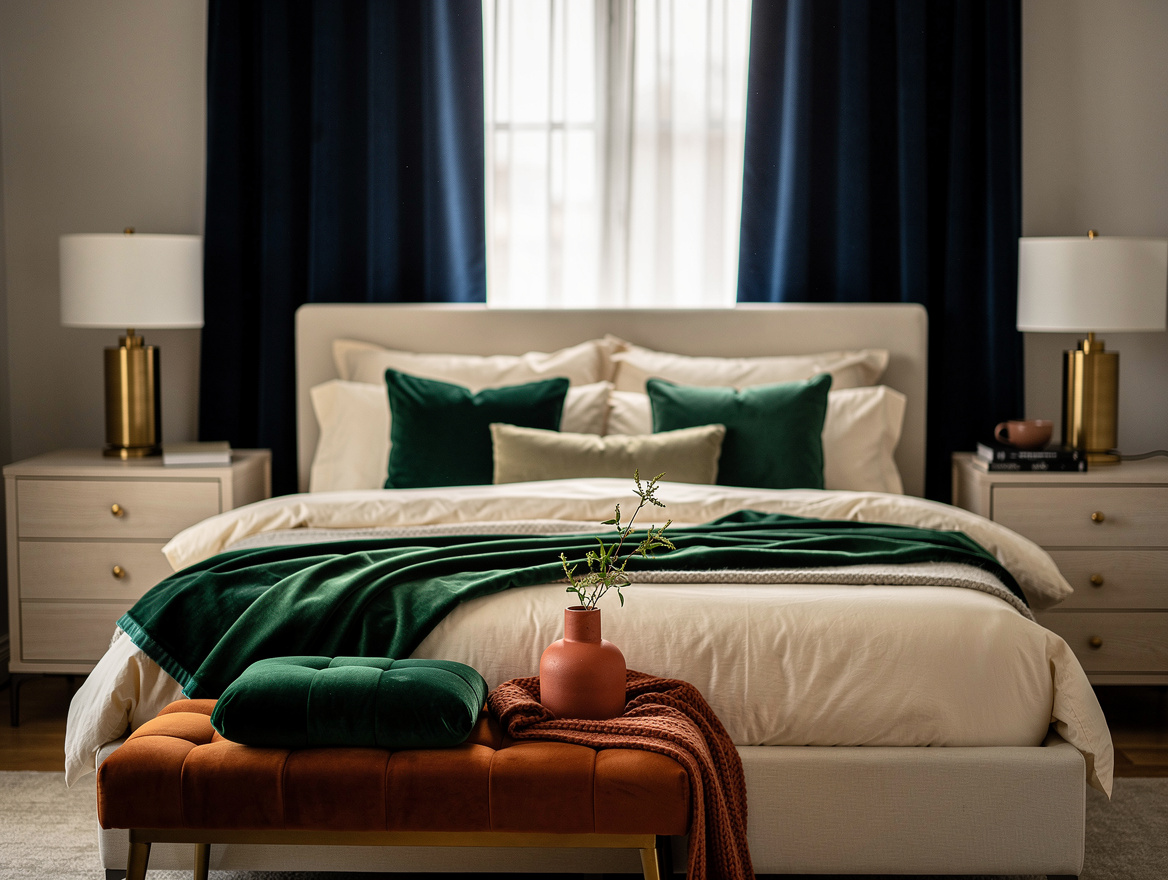
Start by placing the ivory bedding and measuring the wall for the mirror before buying another accent. Let one surface lead, then build the color story around it with velvet, dark blue, and small touches of aged gold.
Mia Carter writes about small-space living and budget home makeovers. She has restyled three rentals and tests most ideas in her own 45 sqm flat.