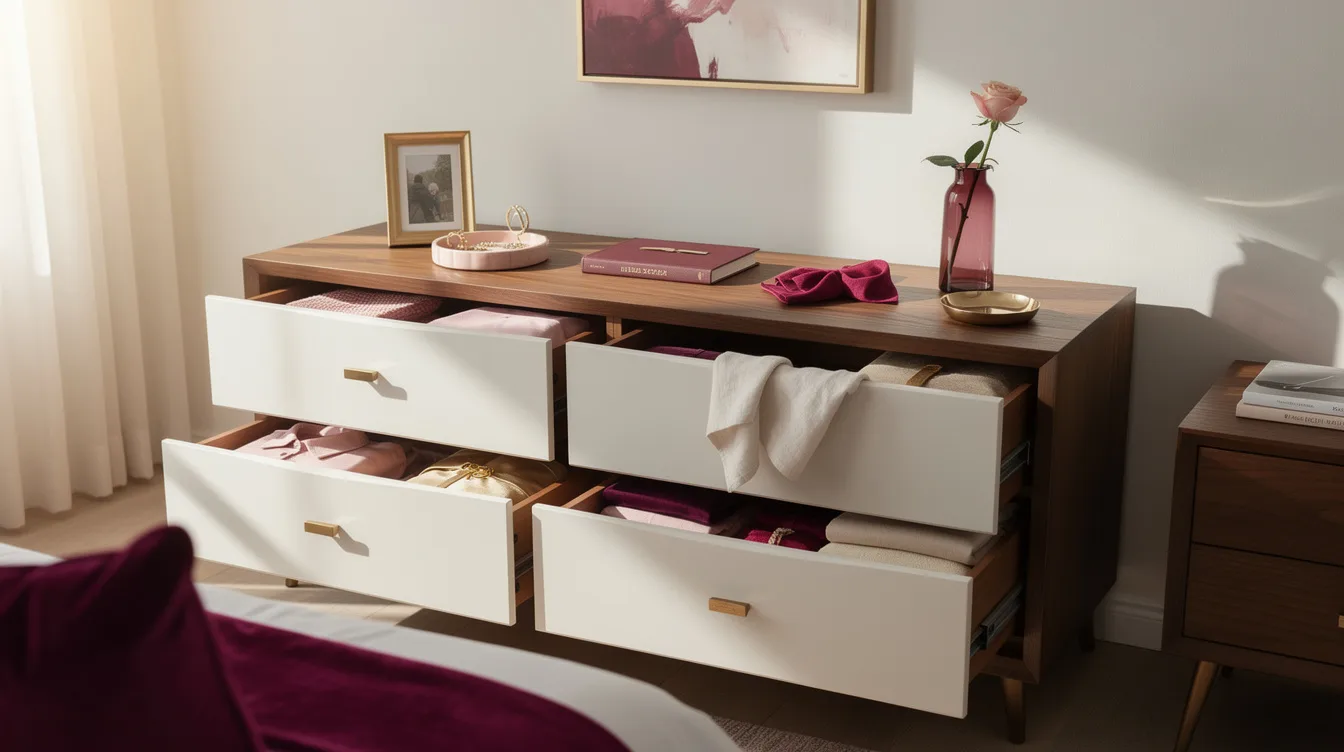
A shared dresser sounds simple until two people reach for the same six-drawer unit every morning. The best setup gives each person a clear three-drawer zone while leaving the top useful for more than clutter.
A wide dresser measuring about 63 3/4 inches can create that division without making the bedroom feel like a storage room. The key is treating the furniture as two personal systems with one carefully managed shared surface.
Real options include IKEA’s IDANÄS at $549.99 and Article’s Lenia at $1,299, both approximately 160 centimeters wide with two columns of three drawers.
Measure the Wall Before Buying
Start with the wall, then choose the furniture. The wide IKEA IDANÄS is roughly 63 3/4 inches wide, about 19 5/8 inches deep, and approximately 37 3/8 inches high.
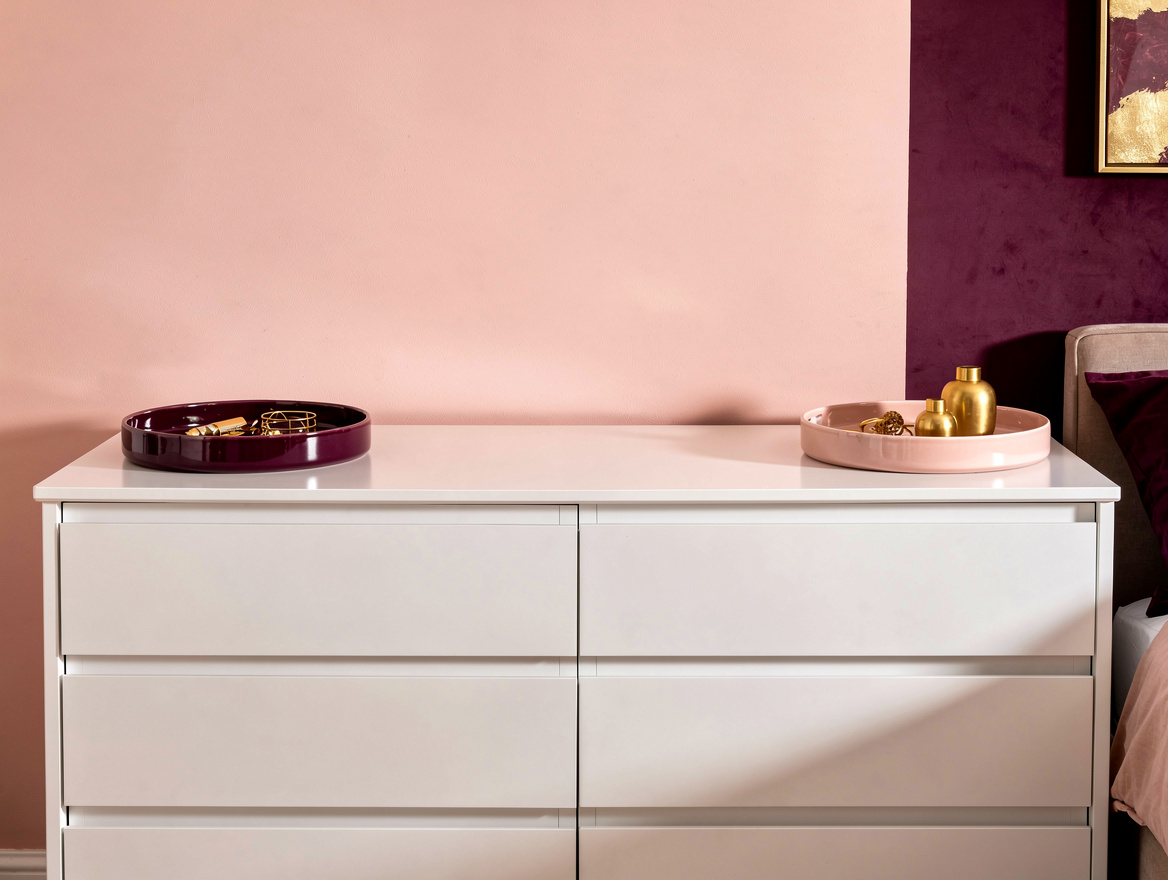
That footprint gives each person one drawer column while keeping the bedroom visually balanced. Its listed price is $549.99, making it a practical choice for a shared setup.
Leave a little open space beside the dresser for cleaning and drawer clearance. A crowded wall makes even well-organized storage feel difficult to use.
Claim One Drawer Column Each
Assign the left column to one person and the right column to the other before anything goes inside. That simple boundary prevents daily negotiations over whose shirts belong where.
Use the same order on both sides: underwear and socks in the top drawers, everyday tops in the middle, and knitwear, sleepwear, or sportswear below.
Keep ownership consistent from top to bottom. Matching drawer organizers can divide small items without turning either side into a shared catchall.
Separate Small Items by Function
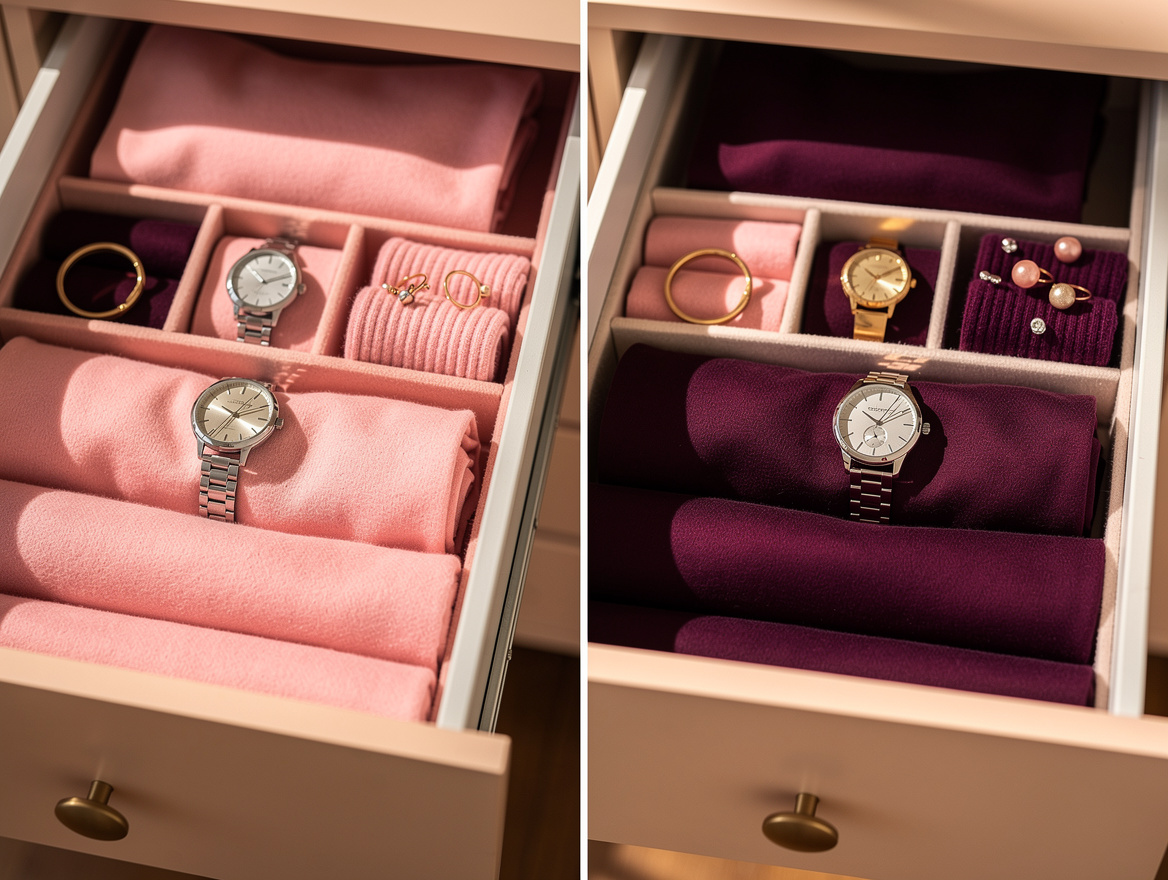
Large drawers work best when each category has a visible home. Add felt drawer dividers for socks, belts, watches, or other small accessories that tend to slide beneath larger clothing.
A shallow bamboo tray can hold folded camisoles or everyday accessories inside a deeper drawer. The material feels warmer than plastic and keeps the storage system from looking temporary.
Give each person the same amount of interior structure, even if their clothing habits differ. Equal space feels fairer than forcing one person to use loose piles while the other gets neat compartments.
Style the Top as Shared Ground
The dresser top should have one shared visual rhythm, with clear personal zones at the ends. Place a small ceramic tray on each side for daily jewelry, glasses, or keys.
Keep the center open for a mirror or one low piece of art. A slim brass lamp can add warm light without using the entire surface as a storage station.
Choose a single finish that connects both sides, such as pale wood, matte black, or warm metal. The strongest arrangement leaves enough open surface to set down a book or fold laundry without starting a new pile.
Compare Wood, Veneer, and Price
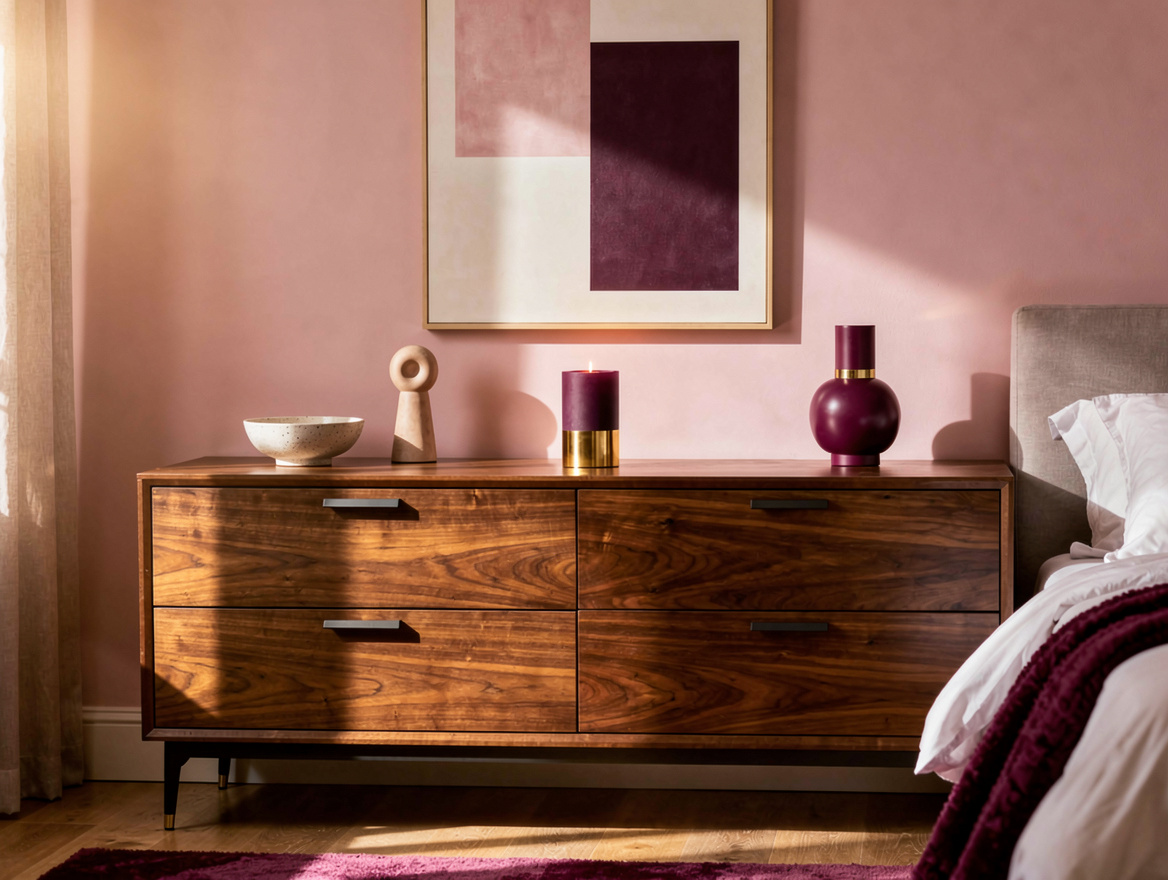
For a warmer, lower-profile option, the Article Lenia is listed at $1,299 and measures approximately 63 inches wide, 19 inches deep, and 32 1/2 inches high.
It uses solid and veneered American black walnut, solid beech, engineered wood, and steel, with soft-close drawers. Its lower height can make a bedroom feel less visually heavy beneath artwork or a window.
The meaningful comparison is around $550 for the painted IKEA dresser versus about $1,300 for the walnut-and-veneer design. The IDANÄS is primarily particleboard and fiberboard, while the Lenia also contains engineered wood, so this is a finish, construction, and budget decision rather than a simple solid-wood contest.
Use the Tall Version for Tighter Rooms
When the wall is narrow, the tall IKEA IDANÄS offers a compact alternative at a listed $499.99. It is roughly 33 1/8 inches wide, 19 5/8 inches deep, and 53 1/8 inches high.
Each person can still receive three drawers, but the side-by-side division disappears. Mark ownership with discreet labels inside the drawer fronts or assign one person the upper half and the other the lower half.
Keep the top deliberately spare with one wooden bowl or a small framed print. Check the tall model’s own material details before buying, since different versions can vary.
Begin by marking the left and right columns with painter’s tape, then sort each person’s clothing before choosing organizers. Once the boundaries are clear, the dresser can support the bedroom instead of competing with it.
Mia Carter writes about small-space living and budget home makeovers. She has restyled three rentals and tests most ideas in her own 45 sqm flat.