
Parisian freestanding tub ideas can make a tired bathroom feel warm and timeless without a full renovation. I learned that after living with a cramped room, cold white tile, and a tub that looked like it belonged in a rental listing. I kept the plumbing, softened the light, and chose old-world details. The result feels charming, intimate, and far more expensive than it is.
Here’s What It Looked Like Before:
The room had the full starter-home package: glossy white walls, a builder-grade vanity, chrome hardware, and one ceiling light that made every surface look blue. The tub sat against a plain wall with no artwork, no trim, and nowhere for your eye to rest.
I didn’t change the footprint. You could still see the same 60-by-30-inch tub zone, the same 32-to-36-inch vanity height, and the same narrow path between the sink and toilet.
But once I stopped treating the bathroom like a utility room, your options opened up. The makeover began with atmosphere.
- Benjamin Moore Chestertown Buff Sets the Mood
- Can Wainscoting Make the Tub Feel Architectural?
- Unlacquered Brass Over Chrome
- Float a Slim Vanity Beside the Parisian Bath
- Build the Three-Height Light Stack
- Hague Blue Adds the Contrasting Note
- Hang Linen Curtains Over the Narrow Window
- The Two-Wood Rule
- What Belongs on a Parisian Bath Wall?
- Marble Instead of a Bulky Cabinet
- Pair the Tub With a Soft Parisian Bath Rug
- Black Interior, Pale Exterior
- Style the Tub With One Ceramic Vessel
- Sea Salt Gives the Door Its Exit
- Would a Freestanding Stool Earn Its Keep?
- Finish With Quiet Metal Details
1Benjamin Moore Chestertown Buff Sets the Mood
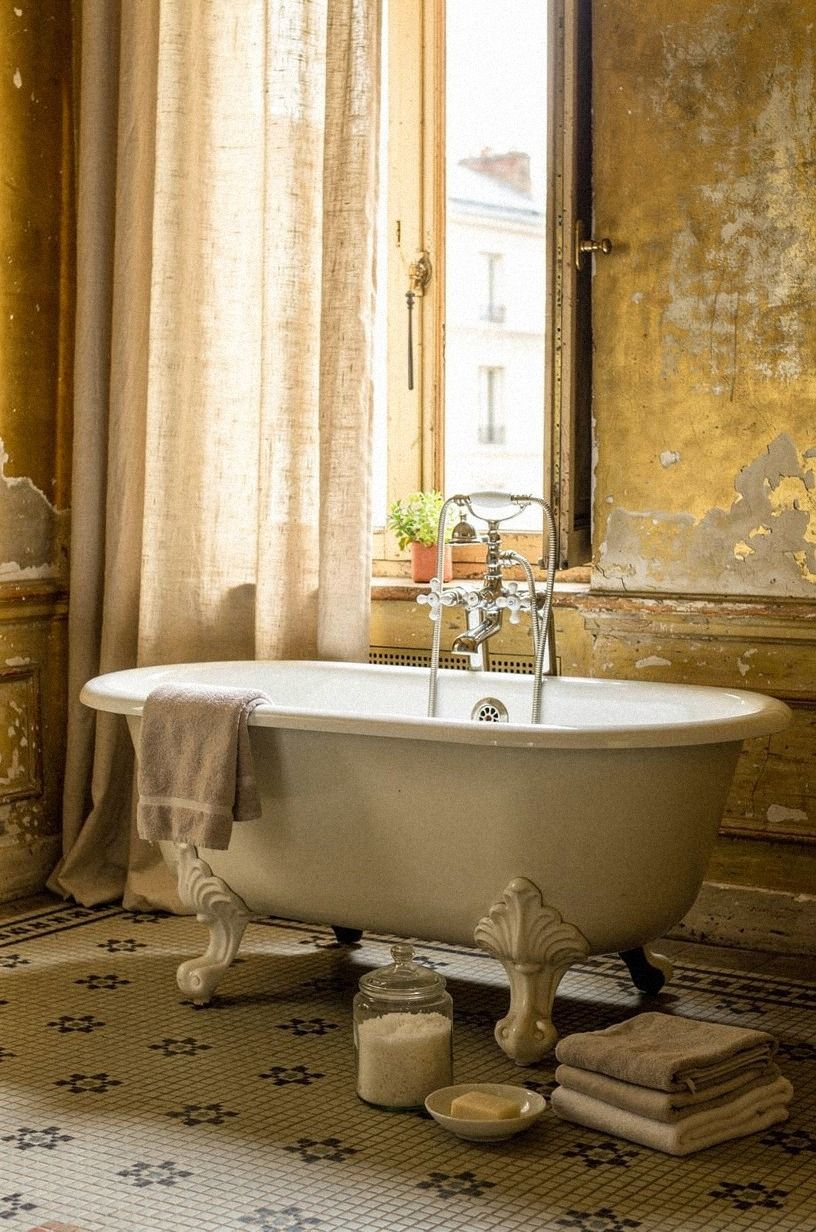
I started with Benjamin Moore Chestertown Buff HC-9 because the room needed warmth without turning yellow. The color caught the afternoon light softly, especially beside the white tub, and it made the old floor look less harsh. You’ll want to test paint beside your fixtures first, since a shade that looks creamy in a store can look flat under bathroom bulbs.
I skipped stark white. It’s clean, but it makes chrome and porcelain feel colder.
Your better move is a warm neutral with enough depth to support aged metal and linen. I painted the walls before bringing in accessories, and that decision saved me from trying to coordinate ten small objects around the wrong backdrop.
For another European color direction, compare this Tuscan Italian bathroom ideas guide. It helped me see how much warmth a single grounded shade can bring.
2Can Wainscoting Make the Tub Feel Architectural?
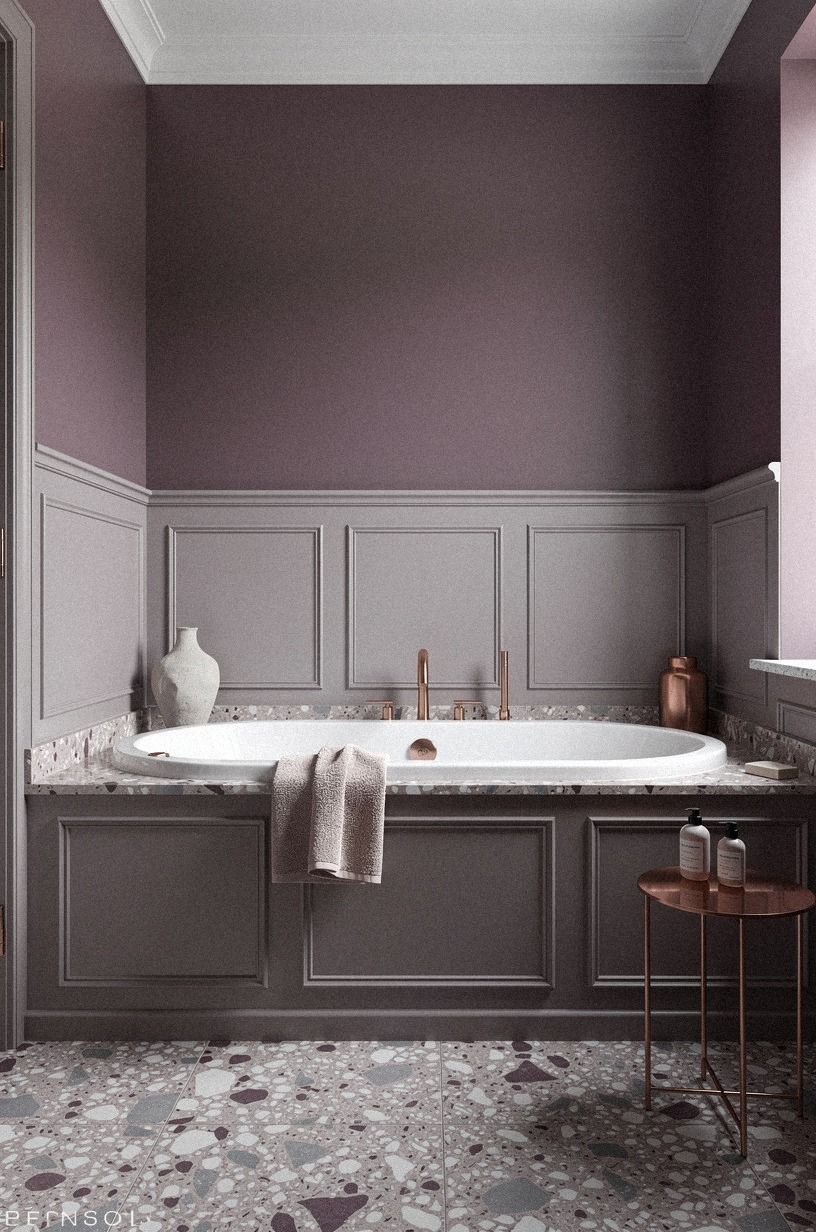
The wall behind the tub needed structure, so I used narrow vertical panels in a deep plum tone with oversized-chip terrazzo accents. This gave your eye a rhythm without making the room feel busy. The rose-gold details and grey stone kept the freestanding tub from looking stranded in the middle of the room.
I’d choose oversized-chip terrazzo for a properly sealed wall application and keep every exposed edge protected from moisture. Your spacing doesn’t need to be ornate, and I’d skip thick farmhouse trim here because it fights the lighter Parisian mood.
If you want a more detailed version, see these wainscoting accent wall ideas behind a freestanding tub. The best detail is the one that makes the tub feel built into the architecture.
3Unlacquered Brass Over Chrome
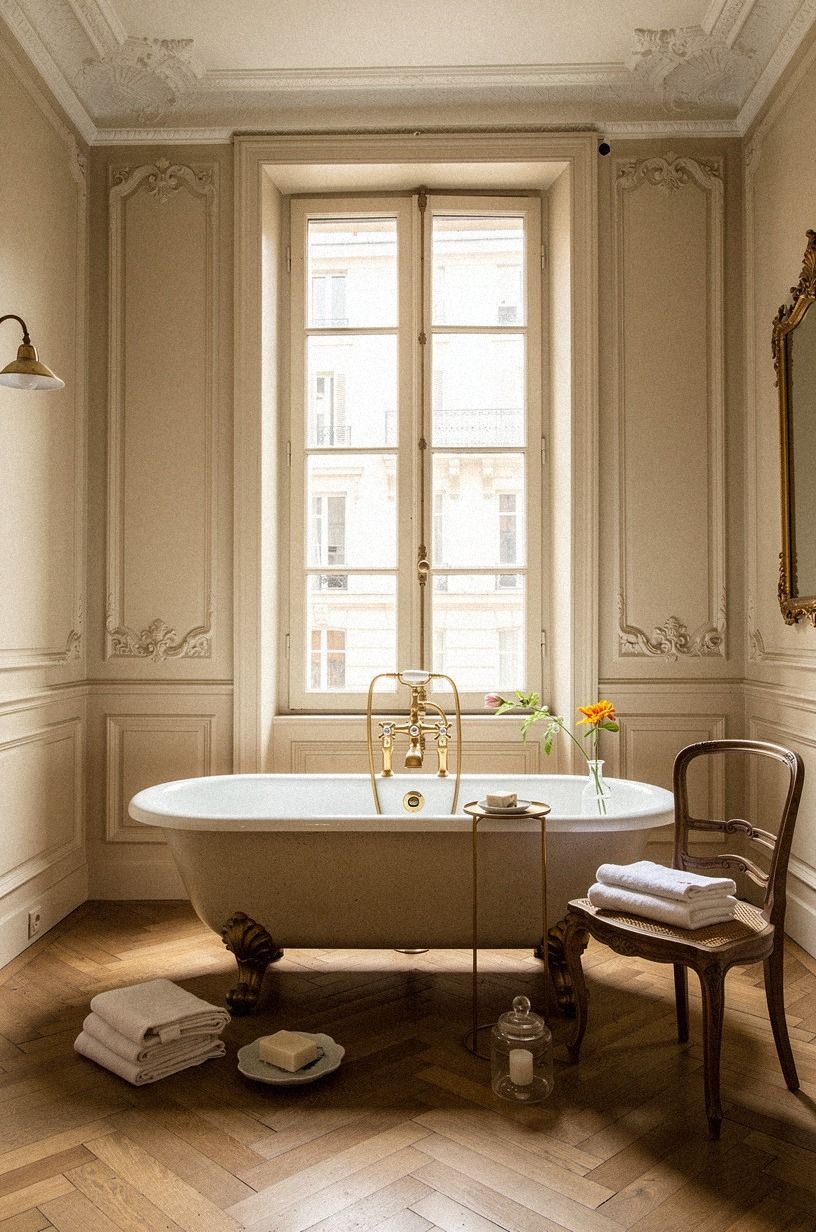
Chrome was the first finish I removed. It reflected the ceiling light sharply and made the room feel newer than I wanted, while unlacquered brass softened every reflection as it began to develop a muted patina. You’ll notice the difference most around the faucet, where your eye naturally lands.
I chose a bridge faucet with a high arch because it gave the tub a furniture-like presence. Against hand-applied Venetian plaster in navy and white, the warm metal felt collected rather than shiny.
Your fixture should still clear the rim comfortably, and you’ll want to confirm the rough-in before ordering anything. I also checked where to put the faucet on a freestanding tub before drilling.
That small pause prevented an expensive mistake!
The warm finish also works beautifully beside a painted door or darker cabinet. I’d save the same faucet-placement guide before starting, because correcting a bad position later is frustrating and costly.
4Float a Slim Vanity Beside the Parisian Bath
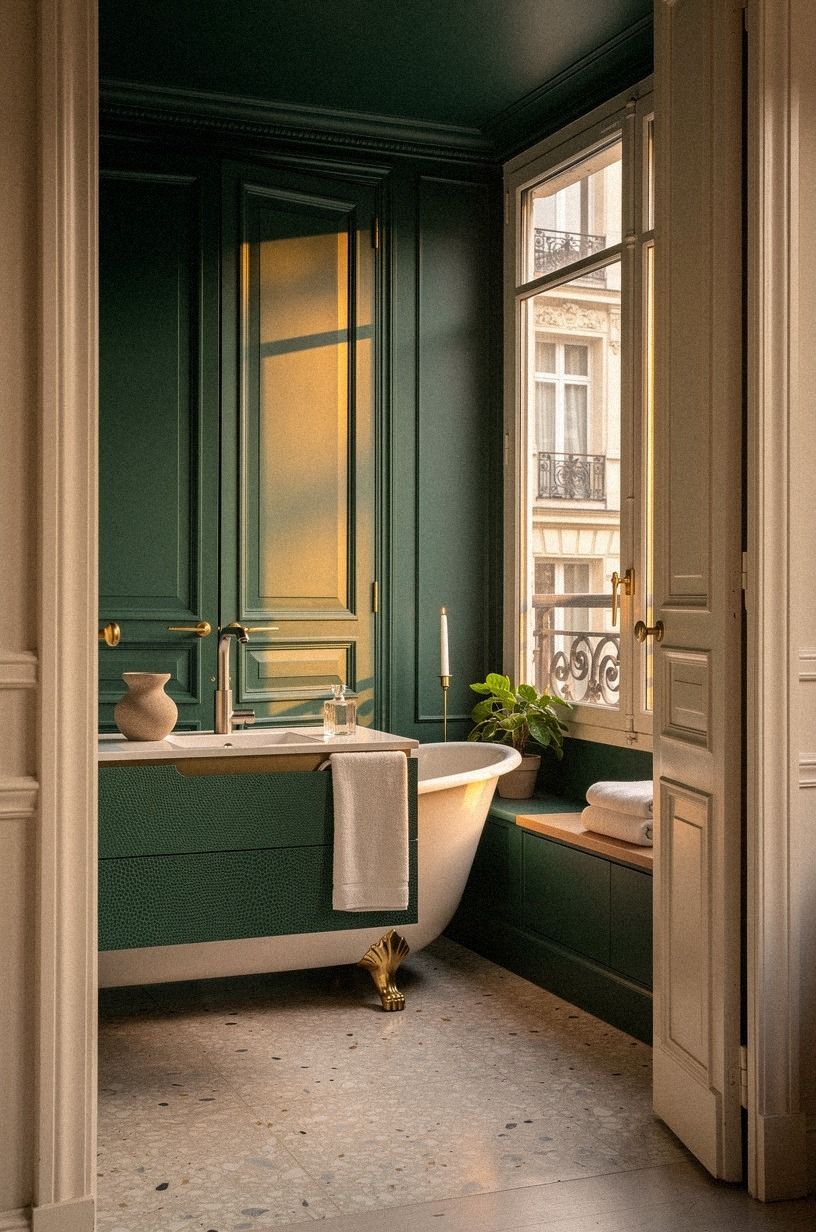
The original vanity was chunky, so I replaced it with a wall-mounted cabinet in deep emerald, softened by cream and subtle shagreen accents. Its silhouette was inspired by an IKEA HEMNES, but the richer finish made it feel more tailored.
The floor continued beneath it, which made your walking path feel wider even though the cabinet storage stayed practical. I wanted the room to breathe around the tub.
You’ll want to keep at least 21 inches of clearance in front of the toilet, especially if your bathroom is narrow. I chose a shallow profile rather than a deep double vanity, and I’d make that choice again. A large cabinet would have offered more storage, but it would’ve swallowed the graceful curve that makes a freestanding tub feel special.
A restrained vanity also keeps the room closer to the relaxed European feeling explored in this Tuscan bathroom color guide.
5Build the Three-Height Light Stack
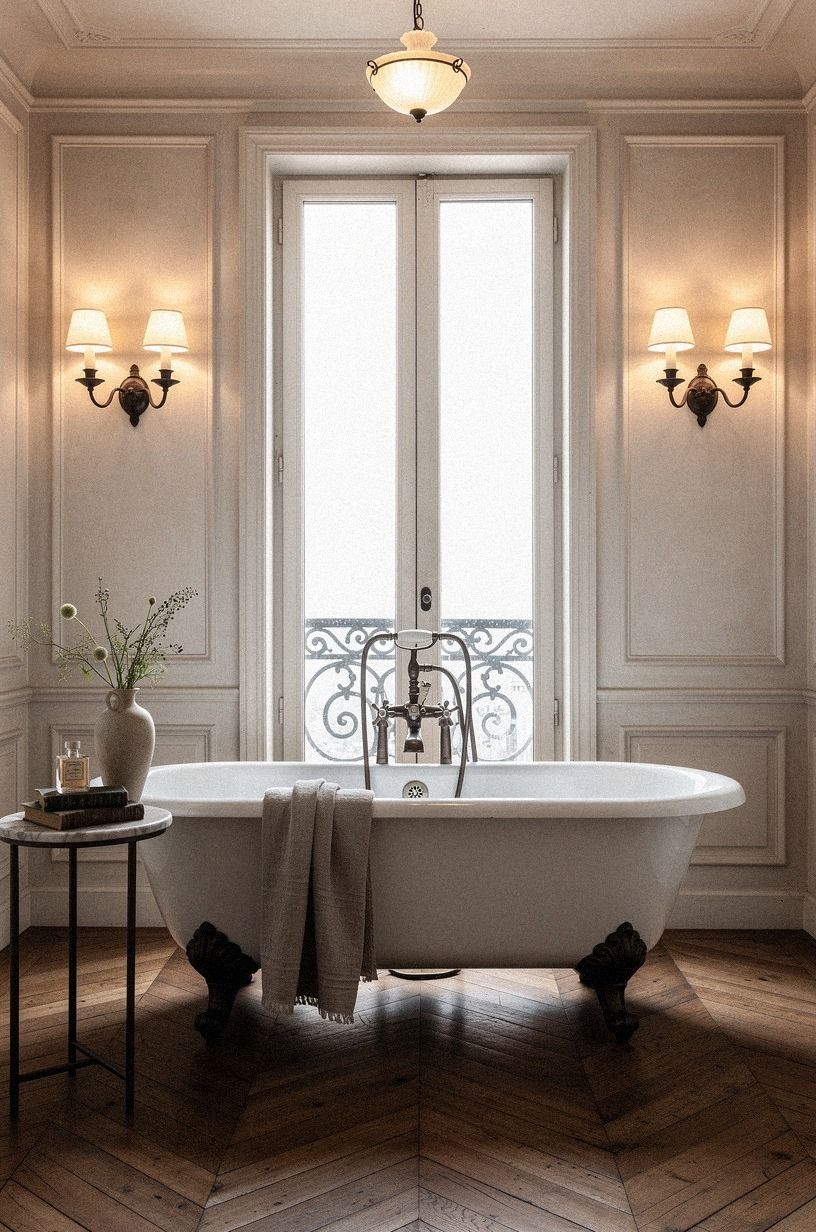
A single overhead fixture couldn’t create the intimate feeling I wanted, so I built what I call the Three-Height Light Stack: ceiling light, wall sconces with washed Belgian linen shades, and one low candle-like glow near the tub. Forest green, rust, and natural oak kept the lighting scheme grounded instead of overly polished.
6Hague Blue Adds the Contrasting Note
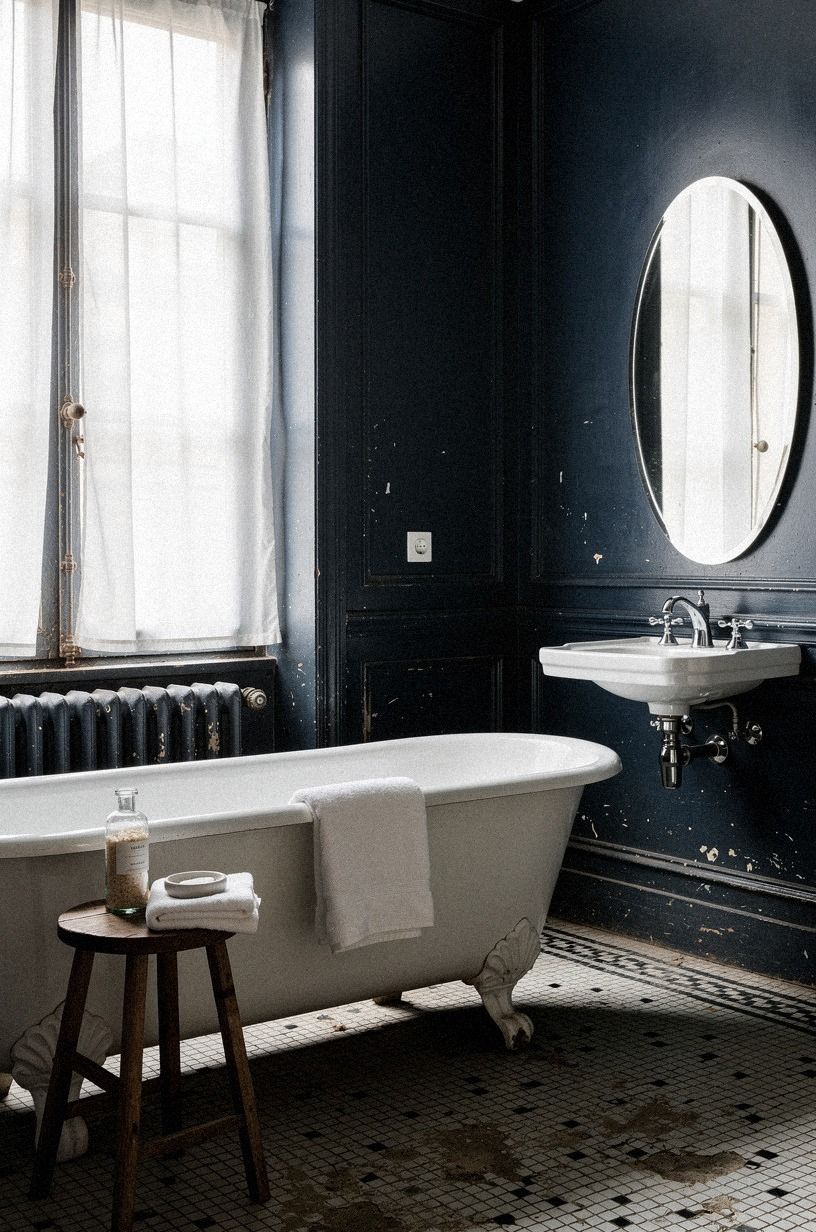
The room needed one dramatic note, so I painted the inside of a narrow storage cabinet charcoal. It was a small decision, but opening the door revealed a deep grey flash against the dusty-rose walls and cream surfaces. A little brass hardware warmed the contrast and made the room feel collected rather than decorated in one afternoon.
I wouldn’t paint every wall dark in this particular space. Your bathroom is compact, and too much charcoal paint would make the tub feel boxed in. A cabinet, door, or half wall gives you the mood without losing air.
I tested three samples first, and the charcoal won because it looked soft in daylight instead of flat black at night.
If you’re considering a darker focal point, these black freestanding tub ideas show how contrast can feel elegant rather than severe.
7Hang Linen Curtains Over the Narrow Window
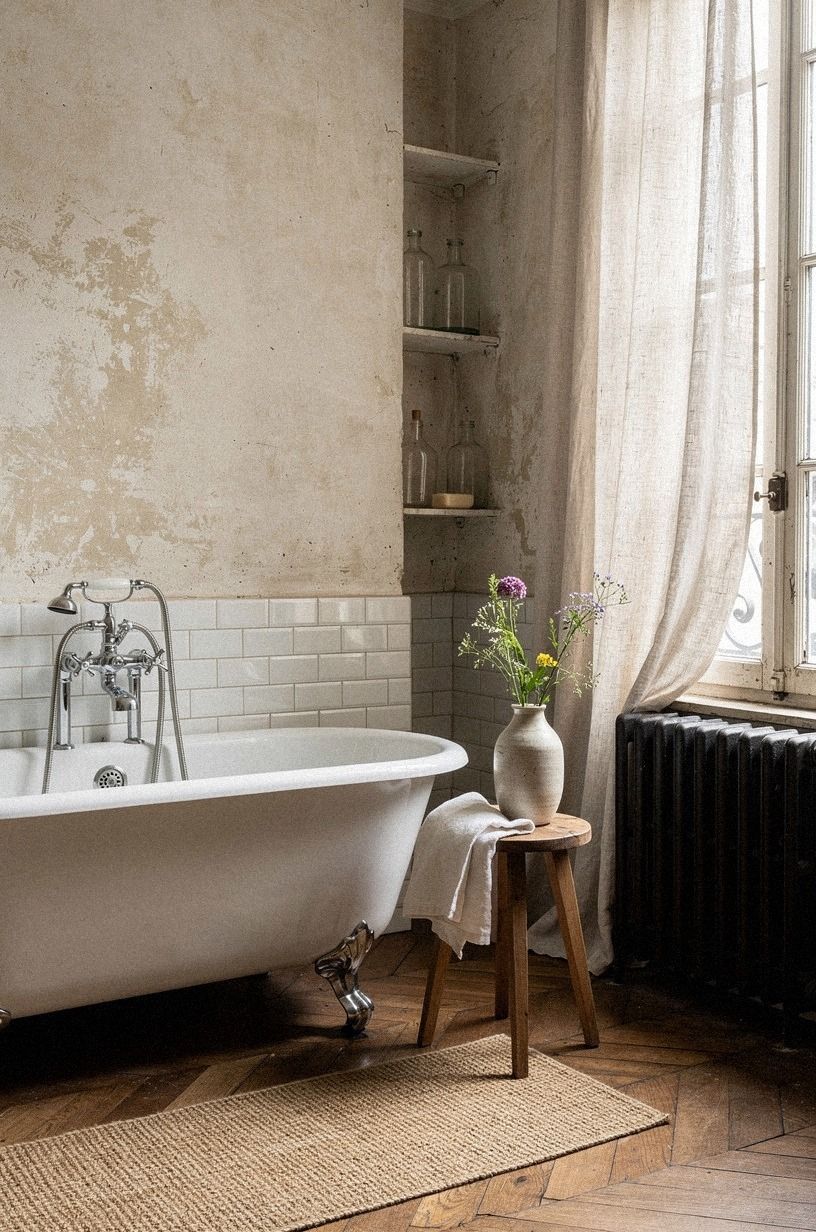
The window needed softness, but heavy drapery would have crowded the tub. I used Belgian flax linen in a loose weave over a Nero Marquina marble sill, hung just above the frame so the fabric skimmed the edge. The warm white and camel tones softened the black marble’s white veining, and the room stopped feeling exposed.
Your curtain doesn’t need to cover every inch of glass if privacy film already does the practical work. I’d skip shiny polyester because it catches the bathroom light in a distracting way. A single panel with a simple rod feels more relaxed, and if you’re renting, a tension rod gives you the same gentle movement without holes.
The curtain also softened the hard lines of the tub. For more wall-treatment inspiration, browse these tile ideas behind a freestanding tub.
8The Two-Wood Rule
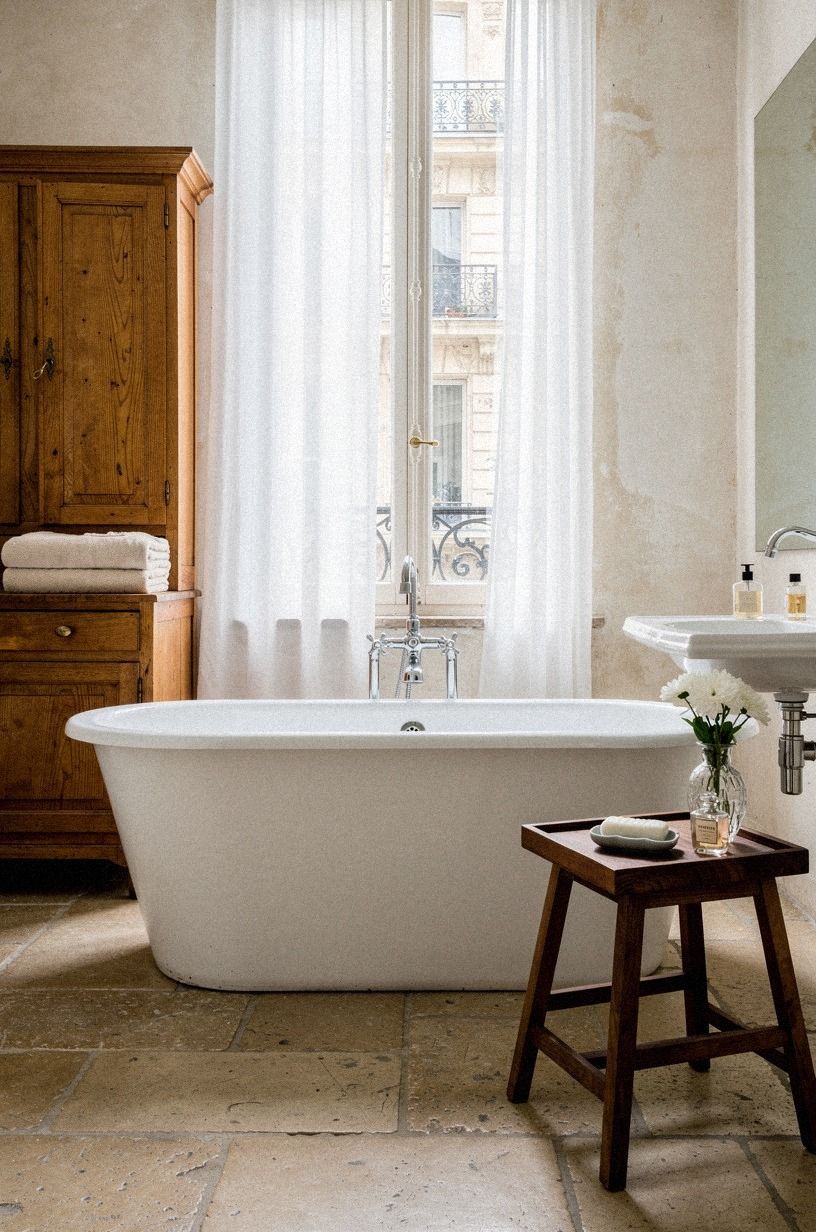
I kept the palette to two strong finishes: midnight blue and copper, softened by ivory. The small stool wore deep-pile mohair velvet, which added a touch of softness without introducing another competing texture.
9What Belongs on a Parisian Bath Wall?
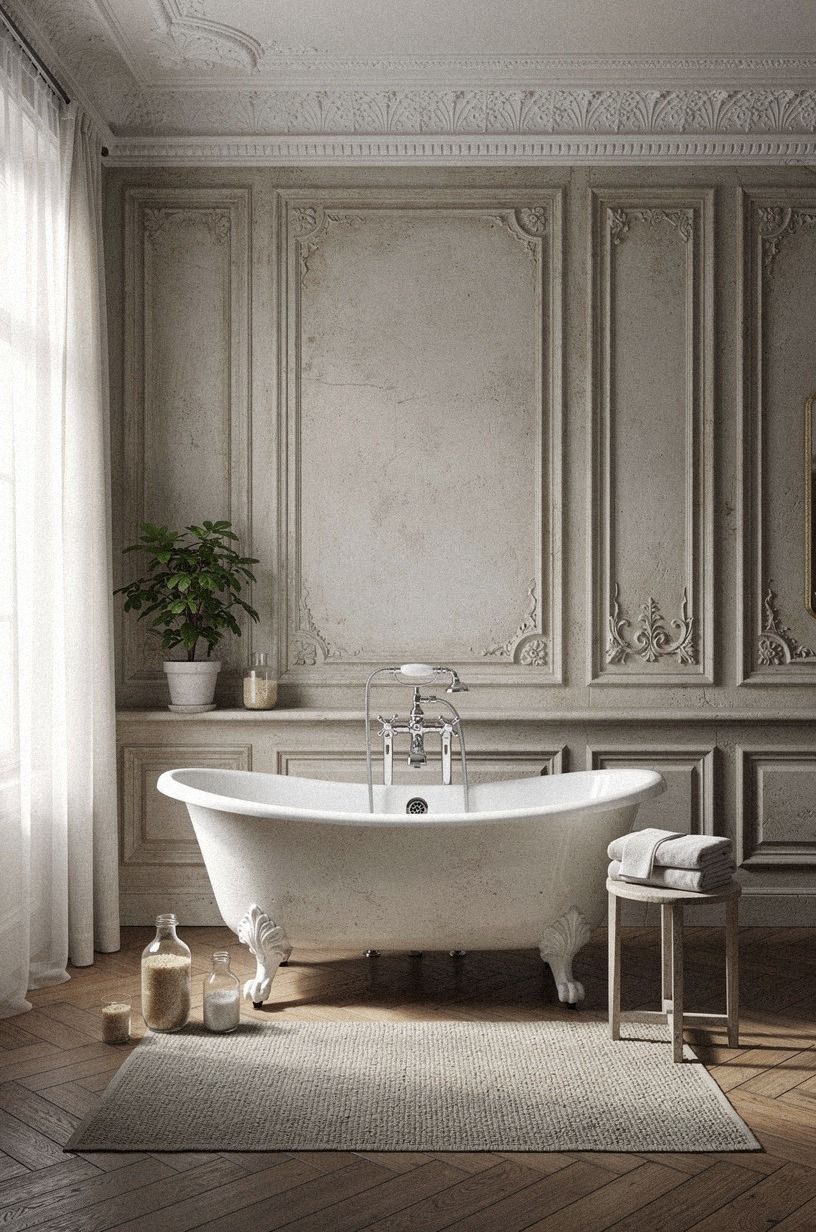
The blank wall beside the vanity became a small gallery of botanical prints, one architectural sketch, and a print of a Parisian balcony. I used natural wood frames instead of bright gold, since the softer material gave the wall a little weight without stealing attention from the tub. A narrow Carrara marble ledge grounded the arrangement against the sage green and warm cream palette.
Your art should sit high enough to avoid splash zones, but it doesn’t need to be precious. I placed the lowest frame above shoulder height and left irregular space between each piece.
That uneven arrangement felt more lived-in than a perfect grid. If you like European rooms with a little more color, this Tuscan Italian bathroom ideas guide helped me think beyond the usual pale palette.
I’d choose one memorable print over six generic ones. A weathered frame, a faded architectural drawing, or a quiet botanical study can make the room feel personal.
10Marble Instead of a Bulky Cabinet
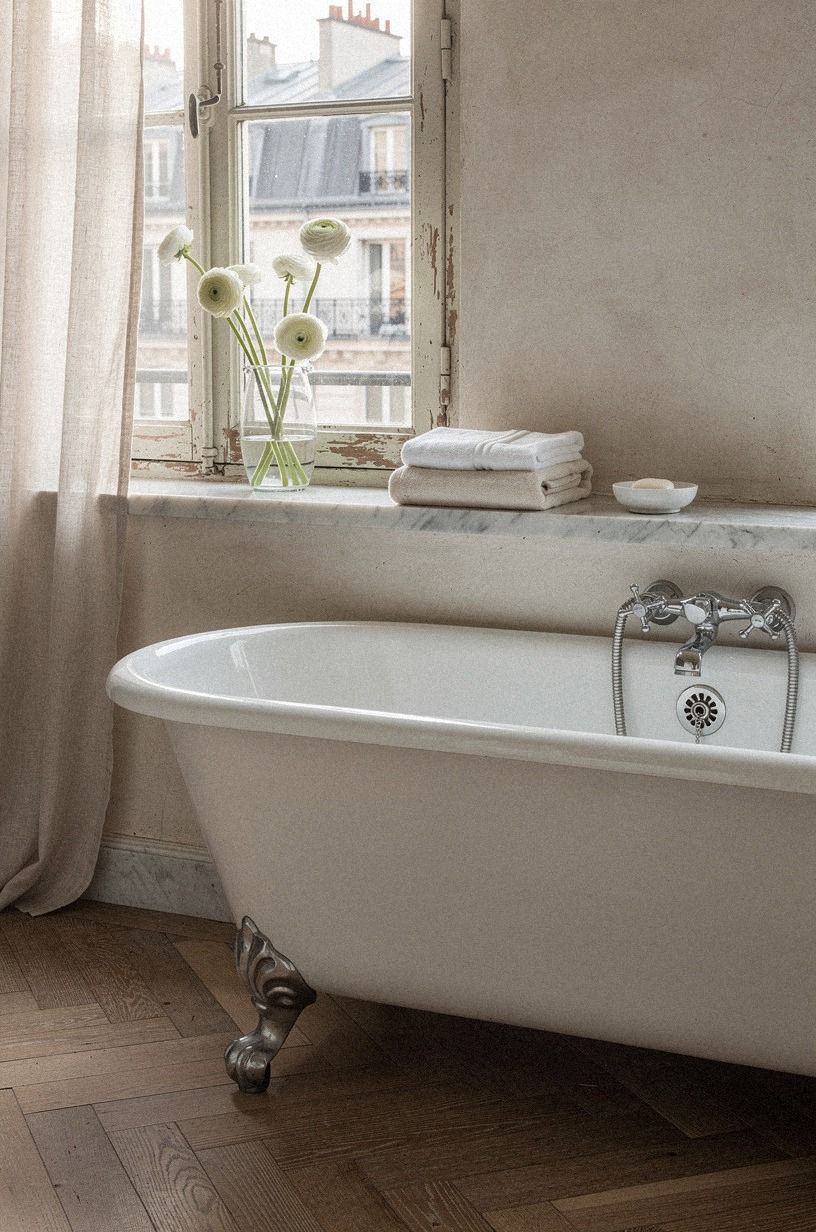
I needed tub storage, but a tall cabinet would have crowded the room. A narrow shelf in reclaimed weathered teak gave me a place for soap, a candle, and one small vase. The wood had a terracotta warmth that looked especially good beside stone and olive accents.
You’ll want to measure the shelf depth before choosing a tub location. I kept the ledge shallow enough that your shoulder wouldn’t brush it while bathing.
I’d seal the teak carefully near constant splashes and choose a finish that lets its weathered texture remain visible. One compact shelf can deliver more visual weight than a whole storage unit.
For a more architectural backdrop, compare the shelf with these wainscoting ideas behind a freestanding tub. Both approaches add structure without consuming floor space.
11Pair the Tub With a Soft Parisian Bath Rug
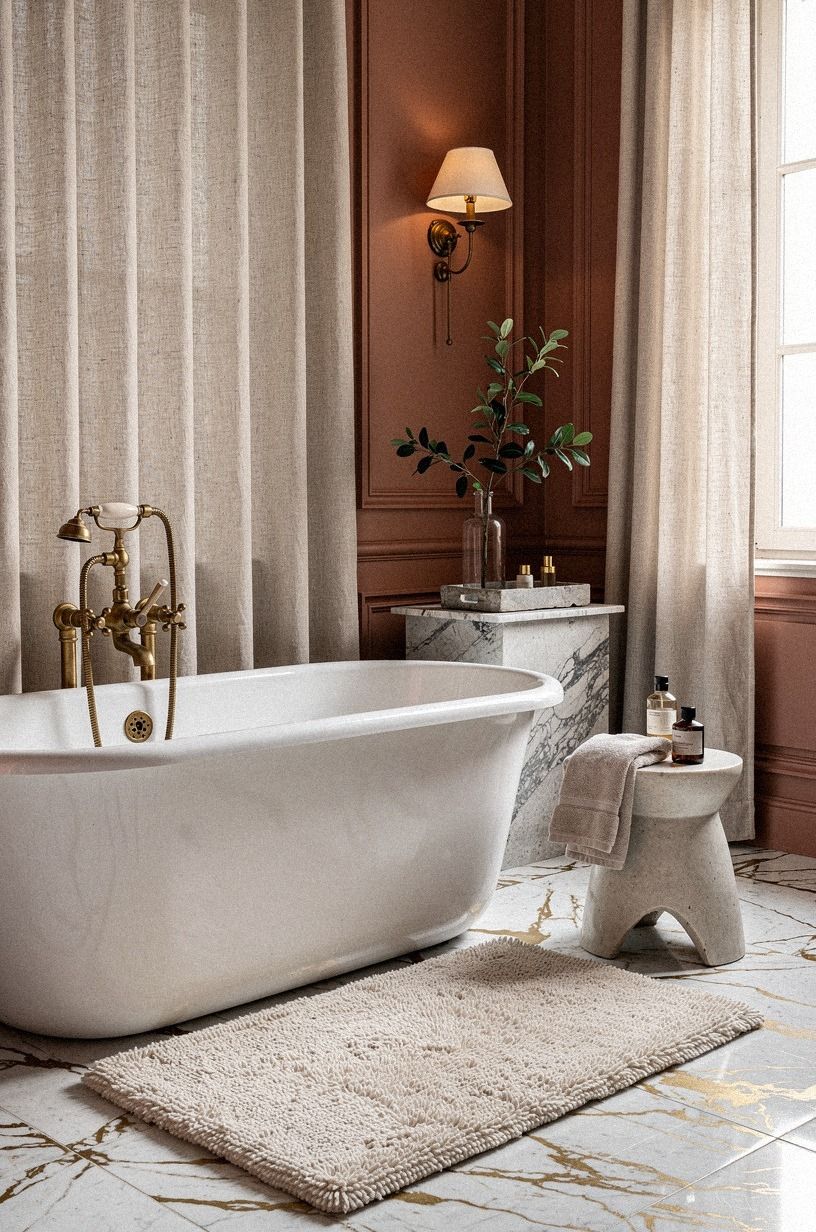
The Calacatta marble floor felt hard and echoing, so I added a 600gsm Turkish cotton runner in a faded ivory tone. It absorbed the sharp sound of footsteps and gave your feet a soft landing beside the tub. The clay, linen, and aged-brass palette made that small sensory change feel warmer before I changed anything else.
I chose a runner rather than a round bath mat because the long line supported the tub’s shape. Your rug should leave enough exposed floor for easy cleaning, especially near the toilet.
I’d skip a thick shag style here. It looks inviting in a showroom, but it traps moisture and makes a compact bathroom feel visually heavy.
The faded ivory color also echoed the porcelain tub without creating a sterile matching set. That balance is what made the room feel calm, tactile, and quietly luxurious.
12Black Interior, Pale Exterior
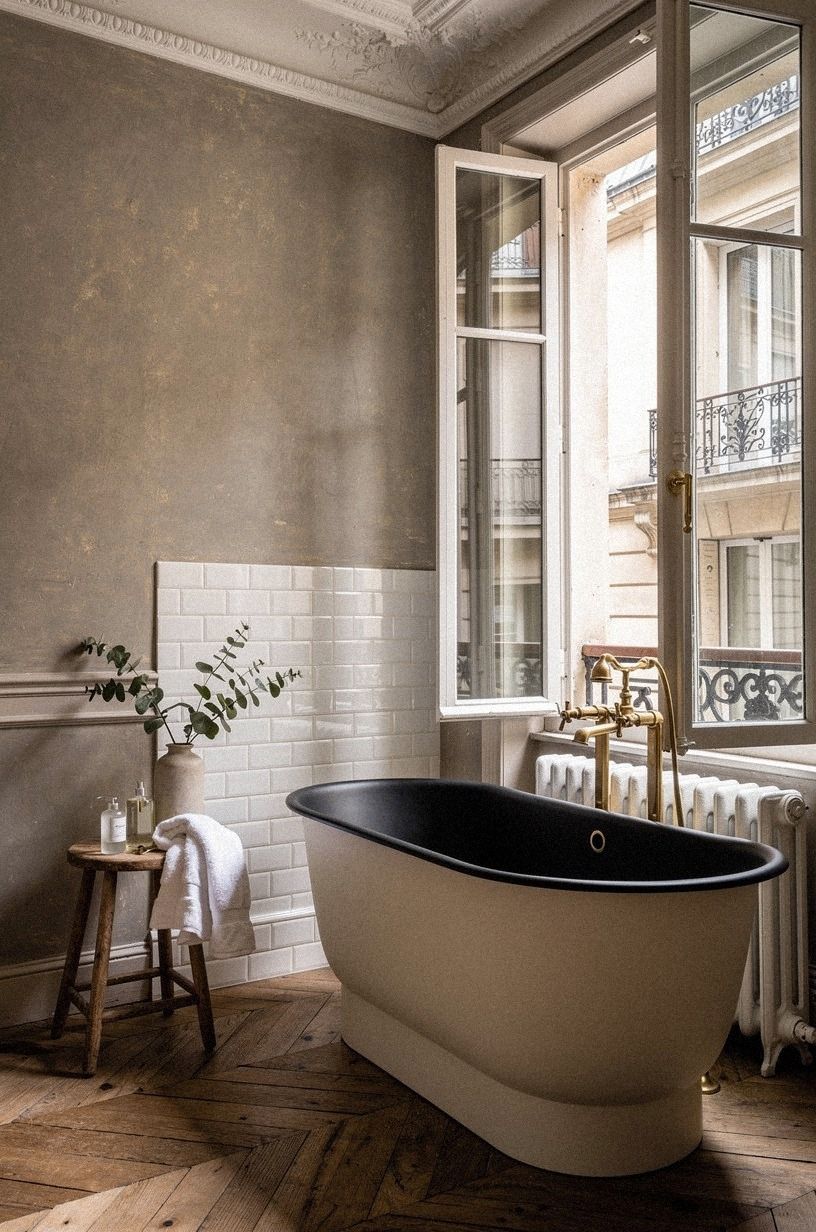
I went back and forth on the tub finish, then chose a pale exterior with a muted plum interior. That contrast gave the room a moody, elegant center without turning the whole space dark. You’ll want to see the finish beside your paint, because plum can read grey or brown depending on the surrounding colors.
A fully white tub would’ve been safer, but safe wasn’t the goal. I’d choose the darker interior again because it made the rose-gold faucet and cerused white oak details look richer. If your room gets strong daylight, a bolder option could work, and these ideas for why a black freestanding tub is the boldest bathroom upgrade show how to balance it.
The result was striking without feeling theatrical. The dark center anchored the room, while the pale exterior kept the overall mood breathable.
13Style the Tub With One Ceramic Vessel
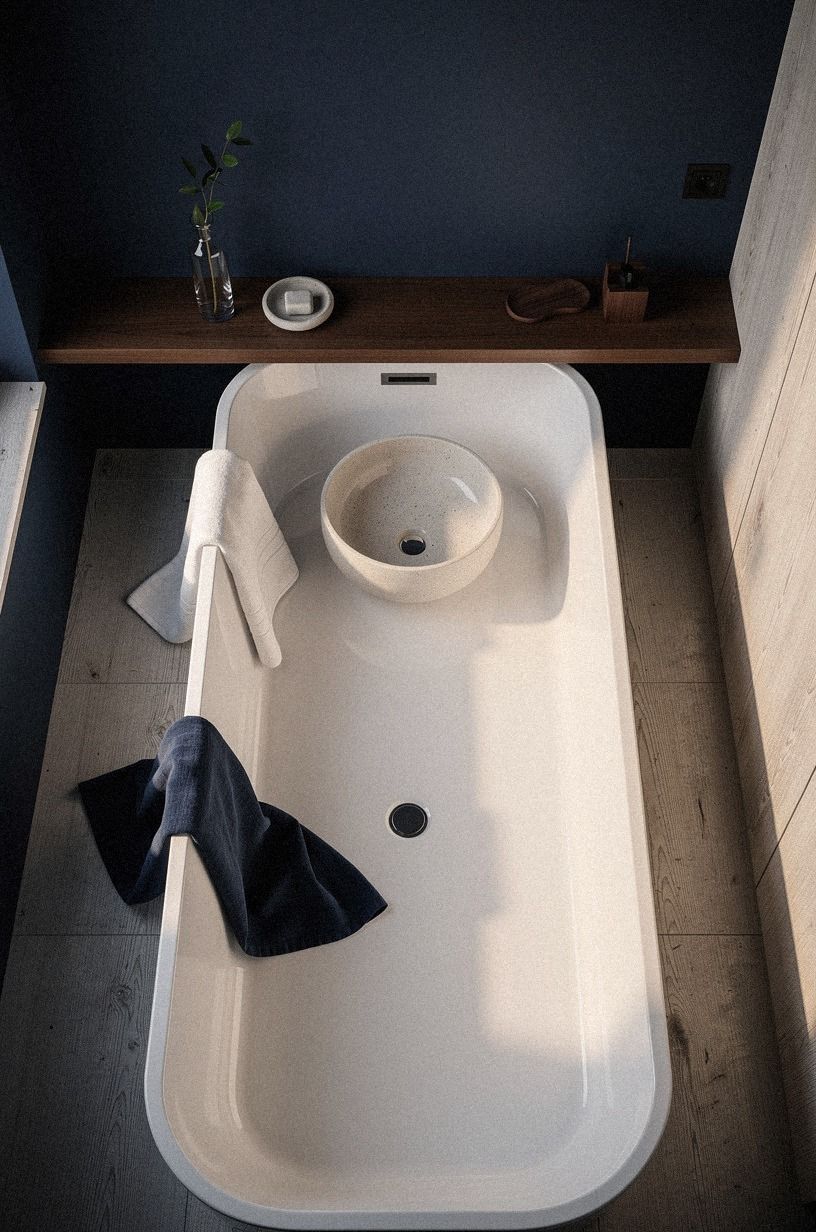
The tub needed a final layer, but I didn’t want a row of bottles. I chose one hand-thrown ceramic pitcher in a soft navy-and-white glaze and placed it beside a walnut stool with cerused white oak details. The leaves added a clean, earthy scent, while the uneven rim kept the arrangement from looking manufactured.
Your styling can stay simple: folded towel, small vessel, one bar of soap. I’d avoid filling every ledge because the room needs negative space around a large tub. And if you’re tempted to copy a crowded showroom display, ask yourself whether you’d want to dust it every week.
I kept the practical objects close and the decorative ones few.
One vessel felt more intentional than a collection of matching accessories. For a similarly restrained fixture decision, this freestanding tub faucet guide is useful before you commit to the final arrangement.
14Sea Salt Gives the Door Its Exit
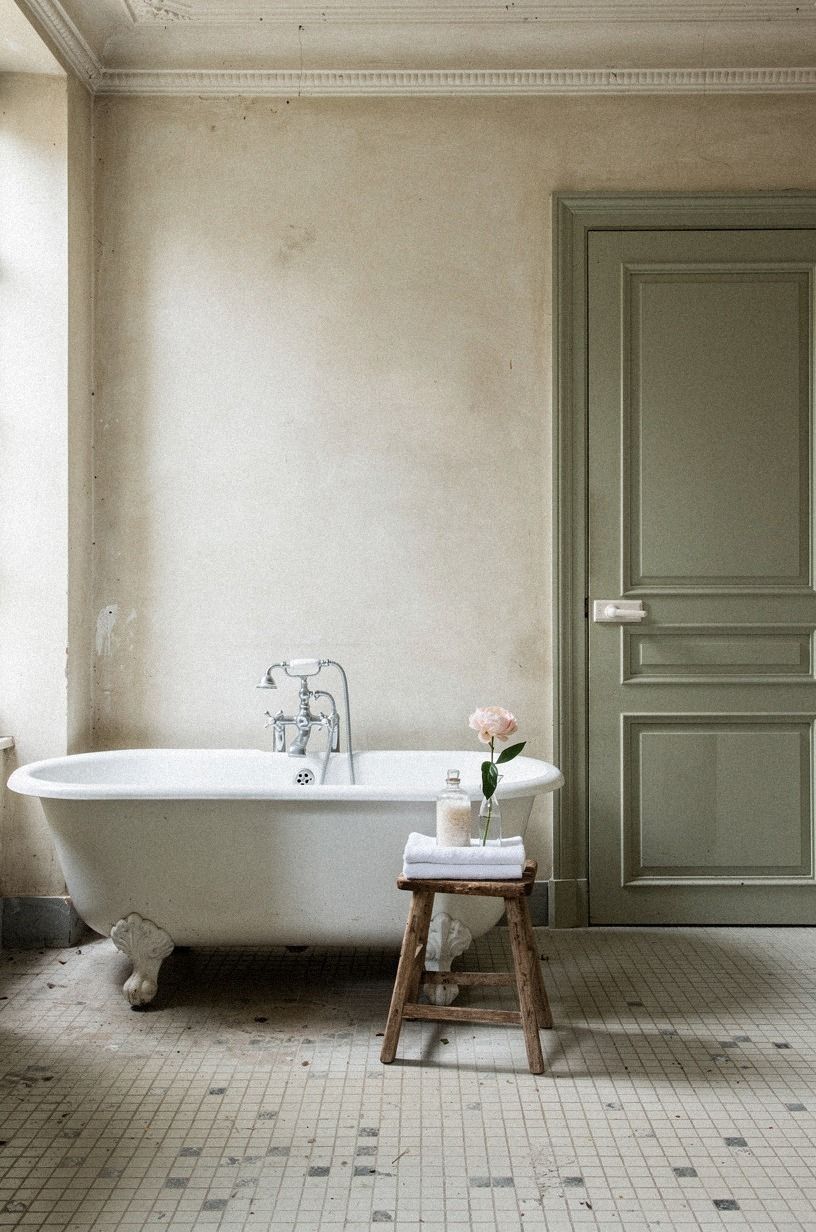
The bathroom door looked disconnected from the rest of the room, so I painted it deep emerald and used cream trim with a small gold detail. The richer shade changed the view from the hallway and made the bathroom feel like a separate little world. A backlit translucent onyx panel near the doorway added a soft glow without competing with the tub.
You’ll want to sample the color on both sides of the door, since hallway light can shift it dramatically. I’d skip matching the door to the walls if your room already has several pale surfaces.
A quiet contrast gives your eye a destination. The finish was satin paint, which handled fingerprints better than flat paint and still felt soft rather than glossy.
The color also connected the warm walls to the cream surfaces and brass fittings. That tiny transition made the whole palette feel more considered.
15Would a Freestanding Stool Earn Its Keep?
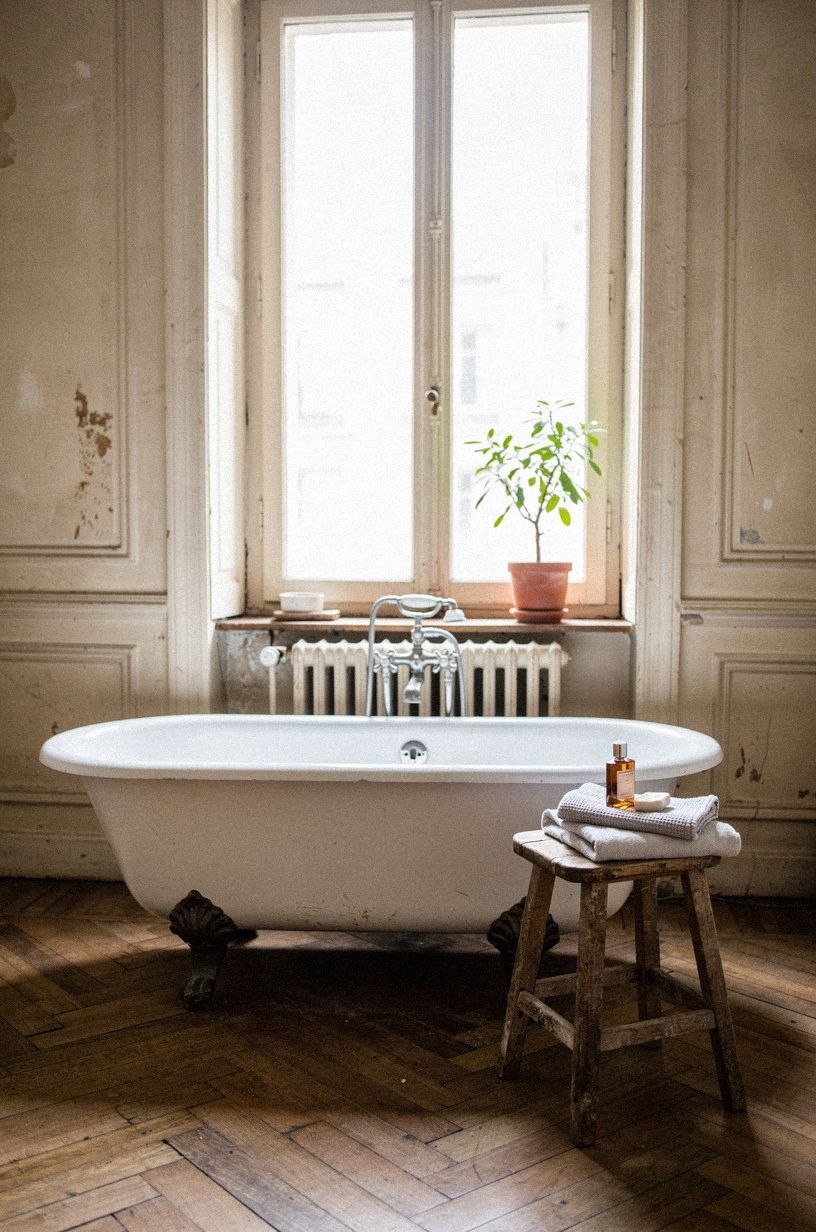
A small book-matched walnut stool beside the tub became the piece I didn’t expect to use so much. Its forest-green and rust accents tied into the room without overwhelming the natural oak around it.
16Finish With Quiet Metal Details
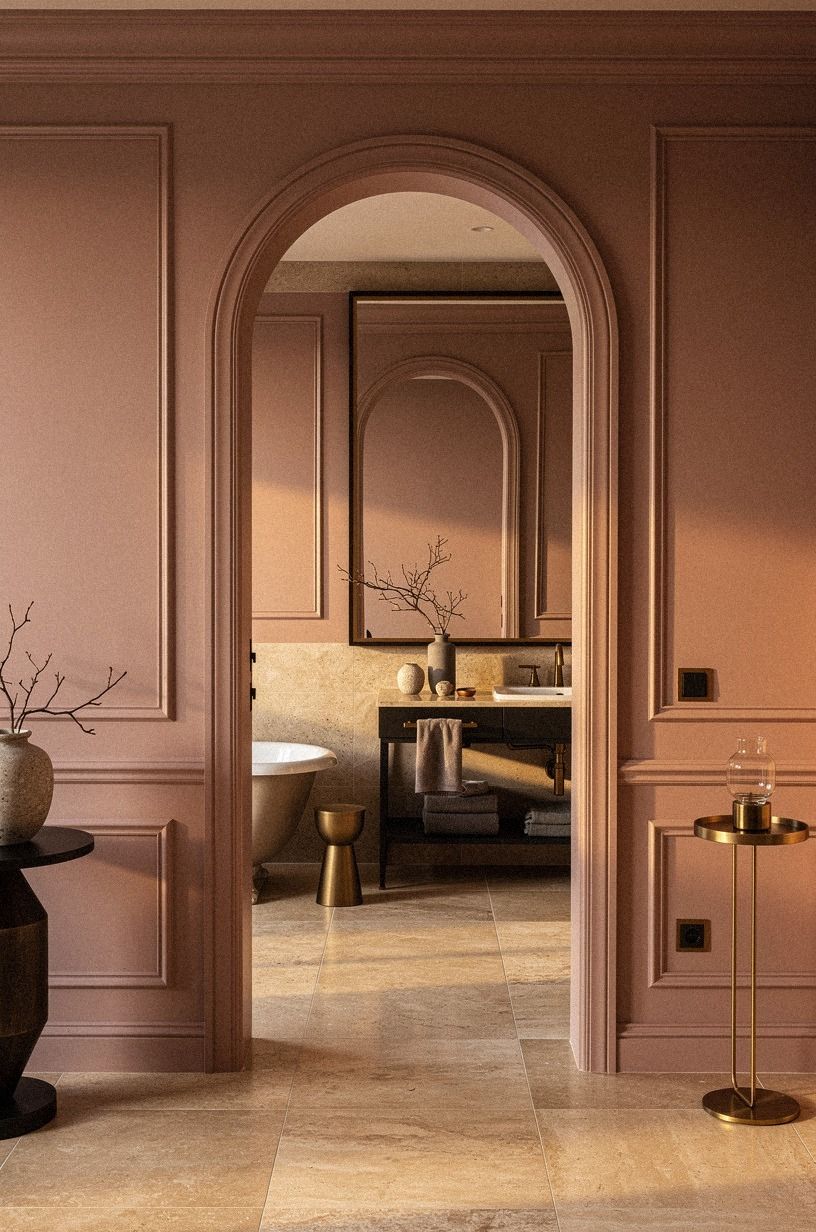
The last step was editing. I changed the towel hooks, toilet paper holder, and cabinet pulls to aged brass so the room had one consistent metal thread. Those details were small, but your eye notices when finishes disagree, especially in a bathroom with limited square footage.
I kept the rest restrained: one warm travertine tray, cotton towels, and a small framed sketch. Dusty rose, charcoal, and brass gave the room enough contrast, while the travertine kept the surfaces from feeling cold.
You don’t need a dozen accessories to make the room feel rich. I removed three objects that looked fine individually but made the counter feel busy together.
The final room became serene because every item had a job, and the tub finally had space to be the focal point.
Before drilling new hardware, I’d review where to put the faucet on a freestanding tub and map every placement with painter’s tape. That extra minute can save an aggravating repair!
How Much It Cost: A $1,200 Parisian Bathroom Refresh
I planned the makeover around the top of the budget tier, $1,200, because that gave me room for paint, a mirror, textiles, and a faucet without touching the plumbing. Your total can stay lower if you keep the existing fixture and shop secondhand for the stool, frames, and vanity.
The larger renovation ranges below helped me decide what not to change. A full re-tile would have pushed the project into a different category, while the cosmetic version gave me the atmosphere I wanted with less disruption. For a more dramatic focal point, compare the costs and visual impact of black freestanding tub upgrades.
I’d spend first on the faucet, lighting, and paint because those are the elements your eye and hands experience every day. Your savings can come from art, accessories, and the stool. I also compared material prices before committing:
Why This Vintage Parisian Bathroom Still Feels Fresh
I don’t think the appeal comes from copying a particular apartment in Paris. It comes from choosing details that age well: imperfect wood, soft paint, warm metal, and pieces that look as if they’ve been useful for years. Your bathroom feels more inviting when it has texture and restraint instead of a pile of trendy finishes.
The tub works because it changes the room’s posture. A standard built-in tub tends to disappear into the wall, while a freestanding shape asks you to leave breathing room around it.
That doesn’t mean your bathroom needs to be large. It means every object has to earn its footprint.
I’d rather have one graceful tub and a small stool than a crowded room full of decorative noise.
My biggest mistake was adding accessories too early. I bought a mirror, baskets, and artwork before deciding how the light moved across the walls.
Some pieces looked charming in isolation but felt fussy once the brass faucet and dark tub were in place. I took half of them out, and the room became calmer immediately.
That’s the part I’d want you to remember. Vintage European style isn’t a shopping list.
It’s a willingness to let materials show their age, to use fewer things, and to choose warmth over perfect matching. You can create that feeling with a $200 paint-and-textile refresh, or you can spend more on tile and plumbing.
The principle stays the same.
The Questions I Get Asked Most
What is the best Parisian Freestanding Tub Ideas for Vintage European Charm for a small bathroom?
The best choice is a compact tub with a slim IKEA HEMNES-style vanity nearby, because it preserves walking space and gives you useful storage. Keep the tub near one wall, protect at least 21 inches in front of the toilet, and let one warm paint color carry the room.
Where can I buy Parisian Freestanding Tub Ideas for Vintage European Charm pieces on a budget?
Look at IKEA, Wayfair, and Target first, then check Facebook Marketplace or local thrift shops for stools, frames, and mirrors. Your best savings usually come from secondhand furniture, while paint and textiles can refresh pieces you already own.
How much does a Parisian Freestanding Tub Ideas for Vintage European Charm makeover cost?
A cosmetic refresh typically fits within $200 to $1,200, depending on the faucet, mirror, paint, and textiles. Your free changes include editing clutter, rearranging art, and reusing furniture. A mid-range renovation can reach $3,000 to $9,000 if you replace the vanity, lighting, or wall tile.
Can I create a Parisian Freestanding Tub Ideas for Vintage European Charm look on a budget?
Yes, and you can begin with paint, secondhand frames, and warmer bulbs. Use Benjamin Moore Chestertown Buff HC-9, add linen-look textiles, and move one small stool beside the tub. Your room can feel softer without changing plumbing or buying a complete furniture set.
Is a Parisian Freestanding Tub Ideas for Vintage European Charm look worth it in a small space?
Yes, because a freestanding silhouette can make the tub feel like furniture instead of a bulky built-in box. Your best layout keeps the vanity shallow, preserves 21 inches of toilet clearance, and uses one strong wall treatment rather than several competing accents. These wainscoting ideas behind a freestanding tub can help you add drama without losing floor space.
Is Parisian Freestanding Tub Ideas for Vintage European Charm a good idea for a rental?
Yes, especially if you use removable upgrades such as peel-and-stick wallpaper, a tension rod, framed art, and renter-safe hooks. Your tub area can still feel warm with linen curtains, portable lighting, and a secondhand stool. For more wall detail, browse these tile ideas behind a freestanding tub.
Where I’d Start First
If I had to pick one, I’d start with the paint color. It changes how every cold fixture reads, and you can’t layer warmth over a wall that fights it. Pin this Parisian bath for later, then test your favorite shade beside the tub before buying anything else.