
Christmas hosting tips for your first time hosting work best when they make the room easier to use, calmer to enter, and warmer to sit in. I learned that in a small rental with one narrow dining table, a crowded kitchen, and guests arriving before I’d finished drying the glasses. The room wasn’t flawless. It felt welcoming, and that mattered more.
- Clear the guest path before decorating
- What the Light Was Missing
- Layer the table with one strong textile
Editor’s note: Start with movement, then add atmosphere. A clear path, a useful serving surface, and gentle lighting will carry more of the evening than a crowded table ever could.
- Clear the guest path before decorating
- What the Light Was Missing
- Layer the table with one strong textile
- The One-Bowl Landing Zone
- Swap a centerpiece for a conversation line
- Set the Guest-Flow Loop before guests arrive
- Could warm wall color change the mood?
- The Collected Material Mix
- Hang the curtains high and let them soften the room
- Practical serving versus a crowded table
- How can an overnight corner feel generous?
- Save the last hour for atmosphere, not errands
1Clear the guest path before decorating
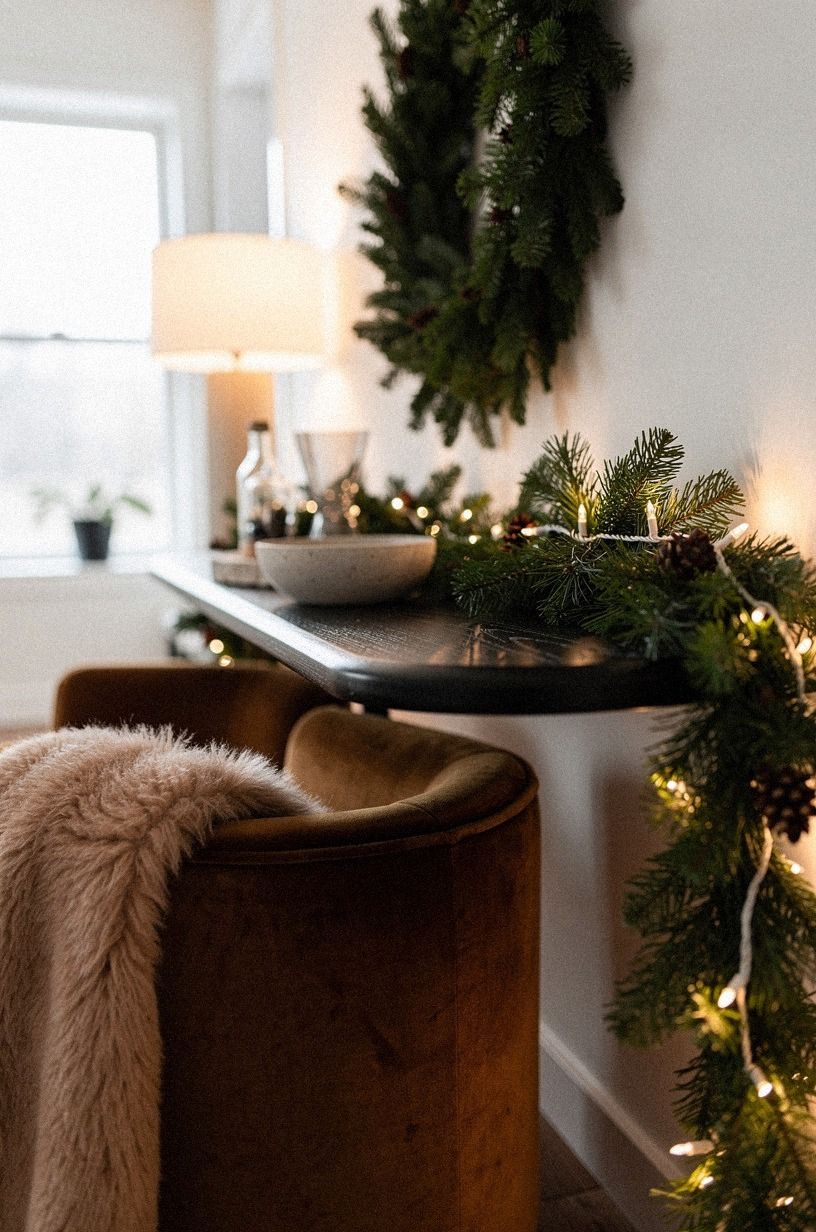
My first easy Christmas hosting idea was painfully basic: I walked through the house carrying a full plate. The route from the oven to the table crossed a chair, a basket, and one badly placed floor lamp. I moved the camel deep-pile mohair velvet bench six inches, and suddenly I could turn without bumping anything.
You’ll want to test your own guest path before guests arrive. Carry a tray, open the refrigerator, pull out a chair, and ask someone to stand nearby.
If you can’t do those things comfortably, your arrangement isn’t ready. I’d skip extra floor decor here.
A clear route feels more generous than another arrangement of pine branches.
Measure the tightest points between the kitchen, dining table, and bathroom. You don’t need a perfect rectangle of empty floor.
You need enough room to turn while holding something hot. Keep chair legs tucked in, move baskets against the wall, and relocate anything that makes you say “excuse me” to an empty room.
If your home has a narrow hallway, give coats one destination instead of scattering hooks around the room. A sturdy black wood peg rail, a large woven basket, or one cleared section of the closet can handle the first rush. Guests relax faster when they know where their things belong.
I also placed a small black umbrella stand by the door and removed a decorative stool that had been blocking it. That tiny change made the entrance feel intentional. Your front door sets the emotional temperature of the evening, so make the first ten feet feel easy and welcoming.
A clear route is one of the highest-value changes you can make on a modest budget. It costs little, feels instantly useful, and can be worth it before you buy a single decoration.
2What the Light Was Missing
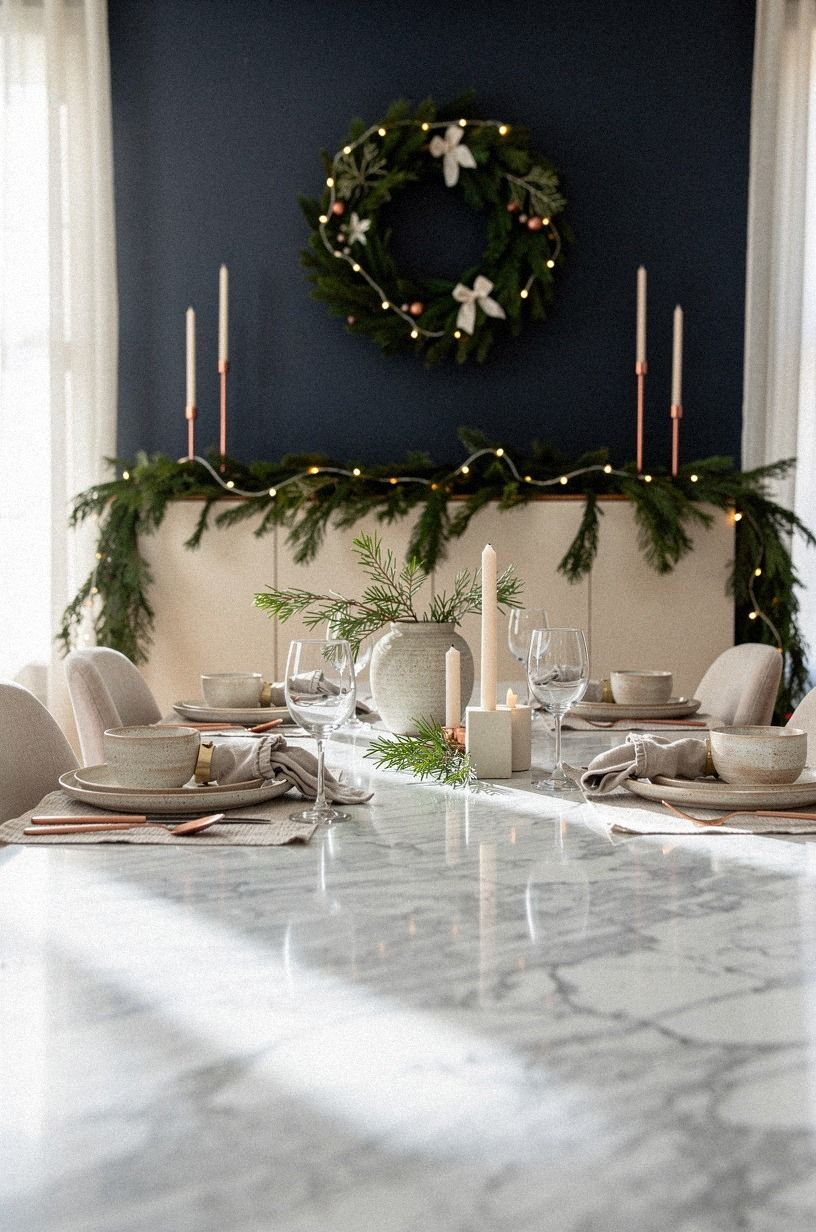
The overhead fixture made my midnight-blue dining area look like a waiting room, especially beside the copper and ivory details.
3Layer the table with one strong textile
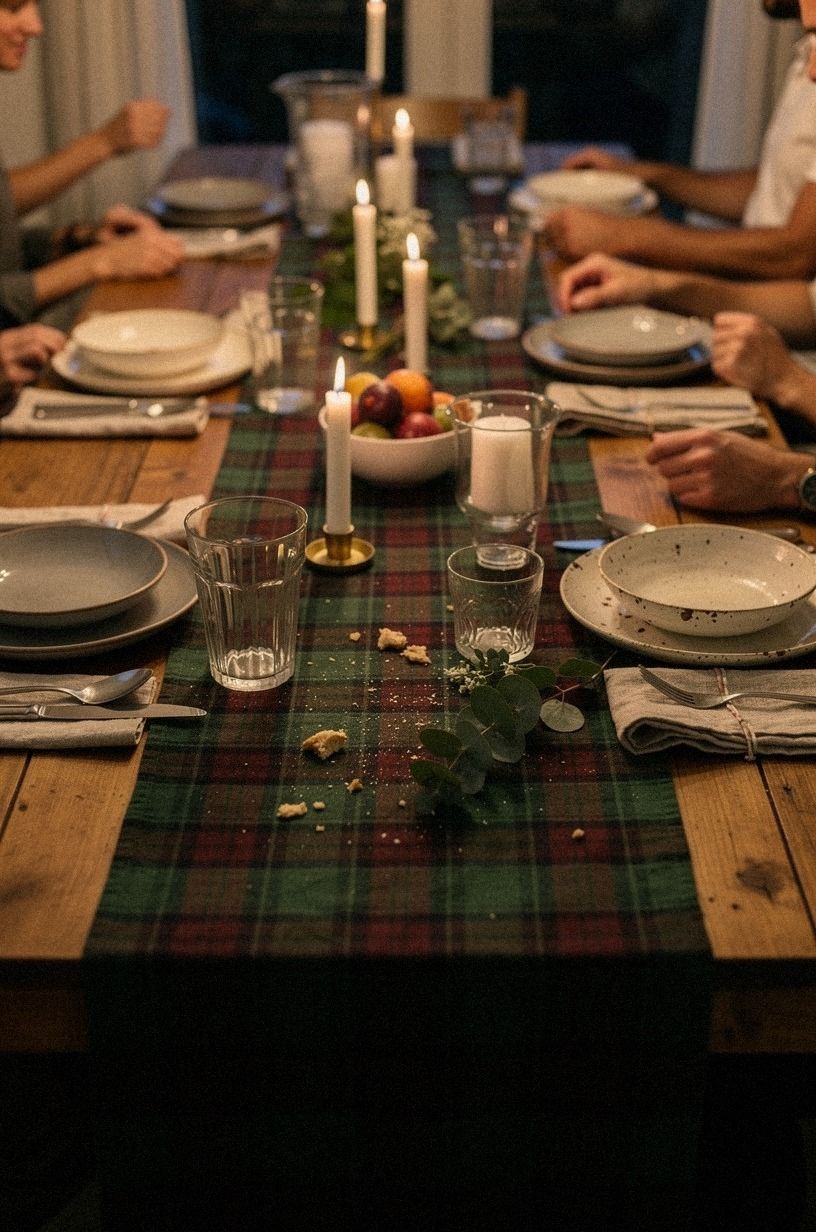
I started with a sage-green linen runner because the reclaimed weathered teak table needed softness, not more decoration. It softened the sound of forks and glasses, covered a scratch near the center, and gave the mismatched chairs a shared color. That one textile did more than a pile of small ornaments would have done.
You can use a runner, a folded cotton throw, or cloth napkins in a warm neutral. Your table doesn’t need matching plates to feel gathered. I mixed white stoneware with clear glasses and one set of sage-green tumblers, and the variation made the setting feel personal.
The mistake would be layering too much fabric. A thick cloth, oversized centerpiece, and dangling napkins leave no room for elbows.
I’d choose 600gsm Turkish cotton napkins over a fussy tablecloth if you’re hosting family Christmas in a small space. They feel substantial, absorbent, and easy to wash after dinner.
Keep the runner narrow enough for serving dishes to sit comfortably. If your table is less than 36 inches wide, let the center remain mostly open. Guests need space for glasses, phones, serving spoons, and the occasional plate that gets passed in the wrong direction.
I used matte brass napkin rings only at the place settings closest to the doorway. The rest of the napkins stayed loose. That irregularity kept the table from feeling stiff, and it saved me from arranging every detail with exhausted precision.
Choose one repeated color, such as sage, cream, rust, or cranberry. Then let the plates and glasses vary. The table will feel collected and soulful instead of overly coordinated.
Before buying a full set, calculate the cost per usable piece. A washable runner and a few excellent napkins often offer more long-term value than seasonal place settings you’ll store for eleven months.
4The One-Bowl Landing Zone
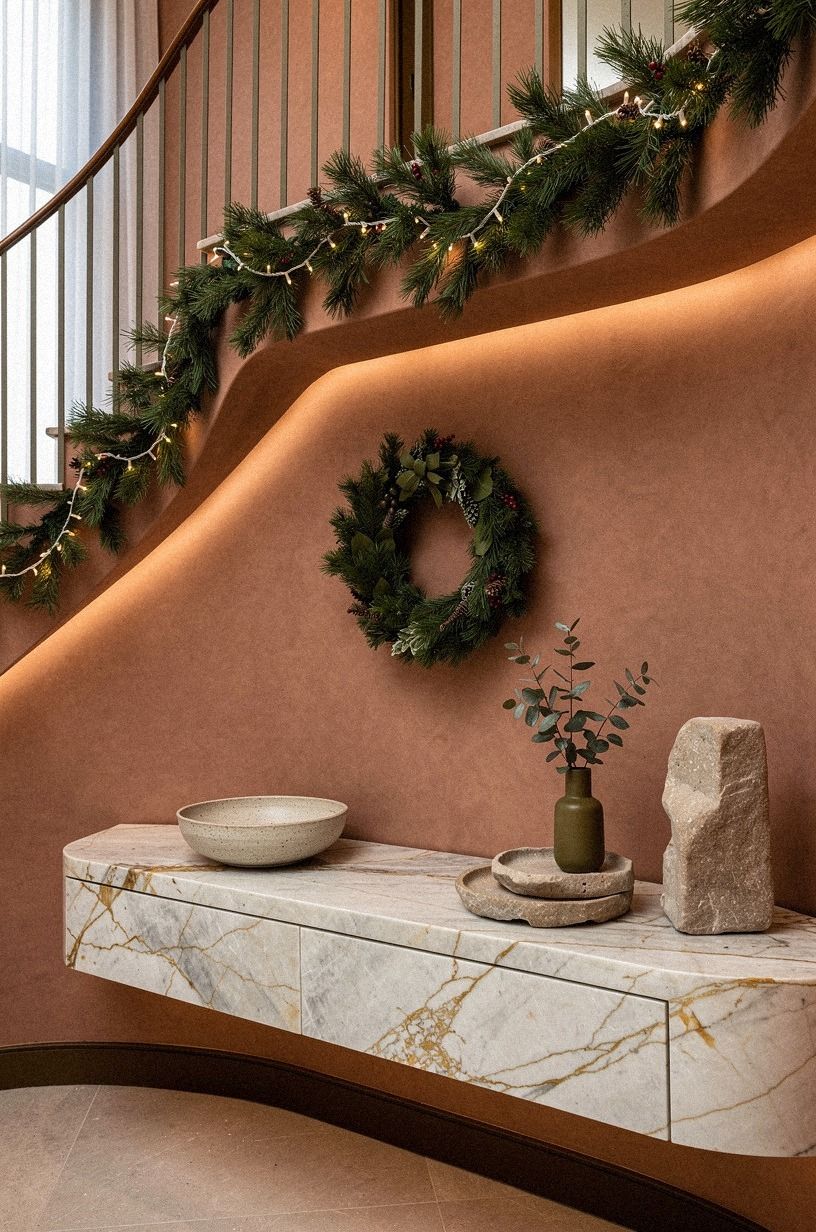
The One-Bowl Landing Zone solved the problem I hadn’t planned for: everyone needed somewhere to put keys, phones, receipts, and wrapped gifts.
I placed a large Calacatta marble bowl with gold veining on the sideboard near the entrance. It was wide enough for several phones but low enough that nobody had to dig through it. Beside it, I put a small olive dish for keys and a stack of terracotta cocktail napkins for anyone carrying a drink.
This sounds almost too simple. It made a remarkable difference.
Without a landing zone, small objects spread across the dining table, kitchen counter, and piano. With one, the room stayed visually calm even while the house filled up.
Choose a container with enough weight that it won’t slide when someone drops in a set of keys. A stone pedestal bowl, woven seagrass tray, or vintage silver dish can work. Avoid anything precious that will make guests nervous about using it.
I also left one empty hook near the door and added an olive wool scarf basket beneath it. That gave guests a choice instead of forcing every coat into the closet. Good hosting often comes down to offering an obvious place before someone has to ask.
The landing zone can hold small gifts, sunglasses, and dog leashes too. Keep it close to the entrance, away from the food, and large enough to remain useful after the first five minutes.
If you already own a bowl or tray, this is a zero-cost improvement with excellent practical value. I’d make it before spending on decorative accessories.
5Swap a centerpiece for a conversation line
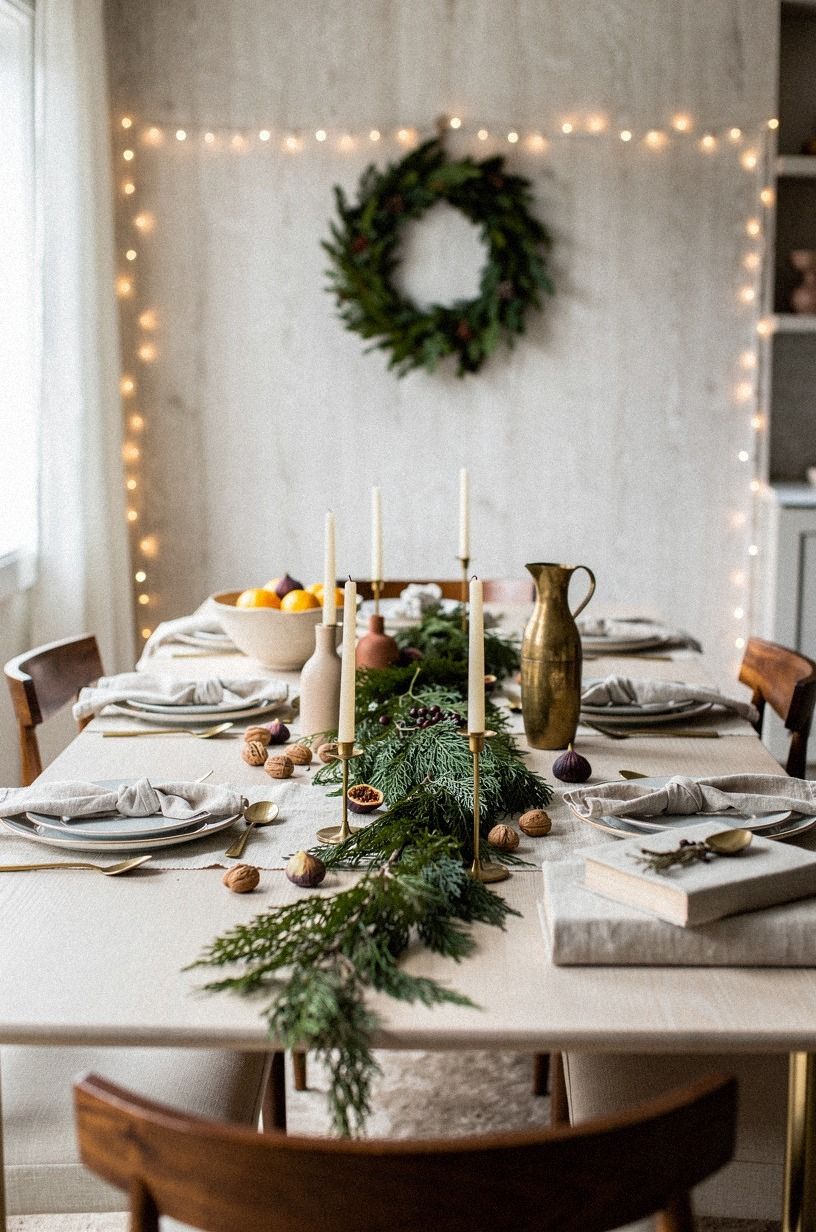
My first centerpiece was too tall. It blocked the person across from me, which meant everyone leaned around it and the table felt strangely formal. I swapped it for a low line of cedar clippings in an aged-brass bowl, and people started talking across the table again.
Your centerpiece should stay below eye level when you’re seated. Use a shallow bowl, small jars, or a line of fruit that can move when the food arrives. I like pears, clementines, and clipped greenery because they look warm without requiring florist skills.
What works on a long table won’t always work on a square one. I’d skip a towering arrangement in either case.
It looks dramatic, but it makes hosting harder. If you need visual drama, use the wall behind the table and hang art with its center about 57 to 60 inches from the floor.
A conversation line can be almost anything with a low profile. Try a row of taper candles, three terracotta pots, or a narrow cerused white oak board holding fruit. Leave gaps between the objects so the arrangement feels relaxed and so you can remove one piece when serving begins.
I kept the greenery slightly uneven. One sprig leaned toward the kitchen, another fell toward the window, and the aged brass caught the lamplight. The effect felt fresh and abundant without looking staged.
Before guests arrive, sit in every chair and check the view. If the centerpiece makes you crane your neck, it’s too high.
If it leaves no room for a serving bowl, it’s too wide. A beautiful table should make conversation easier.
This is one of the best budget choices because it uses flexible materials rather than a costly centerpiece. The value comes from scale, height, and placement.
6Set the Guest-Flow Loop before guests arrive
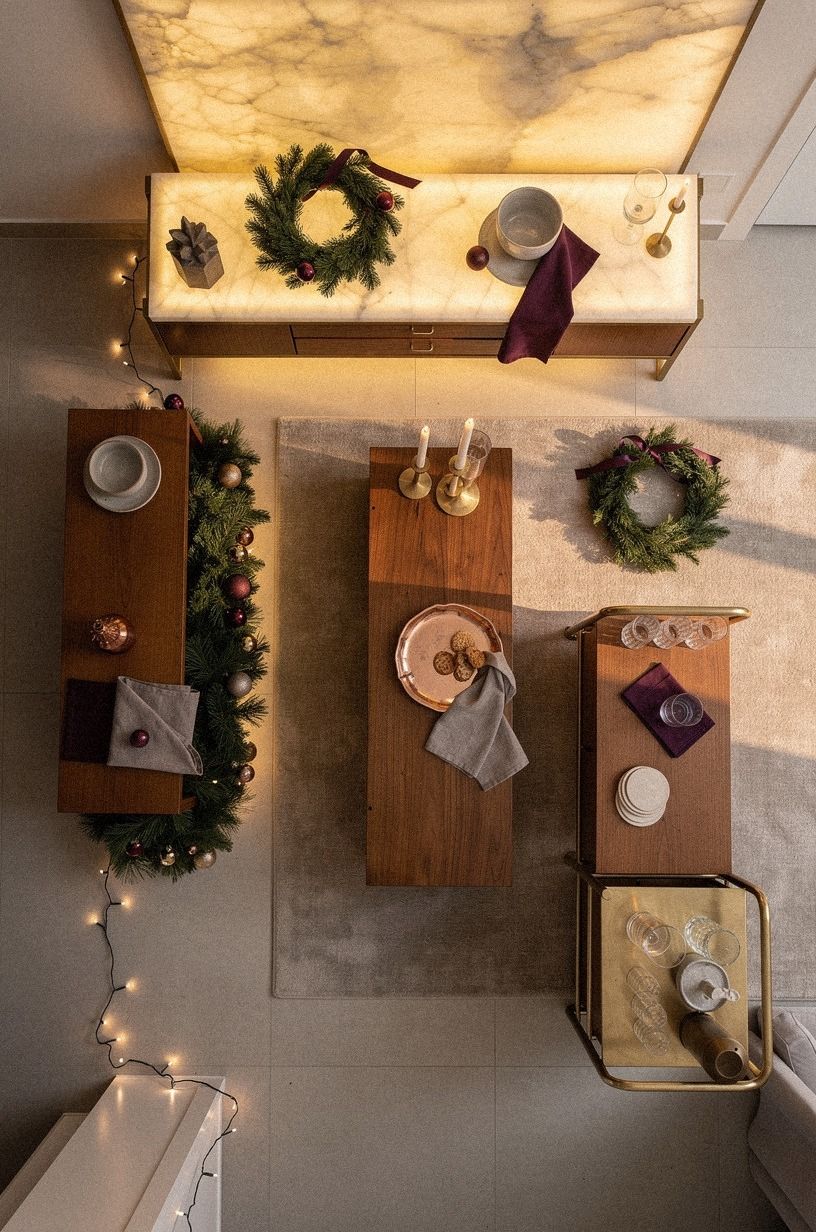
The Guest-Flow Loop is simple: guests enter, drop coats, find a drink, locate the bathroom, and reach the seating area without asking you four questions. I walked the route myself and placed a rose-gold tray on the backlit translucent onyx console near the drinks so glasses had a clear landing place.
You’ll want to prepare the first five minutes because that’s when your attention is most divided. Put water where people can see it, keep napkins beside the drinks, and leave the bathroom door open with a fresh hand towel inside. Your guests will feel cared for before dinner begins.
I’d place the drinks away from the kitchen if you can. A crowded counter makes cooking harder, and everyone gathers there because that’s where the action is. Moving the station six feet away gives you space to work and encourages guests to settle into the room.
Use a visible glass beverage dispenser, a stack of clear tumblers, and one small bowl of snacks. Add a labeled pitcher for water if you’re expecting children or older relatives who may not want to ask. People shouldn’t have to search for the basics.
Walk the route with the lights low. Check for sharp corners, loose rugs, and doors that don’t open fully. Tuck away extra stools and keep a rubber-backed runner flat near the entry if the weather is wet.
My favorite hosting improvement was placing the bathroom supplies in a small grey shelf basket. Extra hand towels, soap, and tissues were easy to find without making the bathroom look like a supply closet. That kind of preparation feels invisible, which is exactly why it works.
The loop is worth planning because it reduces frantic interruptions. Its cost can be nearly zero, but its value during the first half hour is enormous.
7Could warm wall color change the mood?
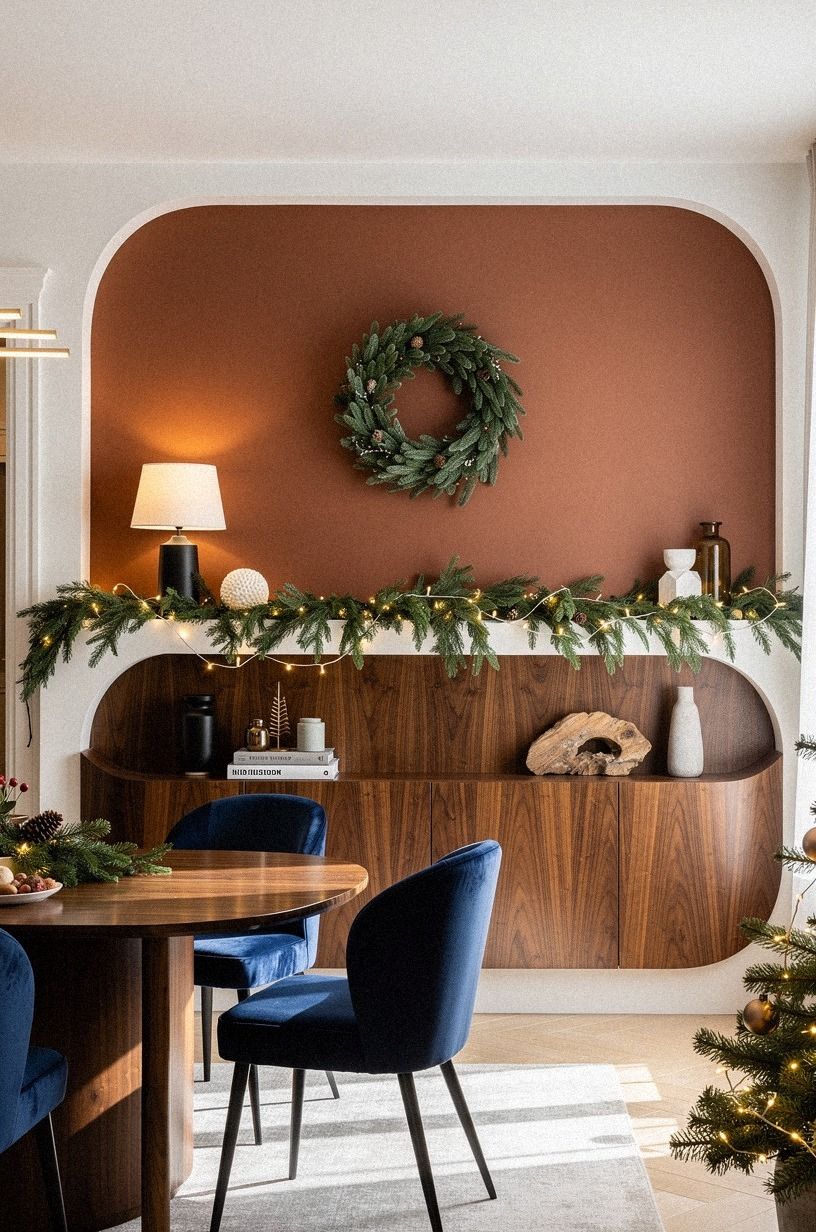
I didn’t repaint the room, but I tested Benjamin Moore Hale Navy HC-154 on a sample board beside the table.
8The Collected Material Mix
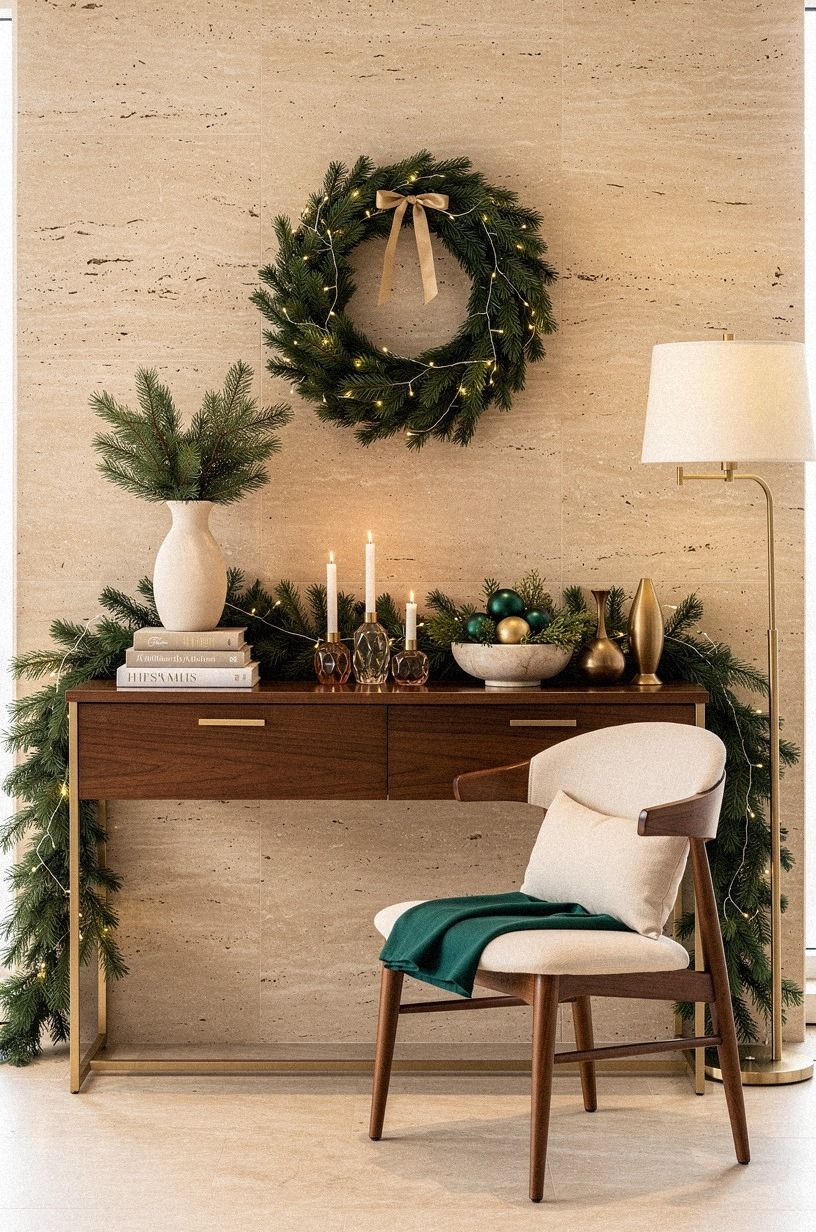
The room looked better when I stopped trying to make every object match. I kept the mismatched chairs and added one refined material: brushed brass on the lamp and serving utensils.
That small metallic note gave the room a polished spark without turning it formal. I paired it with warm travertine, cream linen, and emerald glass. Four materials were enough to make the space feel layered and thoughtful.
You can create the same effect with what you already own. Combine an old wooden bowl with a newer travertine trivet, or place a modern lamp beside a thrifted sideboard. The tension between pieces gives the room character.
Avoid adding one new finish in every corner. Too much variety becomes visual noise, especially in a small dining area. Choose one material to repeat twice and let the rest recede.
My favorite piece was an old walnut serving spoon with a darkened handle. It wasn’t valuable, but everyone commented on it because it looked used and loved. Those little signs of history make a gathering feel more generous.
If you’re shopping, spend first on the object your hands will touch. A comfortable chair, substantial napkin, or sturdy serving board can improve the evening more than a decorative ornament. Sensory details stay with people longer than perfect symmetry.
The collected mix gives you more value because it lets you combine inherited, thrifted, and new pieces. You don’t need a complete room makeover to get a finished result.
9Hang the curtains high and let them soften the room
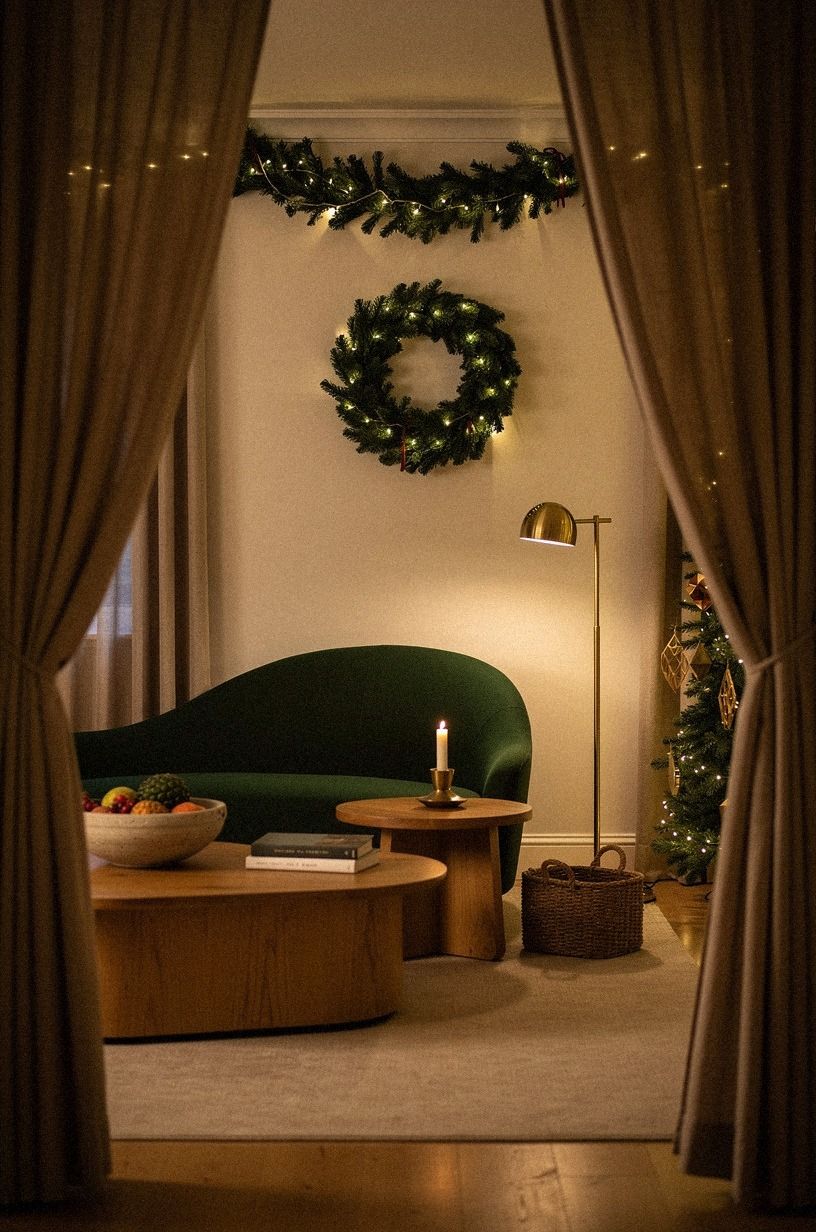
The windows were bare, and every sound bounced around the dining area. I hung forest-green Belgian flax linen curtains with an unlacquered brass rod 4 to 6 inches above the frame and let the panels fall to the floor. The room became quieter and more inviting, especially after sunset.
You’ll want the fabric to frame the window rather than cover most of it. Keep the panels wide enough to stack beside the glass, and choose a soft rust or natural-oak tone if your table already has strong color. Your guests won’t know why the room feels gentler, but you’ll hear it in the quieter conversation.
And don’t use short curtains unless the window requires them. They can make the wall feel chopped up. I’d choose a tension rod for a rental and a removable shade for privacy, then add floor-length panels only where they won’t interfere with heaters or doors.
A lined curtain will soften sound more effectively than a very thin panel. If you rent, use no-drill brackets where allowed and check the weight before hanging anything. Safety matters more than a fast visual upgrade.
I also placed a low natural-oak bench beneath the window. It gave the room another seat, absorbed some echo, and created a practical spot for folded blankets. The curtains and bench made the dining area feel sheltered without closing it in.
The first-time confidence boost was real when the panels finally stopped looking temporary. The room felt finished enough to host, even though the furniture was still wonderfully imperfect.
Curtains can be a worthwhile purchase when echo is the main problem. Compare fabric quality, lining, hardware, and installation cost together before deciding whether the upgrade fits your budget.
10Practical serving versus a crowded table
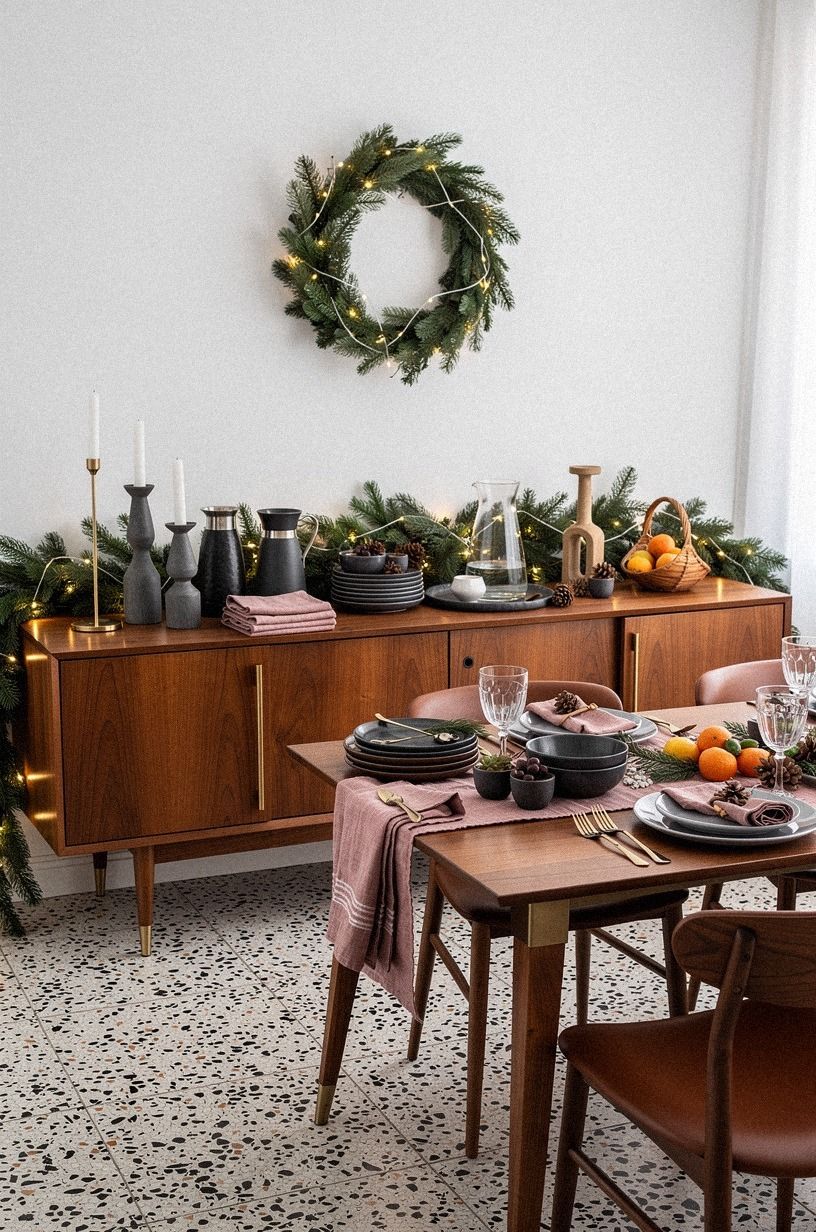
I moved the food to one oversized-chip terrazzo serving board on the sideboard instead of spreading dishes across the counter. A charcoal bowl and dusty-rose napkins kept the station useful without making it look improvised.
11How can an overnight corner feel generous?
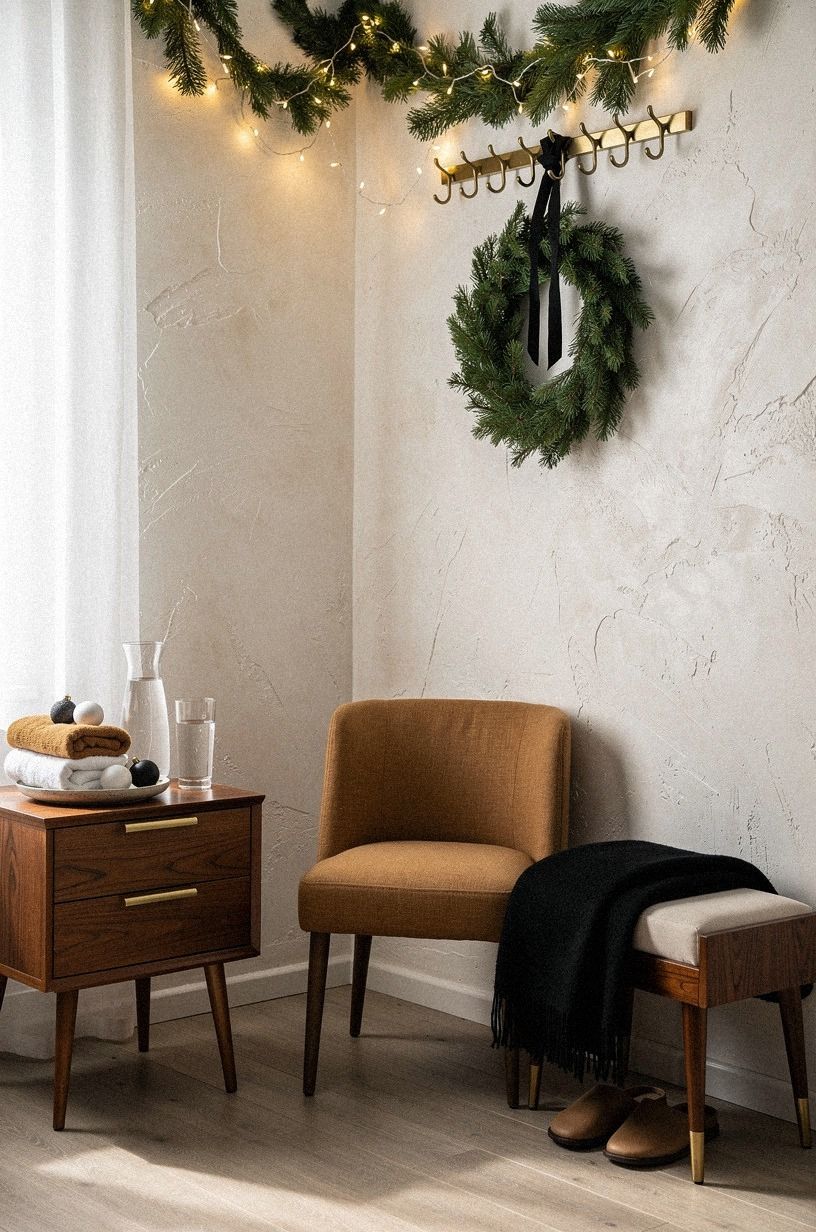
One cousin stayed overnight, so I cleared a chair beside the warm-white wall with hand-applied Venetian plaster, added a camel wool throw, and placed water, a phone charger, and a clean towel on the bedside table. That was enough. The room felt peaceful because it was useful, not because it was filled with decorative extras.
You’ll want to make the basics easy to find. Put the Wi-Fi information on a small card, clear one drawer, and leave a night-light near the bathroom. Your guest shouldn’t need to search through cabinets at midnight.
I’d skip buying a matching guest-room set. Borrow a lamp, fold a spare blanket at the foot of the bed, and use one warm art print above the dresser. A washed cotton duvet, ceramic water carafe, and black bedside lamp can make a spare room feel wonderfully calm.
Think through the small moments. Where will your guest put a watch?
Is there an outlet near the bed? Can they find an extra toothbrush without opening every drawer?
These questions are more useful than adding another cushion.
I placed a woven laundry basket beside the chair and left two empty hangers in the closet. I also set out a small dish for jewelry. None of it looked elaborate, but my cousin said the room felt unusually easy to settle into.
If your guest is sleeping on a sofa, clear the coffee table, add a supportive pillow, and keep a folded wool blanket within reach. A glass of water and a working lamp will make the space feel cared for.
Hospitality becomes less stressful when you prepare the quiet hours too. Guests remember being comfortable at midnight just as much as they remember the meal.
This approach delivers impressive value without a large guest-room budget. Buy only what solves a real problem, and borrow the rest.
12Save the last hour for atmosphere, not errands
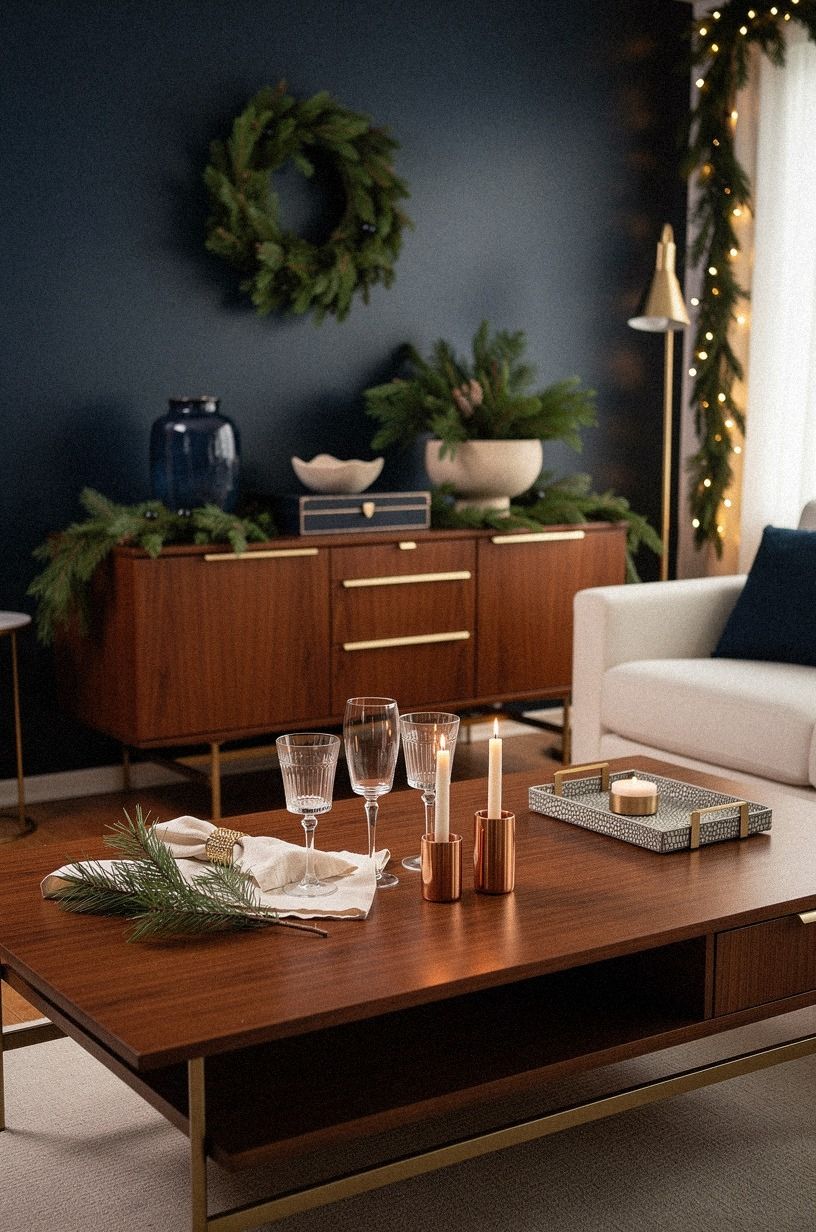
The final hour is where I used to lose my temper. I’d still be looking for serving spoons, wiping counters, and trying to make the room appear finished while the first car was already turning onto the street.
Now I finish practical tasks earlier and save the last hour for gentle adjustments. I turn on the lamps, chill the drinks, put on the music, and place the napkins. After that, I stop adding things.
Make a short closing list before the day begins:
– Clear the guest path. – Set out coats and bathroom supplies. – Put drinks on the serving surface. – Light or place the candles safely. – Check the room from every seat. – Leave fifteen minutes to change clothes and breathe.
I also keep a small copper timer in the kitchen so I don’t drift into endless tidying. When it rings, I leave the counter alone. A few crumbs won’t ruin dinner, but a tense host can change the mood quickly.
The final atmosphere came from three small choices: the ivory linen-shaded lamp, the shagreen catchall, and a playlist that started softly before anyone arrived. Nothing was theatrical. The room simply felt ready.
I used to think a polished table would prove I knew what I was doing. Then a guest arrived early, saw me carrying dishes, and started drying glasses without being asked. The room changed because people were participating in it.
That was the moment I understood that hospitality is a series of small signals that tell people they can relax.
Now I choose one strong visual decision and make the practical parts easy. A warm wall color, a low centerpiece, and a clear coat drop are more valuable than twelve little decorations competing for attention. You’ll get a calmer evening when your home supports the gathering instead of demanding that you maintain it.
My biggest mistake was saving all the atmosphere for the final ten minutes. I’d rather you place the lamps early, prepare one quiet corner, and leave enough time to sit down before the food comes out. The room can be imperfect.
The welcome can’t feel rushed.
How much it cost
I tracked the refresh instead of guessing, and my own small changes landed at $387. I already owned the table, chairs, dishes, and lamps, so the money went toward textiles, paint samples, greenery, and one serving piece. Your total could be lower if you borrow chairs and cut greenery from your yard.
These are the typical US room-refresh ranges I used as a reality check:
A wool rug typically runs $400-$1,500, linen drapes for a pair run $120-$400, a statement light fixture runs $150-$800, and DIY room paint runs $200-$600. I’d spend first on the thing that changes how guests move, then on the piece that changes how the room feels.
You can host beautifully for less by borrowing chairs, using garden greenery, repurposing glass jars, and moving furniture before buying anything. My most useful purchases were the linen runner, serving board, and warm lamp. Each solved a practical problem while adding atmosphere.
For the best return, start with the low centerpiece, the guest-flow loop, and the overnight corner. Those changes improve comfort before they improve appearance.
Why I stopped trying to impress everyone
The hardest part of hosting Christmas for the first time wasn’t decorating. It was accepting that every guest would notice something different.
One person cared about the food, another wanted a comfortable chair, and someone else only remembered that the music was good. I had spent too much energy trying to make the room look finished from every angle.
I used to think a polished table would prove I knew what I was doing. Then a guest arrived early, saw me carrying dishes, and started drying glasses without being asked.
The room changed because people were participating in it. Hospitality wasn’t a performance with better napkins.
It was a collection of small, generous decisions.
Now I choose one strong visual decision and make the practical parts easy. A warm wall color, a low centerpiece, and a clear coat drop are more valuable than twelve little decorations competing for attention. You’ll get a calmer evening when your home supports the gathering.
The most memorable detail was not the table. It was the moment everyone found a comfortable place to stand, sit, or help.
That’s what I’d aim for first. Let the room feel lived-in, useful, and warmly prepared.
The Questions I Get Asked Most
What is the best Christmas hosting setup for a small first-time host?
The best setup uses a clear guest path, one serving surface, and three light sources. An IKEA KALLAX or a compact console can hold drinks, napkins, and serving pieces without crowding the table. Your small room may feel more intimate once every item has a place.
Where can I buy Christmas hosting pieces on a budget?
Look at IKEA, Wayfair, and Target first, then check Facebook Marketplace or a local thrift store for chairs, trays, and lamps. You’ll often find solid wood serving pieces second-hand for less than new decor, and your table will feel less matched and more personal.
How much does a Christmas hosting makeover cost?
A small refresh can cost about $100 to $300 if you already own furniture and dishes. A broader budget room refresh typically falls between $200 and $800. Free changes include moving furniture, borrowing chairs, clipping greenery, and clearing one useful serving surface.
Can I create a Christmas hosting setup on a budget?
Yes, and you can begin with three free moves: clear the guest path, group your lighting, and create one coat drop. A $20 textile or thrifted tray can add warmth, while a Benjamin Moore White Dove sample helps you test the room before spending more. Those steps usually offer better value than buying several small decorations.
Is Christmas hosting worth it in a small space?
Yes, because a small space keeps people close and makes conversation easier. Use a low centerpiece, push the food to a sideboard, and let the furniture overlap the rug rather than floating randomly. Your room will feel intimate instead of cramped when movement stays clear.
Is Christmas hosting a good idea for a rental?
Yes. Use a tension rod, removable hooks, peel-and-stick art, and freestanding lamps instead of permanent changes. A Farrow & Ball Pigeon No.25 sample board can bring color without painting the walls, and you can remove every layer when the season ends.
Where I’d Start First
If I had to pick one, I’d start with the guest path. A clear route keeps plates steady, coats contained, and you out of apology mode. Move one piece tonight, then let the room breathe.
Your guests will feel the difference before they notice the decorations.