
Indoor trees sound restful until a canopy crowds the window and turns the bed into a maintenance station. In a bedroom built around a roughly 8-foot tree, the smartest layout leaves a clear walking lane and keeps the leaves away from pillows.
Natural stone can sharpen that leafy mood, but too much gray tile makes the room feel cold and overly hard. The best version pairs one grounded mineral surface with warm wood, breathable fabric, and lighting that respects sleep.
Designers treat the bedroom as a living system, so placement matters as much as the plant itself. Every pot, tray, and lamp should support a calmer routine instead of creating another chore.
Choose One Tree With Room to Breathe
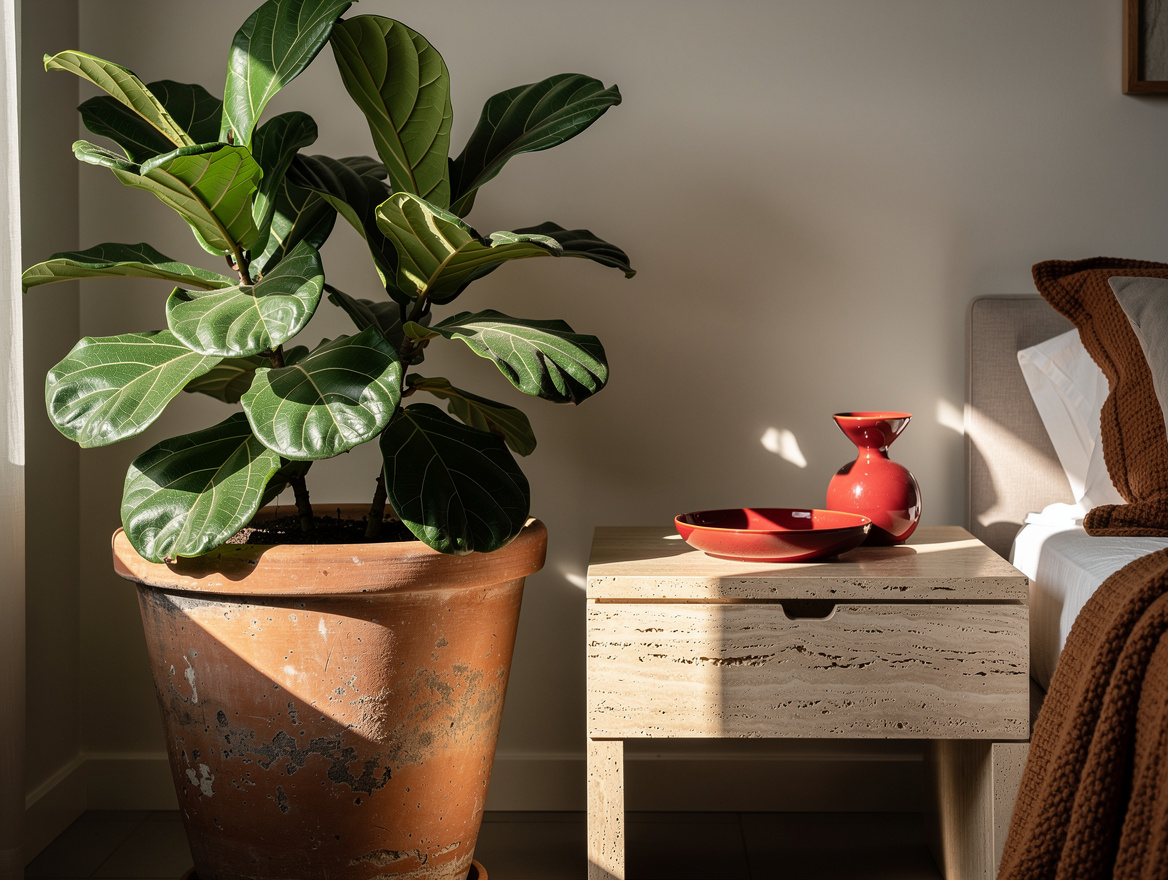
An indoor tree should frame the bed or fill an empty corner, never block a window or scrape the ceiling. A fiddle-leaf fig needs bright, indirect light and enough clearance for its leaves to grow without brushing against bedding.
Measure the pot, canopy, and walking path before buying, then leave roughly 24 inches between the container and nearby furniture. Home Depot carries planters in several sizes, but the largest option rarely makes the most sense for a sleeping space.
A raised stand keeps foliage visible from the bed and protects flooring from dampness. Choose a heavy terra-cotta planter for stability, especially if the room has pets, children, or a narrow passage.
Anchor the Bed With Natural Stone
Natural stone works best as a controlled accent behind the nightstand, on a low ledge, or across a small wall section. A honed travertine slab adds warmth and movement without competing with the tree’s leaves.
Use one stone finish throughout the room, because mixing polished tile with glossy counters can make a bedroom feel like a showroom. A slim slate shelf has enough visual weight for a lamp, a book, and a small plant without swallowing the wall.
For renters, a stone-look surface from Wayfair can create the same earthy impression at a typical lower cost than a custom slab. Keep the pattern quiet, and let the real tree provide the drama.
Protect Sleep From Excess Moisture
Plants and stone introduce moisture, so the bedroom needs a simple care zone rather than a collection of saucers scattered across the floor. Place every pot on a waterproof tray lined with cork, which softens the look while catching stray drops.
Water plants in the morning and check the soil before adding more, since overwatering is the fastest way to create odor and attract pests. A small Walmart hygrometer can help you watch humidity, while a basic humidifier typically costs about $30 to $60.
Keep the humidifier several feet from wood furniture, curtains, and bedding, and empty it daily when used. A washable linen cover on the hamper or bench adds softness without encouraging the room to feel damp.
Layer Wood Against the Greenery
Indoor trees look grounded when the room includes a natural material with a similar visual temperature. A simple oak nightstand echoes the trunk and gives the bed a firm, quiet anchor.
Choose one strong wood tone for the main furniture, then add smaller variations through a bench, frame, or tray. Pale wood can make deep green leaves feel fresh, while walnut gives a larger bedroom a more settled mood.
Bring in texture through a woven headboard or basket, but keep the pattern open and easy to dust. An rattan basket beside the dresser can hold pruning shears, extra linens, or the watering can without looking like garden equipment.
Light the Leaves Without Losing Sleep
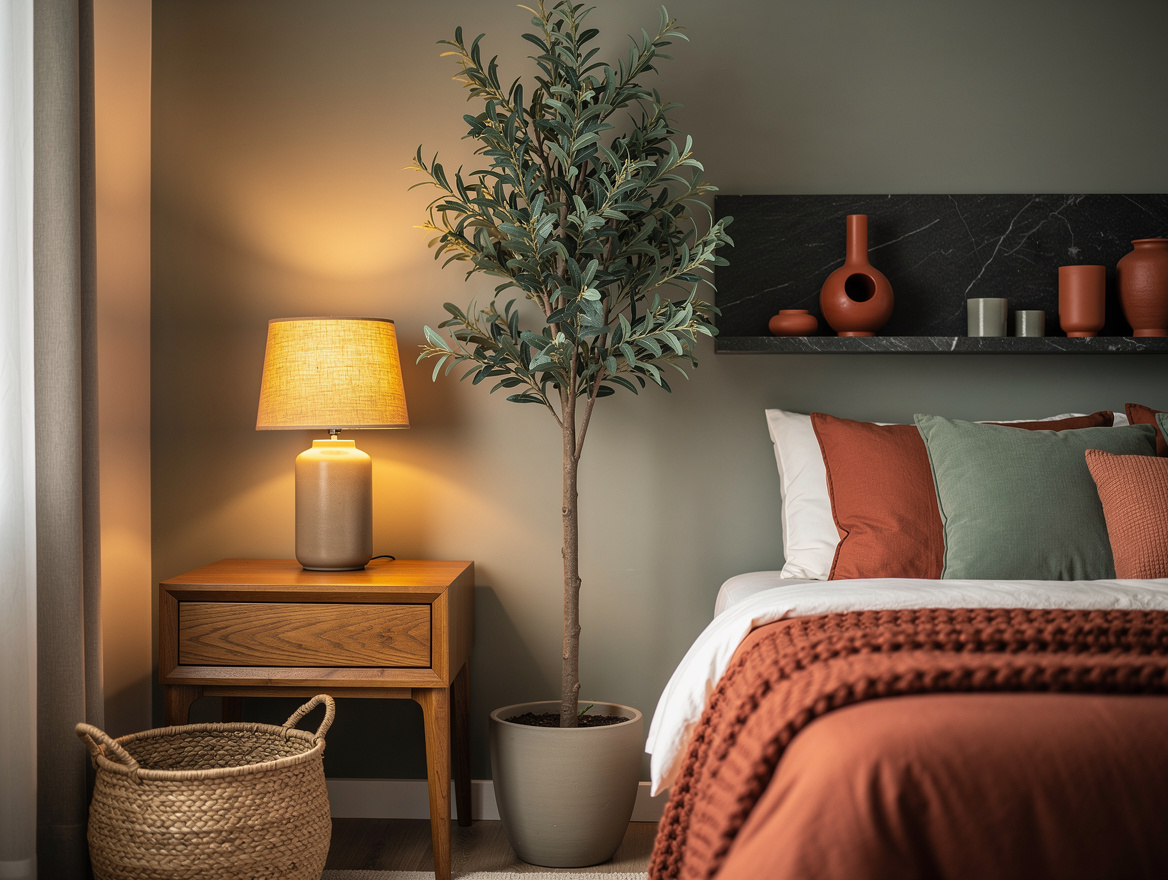
Daylight should reach the tree, while nighttime lighting should stay low and warm around the bed. Use a dimmable LED bulb in the ceiling fixture and add a separate reading lamp so the whole room does not glow when one person stays up.
Place the brightest lamp near the plant only if the species needs supplemental light, and use a timer to keep the routine consistent. A compact Target table lamp with a fabric shade can soften stone surfaces and prevent harsh reflections after dark.
Window treatments need to balance plant health with sleep, especially in a bedroom facing streetlights or early sun. Full-length blackout curtains in a warm neutral color keep the room restful while allowing the panels to open fully during the day.
Edit the Plant Collection With Discipline
A biophilic bedroom feels calm when every plant has a job in the composition. One tall tree, one low leafy plant, and a small cutting are usually enough for a standard bedroom, while a snake plant can handle a darker corner with less attention.
Repeat leaf shapes only when they support the furniture layout, and remove any plant that blocks a drawer, hides a light switch, or turns the bed into a tunnel. A narrow Amazon plant stand can fill unused vertical space, but it should stay outside the main walking lane.
Finish with one natural object that is not another plant, such as a stone bowl, a carved wood box, or a woven catchall. A low stone bowl on the dresser gives the eye a resting point and keeps the room from reading as a greenhouse.
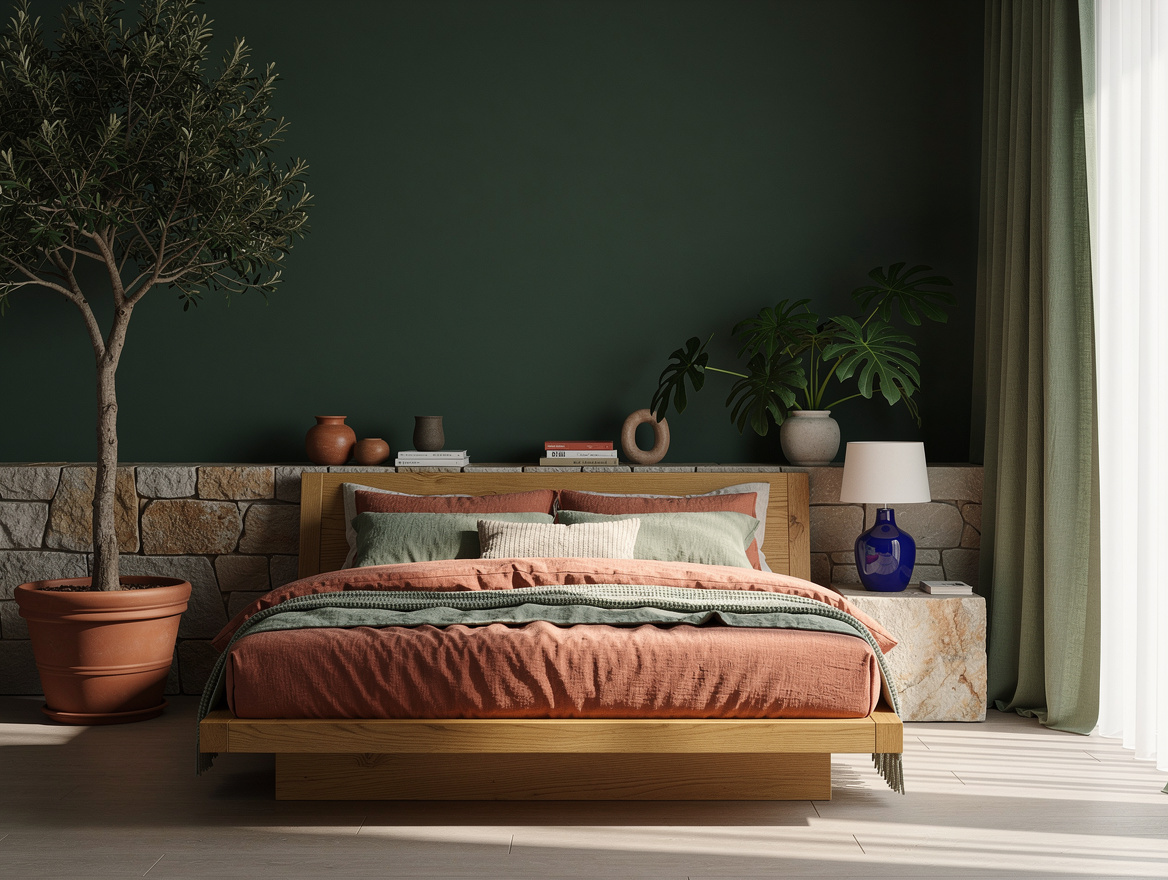
Start with the tree’s light needs and the bed’s walking clearance, then build the stone and wood accents around those limits. Once the room works comfortably at night, add only the plant or texture that solves a visible gap.
Mia Carter writes about small-space living and budget home makeovers. She has restyled three rentals and tests most ideas in her own 45 sqm flat.