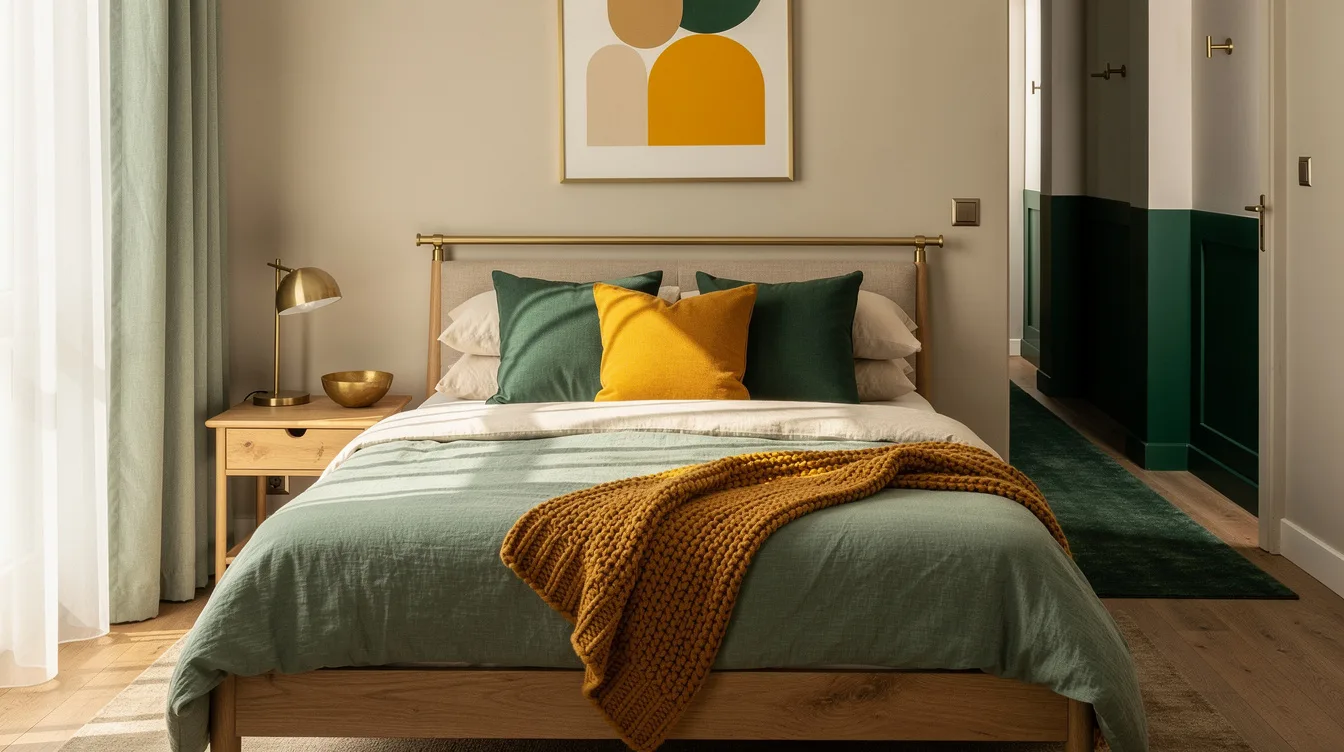
The bedroom can feel perfectly calm until the doorway reveals a hallway in a completely different color story. In a typical 10-by-12-foot bedroom, the fix usually starts with one anchor shade that can travel beyond the walls.
The transition doesn’t require identical paint or a matching furniture set. It needs shared undertones, repeated materials, and enough breathing room for each space to keep its own character.
Choose One Color to Lead
A bedroom-to-hallway palette works best when one shade carries the visual story. In a typical 10-by-12-foot bedroom, I’d choose a muted clay, soft sage, or warm blue as the anchor, then let the hallway borrow a lighter version.
Soft sage has enough color to feel intentional without making the passage feel narrow. Repeat it in a pillow, lampshade, or small framed print so the connection feels designed rather than accidental.
Keep the main bedroom walls calmer than the accents. A room needs one clear resting place, and too many competing colors make the hallway transition feel choppy.
Blend Undertones Before Adding Contrast
Undertones decide whether two colors live comfortably together. Warm beige beside a blue-gray with a cool undertone can make both shades look wrong, even when their paint chips seemed compatible.
Hold samples beside the bedroom flooring, hallway trim, and largest furniture piece during morning and evening light. Warm white trim usually softens a palette, while stark white can sharpen the difference between connected spaces.
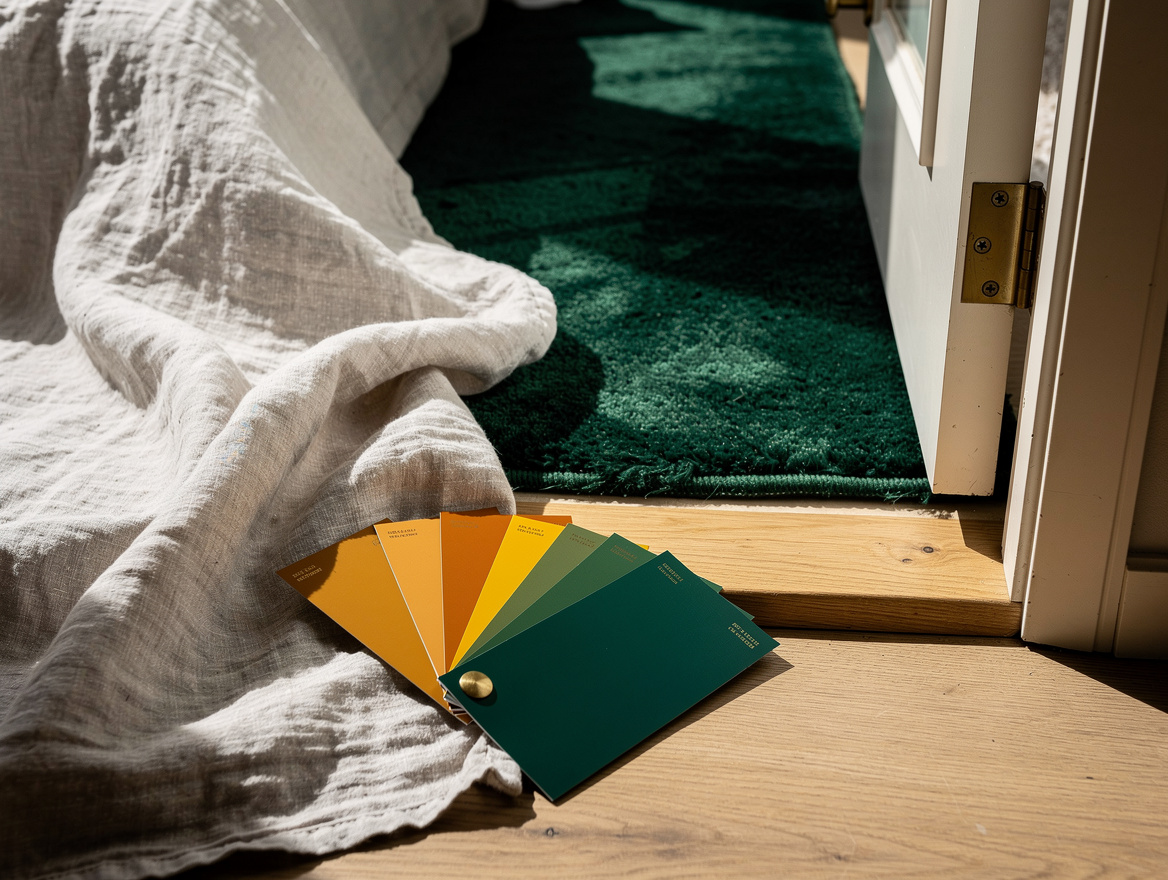
My reliable test is simple: place the samples at the bedroom doorway and view them from the hall. If the colors clash from that angle, no amount of matching decor will rescue the transition.
Carry the Color Through Materials
Paint alone can’t make a palette flow. Repeat the bedroom’s leading color through fabric, wood, metal, or artwork, then place one related detail in the hallway.
A natural oak bench in the hall can echo a bedroom nightstand without matching it exactly. That small material link helps the spaces feel related while preserving their separate purposes.
Textiles are especially useful in rentals. A Target runner with a muted stripe can connect the hallway to bedding, curtains, or a throw without requiring a wall-color change.
Scale the Shade Down in the Hall
The hallway usually receives less natural light, so repeating the bedroom’s full-strength color can make it feel heavy. Use the same family at a softer intensity, or place the bolder shade only on a short focal wall.
A Lowe’s paint sample card can help you compare related shades before committing to several gallons. Look for a color that shares the bedroom’s undertone, then choose the lighter option for the passage.
This is where restraint matters. The hallway should guide the eye toward the bedroom, not compete with it at the doorway.
Match the Transition at Eye Level
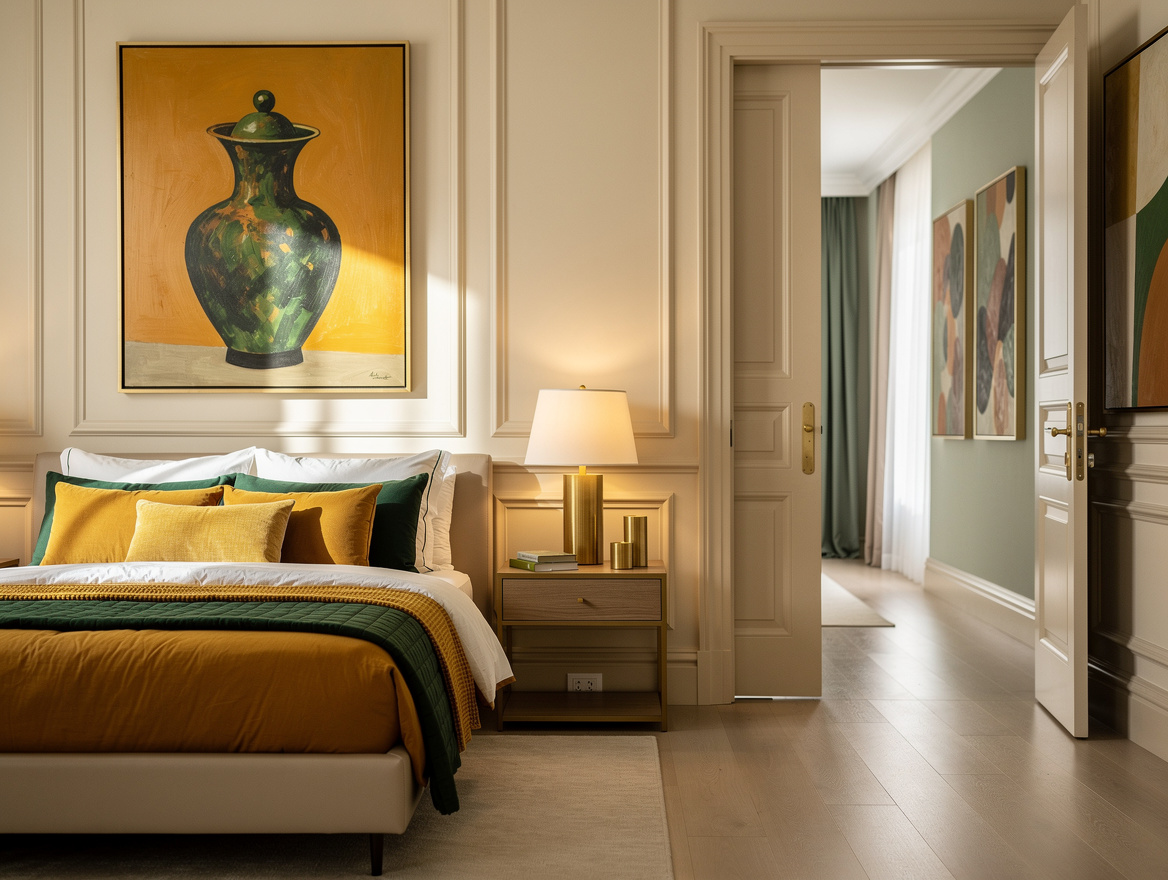
Doorways create an abrupt visual break when the bedroom palette appears only below the line of sight. Hang one hallway piece that repeats the bedroom color around eye level, such as a print, woven wall hanging, or narrow console lamp.
A Wayfair framed print in the same muted family can do more work than a cluster of unrelated accessories. Keep the frame simple and let the color provide the connection.
For a smaller budget, a Walmart table lamp with a linen-toned shade can echo bedding or curtains without adding another strong hue. The goal is recognition, not duplication.
Edit the Palette Before You Shop
Before buying anything new, remove colors that belong to neither space. A bedroom-to-hallway scheme often improves after one bright accent, glossy finish, or mismatched metal leaves the room.
Make a short list of the shades already present in the bedroom, then choose one lead color, one supporting neutral, and one restrained accent. IKEA storage, bedding, and lighting can help fill practical gaps while keeping the palette disciplined.
Set a spending limit before shopping. Around $120 is a typical starting budget for a runner, two small accessories, and paint samples, though the total depends on what you already own.
Use the bedroom doorway as your final checkpoint. If the hall looks calm from there, the palette is doing its job.
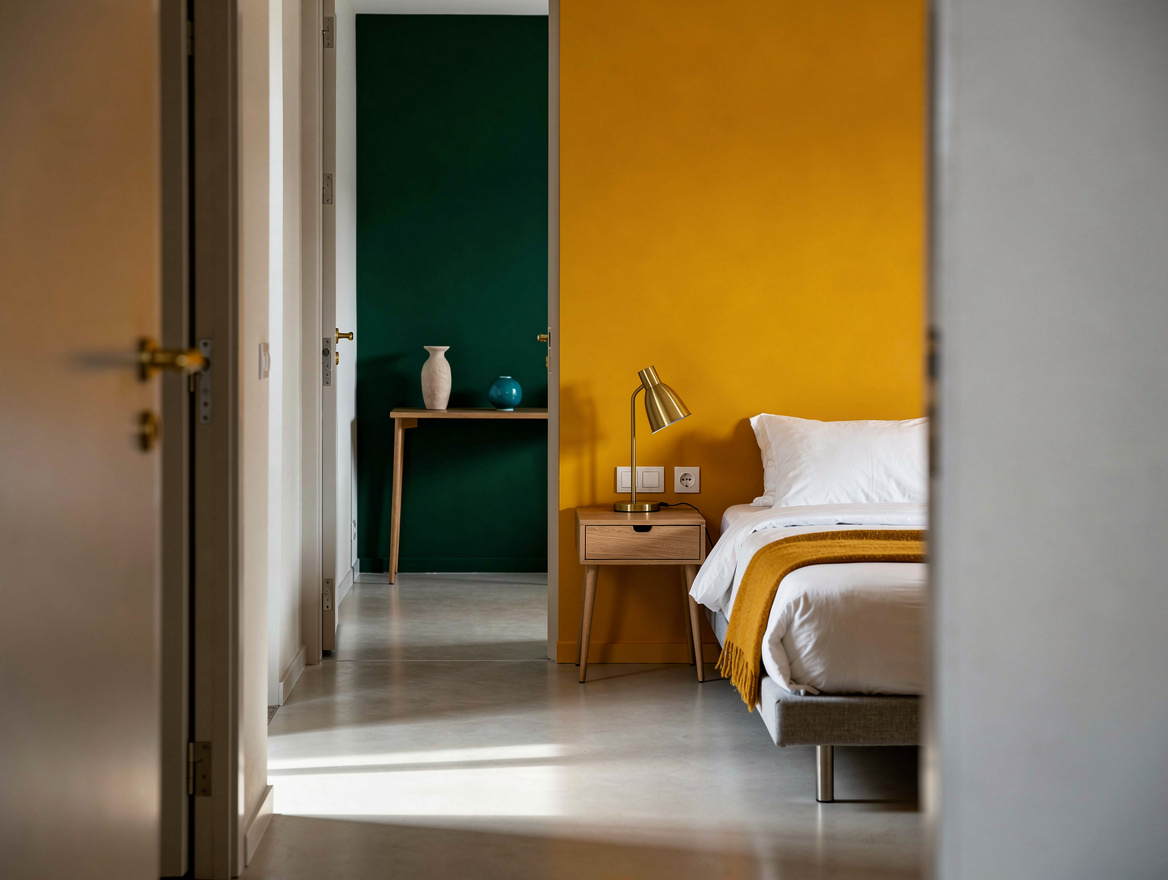
Start by placing three large color samples at the bedroom doorway, then remove anything that fights the hallway light. That small test will tell you more than a full cart of new accessories.
Mia Carter writes about small-space living and budget home makeovers. She has restyled three rentals and tests most ideas in her own 45 sqm flat.