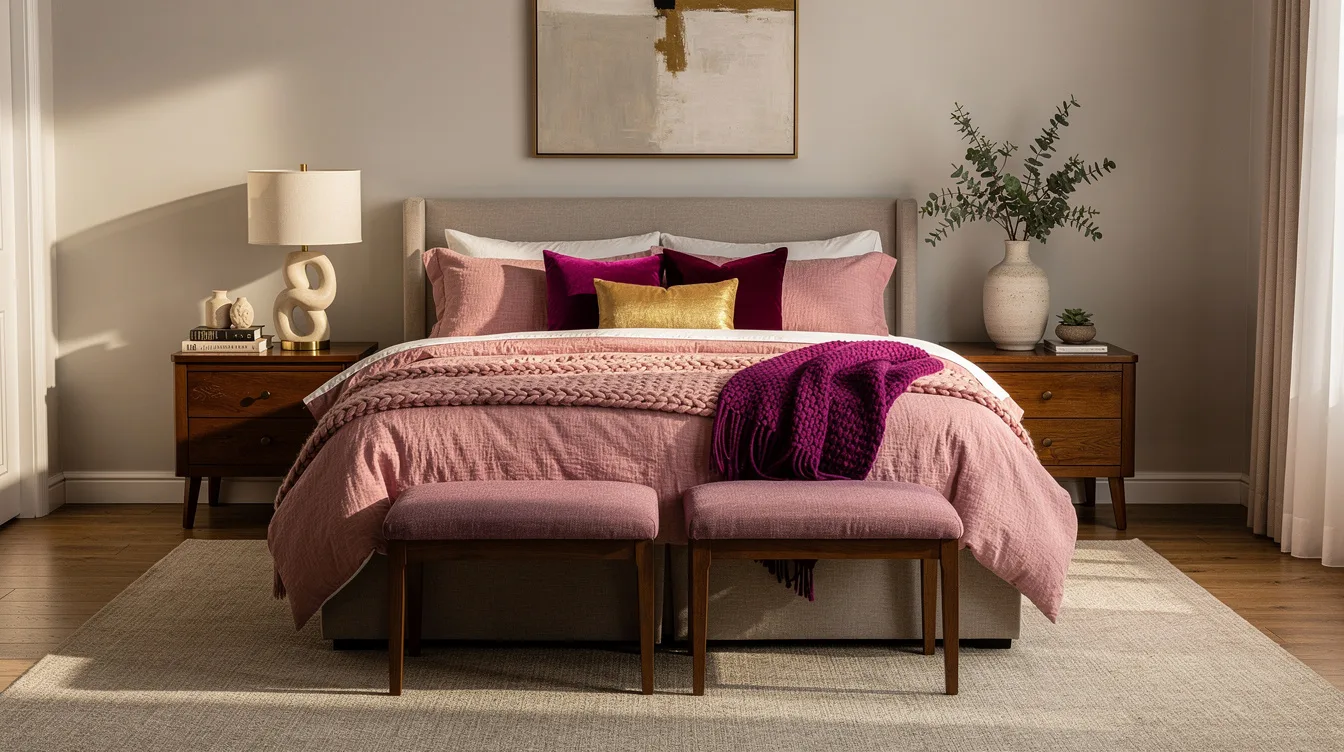
Two separate bedside benches can give a couple’s bedroom a thoughtful sense of balance, but they can also create a traffic jam beside the bed. Around a typical 60-inch-wide queen bed, a few careless inches can decide whether each side feels personal or cramped.
The fix is a mix of spacing, seat height, lighting, and restraint. Designers tend to favor benches that coordinate quietly, then let each side support the person’s actual routine.
Give Each Bench a Clear Landing Zone
Place one bench beside each side of the bed, then leave enough room for a person to sit and stand without brushing the nightstand. Around a typical 60-inch-wide queen bed, each bench needs its own visual and physical territory.
A slim oak bench works well beside a taller nightstand because its warm grain keeps the arrangement from feeling overly matched. Keep roughly 24 inches of walking space between the bench and nearby furniture whenever the room allows it.
Think of the benches as personal landing zones for slippers, a robe, or tomorrow’s clothes. The floor should stay mostly clear, since a crowded path makes even a generous bedroom feel tight.
Match the Benches Without Cloning Them
Two bedside benches should share a visual language, but they do not need to come from the same set. Pair a woven seat on one side with a simple black metal bench on the other when both have similar widths and quiet silhouettes.
Use one common detail to hold the pair together: matching legs, the same seat height, or a repeated accent color. This gives the room balance while leaving space for each partner’s taste.
For a practical starting point, a typical entry-level bench costs about $100, while upholstered or solid-wood versions can run higher. IKEA and Target both make it easier to compare compact shapes before committing to a larger piece.
Keep Seat Height Below the Mattress
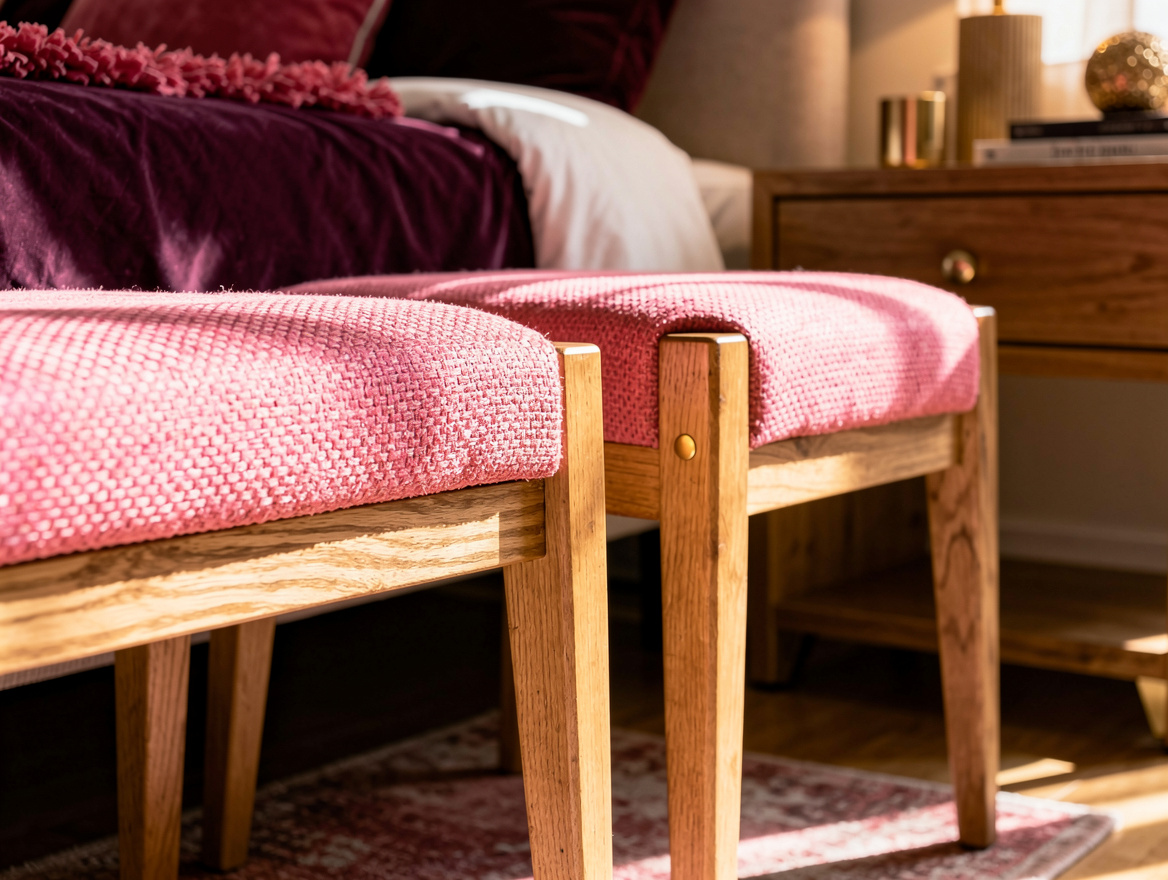
Measure from the floor to the top of the mattress before shopping. A bench that sits roughly 2 to 4 inches below the mattress line usually looks intentional and feels comfortable when someone sits down.
A low linen-upholstered bench softens a room filled with hard case goods, but its fabric needs to suit daily use. Choose a tight weave in a medium shade if the benches will hold bags, shoes, or folded laundry.
Skip deep arms and oversized backs near the bed. They steal usable floor space and make the bedside arrangement read like a second seating area.
Build the Palette Around the Bed
Start with the largest textile in the room, then let the two benches support its color story. A warm gray duvet, pale wood nightstands, and a rust-colored seat cushion create enough contrast without turning the bed into a collection of unrelated accents.
Keep the bench upholstery close to one existing tone, such as the rug, curtains, or headboard. A small swatch from a fabric store can prevent a cool gray seat from fighting with warm beige bedding.
Walmart and Wayfair offer many affordable textiles, but inspect the fabric description before ordering. Performance blends are usually the sensible choice for a bench that gets touched every morning and evening.
Light Each Side for Its Own Routine
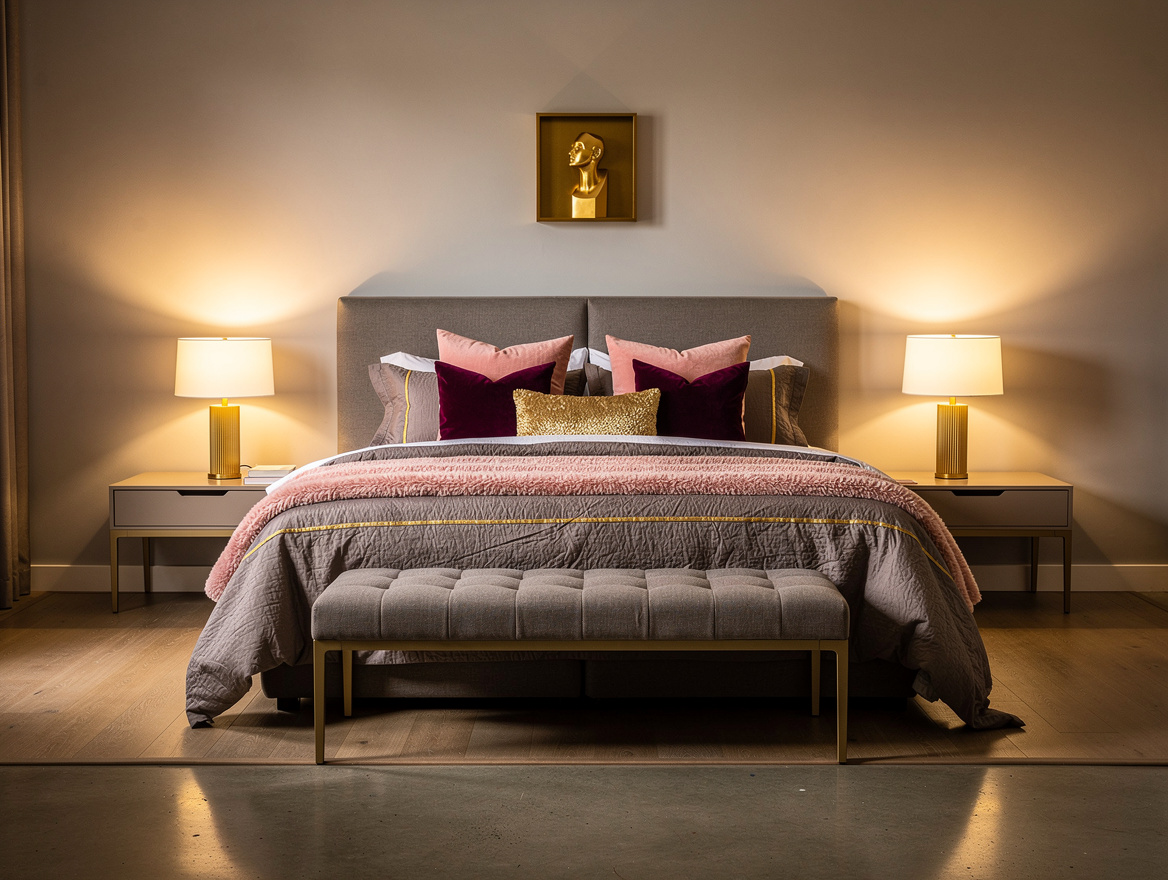
Two benches make the bedroom feel balanced, yet the lighting should still respond to two different routines. Give each side a reading lamp, charging point, and reachable surface instead of forcing both people to share one bright fixture.
A compact brass table lamp adds warmth beside a wood bench, while a ceramic lamp can calm a side filled with darker finishes. Choose shades that direct light downward so late reading does not flood the entire bed.
Keep cords behind the nightstands and away from the bench legs. A simple power strip from Home Depot or Lowe’s can organize chargers, but it should stay hidden rather than becoming part of the room’s visual clutter.
Leave the Foot Path Unblocked
The best arrangement lets both people move from the bed to the door without weaving around furniture. Set the benches far enough from the foot of the bed that knees, baskets, and open drawers do not collide.
A narrow wool runner can connect the two sides while preserving a clear route through the center. Keep its edges flat and use a rug pad, especially if the benches slide when someone sits down.
Resist filling the open space with a trunk or extra chair just because the room can hold one. The separate benches already provide useful furniture, and the remaining breathing room is what makes the layout feel restful.
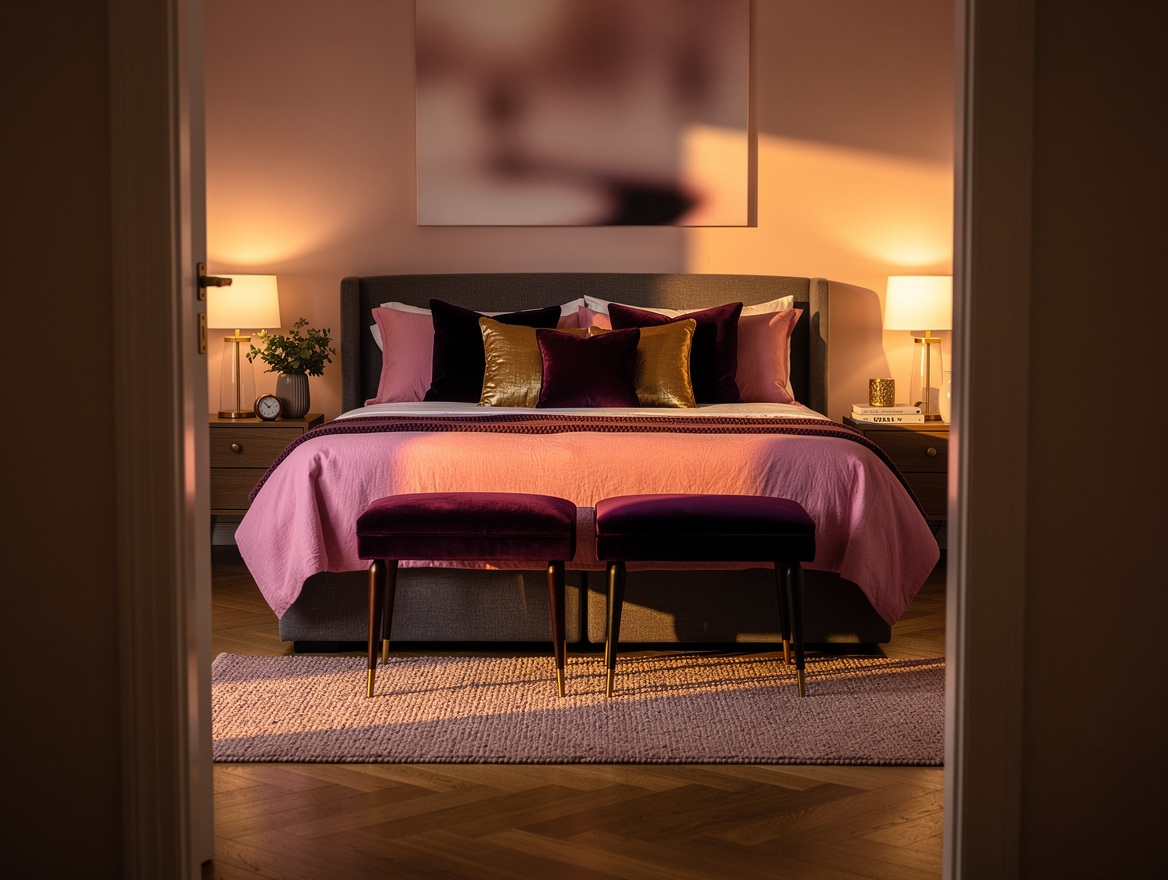
Begin with painter’s tape: mark the bed, both benches, and the walking paths before buying anything. Once the movement feels easy, choose the finish that brings the two sides into the same conversation.
Mia Carter writes about small-space living and budget home makeovers. She has restyled three rentals and tests most ideas in her own 45 sqm flat.