
A Thanksgiving centerpiece using pumpkins and greenery can cost $0 if you shop your yard first, or $200-$800 if you refresh the whole table. I once crowded every inch with gourds and lost the place settings. Now I leave breathing room, vary the heights, and let one material lead. Your table will feel gathered, not staged.
Editor’s note: Start with the table, not the decorations. Notice its shape, the color of the room, and where guests will place serving dishes.
Then choose one strong idea and let the rest support it. A cozy centerpiece should make dinner easier, warmer, and more memorable.
- Build the Long-Table Garland With Greenery
- Float Mini Pumpkins in the Three-Height Rule
- Layer the Three-Height Light Stack
- Which Thanksgiving Centerpiece Works in a Small Space?
- Anchor a Rustic Dough Bowl With Pumpkins
- Paint the Pumpkin Group in One Quiet Color
- Choose Greenery Over More Pumpkins
- Frame the Place Settings With Mini Bundles
- Can You Make a Candlelit Centerpiece Safe?
- Mix White Pumpkins With Burnished Metal
- Repeat One Color From Room to Table
- Let the Runner Become the Frame
1Build the Long-Table Garland With Greenery
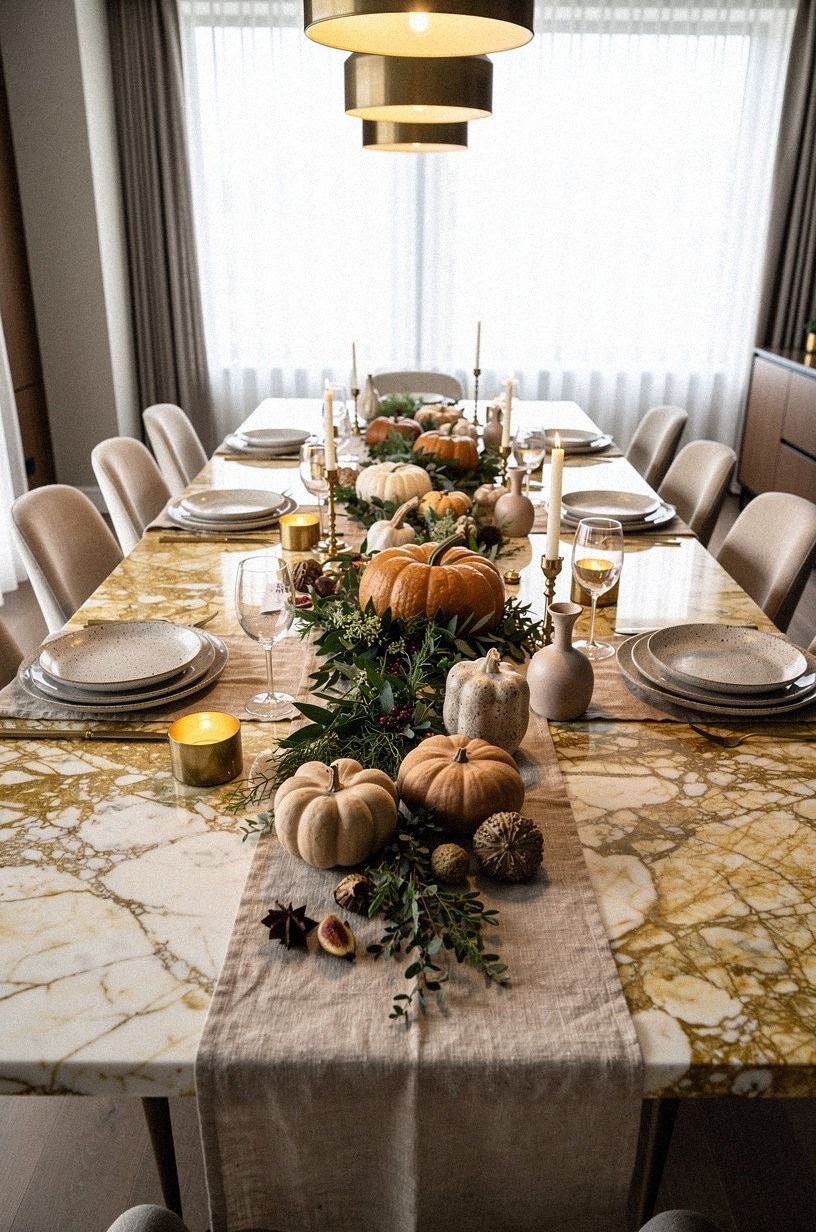
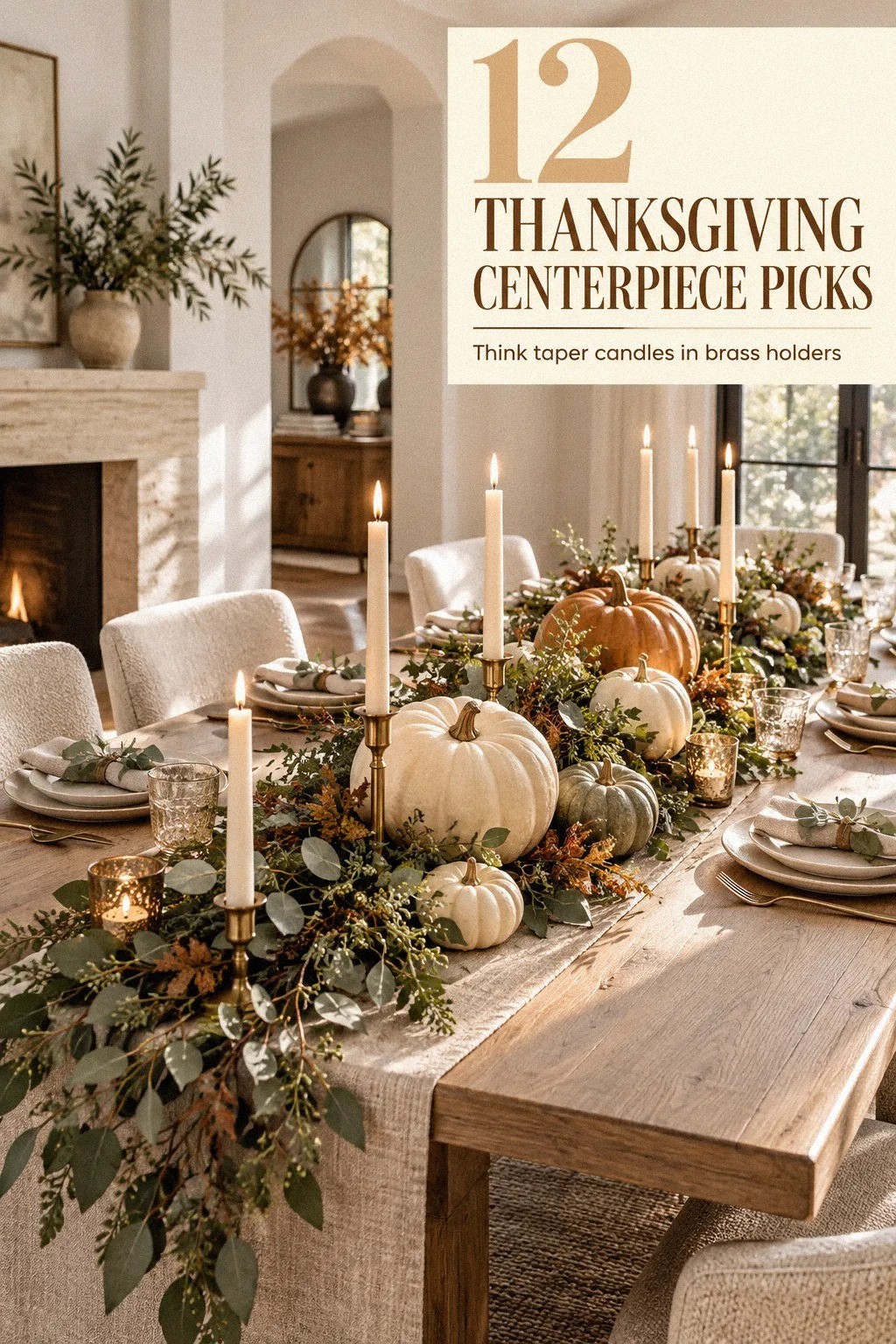
A loose garland works best when your table needs one strong line from end to end. Start with cedar greenery, eucalyptus, or clipped olive branches.
Then tuck clay-colored pumpkins into the gaps instead of lining up twelve identical ones. You’ll get movement, and your guests will still see each other across the table.
I like a garland that stays lower than the water glasses. Lay down a narrow linen runner first.
Place greenery in three uneven clusters. Add clay mini pumpkins, a few dried seed heads, and one low bowl of pears on a piece of Calacatta marble with gold veining.
If you’re using grocery-store stems, strip the lowest leaves so your napkins won’t catch. Keep anything strongly fragrant away from the food.
A fresh table should smell like dinner, not perfume. This Thanksgiving guide about avoiding an overfull holiday makes the same useful point: leave space for what matters.
For a longer table, let the greenery taper at both ends. Don’t make the line perfectly even.
One side can feel slightly fuller, while the other side carries a low bowl or aged-brass candle. That gentle imbalance feels relaxed and generous.
2Float Mini Pumpkins in the Three-Height Rule
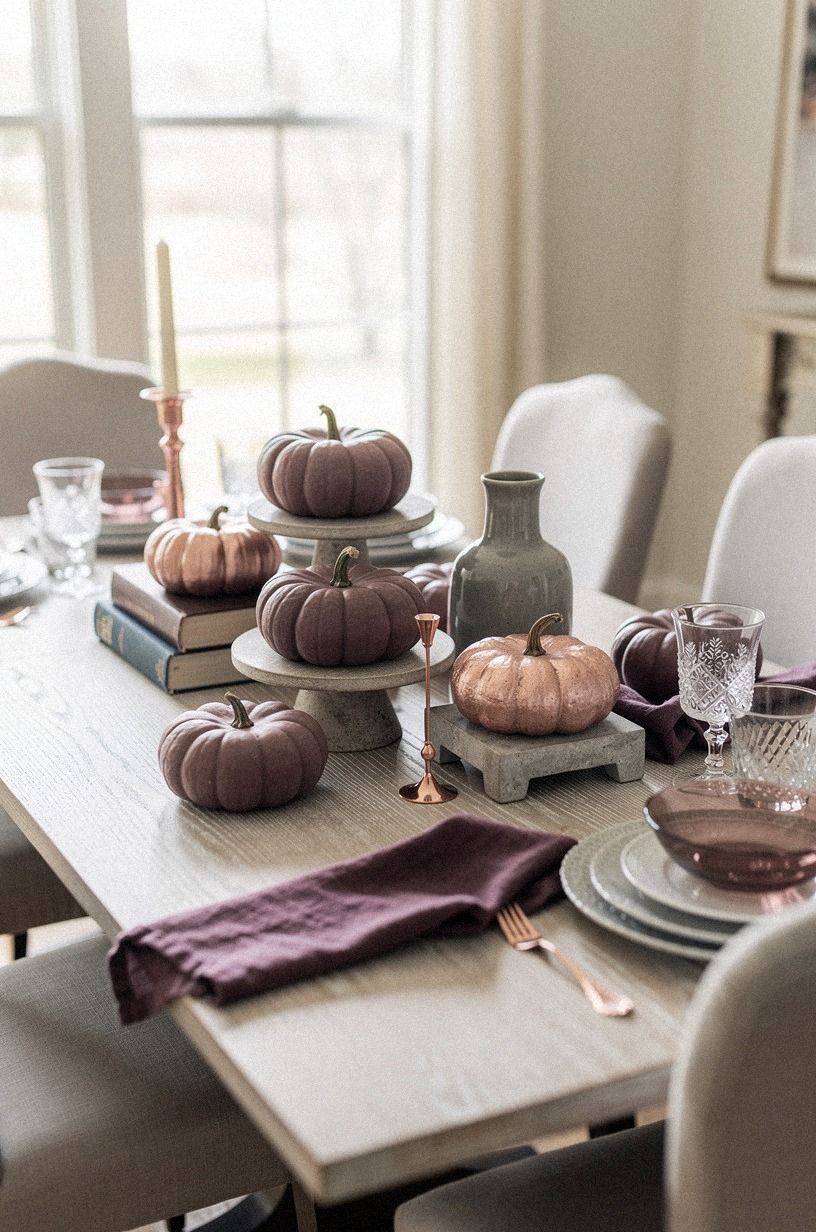
The Three-Height Rule keeps your Thanksgiving table from looking flat. Choose one pumpkin close to the table, one vessel at medium height, and one branch that reaches upward without blocking anyone’s view. You don’t need more objects.
You need contrast.
Use a cerused white oak bowl for the middle layer. Fill it with moss, dried leaves, and three small pumpkins in muted plum. A slender branch of beech or maple creates the high point.
I’d skip a tall vase packed with flowers. It can turn the table into a wall, especially when the dining room is narrow. Your eye should travel across the arrangement, not stop at one bulky object.
Keep the lowest layer tactile. Try acorns, pinecones, or a few smooth stones.
Add a small gray linen knot if the arrangement needs softness. If you’re also preparing a calm guest room, this simple face-washing routine offers another reminder that fewer, better layers often feel more polished.
The middle layer should do most of the visual work. The high branch only gives the arrangement a graceful lift.
Cut it shorter if it interrupts conversation. A beautiful centerpiece still has to behave at the table.
3Layer the Three-Height Light Stack
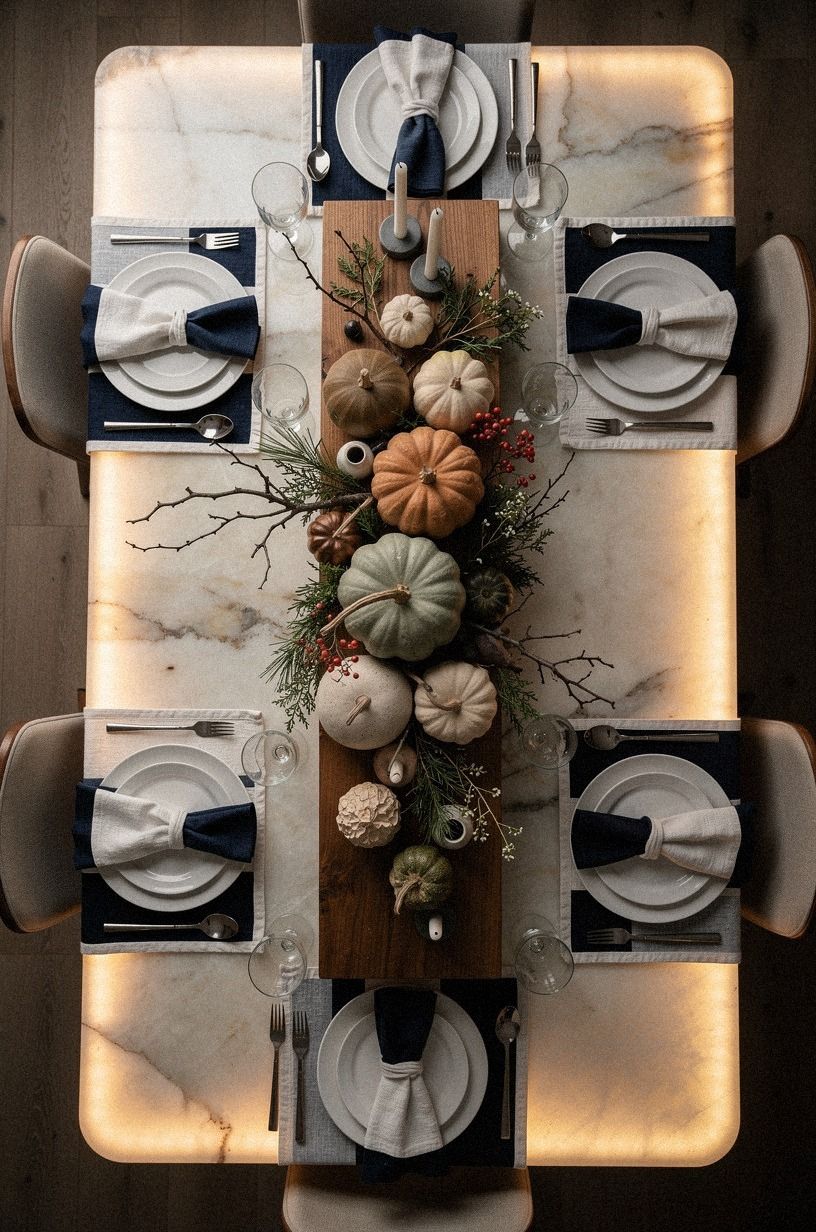
Candles make pumpkins look richer after sunset. The flame catches their ridges and throws delicate shadows across the runner. That small change can make the whole table feel warmer!
Start with three low glass votives. Place them between the pumpkins, not directly behind them.
Add one medium-height walnut candlestick near the center. Finish with a short hurricane lantern at one end.
The light should move through the arrangement. If every candle sits at the same height, the glow becomes dull and predictable.
Vary the vessels, but keep their finishes related. Navy, clear glass, and warm white wax make a handsome combination.
A small piece of backlit translucent onyx can give the central candle a gentle glow.
Battery candles work well when children will be reaching across the table. They’re also smart around dried grasses and loose leaves. If you use real flames, trim every wick and remove anything brittle from the immediate area.
Don’t put a candle inside a pumpkin beside a pile of dry moss. The effect may look charming for a moment, but it isn’t worth the risk.
A soft glow is enough. You don’t need a dramatic centerpiece to create an atmospheric evening.
If you want a simpler table, use one lantern per three place settings. Keep the rest of the arrangement low. This Thanksgiving reading piece is a useful nudge toward leaving room for plates, serving bowls, and second helpings.
4Which Thanksgiving Centerpiece Works in a Small Space?
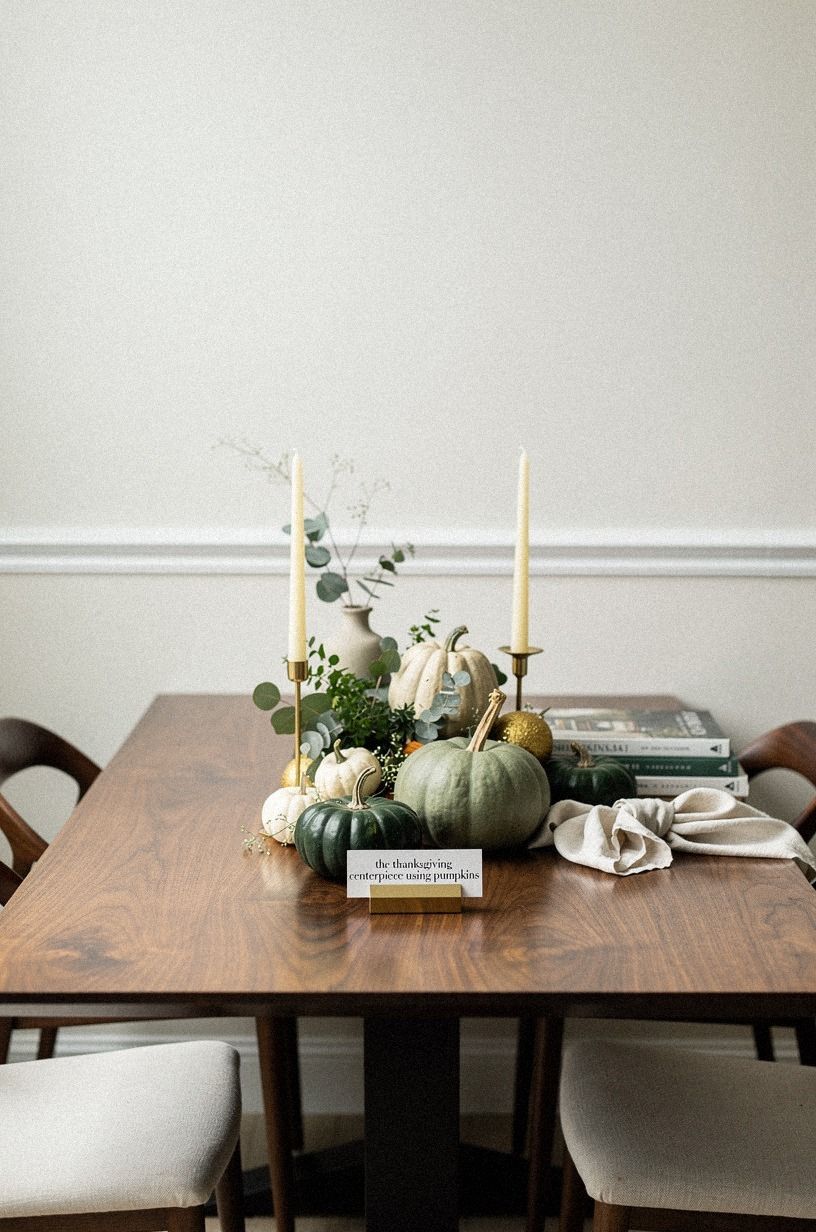
A narrow trough is the best small-space Thanksgiving centerpiece because it gives you one footprint instead of scattered objects. Choose a vessel no wider than your forearm. Fill it with emerald-green moss, two small pumpkins, and clipped rosemary.
Your guests will have room for plates, elbows, and the inevitable second helping. That matters more than adding another decorative object.
For a round table, use a low bowl rather than a runner. A cream stoneware bowl set on book-matched walnut gives you enough depth for greenery while keeping the silhouette calm.
I’d avoid a tall floral arrangement in a small dining area. It steals conversation and makes the room feel tighter.
Measure before you decorate. Leave at least ten inches between the centerpiece and the edge of the table.
Keep serving dishes in mind, too. A centerpiece that looks elegant before dinner can feel frustrating once the turkey arrives.
If you’re styling a console behind the table, hang nearby art with its center about 57-60 inches from the floor. The whole arrangement will feel more balanced. Your centerpiece should support the room, not compete with it.
A small table can still feel festive and abundant. Use one strong color, one useful vessel, and a few rich textures. The result will look intentional rather than crowded.
5Anchor a Rustic Dough Bowl With Pumpkins
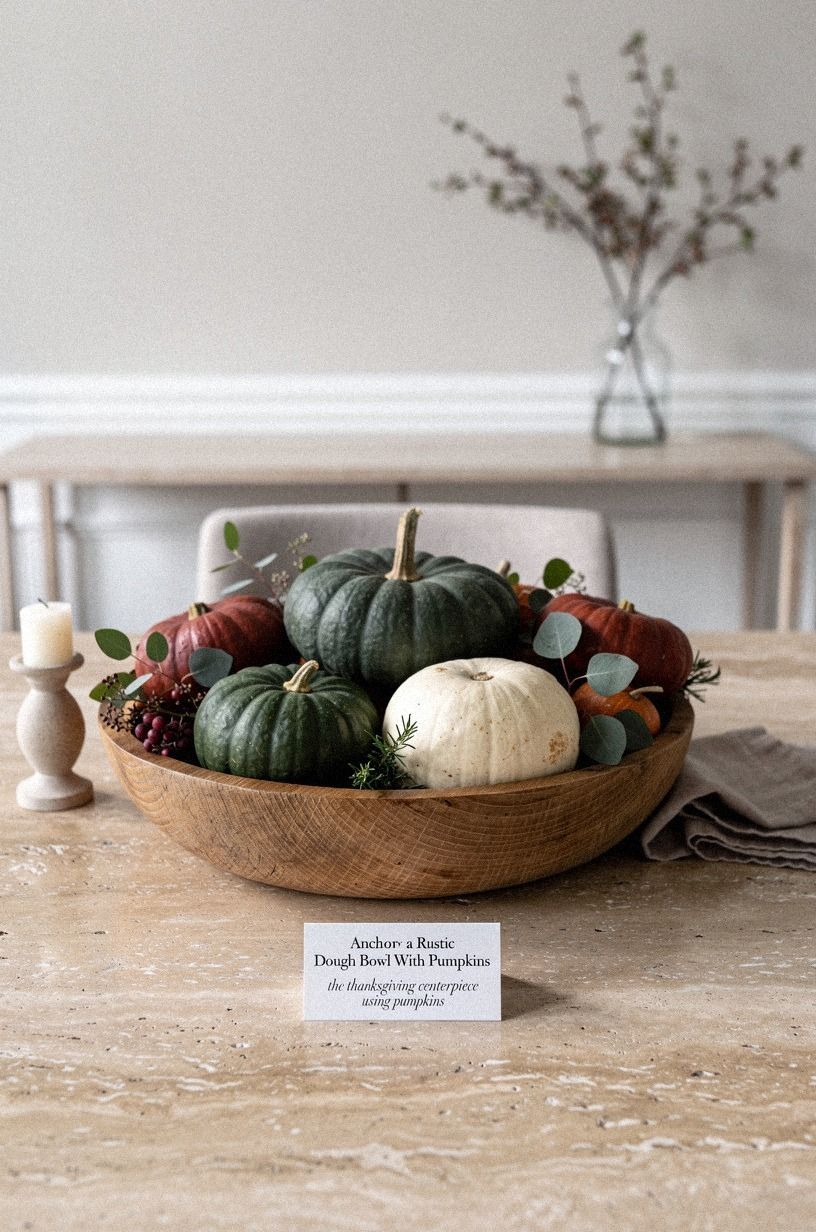
A dough bowl gives your arrangement an old-house feeling, especially when the table already has visible grain. Fill it with natural oak beads, preserved moss, and small pumpkins in forest green, rust, and faded orange. The irregular shape keeps the arrangement from looking like a store display.
Place the largest pumpkin near one end, not in the middle. Let greenery spill toward the opposite side. You’ll create a diagonal that feels more relaxed than perfect symmetry.
I’d skip glossy plastic filler. It reflects candlelight in a hard, distracting way. A thrifted wooden bowl is often better than a new decorative tray.
You can use it all year with lemons, pinecones, or folded linens.
If your bowl needs more depth, tuck in warm travertine pieces under the greenery. The stone gives the materials a layered, tactile base. Try a folded napkin underneath if you don’t have spare travertine.
A dough bowl looks especially lovely with a restrained palette. Use forest-green pumpkins, olive leaves, and one rust detail. Too many colors will hide the shape that makes the bowl special.
You can also use a shallow travertine bowl, a vintage bread board, or an old ceramic basin. The point is character.
A small imperfection makes the table feel personal. If you enjoy practical routines that simplify daily life, this simple face-washing guide pairs neatly with the same less-but-better approach.
6Paint the Pumpkin Group in One Quiet Color
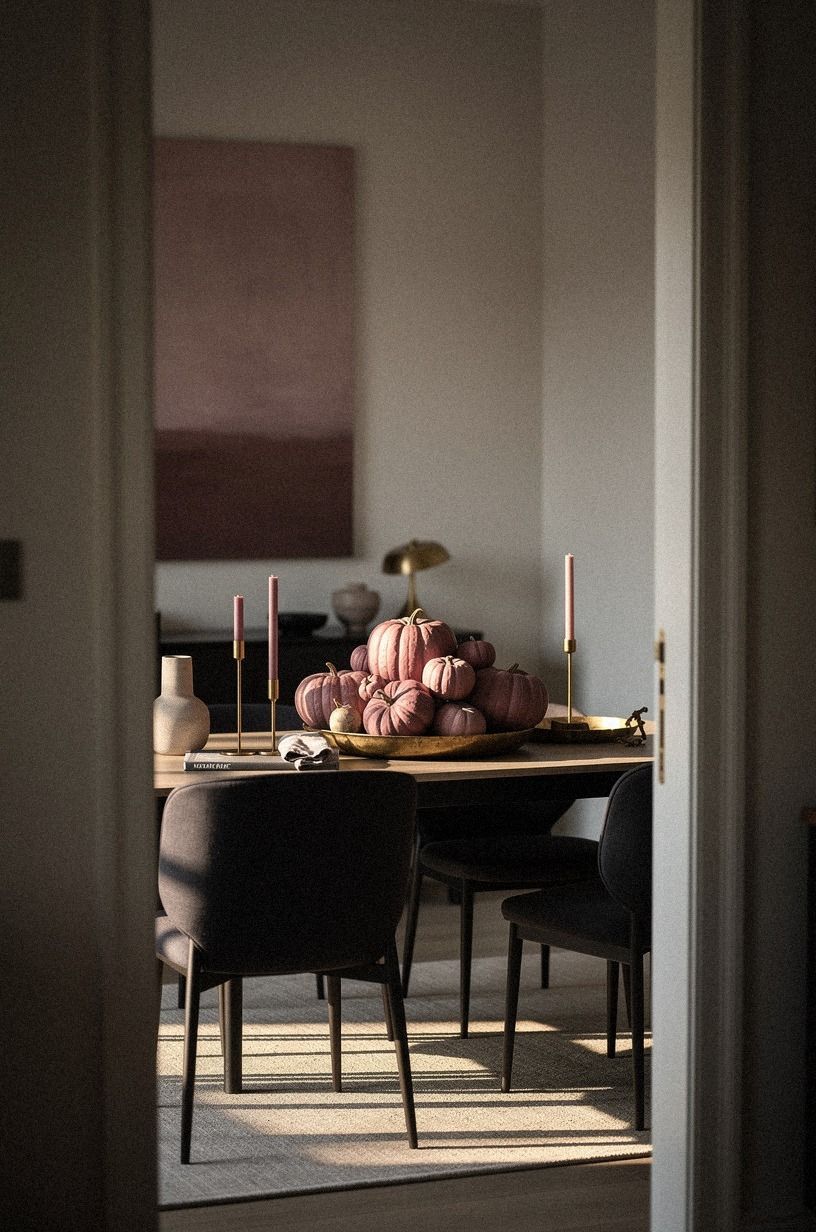
Painting pumpkins the same soft color makes a group feel intentional without requiring matching shapes. Try Benjamin Moore First Light 2102-70 for a dusty-rose table. Use Farrow & Ball Railings No. 31 if your room has charcoal walls.
You’ll get a refined effect that still feels seasonal. Use three sizes and two finishes. Matte paint on the large pumpkins looks grounded, while a faint satin finish on the smaller ones adds a gentle highlight.
I once painted every pumpkin bright white. The table looked more like a craft display than a meal. Your greenery needs contrast, so add brown seed heads or dried wheat stems between the pumpkins.
For another muted palette, Sherwin-Williams Redend Point SW 9081 works near natural wood. I’d choose First Light for a softer autumn table. Benjamin Moore Kendall Charcoal HC-166 can also bring a quiet dark note without making the arrangement feel heavy.
Don’t paint every stem. Leave a few natural.
That small variation keeps the group from looking manufactured. You can also paint only the front-facing pumpkins and leave the backs unfinished.
No one will know once the table is set.
A painted group works best when the rest of the table stays simple. Pair it with unlacquered brass, a wooden bowl, and soft candlelight. The brass will develop a gentle patina over time.
The result will feel elegant, calm, and surprisingly warm.
For a relaxed seasonal reset, this peptides article can join your reading queue while the paint dries.
7Choose Greenery Over More Pumpkins
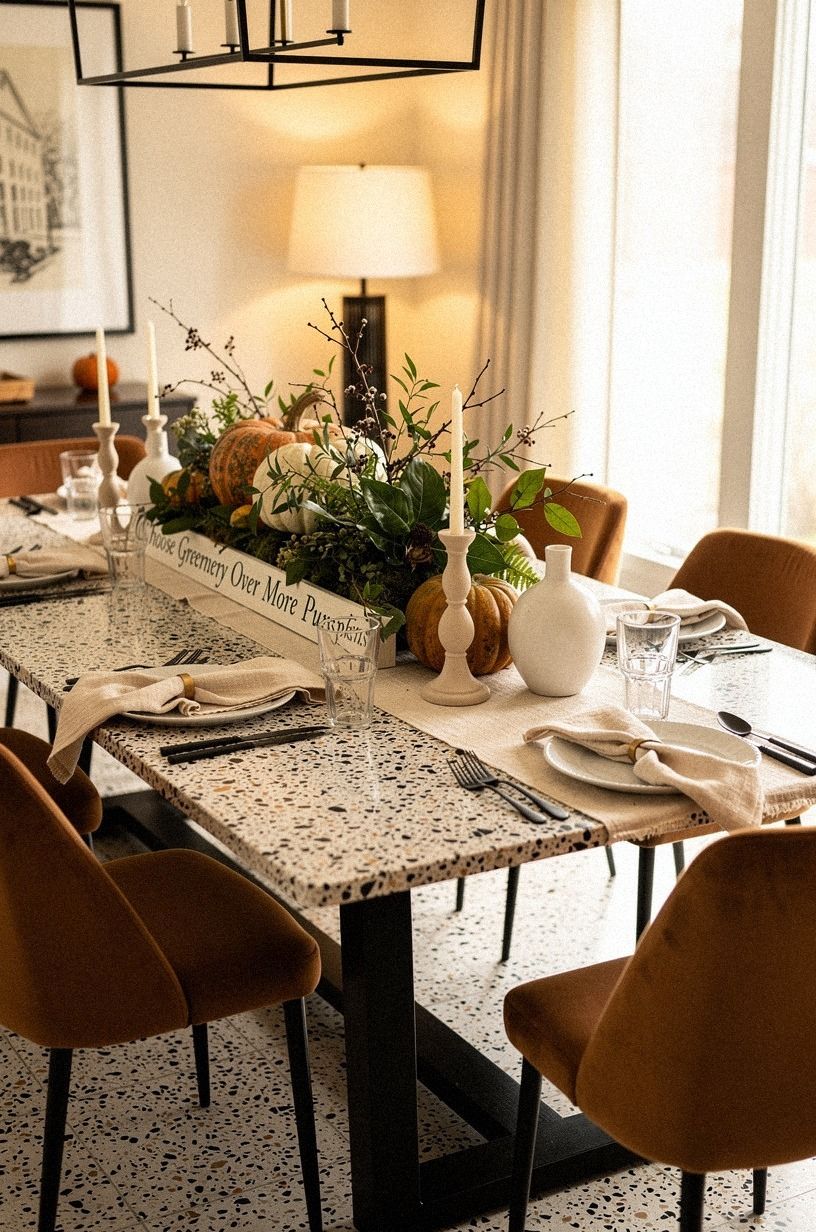
More pumpkins won’t always make your centerpiece richer. Choose greenery over extra fruit when your table already has patterned plates, colored glass, or a busy tablecloth.
The open leaves give your eye a pause. That pause makes the pumpkins feel special.
Try warm-white greenery with soft leaves. Add only three pumpkins in different finishes. A camel velvet pumpkin beside a ribbed ceramic one gives you texture without visual clutter.
You’ll want to keep the stems facing different directions. The group will look gathered rather than lined up.
I’d avoid mixing orange, white, metallic, and glittered pumpkins in one arrangement. The palette starts arguing with itself.
If your table is plain, one deep black pumpkin can provide the dramatic note your room needs. Dusty eucalyptus, bay leaves, and rosemary offer different shapes without demanding attention.
Greenery also helps a centerpiece feel less expensive. Clipped branches can look lush when you strip damaged leaves and cut the stems at different lengths. Put the fullest branch toward the back.
Let two smaller branches soften the front.
Set the arrangement on an oversized-chip terrazzo tray if the table needs a stronger base. Its warm flecks can connect the greenery to camel textiles and black accents.
Your centerpiece doesn’t need to explain every autumn color at once. Pick one seasonal note and give it room to breathe. If you’re building a softer palette elsewhere, this hyaluronic acid piece can sit in your reading list while you decide between eucalyptus and olive.
8Frame the Place Settings With Mini Bundles
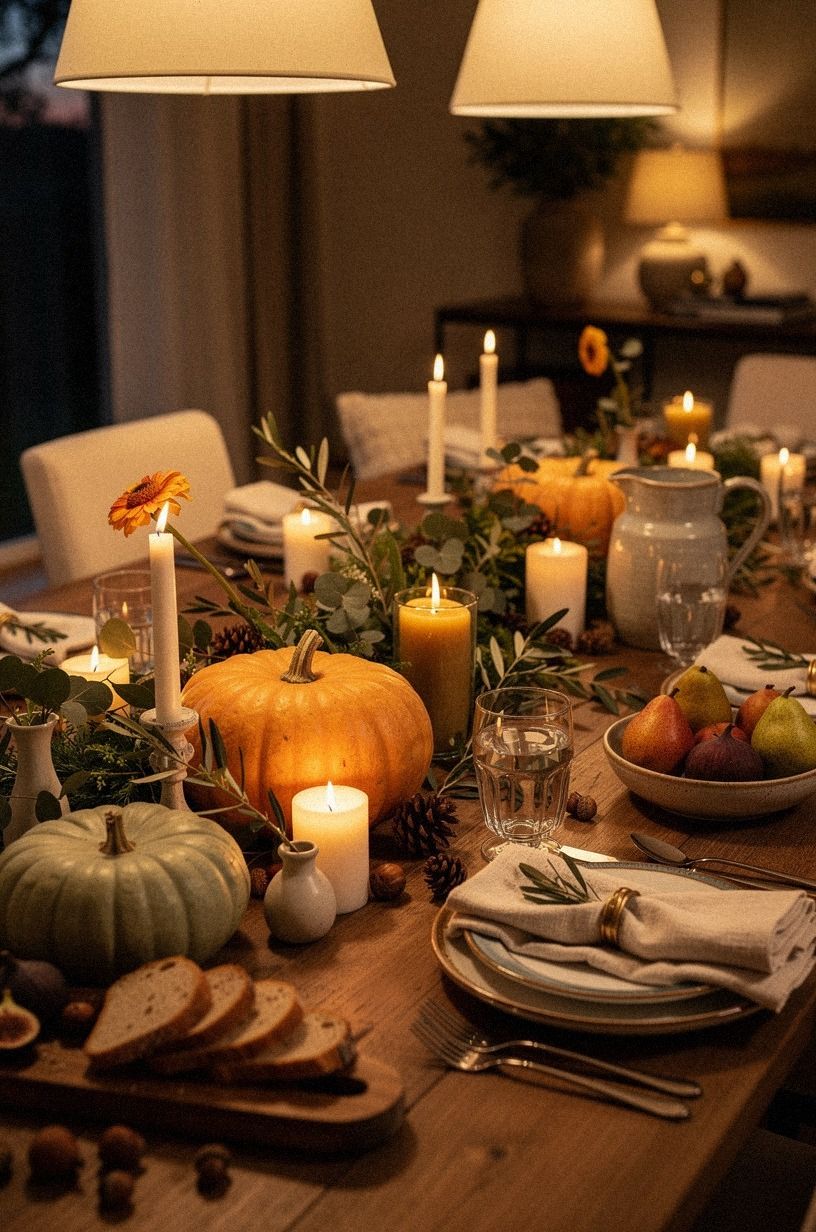
Small greenery bundles at each place setting make a Thanksgiving table feel personal without adding a large central arrangement.
9Can You Make a Candlelit Centerpiece Safe?
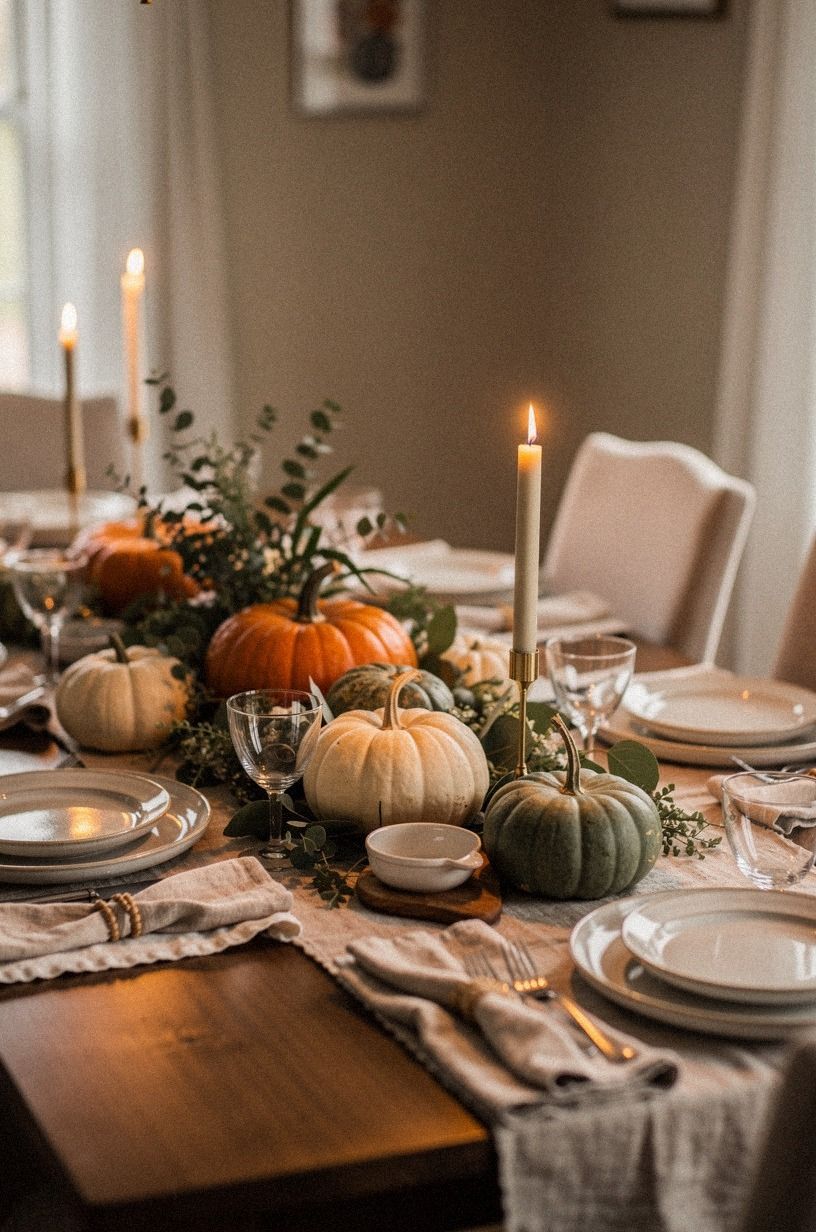
Yes, you can make a candlelit centerpiece safe if you keep flames away from dry leaves, loose greenery, and passing sleeves. Use glass hurricanes for taller candles. Place them on a stable natural wood tray with shagreen accents.
Your table will still glow, but the flame will have a defined boundary. Set votives at least a hand’s width from the nearest pumpkin stem. Check every wick before guests sit down.
I’d choose battery candles if your centerpiece includes dried grasses. One spark can travel faster than you’d expect. The goal is soft light, not a dramatic fire show!
Keep candle holders on a level surface. Never place a taper inside a loose vessel. Avoid sleeves, hanging ribbons, and dried material near the flame.
If you’re using three lighting sources in the dining room, combine overhead, task, and ambient light. Dim the ceiling fixture. Let the table carry the warmest glow.
A candlelit centerpiece feels especially romantic with warm cream pumpkins, natural wood, and low greenery. Add a small shagreen detail for texture.
It can also feel cheerful with pale green leaves and soft ivory fruit. Choose the mood before you choose the holders.
For more after-dinner planning, this peptides article can sit in your reading queue. The table, meanwhile, should stay clear enough for everyone to relax.
10Mix White Pumpkins With Burnished Metal
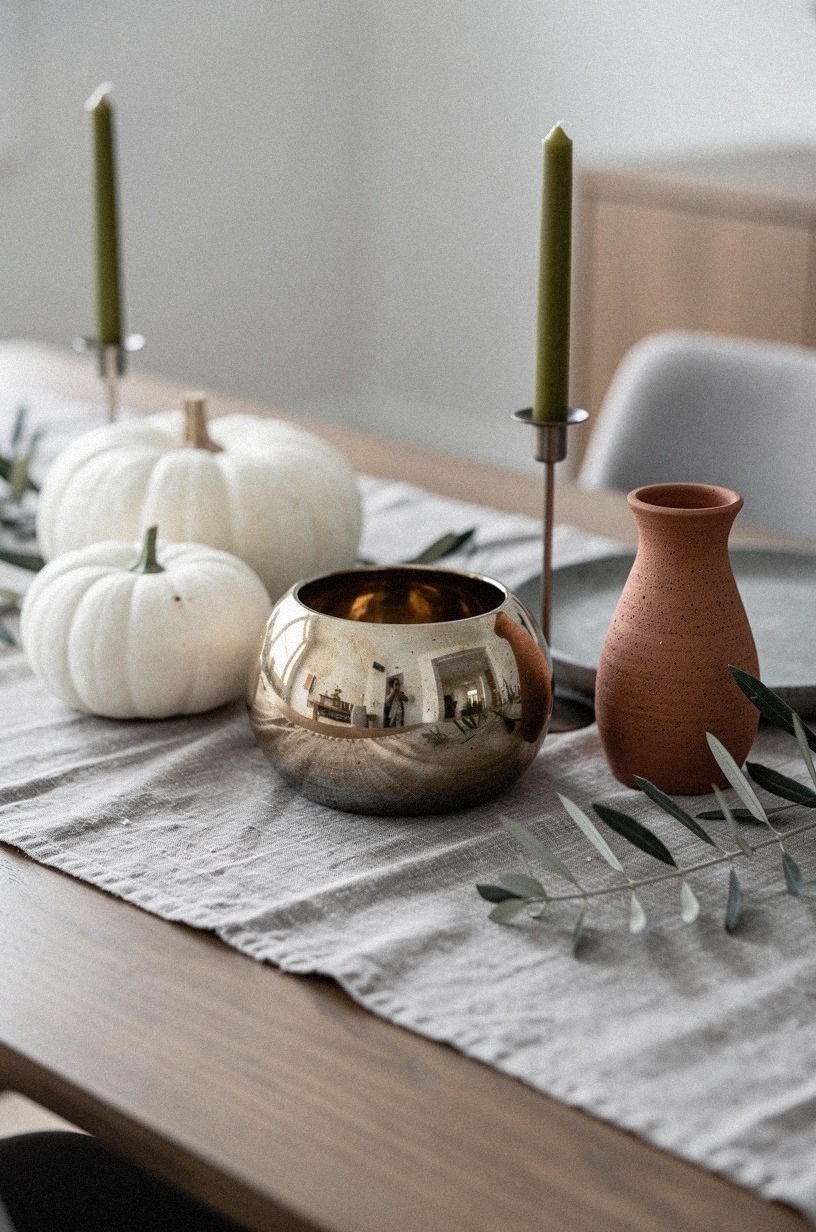
White pumpkins look less pale when you pair them with washed Belgian linen, terracotta, stone, olive, and a warm metal that catches candlelight.
11Repeat One Color From Room to Table
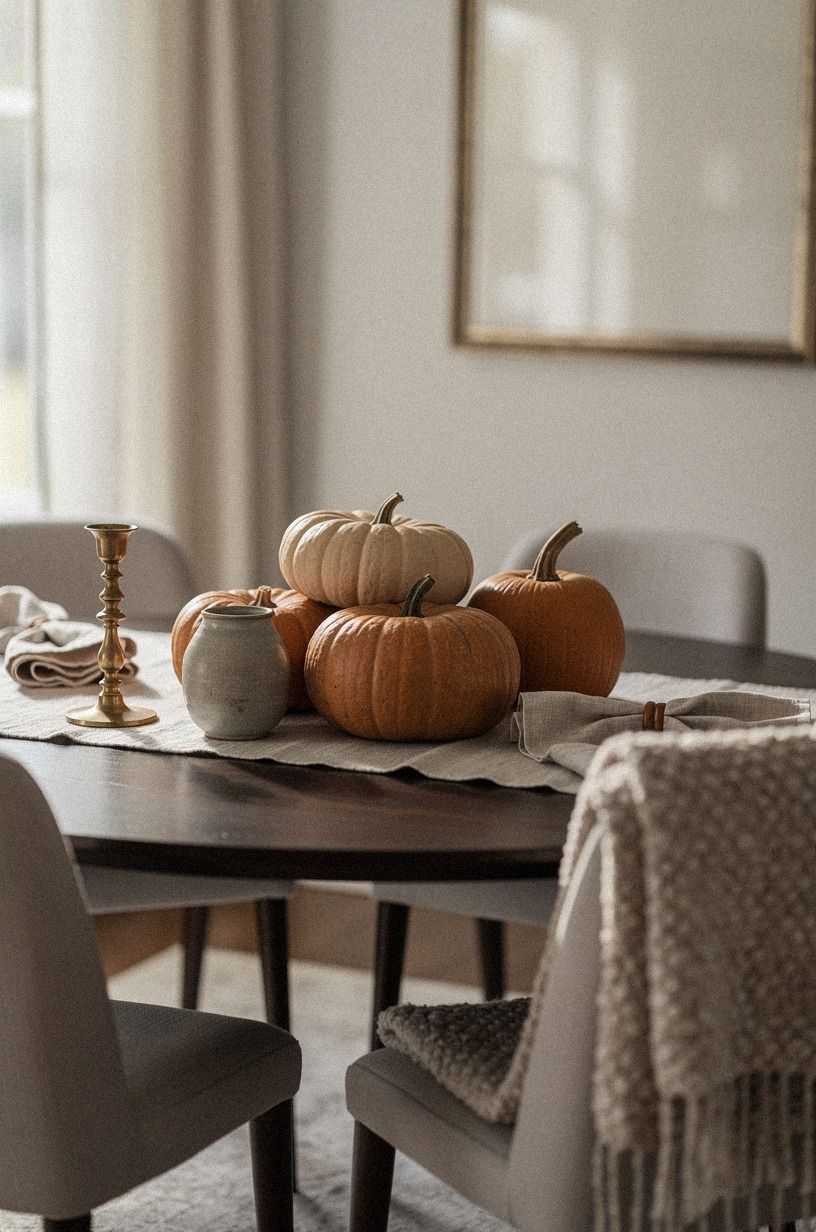
Repeating one color from your dining room makes the centerpiece feel connected to the house. If your nearby walls are clay, echo that grounded tone with clay pumpkins, linen napkins, or a warm branch.
You’ll get harmony without matching every item. For a cooler room, repeat olive from a rug or artwork in one pumpkin and one napkin stripe. The repetition should be visible but not exact.
I’d rather see one thoughtful color echo than six decorative colors competing for attention. An organic bouclé pumpkin in clay can bridge a warm wall and a wood table. Cream pumpkins will keep the arrangement bright.
Your eye will recognize the relationship before you consciously notice it. That’s why a single repeated color can make a room feel finished.
Look around the dining area before shopping. Notice the curtain trim, nearby artwork, chair fabric, and even the view outside the window. Choose one color that already belongs there.
You can repeat a color through small details. Try linen napkins, an aged-brass bowl, and one faded clay pumpkin. Or use gray glass with muted green leaves.
The effect can be subtle and still feel compelling.
If you’re also changing a bedroom palette, this hyaluronic acid piece can keep your seasonal reading moving while you test paint samples.
12Let the Runner Become the Frame
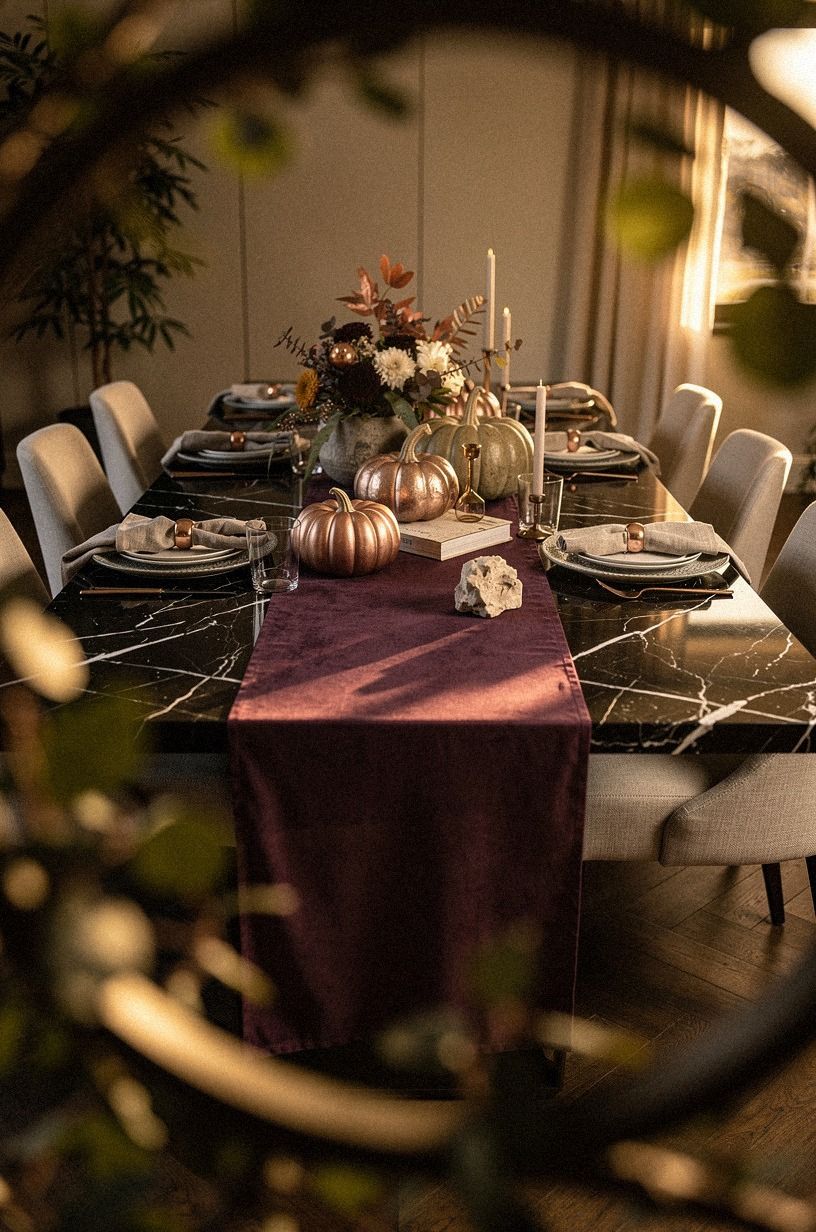
A runner should support your Thanksgiving centerpiece, not disappear underneath it. Choose plum-gray linen with a subtle rose-gold detail. Keep the arrangement slightly narrower than the fabric.
You’ll see the edge of the textile. That visible border makes the greenery look purposeful. For a long table, let the runner extend naturally rather than folding it into a stiff rectangle.
Add a few pumpkins at the center. Leave the ends mostly clear. This gives the table a graceful sense of length and keeps the arrangement from feeling like a solid block.
If your curtains are nearby, a rod placed 4-6 inches above the frame and running down to the floor can make the dining area feel taller. The effect is especially useful beside a low table.
I’d avoid a ruffled runner with ornate pumpkins. Both elements demand attention. Your best result will come from contrast: soft linen, smooth ceramic, and Nero Marquina black marble with white veins catching the last light.
A runner can also soften a very modern table. Use gray textile with simple white pumpkins and clipped branches. For a traditional room, try plum fabric with cream gourds and a rose-gold accent.
Wash the runner before Thanksgiving if it’s new. A little natural wrinkling looks relaxed and inviting. Press only the center if you want a cleaner line.
What This Thanksgiving Table Costs in the US
A centerpiece can be free when you use clipped branches, yard leaves, and bowls you already own. If you’re refreshing the whole dining area, the broader US cost ranges below give useful context. Your table may need only a small part of the budget.
A wool rug may run $400-$1,500. Linen drapes can cost $120-$400 per pair.
A statement light fixture may cost $150-$800. DIY room paint often runs $200-$600.
For a centerpiece, your smartest spend is usually a reusable vessel or good linen. Disposable decorations rarely earn their space after the holiday. A handsome bowl can return every season with new branches, fruit, or flowers.
Set a small budget before you shop. Spend first on the item that gives the arrangement structure. That might be a dough bowl, a brass tray, or a generous length of greenery.
If you’re weighing a larger room update, this geographic-arbitrage retirement article is an odd but useful reminder to separate a seasonal want from a major financial decision. A beautiful table doesn’t require a beautiful debt.
The Two-Wood Rule I’d Use at Thanksgiving
I’ve styled enough autumn tables to know that pumpkins and greenery aren’t the hard part. The hard part is deciding what you’ll leave out.
My Two-Wood Rule keeps the arrangement grounded. Use one visible wood tone for the table or bowl. Then add one small supporting wood note, such as a walnut candlestick or pale oak bead.
More than that can make the table look like a collection of samples.
I once paired a dark walnut table with orange oak accessories, a woven tray, and several brown branches. Nothing was wrong by itself. Together, though, it looked muddy.
Your eye needs one clear anchor. If your table is light oak, choose darker greenery or burnished metal for contrast. If your table is walnut, use cream pumpkins and Benjamin Moore White Dove nearby to lift the whole composition.
And this is where your own taste matters. You don’t need to copy a catalog table if your family eats from it every year. A bent branch can be more welcoming than a perfectly symmetrical spray.
A good centerpiece also respects the meal. Keep serving paths open.
Keep the tallest item low enough for conversation. Let the materials show their natural flaws.
Your guests will remember the warm candlelight, the sound of chairs moving, and the bowl passed down the table. They won’t remember whether every pumpkin matched.
I’d also give yourself permission to stop before the table feels finished. That last extra bundle is often what makes an arrangement crowded. Pull one thing out, then look again from the doorway.
If the table still feels inviting from across the room, you’re done. If it looks bare, add greenery before adding another object. This brain and metaphor article captures the larger idea: your mind notices relationships, not just individual objects.
The Questions I Get Asked Most
What is the best Thanksgiving centerpiece for a small table?
A low trough with three mini pumpkins and olive branches is the best pick for a small table because it keeps sightlines open. You can use a shallow IKEA bowl, cream linen, and one candle. Your guests will have room for plates, serving dishes, and conversation.
Where can I buy Thanksgiving centerpiece pieces on a budget?
Look at IKEA, Target, and Wayfair for bowls, faux greenery, and linen napkins. Then check Facebook Marketplace or a thrift store for wooden vessels.
You don’t need a complete set. One reusable bowl and branches from your yard can carry the arrangement.
For another seasonal reading idea, see this mouth-care article.
How much does a Thanksgiving centerpiece makeover cost?
A centerpiece refresh usually costs about $20-$100 if you already own a bowl and candles. A broader dining-room update may reach $200-$800.
Free branches, yard greenery, and reused glassware can lower your total. You’ll get more value from reusable linens than disposable seasonal pieces.
Can I create a Thanksgiving centerpiece on a budget?
Yes, and you can start with three free materials: clipped greenery, fallen leaves, and a bowl from your kitchen. Add one $10-$20 candle set or a few thrifted pumpkins. Your table will feel warm when the heights and textures vary, even if nothing matches.
Is a Thanksgiving centerpiece worth it in a small space?
Yes, because a small table benefits from one controlled focal point. Use a low bowl, keep the arrangement narrower than your runner, and leave clear space around every place setting. You’ll create an inviting table without sacrificing function or forcing guests to reach around decorations.
Is a Thanksgiving centerpiece a good idea for a rental?
Yes, especially when you use removable pieces instead of permanent changes. Try a freestanding bowl, peel-and-stick art nearby, a tension rod for curtains, and removable candle trays.
Your arrangement can bring in seasonal color without paint, nails, or damage. This retinol article can wait until after dinner.
Where I’d Start First
If I had to pick one, I’d start with the low greenery garland. It leaves room for serving dishes, makes inexpensive pumpkins look intentional, and still feels warm after the candles are lit. Pin the garland idea for later and build it from what you already own.