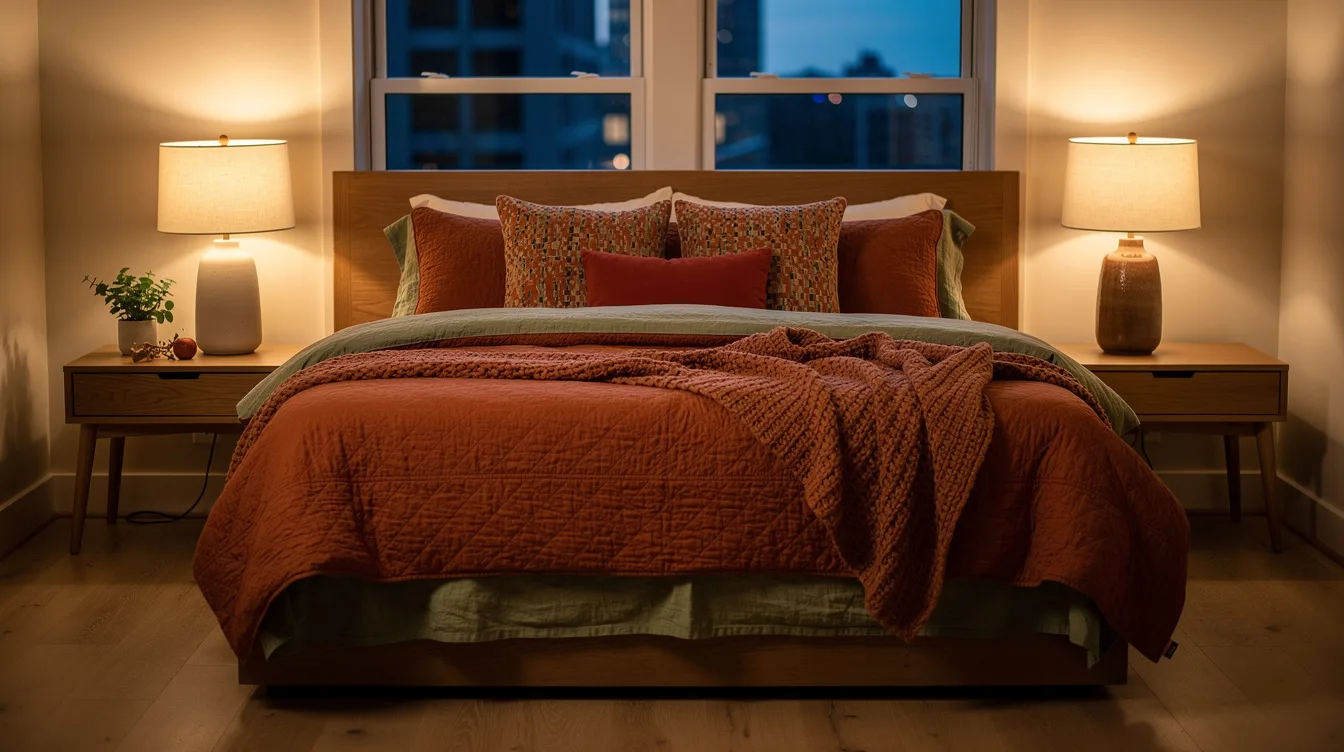
At 10 p.m., a bedroom lit by a cool ceiling fixture can feel more like a work zone than a place to rest. The fastest fix is usually a shift toward 2700K, paired with one lower light source and a dimmer.
Color temperature changes the mood of the room before you change the bedding, paint, or furniture. The right setup makes a familiar bedroom feel quieter by bedtime.
Read the Kelvin Number Before Buying
Start with the number on the box, because labels such as warm white are used inconsistently. A 2700K LED bulb is the safest default for a bedroom because it gives off familiar, relaxed light.
Warm-white light generally falls below about 3300K, while roughly 2700K to 3000K works well for most bedrooms. That range keeps bedding, wood, and painted walls from looking gray or clinical after sunset.
Save 3000K for tasks that need more clarity, such as dressing or reading fine print. A 4000K daylight bulb can feel crisp and office-like at night, so I would keep it out of the evening lighting plan.
When in doubt, buy the bulb with the clearest Kelvin marking rather than trusting a vague package color. The number tells you far more than the phrase warm white.
Layer Three Warm Pools Around the Bed
A cozy bedroom needs separate pools of light instead of one powerful source overhead. Start with a dimmable 2700K ceiling pendant for cleaning and getting dressed, then let smaller fixtures handle the evening mood.
Place matching bedside lamps or sconces on both sides of the bed, preferably with shades that hide the bare bulb. A frosted-glass shade softens glare and spreads light across the wall instead of sending a sharp point into your eyes.
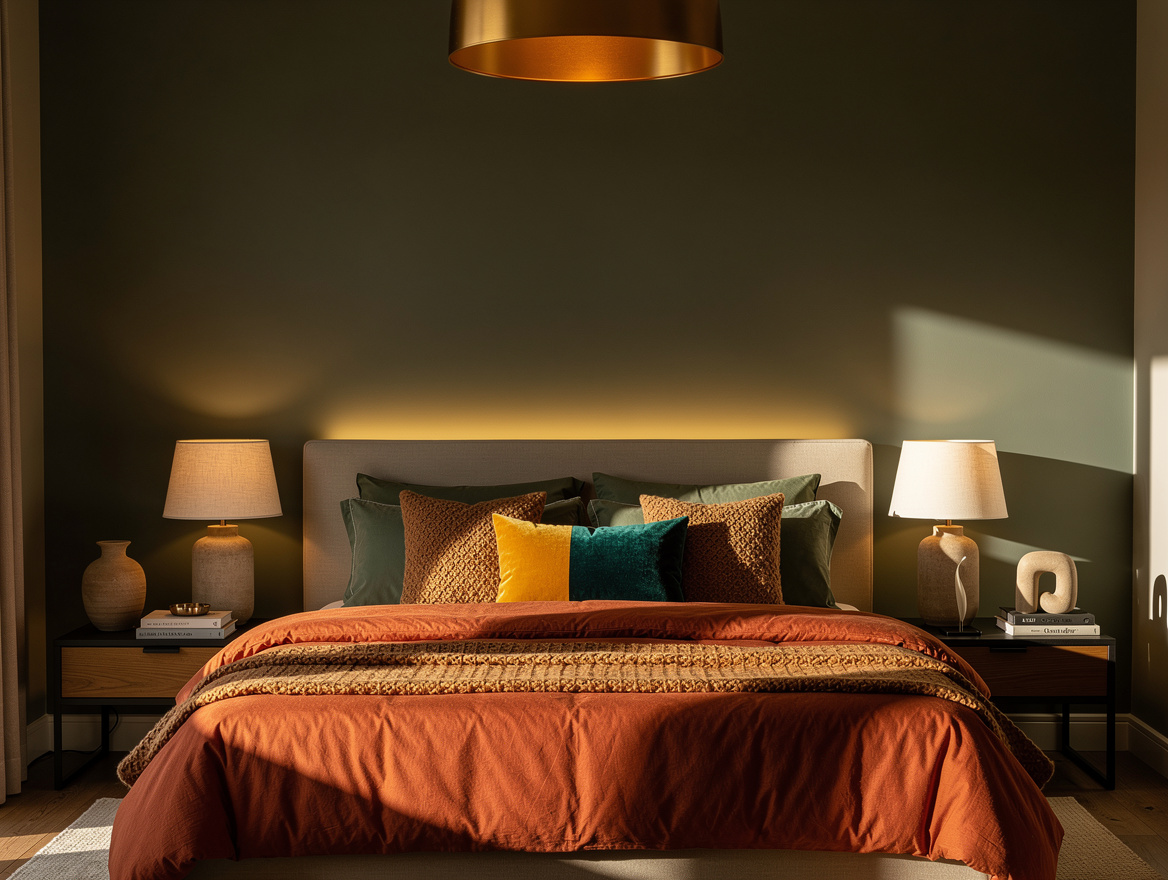
Add one low accent near a shelf, curtain, headboard, or plant. A 2200K accent lamp creates the amber, candlelike layer that makes the room feel settled during the final hour before sleep.
Keep each layer on its own switch when possible. That lets you turn off the practical ceiling light while leaving a gentle bedside glow in place.
Lower the Light to Soften the Room
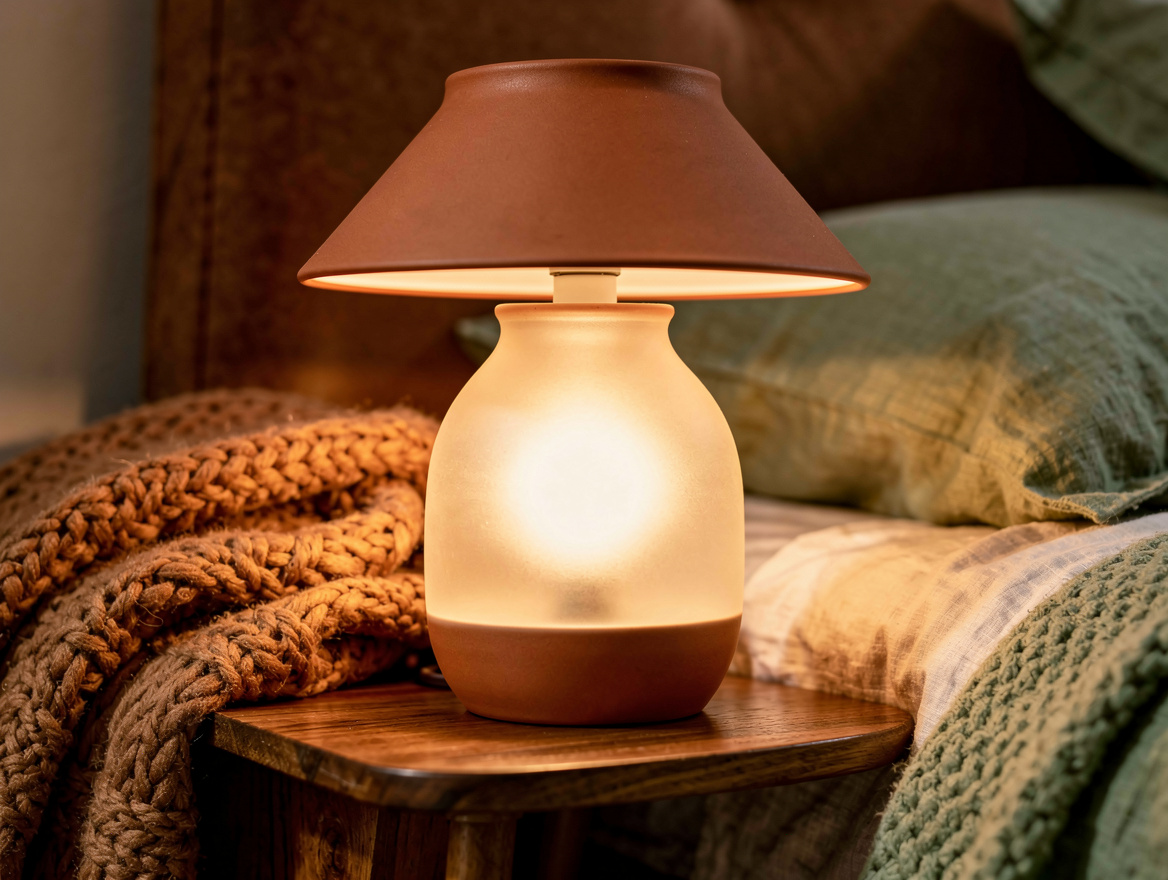
Light placed at eye level or below feels gentler because it brightens textiles, walls, and wood indirectly. A ceramic table lamp on a nightstand usually feels calmer than an uncovered bulb mounted high above the bed.
For a standard bed around 20 to 24 inches high, aim for the center of the shade to sit roughly 18 to 26 inches above the top of the mattress. This keeps the bulb useful for reading without placing it directly in your sightline.
A typical bedside lamp around 18 to 24 inches tall works well beside a bed roughly 55 to 71 inches wide. Shades around 10 to 14 inches across usually look substantial without crowding a small nightstand.
Choose opaque fabric, paper, ceramic, or frosted glass when softness matters most. Clear bulbs can work as decoration, but only when they are deliberately low-lumen and positioned away from your eyes.
Match the Temperature to the Activity
Reading in bed calls for a little more clarity than winding down. An adjustable 2700K-3000K reading lamp keeps the page legible while preserving the warm character that makes the room restful.
For dressing, use a bright but dimmable fixture capped at about 3000K. That neutral warmth helps you see clothing colors without turning the bedroom into a changing room under commercial lighting.
For the final hour before sleep, shift toward roughly 1800K to 2200K or dim your 2700K source very low. A decorative filament bulb can provide that amber glow, but choose a frosted version near the bed if the visible filament feels harsh.
Use dimming as part of the temperature plan. A warm bulb at full brightness can still feel too energetic, while a slightly brighter 2700K lamp may be more comfortable than a weak, poorly placed amber bulb.
Swap the Bulbs Before Replacing Fixtures
If your existing fixtures have good positions, change the bulbs first. An IKEA SOLHETTA E27 806-lumen bulb is dimmable, rated at 2700K, and measures roughly 60 millimeters wide by 110 millimeters tall.
The listed example costs about 4.99 euros for a two-pack in Germany, which makes it a useful reference for an inexpensive bulb upgrade. Use roughly 470 to 806 lumens for a ceiling fixture, depending on room size and how much practical light you need.
For bedside lamps, choose about 250 to 470 lumens so the light remains useful without washing out the room. IKEA’s SOLHETTA E27 470-lumen bulb is another 2700K option, listed at about 2.99 euros in the supplied German pricing example.
Bulb shape matters as much as output. An opal LED bulb hides the brightest point, reduces sharp shadows, and makes an inexpensive shade look more polished.
Test the Room After Sunset
Color temperature looks different against your actual walls, bedding, and flooring, so test the room after dark. Turn on the overhead light first, then add the bedside lamps and the low accent one at a time.
Notice where your eyes land when you enter the room. If the brightest spot is above your head, lower the visual center with a low-profile floor lamp or a smaller light on a shelf.
Use a dimmer to create a gradual evening shift: practical brightness while dressing, warm bedside light for reading, then a quiet amber glow before sleep. The goal is a room that becomes softer without requiring a new fixture every season.
Begin with one 2700K dimmable bulb and one lower light source. That small change usually reveals whether the room needs more warmth, better placement, or simply less brightness.
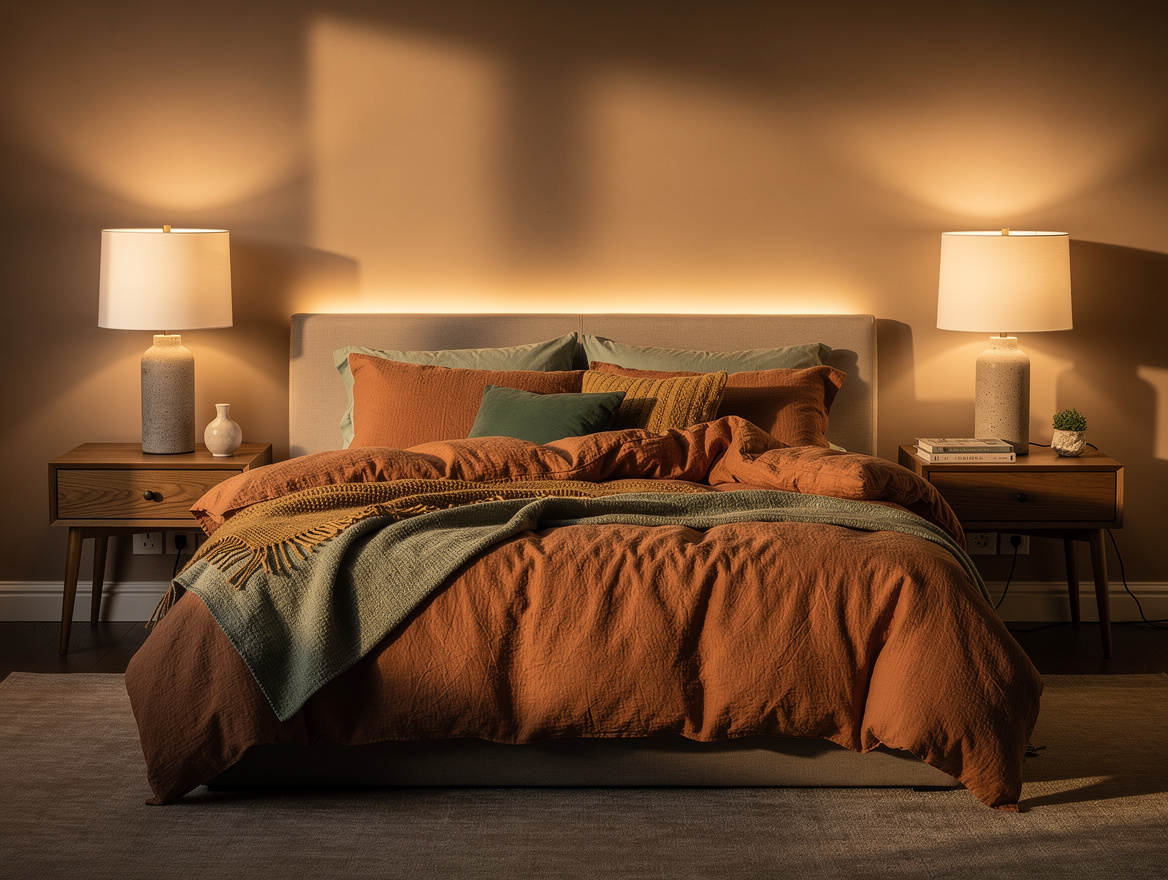
Start tonight by switching off the ceiling light and turning on a dimmable 2700K lamp at a lower level. Then add a 1800K-2200K accent only if the room still feels too bright, because placement and brightness matter as much as the Kelvin number.
Mia Carter writes about small-space living and budget home makeovers. She has restyled three rentals and tests most ideas in her own 45 sqm flat.