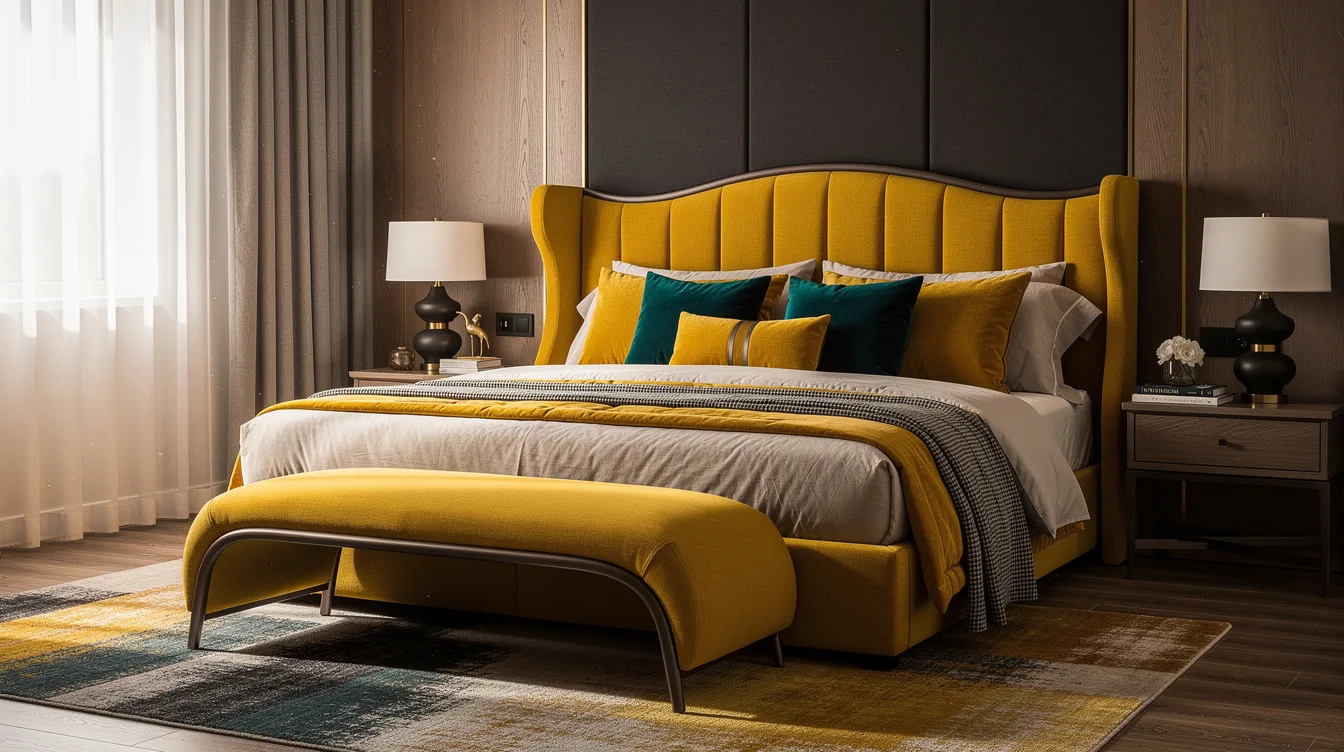
The wrong bedroom ottoman makes a carefully chosen bed look as if it has been given a random extra seat. The right one usually spans about 60% to 80% of the bed’s visible width, with a clear inset at both ends.
Start with the bed’s shape, then decide whether the ottoman should echo its material or create a deliberate contrast. A low curved bench, a storage trunk, or two square seats can all look custom when their scale and clearance are handled first.
The goal is a complete bed composition, not a bench pushed against the footboard.
Match One Element, Then Add Contrast
A convincing bedroom composition follows one useful formula: match one detail to the bed, contrast another, and let the ottoman keep a little visual breathing room.
For a queen bed, a typical ottoman width is about 120 to 150 cm, while a king usually suits roughly 145 to 170 cm. That proportion keeps the piece narrower than the bed and prevents an edge-to-edge furniture-store look.
Leave about 10 to 20 cm of visual inset from each side, then check the walking path. Roughly 60 to 75 cm of clearance between the ottoman and a dresser, wardrobe, or opposite wall usually feels comfortable.
Repeat Soft Curves With a Low Bench
A rounded upholstered bed pairs best with a long, low loop-textured ivory bench that repeats its soft shape without copying the headboard.
Look for an oak or concealed plinth base, especially when the bed has channel stitching or rounded corners. IKEA is a practical place to browse this profile, but the shape matters more than the retailer.
Keep the finished height around 42 to 48 cm when the bench will hold clothing or serve as a dressing seat. A squat silhouette looks intentional beside a tall headboard, while a tall bench can make the bed feel visually crowded.
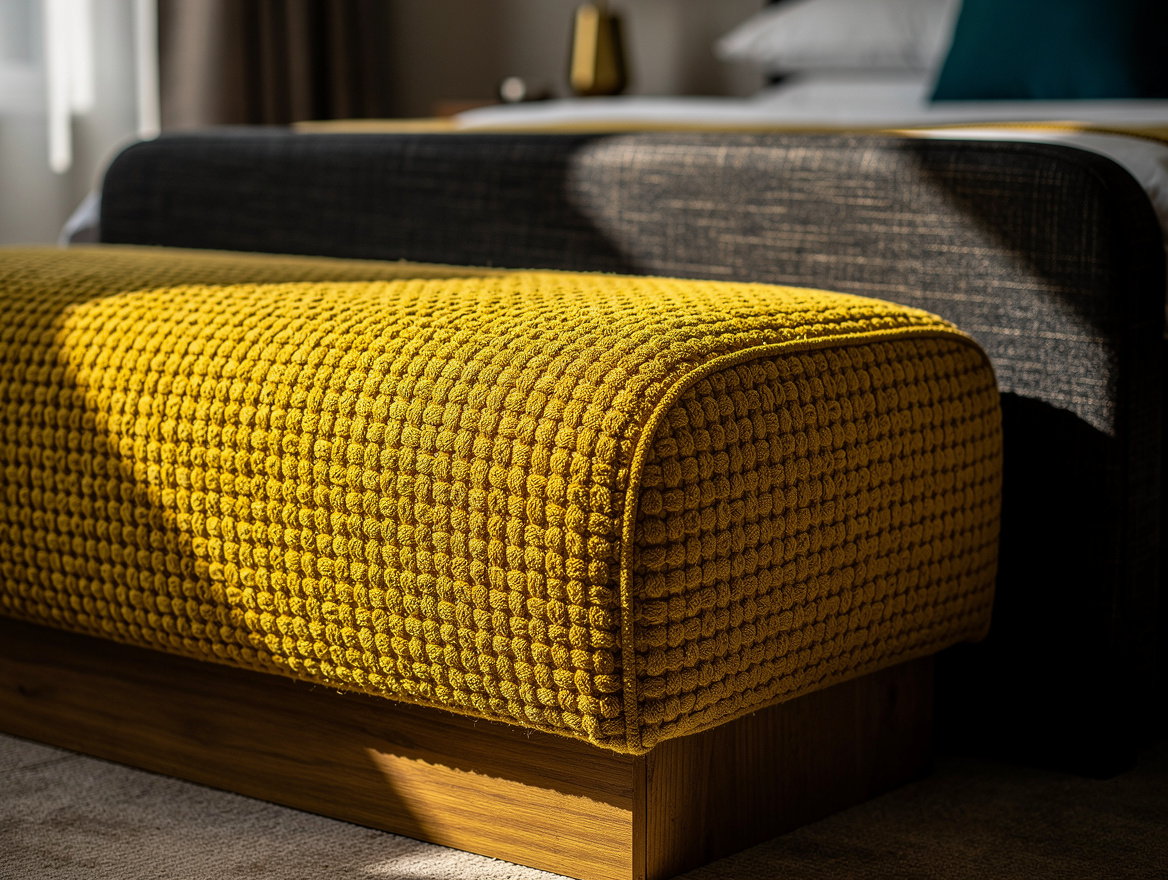
Sharpen Warm Wood With Leather
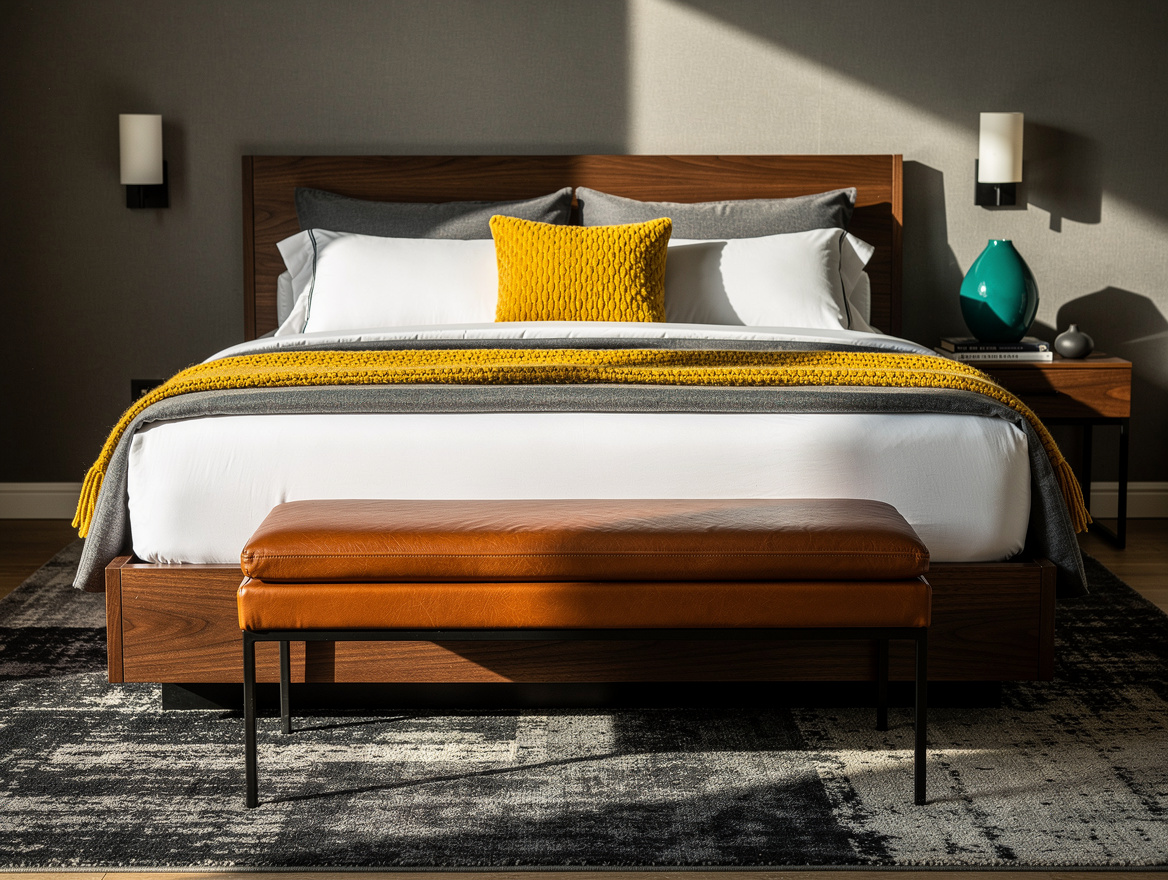
A walnut or oak platform bed gains a tailored hotel-suite contrast from a rectangular cognac leather bench with slim dark legs.
The pairing works because the wood supplies warmth and the leather adds a cleaner, more polished texture. Wayfair often offers this general shape, though a tobacco-colored velvet seat can create a softer version of the same contrast.
Choose a bench with enough depth for sitting, usually about 42 to 52 cm, rather than a narrow decorative ledge. A full-grain leather top can handle daily use, and its inevitable variation keeps the arrangement from looking mass-produced.
Layer Linen Around a Relaxed Bed
A linen or slipcovered bed calls for a relaxed flax-linen storage ottoman, preferably in a shade close to the bedding but slightly deeper.
Oatmeal, warm gray, and soft stripe upholstery build tonal depth without creating a matched bedroom set. Target has accessible upholstered storage shapes, but avoid anything with a glossy finish or overly formal trim.
A skirted base works in a traditional room, while a softly tailored box works better in a cleaner space. Use the hinged interior for extra blankets, spare pillows, or the clothing that otherwise lands on a chair.
Balance Dark Timber With Tactile Volume
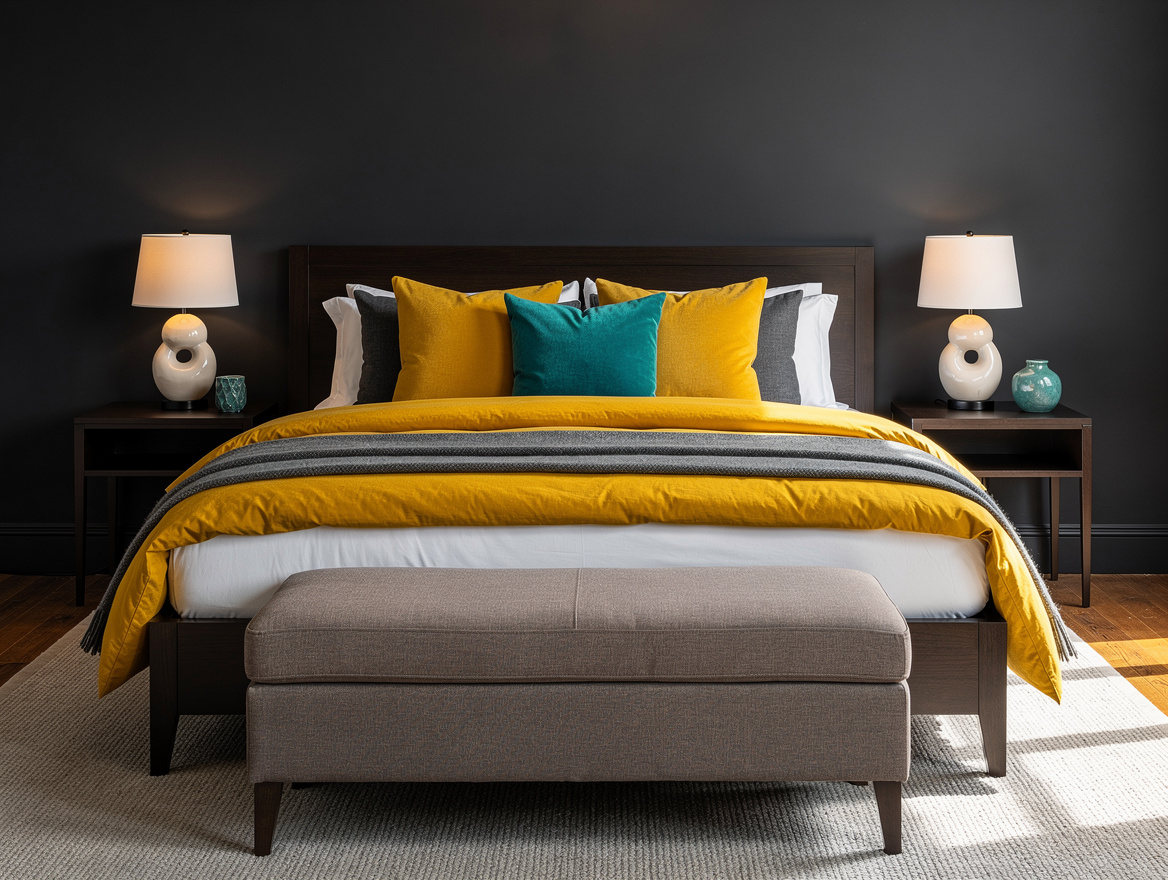
A black, dark wood, or smoked-oak bed benefits from a generous taupe mohair ottoman that brightens the foot of the bed without making the room feel casual.
Stone, camel, and muted olive are strong alternatives when the walls and bedding already lean warm. Amazon offers many look-alike fabrics, so inspect the product photos for a dense surface and a recessed base instead of choosing by color alone.
The best version feels substantial but low, with an ebonized wood or antique-brass detail used sparingly. This is where a smaller ottoman can look underpowered, particularly beside a tall headboard or heavy bed frame.
Split Minimal Beds Into Two Seats
A minimal upholstered bed can look more deliberately designed with two matching large square ottomans instead of one long bench.
Choose pieces around 55 to 70 cm square, with a typical finished height near 40 to 46 cm. Walmart carries compact seating in performance velvet and textured woven fabric, both useful when the ottomans need to move for cleaning.
The gap between the pair gives the composition a lighter rhythm and makes each piece easier to reposition. Use matching upholstery for a quiet suite effect, or repeat the bed fabric on one ottoman while bringing in leather or wool on the other only when the room already has strong material contrast.
Ground Large Beds With Purposeful Storage
A canopy or four-poster bed needs visual weight at its foot, so choose a wide upholstered storage trunk with a tailored top and a calm, rectangular profile.
Linen, a wool blend, or leather can work here, but skip heavy nailhead decoration. Home Depot is useful for checking nearby room dimensions and hardware details, while the trunk itself should read like part of the bed architecture.
In a classic or transitional bedroom, an oval or scalloped seat with antique-brass feet softens boxy furniture. In a modern luxury room, replace that curve with a deep rectangular ottoman on a recessed plinth, using performance velvet or a nubuck-look microfiber for a boutique-hotel finish.
Put painter’s tape on the floor first, then choose the finish that repeats one detail already present in the room. That small planning step protects the walking path and gives the ottoman a reason to be there.
Mia Carter writes about small-space living and budget home makeovers. She has restyled three rentals and tests most ideas in her own 45 sqm flat.