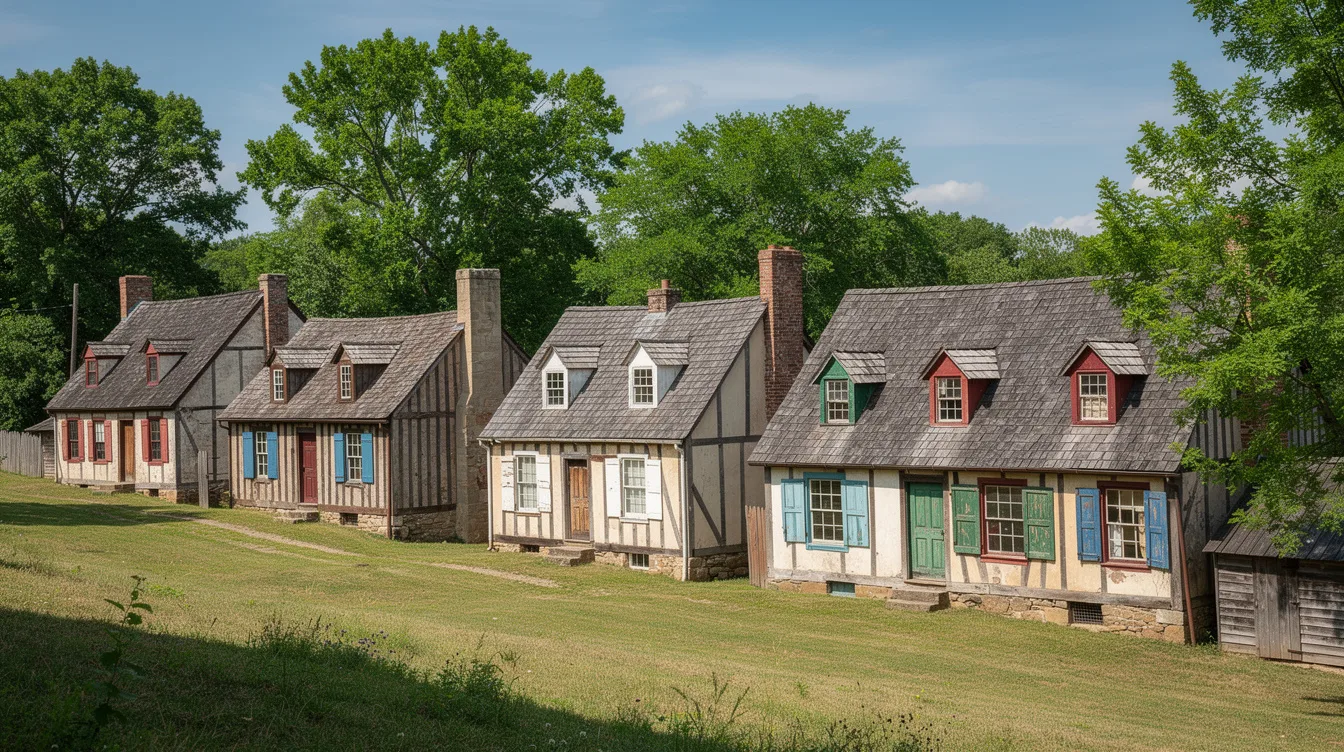
Ste. Genevieve is generally recognized as Missouri’s oldest permanent European settlement, and its 18th-century French colonial buildings are still standing. The reason is practical as much as historical: after severe flooding, the original village moved to higher ground in 1785.
That decision left a town shaped by French-Canadian settlers, French and Spanish colonial rule, and later American influence. You can still walk narrow streets past enclosed gardens and French-influenced homes, then sit down somewhere quiet enough to hear the town settle.
Why the flood changed Ste. Genevieve
The first village stood closer to the Mississippi River, where flooding threatened daily life. After the move, much of the community’s earlier pattern survived, which is why the town feels older than its Midwestern setting suggests.
And the river remains part of the story, even when you can’t see it from every street. The town sits on the Mississippi’s west bank, roughly one hour south of St. Louis, so you can reach it easily without turning the trip into a major expedition.
But Ste. Genevieve isn’t a preserved stage set. French traditions continued under Spanish rule, then met growing Anglo-American and German influence after the Louisiana Purchase.
That tension gives the town its character, and I think it makes the surviving buildings more interesting than a perfectly frozen colonial village would be.
Start with the buildings that made the town famous
Ste. Geneviève National Historical Park is the best starting point for understanding what you’re seeing. The park protects historic structures and explains how the settlement developed, so the buildings stop looking like pleasant old houses and start reading as evidence.
And the Félix Vallé House State Historic Site gives the story a more intimate scale. You can move from the broad history of the settlement to the details of a house museum, where rooms and materials make the colonial period feel close enough to touch.
But the strongest impression may come from simply walking downtown. The Bolduc House is one of the area’s best-known surviving French colonial homes, and the surrounding streets keep the experience relaxed rather than staged for crowds.
A small town with a distinctly French rhythm
Ste. Genevieve carries a French connection that reaches beyond its buildings. The city is named for Saint Geneviève, the patron saint of Paris, and early residents spoke varieties of French connected to Canadian French.
And French Catholic culture remained important for a long period, giving the town a cultural thread that feels unusual in the United States. You don’t need to arrive with a background in colonial history, because the street plan and old homes make the point without much explanation.
That said, this is a quiet heritage stop, not a nightlife destination. You can browse local shops, visit cafés, and take your time downtown, but the appeal is the slow accumulation of details rather than one giant attraction.
Pair the historic district with Missouri outdoors
After the houses and museums, Hawn State Park changes the pace. The park is known for forest, sandstone formations, hiking, and campsites, so a visit can shift from colonial streets to shaded trails without leaving the wider area.
And Pickle Springs Natural Area and Hickory Canyons provide shorter hiking and geological outings near town. You should check your energy before adding a trail, because Ste. Genevieve works best when you leave room for an unhurried afternoon.
But the contrast is exactly the point. History gives the trip its focus, while forest and stone keep it from feeling like a museum circuit. I would plan the outdoor stop after the historic district, when your feet want a different kind of story.
Can you make it a one-night trip?
Yes. A one- or two-night heritage-and-nature trip from St. Louis is the right scale for Ste.
Genevieve. Spend the first afternoon walking downtown and visiting the national historical park, then choose a colonial house museum before dinner.
And the next day can take you toward Hawn State Park, Pickle Springs, or a local winery. The area forms part of Missouri wine country, with vineyard tastings and countryside views, but you shouldn’t expect the constant activity of a larger destination.
There are limits, and they’re part of the bargain. Seasonal details aren’t specified here, and the town’s strength is its calm atmosphere rather than a packed schedule. If you want history you can absorb at walking speed, Ste.
Genevieve has a persuasive case.
By late afternoon, the old streets grow quiet, and the French colonial houses hold their place above the river’s floodplain. You can hear your own footsteps, which may be the clearest reason the town’s past still feels present.