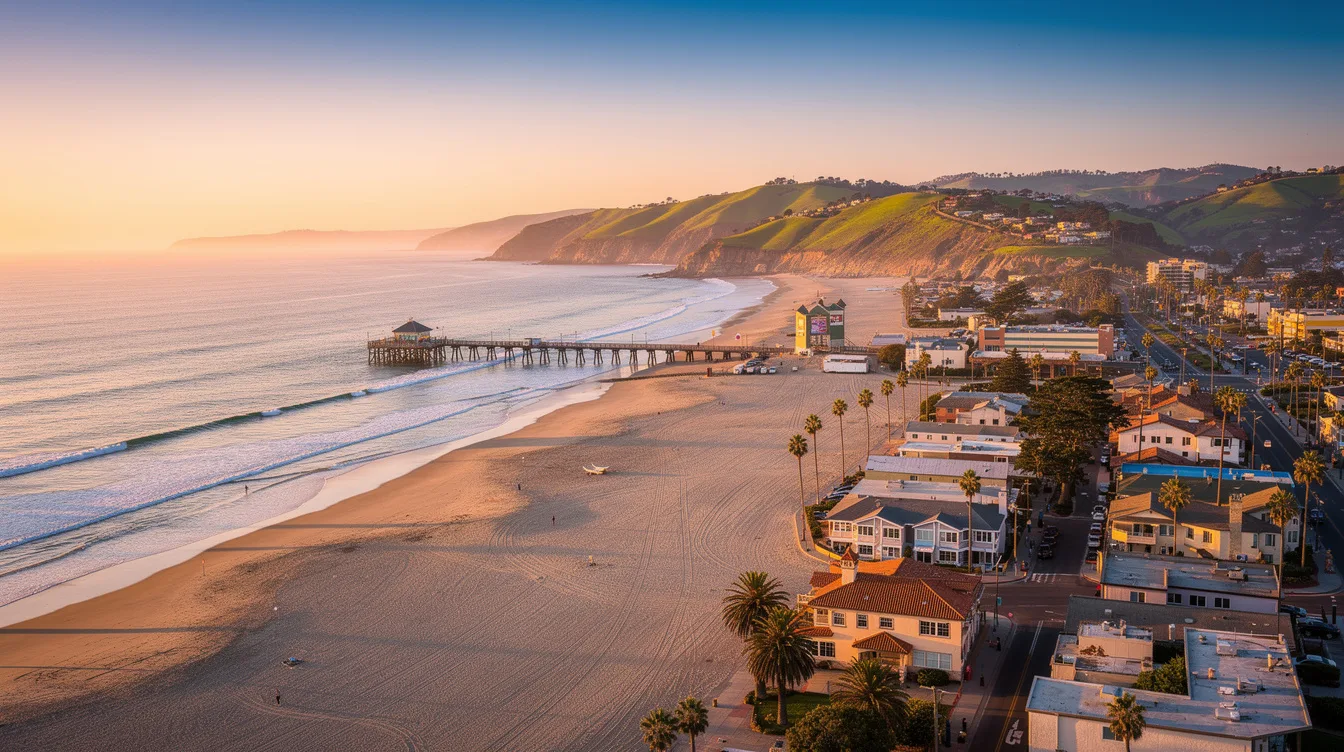
Avila Beach looks like a relaxed California beach town, but its calm center was once a major cleanup site. After decades of oil seepage from corroding pipes, workers excavated about a quarter mile of downtown and removed more than 6,750 truckloads of contaminated soil.
And the cleanup changed the town physically. Several blocks of Front Street, along with homes and businesses, were removed before clean Guadalupe Dunes sand replaced the polluted material. You can still walk the rebuilt streets without seeing much evidence of the excavation.
But that history gives Avila Beach more weight than its easygoing appearance suggests. The town makes a convenient stop on a Highway 1 road trip. The harbor air smells of salt, warm sand, and food drifting from Front Street.
The oil spill changed downtown, not the town’s mood
And the rebuilt center is compact enough to explore on foot. Restaurants, shops, bars, and the main beach sit within a few blocks, so you can leave the car parked and follow the promenade toward the water.
Avila Beach is calmer than nearby Pismo Beach or Morro Bay, and its protected bay helps keep the water gentler. The cliffs at Point San Luis also block prevailing northwesterly winds, which helps the beach feel warmer than much of the nearby Central Coast.
But the town isn’t untouched or remote. It has a working commercial fishing pier, busy summer services, and a tourism economy. The contrast is appealing: polished enough for an easy weekend, small enough that the ocean still sets the rhythm.
For background, read this short guide to Avila Beach’s rebuilding and coastal setting before you go. The cleanup is part of the place’s identity, even if most visitors first notice the sunlight.
A pier and a flat trail set the pace
And the Avila Beach Pier gives the shoreline its strongest visual marker. It has been closed since 2015 because of structural engineering concerns, so treat it as a landmark rather than a walking route.
Instead, take the Bob Jones City to Sea Trail. The mostly flat path follows an old railroad right-of-way for about 3 miles, making it an easy morning by bike or on foot. You’ll hear birds and bicycle tires before the beach comes fully into view.
But you should save time for the smaller beaches. Olde Port Beach is dog friendly and quieter, while Fisherman’s Beach has fewer services and works better for a simple picnic. Pirate’s Cove is reached on foot and is clothing-optional, so it won’t suit every traveler.
The Point San Luis Lighthouse dates to 1890 and is visited through guided outings on selected days and schedules. Beyond it, the Pecho Coast Trail requires a docent, which makes advance planning important.
Can you swim there? Yes, but choose the right water
Yes, the main Avila Beach is used for swimming, kayaking, paddleboarding, and beach volleyball. Because the bay is sheltered, the water often feels more manageable than exposed beaches nearby, though conditions can still change.
And you shouldn’t swim or wade in the lagoon where San Luis Obispo Creek reaches the sea. Agricultural runoff is a concern there, so stick with the main beach when you want to get in the water.
After the beach, you can warm up at Avila Hot Springs or book a private bath at Sycamore Mineral Springs. Wine bars and tasting rooms line the waterfront, while nearby Edna Valley and San Luis Obispo add more options without requiring a long drive.
Can you get around without a car?
Yes, you can walk or cycle around the town itself. But a car is still preferable if you want to reach the hot springs, wineries, lighthouse visits, or nearby Central Coast communities.
September and October bring the best compromise
And September-October is the period I’d choose. The weather is usually pleasant, crowds ease from their summer peak, and the water can feel more comfortable than it does earlier in the year.
Avila Beach lies about 159.7 miles northwest of Los Angeles, with a drive of roughly 3 hours 30 minutes to 4 hours depending on traffic and route. From San Francisco, plan on about 4 hours to 4 hours 30 minutes.
But don’t expect Big Sur drama or Santa Barbara energy. Avila Beach is gentler and more contained, better suited to one or two slow nights than a packed itinerary. Stay near the waterfront for walkability, or choose San Luis Obispo for more restaurants and potentially lower rates.
By late afternoon, the rebuilt Front Street glows above the bay, and the air carries the cool smell of the Pacific. The town’s hardest history is beneath your feet, while the last light settles quietly on the sand.