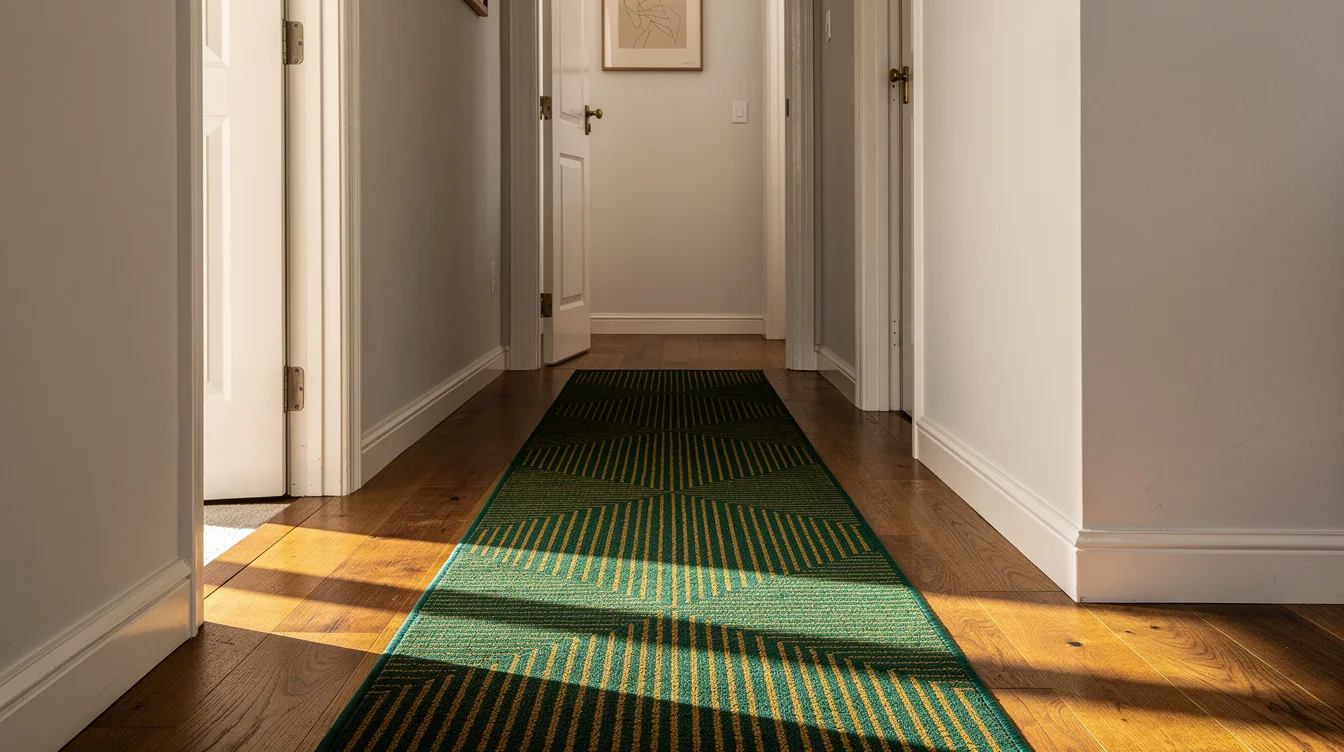
A bedroom corridor can look unfinished even when every piece of furniture is carefully chosen. The usual culprit is a runner that fills the passage wall to wall, catches beneath a door, or uses a plush pile where people walk all day.
Start with a low-pile runner around 75 centimeters wide and roughly 305 centimeters long, then leave a visible floor border on both sides. The best choice depends on traffic: washable synthetic fiber for busy households, wool or a wool blend for quieter bedrooms.
Designers treat the rug as part of the floor plan, not a protective afterthought. That means measuring the route, respecting door clearance, and choosing a pattern that gives the corridor direction without shouting for attention.
Measure the Walking Path First
The right runner begins with the clear walking path, not the full bedroom width. Measure from the edge of the door swing to the opposite wall, wardrobe, or bed, then subtract roughly 16 to 30 centimeters so the floor can frame the rug.
A 70 to 80 centimeter runner usually fits a straight bedroom corridor when it leaves about 8 to 15 centimeters of hard flooring on each side. In a very tight passage, keep at least about 7.5 centimeters, or 3 inches, visible per side.
That border is what makes the layout look deliberate. A rug pressed against both walls reads like a patch, while a narrow strip of exposed timber, stone, or tile gives the corridor breathing room.
Choose a Low Profile for Door Clearance
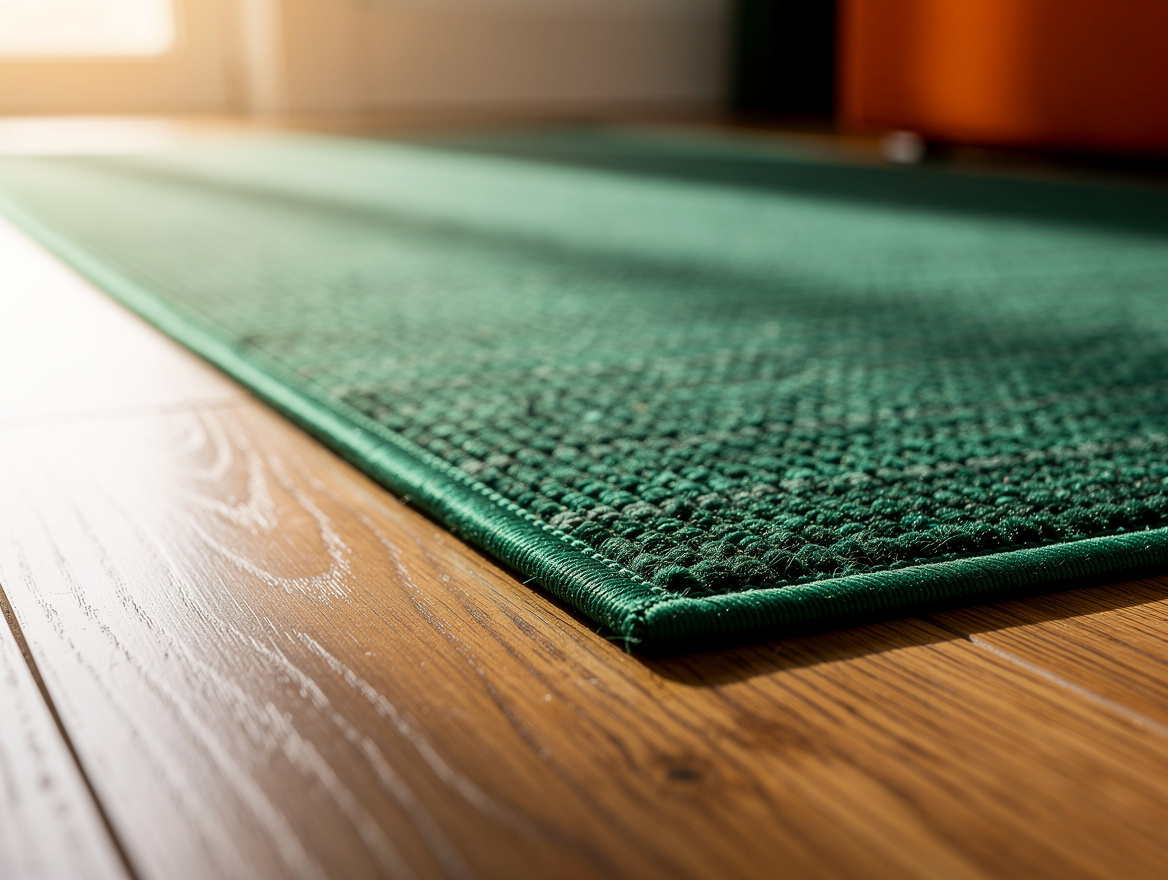
Bedroom corridors have two enemies: swinging doors and catching toes. A low-pile construction keeps the surface comfortable underfoot without creating a raised edge beneath a bedroom or ensuite door.
Deep shag has no place in a passage people use regularly. Its height traps more debris, makes vacuuming harder, and can interfere with doors that already have very little clearance.
For a long dressing or ensuite route, a runner around 75 to 80 centimeters wide and roughly 305 to 365 centimeters long can suit the geometry. A flatweave with a simple linear pattern also helps the corridor feel longer without making the floor visually busy.
Match the Fiber to Daily Traffic
Busy households need a fiber that forgives hurried mornings, pet paws, and occasional spills. Polypropylene is a practical choice because it is low profile, stain resistant, easy to vacuum, and often available in washable constructions.
Polyester works well when frequent cleaning matters most, especially in a rental bedroom or a home with children. Check the care label and the washer capacity first, because a long runner may need a large machine or professional cleaning.
Quieter adult bedrooms can handle the richer feel of low-pile wool. Wool is resilient, naturally dirt resistant, and warm underfoot, but its higher upfront cost and more careful cleaning requirements make it a poor match for every household.
A wool blend lands between practicality and softness. I would choose it for a guest room or calm primary suite, but I would still favor synthetic fiber where an ensuite creates constant moisture and cleanup.
Frame the Corridor With a Quiet Pattern
The runner should support the bedroom, not compete with the bedding, wall color, or artwork. A small repeat pattern hides everyday dust and minor marks while keeping the narrow route visually controlled.
Understated borders and slim stripes work especially well in a central corridor that runs from the bedroom door toward a bed, dressing area, or ensuite. They add direction without making the passage feel shorter.
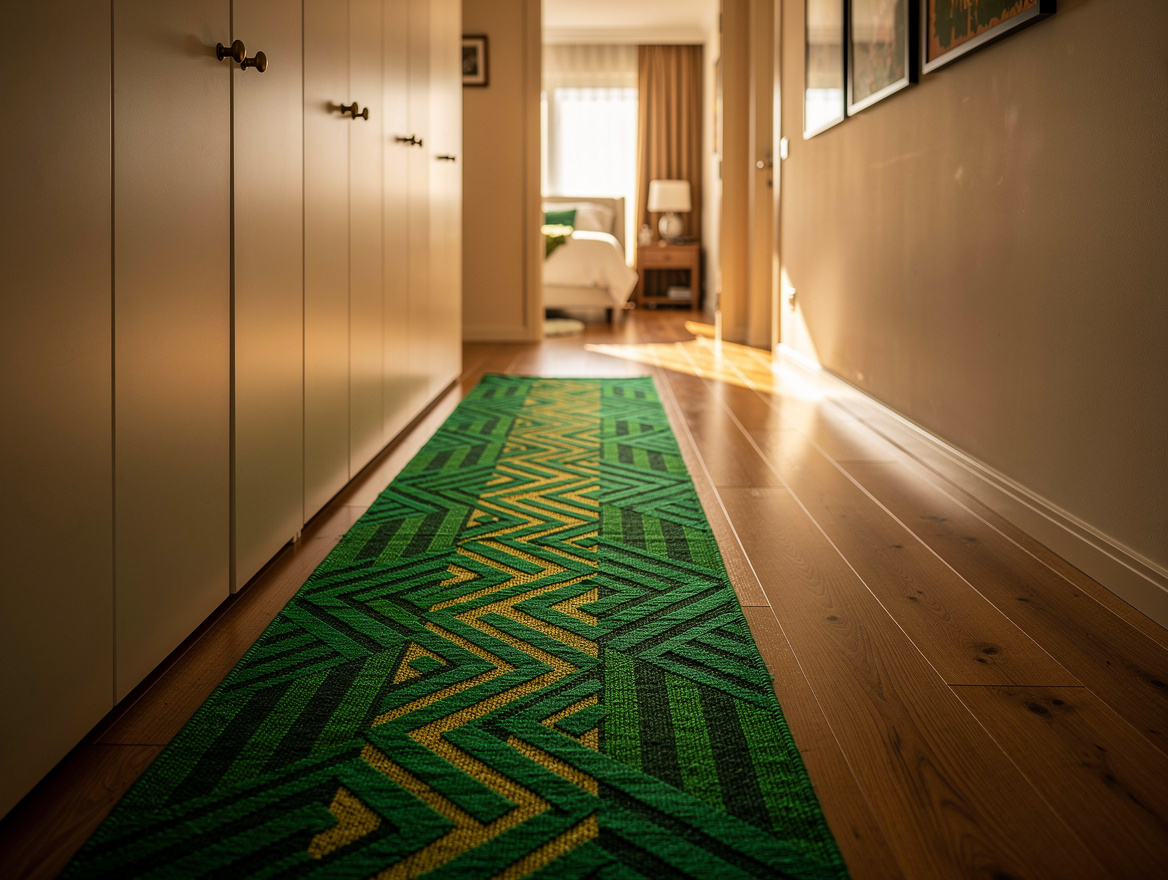
Skip oversized motifs in a narrow space. A linear design is the stronger choice beside wardrobes because its direction echoes the route and makes the floor plan easier to read.
Color matters just as much as pattern. A muted charcoal, sand, faded blue, or warm gray can connect the runner to the room, while a stark contrast may make the corridor feel chopped into separate zones.
Use Separate Runners When the Route Turns
An L-shaped bedroom route rarely needs one awkward rug forced around the corner. Use coordinated runners instead, keeping the same colorway and pile height so the transition looks intentional.
Terminate each piece cleanly before the turn. A runner that bunches at the corner looks accidental, while two aligned rectangles préservé the shape of the floor and make replacement easier later.
For a bedside runway, a runner around 60 to 75 centimeters wide and roughly 215 centimeters long can cover a compact walking zone. Align it with the bed rather than automatically pushing it against the wall.
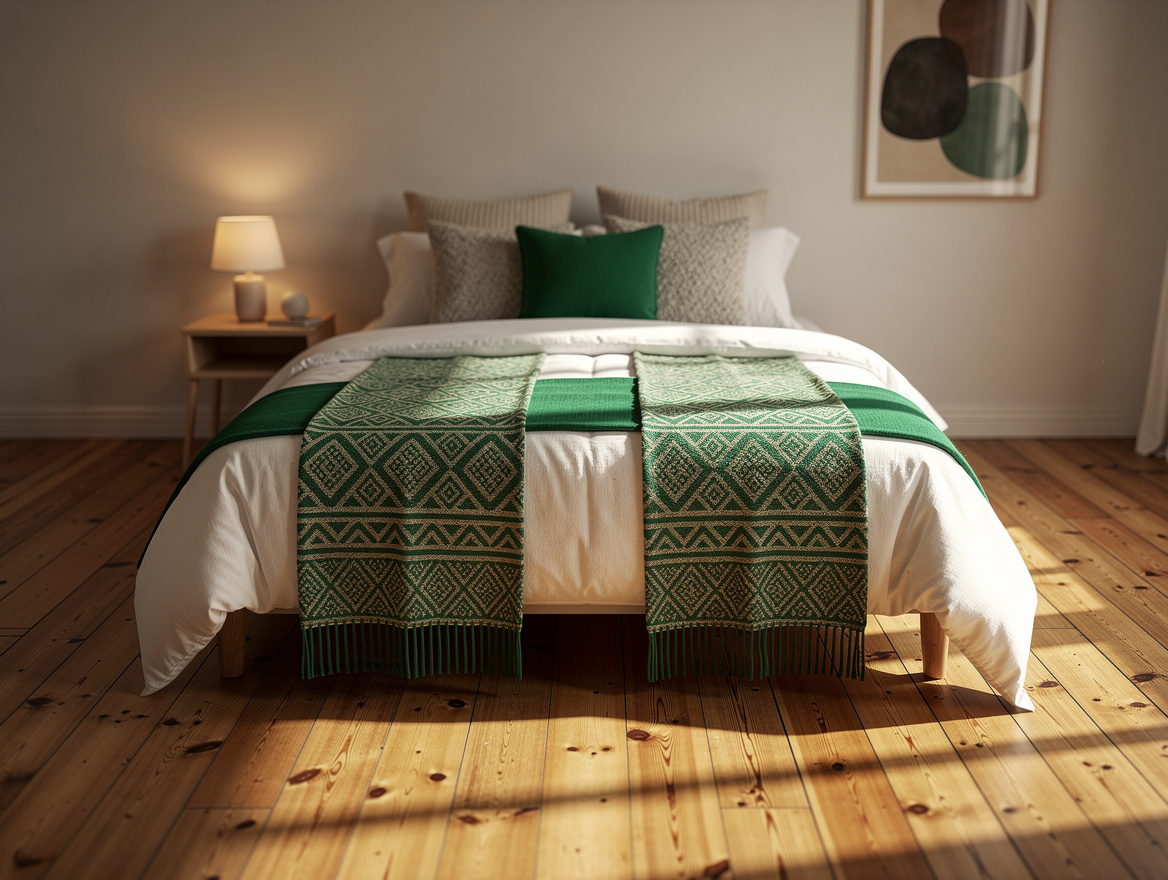
Twin runners create a tailored hotel-style effect on both sides of a bed. Two pieces around 60 to 75 centimeters wide and roughly 180 to 240 centimeters long can préservé attractive flooring while giving each side a soft landing.
Finish the Edges With the Right Pad
A durable runner still needs help staying flat. Choose a thin rug pad sized slightly smaller than the rug, and confirm that its backing is suitable for wood, tile, or stone before placing it in the corridor.
The pad should reduce sliding without adding enough height to block a door. This is especially important with washable synthetic rugs, which can feel insubstantial when placed directly on a smooth floor.
For a foot-of-bed route that continues past the bed, repeat one rug design in different lengths rather than forcing one oversized piece into every zone. The repeated material creates a connection, while the separate sizes respect each section of the room.
Vacuum according to the fiber and rotate the runner when one section receives more traffic. That small maintenance habit keeps the corridor looking finished long after installation day.
Measure the clear walking path before shopping, then set the runner’s width from the floor border you want to reveal. A low-profile washable synthetic is the safest starting point for a busy bedroom corridor, while dense wool earns its place in a calmer room where texture matters more than easy machine care.
Mia Carter writes about small-space living and budget home makeovers. She has restyled three rentals and tests most ideas in her own 45 sqm flat.