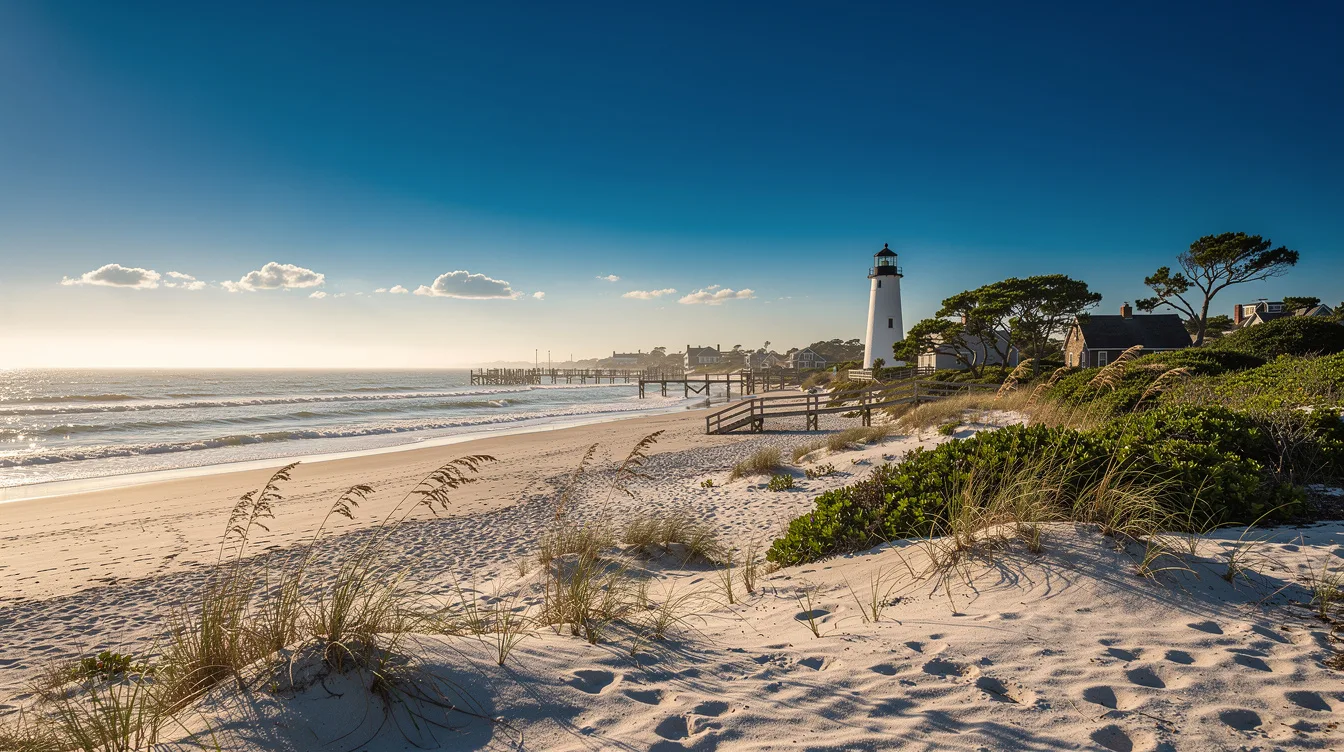
Ocracoke has no bridge to mainland North Carolina, and that inconvenience shapes the entire visit. You arrive by ferry, private boat, or small plane, so the island feels slower before you even reach its village. At the southern end of the Outer Banks, access is part of the experience.
The ferry is the first part of the trip
Most visitors drive to Hatteras Village, then board the vehicle and passenger ferry to Ocracoke. The crossing takes 40 to 60 minutes, depending on conditions and ferry operations.
And when you reach the island’s northern dock, you still have about 25 to 30 minutes on NC-12 before the village appears. The road runs through a narrow barrier island where dunes, marsh, and ocean keep changing places outside your window.
But don’t build a tight schedule around the crossing. Wind, weather, season, and crowds can affect waiting times, so check the North Carolina Ferry System before you leave.
Why the inconvenience works
Ocracoke is less urbanized than the busiest parts of the Outer Banks because cars can’t simply roll across a bridge. The island’s long beaches remain lightly developed, with much of the shore within Cape Hatteras National Seashore.
And that distance creates a different rhythm. You can walk toward the beach with salt on your skin, hear wind moving through the dunes, and spend an afternoon without a resort strip competing for attention.
But this isn’t a place built for constant entertainment. If you want major nightlife or a large resort, the ferry becomes a limitation quickly. If you want a quieter coastal base, it acts more like a filter.
Can you swim there?
Yes. You can swim at Ocracoke’s ocean shoreline.
And the beach still feels open and natural, with dunes behind the sand instead of dense construction. You should expect changing coastal conditions, though, and the island doesn’t promise the convenience of a controlled resort beach.
Silver Lake keeps the village compact
Silver Lake is the small harbor at the center of Ocracoke village, surrounded by boats, restaurants, shops, and the marina. The water catches the late light, while bicycles and golf carts move through streets lined with wooden homes.
And you can spend a full morning here without covering much ground. Walk beside the harbor, pause for seafood, then follow the village toward the lighthouse before the afternoon heat settles over the road.
But Ocracoke remains a small village rather than a polished vacation district. That gives it character, though dining and lodging choices are more limited than in larger Outer Banks communities.
A lighthouse carries the island’s older story
Ocracoke Lighthouse has guided vessels since 1823. You can see the exterior and base at certain seasonal hours, but you can’t climb the tower.
And the island’s history reaches back further than the lighthouse. A pirate was killed near Ocracoke Inlet in 1718, and the surrounding waters helped make the island an important anchorage long before modern tourism.
But the past here isn’t only maritime folklore. The British Cemetery quietly remembers sailors whose bodies reached the island during World War II, while maritime forest, salt marsh, and a sound-side beach are also part of the island.
What can you do without a packed itinerary?
You can swim, fish, kayak, paddle, surf, watch birds, or simply follow the shoreline. A walk with shade and marsh views is a good choice when you want something other than another hour on open sand.
And you can take a boat toward Portsmouth Village when conditions and operators allow. The outing is more isolated and requires planning, which is precisely why it feels different from a standard beach excursion.
Plan around the island’s limits
A stay of 2 to 4 nights gives you time for the village, beach, and at least one water-based outing. From Cedar Island or Swan Quarter, longer paid ferries reach Ocracoke from mainland North Carolina, but those routes require more advance organization.
But don’t treat Ocracoke as an effortless weekend stop from a major airport. The trip rewards patience, and the weather can disrupt the most carefully arranged plan.
And that’s the honest trade-off. The ferry keeps Ocracoke remote, but it also protects the slow pace many visitors came to find. When the boat pulls away from Silver Lake, the water goes quiet around the docks.