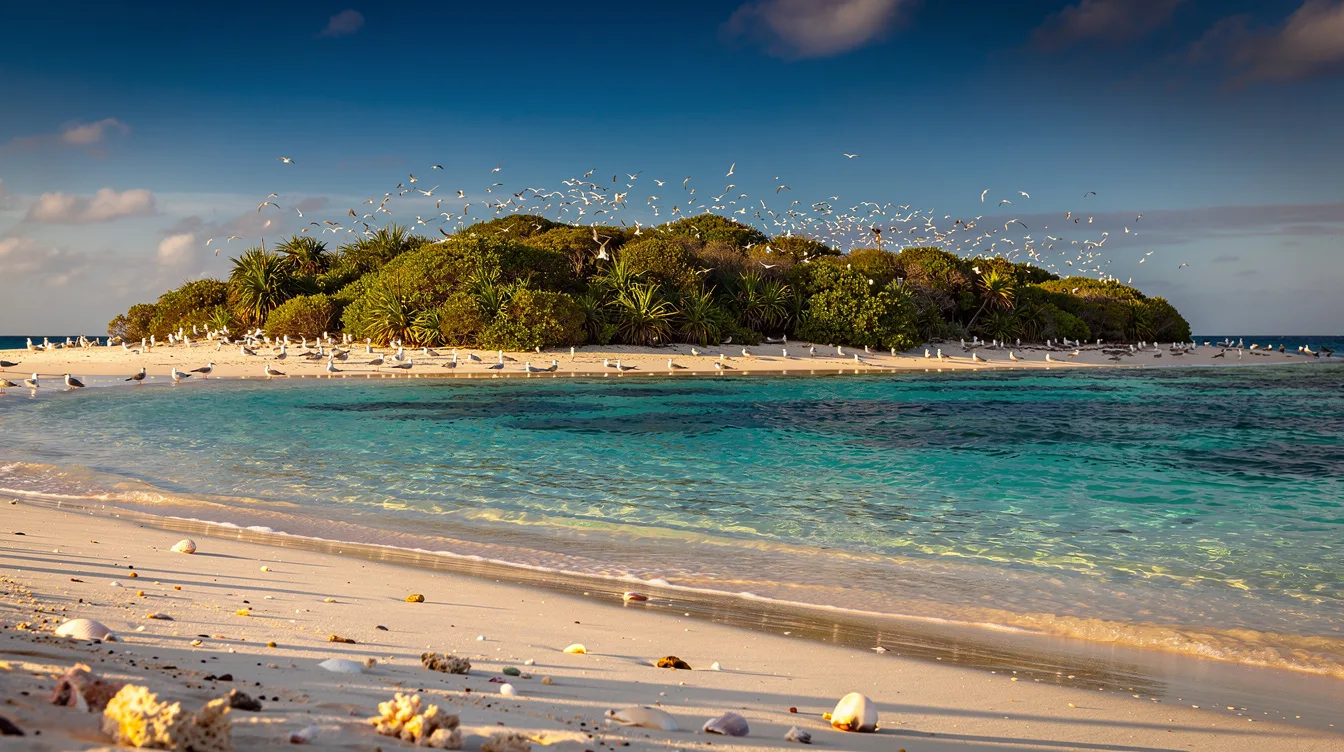
Lady Elliot Island is the southernmost coral cay of Australia’s Great Barrier Reef, and more than 100,000 birds nest here during the summer breeding season. The number matters because this tiny island feels quiet at first, then suddenly fills with wings, calls, and movement. You come for the reef, but the birds may become the trip’s sharpest memory.
And the island’s protection explains that abundance. Lady Elliot sits inside a marine Green Zone, the highest protection level in the Great Barrier Reef Marine Park, so fishing and removing marine life are prohibited in the surrounding waters.
More than 100,000 birds turn a quiet cay into a summer nursery
The seabird colony is the main surprise. Tropical seabirds and wading birds use the island, including boobies, frigatebirds, terns, noddies, and shearwaters. You don’t need a boat to notice them.
Their calls carry across the low vegetation and pale coral ground.
But the island is also an important turtle site. Green and loggerhead turtles come ashore to nest, while hatchlings usually emerge from February to April. If you want to watch young turtles reach the water, that period makes more sense than a winter visit aimed at manta rays.
The Green Zone keeps the reef close and unusually busy
More than 1,200 marine species have been recorded around Lady Elliot. That richness is the payoff for protection, and the reef begins close to shore, which makes snorkeling easier than on islands where every swim requires a boat trip.
And you can see manta rays, reef sharks, tropical fish, and turtles in the same protected waters. The reef’s clarity can feel almost startling in the afternoon sun, but conditions change with tide and weather. Bring patience, because the best encounter may happen after several ordinary minutes.
Can you snorkel straight from the beach?
Yes, and that is my strongest reason to choose this island. Shore snorkeling removes the long transfer that can turn a reef day into a logistics exercise. You walk from the resort, enter the water, and begin looking down through the surface.
But the island gives you other ways to read the reef. Guided snorkeling trips, glass-bottom boat rides, reef walks at low tide, and scuba diving across roughly 20 sites are available. You can also take PADI training on the island, though the small setting means activities depend on weather, tides, and capacity.
A 30-minute flight replaces the ferry
Lady Elliot lies in the Coral Sea. There is no public ferry, so you reach it by small charter plane from Bundaberg, Hervey Bay, Brisbane, Redcliffe, or the Gold Coast.
And the flight from Bundaberg takes about 30 minutes, with views over shallow water, coral, and sandbanks. That short crossing makes the island remote, but not difficult to reach from Queensland’s southeast. You should still plan carefully because flights are tied to the resort and weather can affect the schedule.
Which season fits your reason for going?
Choose June to September for the best chance of manta ray encounters and migrating humpback whales. The season is cooler and drier, which makes time on the water more comfortable. Whale sightings can happen from flights, boats, beaches, and beneath the surface.
But choose February to April if hatchling turtles are your priority. Bird activity builds from September, while November to February brings turtle nesting and warmer, more humid weather. There is no perfect month here, only a better match for what you want to see.
One resort keeps the stay calm, and limits it too
The island has essentially one place to stay, the Lady Elliot Island Eco Resort. There are few shops, no cars, and little nightlife, so the days revolve around the reef, the beach, and the changing light over the water.
And that simplicity is the appeal. You can walk across the small island, hear seabirds beyond the paths, and return to the water without another transfer. But this is a premium trip, and it suits two to four nights better than an open-ended holiday.
By evening, the last aircraft is gone, and the coral shore grows quiet beneath the birds.