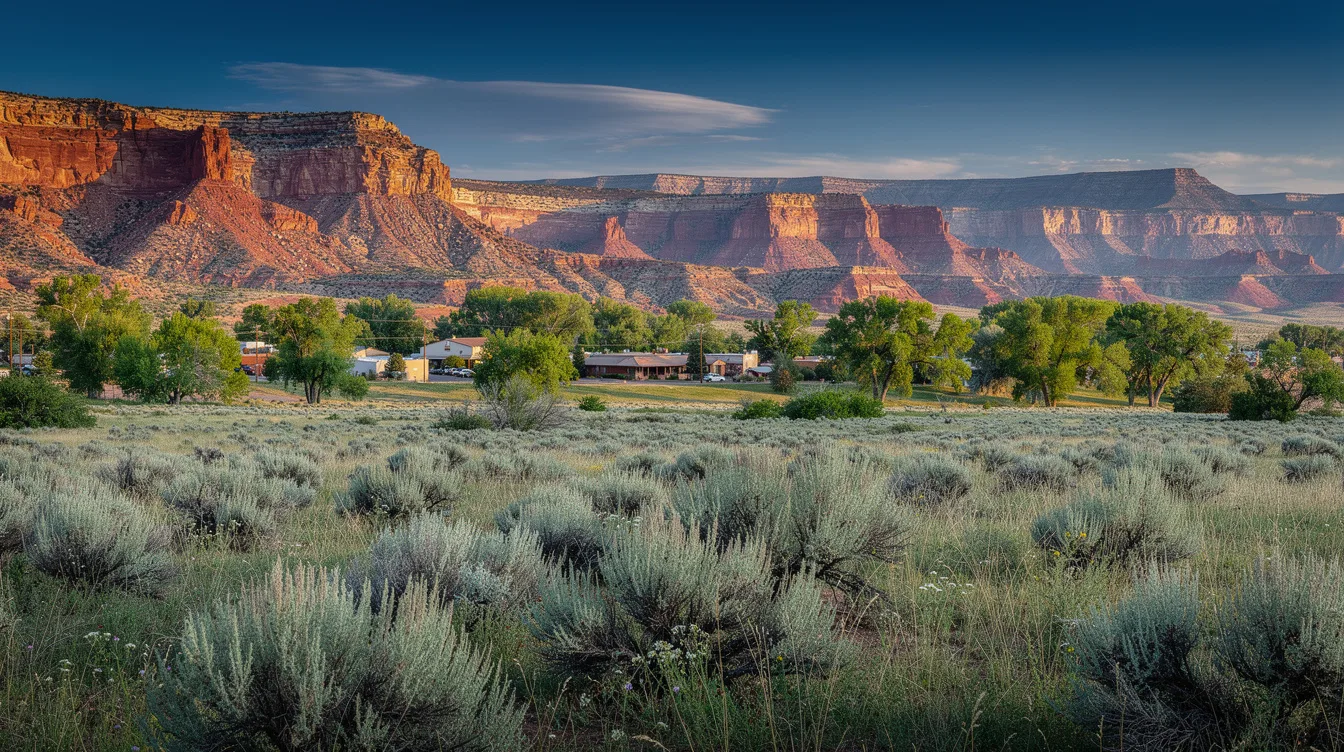
Torrey sits 8.1 miles east of Capitol Reef National Park, and its night sky changed the town’s profile. In 2018, it became Utah’s first International Dark Sky Community. That makes this tiny Wayne County town more than a convenient place to sleep.
It gives you a reason to stay after the red cliffs disappear into darkness.
And the distance matters because Capitol Reef deserves more than a rushed stop. You can use Torrey as a base for 1 to 3 nights in Capitol Reef, then return to a quiet main street instead of moving on after sunset. The town is small, practical, and far removed from city noise.
Why 8.1 miles makes Torrey worth your time
Torrey lies along State Route 24, between Capitol Reef’s red-rock country and the higher ground around Boulder Mountain. The setting changes quickly, so you can spend the afternoon among dry canyons and the evening looking toward darker, cooler mountain country.
But Torrey’s strongest argument is convenience with limits. You get hotels, motels, lodges, rentals, restaurants, cafes, fuel, and small groceries, yet the choices remain limited. Book early in spring, fall, and American holiday periods because the town can’t absorb endless last-minute arrivals.
And if you’re building a Utah road trip, this stop fits naturally between major destinations. Torrey works on routes linking Zion, Bryce Canyon, Scenic Byway 12, Escalante, Moab, Arches, and Canyonlands, although the notes don’t establish travel times between them. That uncertainty is useful: plan your drive from a current map, not a guessed schedule.
Capitol Reef rewards the extra night
Capitol Reef National Park spreads your attention across Fruita, Scenic Drive, Hickman Bridge, Cassidy Arch, Cathedral Valley, and the Waterpocket Fold. You don’t need to force all of that into one hurried day. Staying in Torrey lets you choose a slower rhythm and return to the park when the light changes.
And the red rock looks different after the crowds thin. Highway 24 carries you through the park’s access areas, while nearby routes lead toward Capitol Gorge and Grand Wash. The source doesn’t provide trail lengths or hiking times, so check current park information before you commit to a route.
But this is not a town for constant entertainment. You come here for access, quiet, and the relief of having your room nearby after a long day outside. In my view, that is exactly why Torrey works for travelers who’d rather spend their energy exploring than changing hotels.
Can you see the stars from Torrey?
Yes, Torrey’s 2018 designation recognizes the community’s unusually protected night sky. Capitol Reef also has a dark-sky designation, so you can make stargazing part of the visit instead of treating it as a lucky extra.
And the best part is the contrast. In daylight, the area is all pale stone, red cliffs, and open roads. After dark, the town grows quiet and the sky becomes the main event.
You should step outside away from strong lights, then give your eyes time to adjust.
Spring and fall are the sweet spots
Spring and fall are especially suitable seasons for Torrey and Capitol Reef. Temperatures are generally easier than in the lower desert, while nights can still feel cool enough for a jacket. The air often carries that dry, clean edge you notice immediately after sunset.
But winter brings cold, snow, and reduced services, so it asks for more preparation. Summer can be more manageable than Utah’s very low desert, with cool nights and daytime temperatures commonly around 50 to 90 degrees Fahrenheit. Still, conditions vary, and you shouldn’t treat a mild forecast as a promise.
And if you visit during a busy season, reserve before arriving. Torrey has enough for a comfortable stay, but not enough to make availability irrelevant. That balance is part of its appeal: remote, but not difficult to use.
A small town with a clear purpose
About 6,800 feet above sea level, Torrey feels more like a road-trip base than a conventional vacation town. Its population is reported at roughly 230 to 300 residents, depending on the source and year. You won’t find an urban center here, and that’s the point.
Beyond town, the road rises toward Boulder Mountain and forests associated with Fishlake and Dixie national forests. The scenery shifts from red cliffs and dry canyon walls toward alpine areas, forests, and lakes. That desert-to-mountain contrast gives you more variety without requiring a second base.
But don’t arrive expecting a long list of late-night options. Plan your meals, fuel, and lodging with the town’s small scale in mind. By the time the last light leaves the cliffs, Torrey is quiet enough to hear the night settle over State Route 24.