
A sea-blue Mediterranean bathroom can cost $200-$1,200 for paint, a mirror, a faucet, and textiles, and the best version starts with color before tile. I learned that after making a small bathroom feel colder with too much gray. You’ll get better results by layering forest green, rust, natural oak, and soft light in order.
- Start with a sea-blue bathroom direction
- Measure before choosing bathroom light blue tiles
- Build The Two-Blue Rule for an ocean bathroom aesthetic
- Paint the ceiling for a warmer blue envelope
- Anchor the vanity with warm Mediterranean materials
- Layer bathroom blue accents at three heights
- Choose hand-glazed tile with visible variation
- Build The Three-Height Light Stack
- Hang a mirror that adds a sunlit shape
- Frame the shower with ocean blue
- Apply The Two-Wood Rule to soften tile
- Can an ocean bathroom aesthetic stay practical?
- Style open storage with useful objects
- Layer The Wet-Dry Color Bridge with textiles
- Price the work before choosing the finish
- Edit the room into a timeless Mediterranean finish
1Start with a sea-blue bathroom direction
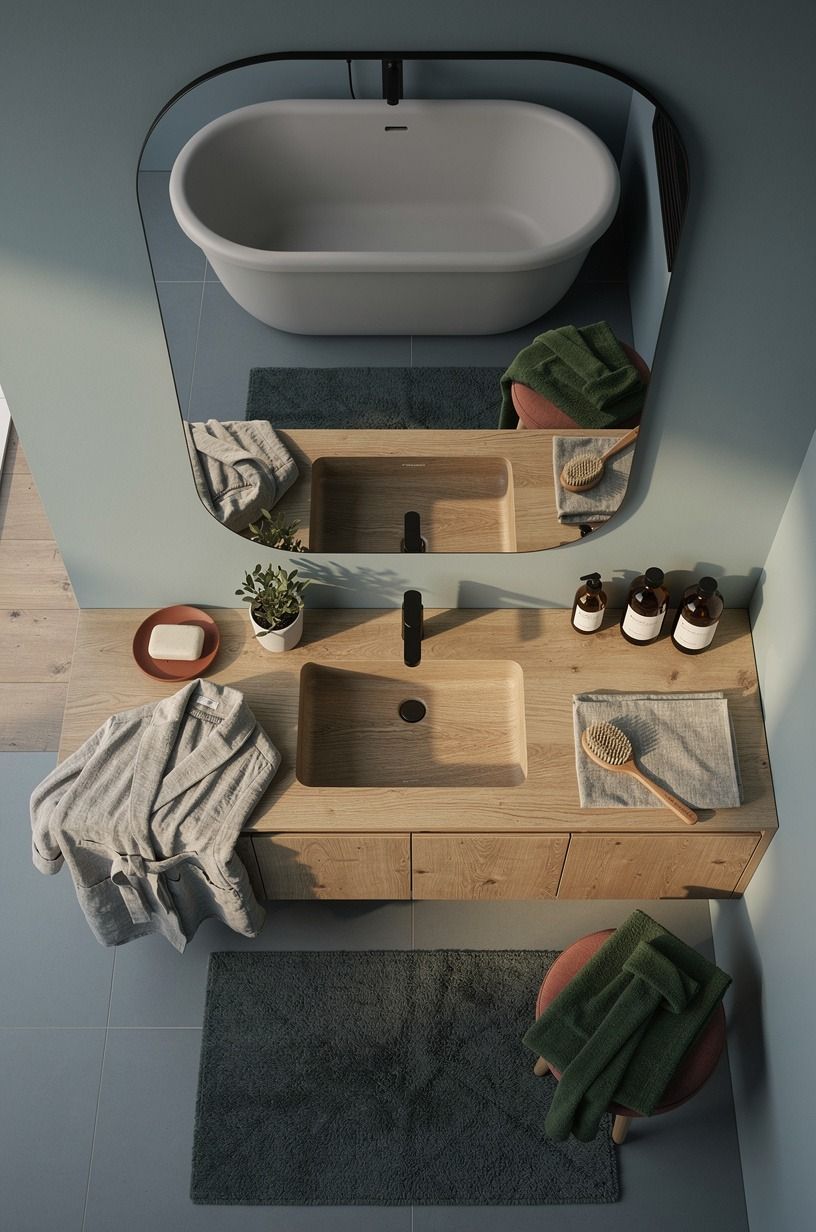
Choose your color before you choose tile. For a calm, earthy room, begin with Farrow & Ball Studio Green and build toward rust through towels, art, or a painted cabinet. If you want a lighter direction, start with a natural oak vanity and keep the floor pale.
Your bathroom should have one dominant forest green, one supporting rust tone, and one warm neutral. That simple order keeps the space harmonious instead of visually noisy.
I’d skip using three equally strong colors because the walls, floor, and vanity will compete for attention. You’ll want the room to feel inviting when you walk in, not like a paint sample display.
For reference, the Mediterranean coastal bathroom guide shows how earthy tones, plaster, wood, and natural texture work together. Keep your first sample near the window and under the vanity light before you commit.
Typical cost by tier (US averages):
2Measure before choosing bathroom light blue tiles
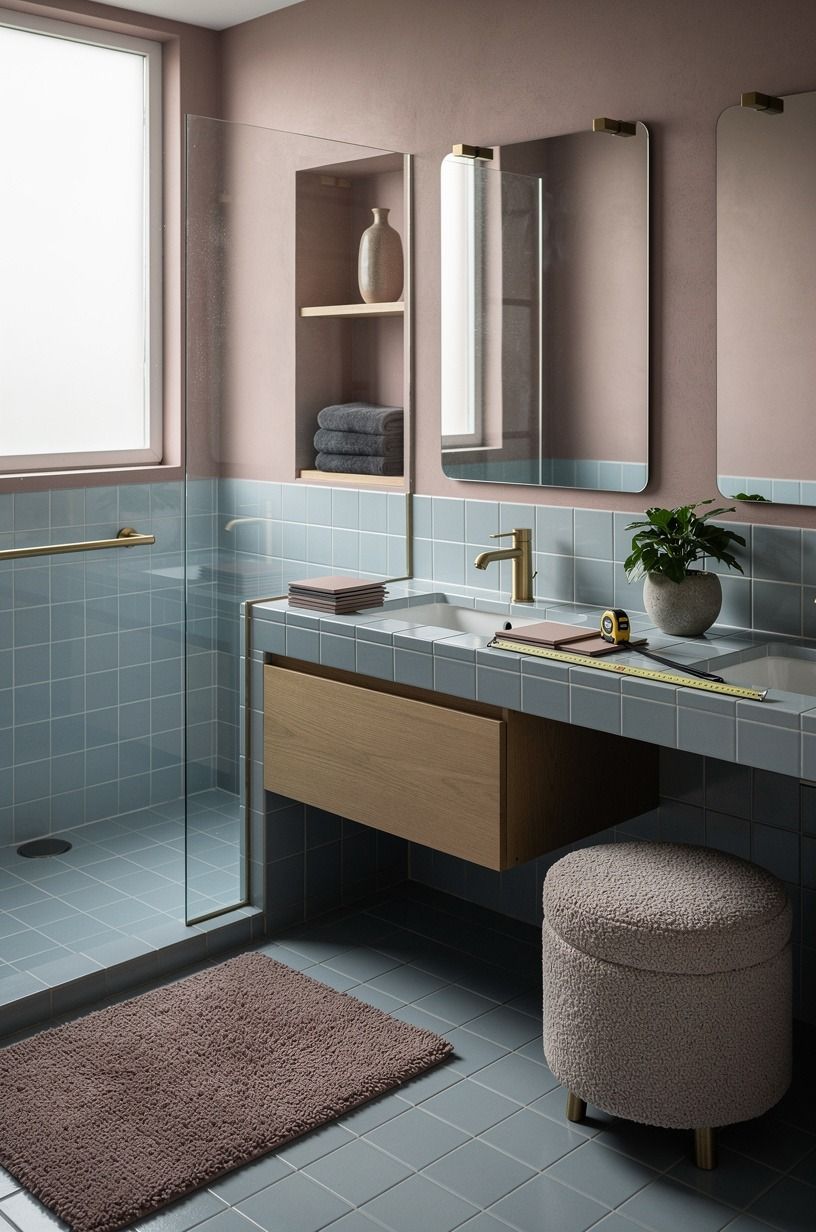
Measure your room before you fall for bathroom light blue tiles.
3Build The Two-Blue Rule for an ocean bathroom aesthetic
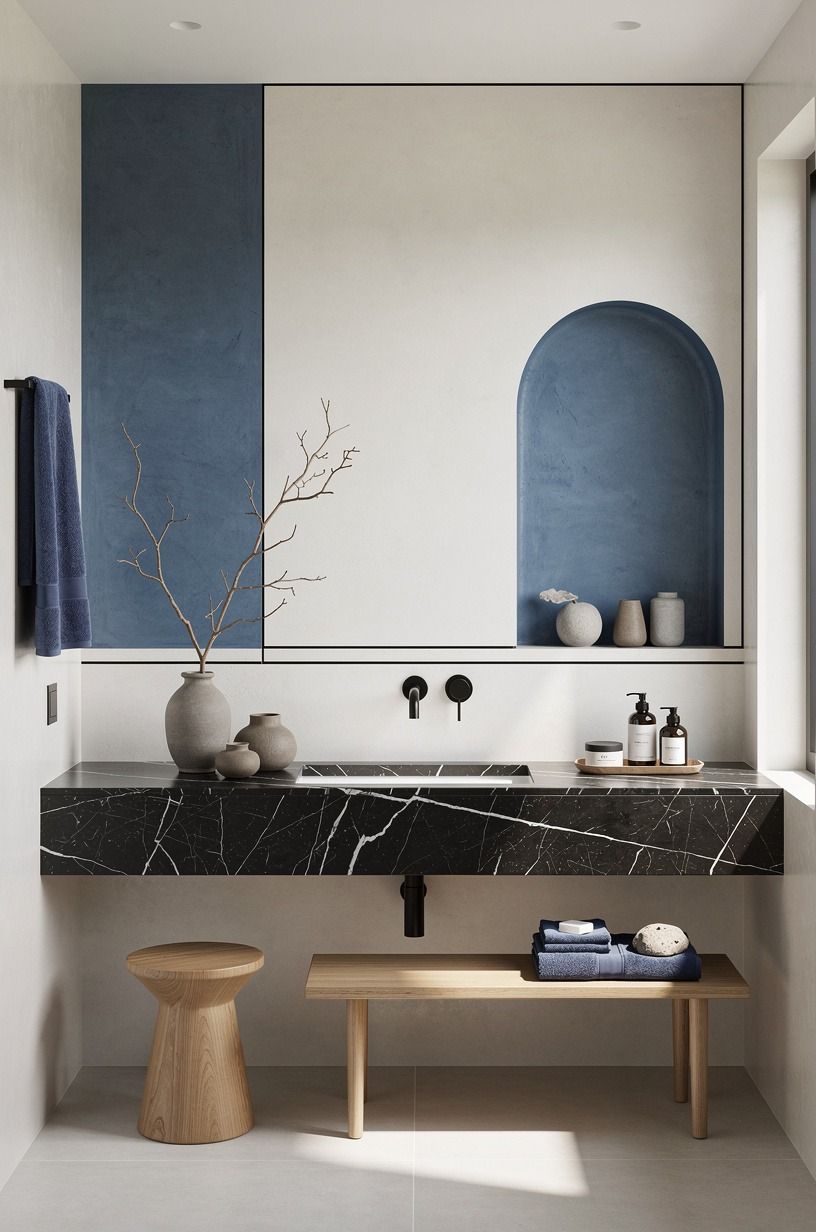
Use warm white for the architecture and camel or black for the movable pieces. That’s the Two-Blue Rule, and it keeps an ocean bathroom aesthetic refined instead of themed. Paint the walls a gentle warm white, then use camel textiles and black accents through the rug, art, or hardware.
A warm wall color such as Benjamin Moore White Dove OC-17 can be the bridge if your bathroom gets weak natural light. I’d avoid pairing stark white with too much black here because the contrast often feels sharp and commercial. Your Mediterranean reference should feel sun-warmed, even on a cloudy morning.
Try this mix: warm white on the walls, camel hand towels, and Nero Marquina marble with white veining around the vanity or backsplash. You’ll get a soft, organic rhythm without covering every surface in shells or stripes. The blue bathroom moments collection is useful when you need examples of darker accents used sparingly.
4Paint the ceiling for a warmer blue envelope
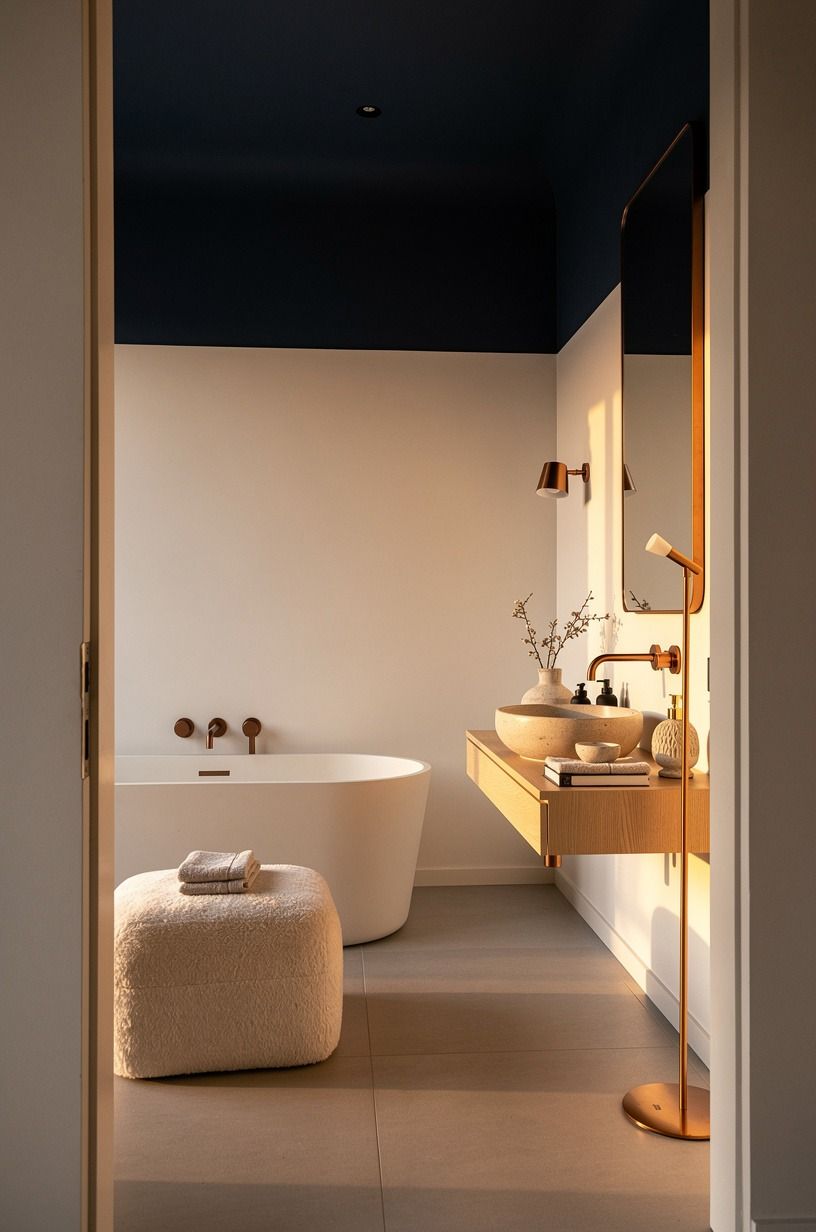
Paint the ceiling when your bathroom feels disconnected from its walls. A midnight blue ceiling can make the room feel intimate and dramatic, while ivory walls keep the envelope from becoming heavy. I prefer a ceiling paired with lighter walls because it gives the room atmosphere without making it feel closed in.
Use Farrow & Ball Hague Blue when the room has enough daylight or strong layered lighting. In a windowless bathroom, that color can feel heavy by evening. You’ll want a soft, washable finish, especially above a shower where steam settles.
And don’t forget the trim. An ivory trim color will look more relaxed than bright white beside a midnight-blue ceiling.
Benjamin Moore White Dove OC-17 works well with copper accents and soft ivory surfaces. If you’re renting, use removable wall color only where permitted, then carry the same blue through textiles and art instead.
The blue bathroom moments collection can help you judge how much contrast your room can handle.
5Anchor the vanity with warm Mediterranean materials
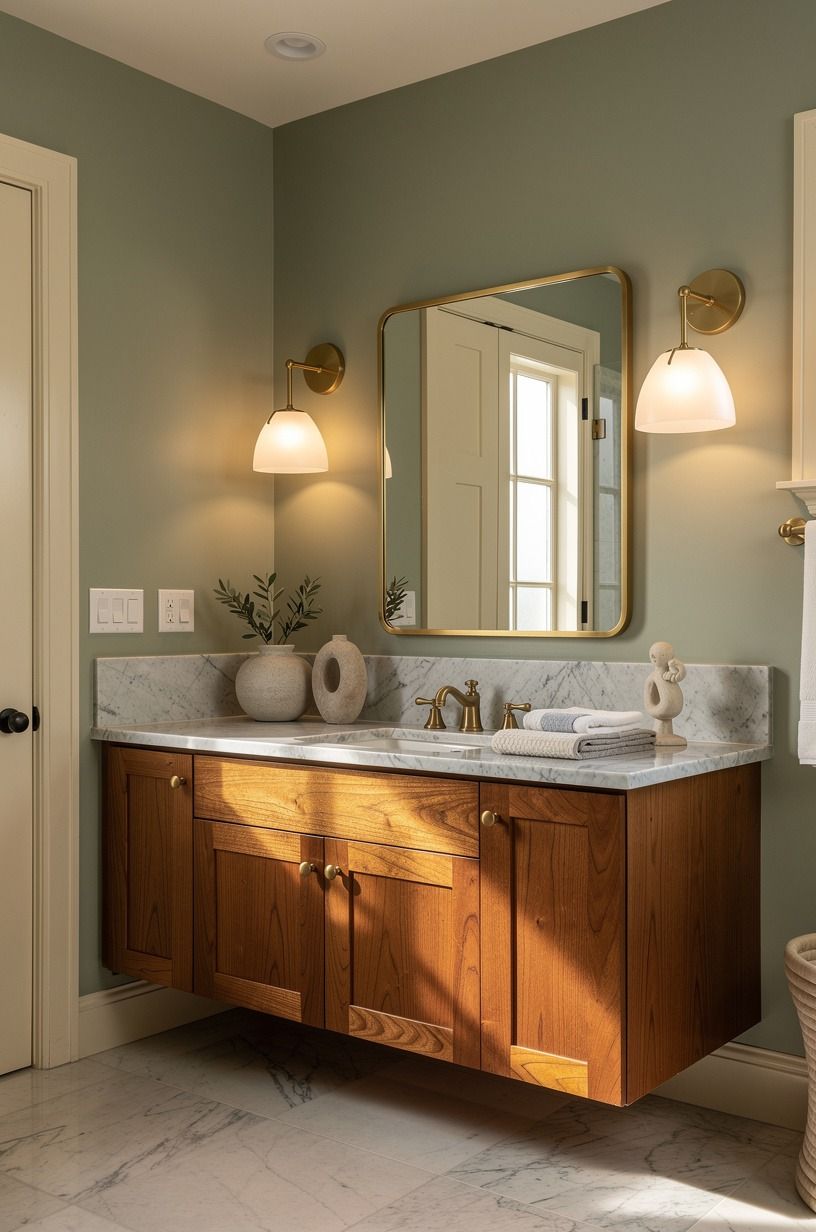
Choose the vanity as the room’s visual anchor. A natural oak cabinet, a sage green base, or a simple wood console can make the bathroom feel earthy and lived-in. I’d choose a wall-mounted cabinet in a small room because the visible floor gives you more air around the toilet and shower.
Look for IKEA HEMNES proportions if you need a practical reference, then soften the cabinet with a Carrara marble top or a woven stool. Your vanity height should land between 32 and 36 inches, depending on the sink style and the people using it.
Skip a glossy white vanity if you’re trying to create a warm Mediterranean mood. It reflects every bulb and makes water spots obvious. A sage green painted surface or natural oak hides small marks better, and you’ll appreciate that on busy mornings.
The Italian villa bathroom ideas offer useful direction for wood, plaster, and old-world proportions.
6Layer bathroom blue accents at three heights
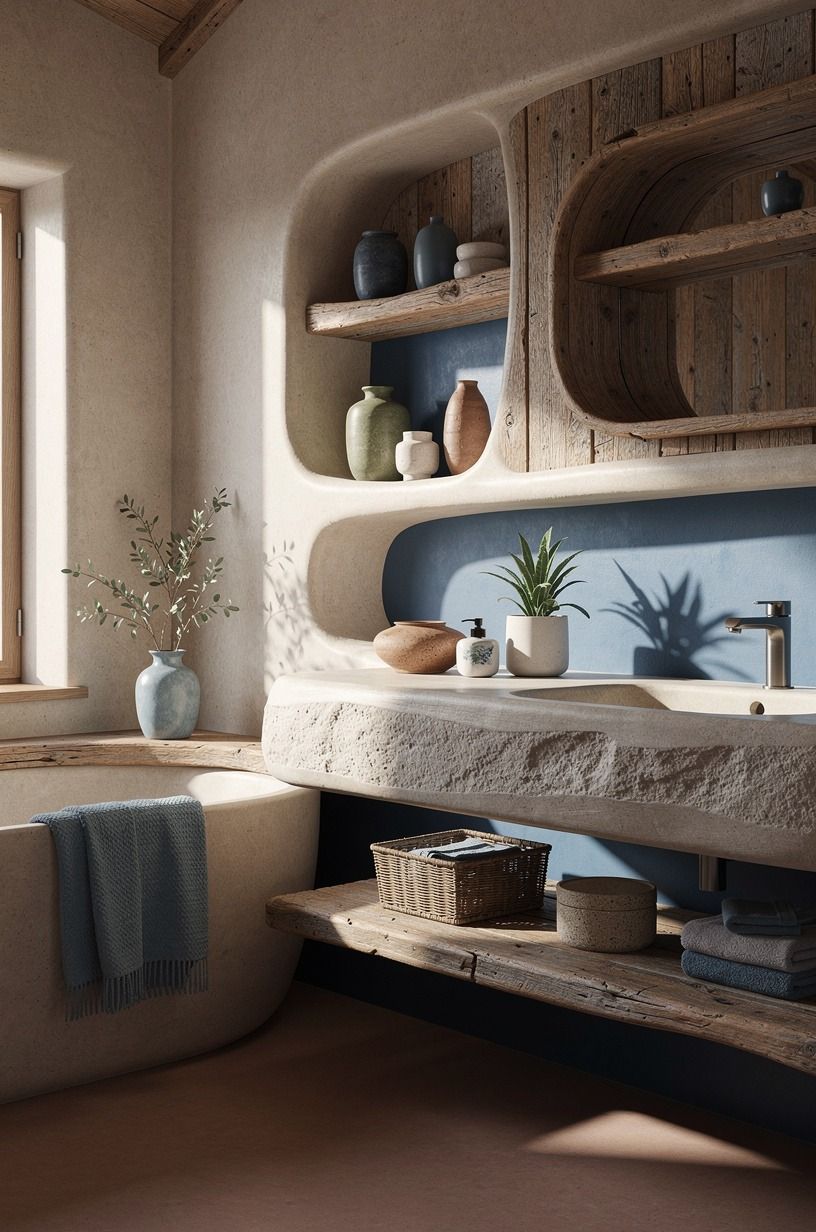
Place terracotta, stone, and olive accents at the floor, eye level, and above the mirror. Use reclaimed weathered teak for a stool or shelf so the room feels grounded rather than overly coordinated.
7Choose hand-glazed tile with visible variation
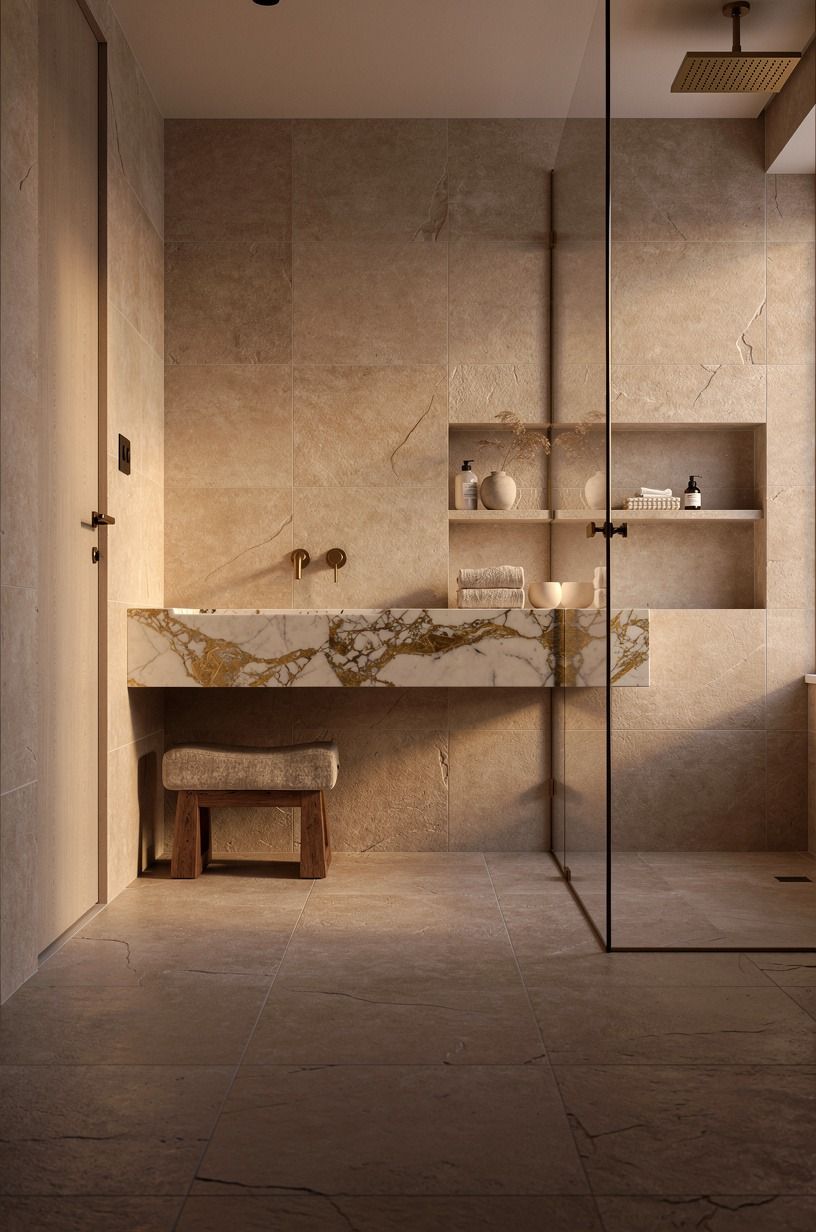
Select tile that changes slightly from piece to piece. Hand-glazed clay zellige has uneven edges, small color shifts, and a softly reflective surface that gives a simple wall character. Pair it with linen textiles and aged brass so the finish feels warm rather than overly polished.
Use it on the backsplash, shower niche, or one full wall instead of every surface. Zellige typically runs $15-$35 per square foot, so a focused application protects your budget. You’ll get more visual impact from a smaller area than from covering the whole bathroom in one expensive finish.
I’d skip perfectly uniform clay-colored porcelain if your goal is an old Mediterranean feel. It’s practical, but it can read flat beside plaster and wood. Read the zellige tile cost guide before you choose grout color, because the wrong grout can erase the handmade effect.
8Build The Three-Height Light Stack
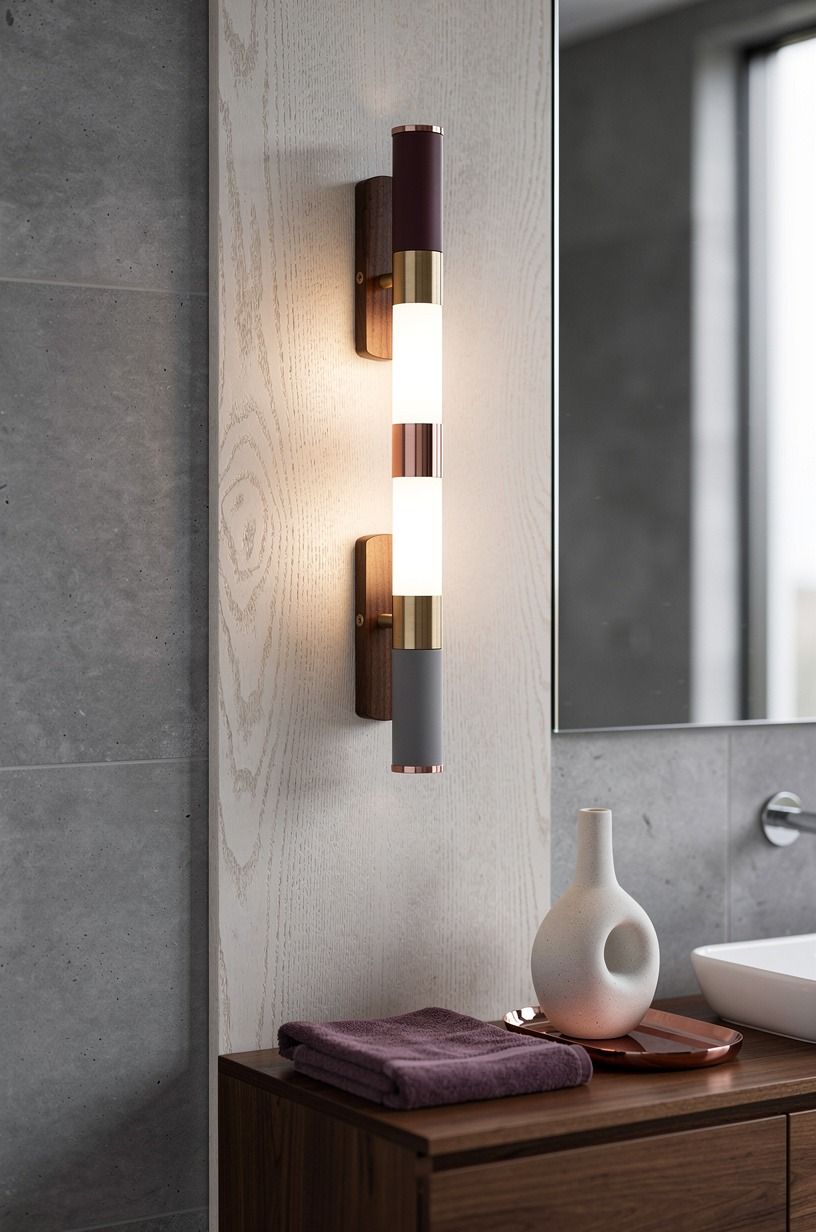
Build The Three-Height Light Stack with a ceiling light, mirror light, and low ambient glow.
9Hang a mirror that adds a sunlit shape
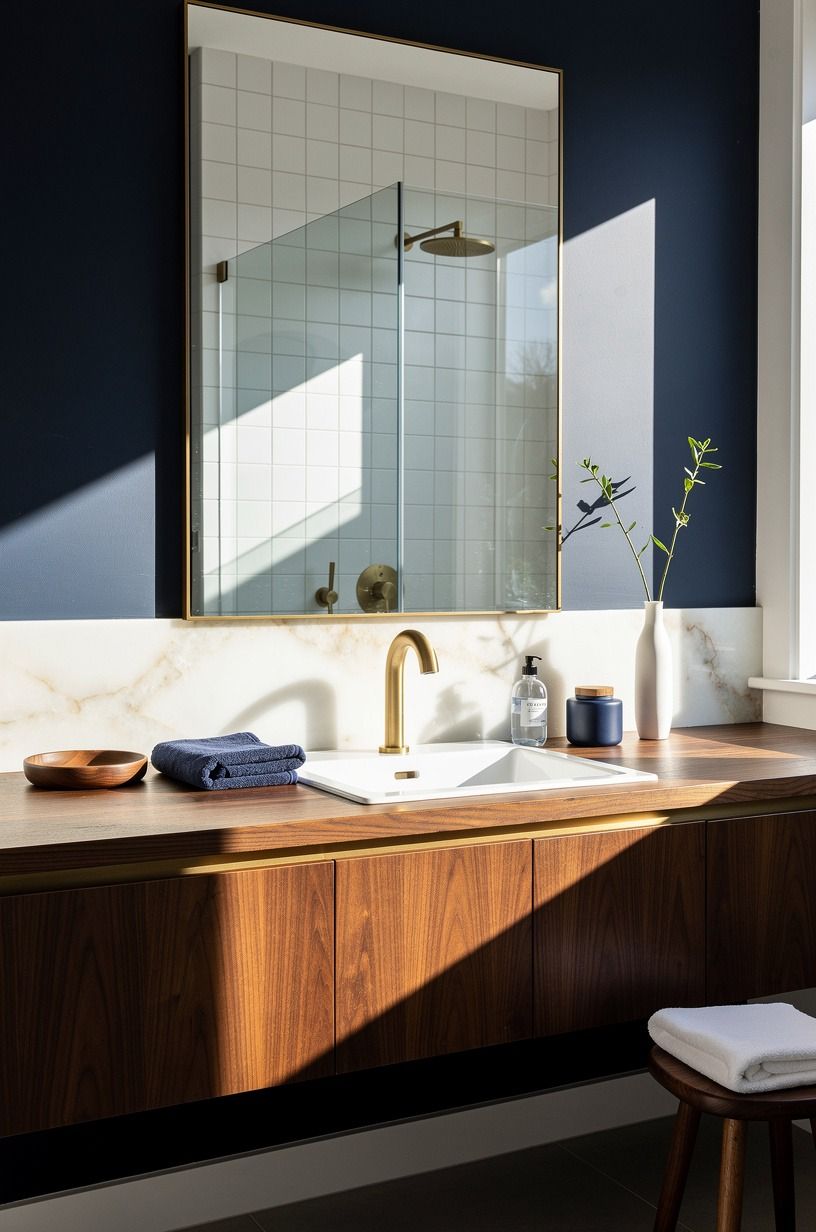
Choose a mirror with a shape that softens the room. A round mirror, arched mirror, or irregular walnut frame will break up the hard lines of a vanity and shower enclosure. Your mirror should be wide enough to relate to the sink without touching the wall edges.
A walnut stool or a rounded walnut frame can repeat the gentle curves without making the bathroom look overly coordinated. I’d skip a frameless rectangle if every other element is square. It’s clean, but it won’t give your room the relaxed character you’re after.
Hang the mirror where it catches daylight or reflects the warmest fixture. That small placement decision can make an airy bathroom feel larger.
You’ll also see the navy-and-white palette twice, once on the wall and once in the mirror, which adds depth without adding clutter. A backlit translucent onyx detail can bring a soft glow around the vanity. The Mediterranean coastal bathroom guide has useful examples of mirrors against textured walls.
10Frame the shower with ocean blue
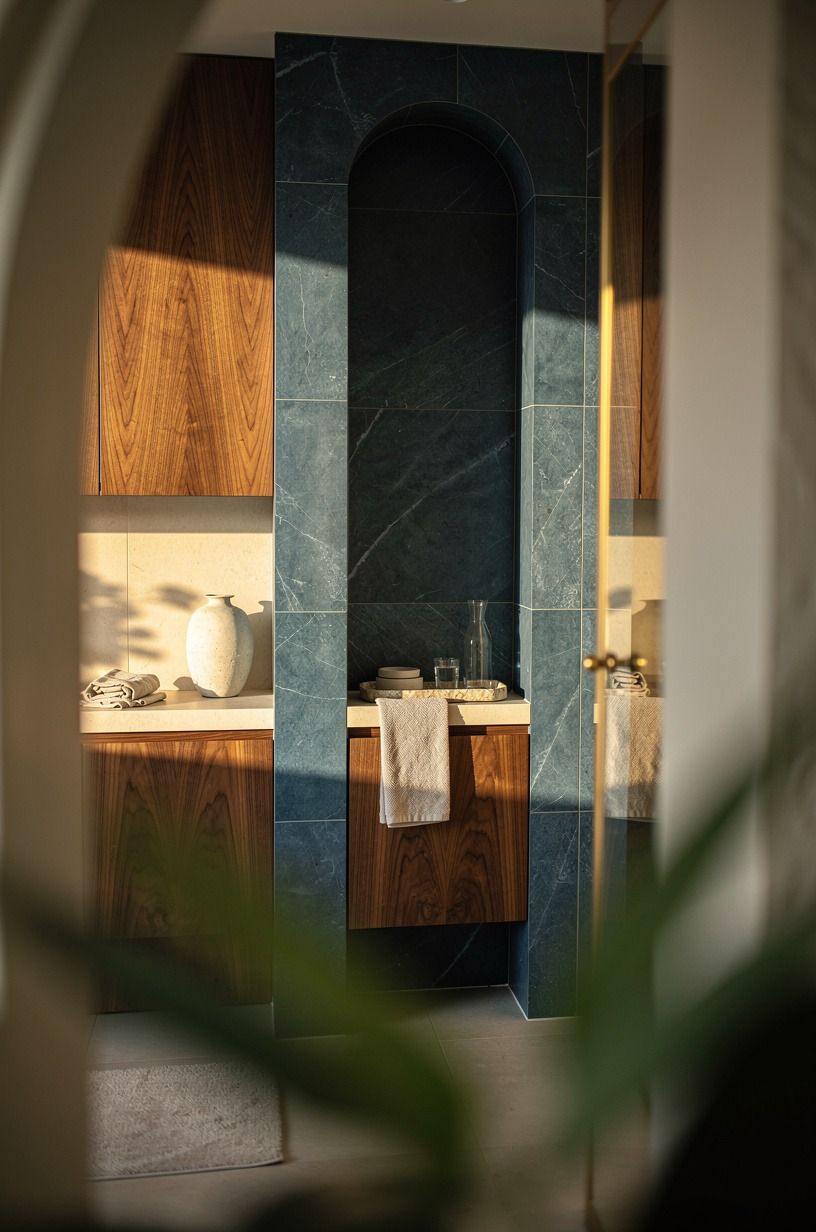
Frame the shower as the strongest green-blue moment in the room. Use emerald tile inside the wet zone, then keep the surrounding walls creamy so the shower feels like a focal point. A narrow vertical tile can make the ceiling appear higher, while a horizontal layout feels broader.
For a comfortable shower, protect the 36 by 36 inch minimum before you plan decorative details. Your shower should still feel easy to enter, turn around in, and clean. I’d choose a simple glass panel over a heavy patterned curtain when the room is tight because transparency keeps the sightline open.
Gold fixtures can warm the emerald tile, but don’t mix too many metals. A brushed brass faucet typically costs $120-$450, so use the finish where your hand touches it most.
Repeat book-matched walnut in the vanity or shelving outside the splash zone. The blue bathroom moments collection shows how a concentrated color zone can feel bold without overwhelming the room.
11Apply The Two-Wood Rule to soften tile
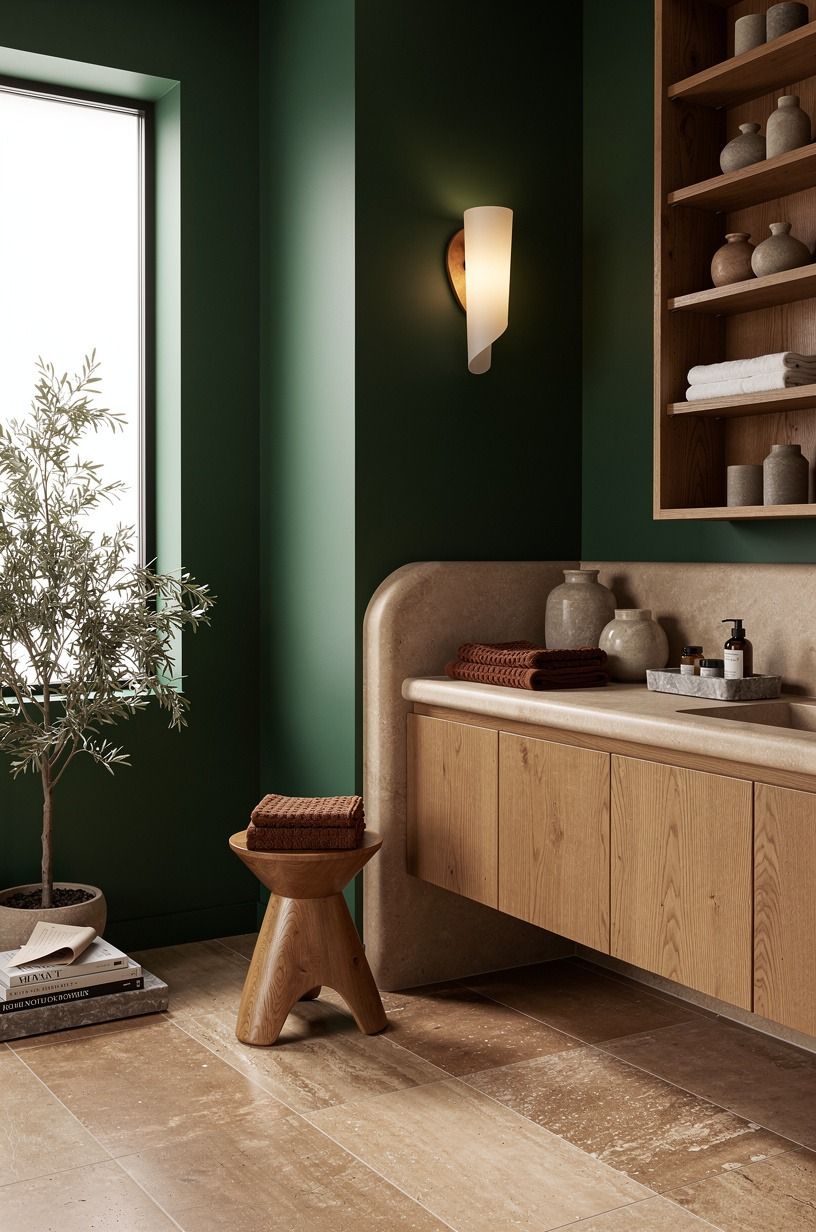
Use one main wood tone and one warm stone accent. That’s the Two-Wood Rule: let natural oak handle the vanity or shelving, then bring in warm travertine for a countertop, ledge, or stool base. A natural oak vanity with warm travertine feels grounded beside forest green and rust.
I’d avoid adding gray driftwood to this palette. It can make the room feel washed out, especially beside earthy green. Your better option is 3/4-inch solid white oak with a clear finish, because the grain adds movement without demanding attention.
And if you’re using a wood stool, keep it away from direct shower spray. Water marks will age it quickly.
Place it beside the vanity with a folded towel or a small ceramic vessel, and you’ll get a useful detail that feels relaxed rather than staged. The Italian villa bathroom ideas offer helpful references for mixing wood without making the room feel rustic.
12Can an ocean bathroom aesthetic stay practical?
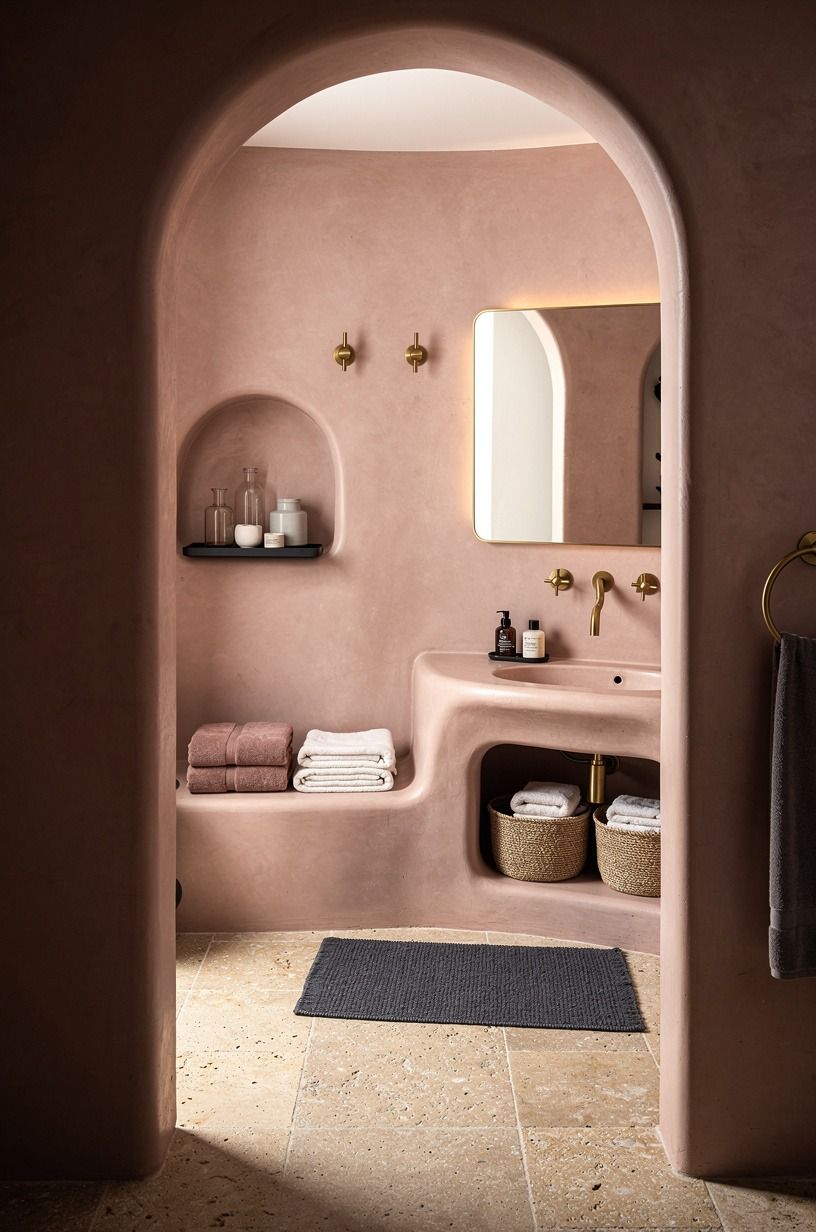
Yes, an ocean bathroom aesthetic can stay practical when you separate the wet and dry materials. Put glazed tile, porcelain, or sealed stone where water lands.
Keep textiles, wood, and woven fibers outside the splash zone. Your room can feel organic without turning maintenance into a daily chore.
Choose dusty rose textiles for a window treatment or cabinet curtain, but don’t use them beside an open shower. I’d skip untreated cane webbing on a vanity in a humid room because the texture can swell and collect dust. Sealed wood and washable cotton will serve you better.
The key is choosing materials that age with some grace. A little patina on unlacquered brass feels inviting; swollen fiberboard does not.
You’ll enjoy the bathroom more when the charming pieces are placed where they can survive. For a broader coastal reference, see the sea-blue Mediterranean bathroom ideas.
13Style open storage with useful objects
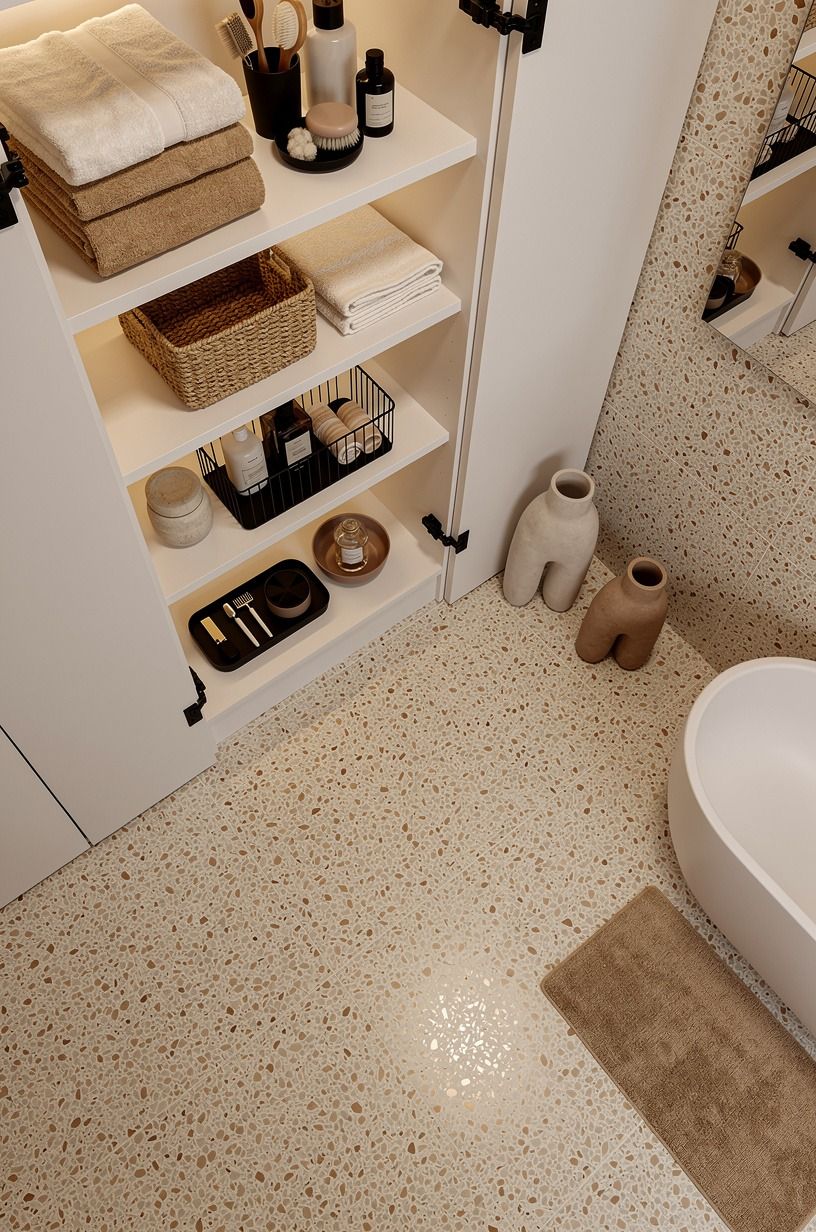
Add open storage only where you can keep it edited. Use a warm white shelf, camel textiles, and one black container, then let an oversized-chip terrazzo surface provide the visual interest.
14Layer The Wet-Dry Color Bridge with textiles
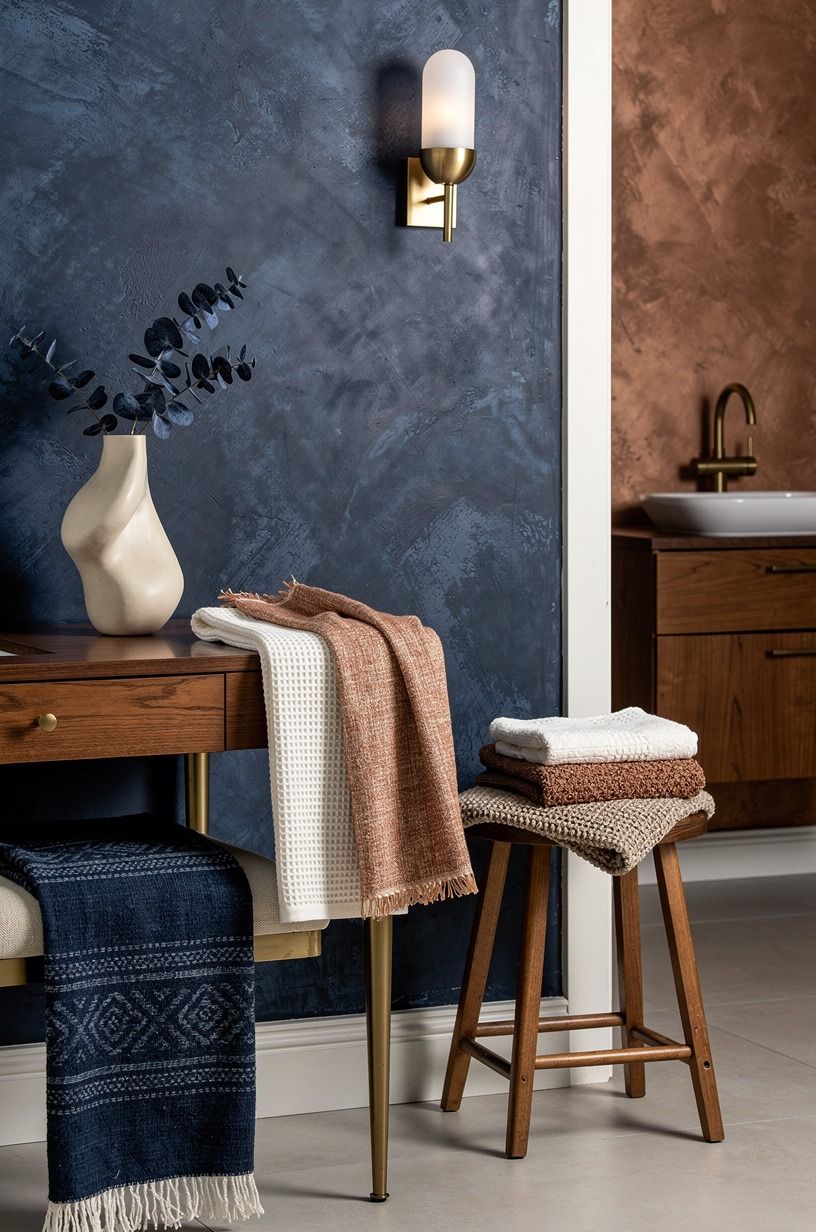
Create The Wet-Dry Color Bridge by repeating the midnight blue in dry textiles. Choose a bath mat, hand towel, and curtain detail that echo the dark tone without matching it exactly. That small connection makes the room feel harmonious from the doorway.
Hand-applied Venetian plaster belongs on the wall rather than the bath mat, but its soft, layered finish can inspire a quiet ivory textile or painted accessory. Choose 600gsm Turkish cotton for a plush towel feel, then balance it with a lighter waffle weave so the room doesn’t become visually heavy.
I’d skip a full matching towel set because it can make the bathroom feel like a hotel supply closet. You’ll get a more inviting result from midnight blue, one copper accent, and warm ivory. The Italian-inspired bathroom collection has useful examples of textiles mixed with aged finishes.
15Price the work before choosing the finish
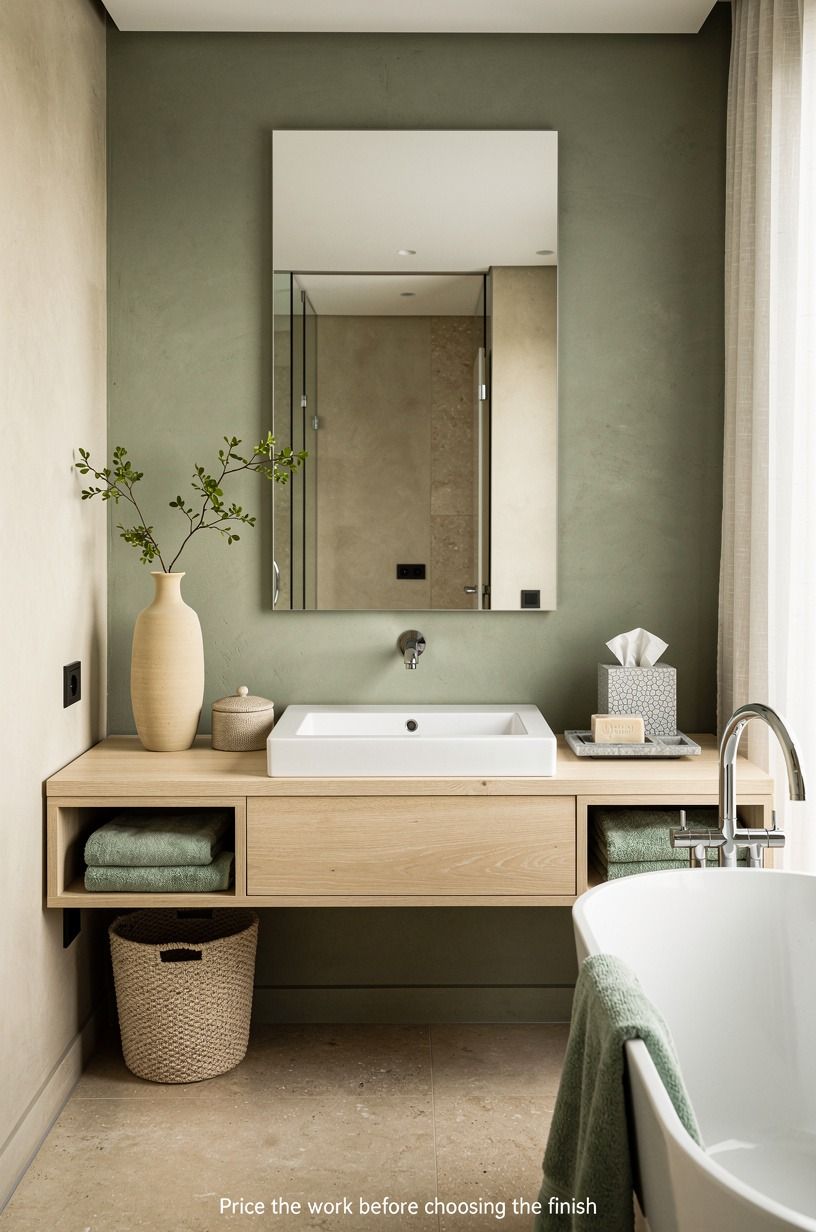
Price the work before you choose a tile pattern.
16Edit the room into a timeless Mediterranean finish
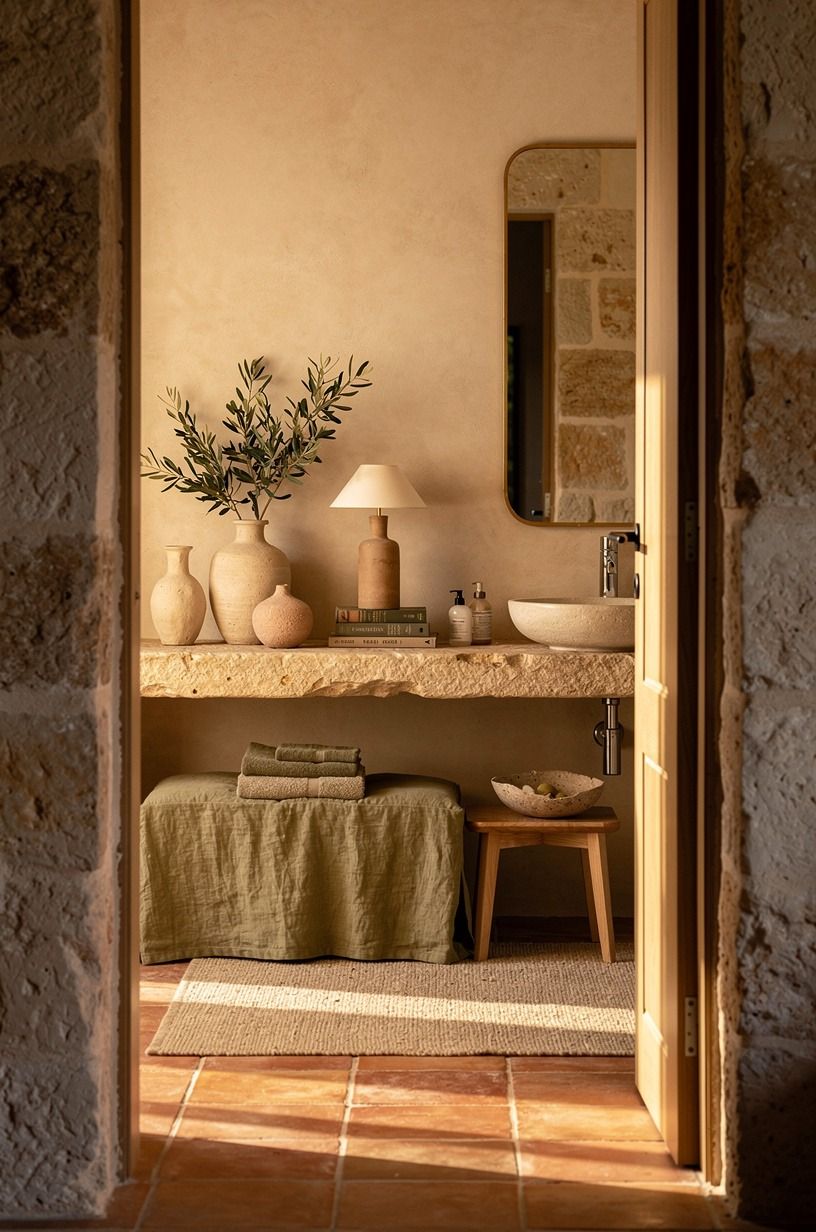
Edit the room after everything is installed. Remove one object, step back, and see whether the palette still feels rich. A timeless bathroom usually has fewer competing accents, stronger material contrast, and one memorable surface.
Keep the terracotta wall, stone surface, and olive accents if they’re doing the work. Remove extra shells, signs, and repeated wave motifs. I’d choose one washed Belgian linen accent over a shelf full of coastal decorations because the single textile feels more refined and personal.
And step outside the room before you judge the final balance. Your eye will catch clutter after a short break that you’ve stopped seeing in person.
You’ll know the room is finished when the palette feels calm, the storage works, and the light lets the terracotta and olive shift throughout the day. The Mediterranean coastal bathroom guide is a useful final check for proportion and restraint.
What I’d Keep and What I’d Skip in This Look
I’ve changed my mind about sea-blue bathrooms more than once. At first, I thought the safest route was pale blue tile, white fixtures, and a few nautical accessories. That combination is easy to understand, but it often feels chilly.
The room has a theme, yet it doesn’t have much life. I’d rather see one deep blue wall, a worn oak vanity, and a brass faucet that’s allowed to develop a soft patina.
The first mistake I made was choosing tile before checking the light. A sample looked airy in the showroom and turned gray beside a north-facing window.
That was the expensive lesson! The second was using too much white.
White grout, white trim, and white fixtures swallowed the warmth I was trying to build. The better move was adding a sandy paint color and repeating it in one woven basket.
I also learned that Mediterranean style isn’t about collecting obvious references. It’s about temperature, texture, and restraint.
You want the room to feel warm when your feet hit the floor, calming when the lights come on, and organic enough that a few water marks don’t ruin the illusion. That’s why I’d spend on lighting before another decorative object.
If you’re deciding between a full tile renovation and a smaller refresh, start with the surface that controls the room from the doorway. For some bathrooms, that’s paint. For others, it’s the vanity or mirror.
Your budget doesn’t need to cover every idea here. It needs to support one strong decision, then let the quieter materials make it feel settled.
The Questions I Get Asked Most
What is the best Sea-Blue Mediterranean Bathroom Ideas, From Azure to Deep Ocean for a small bathroom?
The best choice is a pale blue wall with one darker accent, such as Sherwin-Williams Sea Salt SW 6204 with a deep blue towel. A wall-mounted IKEA vanity keeps the floor visible, which gives your small bathroom a more airy and calming feel. I’d test the color in both daylight and evening light before you buy tile.
Where can I buy Sea-Blue Mediterranean Bathroom Ideas, From Azure to Deep Ocean pieces on a budget?
Look at IKEA, Wayfair, and Target for mirrors, towels, and storage. You can also check Facebook Marketplace or a thrift shop for wood stools and ceramic pieces.
Your best budget finds are often the objects with useful texture, not matching coastal sets. I’d spend more time looking for one strong mirror than several small accessories.
How much does a Sea-Blue Mediterranean Bathroom Ideas, From Azure to Deep Ocean makeover cost?
A small refresh typically falls within the $200-$1,200 budget tier for paint, a mirror, a faucet, and textiles. Free changes include editing clutter, rearranging storage, and moving art.
A new vanity and partial tile project moves closer to the $3,000-$9,000 mid-range. If you’re doing the work yourself, remember to price tools and disposal too.
Can I create a Sea-Blue Mediterranean Bathroom Ideas, From Azure to Deep Ocean on a budget?
Yes, and you can start with paint, a secondhand mirror, and blue textiles. Paint the vanity if its structure works, change the hardware, and use one ceramic accent. Those affordable moves can make your bathroom feel warm and inviting before you replace any tile.
I’d change the lighting before spending on decorative objects.
Is a Sea-Blue Mediterranean Bathroom Ideas, From Azure to Deep Ocean worth it in a small space?
Yes, because a small room gives your color choices more impact. Use one dominant blue, keep the floor light, and protect the 21-inch toilet clearance. Your compact layout can feel peaceful when the finishes are repeated instead of scattered.
I’d choose one memorable tile zone rather than trying to decorate every wall.
Is Sea-Blue Mediterranean Bathroom Ideas, From Azure to Deep Ocean a good idea for a rental?
Yes. Use removable art, a tension rod, washable blue textiles, and peel-and-stick panels where your lease allows them.
Your safest changes are the ones that leave tile and plumbing alone. A blue mirror frame can bring more character than a permanent renovation.
You’ll still get the Mediterranean feeling through color, texture, and warm light.
Where I’d Start First
If I had to pick one step, I’d start with the wall color. You can’t layer warmth onto a cold blue, and every tile, towel, and lamp will fight the room if the undertone is wrong.
Test Sea Salt beside your light first. Then let the deep ocean accents follow.