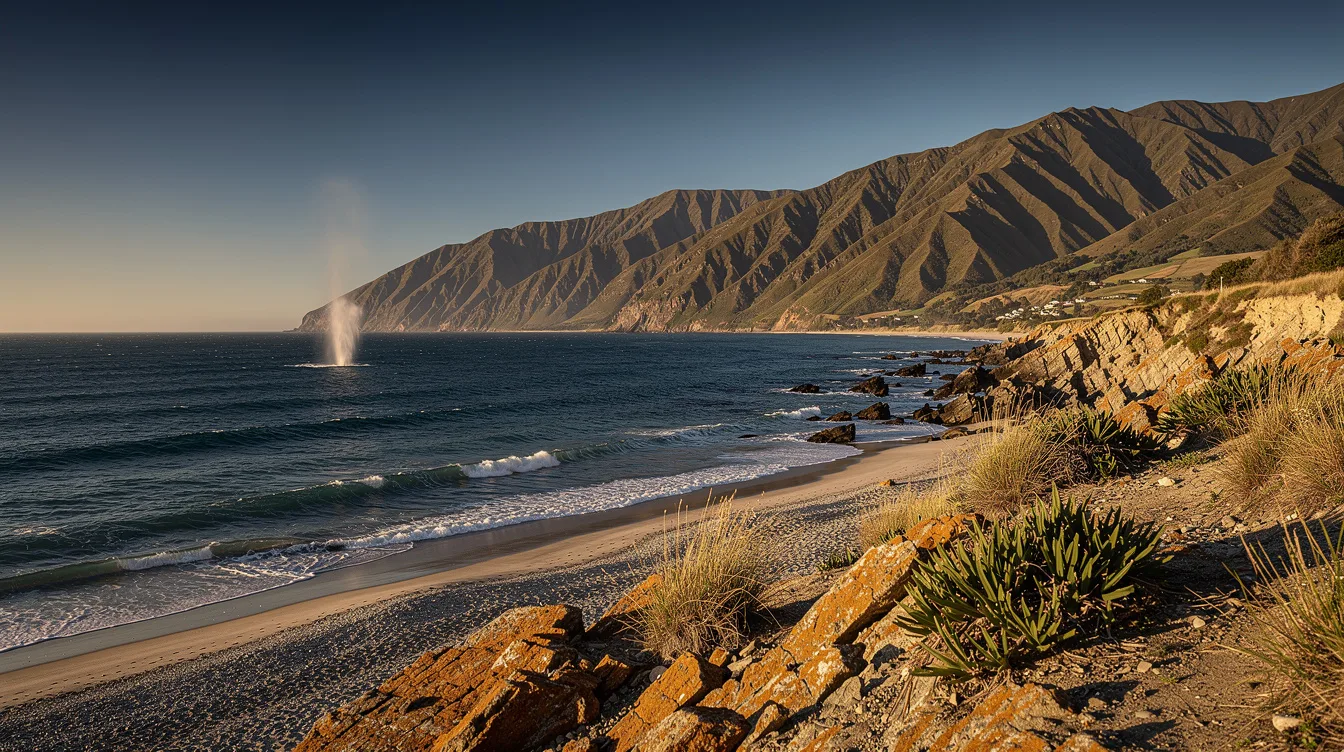
Kaikōura is overlooked by many tourists, yet sperm whales feed just 0.6 miles offshore. That closeness changes the whole experience. You don’t spend hours crossing empty water before anything happens.
The coast, mountains, and wildlife arrive together, which is why I’d make this more than a quick roadside stop.
And the reason is hidden beneath the surface. The Kaikōura Canyon begins about 0.6 miles from shore, dropping from roughly 98 feet to 1,969 feet before reaching much greater depths. That steep underwater wall concentrates marine life, so sperm whales remain near the coast throughout the year.
Why the whales stay so close to shore
The canyon is the central fact here, and it makes Kaikōura different from many whale-watching destinations. Deep water usually means a long boat ride. Here, the seafloor falls away almost immediately, so your boat can reach productive water without losing half the morning.
But the setting is just as memorable from land. The Seaward Kaikōura Range rises behind the coast while salt wind moves across the water. You can watch the horizon from the peninsula and still feel the mountains at your back.
And the town is small enough to keep the experience personal. Kaikōura had about 2,350 permanent residents in June 2025, according to the supplied research. It feels active around departures, but quiet again when boats return and the harbor settles.
Read more about the wider New Zealand coast before you plan the route. Kaikōura works best as a deliberate pause, not as scenery glimpsed through a car window.
What you can see beyond sperm whales
Sperm whales are present year-round, and the advertised sighting rate is about 95 percent. That figure doesn’t guarantee a perfect trip, because ocean conditions still decide whether boats leave. If you want the strongest odds, build flexibility into your schedule.
But the calendar brings different possibilities. Humpback whales are more frequent in June and July, while orcas can appear from December through March. You may also see dolphins, fur seals, and albatrosses, though wildlife never follows a script for your camera.
And you don’t have to choose a boat if motion makes you miserable. Scenic flights by plane or helicopter offer another view of the whales, coast, and mountains. The water sounds distant from above, while the coastline becomes a long pale edge beneath you.
Can you explore Kaikōura without boarding a boat?
Yes. The Kaikōura Peninsula Walkway follows the coast near cliffs, ocean views, and fur seals around Point Kean. You can make it part of your arrival day, then keep the next morning free for a whale excursion.
But don’t expect a resort-style waterfront with endless diversions. The appeal is concentrated, which I think is the point. Walk slowly, watch the seals from a respectful distance, and let the cold sea air replace the usual sightseeing rush.
And kayaking gives you another way to meet the coast. Guided outings can include dolphin watching or supervised swimming with dolphins, depending on the provider and conditions. That last qualification matters, because the sea can cancel your plans without apology.
The local food follows the same logic. Kaikōura means roughly “meal of crayfish,” and crayfish remains part of the area’s identity. Order it if your budget allows, but expect a seafood experience shaped by a small coastal town rather than a polished dining district.
How long should you stay in Kaikōura?
One night is the minimum I’d recommend. Drive in, walk the peninsula, eat seafood, and take the whale trip the next day. A rushed day trip can work, but it leaves no room when weather moves a departure.
And Kaikōura is about 111.8 miles from Christchurch, or roughly 2 hours 20 minutes to 3 hours by road. It is remote enough to feel like a change of scene, but not difficult to add to a South Island itinerary.
Two nights give you room for kayaking, a scenic flight, or a second chance on the water. The town also connects naturally with Blenheim and Picton, and the Coastal Pacific train links Christchurch with Picton along the coast.
But the trade-off is simple: marine wildlife controls the timetable. When the sea turns rough, boats may be delayed or canceled. Keep your final evening flexible, then stand near the shore as the mountains darken and the last white wake disappears.