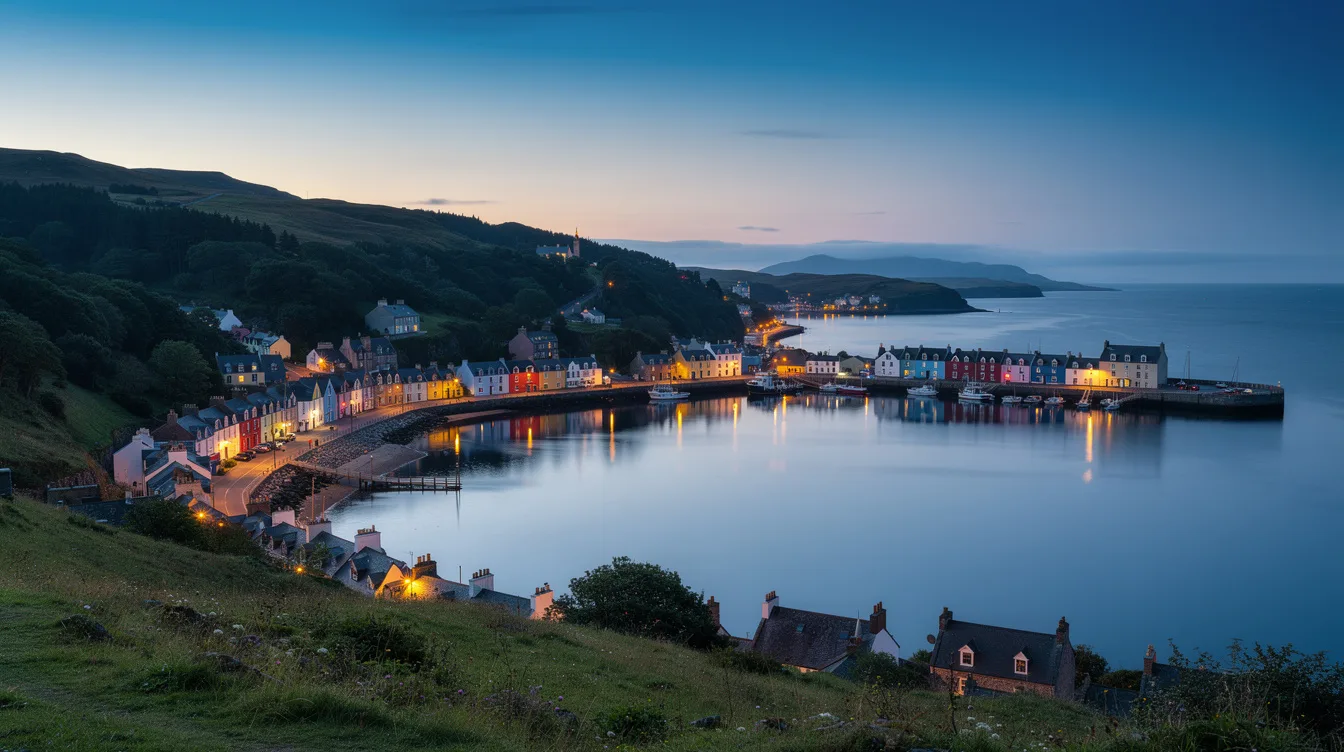
Tobermory was established in 1788 as a planned fishing port, and its colorful waterfront later appeared in Balamory. That history gives the Isle of Mull’s main town a pleasing tension: carefully laid out, yet softened by rain, boats, and changing light.
And the first view earns your attention. Pastel façades curve around a sheltered natural harbor, where the water carries the quiet slap of small boats against the quay. You can walk the waterfront quickly, but you’ll want to slow down.
Why Tobermory feels bigger than its size
And with about 1,045 residents recorded in 2022, Tobermory remains a small place with an outsized role on Mull. It has the island’s main concentration of places to stay, restaurants, shops, and everyday services.
But it doesn’t feel like a purely practical base. The harbor gives the town its rhythm, while pastel buildings catch the low Scottish light after a shower. You get convenience here, along with the sense that the weather is still in charge.
The waterfront is the reason to linger
The colorful harbor is Tobermory’s visual signature, and it works best when you walk without a tight schedule. Look across the water, then back toward the façades, where the changing sky keeps rearranging the scene.
And the town is lively without becoming loud. You can spend an hour following the quay, listening to gulls and boat lines, then find a quieter stretch when the day-trippers move on. That contrast is the town’s real charm.
Can you reach Tobermory without a car?
Yes. From Oban, the CalMac ferry takes about 50 minutes to Craignure on Mull, and a bus can continue toward Tobermory. You won’t have the same freedom to stop along the island’s narrower roads, but the basic journey is straightforward.
And if you’re driving, reserve the ferry ahead during the busier months. From Craignure, allow about 30 to 40 minutes by road to Tobermory, with single-track sections and passing places requiring patience.
Use the town as your base for Mull
Tobermory is more useful than its postcard appearance suggests. From here, you can plan wildlife outings focused on marine life or white-tailed eagles, then return to town before the evening weather settles over the Sound of Mull.
But Mull rewards visitors who leave the harbor. The Rubha nan Gall lighthouse, Baliscate standing stones, North Mull’s scenic roads, and the beaches beyond town give you reasons to keep exploring. The roads are narrow, so unhurried driving is part of the experience.
What can you do when the weather turns?
The Tobermory Distillery is the obvious indoor choice, with visits reserved online. You can also settle into the town’s food and drink spots, where a wet afternoon becomes less of a problem once rain taps against the windows.
And Iona makes a possible full-day excursion if you have extra time on Mull. Tobermory itself, though, is worth more than a quick photograph. The harbor changes character after a shower, when the painted fronts look sharper against the gray.
When should you plan the trip?
The strongest season is May to September, when longer days help with boat trips, walking, and wildlife watching. June through August brings the most activity, which also means greater pressure on ferries and accommodation.
But April, May, September, and October can feel calmer, with green scenery and sometimes gentler prices. Winter remains possible, although shorter days, seasonal closures, and difficult weather can complicate travel.
There is also an old Armada treasure story attached to the bay, but treat the gold claims cautiously. Tobermory’s real reward is simpler: the last light on the harbor, the sound of rain beginning, and painted buildings glowing before evening.