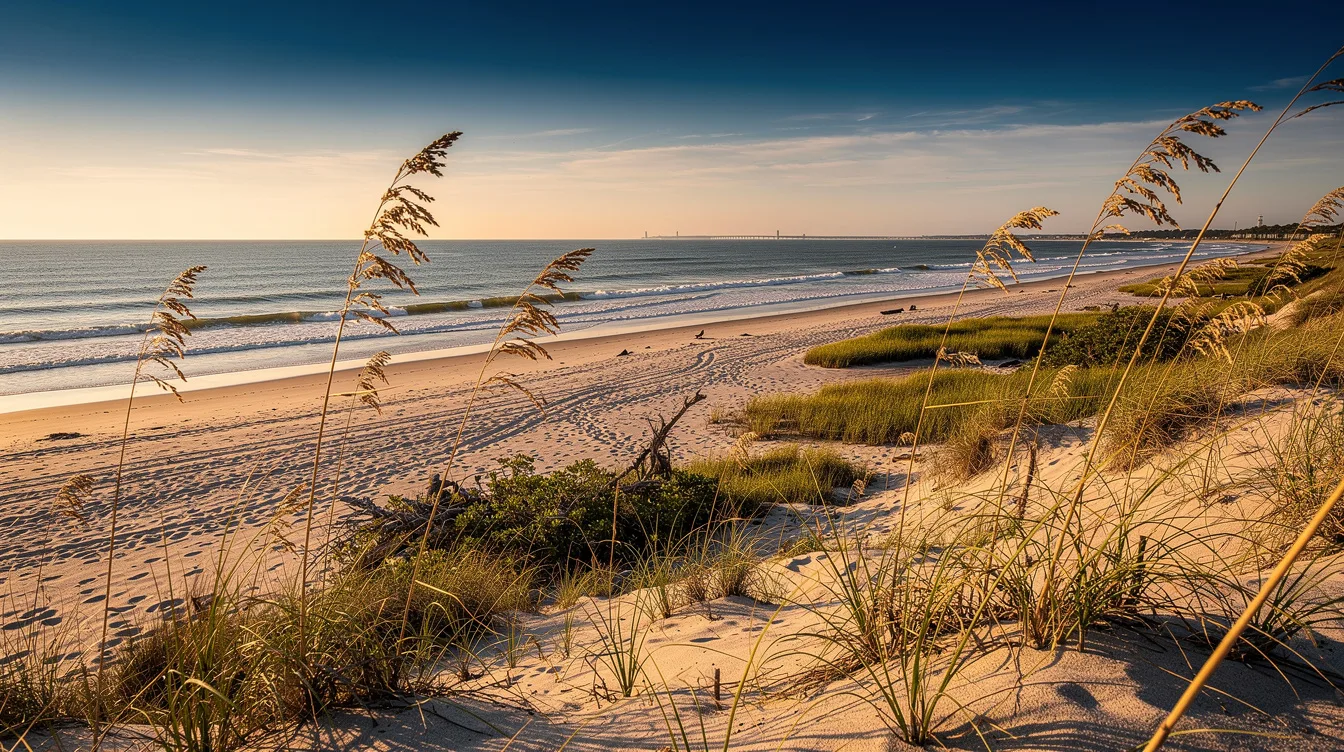
Tybee Island sits 18 miles east of Savannah, but its strangest claim lies offshore. In 1958, a U.S. Air Force plane accidentally dropped a nuclear bomb near the island, and it was never recovered.
That story gives this small Georgia barrier island an unusual edge. You can spend the morning near the water and still be thinking about what may lie beneath the shifting sand and tides.
But Tybee isn’t a military curiosity with a beach attached. It’s a relaxed coastal town with seafood restaurants, marshes, and a pace that makes Savannah feel busier than it did an hour earlier.
The 1958 bomb story is real, but Tybee feels ordinary
On February 5, 1958, a B-47 bomber collided with an F-86 fighter during training exercises. The bomber dropped a Mark 15 hydrogen bomb into the sea before landing at Hunter Air Force Base.
And the weapon has never been recovered. The Air Force has said the bomb lacked a nuclear capsule and posed no serious threat, while other reports have questioned that conclusion.
A private search in 2004 reported unusual magnetometer readings and high radiation near Wassaw Sound. But an Air Force search later attributed the readings to naturally radioactive monazite, leaving the story unresolved.
I think that uncertainty works better than a forced answer. You don’t come here for a conspiracy tour, but the lost bomb adds a dark thread to an otherwise easygoing beach trip.
Why Savannah visitors keep treating Tybee as a day trip
Tybee is about 18 miles from downtown Savannah by US 80, usually a 20-to-30-minute drive. That proximity makes it an easy add-on after Savannah’s architecture, restaurants, and historic districts.
And the island feels less polished than a large resort town. You get raised houses, salt air, casual seafood, and stretches where the road seems to narrow between marsh and water.
But summer traffic can spoil the simplicity. The island’s access is concentrated along US 80, so parking and congestion become real problems on busy weekends.
If you want my view, stay two nights instead of rushing back after sunset. The smaller scale is the point, and you notice it once the day visitors leave.
Five miles of beach give you several different Tybees
Tybee has about five miles of public beach, but the sections don’t feel interchangeable. South Beach is the busiest, with the pier, shops, and restaurants close by.
And North Beach is generally quieter and more family-friendly. Mid Beach has a more residential feel, while Back River turns your attention toward marshes and evening light.
Which beach should you choose?
Choose South Beach if you want to walk between the sand and dinner. Pick North Beach or Mid Beach if you prefer fewer distractions and a slower morning.
But don’t expect solitude in summer. You can find a calmer stretch, though the island’s popularity is most obvious when cars fill the narrow approach road.
I prefer Back River near sunset, when the marsh replaces the ocean as the main view. The mood is quieter there, but you lose the convenience of the pier.
March through May is Tybee’s easiest season
March through May brings pleasant temperatures, bright spring days, and moderate crowds. That makes it the best compromise if you want to combine Savannah sightseeing with time beside the Atlantic.
And summer brings warmer water, heavier humidity, and the island’s largest crowds. You may enjoy the full beach atmosphere, but you’ll need more patience with traffic and parking.
Fall can feel calmer, with the sea still mild early in the season. Winter is cooler and often sunny, which suits walking, seafood, and a quieter Savannah stay.
On a practical note, you should watch tropical weather alerts during hurricane season. I think the shoulder seasons give Tybee its best balance, lively enough for dinner but never overwhelming.
A lighthouse and a Civil War fort anchor the visit
The Tybee Island Light Station traces its origins to 1736 and remains the island’s most recognizable landmark. Its preserved grounds give you a reason to leave the beach without leaving the coast behind.
And Fort Pulaski National Monument sits near the island’s entrance. The Civil War fort is a strong stop for anyone interested in military history, marsh views, and places where the geography explains the strategy.
You can also kayak, paddle, fish, join a dolphin cruise, or travel toward Little Tybee Island’s protected wetlands. But the activities depend on weather and water conditions, so leave room in your plans.
Tybee works best when you resist overplanning. By evening, the salt air settles over the road, and the last light fades across the marsh.