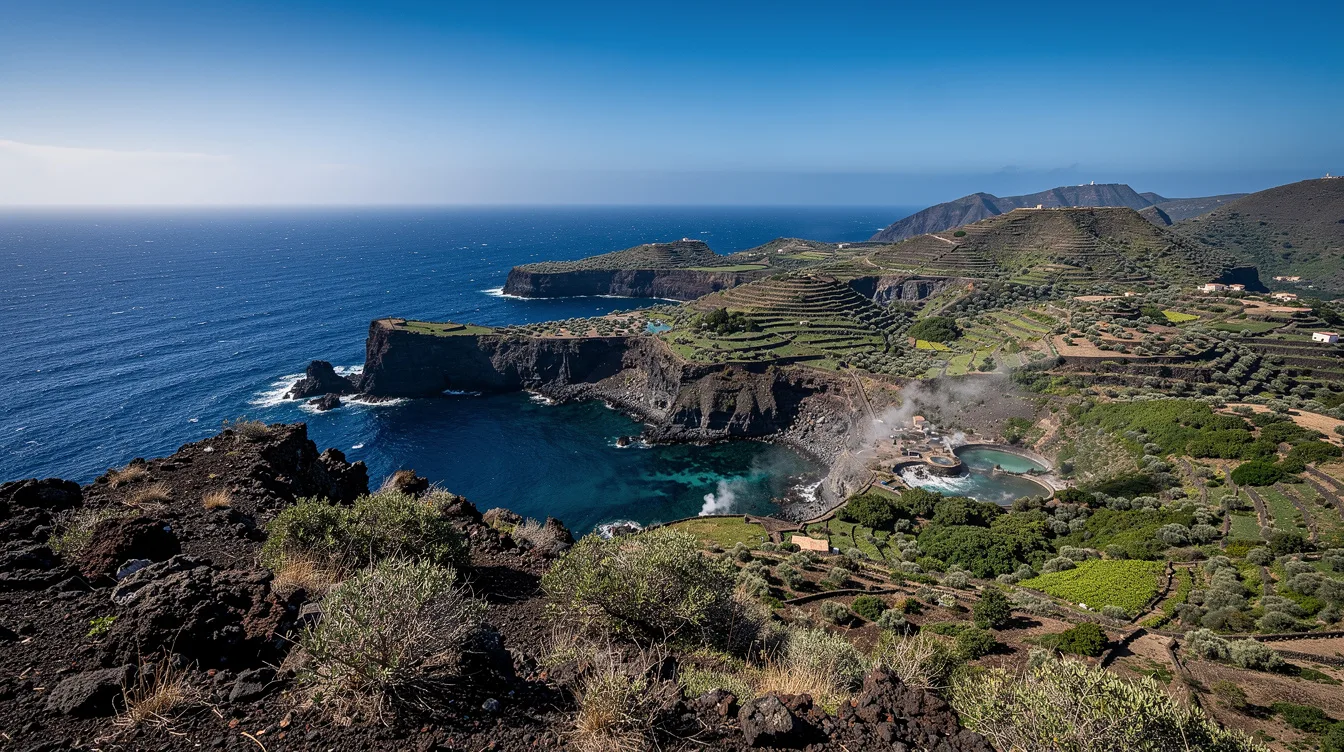
Pantelleria is the Italian island that last erupted beneath the sea in 1891. It still releases volcanic heat through hot springs and fumaroles, so a visit feels less like a beach escape and more like entering a living geological experiment.
And it sits closer to Tunisia than Sicily, about 42.3 miles from the Tunisian coast. The island is dry, windy, and built from dark volcanic rock, with white-domed stone homes called dammusi scattered among vineyards and low walls.
An underwater eruption still shapes the island
Pantelleria lies in the Strait of Sicily, about 65.9 miles southwest of Sicily. Its last confirmed eruption happened below sea level in 1891, but the heat did not disappear when the eruption ended.
And Montagna Grande rises to 2,743 feet, giving the island a high point above its mostly submarine volcanic base. The slopes feel stark and mineral-rich, while strong winds move across the ridges and keep the horizon unusually open.
That geology explains the island’s character. You won’t find long sandy beaches here, so plan around rocky coves, natural pools, and warm water instead. Read more about Sicily’s lesser-known islands before you go.
Hot springs turn a crater lake into the main event
Specchio di Venere, also called Lago di Venere, sits inside an extinct volcanic crater. The lake is fed by rain and hot springs, reaches 39 feet deep, and is popular for swimming and mud bathing.
Can you swim in the hot water?
Yes, you can swim at Specchio di Venere, where warm springs and mineral mud make the visit feel distinctly different from a normal beach day. And the water’s changing appearance gives the lake a quieter appeal than the island’s exposed coastline.
At Cala Gadir, natural hot water gathers near the coast. Bagno Asciutto adds another kind of heat, with steam filtering through rock inside a small cave. You should enjoy the warmth, but don’t treat every volcanic vent like a spa.
Dammusi and vineyards make the interior worth your time
The island’s traditional dammusi have thick walls of volcanic stone and white-painted domes. The domes reduce heat and collect rainwater, which then flows into a cistern or the soil for the dry season.
And those same winds shape the vineyards. Local growers train Zibibbo vines low to the ground, a method called vite ad alberello that protects the plants from harsh weather. The result is an agricultural culture that feels practical before it feels decorative.
If you rent a dammuso, choose one with a terrace or sea view. The accommodation is part of the experience here, especially when the wind drops and the black stone holds the day’s warmth. See more Italian island escapes for comparison.
Rocky coves reward patience, not beach-hopping
Arco dell’Elefante is the island’s best-known coastal arch, with water suited to swimming and snorkeling when conditions cooperate. The approach is rocky, and the sea can quickly remind you that Pantelleria isn’t built for effortless shore access.
And Cala Gadir is better when you want warm water without a long outing. Along the coasts of Scauri and Suvaki, volcanic shelves create places to sit, swim, and watch the sun lower across the sea.
Montagna Grande gives you a different view, with more vegetation and broad panoramas across the island. The climb is worth it if you like elevation, but exposed sections and wind mean you should start before the day becomes hot.
Passito tastes of sun, wind, and patient farming
Pantelleria’s signature wine is Passito di Pantelleria, made from Zibibbo grapes dried in the sun before fermentation. That process concentrates flavors of candied fruit, citrus, honey, and flowers.
And the island’s capers belong on the table beside grilled vegetables, fresh fish, or couscous. The cooking carries Sicilian, Arabic, and Tunisian influences, which makes sense when Tunisia is only 42.3 miles away.
Try a granita or dessert made with citrus, almonds, or raisins after a swim. July and August bring more heat, visitors, and expense, so you may prefer May through June or September through October.
Getting there takes planning, but the distance helps
You can reach Pantelleria by air through Pantelleria Airport or by ferry from Trapani. The ferry takes about five to six hours, so the journey rewards travelers who are comfortable letting the schedule shape the day.
And a car or scooter is strongly advised because villages, accommodations, coves, and thermal sites are spread across the island. Public transportation is limited, which gives Pantelleria its remote feeling but complicates spontaneous plans.
Stay at least four or five nights if you can. By evening, the wind softens over the stone walls, and the island settles into the sound of water against black rock.