
A first Friendsgiving runs about $200 to $800 all in, and honestly, most of that goes to things nobody remembers. I spent my first one on matching plates. Nobody looked at the plates. What people remember is whether they had somewhere warm to sit and whether the food kept coming, so that’s where your money should go.
- Build the table before you buy the food
- Skip the centerpiece, run a low line instead
- The Three-Source Rule for a room that feels warm at 7pm
- Potluck, but assign the categories
- Layer the seating instead of matching it
- Paint one wall if you’ve got a weekend
- What does a first Friendsgiving actually cost?
- Rent the glassware, don’t buy it
- Hang the art at 57 inches, then leave it alone
- Warm the floor with a rug that’s big enough
- Set up a drinks station away from the kitchen
- Cloth napkins over paper, every time
- Curtains: go 6 inches high and let them hit the floor
- Make a place for coats before anyone arrives
- Anchor the room with one warm wood tone
- Build a buffet flow that doesn’t jam
- Instead of a playlist, build two
- Prep three things the night before
- Skip the printed place cards, seat people anyway
1Build the table before you buy the food
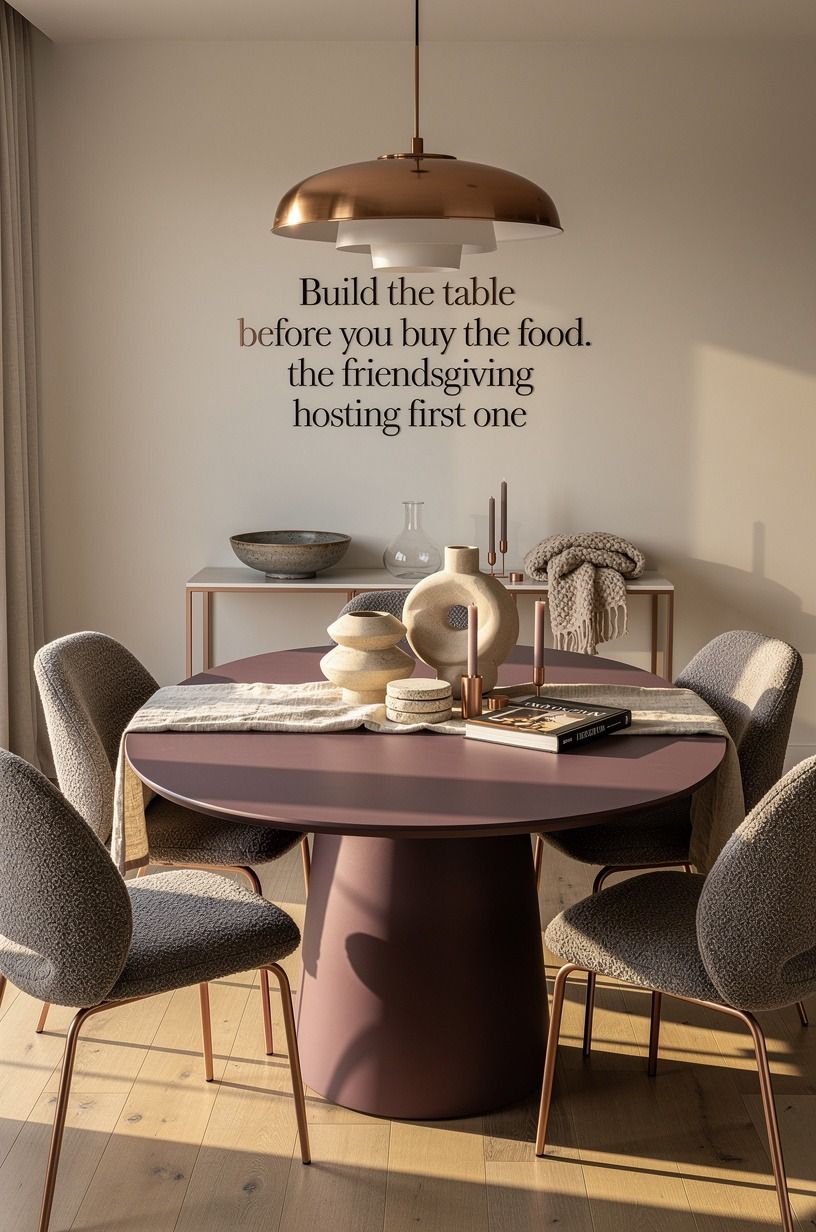
Here’s the thing about hosting friendsgiving for the first time: you plan the menu for three weeks and then realize at 4pm that eleven people don’t fit anywhere. Measure first. A folding 6-foot table seats six comfortably, eight if you’re friendly, and you can rent one for about $12 or borrow one from literally anyone’s garage.
Push your dining table against a wall and set the rental at a right angle. It looks intentional, not desperate.
I’ve done the “everyone eats on the couch” version and it’s fine for four people, chaos for ten. A plum organic bouclé tablecloth from a discount home store covers a beat-up folding table for around $15 and drapes better than a plastic cover, which always announces itself.
Smooth it the night before. That’s the whole move.
2Skip the centerpiece, run a low line instead
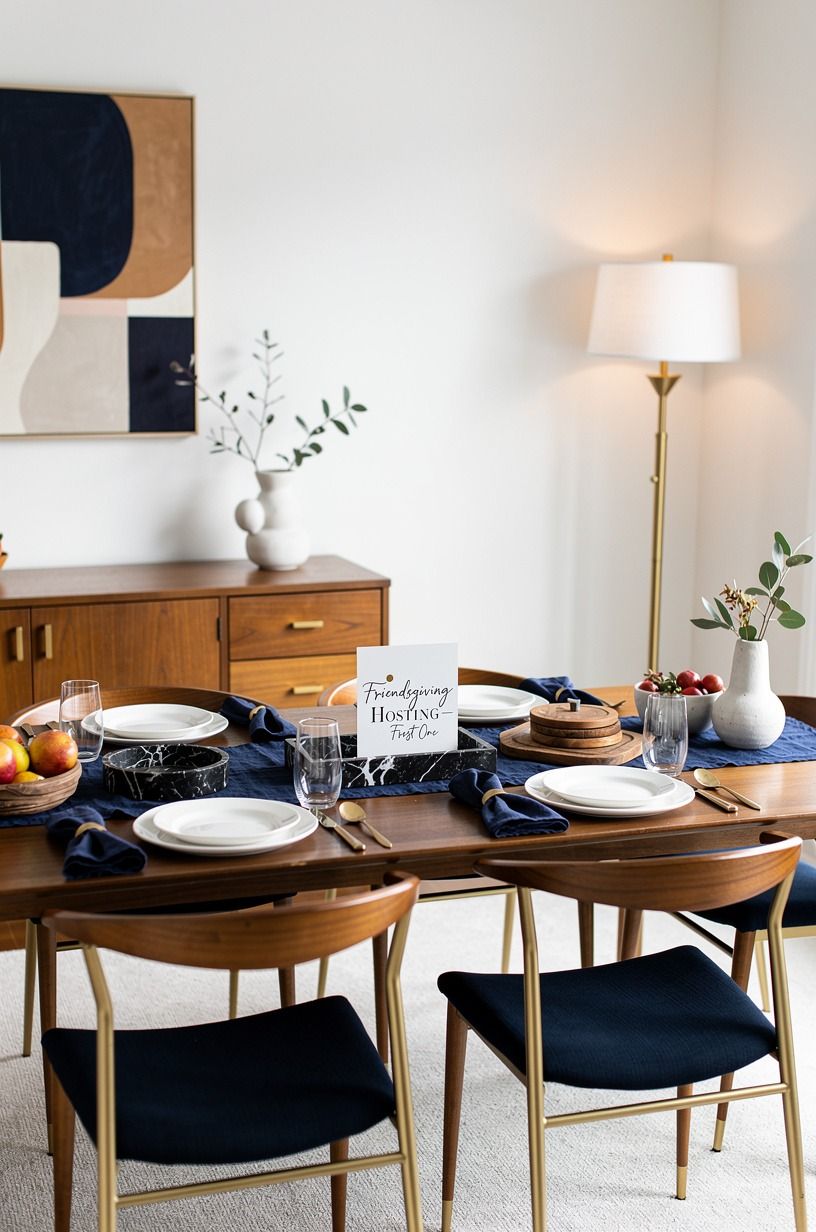
Tall centerpieces are the most common first-time mistake, and they’re the one that quietly ruins the night.
3The Three-Source Rule for a room that feels warm at 7pm
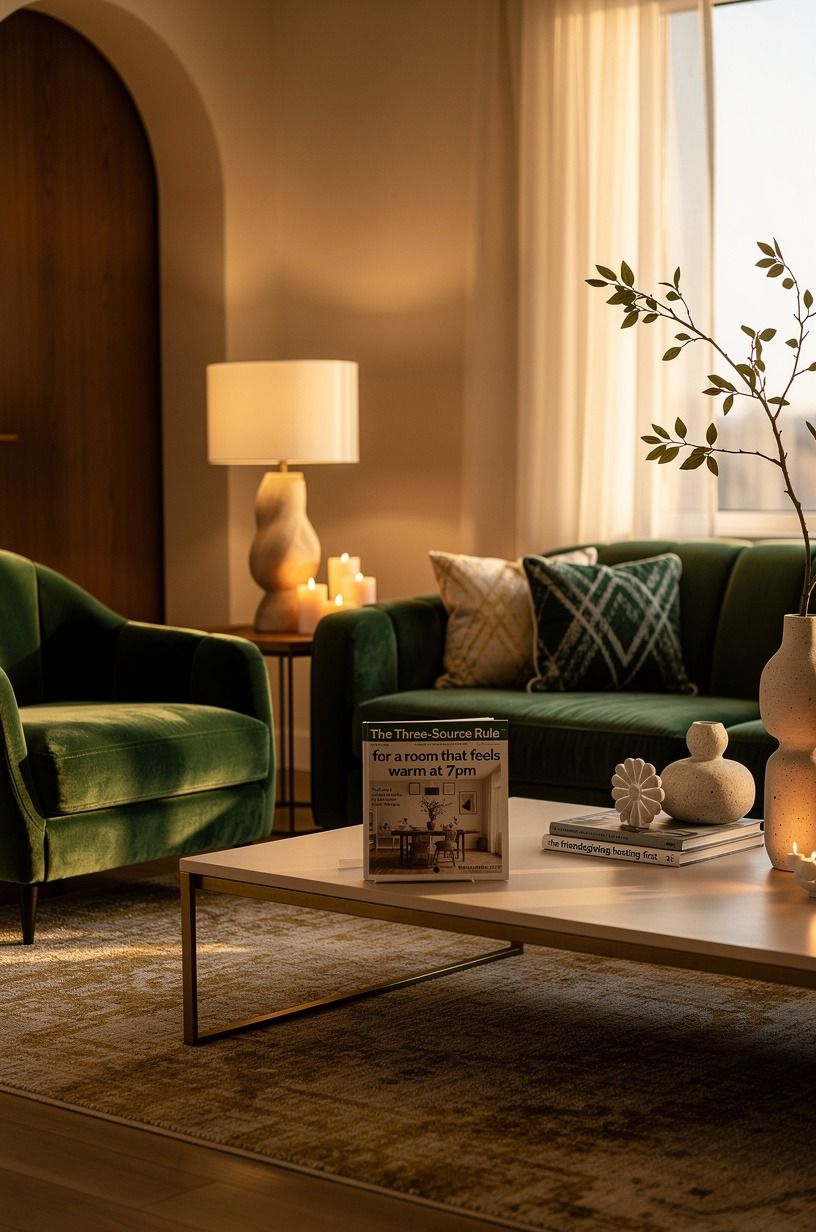
Kill the ceiling light. Seriously, that’s the whole move to making a rented apartment feel gathered instead of institutional, and it costs nothing.
Every room wants three light sources: something from the ceiling on a dimmer, something task-level, something low and ambient. For a friendsgiving dinner party you want the last two and not the first.
A table lamp on the sideboard, a cluster of tealights on the table, and one lamp in the far corner of the room so the space doesn’t end at the table edge. If your ceiling fixture is the only one you’ve got, swap in a 2700K warm bulb for about $4 and put it on the lowest setting your fixture allows.
The difference between 5000K and 2700K in a dining room is the difference between a dinner and a DMV.
4Potluck, but assign the categories
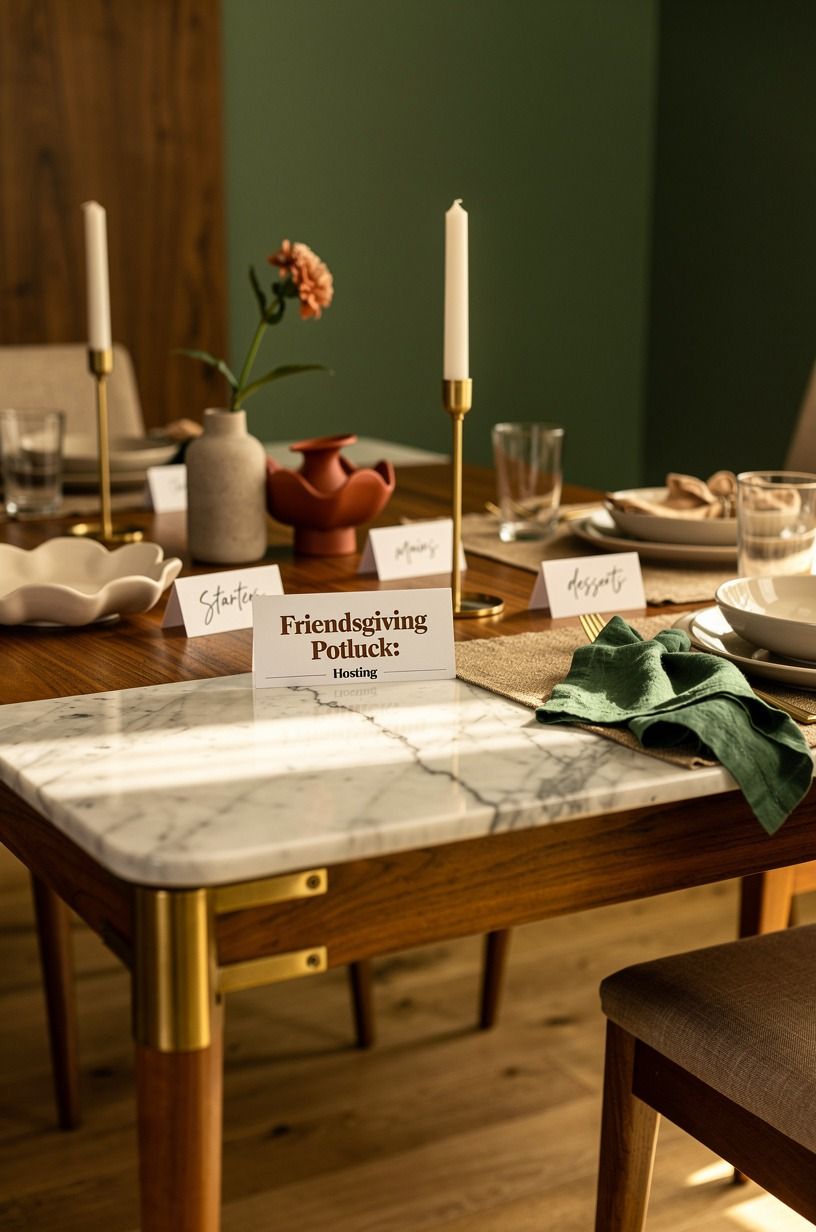
“Bring whatever!” is how you end up with six desserts and no vegetables. Ask me how I know.
Assign categories, not dishes. You take the turkey or the main, then someone’s on starch, someone’s on green vegetable, two people on appetizers, one on dessert, two on drinks and ice.
People still get to cook what they want, and you don’t spend $300 on a full menu you’re making alone at 6am. This one decision is the difference between a $150 Friendsgiving and a $450 one.
And nobody feels like a guest at a restaurant, which is sort of the point of the whole holiday.
5Layer the seating instead of matching it
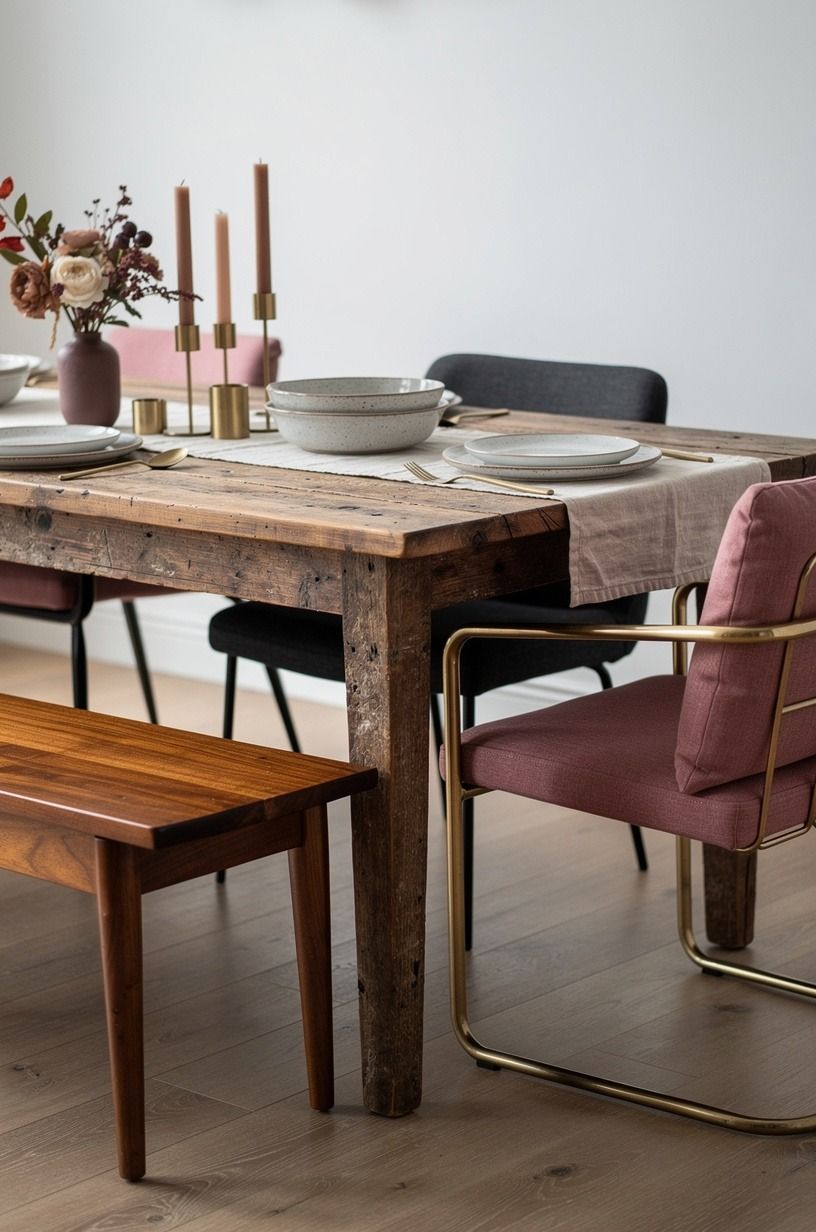
You don’t need matching chairs. You genuinely don’t, and chasing that is how people blow their budget on a folding chair set they’ll store in a closet for eleven months.
Mix what you have. Desk chair, piano bench, a reclaimed weathered teak bench if you already own one, two dining chairs, a stool from the kitchen.
Then unify the whole thing with one repeated element: throw the same Belgian flax linen napkin over every seat back, or tie a strip of the same fabric on each. The eye reads repetition as intention.
I borrowed four chairs from a neighbor for my second Friendsgiving and it looked better than the year I rented matching ones, because the mismatch felt lived-in instead of catered.
6Paint one wall if you’ve got a weekend
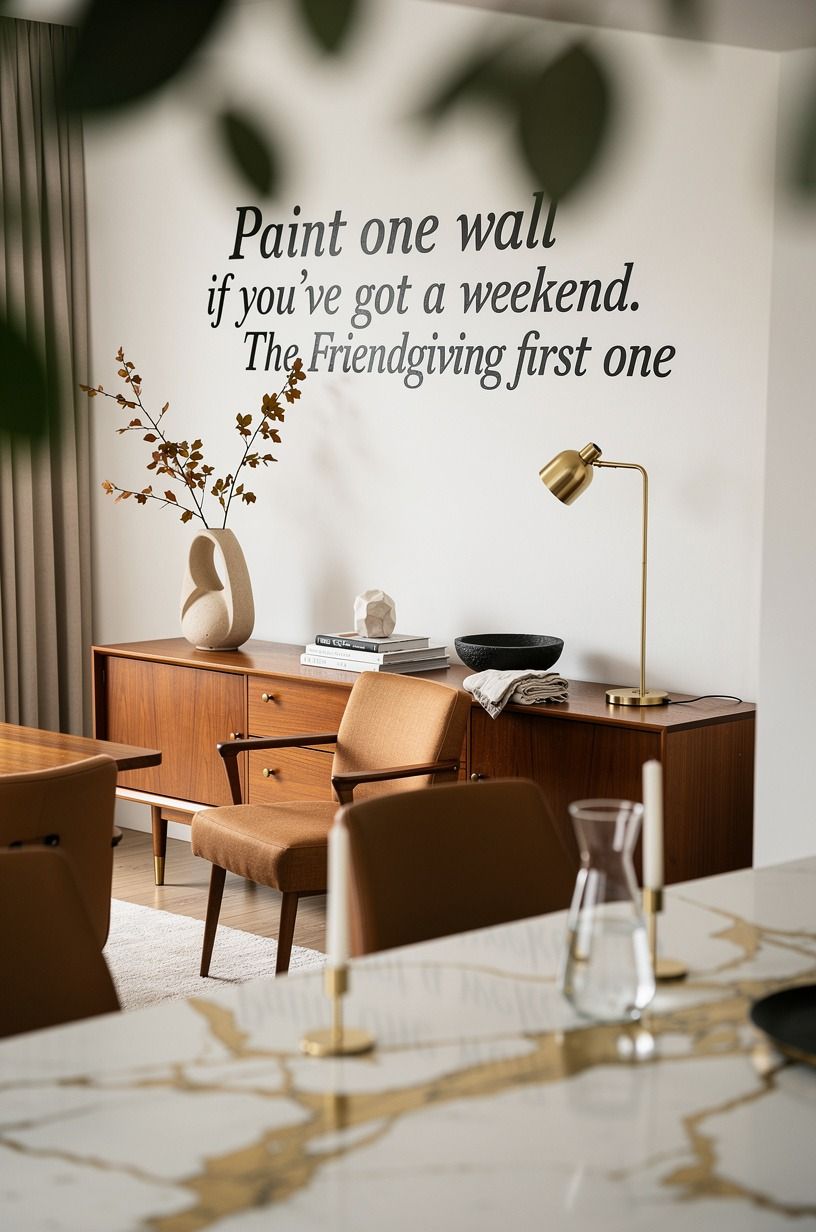
This is the only genuinely worthwhile renovation move before hosting, and it’s cheap. A room’s worth of paint runs $200 to $600 done yourself, but a single accent wall behind the table is more like $45 and three hours.
Farrow & Ball White Tie (No.2002) behind a dinner table is a warm white that makes skin tones look good in candlelight, which sounds like a small thing until you see how the room feels afterward. Benjamin Moore White Dove (OC-17) is the safer call if you’re renting and want something you can paint back without argument.
I’d avoid anything in the cool-blue family for a dinner room. It goes gray under warm bulbs and everyone looks tired.
Test a swatch at 7pm with the lamps on, not at noon.
7What does a first Friendsgiving actually cost?
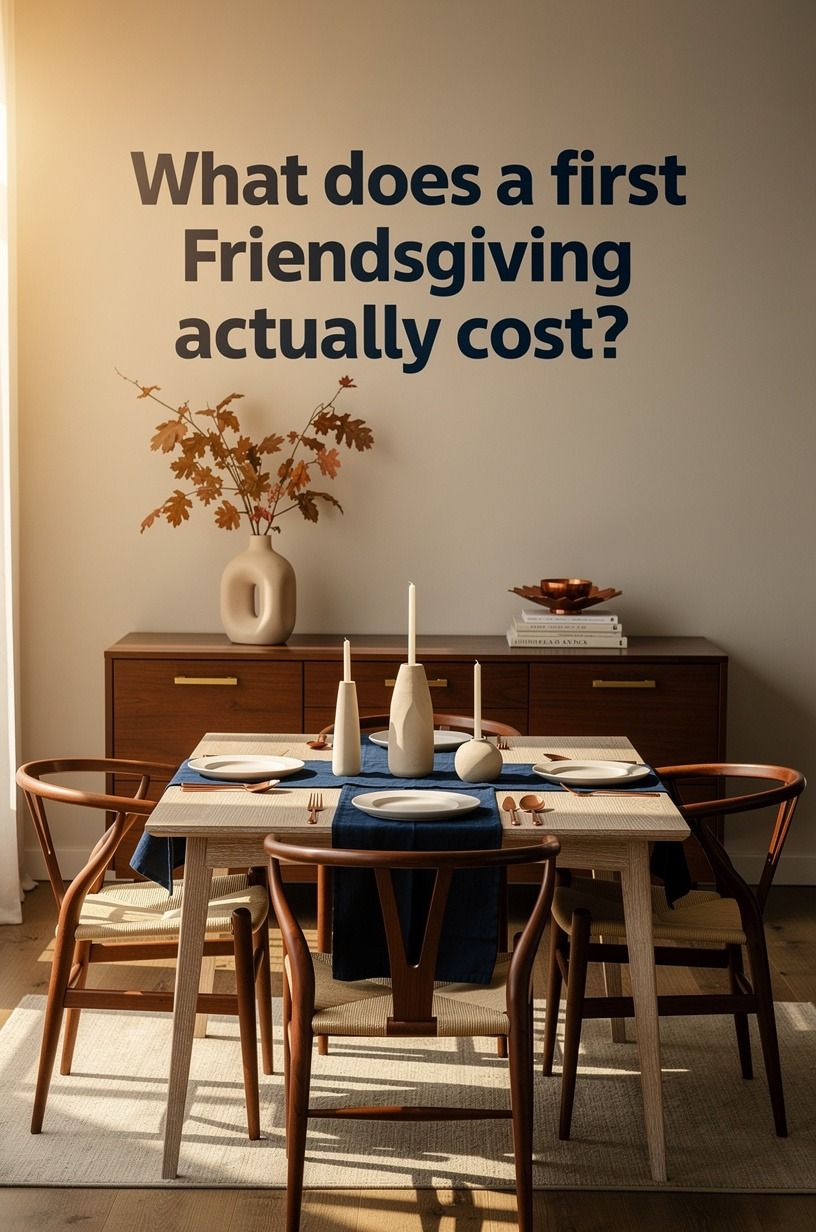
More than people admit, less than you’re afraid of. Here’s how the spend usually breaks down when you’re building a room and a table from scratch.
For a first Friendsgiving you’re living entirely in that top row, and you should be. Textiles and light do more per dollar than furniture ever will.
If you’re weighing where to put the money, designers put about 70% of a budget into paint and fabric first for exactly this reason. The rug can wait until February.
8Rent the glassware, don’t buy it
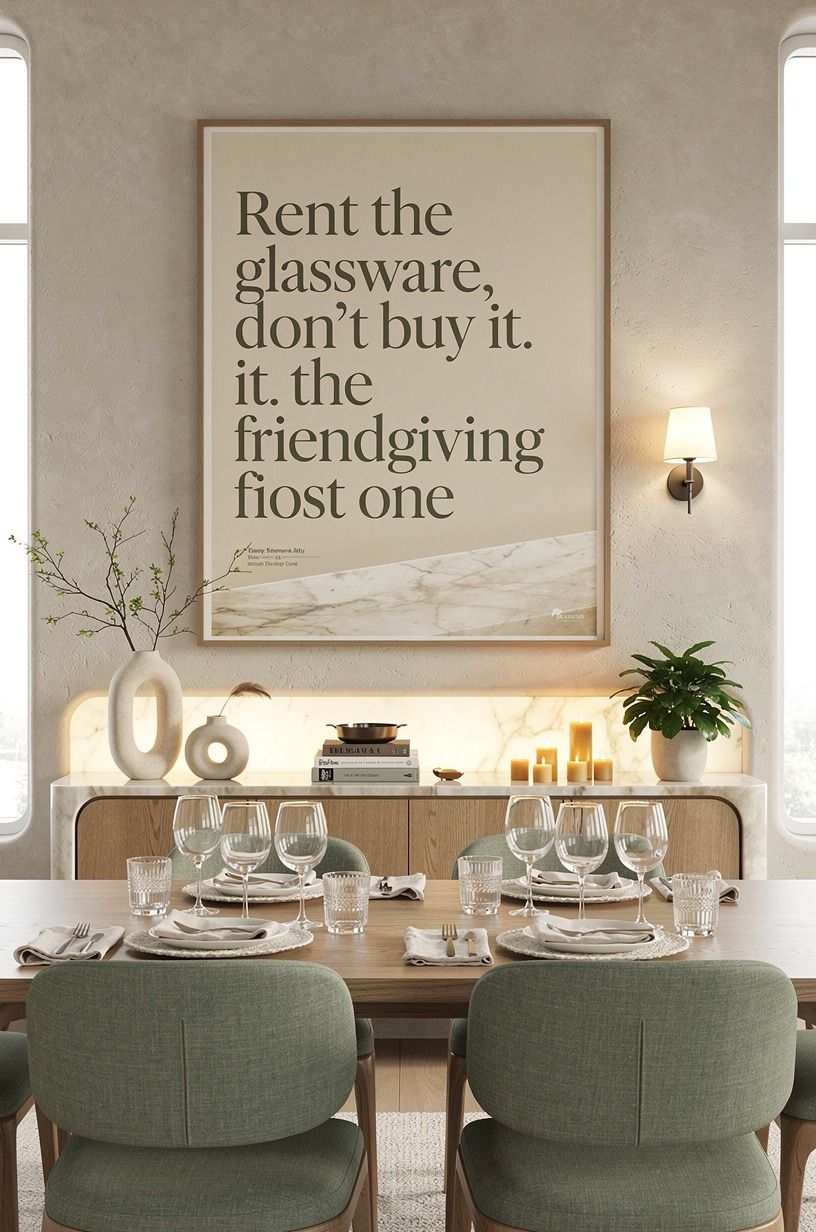
Nobody tells you this, but most party rental companies will do glassware for about 50 cents a glass and you return them dirty.
9Hang the art at 57 inches, then leave it alone
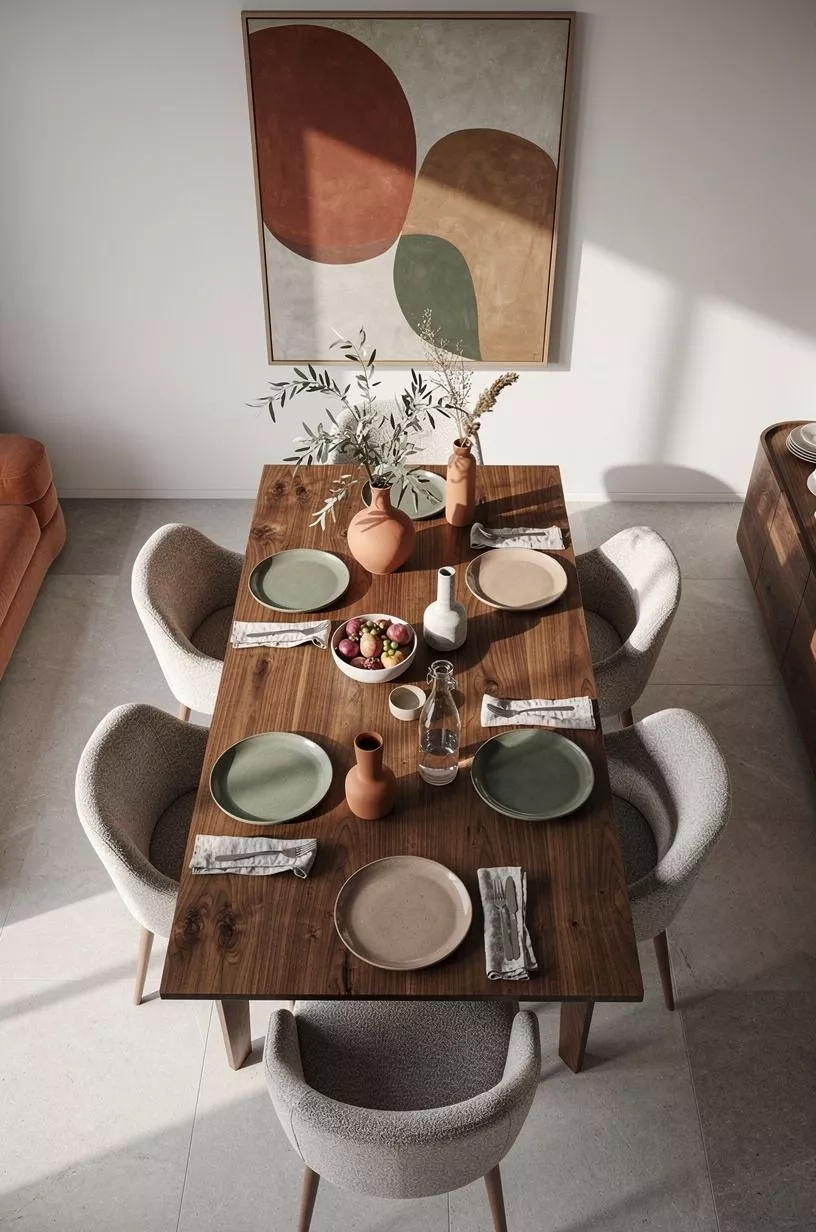
Your walls matter more than you think on a night when people are standing around holding drinks and looking anywhere but at each other.
Hang art with its center 57 to 60 inches from the floor. That’s gallery height and it’s not negotiable, because art hung too high is the number one thing that makes a room read as rented.
If you’re hanging a group, treat the whole cluster as one rectangle and center that at 57. A pair of thrifted frames with book-matched walnut grain and muted terracotta, stone, and olive prints costs under $30 and does more for a bare dining wall than anything you’d order online.
And it’s up in twenty minutes.
10Warm the floor with a rug that’s big enough
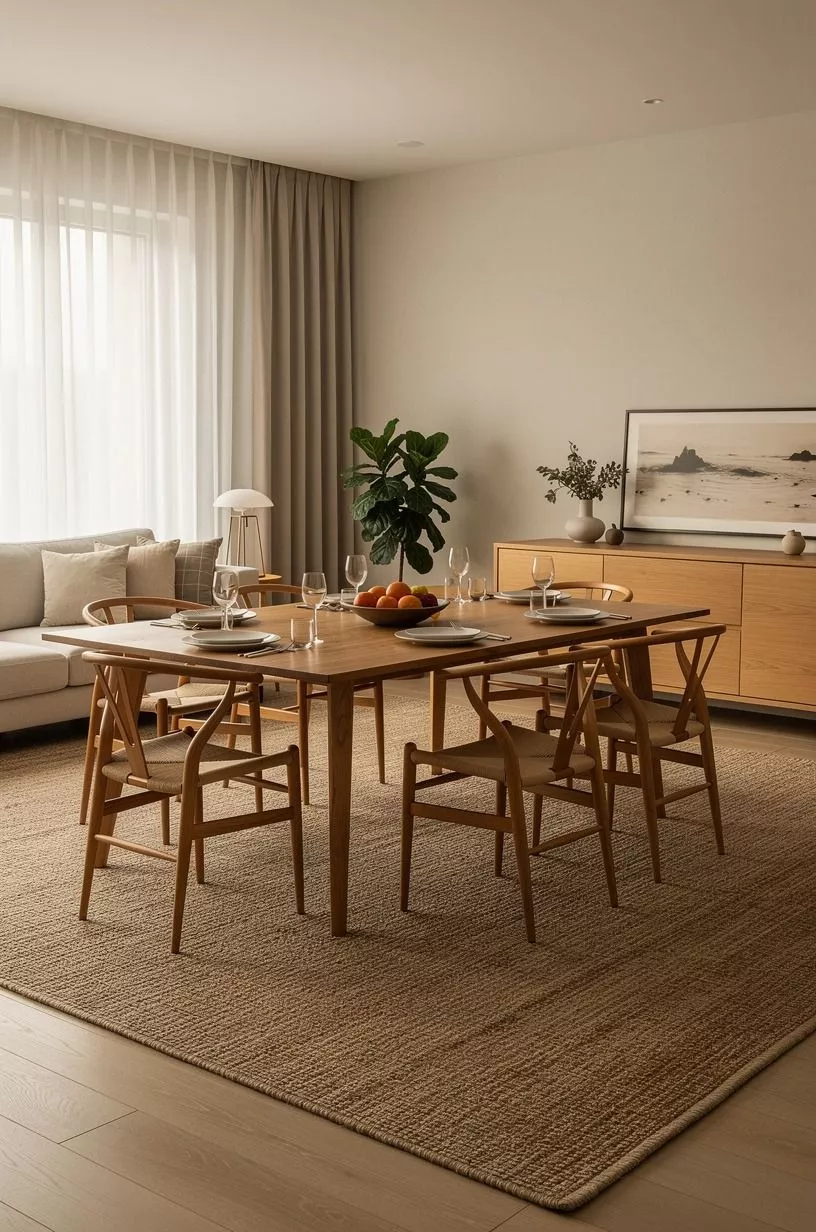
Small rugs are the most common budget mistake in a dining setup, and the fix isn’t spending more, it’s buying differently.
The rule: every chair leg stays on the rug even when the chair’s pulled out. For a table seating six that’s usually 8×10 minimum. A real wool rug runs $400 to $1,500, which is nowhere near first-Friendsgiving money.
So go flatweave cotton or jute instead, around $120 for an 8×10, and accept it’s a two-year rug. Layering a small rug on a big cheap jute base is the move if you already own something you love.
What you don’t do is center a 5×7 under a dining table and hope. It makes the room look like a hotel lobby seating area, and chairs catch on the edge all night.
11Set up a drinks station away from the kitchen
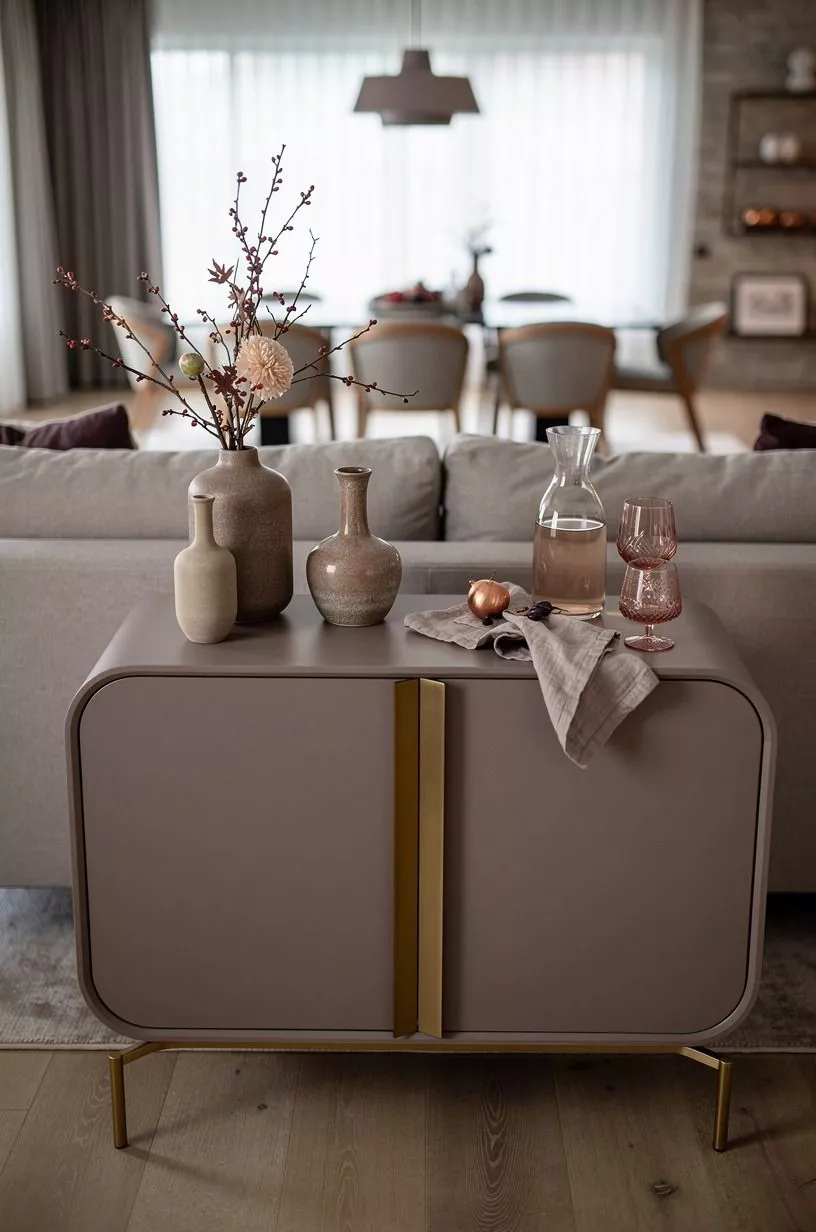
Everyone crowds the kitchen. It’s a law of physics. The fix is to give them somewhere else to stand.
Put the drinks on a console, a dresser, a bookshelf, anywhere that isn’t where you’re plating food. Ice in an unlacquered brass tub developing a patina on the floor beside it, glasses stacked, one bottle opener tied to the handle with twine so it doesn’t walk off.
Add a lamp. That’s what makes it a station instead of a pile.
I’ve hosted both ways and the drinks-in-the-kitchen version means you’re cooking with four people standing in your path holding wine. This is the single highest-impact thing on this list for friendsgiving set up, and it costs you a tub.
12Cloth napkins over paper, every time
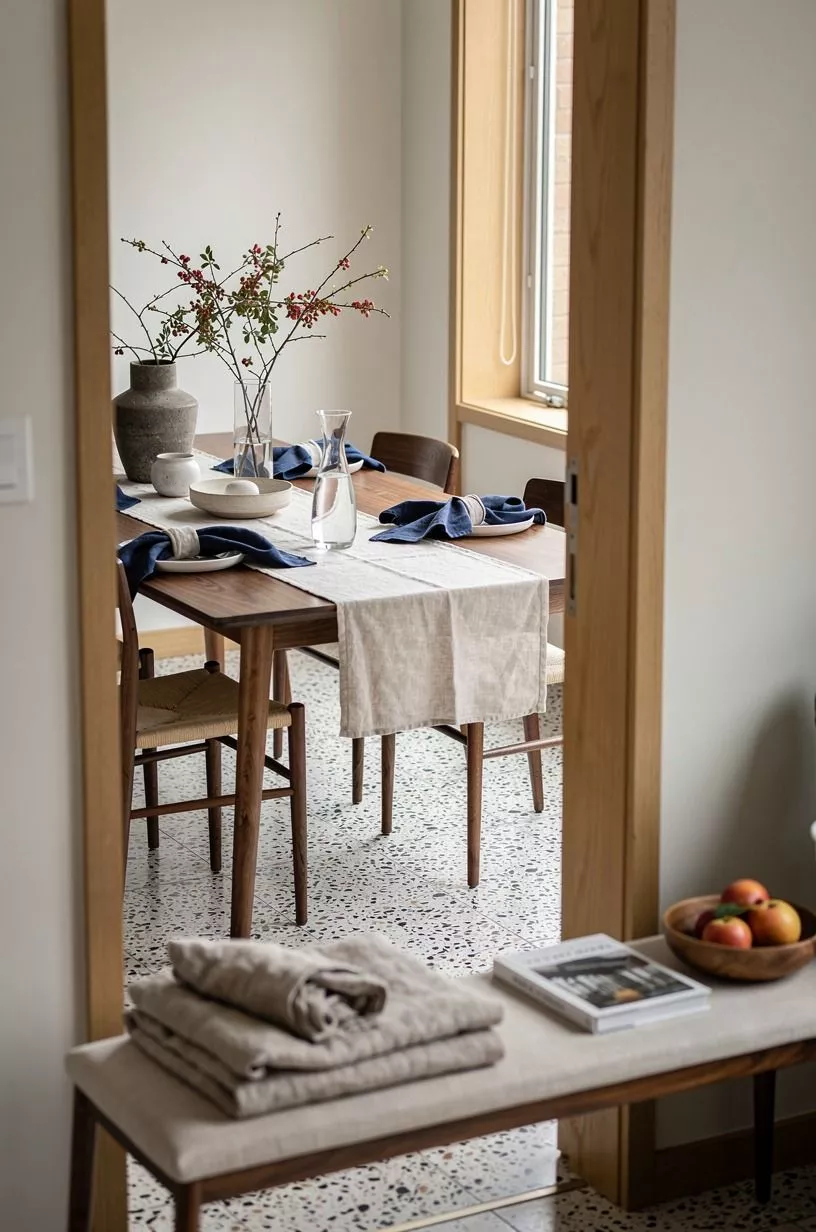
Paper napkins cost $6 and get thrown away.
13Curtains: go 6 inches high and let them hit the floor
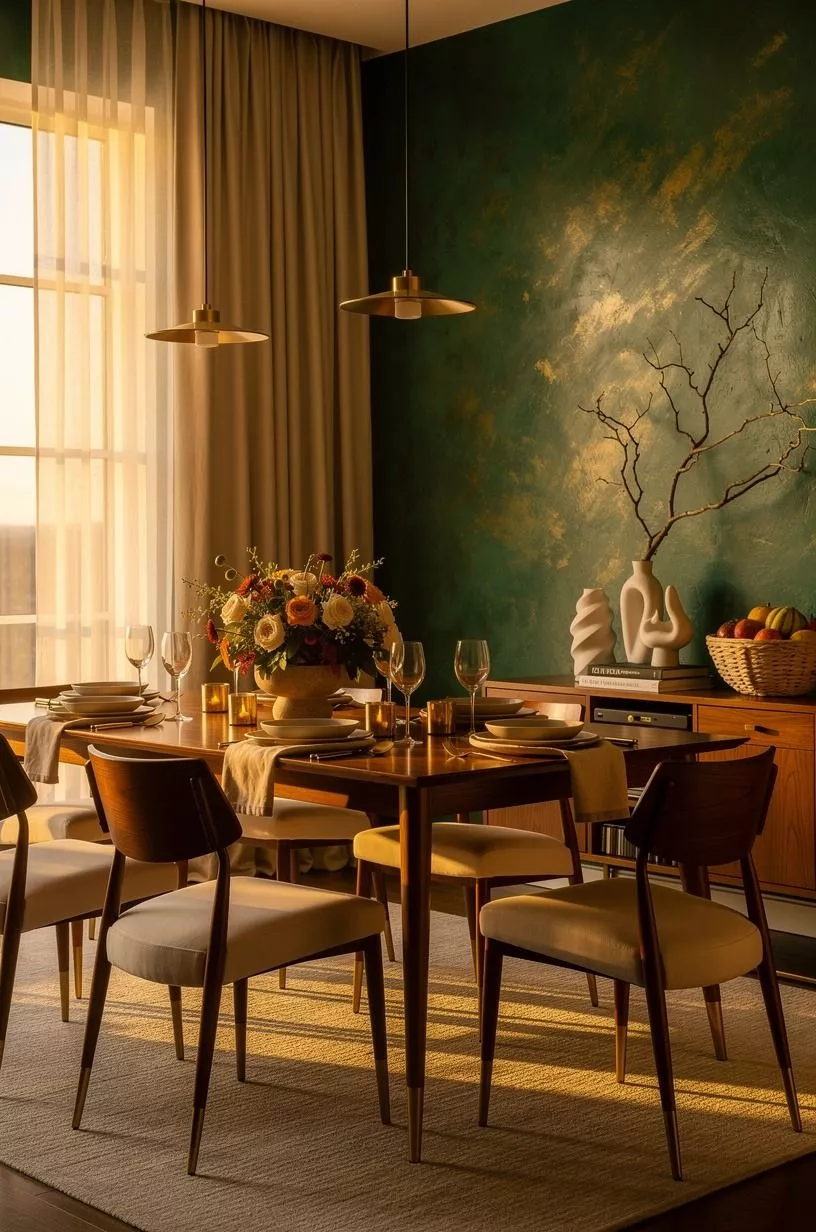
If you’re renting and your windows have those short builder blinds, this is the cheapest transformation available to you and most people never try it.
Mount the rod 4 to 6 inches above the window frame and run the panels all the way to the floor. A pair of linen drapes runs $120 to $400, but IKEA RITVA or a cotton pair from Target sits closer to $40.
The height move makes the ceiling read taller, which matters a lot in an apartment where you’ve squeezed ten people in. Command hooks and a tension rod get you there without a drill, so no security deposit drama.
Hem them with iron-on tape if they pool. Puddled curtains look romantic for about five minutes and collect dust in real life.
14Make a place for coats before anyone arrives
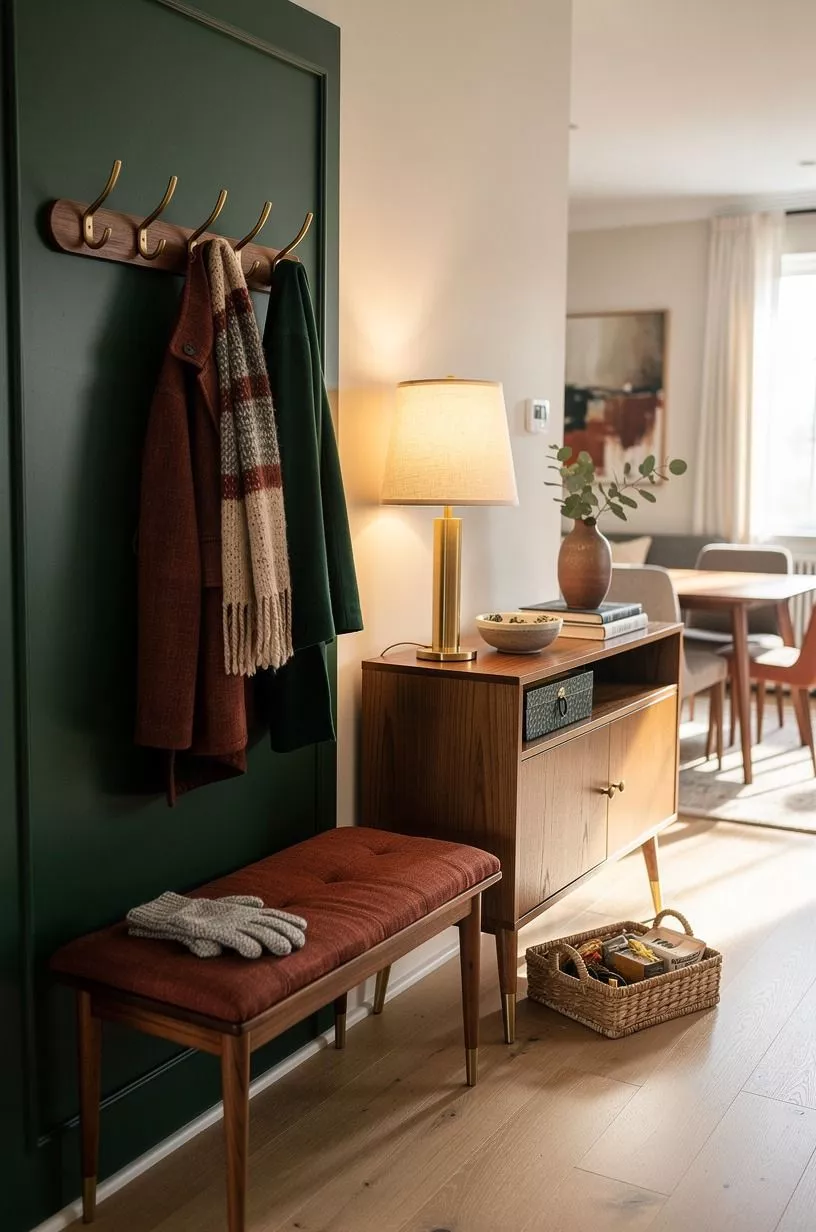
Boring? Yes. It’s also the difference between a calm entry and a pile of parkas on your bed that everyone has to dig through at midnight.
Clear one closet rod, buy ten wooden hangers for about $12, and put a woven basket with shagreen accents by the door for bags and shoes. That’s it. Eight minutes of work.
I skipped this exactly once and spent the last half hour of a lovely night sorting through a mountain of black wool coats with a flashlight, which is a genuinely miserable way to end a party. Never again!
15Anchor the room with one warm wood tone
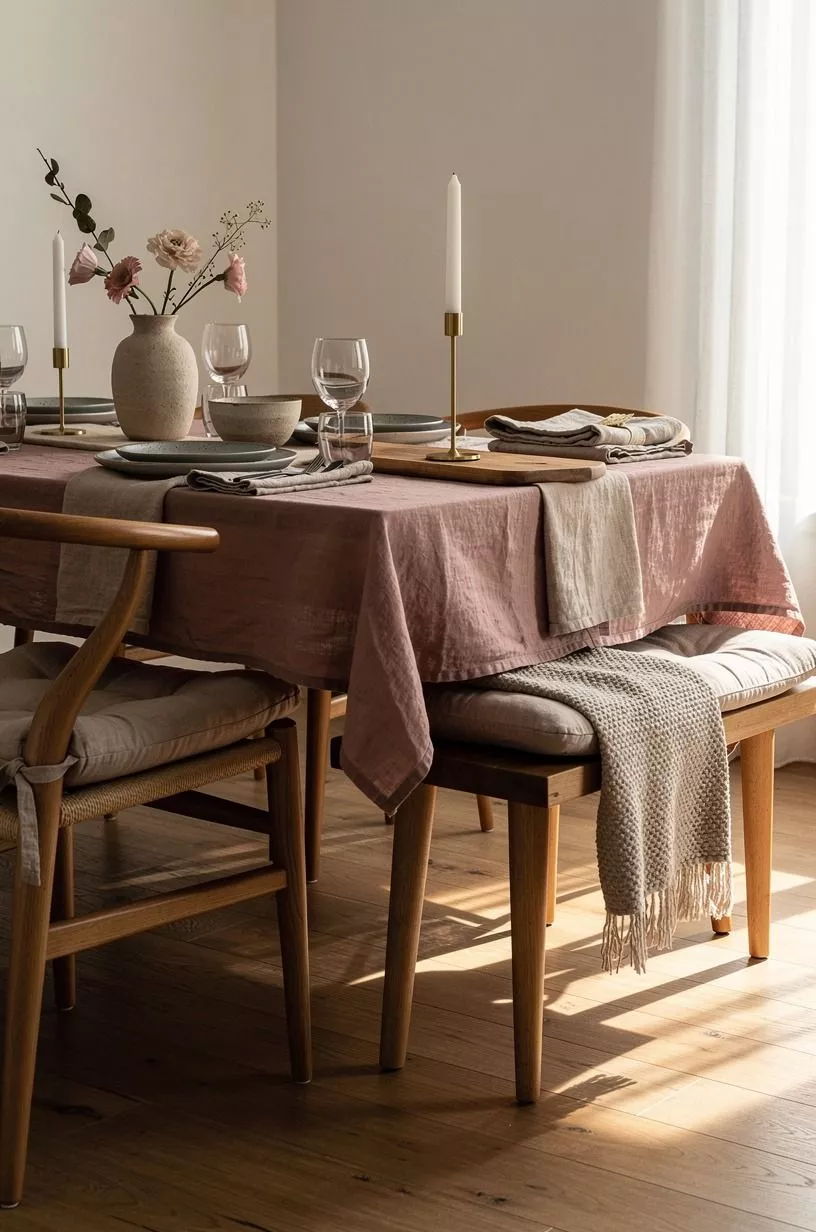
A washed Belgian linen runner, a walnut salad bowl, a pine bench. When wood tones fight, a room feels thrown together, and this is the cheapest fix on the list because it’s about editing, not buying.
Pick one wood family and let the odd pieces go in a cupboard for the night. Warm mid-browns are the most forgiving with candlelight and with the dusty rose, charcoal, and brass palette most friendsgiving theme ideas land on.
Cool gray-washed wood reads cold against a warm bulb. It’s fine in daylight, it’s wrong at 7pm in November.
Serving boards are where you’ll notice this most, since they’re on the table the whole night. One good acacia board at $25 beats three mismatched ones you already own.
16Build a buffet flow that doesn’t jam
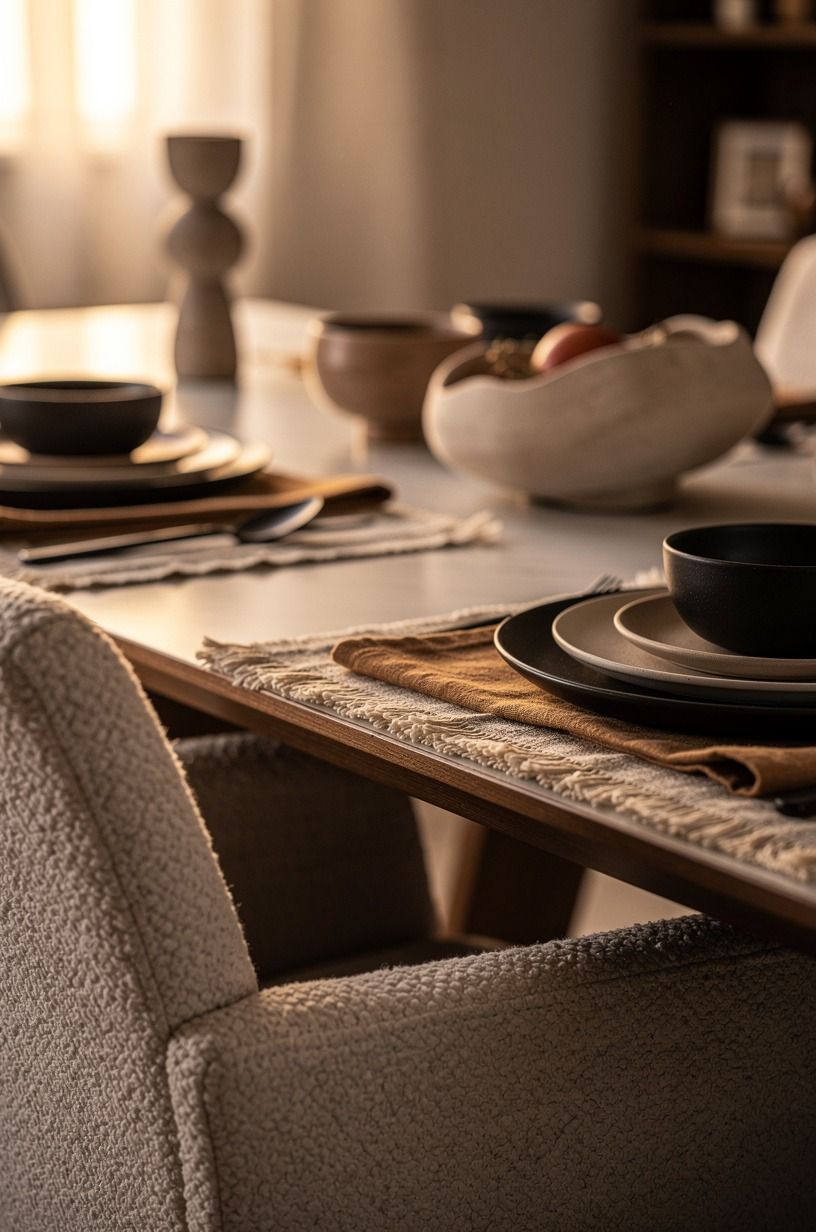
Serve buffet-style, always, for more than six people. Plated dinner for ten in a home kitchen is a project and you’ll miss the entire first hour of your own party.
Set the order deliberately: plates first, then mains, then sides, then sauces and bread, then napkins and forks at the very end. People carrying cutlery from the start means they can’t serve themselves properly and the line stops dead.
Give it two feet of counter per dish so nobody’s reaching over a hot pan. If your counter’s short, the kitchen island plus a rolling cart works, and an IKEA RÅSKOG cart at $40 is the most useful thing I own for this.
It holds bread and drinks during dinner and rolls out of the way after.
17Instead of a playlist, build two
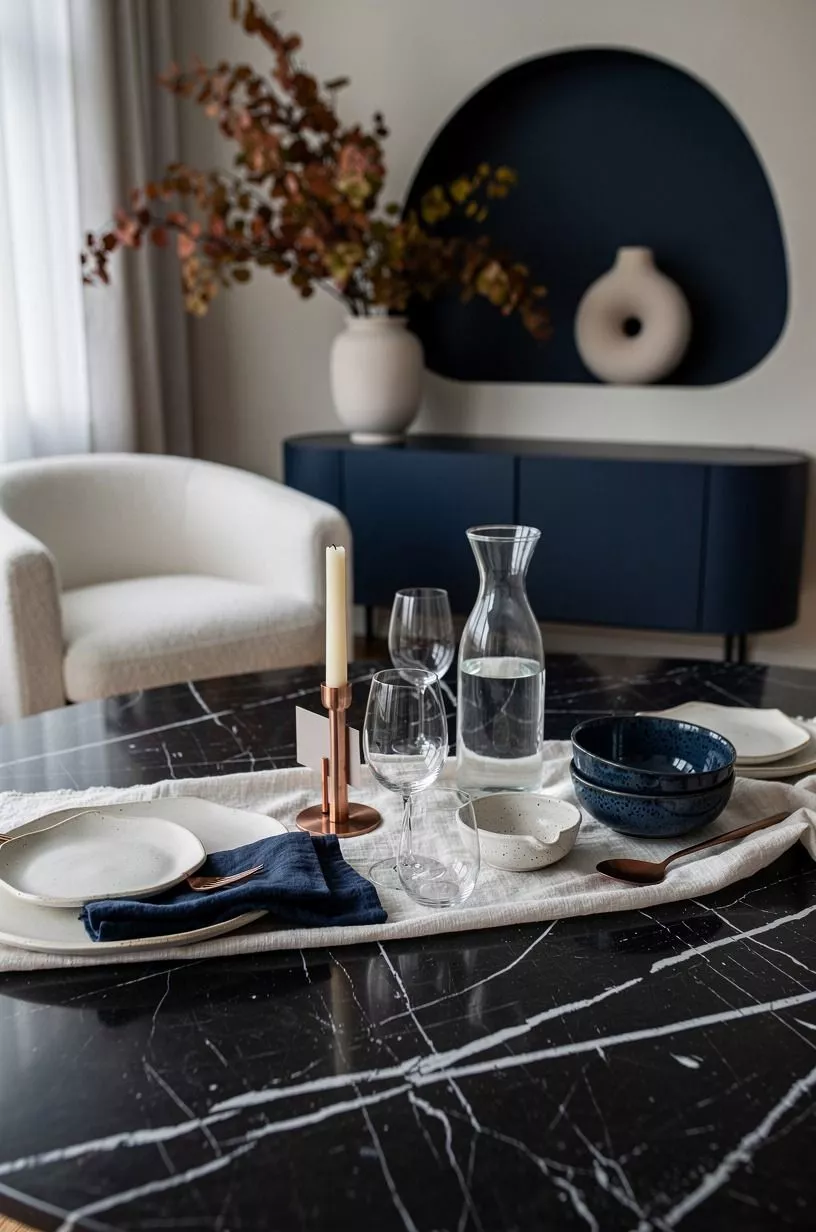
One playlist for the whole night is a rookie call. The energy you want at 6pm while people are arriving isn’t the energy you want at 10pm when four people are still there and the candles are low.
Build two. Something warm and instrumental for arrival and dinner, at a volume where people can talk over it without raising their voices.
Then a second one with actual songs for after the plates clear. Four hours total so you’re never scrambling with wet hands to change it.
And keep a speaker off the dining table, because music coming from the same height as conversation makes everyone louder and louder until dinner sounds like a bar.
18Prep three things the night before
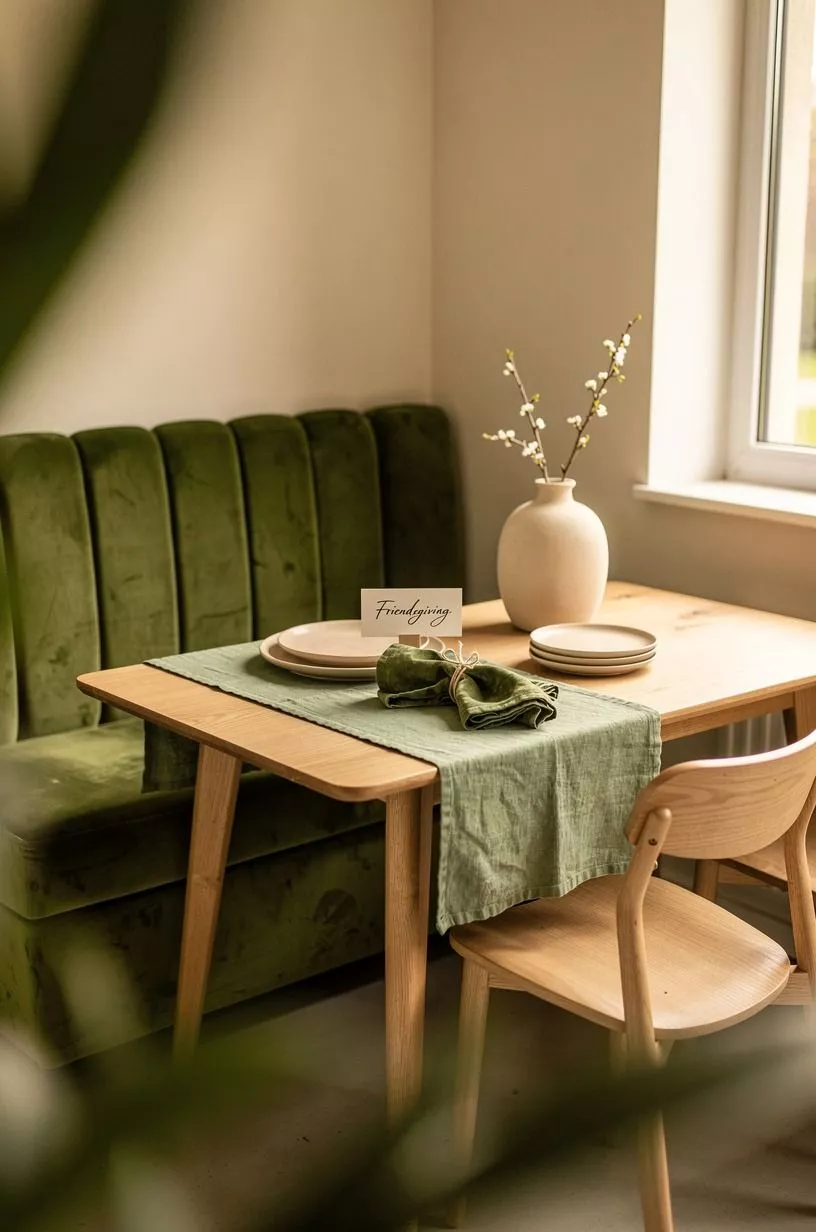
The hosts who look relaxed aren’t calmer people. They just did the work on Wednesday.
Set the table completely the night before. Not partly, completely: plates, glasses, napkins, candles, the low line down the middle.
Chop everything that can be chopped and put it in containers. Clear the fridge shelf where the potluck dishes are going, because ten people arriving with ten casserole dishes and nowhere to put them is a real problem nobody warns you about. Then on the day you’re only cooking, and you’ll actually be in the room with your friends.
That’s the entire point of this holiday, and it’s remarkably easy to miss while standing at a sink.
19Skip the printed place cards, seat people anyway
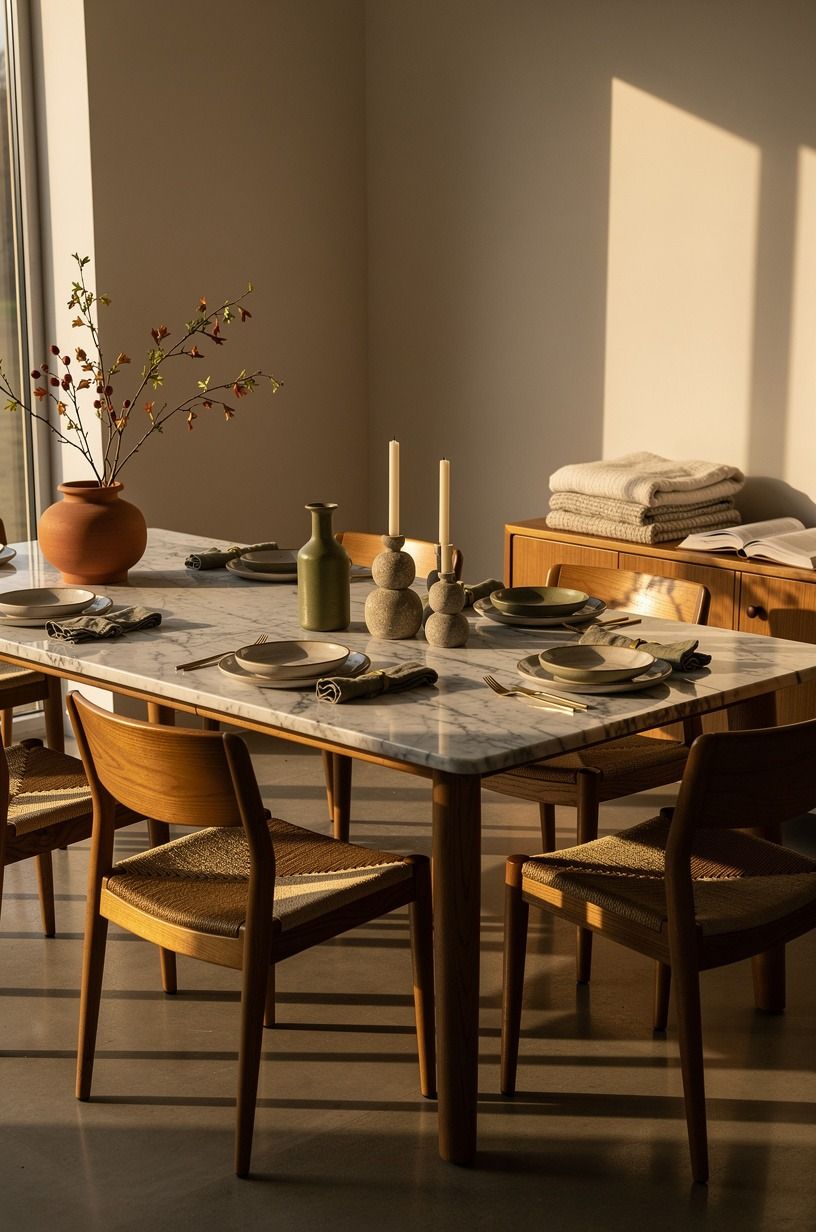
Place cards feel fussy for a first Friendsgiving.
What I Actually Learned Hosting My First One
My first Friendsgiving cost me about $380 and I did almost all of it wrong.
I bought plates. Twelve matching stoneware plates, because I had this magazine version in my head of what a hosted dinner looks like, and it wasn’t based on any dinner I’d actually enjoyed.
Nobody mentioned the plates. Not one person. What they mentioned, weeks later, was that my friend Dan had told a story about his dad for twenty minutes and the whole table went quiet listening.
You can’t buy that, but you can build the conditions for it, and the conditions are mostly: can everyone see each other, is the light kind, and is there enough food that nobody’s counting.
So here’s what I’d spend on now, in order. Light first, because it’s under $20 to change and it changes everything.
A warm bulb and four candles do more than any piece of furniture in the room. Then seating, meaning enough of it and close enough together, even if nothing matches.
Then the table surface, which is a drop cloth and some napkins and costs under $40. Then food, and only then, because good food at a cold table in harsh ceiling light is a meal, not a night.
The thing I got most wrong was thinking the goal was for it to look finished. It shouldn’t.
A table that looks like a showroom display makes people careful, and careful is the opposite of what you want from people sitting down to eat with their friends. Rumpled napkins, mismatched glasses, a candle burning unevenly. That stuff reads as generosity, somehow.
Perfection reads as performance, and everyone can feel the difference even if they can’t name it.
One more thing, and I mean this. Sit down.
I spent my first one standing at the counter for three hours in a kind of hosting-anxiety trance, and I barely talked to anyone. Make a plate.
Sit in it. The dishes will still be there.
The Questions Worth Answering First
What’s the best Friendsgiving setup for a small apartment?
One long surface beats two round ones, every time. Push your dining table to a wall and add a rented 6-foot folding table at a right angle, covered with a canvas drop cloth.
An IKEA RÅSKOG cart ($40) handles overflow drinks. The long line keeps everyone in one conversation instead of splitting into two tables.
Where can I buy Friendsgiving pieces on a budget?
IKEA for napkins, candles, and carts. Target for drapes and serveware. Wayfair when you need one specific size.
But your best value is second-hand: Facebook Marketplace and thrift stores are full of mismatched cut crystal and linen for a dollar or two a piece. Second-hand glassware genuinely looks better than budget matched sets.
How much does hosting a first Friendsgiving cost?
Plan on roughly $200 to $800 depending on how much you’re building from scratch, with the food itself landing around $150 if you go potluck. Free wins: rearranging furniture, killing the ceiling light, borrowing chairs. Rented glassware runs about 50 cents a glass.
Can I pull off a good Friendsgiving on almost no money?
Yes, and the no-money version is often warmer. Swap to a 2700K bulb for $4. Borrow chairs from two neighbors.
Assign potluck categories so the food cost splits eight ways. A grocery-store eucalyptus bunch at $6 runs the whole length of your table.
That’s a complete tablescape for under $25.
Is a proper setup worth it in a small space?
More worth it, actually. Small rooms fill with light and sound faster, so candles and a warm bulb do double duty, and people end up closer together, which is the whole goal. Push furniture to the walls and leave the middle open so the room breathes when ten people are standing in it.
Is any of this a good idea in a rental?
Yes, and almost none of it needs a drill. Tension rods for curtains, Command hooks for art, peel-and-stick anything for a backsplash you hate.
Farrow & Ball White Tie (No.2002) on one wall is worth the repaint if your lease allows it. If you want more rental-friendly budget thinking, the same get-the-look-for-less approach works on a wardrobe.
What if more people show up than I planned for?
Add a chair, not a table. Ten people at a table meant for eight is intimate. Ten people split across two rooms is two parties.
Keep a folding chair and two extra place settings in reserve and squeeze, because nobody has ever complained about sitting close on Friendsgiving night.
Where I’d Start First
If I had to pick one, I’d start with the light. Swap one bulb to 2700K and kill the ceiling light. You can’t fix a cold room with food, and every candle you light after that has something to build on.
Pin this one for later!