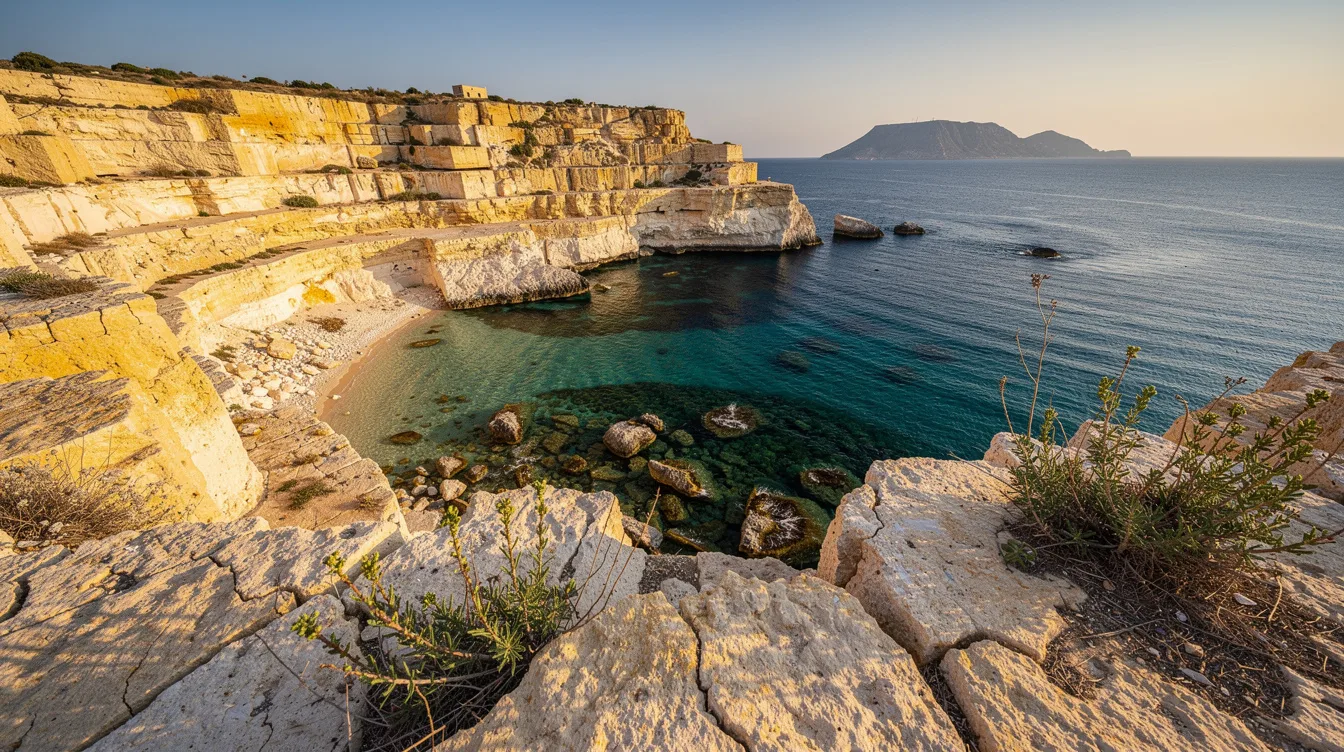
The water at Cala Rossa is so clear you can count the stones on the bottom from the cliff above. It’s also a graveyard. On 10 March 241 BC, a naval battle just offshore ended with so many dead washed up on this shoreline that the cove kept the name Red Cove.
And you can swim there today, with no plaque and no ticket booth.
Two hundred Roman ships against four hundred Carthaginian ones
The numbers still feel lopsided in the wrong direction. Two hundred Roman ships under the consul met a Carthaginian fleet of 400 and beat it anyway. The Romans sank 120 vessels and took 10,000 prisoners.
That ended the First Punic War, and Rome took the island under the treaty. You’re floating over the turning point, which is a strange thing to do on a Tuesday afternoon in swim trunks.
But don’t expect sand here. Cala Rossa is rock and old quarry faces, and getting in means picking your way down. Worth it.
Just not barefoot.
Twenty minutes from Trapani, and no airport at all
Favignana sits about 11 miles off Sicily’s west coast, between Trapani and Marsala. The hydrofoil takes 20 to 30 minutes. There’s no airport on the island, so the boat is the only way in.
Trapani-Birgi is the closest airport on the mainland side. From the port, the crossing is short enough that you’ll still have salt in your hair when you land.
Do you need a car?
No. Rent a bike or a scooter near the port and you’re set. The eastern half of the island is flat, which is why nearly everyone arriving off the morning boat is pedaling within twenty minutes.
The island is shaped like a butterfly, and the two wings don’t match
Favignana covers 7.6 square miles and gets described as butterfly-shaped, with the town on the narrow isthmus between the wings. East is flat and easy. West climbs into hills.
The high point is Monte Santa Caterina at 1,030 feet, topped by a fort the Saracens started. The Italian military used it, then closed it, and it’s abandoned now. So you get the silhouette, not the summit.
What the tuna money built, and what it left behind
In 1874, Ignazio Florio bought the Aegadian Islands for two million liras and built a major tuna cannery here. It brought real prosperity to the island for decades.
Then factory fishing arrived after the war and the fishery declined. The cannery is a museum now. Go, because the scale of the place explains more about this island than any beach will.
Favignana is also where the mattanza was practiced, the old bluefin trap-and-slaughter. It’s a hard history, and the island doesn’t pretend otherwise.
Where to actually swim
The island is mostly calcareous rock, so there are few beaches. That’s the honest trade-off. Cala Azzurra is easier to get into than Cala Rossa and the water stays calm.
Lido Burrone is the sand option if you want a towel-and-umbrella day. Bue Marino is all carved rock and caves, more dramatic than comfortable.
And the whole archipelago sits inside a marine reserve, which is why the snorkeling and diving here draw day-trippers from Trapani who never stay the night.
When should you go?
Late May through late June, or September. The sea is warm in September and the crowds have thinned. July and August are beautiful and noticeably more expensive, with ferries and the good addresses booking out.
If you come in high summer, reserve the boat and the room before you reserve anything else.
Give it three nights, not one
A day gets you the town and maybe two coves. It doesn’t get you a boat trip out to Levanzo or Marettimo, and it doesn’t get you the island’s actual rhythm.
Three or four nights is the right shape. Pair it with Trapani or Marsala on either end.
4,540 people live here year-round. In June, on the road above the red cove, you can hear the water before you see it, and there is nothing to tell you what happened offshore except the name.