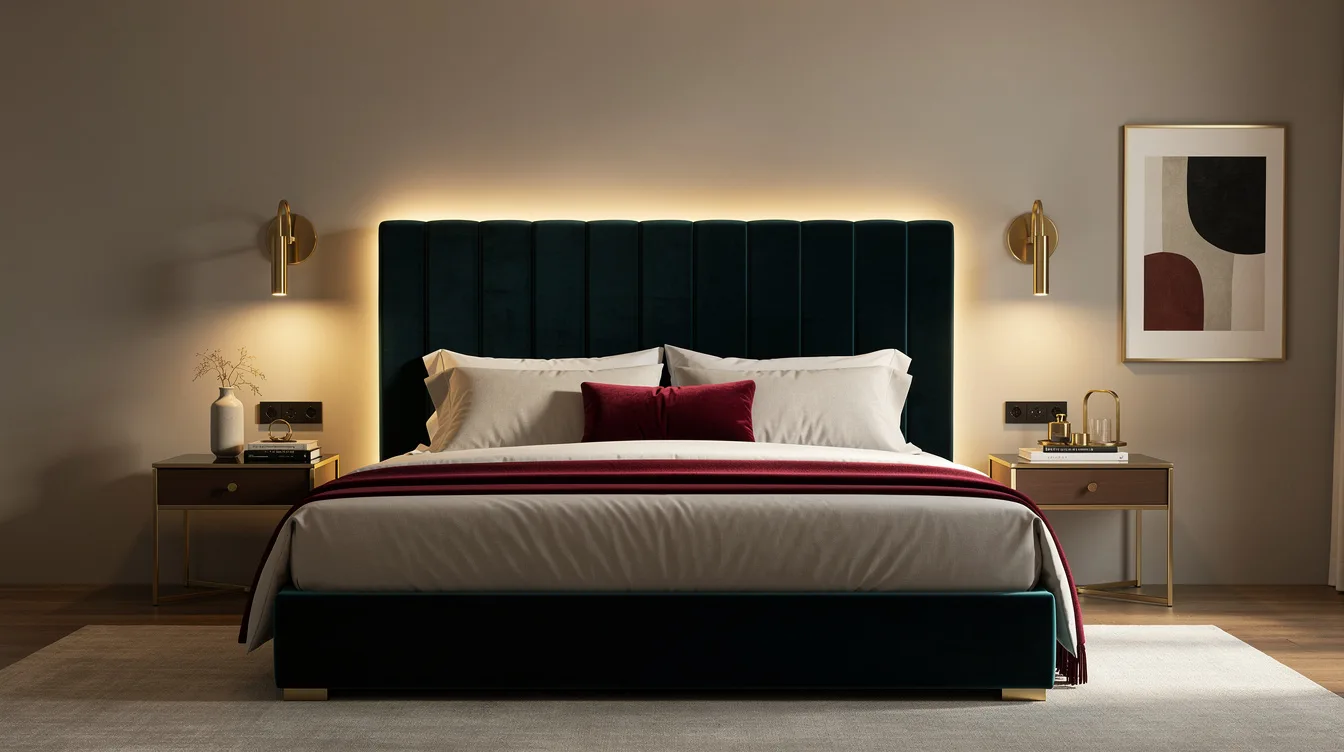
The difference between a hotel room and a bedroom with a bright ceiling light is often decided after dark. A typical scheme uses roughly 2,000 to 4,000 lumens, but those lumens work best when divided among several dimmable layers.
Start with 2700K warm-white light, add a soft halo behind the headboard, and give each side of the bed its own reading control. The goal is a room that shifts from usable to restful without moving a lamp.
Build a Halo Behind the Headboard
Build the halo around an oak veneer or upholstered headboard that sits slightly wider than the mattress. A convincing target is about 8 to 16 inches wider overall and approximately 43 to 55 inches tall, so the glow reads from the doorway and from the pillow.
Mount 24V COB LED tape on the rear perimeter, about 1 to 3 inches inside the edge, and leave roughly 1 to 2 inches between the headboard and wall; choose around 2700K, about 8 to 12 watts per meter, a CRI of about 90 or higher, and an opal diffuser in an aluminum channel because bare diode dots make the effect look unfinished.
A typical basic kit sourced through Home Depot runs about $40 to $120 for tape, channel, driver, and dimmer, while a custom-looking DIY headboard usually lands around $150 to $500 and fully bespoke joinery and electrical work can run beyond about $800; keep the strip aimed at the wall so the room sees the reflection, not the source.
Give Each Side Its Own Reading Beam
Give each sleeper a directional reading beam with adjustable swing-arm sconces mounted on both sides of the bed. Start at about 57 to 61 inches from the finished floor to the fixture centerline, then adjust for mattress height and the way you actually sit.
Aged brass, satin brass, matte black powder-coated steel, brushed nickel, alabaster, and frosted glass all work, but the mechanism matters more than the finish: favor a shielded arm or narrow beam that lands on the page instead of spilling across the room.
For a rental, plug-in fixtures from Wayfair can préservé the two-sided layout without opening the wall, and the switch should sit within reach of the pillow so one reader can stay up without turning the room into a stage.
Divide the Room Into Three Light Zones
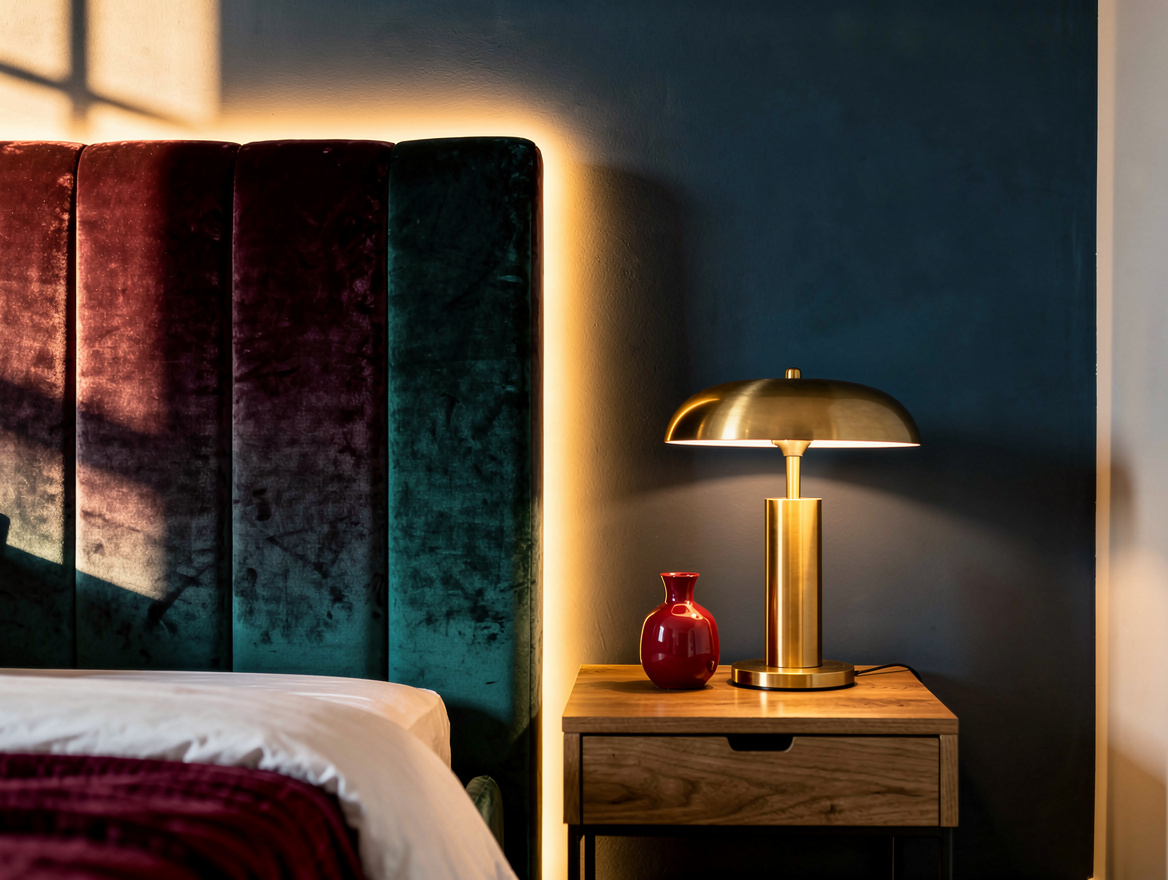
Plan three controllable zones: ambient for general visibility, task for reading, and accent for the halo. A dimmable flush-mount fixture or perimeter wall wash handles the first zone with less glare than a bare central bulb.
A typical bedroom scheme contains at least five sources: two bedside task lights, two or more ambient sources, and one accent source; warm-white bulbs keep the layers related while separate switches let you lower the halo without losing the reading beam.
Place one control near the door and another on each side of the bed when the wiring allows it, and use a smart dimmer purchased through Amazon only as a convenience because a physical switch still wins when you are half asleep.
Wash the Ceiling With Warm Light
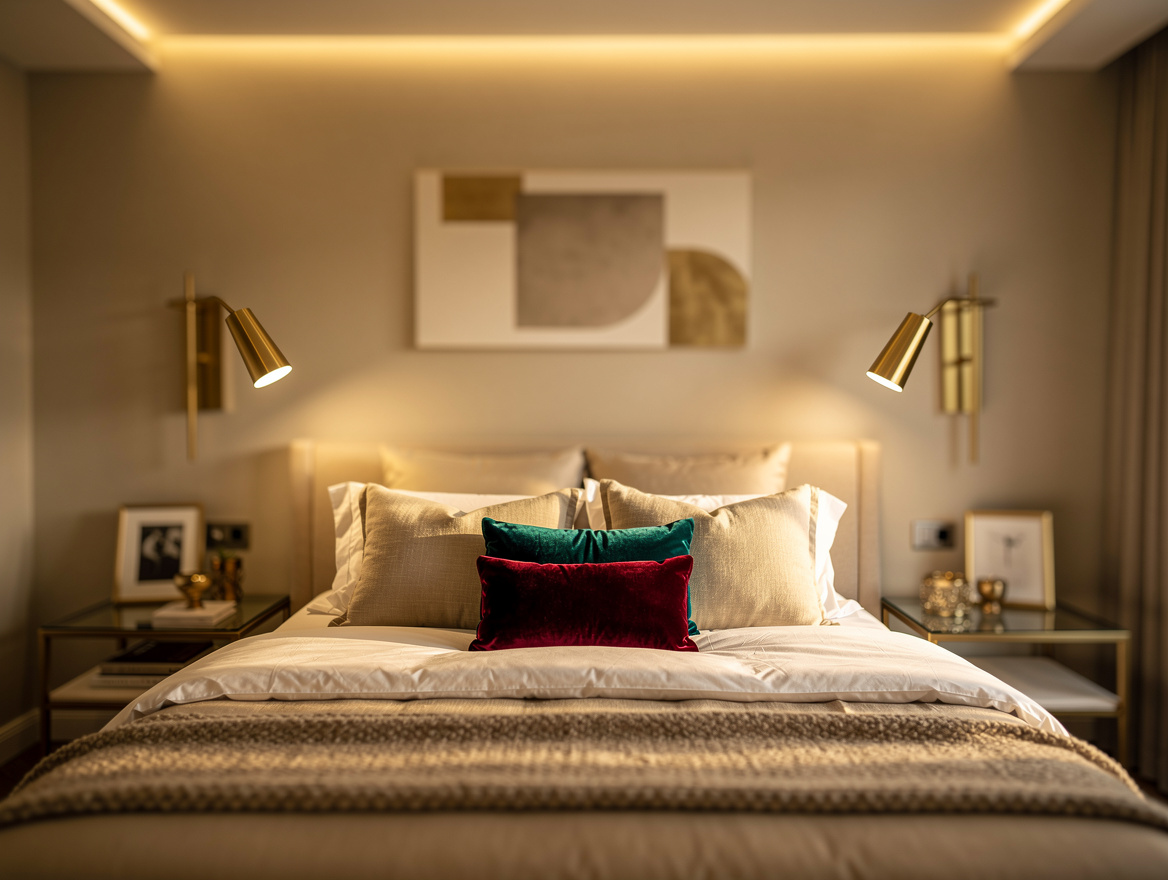
Choose 2700K LED bulbs for the first setting, with roughly 3000K as the upper limit when you need a cleaner work light. For most bedrooms, around 2,000 to 4,000 total lumens is a useful planning range, distributed across the ceiling, walls, and accent layer.
A linen shade softens a flush mount or pendant, while frosted glass spreads light without putting a bright point above your eyes; I would choose a low, broad fixture over a dramatic pendant centered directly over the mattress.
The ceiling’s job is to support the room and recede visually, so set the ambient layer low enough for the headboard halo and reading beams to remain visible, then raise it for dressing, cleaning, or finding something under the nightstand.
Hide the Strip, Driver, and Cords
Concealment is what gives the setup its expensive look. Run the strip inside an aluminum LED channel with an opal diffuser, and place the driver where you can reach it for service rather than sealing it behind permanent joinery.
A paintable cord raceway can make a plug-in sconce or under-bed accent look intentional in a rental, but keep the accent source dim and indirect with the strip hidden from standing height; a bright line under the bed reads like a gadget display.
For a simple renter setup, IKEA furniture can hide a slim power strip and keep the nightstands visually clear; leave ventilation around the driver and test every cable path before moving the bed.
Set the Scene Before You Climb In
Symmetry carries much of the hotel effect, so mirror the reading lights, switch heights, and halo distance on both sides. Use matching bedside sconces when possible, or choose two fixtures with the same beam and color temperature if the room needs a more coherent look.
Sit in bed and test the separate dimmer at night, looking for glare on the page, shadows across the pillow, and a beam that lands on your partner; set the ambient layer first, then the reading lights, then the accent glow, with each level low enough to préservé the room’s quiet mood.
If the room still feels flat, change the light’s direction before buying another fixture, since a small adjustment to a matte black steel reading arm or a headboard gap often does more than adding brightness; take one photo from the doorway after sunset and lower the ceiling output if it dominates the frame.
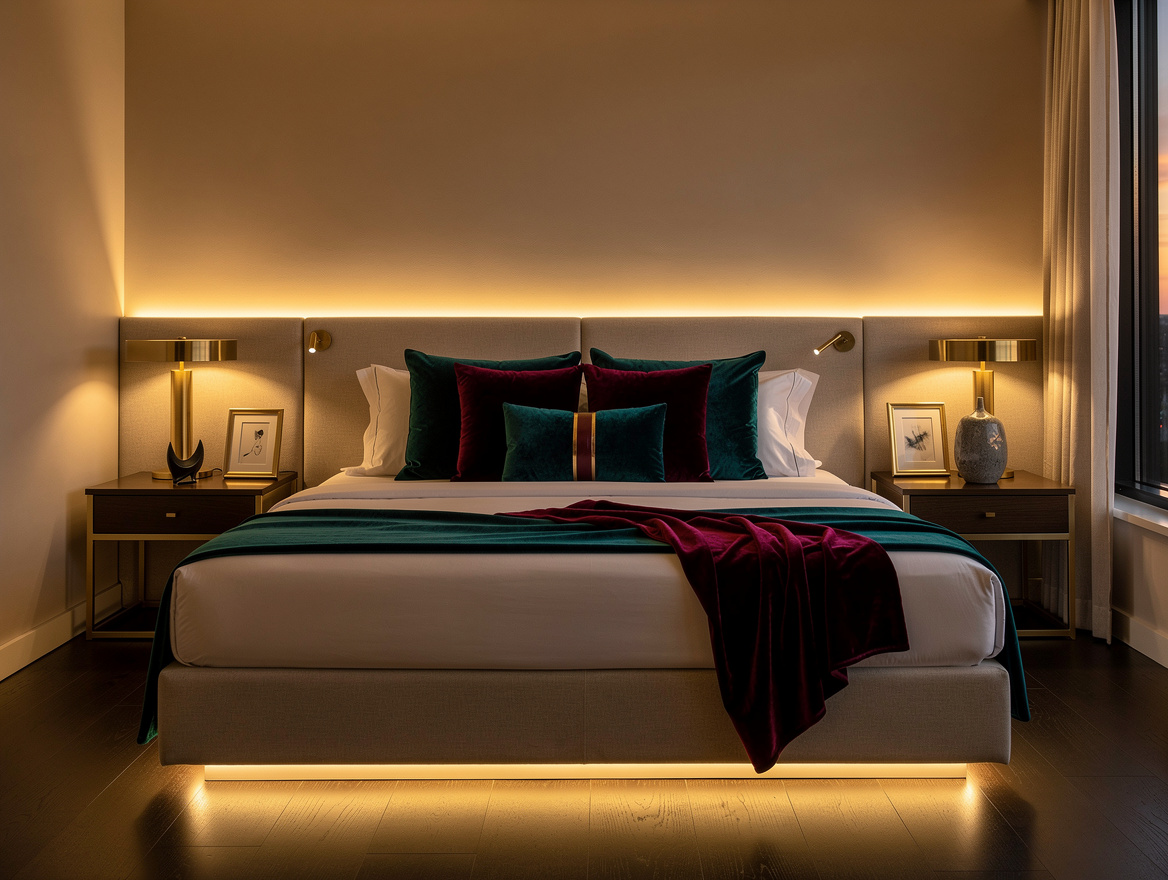
Begin with two bedside reading lights and their switches, then add the hidden halo; that order solves function before mood. Once the beam is comfortable from the pillow, tune the ceiling layer until the room feels softly lit even when the accent is off.
Mia Carter writes about small-space living and budget home makeovers. She has restyled three rentals and tests most ideas in her own 45 sqm flat.