A shared bedroom can feel lopsided fast: one bed gets the only reading light, while the other inherits a bare wall and a pile of books.
A ready-made floating-shelf setup can cost roughly $80-$250, so symmetry is within reach before a renovation enters the picture.
The strongest layouts frame the beds or create a balanced central zone, giving each sleeper a clear place for books, chargers, and small personal items. The goal is an intentional composition that feels equal without making the room look like a showroom.
Frame Each Bed With Matching Shelves
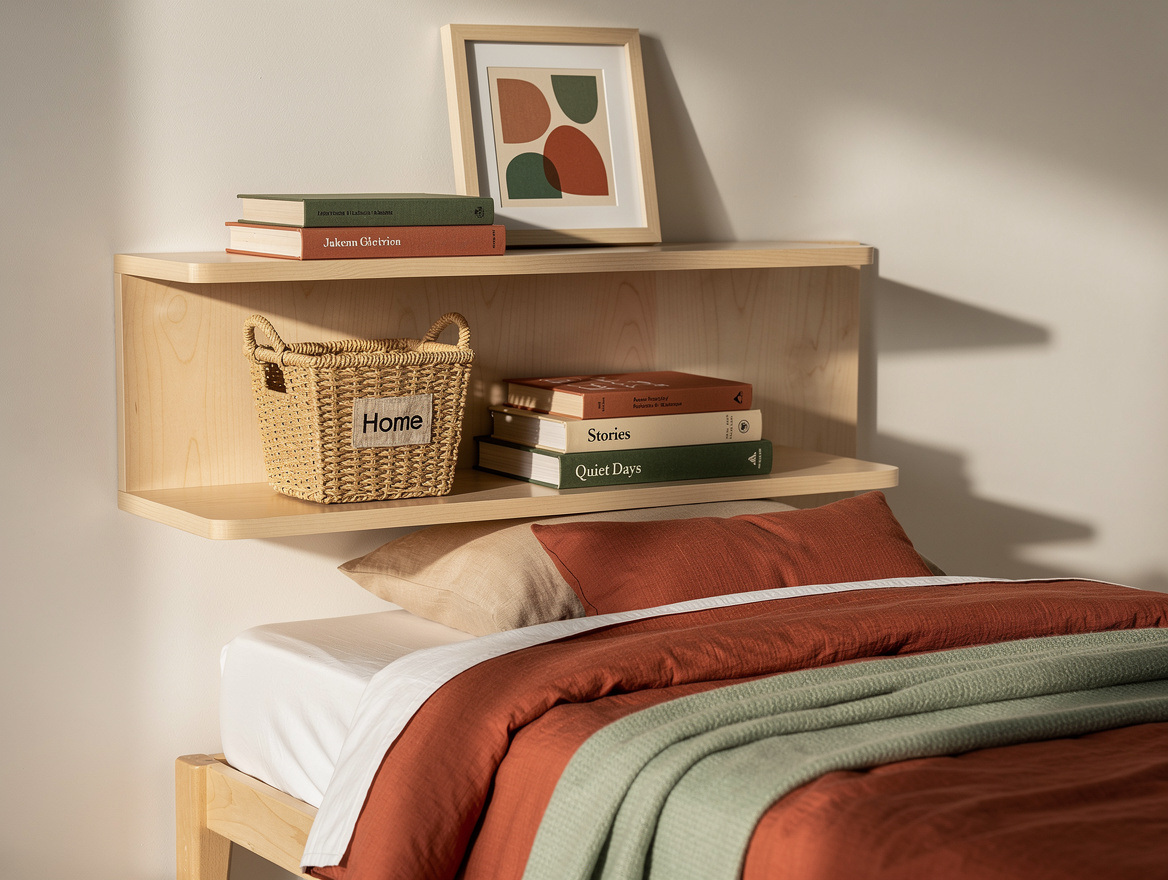
Start with two identical birch shelves above the beds, because mirrored lines immediately calm a busy wall and give each child or guest the same visual footprint for books, art, and a nighttime drink.
For a twin, shelves around 24 to 36 inches wide and 8 to 10 inches deep usually look proportionate, while two shelves per bed create useful storage without making the headboard area feel like a cabinet.
Keep the lowest shelf roughly 20 to 28 inches above the top of the mattress, then move it higher if either sleeper sits up to read or if the bed has a tall pillow stack.
This is my favorite starting layout for a rental: repeat a Target basket on each side, but let each person choose a different book or framed print so the order feels generous rather than rigid.
Build Equal Bed Bays
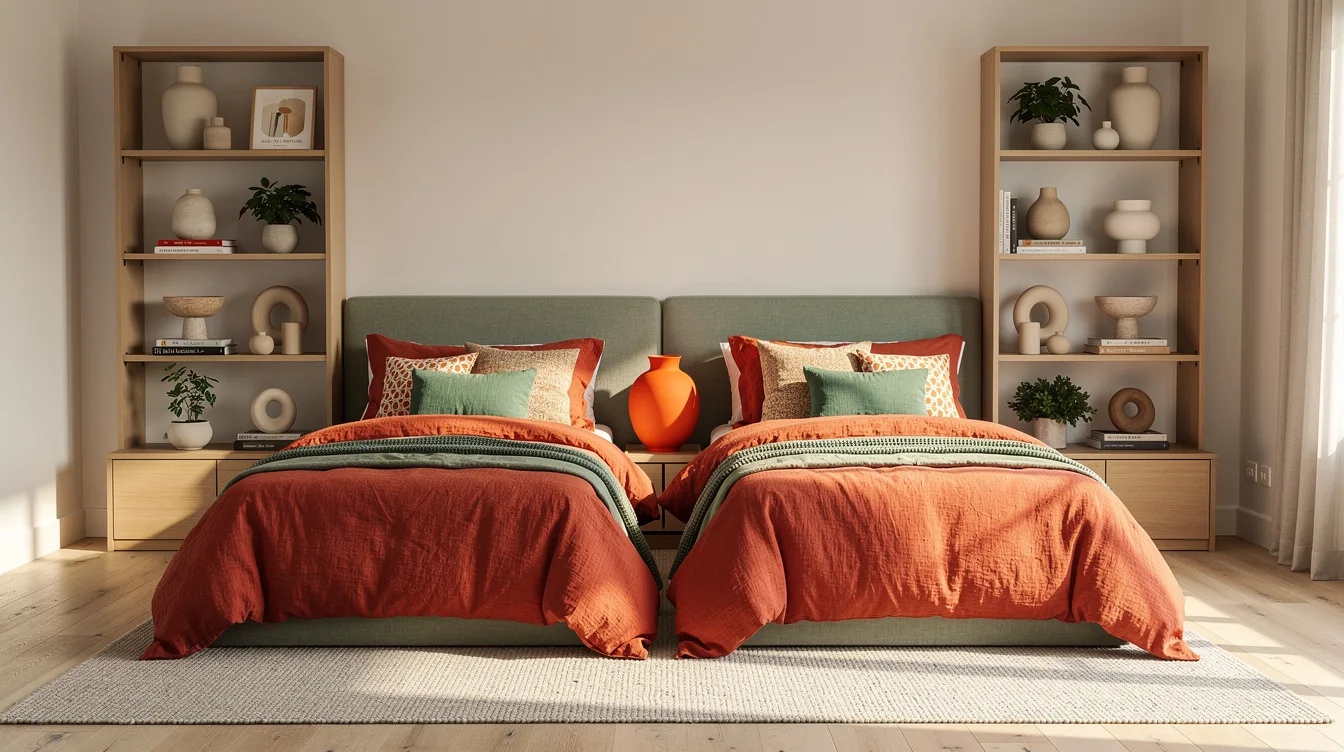
When the beds sit side by side, use matching white-oak bookcases or wall-mounted towers at the outer edges, creating two bed bays with equal visual weight and a clear personal storage zone for each sleeper.
Aim for towers roughly 18 to 24 inches wide, 8 to 12 inches deep, and 60 to 84 inches high, then anchor them into studs or approved wall hardware so the tall profile stays stable during everyday use.
A modular setup can cost around $300-$1,200, depending on the pieces and finish, but that investment makes more sense here than buying unrelated nightstands that leave one bed visually favored.
I prefer a low, open profile near the mattress, with Walmart bins or canvas boxes below eye level, because closed storage keeps the room tidy without adding another heavy block to the wall.
Reserve the Center for Shared Storage
A gap between the beds deserves one deliberate anchor, such as a narrow maple bookcase or cubby unit, rather than two mismatched stands competing for attention and stealing width from the walking path.
Keep the central piece roughly 12 to 18 inches wide, 10 to 14 inches deep, and 30 to 60 inches high; in a renovation, a recessed niche around 8 to 10 inches deep and 18 to 30 inches wide creates the same balance with less floor intrusion.
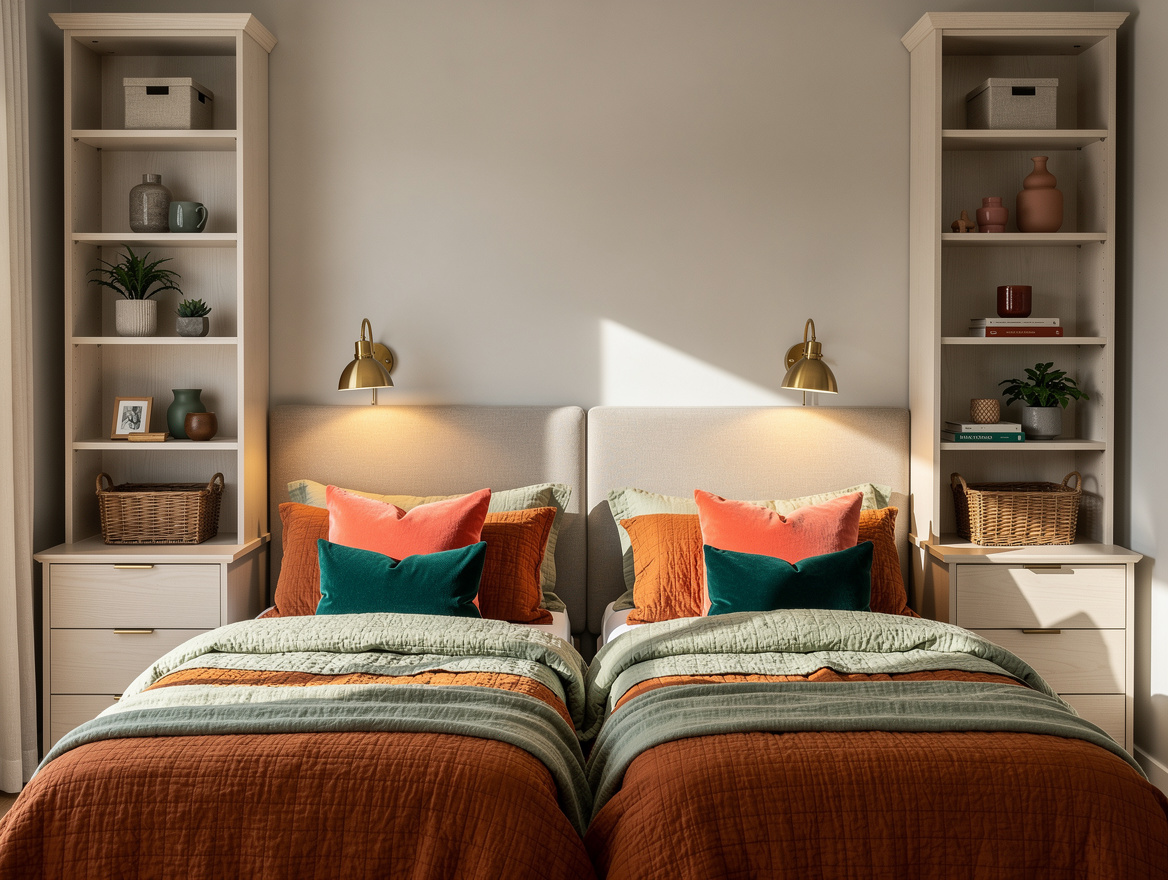
Add a shared brass reading light and a charging station at the center, then give each side one shelf or bin for private items, making the middle useful without pretending everything must be shared.
A shallow IKEA cubby unit works well when floor area is tight, but I would skip anything deep enough to turn the walkway into a squeeze or make the beds feel boxed in.
Balance a Long Headboard Wall
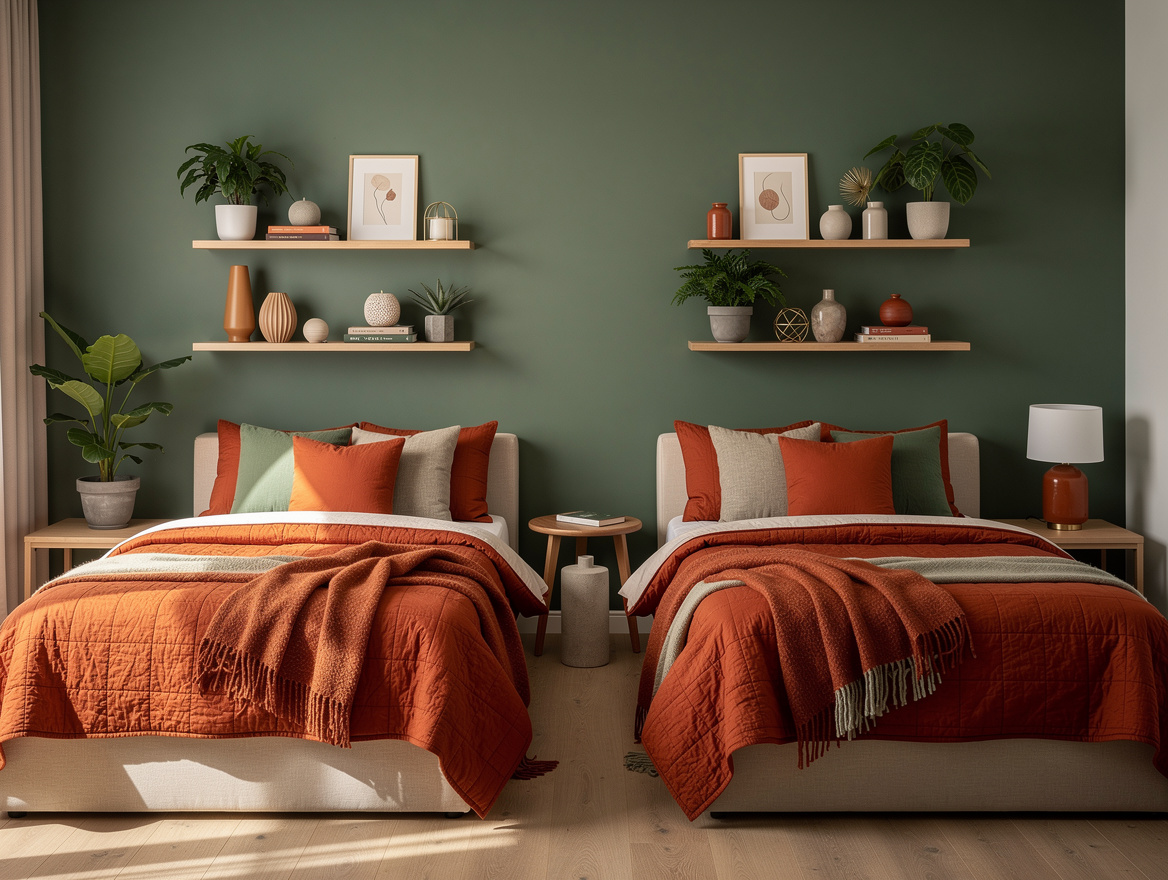
For two twins on one long wall, treat the entire composition as a single drawing: place pine shelves with matte-black brackets at the outer edges, then leave the center open enough for art or a low bench.
A wall about 10 to 12 feet wide typically gives two twin beds enough room for functional side shelving, although doors, windows, and the walking path should decide the final placement before anything is drilled.
Paint the panel behind the shelves a muted sage green or warm clay, then repeat that color in bedding or a rug so the shelves feel connected to the room instead of pasted on.
A low oak bench can hold spare quilts and school bags, and this is my favorite solution when the beds need to read as one calm arrangement without losing their individual corners.
Light the Shelves Before Styling
Symmetry fails when one side glows and the other disappears, so mount identical LED reading lights at the same height and keep the cords hidden behind the shelf or along the bed frame.
For a rental, slim plug-in fixtures from Amazon can préservé the layout, while a renovation can place outlets near each bed and the central shelf for cleaner charging and fewer trailing cables.
Use warm light on a linen shade, and reserve the shelves for lightweight books, paper art, and small storage rather than heavy objects that could fall above a pillow.
A shelf is a storage surface first, but its lighting should make bedtime easier, so skip harsh white bulbs that turn a quiet room into an alert, overlit display.
Mount for Safety and Daily Use
Choose shelves that can handle their intended load, then fasten every steel bracket into a stud or suitable anchor before styling the room, especially when the shelves will hold books or baskets.
Keep ceramics, glass, large planters, and dense stacks of books away from the space directly above where someone sleeps, particularly in a child’s room or a guest room used by people unfamiliar with the layout.
Daily-use shelves should sit around 59 to 63 inches from the floor or lower, so books and chargers remain reachable without a chair, while taller display shelves can hold less frequently used pieces.
A shallow Wayfair shelf can suit a refresh, while tailored millwork may cost several thousand dollars, but I would choose sturdy construction and clean mounting over extra decor every time.
Measure the wall, mark both bed centers, and place painter’s tape at the lowest shelf before buying anything.
Start with the mirrored pair above the beds, then add lighting and personal objects only after the clearance feels comfortable.
Mia Carter writes about small-space living and budget home makeovers. She has restyled three rentals and tests most ideas in her own 45 sqm flat.