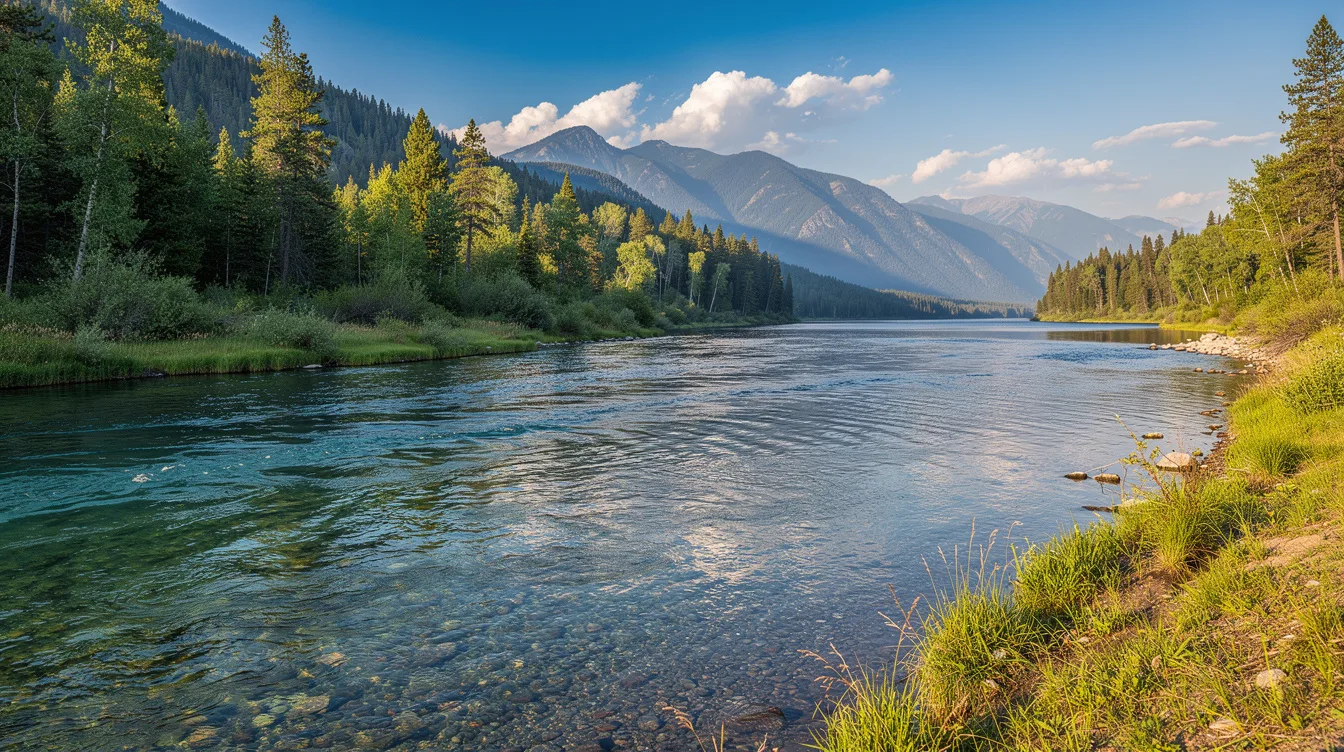
Bigfork sits at the north end of Flathead Lake, where the Swan River joins the water. That geography is the town’s central draw, because you get a lakeside base with mountain country around it, not a resort stripped from its setting.
The lake is one of the largest natural freshwater lakes west of the Mississippi, and it gives the village an unusually strong sense of place. But you’ll also find galleries, cafes, restaurants, and a summer theater, so Bigfork feels more layered than its size suggests.
Why 5,118 people give Bigfork a bigger feel
Bigfork is a census-designated place in Flathead County, not an incorporated city, and its 2020 count was 5,118 residents. But that distinction matters less on the ground than the scale: the core feels small enough to walk, yet ready for summer visitors.
The center gathers around Bigfork Bay, close to the Swan River’s mouth. You can move from galleries and the Bigfork Art and Cultural Center to cafes, shops, restaurants, and lodging without losing the view, which is why I prefer it to a purely rural base.
And the arts give the town a personality beyond lake access. If you spend an afternoon here, keep room for a gallery stop or a meal, because Bigfork feels more like a resort-and-arts village than a generic roadside stop. That makes it a useful Montana base when you plan beyond the lake.
Flathead Lake makes the northern end worth slowing down
The water changes the pace of the day. Flathead Lake is one of the largest natural freshwater lakes west of the Mississippi, so you can boat, kayak, paddleboard, or swim without treating the shoreline as a quick photo stop.
But the northern edge has a clear physical story. The Swan River reaches the lake, while the Flathead River is nearby, so the town’s setting feels connected rather than staged. I think that is Bigfork’s strongest argument.
And if you visit in summer, bring patience for your lake plans. More visitors arrive, lodging availability tightens, and prices rise, but that pressure is also why the town feels most alive then. Follow Flathead Lake when you want the day to stay outdoors.
Summer brings Flathead cherries and a busier bargain
Summer gives Bigfork its full range: lake time, outdoor dining, theater, and summer cherries when the region’s fruit is in season. You can build a whole day around those pleasures, although more visitors and tighter lodging make the season less relaxed.
But the Bigfork Summer Playhouse has been active for more than 50 years, giving the village a cultural anchor beyond the weather. I like that balance: the lake gets you here, but a repertory show can keep the evening from feeling like an afterthought.
And autumn may be the sharper choice if you prefer quieter roads, foliage, and cooler weather. Winter is cold and snowy, but it suits travelers who want a calm mountain base instead of a large ski-town scene.
Can you visit outside summer?
Yes. If you want less activity around you, choose autumn; if you want lake time and cherries, choose summer and accept more visitors and costlier lodging. I would take autumn for ease, but summer for the fullest version of Bigfork.
Kalispell is 30 minutes away, but Glacier changes the scale
Bigfork is about 30 minutes by car from Kalispell and Glacier Park International Airport. It sits roughly 17-20 miles southeast of Kalispell, so you can fly in, pick up a car, and reach the lake without turning arrival day into a long transfer.
And Glacier National Park is north, within reach for an outing beyond the bay. The Flathead Valley also gives you room for cycling, hiking, camping, and wilderness exploration, so you can use Bigfork as a base instead of changing lodging every night.
But roads can be narrow and busy in high season. If you drive during summer, leave flexibility in the schedule, because the access is easy but the day isn’t built around rushing from one attraction to the next. Read more about Glacier National Park before you go.
Bigfork’s polished edge has a price
Bigfork looks like a small Montana village, but it carries a more polished gallery-and-dining character than many rural towns. That is its appeal and its limit: you get a more polished stay, but not the feeling of an isolated Western outpost.
Accommodation ranges from bed-and-breakfasts and lodges to resorts, and peak summer availability is the tightest. But if you want a quieter stay, autumn is the practical compromise; if you want the fullest lake experience, book summer and accept that Bigfork may cost more than its village scale suggests. Explore the Flathead Valley before choosing your base.
And the town’s official status as a census-designated place won’t shape your itinerary. What you will notice is a walkable core, nearby water, galleries, and easy access from Kalispell, a combination that makes Bigfork more useful than its size suggests. For me, that balance is the point.
Stand near Bigfork Bay and the geography explains the town before any brochure does. The river meets the lake, and the village stays close behind, which is exactly why I’d linger until the water goes quiet.