
Build your entire Halloween porch around one wreath by repeating three cues: one dark anchor, one warm light source, and one low shape. I’ve learned this after buying too many pumpkins and still ending up with a doorway that looked busy, not inviting. Start with the wreath, then make every other choice support it. That’s the whole plan.
- Measure Your Porch for Halloween Porch Decorations
- Choose a Halloween Porch Wreath as the Dark Anchor
- Map Front Porch Halloween Decor With the Three-Point Frame
- Price Your Wreath and Porch Decor Before You Shop
- Paint the Door for Halloween Porch Styling
- Hang the Wreath Where Your Eye Lands First
- Build the Two-Height Pumpkin Group
- Layer a Runner Instead of a Giant Mat
- Add the Three-Height Light Stack
- Mix One Wood Tone With One Metal
- Frame the Door With Repeated Shapes
- Which Halloween Entrance Decor Should You Repeat?
- Swap Real Flame for Weatherproof Glow
- Pull the Palette Down to the Steps
- Edit the Wreath and Porch Decor From the Street
- Photograph the Halloween Porch Styling at Dusk
- Lock the Look Against Wind and Rain
1Measure Your Porch for Halloween Porch Decorations
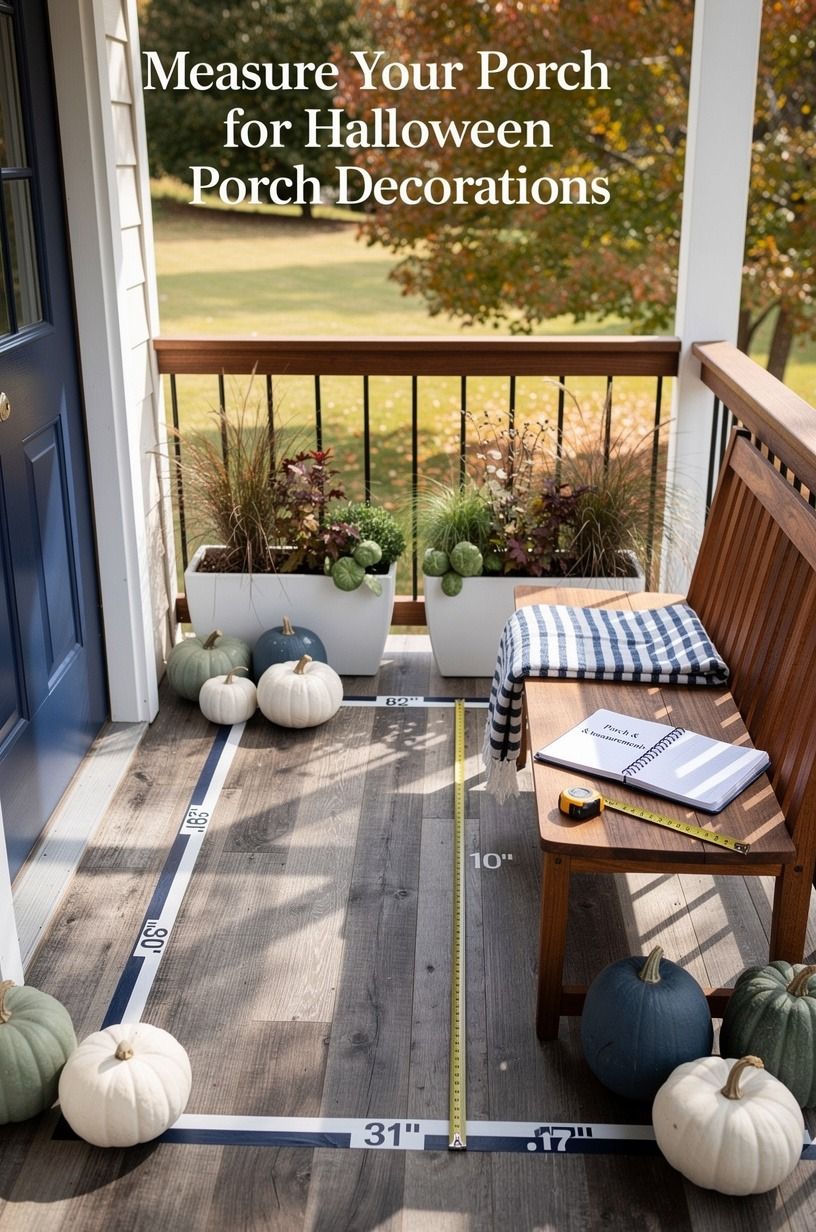
Start at the sidewalk, not the shopping cart. Stand where you usually arrive and note the door swing, the steps, and the clear route around them.
Your walkway needs 36 in of minimum clearance, so leave room for shoes, parcels, and guests. I use painter’s tape to mark the usable zone before bringing home a reclaimed weathered teak bench.
Its walnut tone gives a navy-and-white palette a grounded, practical note.
Then check your porch in daylight and again at dusk. You’ll see which wall can carry the wreath and where a low object will read from the street.
If you’re working with a narrow entry, compare where to hang a Halloween wreath indoors for placement logic. You don’t need a large porch; you need your front door to stay visible.
A walnut hook should disappear against the door, because your wreath is the feature your eye should keep.
2Choose a Halloween Porch Wreath as the Dark Anchor
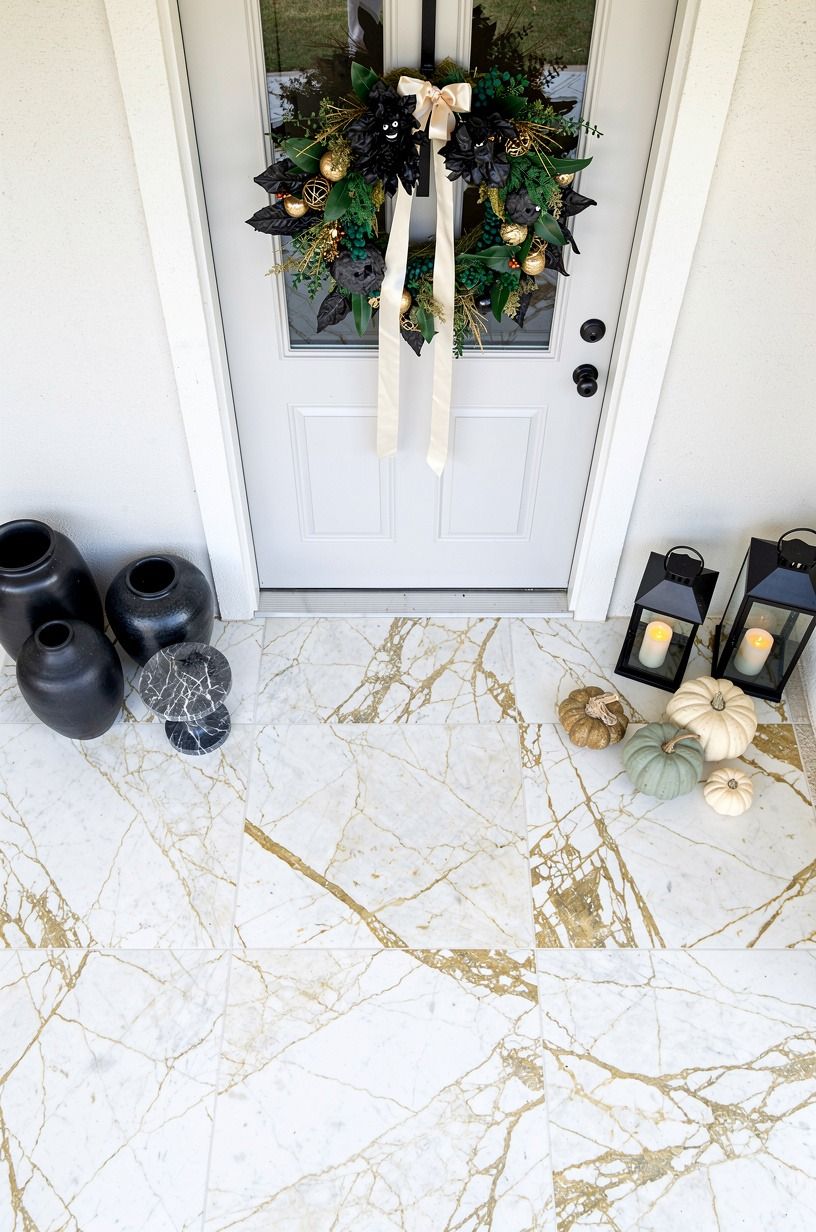
Pick the wreath before the pumpkins, lights, or mat. Your anchor needs one readable silhouette from the curb, such as cream dried grasses with emerald foliage, gold seed pods, or a narrow velvet ribbon.
I’d skip a wreath made from five unrelated novelty pieces. It can look charming in isolation, but the outline gets noisy at a distance, and your porch loses its moody center.
Keep the supporting colors warm and limited. A wreath with emerald leaves can sit beside a small Calacatta marble ledge with gold veining, while one cream ceramic ghost supplies the Halloween note.
You’re building an inviting doorway, not a crowded display. That silhouette matters! If you’re unsure about height, use the Halloween wreath placement guide and choose the position that lets your eye land on the wreath first.
Keep a spare gold ribbon nearby; your first tie may look too shiny after dark.
3Map Front Porch Halloween Decor With the Three-Point Frame
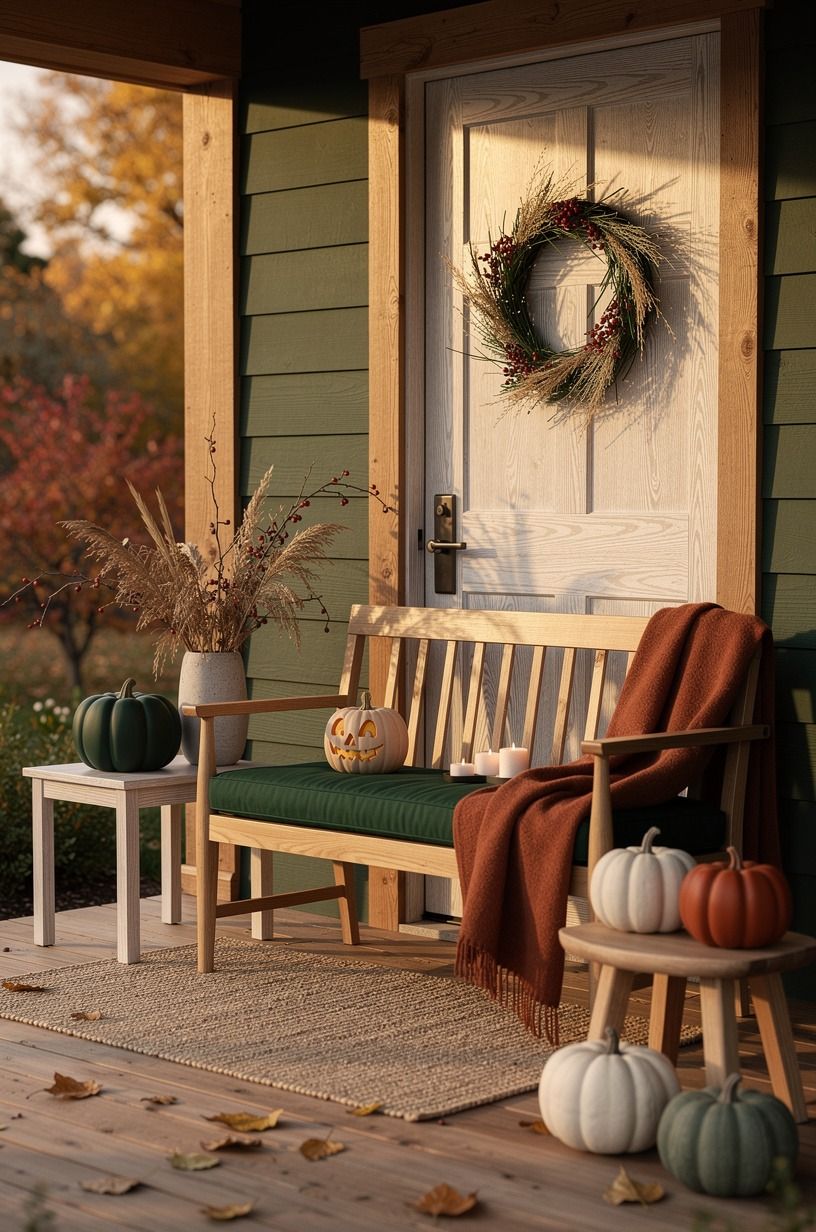
Use the wreath, a low ground object, and one vertical side element as your three points.
4Price Your Wreath and Porch Decor Before You Shop
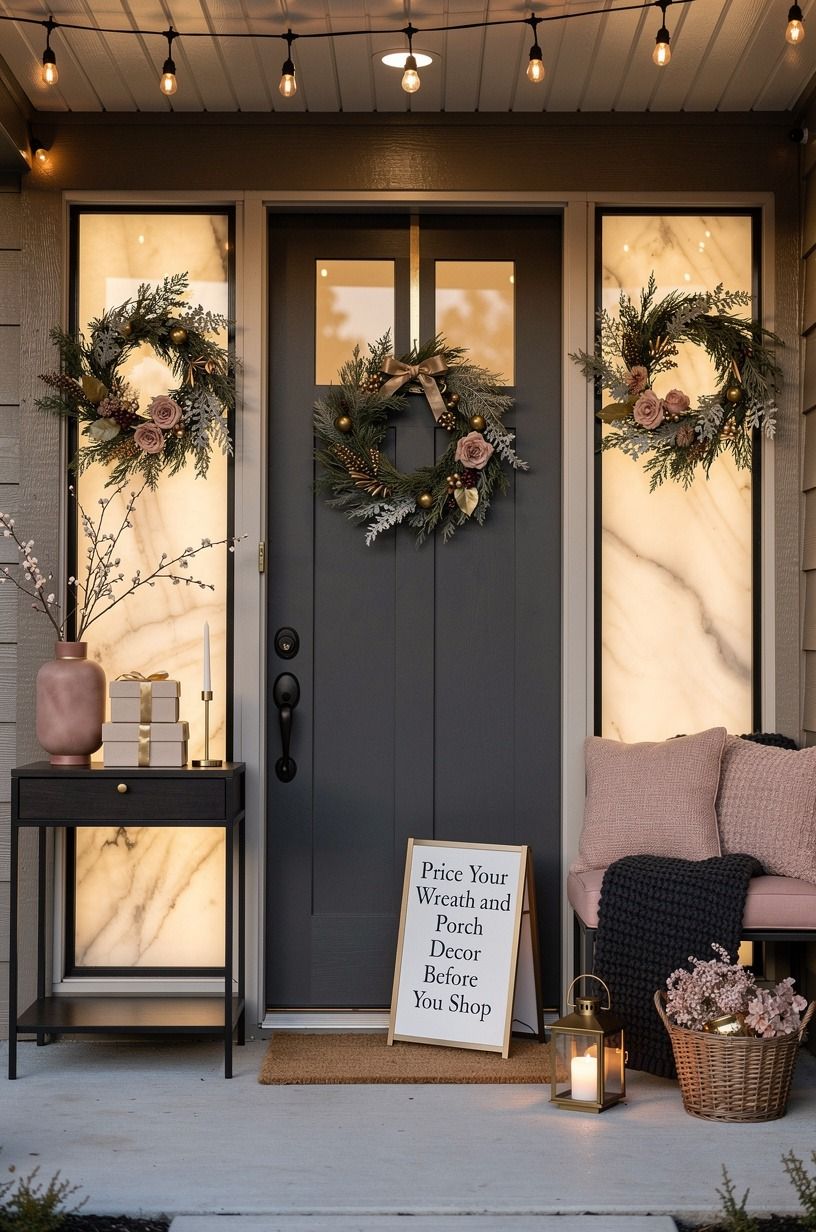
Set your budget before your eye gets attached to a premium backlit translucent onyx planter. For a Halloween porch, free moves include rearranging what you own, clipping branches, and reusing a lantern.
A leftover can of Benjamin Moore Aura Exterior in charcoal can carry more visual weight than another plastic prop. The outdoor ranges below are guardrails, not a promise about one wreath.
A low-cost plan can still feel rustic and organic when your materials repeat.
Use the Budget row as your ceiling for a small seasonal setup, then spend first on the anchor you touch and see every day. If you’re lighting the steps, aged-brass LED lights keep the glow bright. For a vertical element, see ways to wrap porch columns for Halloween without a ladder.
A Target Threshold metal planter in brushed brass can handle the low point without stealing attention.
5Paint the Door for Halloween Porch Styling
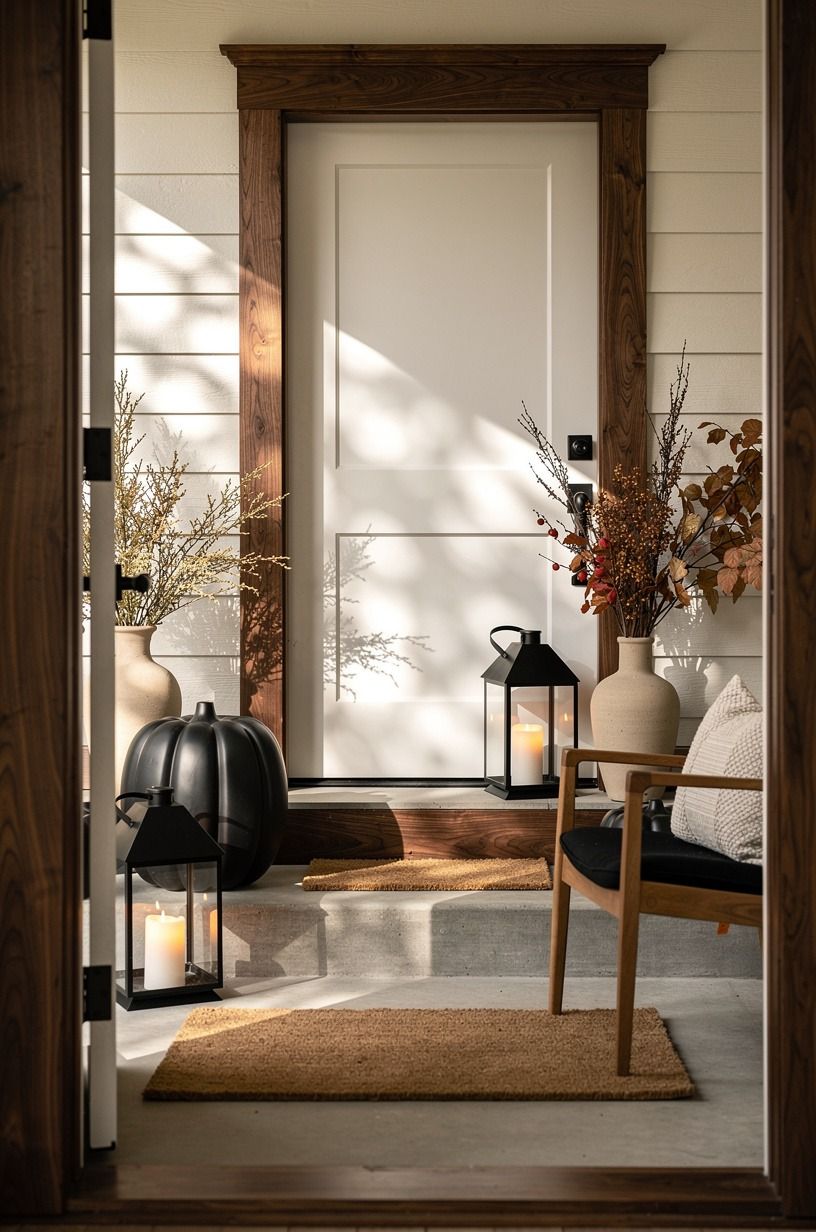
Let the door give your wreath a clean field.
6Hang the Wreath Where Your Eye Lands First
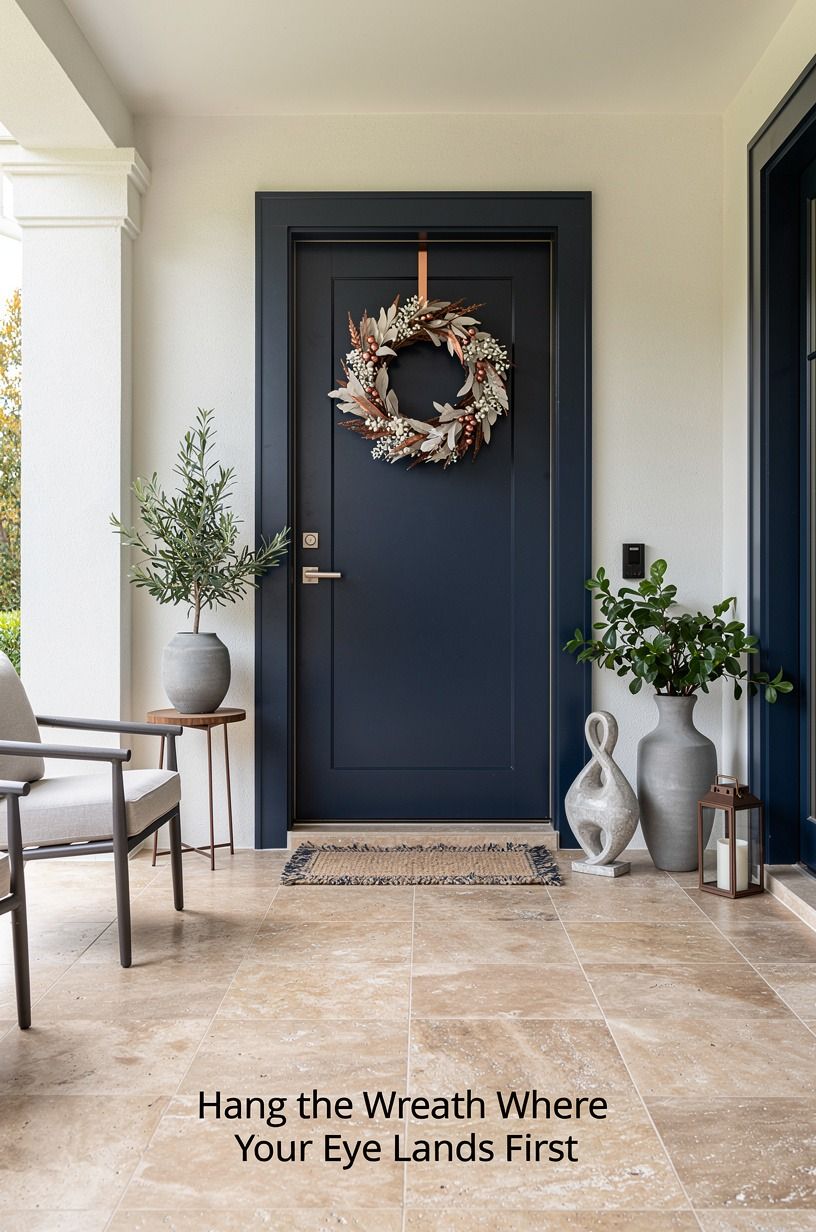
Hold the wreath in place before you commit to a hook. Your eye should meet its center as you approach, with enough room below for the low point of the composition.
I use removable hardware on a protected midnight-blue door and a soft loop of ivory linen when I want the hanger to disappear. It feels gentle and refined, not fussy.
Check the door from the sidewalk, then from the bottom step. Let a warm travertine threshold stay visually quiet, and don’t let the wreath drift so high that the top half of your door becomes dead space.
If you’re renting, a removable hook or over-door hanger keeps the experiment low-risk, and this guide to hanging a Halloween wreath indoors helps you compare sightlines. Your goal is simple: notice the wreath before the hardware.
A copper-finished removable door hook keeps your rental test clean and easy to reverse.
7Build the Two-Height Pumpkin Group
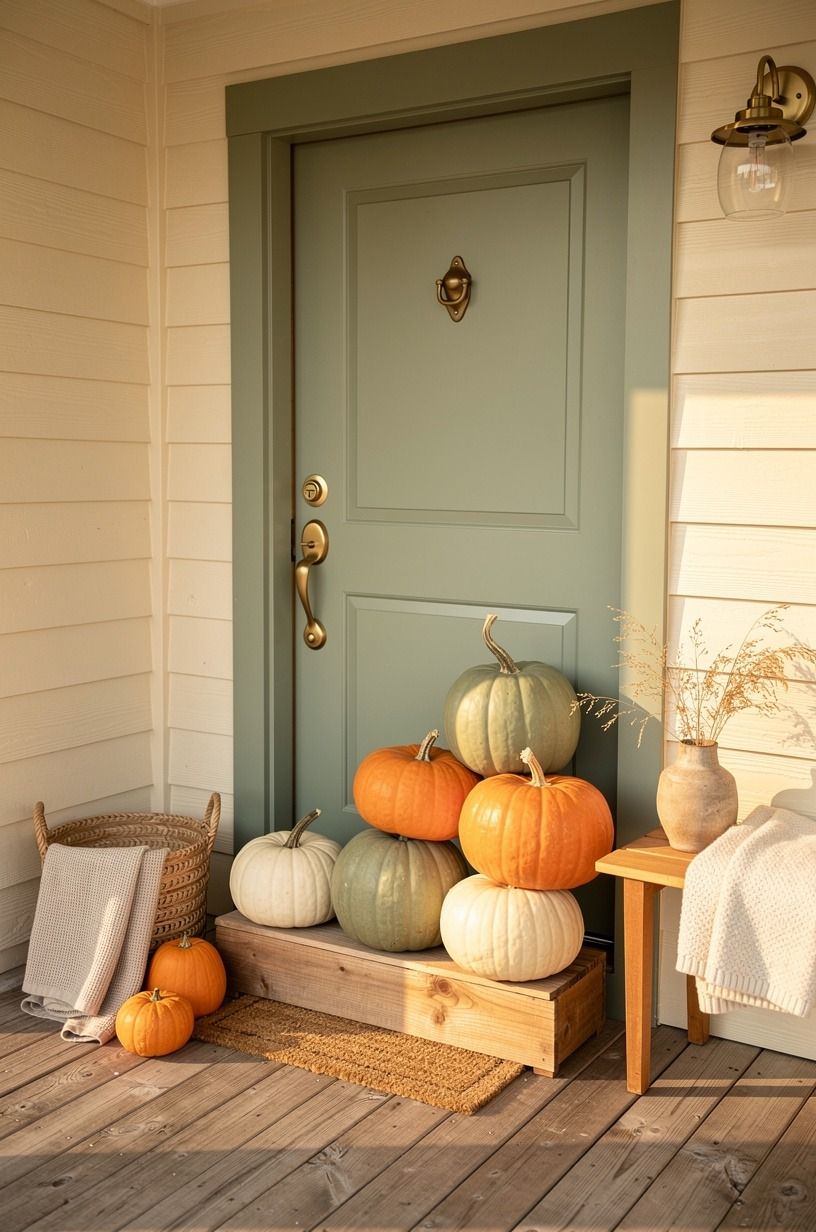
Create the low point with two visible heights, not a heap.
8Layer a Runner Instead of a Giant Mat
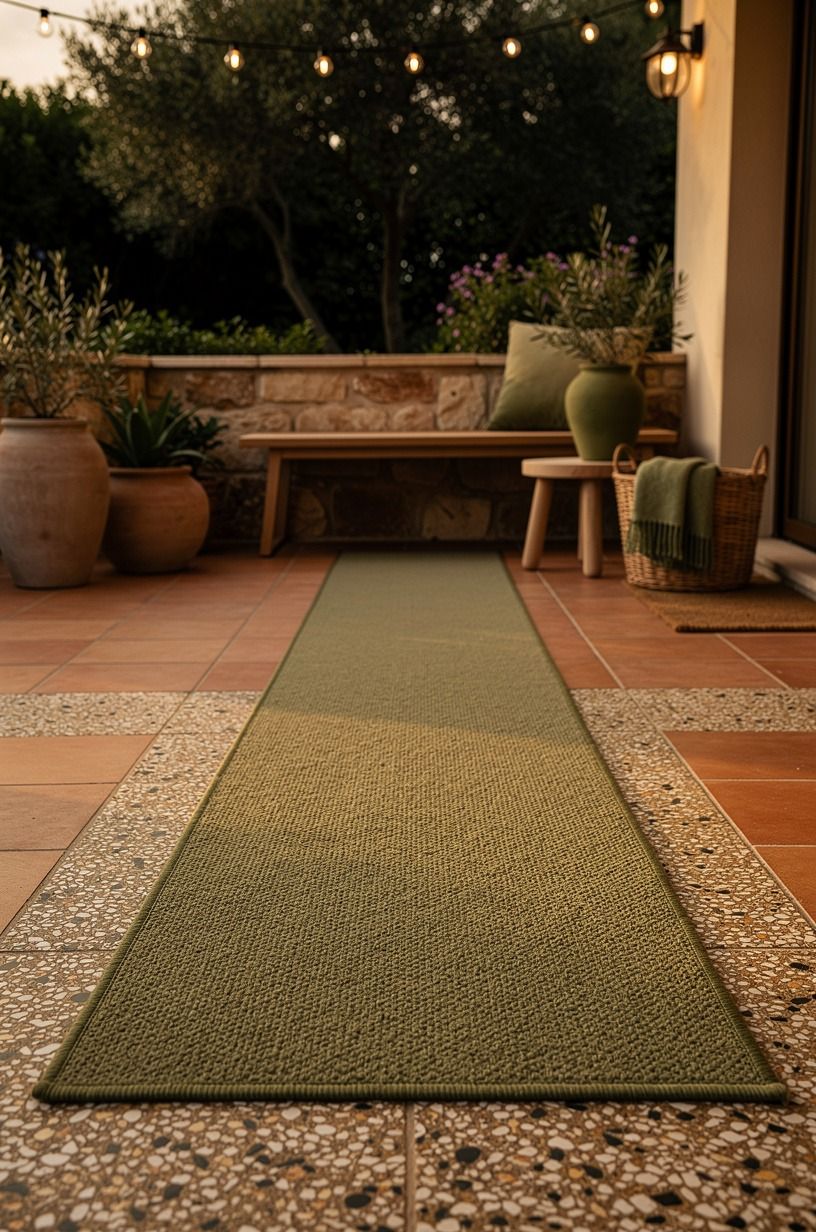
Use the floor to carry the palette from the door to the sidewalk. A narrow terracotta runner over oversized-chip terrazzo can add pattern without swallowing a compact landing, and it tolerates damp shoes better than delicate indoor fabric.
Put the front legs of any porch seating on it, but keep the walking lane open. I’d skip a huge seasonal mat if your entry is tight; it makes every other object look smaller.
Choose one pattern that repeats a color already found in your wreath, such as terracotta, stone, or olive. If you’re adding a bench, a 28-30 in patio table height can help you judge whether a drink surface will crowd the path. The rug should feel serene and practical, not like a second focal point.
Pair it with porch-column wrapping ideas that need no ladder, and you’ll get height without taking floor space.
An olive-painted bench can ground the runner while leaving your route clear.

9Add the Three-Height Light Stack
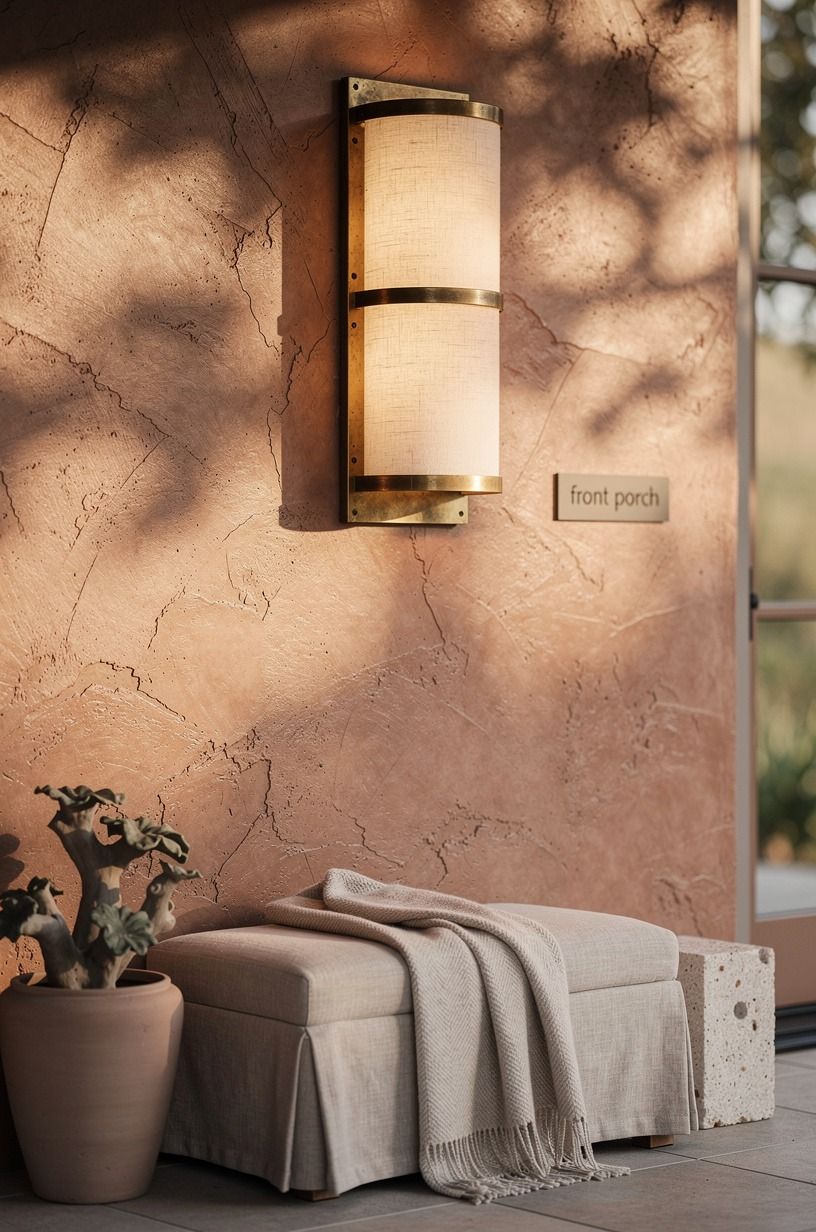
Build light in three levels: a small glow near the ground, a middle lantern or candle, and the wreath catching a little light above. This is the Three-Height Light Stack. An aged-brass LED lantern is a reliable middle layer because it gives a bright, warm glow without asking you to watch a flame.
I’d hide the battery pack behind the planter so your porch stays airy.
Use fewer bulbs than your first impulse suggests. A soft pool of light on the steps feels intimate and welcoming, while every surface lit equally can flatten the doorway.
If you’re working under an umbrella or covered seating zone, keep it wide enough to cover the table and about 2 ft on each side, then let the wreath own the vertical view. The layered hillside village reference is a useful reminder that depth comes from staggered levels.
On hand-applied Venetian plaster, the warm glow becomes part of the texture. The evening payoff is real!
A clay-toned covered lantern gives your lowest light a weather-safe home.
10Mix One Wood Tone With One Metal
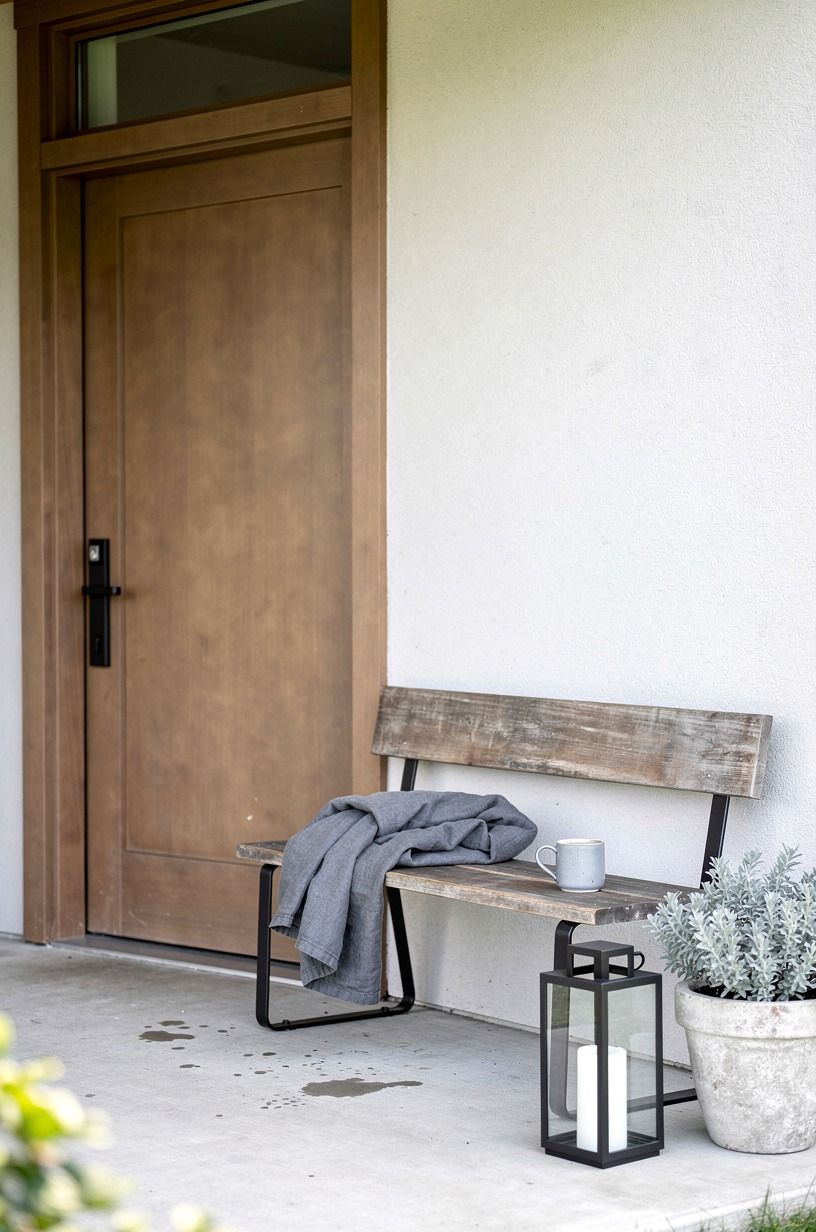
Choose one wood temperature and one metal finish, then repeat them twice. A grey-washed wood tone beside rose-gold metal, with shagreen accents, feels warm and considered; plum-painted wood beside cool silver feels accidental here. I’ve tried mixing three metals on a small entry, and the result looked busy before the first guest arrived.
Your wreath already has texture, so the supporting pieces need restraint.
Look at the hardware on your door, light, and furniture before you buy a new prop. If your home already has rose gold, let the shagreen accent be the quiet thread.
The pastel-house composition in this three-ring village reference reinforces the same principle: let one natural element lead, then keep the rest legible. And you don’t need a matching set to make your Halloween entrance decor feel sophisticated.
A plum shagreen detail can repeat the wreath’s texture without adding another metal.
11Frame the Door With Repeated Shapes
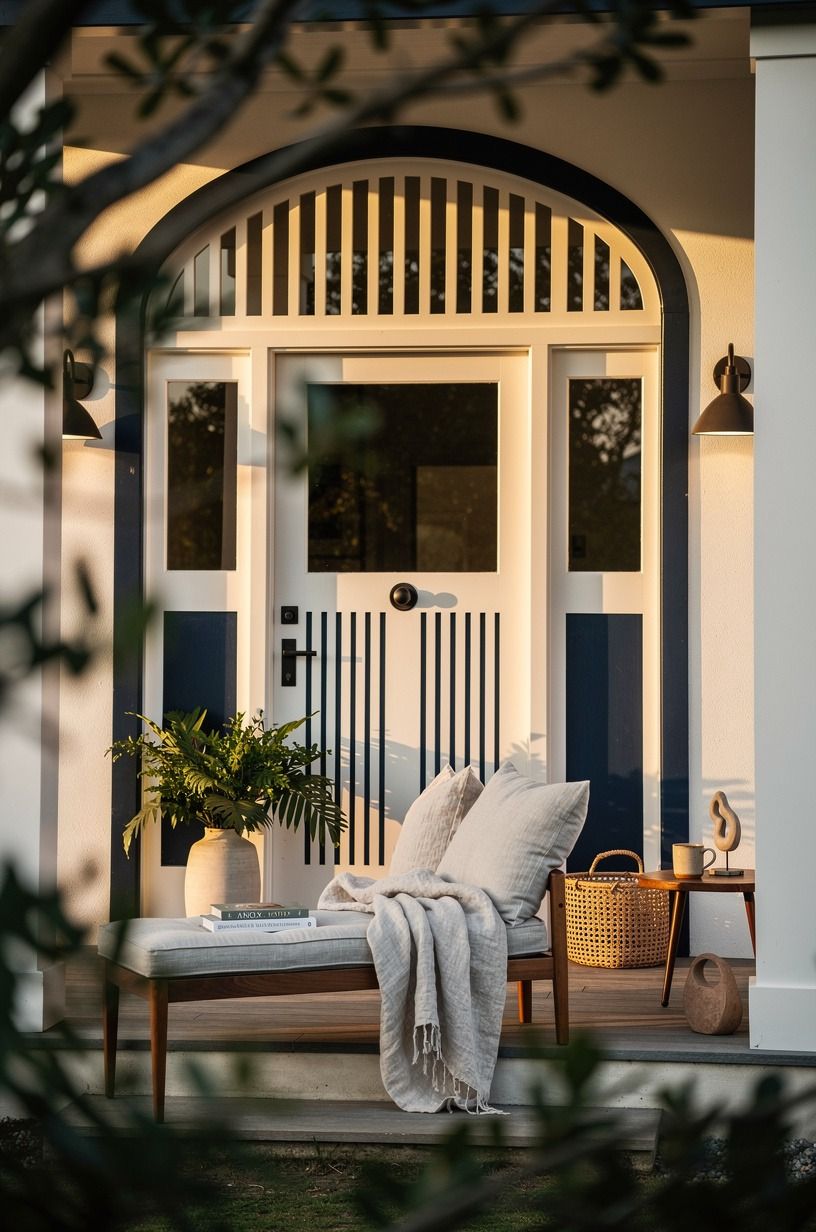
Repeat the wreath’s shape in small doses. Round white baskets under a bench, oval navy leaves in a planter, or circular candle plates can echo the main ring without copying it.
I’d avoid adding another giant circle at the opposite side, because symmetry can get stiff on a narrow porch. One big round form and two smaller echoes feels inviting.
Keep the side element vertical and narrow. A navy lantern, a tall branch, or a slim walnut screen softened with washed Belgian linen gives your eye a route from ground to door, and you can repeat the same navy note in the handle or house numbers. The three rings around medieval stone make this rhythm easy to see.
But if your entry is already busy, remove one echo before adding another. Your edit will look more elegant.
White house numbers can repeat the wreath without competing with it.
12Which Halloween Entrance Decor Should You Repeat?
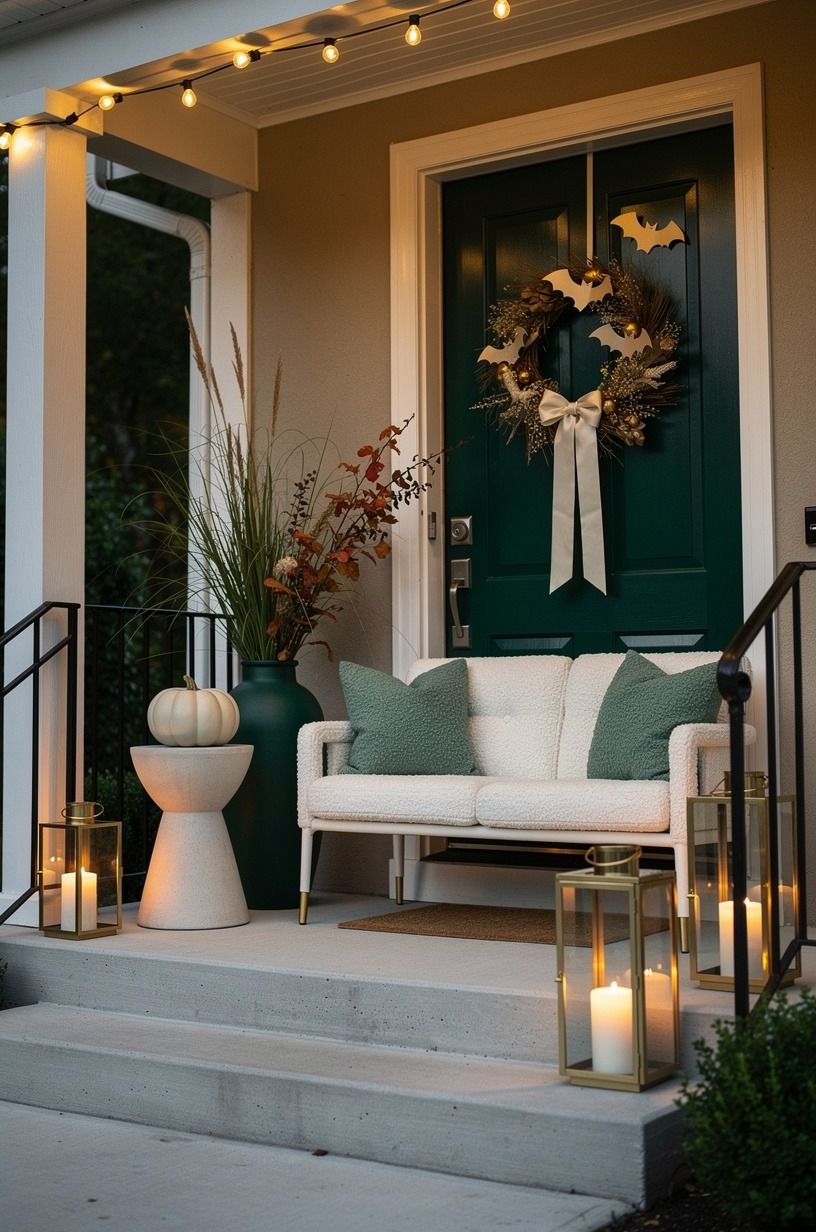
Repeat the element that already exists on your house, not the one you wish you had.
13Swap Real Flame for Weatherproof Glow
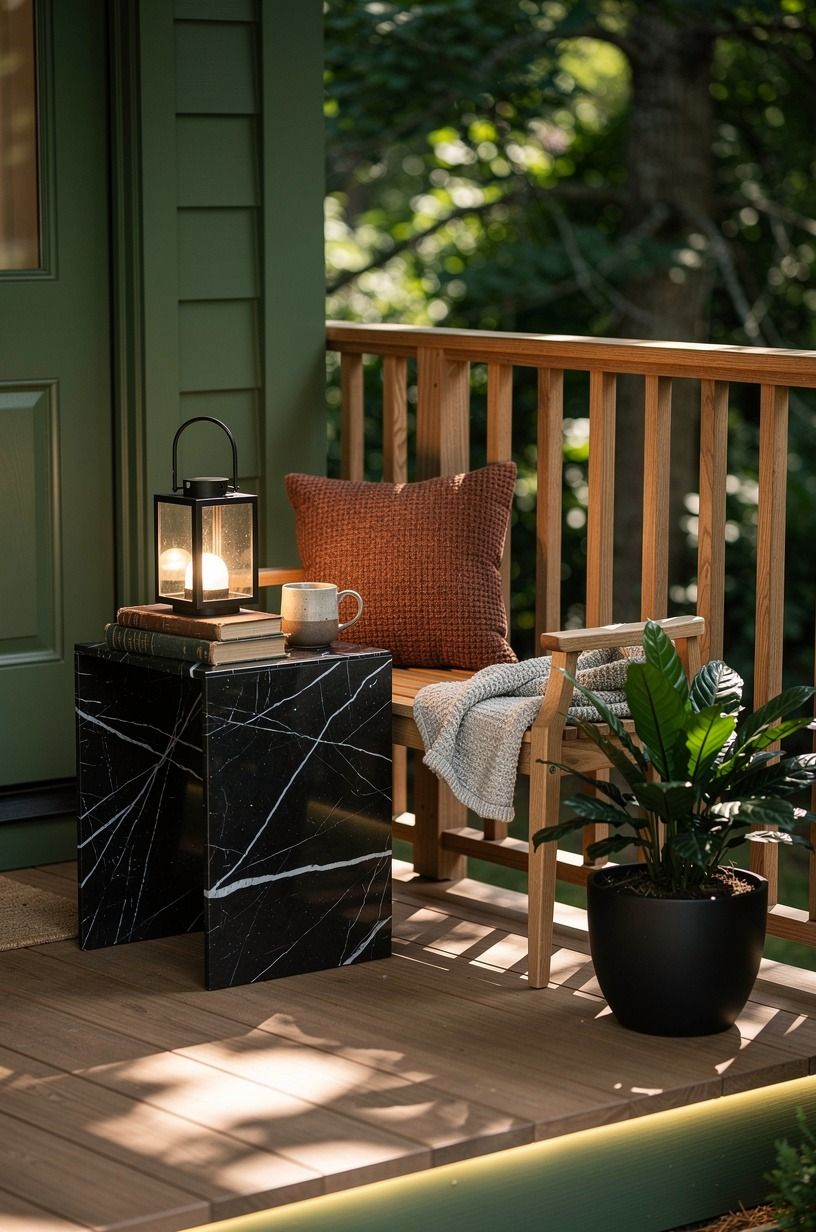
Use weather-safe light where your porch gets wind or damp. A covered LED lantern set on Nero Marquina black marble with white veins can give you the same soft flicker without soot on the door. I’d rather see a quiet glow than a dramatic flame that you have to monitor every minute.
If you love candles, place one in a deep rust-toned hurricane vessel on a stable natural-oak surface and keep fabric away from it. Your light should make the wreath legible, not compete with it. You’re styling for the whole season, so test the setup after dark before guests arrive.
The no-ladder column guide offers another way to add height without relying on a fragile flame. It can feel peaceful and enchanting when the light stays controlled.
A hurricane glass vessel protects the flame and keeps your doorway calm.
14Pull the Palette Down to the Steps
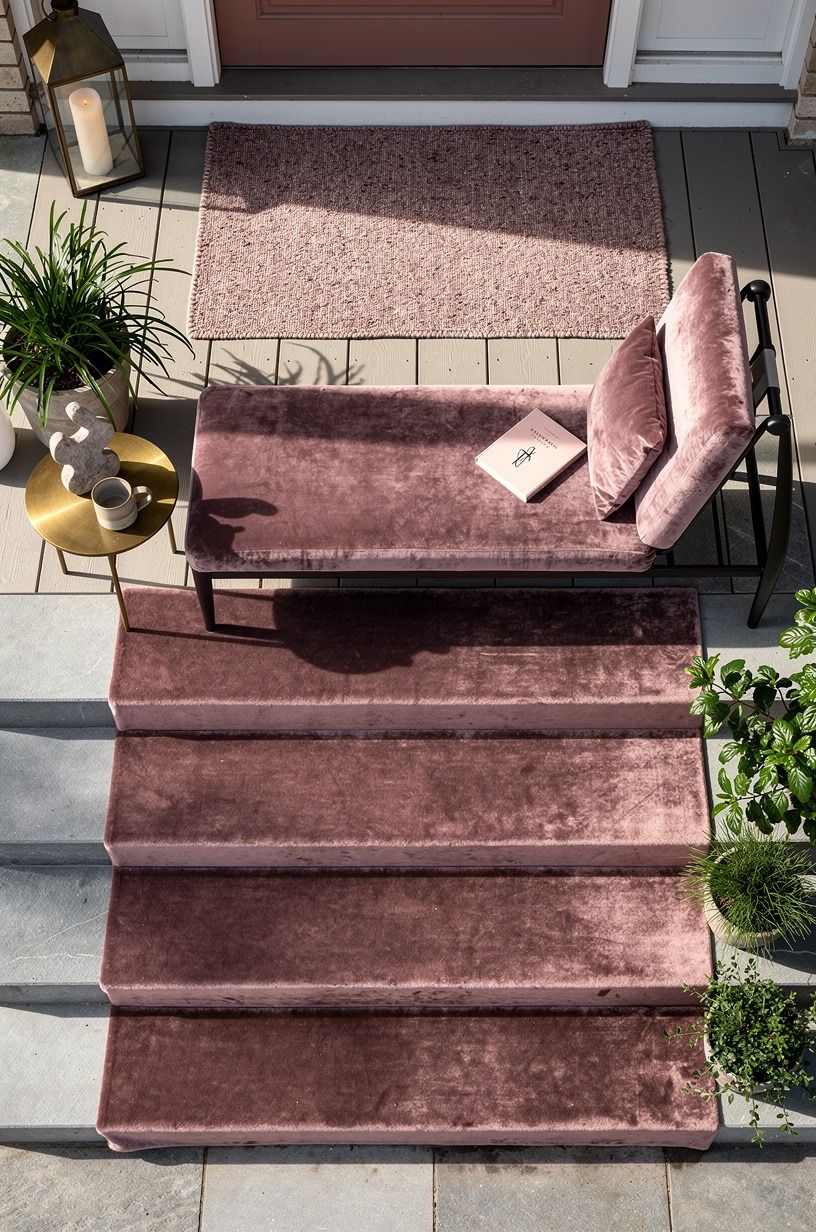
Connect the wreath to the ground with one low color. Deep-pile mohair velvet in dusty rose can work on a covered bench, while charcoal planters and brass accents repeat the wreath’s shadow.
I’ve found that the lower note matters more than a second door sign, because it makes the porch feel finished from the curb. Your eye should travel down, pause, and return.
Keep the bottom layer below the visual line of the door handle unless you have a wide landing. Leave 36 in of walkway clearance, even if a cluster would look picturesque in a photo.
If you’re adding plants, use their foliage as the quiet bridge between Halloween and the rest of the year. A layered Spanish hillside village offers a useful lesson in depth.
Your entrance will feel organic and sophisticated.
A charcoal planter with a brass rim can connect the seasonal wreath to the rest of your home’s planting.
15Edit the Wreath and Porch Decor From the Street
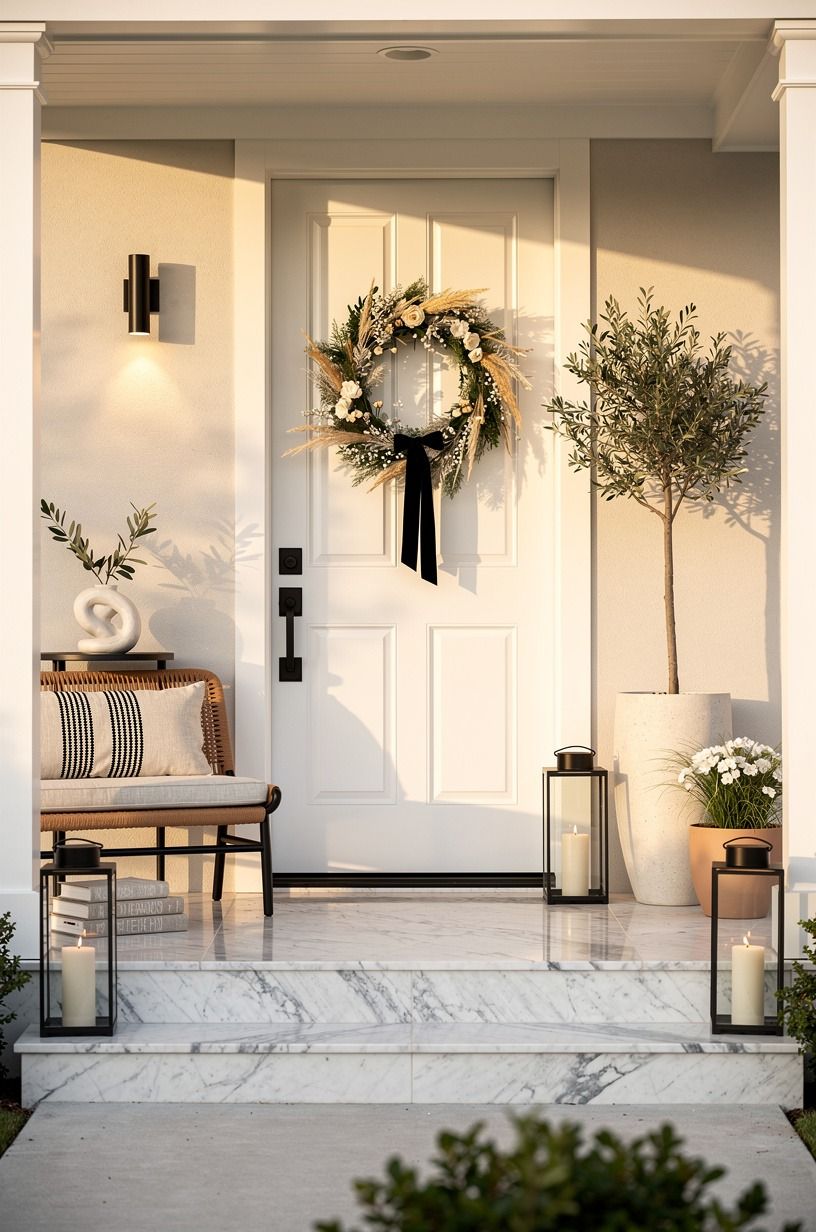
Stand at the sidewalk until the porch feels small, then edit what your eye notices first, second, and third. Your wreath should lead, the low group should support, and the light should make the path readable.
I’d remove any object that announces itself before the wreath, especially a bright sign or glossy plastic skull. A restrained edit feels more luxurious than a bigger pile.
Check the porch from the sidewalk and then from the side of the steps. If you’re seeing clutter, move an object rather than buying a new one.
A matte black lantern beside a Carrara marble plinth with subtle grey veining can give your entry a gentle edge, while a camel cushion keeps the palette warm. Compare the white village beneath a Moorish castle for a lesson in layered color, then let your own porch keep the composition simple. This is where the porch starts to feel alive!
You’ll know it’s working when the scene feels welcoming before anyone reads the details.
16Photograph the Halloween Porch Styling at Dusk
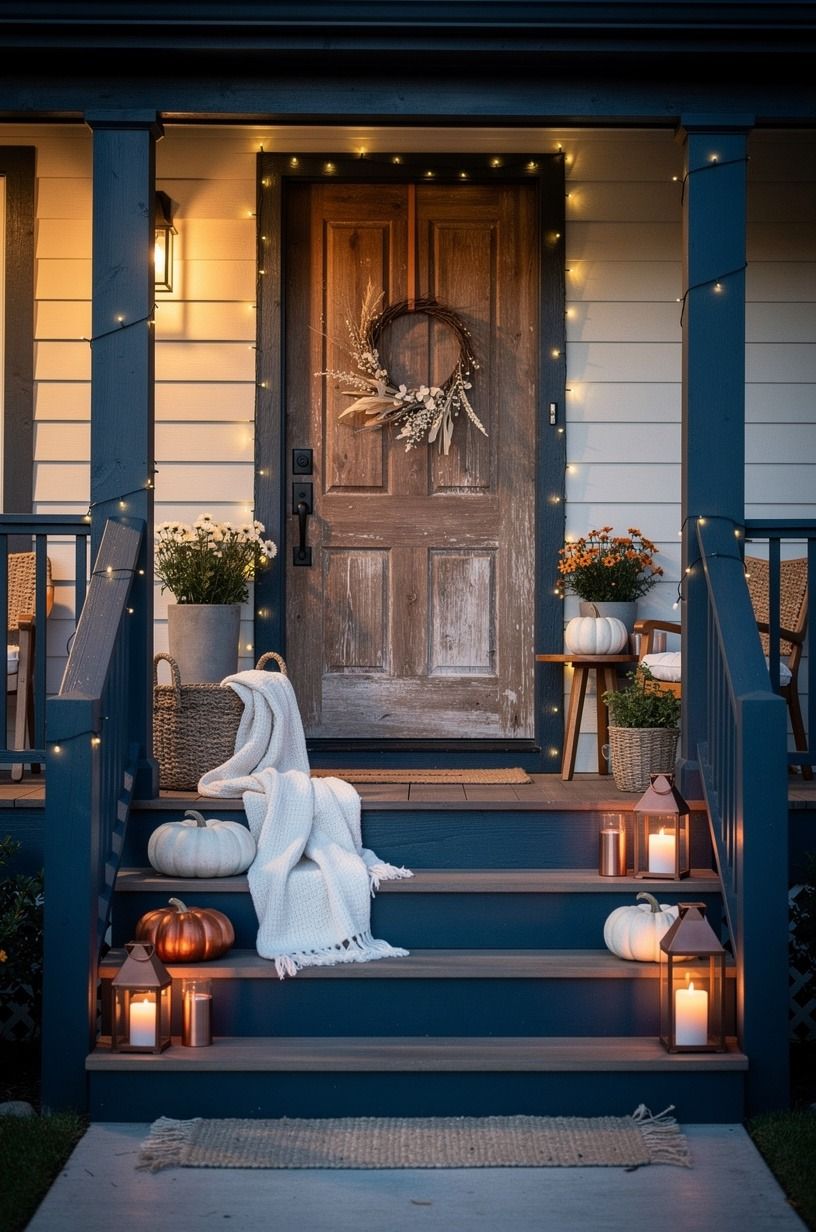
Check the finished porch at the moment daylight turns blue. You’ll notice whether the wreath still has shape, whether the floor glow is too bright, and whether the door color goes muddy.
I use the blue hour as a second pair of eyes, not as a reason to make the porch more dramatic. A reclaimed weathered teak bench can shift in low light, while Farrow & Ball Exterior Eggshell in midnight blue deserves a real test.
Check the entry with the door closed, then with someone standing in the entry. If you’re pinning the result, leave enough empty space around the doorway so the wreath reads at a glance.
The three-ring village reference can help you think about a balanced grouping, but your house should still look lived-in. Midnight blue with copper and ivory accents will feel captivating and dreamy without adding one more prop.
A warm-white bulb helps your eye catch the wreath’s texture instead of flattening it.
17Lock the Look Against Wind and Rain
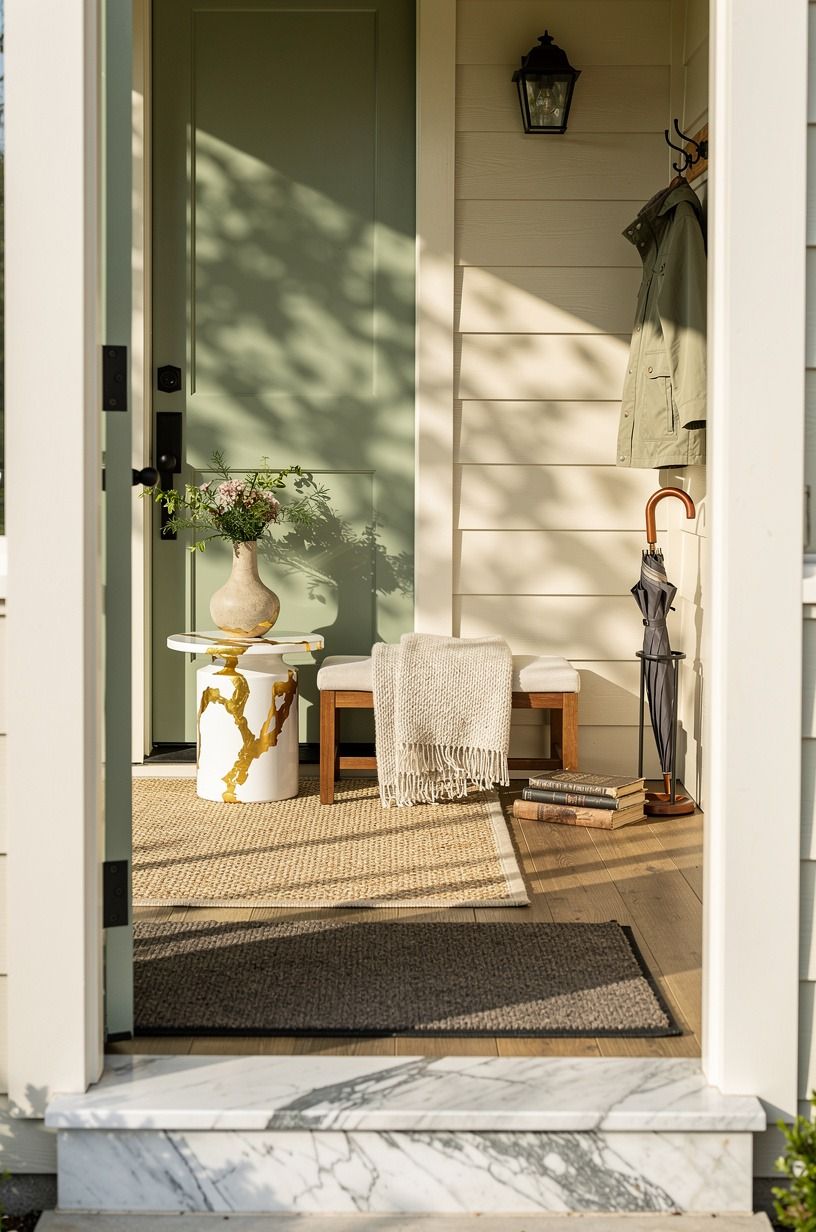
Finish by testing every loose piece with your hand. Your wreath needs a secure hook, your runner needs a grippy underside, and your low objects need enough weight to stay put. I use Calacatta marble with gold veining as a small stabilizing stone inside a planter, never loose on the path.
It keeps the arrangement calm when weather turns.
Walk the route once with a bag in your hand and once with the door open. If you brush a pumpkin or catch a ribbon, fix it before the first visitor arrives.
You’re done when the entry feels warm, safe, and inviting without asking guests to navigate around it. For one last vertical check, use ways to wrap porch columns for Halloween, then stop shopping.
The whole point is that your wreath can breathe.
Why One Wreath Is Enough for This Porch
I used to think a seasonal porch needed a whole cast of characters. A sign, three pumpkins, a scarecrow, a basket, and a lantern all seemed necessary.
Then I styled one doorway with only a dark emerald wreath, a low planter, and warm light, and the difference was immediate. The porch felt more inviting because my eye knew where to rest. Your house doesn’t need to perform Halloween from every angle.
The rule I keep now is simple: one object gets the headline, and everything else behaves like supporting text. I wouldn’t spend first on novelty props.
I’d spend on the wreath’s texture, a weather-resistant hook, and a light that makes the texture visible after sunset. That choice is less exciting in the store, but it lasts longer in your actual life.
If the anchor feels right, even Target Threshold planters can look intentional around it.
There’s also a practical reason this works. A porch has to remain a porch.
You need a clear route, a door that opens fully, and enough empty space for a parcel, a stroller, or a guest carrying a drink. The 36 in clearance rule isn’t a design punishment; it protects the relaxed feeling you wanted.
And when wind moves the ribbon or rain darkens the wood, the composition still has room to breathe. I learned that after one overfilled entry became a daily obstacle.
That is why I’m not chasing the largest display this year. I’m choosing a matte black lantern, one low material with weight, and a wreath with enough character to hold the season.
You can borrow the layered feeling from this Spanish hillside village reference, but you don’t need to copy its scale. Your porch should be warm, calm, and a little mysterious from the sidewalk, then easy once you reach the door.
Worth the restraint!
The Questions Worth Answering First
What is the best one-wreath setup for a small front porch?
Use one dark wreath, one low planter, and one warm light. That trio gives your small porch a clear focal point without taking the walking lane.
Keep 36 in open, and use wreath placement ideas for sightline help. You won’t need a bench or extra sign.
Where can I buy Halloween porch pieces on a budget?
Start at IKEA, Wayfair, or Target, then check Facebook Marketplace and thrift stores for planters, crates, and lanterns. Your best budget move is reusing a vessel you own. Secondhand texture often feels more charming than matching seasonal sets, and you don’t need a complete collection.
How much does a one-wreath porch makeover cost?
Plan on about $200 to $900 for the broader budget outdoor tier, though a wreath-only refresh can cost less when you reuse paint, lights, and containers. Your free inventory matters. Check your garage first, then spend on the anchor and weather-safe hardware.
Can I create this porch look on a budget?
Yes, and you can start with three free moves: rearrange existing planters, gather branches, and move one lantern beside the door. Add LED string lights only if the porch needs glow, then stay within the Budget row. You’ll get a warm result without buying a complete seasonal collection.
Is this worth it in a small space?
Yes, because a small porch makes the three-point plan easier to read. Keep the wreath high, the low object to one side, and the path open. Less visual noise gives your entry a calming pause, and you won’t need a large rug or furniture set.
Is a one-wreath Halloween porch a good idea for a rental?
Yes. Use a removable hook, a tension rod for fabric, and freestanding pieces instead of drilling into the door.
No-damage flexibility lets you test the layout, and you can take everything down cleanly. For columns, see no-ladder wrapping ideas before attaching anything.
Where I’d Start First
If I had to pick one step, I’d start with the wreath placement. A centered anchor gives every later object a job, while a pile of pumpkins only gives your doorway more things to fight. Pin the wreath placement guide for later, then step outside and check the view from the sidewalk.