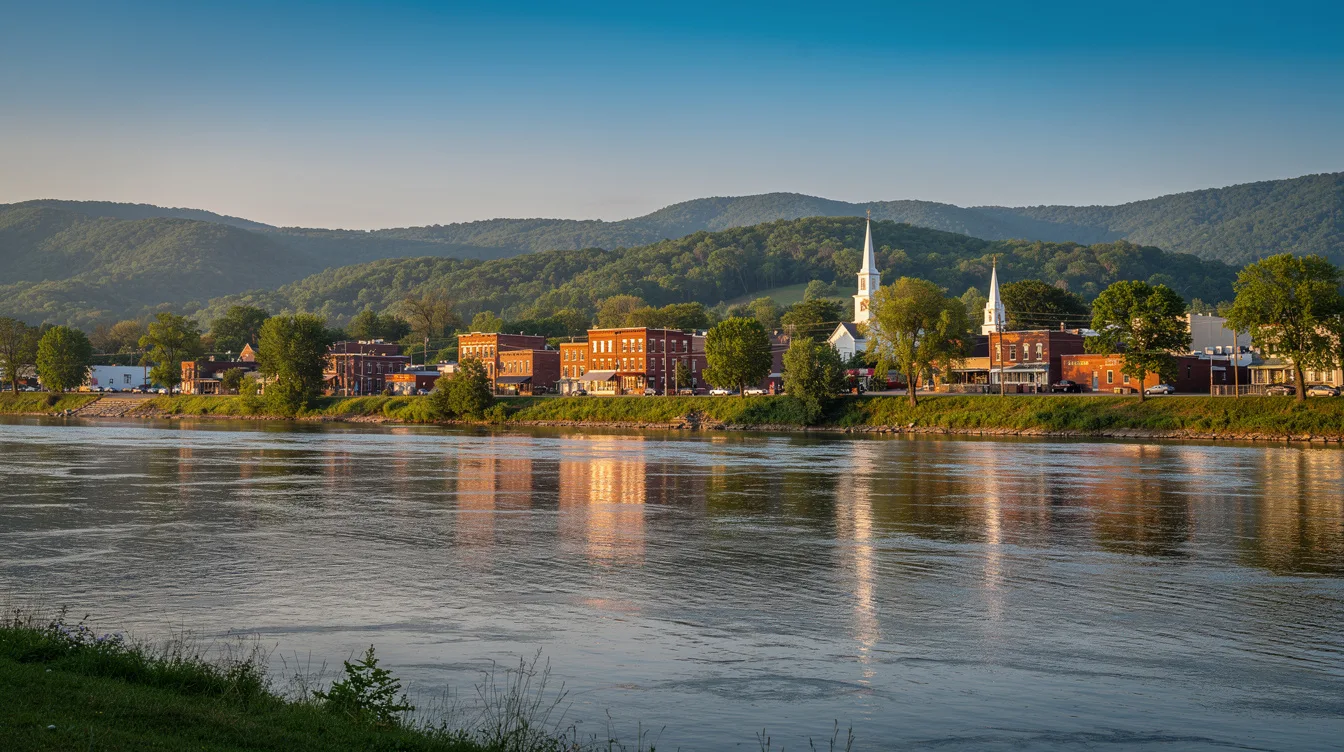
Marietta began on April 7, 1788, when it became the first permanent American settlement in the Northwest Territory and the territory’s first government seat. It sits where the Ohio and Muskingum rivers meet, about 11.2 miles northeast of Parkersburg, West Virginia. But it doesn’t feel like a former capital chasing attention.
It feels like a river town that kept its history close.
And that modest scale is part of the draw. The 2020 census counted 13,385 residents, so you’ll find a calm Ohio River Valley stop rather than a major urban destination. The Riverboat Town identity fits its position on the Ohio River.
And if you come for the capital story, you’ll get it quickly. Stay longer, and the appeal shifts toward a quiet weekend shaped by history and water.
April 7, 1788 still shapes Marietta
And the founding date explains the town’s strongest claim. The Northwest Territory was created the year before Marietta, then this settlement became its first permanent American outpost and first government seat. April 7 feels like more than a founding date here.
But Marietta doesn’t perform the past like a theme park. It’s the Washington County seat, with college life and local shops alongside its frontier story. I prefer that mix because you can spend an hour with history and still feel a working town around you.
Can you see the first settlement?
Yes, start at Campus Martius Museum. The exhibits cover early settlers and the Northwest Territory, while the Ohio Company Land Office gives the date a physical setting. And you’ll understand the town faster if you begin here.
The museum opens a useful door into Ohio’s early history. But don’t rush through it to reach the river. The point is context, and Marietta rewards a slower first morning.
The Ohio and Muskingum meet at the town’s center
And the geography is impossible to miss. Marietta sits at the meeting point of the Ohio and Muskingum rivers, so its river history stays visible. The Riverboat Town identity follows naturally from that setting.
But the best stop for that story is the Ohio River Museum. It covers river traffic and steamboats, giving the waterway a human history you can follow beyond the shoreline. You’ll leave knowing why the rivers matter.
Historic Harmar Village sits across the Muskingum River, with railroad and river heritage. Front Street and the historic center shift toward nineteenth-century buildings, with independent shops and restaurants.
If you like a place where geography does the storytelling, follow the Ohio River Valley thread. And make time for the view toward West Virginia, because the border setting gives Marietta distance without making it hard to reach.
Mound Cemetery adds a deeper layer of history
And the historical story widens at Mound Cemetery. The cemetery incorporates an older Indigenous burial mound, so the site reaches beyond the settlement narrative. One careful stop adds depth without slowing the day.
But Marietta isn’t an indoor history stop. Around town, Wayne National Forest supports hiking and biking, while the Ohio River Valley opens into scenic routes and water-based outings. The outdoor side works best as breathing room, not a forced itinerary.
Can you make it an outdoor weekend?
Yes, but the outdoor offering is broad rather than tightly packaged. The forest and rivers let you choose an outing that fits your energy. And because no source identifies a single best season, plan around your weather preferences instead of a fixed travel window.
That uncertainty is useful, not a flaw. You can build a calm weekend around history and movement, then leave space for the day to set the pace. The town is small, but it doesn’t ask you to hurry.
Parkersburg makes this old capital easy to reach
And the route into southeast Ohio is practical. Marietta is about 11.2 miles northeast of Parkersburg, West Virginia, and the Mid-Ohio Valley Regional Airport is near that city. Larger airports in Columbus or Pittsburgh are farther away.
But don’t expect a major-city weekend. The 2020 census counted 13,385 residents, and Marietta College plus Washington State Community College give local life more activity than its size suggests. You get a lived-in town, not a display case.
The practical details are plain: Marietta uses Eastern Time, and its ZIP code is 45750. No best season is specified, so you’ll decide when the river and outdoor time fit your plans.
And that is the trade-off. You won’t find a week of big-city variety, but you will find a focused stop where the capital story and surrounding outdoors share a weekend. At the confluence, the water keeps moving beside a town that still feels unhurried.