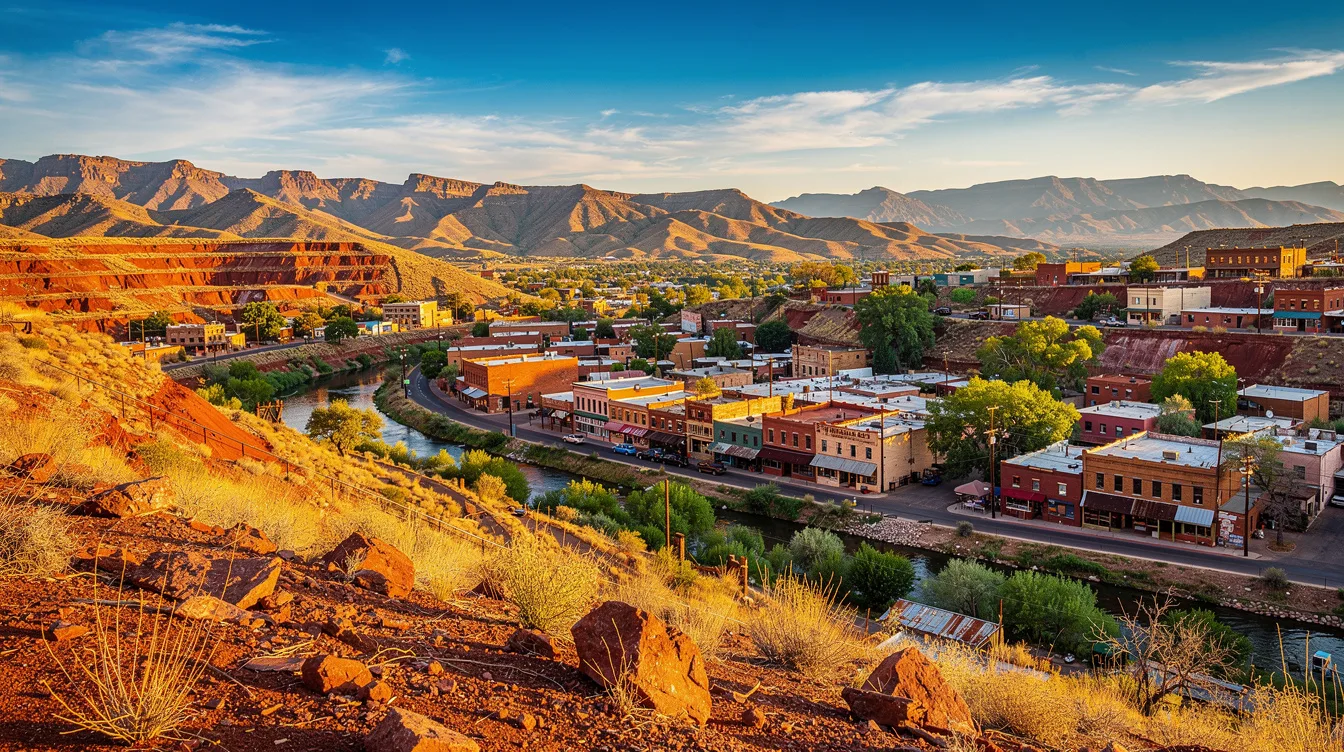
Bisbee is a former copper mining town in southeastern Arizona with a difficult claim to fame. In 1917, the Bisbee Deportation illegally expelled 1,300 miners from town and transported them toward Columbus, New Mexico. Today, steep streets and colorful Victorian buildings draw visitors, but the labor history should come before the postcard charm.
The past changes the way you’ll read the place. The town grew in narrow canyon terrain on the slopes of the Mule Mountains, so homes cling to hillsides while staircases thread between them. Copper created the wealth, while the remaining streets hold the texture of a town that had to build upward.
Why 1917 still changes the way you see Bisbee
And the forced removal of miners is more than a dark paragraph in a brochure. More than 1,000 striking miners connected with the Industrial Workers of the World were forcibly removed during World War I and sent toward Columbus, New Mexico. If you care about how a town was made, this is the history you shouldn’t skip.
But the story isn’t sealed away from the streets. The town’s dense hillside form grew from an extraction economy, and the Bisbee Mining & Historical Museum provides context for its boom years and mining workforce. You’ll understand the stairs differently after that, because the terrain records the pressure of the mine.
The streets make the mining town visible
And Old Bisbee is the part you’ll remember. Homes sit tight against the hillsides, while staircases and narrow streets turn an ordinary walk into a small physical challenge. Because the historic core is compact, you’ll get more from wandering than from driving between stops, and the best view is often the next turn.
But bring shoes you trust. The town is walkable and hilly, with limited historic center parking, so a car can become a burden once you arrive. You can duck into galleries and independent shops, then pause at a café or old saloon; the mood is lively, but never loud.
The mines explain why Bisbee grew upward
And the town’s origin starts with discoveries in 1880. Copper drove the economy, though miners also found gold, silver, and Bisbee Blue turquoise. That wealth created a dense settlement in difficult terrain, so the streets still feel layered instead of neatly planned.
But the Copper Queen Mine Tour is the clearest way to understand that connection. It shows you how Bisbee’s economy and townscape emerged, keeping the history grounded beneath your feet. In my view, it’s the strongest first stop because the streets make more sense once you’ve seen what shaped them.
And the Lavender Pit offers a sharper contrast. Large scale mining declined, and the open pit mine ceased production in 1975; viewpoints show its immense industrial cut. Don’t come expecting a conventional scenic attraction; come to see the cost of the industry that built the town.
A small mining town finds a creative afterlife
And with 4,923 residents in the 2020 U.S. Census, Bisbee remains small enough to read as a town rather than a resort district. Historic preservation and a creative local culture now fill spaces shaped by mining.
You’ll find galleries, independent shops, restaurants, and cafés, but the place feels more curious than polished.
But don’t mistake that creative energy for a glossy makeover. Colorful Victorian buildings and old saloons keep the streets grounded, while the canyon setting keeps every turn close and vertical. You can photograph the façades, then slow down for a meal or a gallery; Bisbee rewards curiosity more than a rushed list.
Why this southern Arizona stop works for a short stay
And one or two nights can work, especially on a southern Arizona route. Bisbee is in Cochise County. That makes it remote enough to feel distinct, but not hard to reach by car.
But don’t plan it as a sightseeing base built around a car. Once you reach the historic core, leave room for slopes and staircases, because the atmosphere is strongest on foot and parking is limited. For a route that continues, Tombstone and Coronado National Memorial make natural nearby pairings.
Can you explore Bisbee without a car?
Yes, you can explore the historic core on foot, but the hills and staircases will set the pace. And that’s a fair trade: you move slowly enough to notice painted walls and the sound of your own shoes on the pavement. The town is compact, but it isn’t effortless.
But Bisbee won’t flatter every traveler. The hills are real, and parking is limited, so easy driving isn’t the point. By the time evening settles over the canyons, you’ll hear footsteps on the pavement and understand why this town’s charm works best with a little history attached.