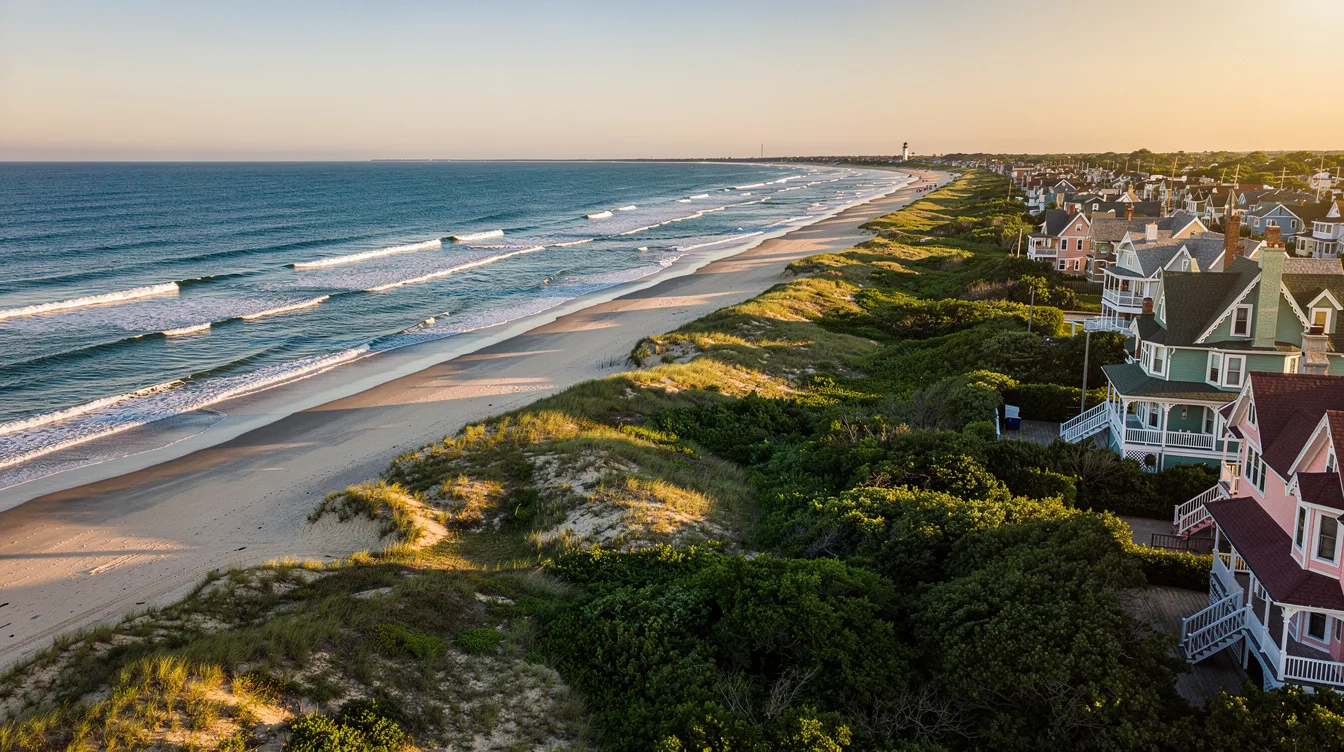
Cape May welcomed vacationers in 1766, when visitors arrived from Philadelphia by stagecoach, ship, and horse-drawn wagon. That claim makes it America’s oldest seaside resort, and it changes how you read the town: this isn’t a beach built around tourism later. Tourism built the rhythm from the start.
At New Jersey’s southern tip, Cape May faces the Atlantic on one side and Delaware Bay on the other. The setting gives you two different evenings, and the bay-side sunset is the better choice when you want a quieter finish.
A resort town before resorts had a script
Cape May had hotels by 1834, but its vacation identity began decades earlier. You can still feel that old purpose in the walkable streets and broad porches, where the town seems designed for lingering rather than rushing between attractions.
And more than 600 Victorian buildings remain preserved here. They make the historic district feel unusually whole, but don’t expect a museum hush: beach towels hang over railings, bikes pass porches, and salty air gets into everything.
The whole city became a National Historic Landmark District on May 11, 1976. That designation matters because the architecture isn’t isolated to one block, so your ordinary walk toward coffee or the shore keeps producing painted trim and old hotel facades.
The beach is the draw, but the streets earn the stay
The Atlantic beaches are why summer crowds arrive, especially from June through August. But the appeal isn’t flashy nightlife. Cape May feels social without feeling rowdy, which makes it a strong fit if you’d rather walk after dinner than chase a late reservation.
You can follow a one-mile promenade beside the ocean for a simple first look. Start there early if heat bothers you, then turn inland toward Washington Street, where the wooden porches offer shade and the town’s Victorian character comes into focus.
And Cape May’s limits are part of its charm. It gets busy in high summer, and prices rise with the demand, so you won’t find the empty-beach fantasy here in July. You will find a town that still knows exactly why people come.
September and October change the whole mood
For my money, September through October is the smarter time to go. The beaches have more breathing room, while Cape May’s position at the end of New Jersey draws major concentrations of migrating birds, raptors, and butterflies.
Birding is serious business here, not a decorative extra on a visitor brochure. You don’t need to arrive with a checklist to appreciate it, either: look up during migration season, listen for movement in the trees, and notice how much attention turns away from the water.
But summer has its own argument. June through August puts the beach at center stage, with swimming, walking, biking, whale-and-dolphin trips, and the full seasonal buzz. Choose it if the ocean is your priority, then accept the crowds as the entry fee.
Which sunset should you choose?
Can you watch the sun set without leaving Cape May?
Yes. Head to Sunset Beach or Cape May Point for a view over Delaware Bay rather than the Atlantic. That west-facing change is the point: the day ends behind the water, and the light feels softer than it does along the beach promenade.
Cape May Point is worth saving for an unhurried evening. You can spend the earlier part of the day in the historic center, then trade street noise for bay air as the temperature eases and the water darkens.
And don’t overlook the working side of town. Cape May Harbor supports commercial fishing and is described by the city as the East Coast’s second-largest fishing port. It adds grit to a place that could otherwise feel almost too polished.
Getting there is easy, timing is the real decision
Cape May sits about 2½ hours from Philadelphia and around 3 hours from New York by car, depending on traffic. The Garden State Parkway leads toward the southern tip, so it works for a long weekend without making the journey the main event.
You can keep a first visit wonderfully simple: historic streets in the morning, Atlantic beach in the afternoon, Delaware Bay at sunset. But I’d give the town an extra day if you can. The pleasure comes from repetition, from taking the same walk after the crowds have thinned.
By evening, porch lights begin to glow behind the Victorian facades, and the bay side settles into a strip of fading silver.