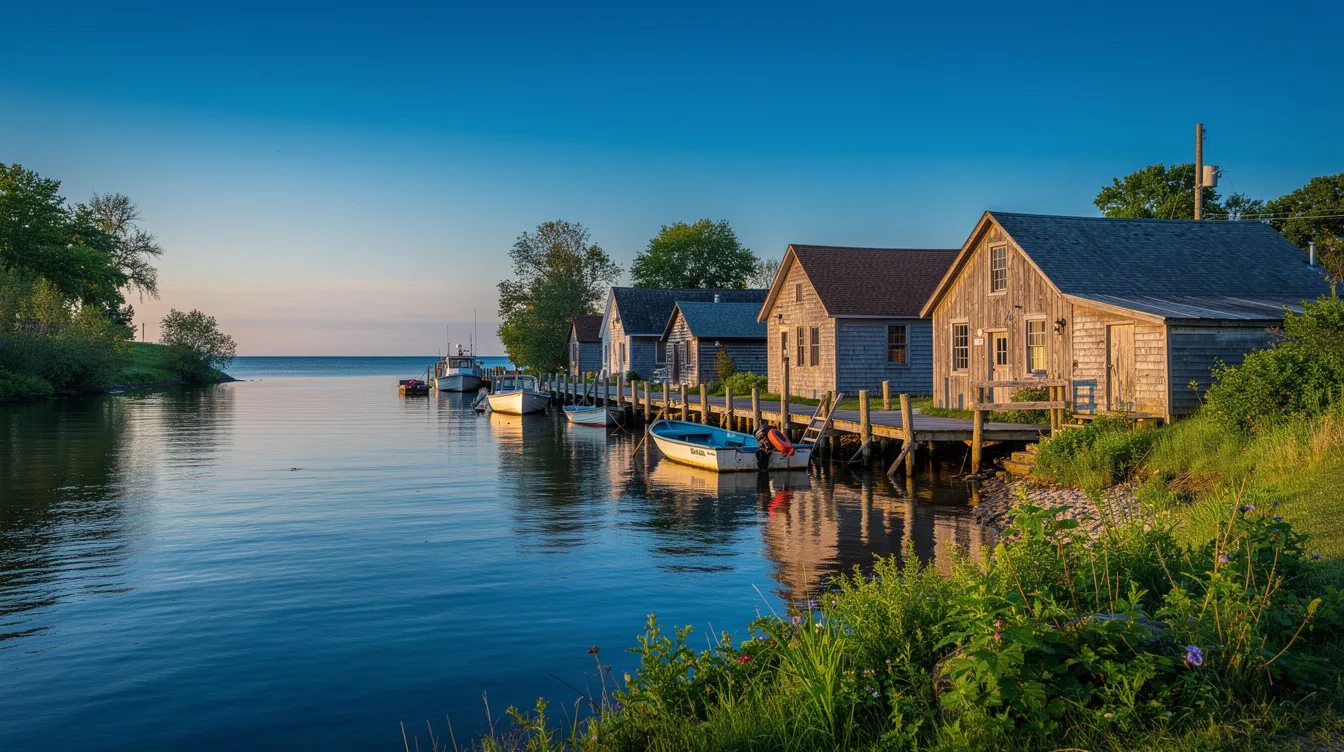
Leland sits about 24.9 miles northwest of Traverse City, and its best reason to stop is right at the water. Fishtown, the preserved fishing village along the Leland River, feels compact enough to take in on foot but layered enough to hold an afternoon.
The river, also called the Carp River, links Lake Leelanau to Lake Michigan. That short passage gives the town its shape, so boats, docks, weathered buildings, and moving water all crowd into one walkable stretch.
Fishtown is the reason to pull over
Fishtown is part of the Leland Historic District, which is listed on the National Register of Historic Places. Its old fishing shanties, docks, galleries, shops, and riverfront make this less of a polished attraction than a working waterfront with history still visible.
And that distinction matters. You can browse the shops, but the point is really the setting: wood worn by weather, water slipping through town, and boats close enough to make the harbor feel active rather than staged.
There is a waterfall along the river, adding a steady rush beneath the conversations and foot traffic. But Leland isn’t large, so don’t expect a full day of formal sights. Come for a slow walk, then let the water decide your pace.
Is Fishtown worth visiting if you only have a few hours?
Yes, especially if you’re already driving M-22. Fishtown gives you the town’s central story quickly, and the harbor walk pairs easily with a Lake Michigan beach stop or a waterfront meal.
This is the kind of place that makes a road-trip schedule feel unnecessary. You’ll likely spend more time looking at the river than you planned, because every turn brings you back to the water.
A town of 410 residents, with room for a proper stop
Leland recorded 410 residents in the 2020 U.S. Census. That small scale keeps the waterfront intimate, even though the town is a popular summer destination and a natural stop for travelers circling the Leelanau Peninsula.
And you can feel the difference between a village and a resort strip. The commercial center stays close to the river, while Lake Michigan lies to the west and Lake Leelanau to the east.
Public beaches, boating, fishing, and launches on both lakes give you options without requiring a complicated plan. But the town’s appeal is strongest if you like water views and wandering, not a packed checklist.
Van’s Beach is one Lake Michigan shoreline option after Fishtown. Go there when you want a cleaner break from shops and docks, with the broad lake taking over the view.
Summer brings the action, early fall brings breathing room
Summer and early fall are Leland’s best seasons for village walks, beaches, boating, cycling, and outdoor dining. Summer has the fullest energy, because visitors come for the lakes and the peninsula roads.
But plan ahead if lodging matters. Demand tends to peak from June through August, while winter is generally the lower-priced period and the town becomes much quieter.
The trade-off is simple: summer puts more of Leland within easy reach, while the off-season gives the riverfront a different kind of stillness. If a Manitou Islands trip is your priority, reserve ahead during peak season.
The Manitou Islands are reached by ferry from Leland and sit within Sleeping Bear Dunes National Lakeshore. That ferry connection turns the harbor into more than a pretty stopping point, though it also means popular departures need planning.
M-22 makes Leland an easy pause with a longer horizon
Leland sits on M-22, the scenic route around the peninsula. From here, you can continue toward Northport, Suttons Bay, Glen Arbor, or Sleeping Bear Dunes, with vineyards, farm stands, small towns, and Lake Michigan overlooks along the way.
And that’s why Leland works best as a pause rather than a conquest. Walk Fishtown first, eat by the waterfront if you have time, then decide whether the beach or the road is calling louder.
By late afternoon, the Leland River keeps moving toward Lake Michigan, and the old docks look most convincing when you stop trying to rush past them.