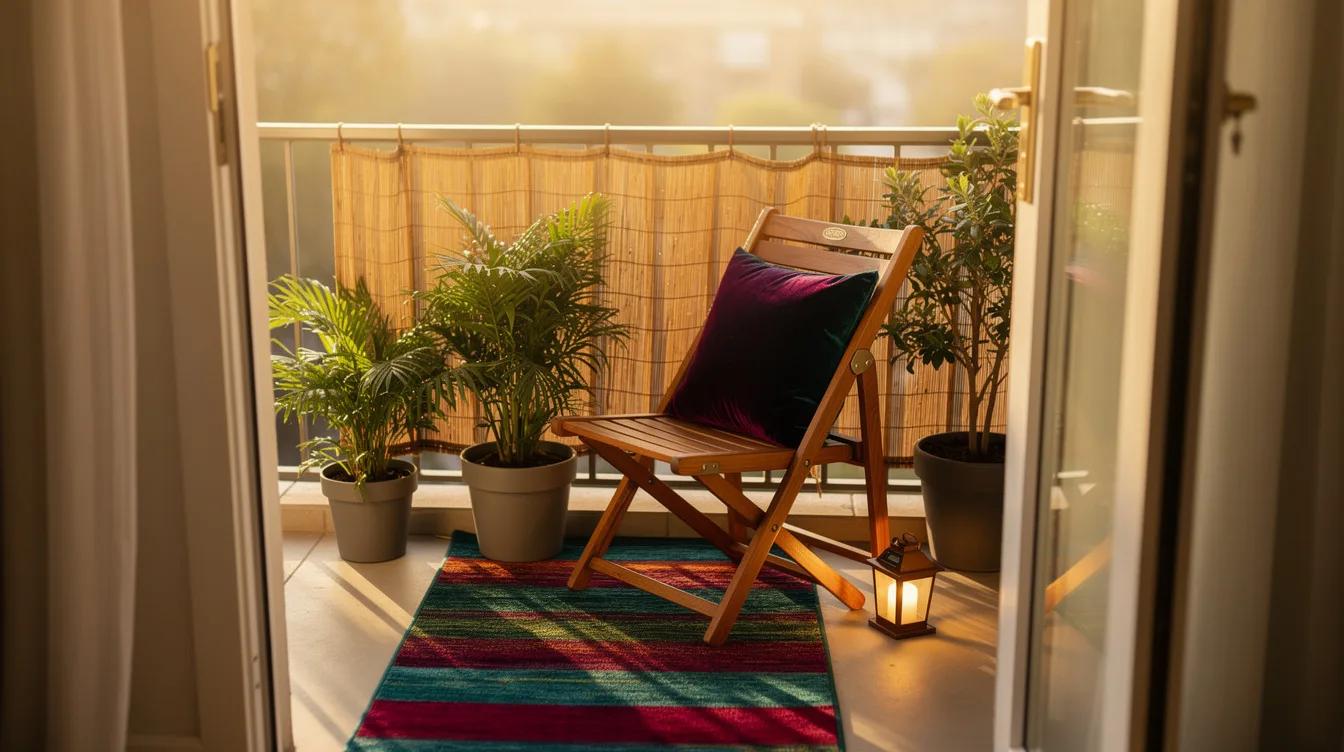
I used to treat my 4-by-8-foot bedroom balcony as a place to shake out a rug and abandon a watering can. The moment I stopped trying to furnish it like a patio, it finally felt like a private outdoor retreat.
My rule was simple: protect roughly 24 inches of passage to the door, then give the remaining floor one job. Morning coffee, reading, or late-night air, but never all of them at once.
Measure the Walking Lane Before Shopping
A narrow balcony punishes wishful buying. I marked out the usable floor with painter’s tape and kept about 24 inches clear where I needed to pass, which made the small footprint feel calmer immediately.
For a balcony under about 4 feet deep, choose one folding chair and a 12- to 18-inch side table. Acacia looks warmer than plastic, while open-frame metal furniture keeps the view from feeling boxed in.
Give the Balcony One Clear Purpose
I chose a reading perch instead of forcing in a dining set. One comfortable seat, a drink surface, and room for my feet created more atmosphere than two cramped chairs ever could.
A small Home Depot folding bistro chair is often around $40 to $70, depending on material and season. Put the chair at an angle toward the railing, not squarely against the wall, so the balcony feels like a destination.
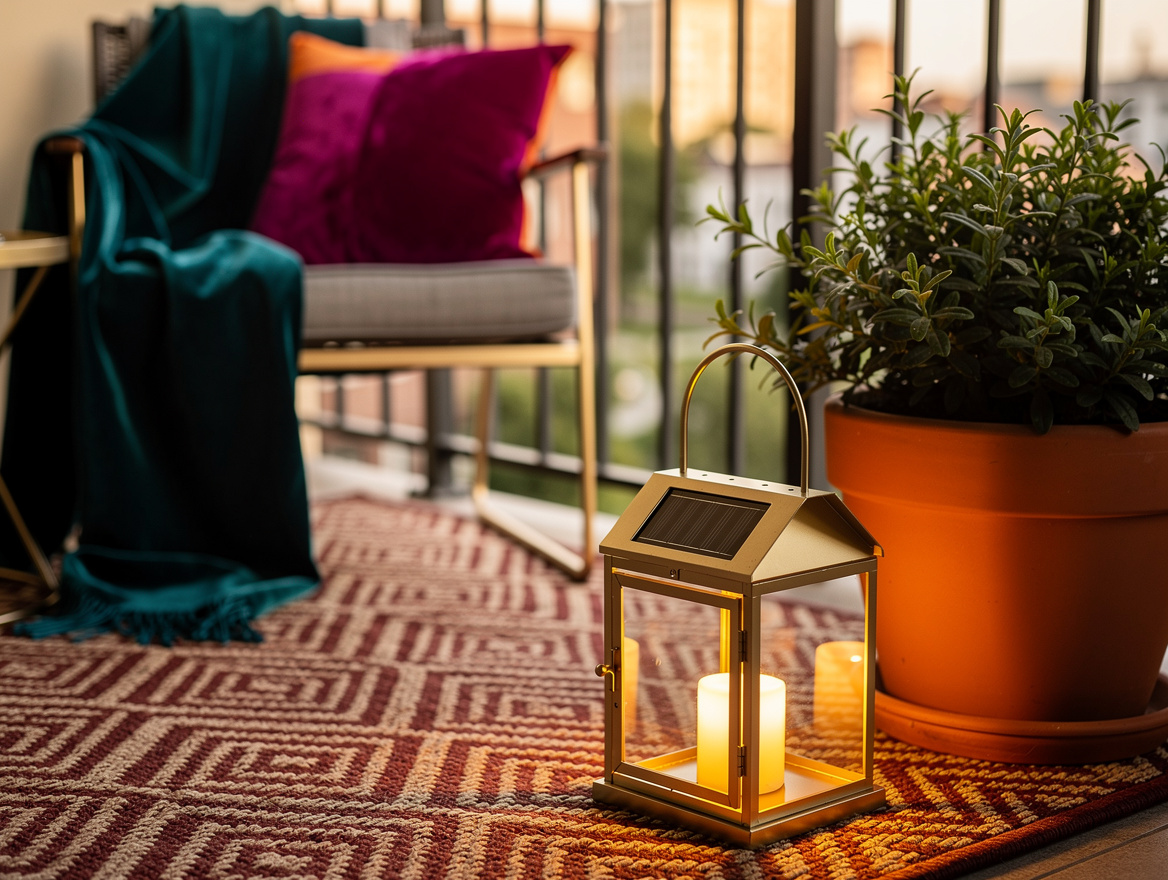
Use Fold-Down Pieces for Flexible Mornings
When a balcony must also handle laundry or window cleaning, folding furniture earns its keep. A wall-mounted or railing-height surface gives you a breakfast spot without permanently claiming the floor.
Look for a table roughly 28 inches wide and 18 inches deep, then pair it with a slim folding chair from Lowe’s or Amazon. A typical compact setup costs about $100 to $180 before planters, and it should close in seconds.
Filter the View With Breathable Privacy
Privacy is the difference between a balcony and a retreat, but solid barriers can make a small space hot and gloomy. I prefer an airy screen that softens sightlines while letting wind and daylight through.
A Bamboo roll-up shade from Walmart or Target can cost roughly $25 to $50 for a small panel. Secure it with weather-rated ties, keep it below the railing when building rules require it, and leave an opening near the door.
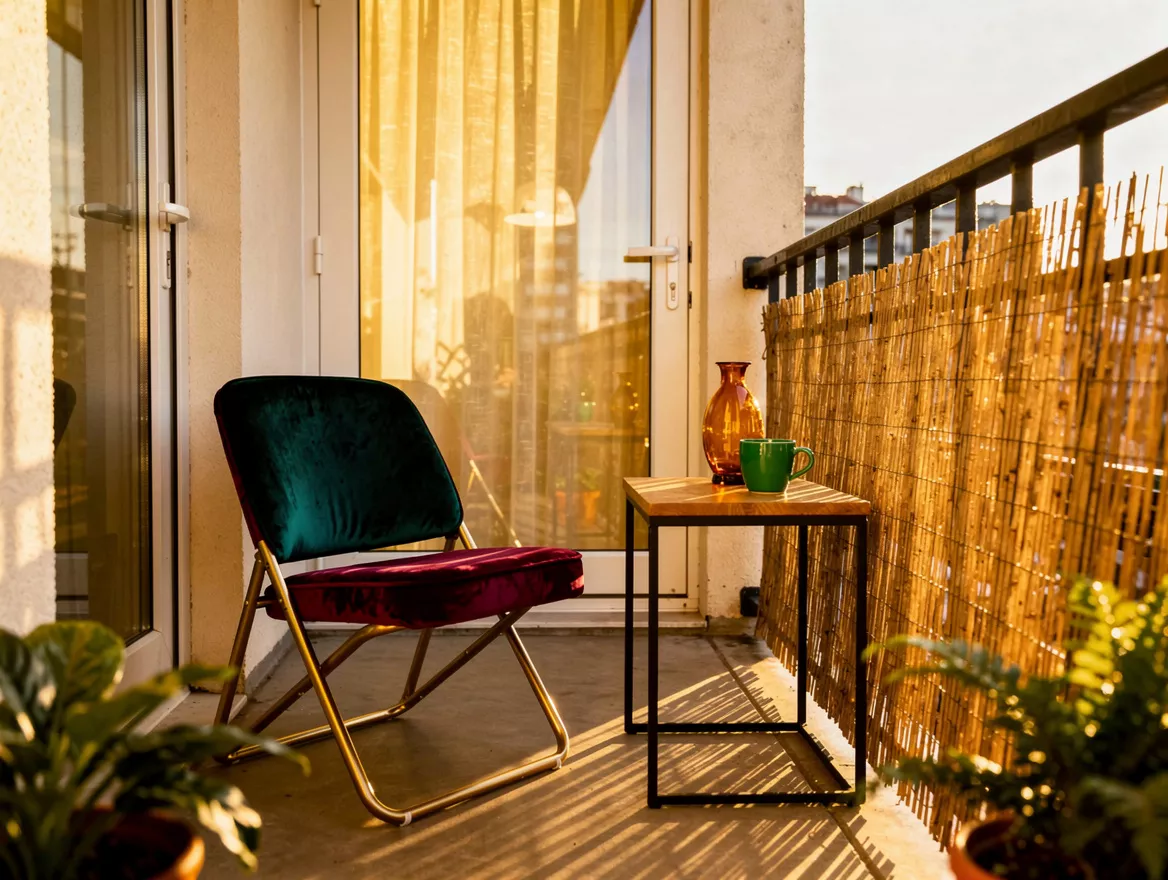
Ground the Floor With an Outdoor Layer
Concrete under bare feet makes even good furniture feel temporary. A narrow outdoor rug gives the balcony a room-like boundary and quietly tells your eye where the retreat begins.
I favor an approximately 2-by-6-foot polypropylene rug from Wayfair, usually around $30 to $70, because it dries faster than a thick textile. Skip giant patterns here: a fine stripe or muted weave gives plants and pillows more room to speak.
Build a Plant Edge Instead of a Plant Crowd
Two or three substantial plants look more generous than a clutter of tiny pots. Put the tallest one at the far corner, then group the others near the railing to create a green edge without swallowing the walking lane.
A terracotta pot, a leafy fern, and a trailing pothos make a convincing little canopy when conditions suit them. Check sun exposure first, because a scorched plant collection makes a balcony look neglected faster than an empty corner.
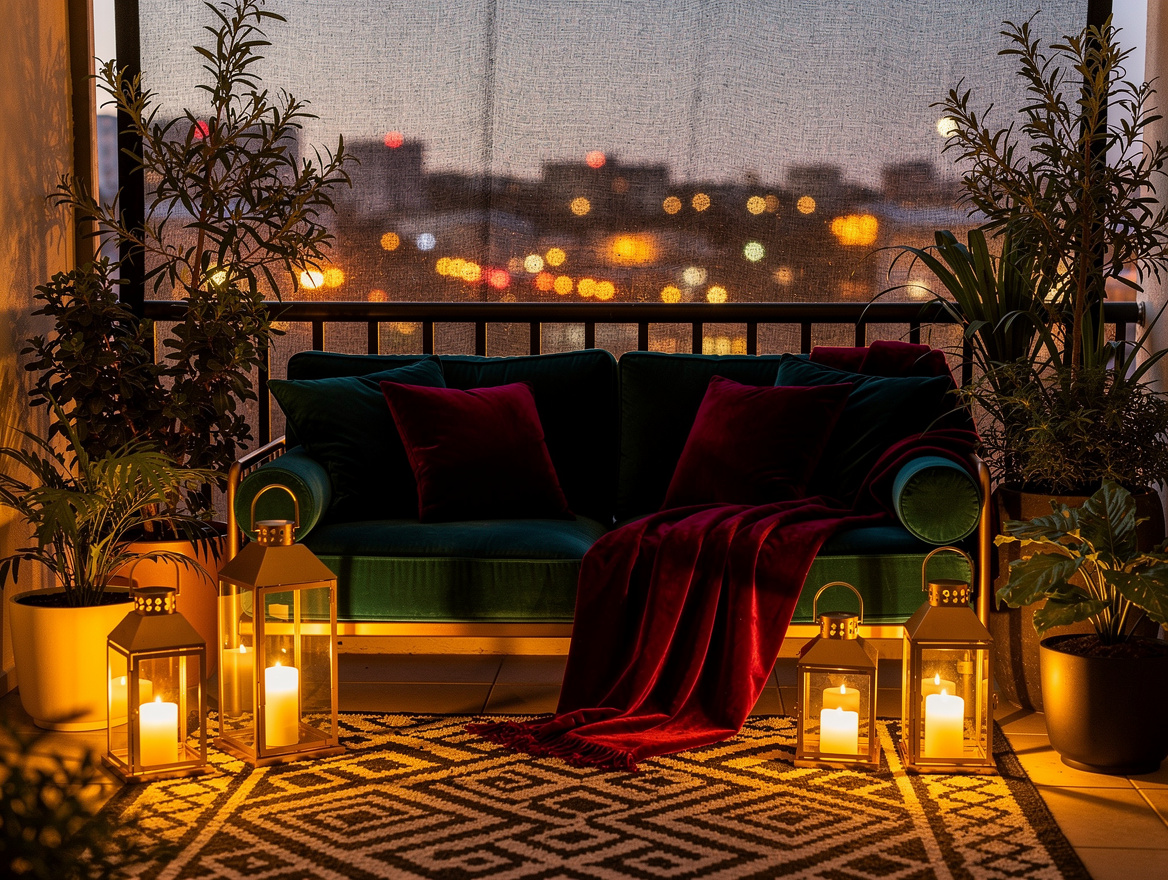
Keep the Light Low and Warm
Overhead glare kills the quiet mood I wanted after dark. Low, warm light makes a small balcony feel enclosed in the best way, especially when the bedroom behind it is dim.
Try a rechargeable solar lantern from Costco or Ace Hardware, often about $20 to $40, placed on the floor or low table. One lantern and a small candle holder are enough; strings of bright bulbs can turn a restful nook into a busy storefront.
Start with the passageway, then buy the single piece that supports how you actually want to use the balcony. Once that purpose is clear, the privacy layer, plants, and low light fall into place without crowding the door.
Mia Carter writes about small-space living and budget home makeovers. She has restyled three rentals and tests most ideas in her own 45 sqm flat.