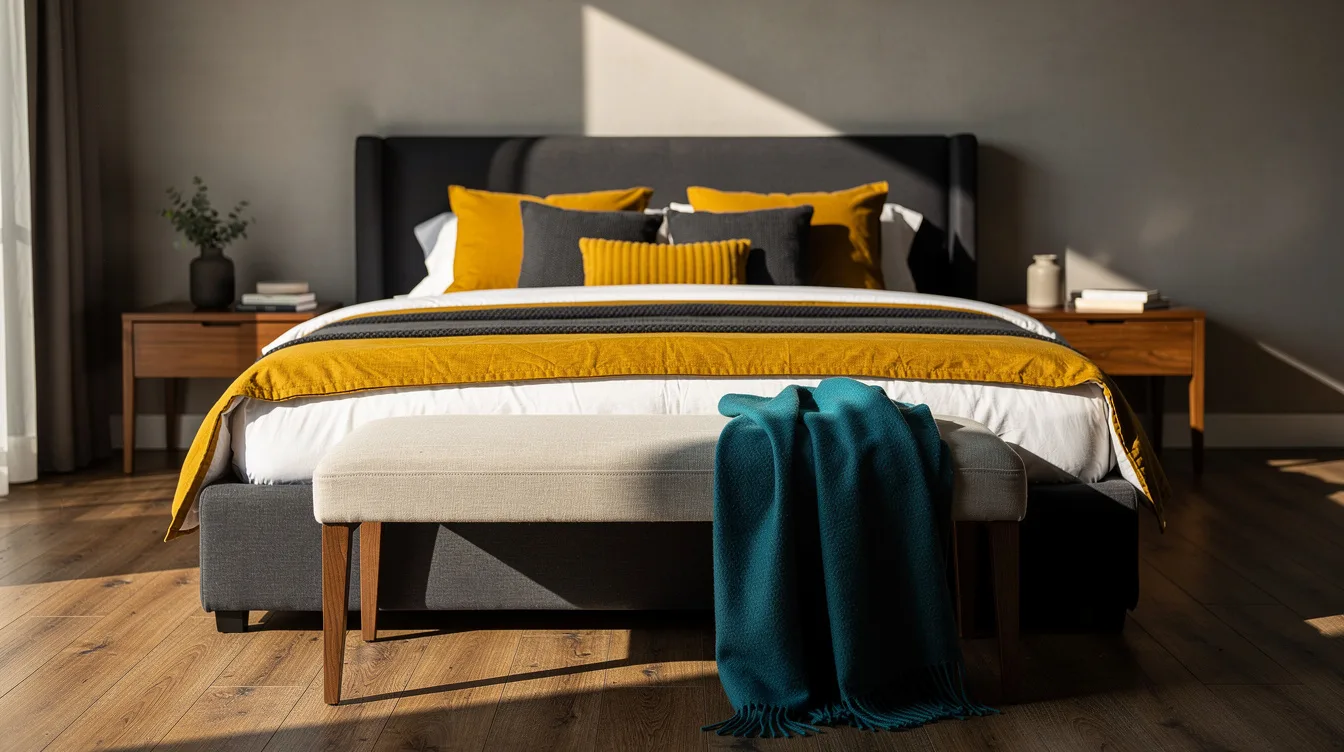
I used to leave tomorrow’s outfit on a chair, then watch that chair disappear beneath a robe, a sweater, and the throw from my roughly 60-inch-wide queen bed. A padded bench gives those everyday items a proper landing place without turning the mattress into a sorting table.
The appeal is practical, but the visual payoff is real: upholstery adds softness where a bed frame, nightstands, and flooring can otherwise feel hard and disconnected. Done at the right scale, the bench makes the bed look deliberately placed.
Give Getting Dressed a Real Seat
A bench earns its footprint when you actually sit on it to pull on socks, lace shoes, or set down a handbag. A firm performance-fabric cushion is my favorite choice for this job because it feels inviting but does not slump into an overly casual pile.
Keep the surface useful, not crowded. Tomorrow’s clothes, one folded throw, and perhaps a book can live there overnight, while the rest belongs in a drawer or closet.
Size It Against the Bed Frame
Measure the outer width of the bed frame, including any winged or upholstered edges, before you browse. A bench that is roughly 70 to 85 percent of that visible width usually looks balanced, and it should never extend beyond the bed.
For a typical queen, start around 48 to 54 inches long, 16 to 18 inches deep, and about 18 inches high. A queen bed frame needs a bench that feels connected to it, not a narrow hallway seat stranded at its foot.
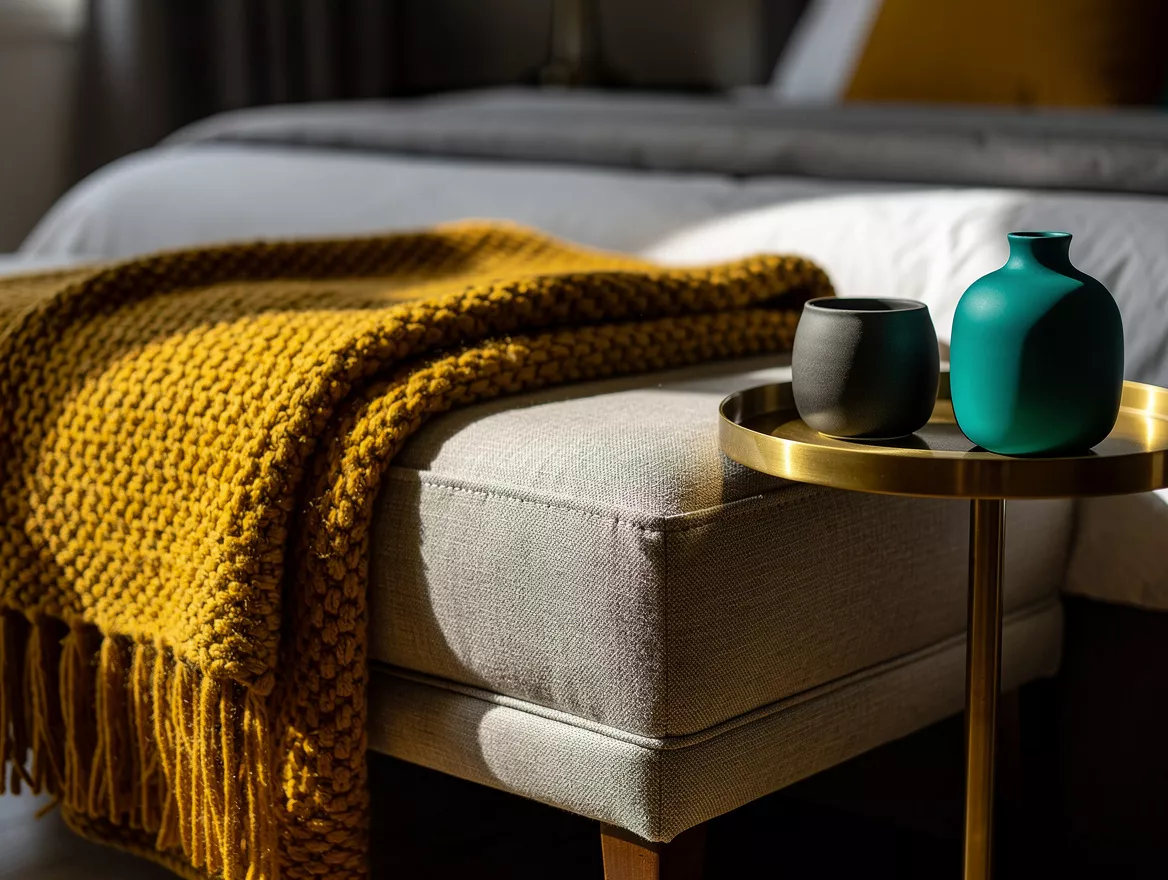
Protect the Walking Path
Circulation decides whether this idea feels polished or irritating. Leave roughly 18 inches as a minimum passage, though around 30 inches is more comfortable when the room permits it, especially beside a dresser or closet door.
Use painter’s tape to mark the footprint before ordering a Wayfair upholstered bench or any comparable piece. You will spot a door swing conflict faster on the floor than in a product photo.
Use Hidden Storage With Discipline
A lift-top bench is excellent in a bedroom short on linen storage. Fold spare sheets, off-season blankets, or pillow inserts inside a storage ottoman, then keep the lid clear enough to open without shifting the bench.
Storage does come with one rule: do not make it a permanent hiding place for laundry. If the lid becomes difficult to lift or the bench collects clothing every night, a closed hamper and a simpler seat will work better.
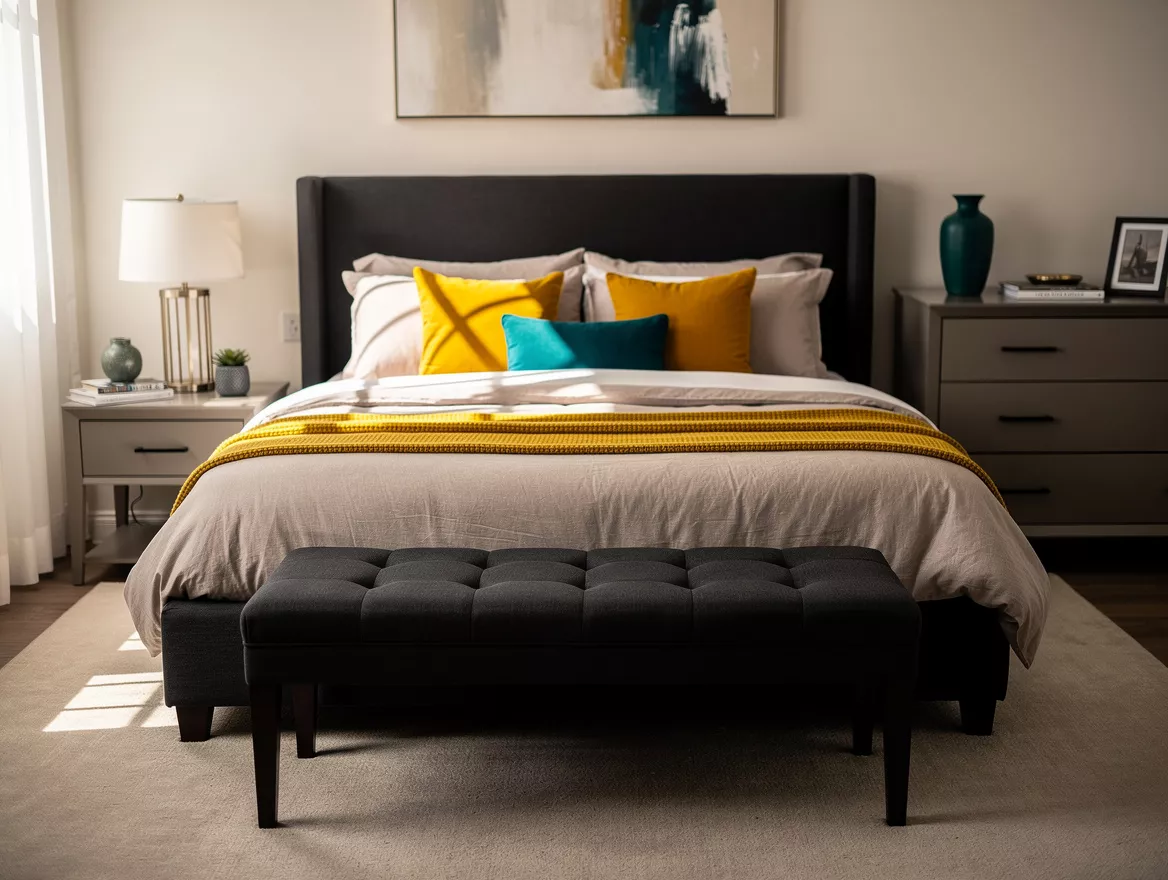
Soften Hard Bedroom Surfaces
Bedrooms often have wood floors, a wood bed, painted walls, and square nightstands all speaking the same hard-edged language. A linen-blend bench breaks that pattern with texture and a little warmth, especially in neutral rooms that risk feeling flat.
Choose the fabric according to real life. A washable-looking oatmeal weave suits a quiet adult room, while a tighter, stain-resistant material is smarter near pets, kids, or a frequently used en suite.
Create a Finished Sleeping Zone
A king bed can look oddly adrift in a generous room, even with good bedding. A bench roughly 60 to 66 inches long gives the far end a visual stop and makes the sleeping area read as one intentional composition.
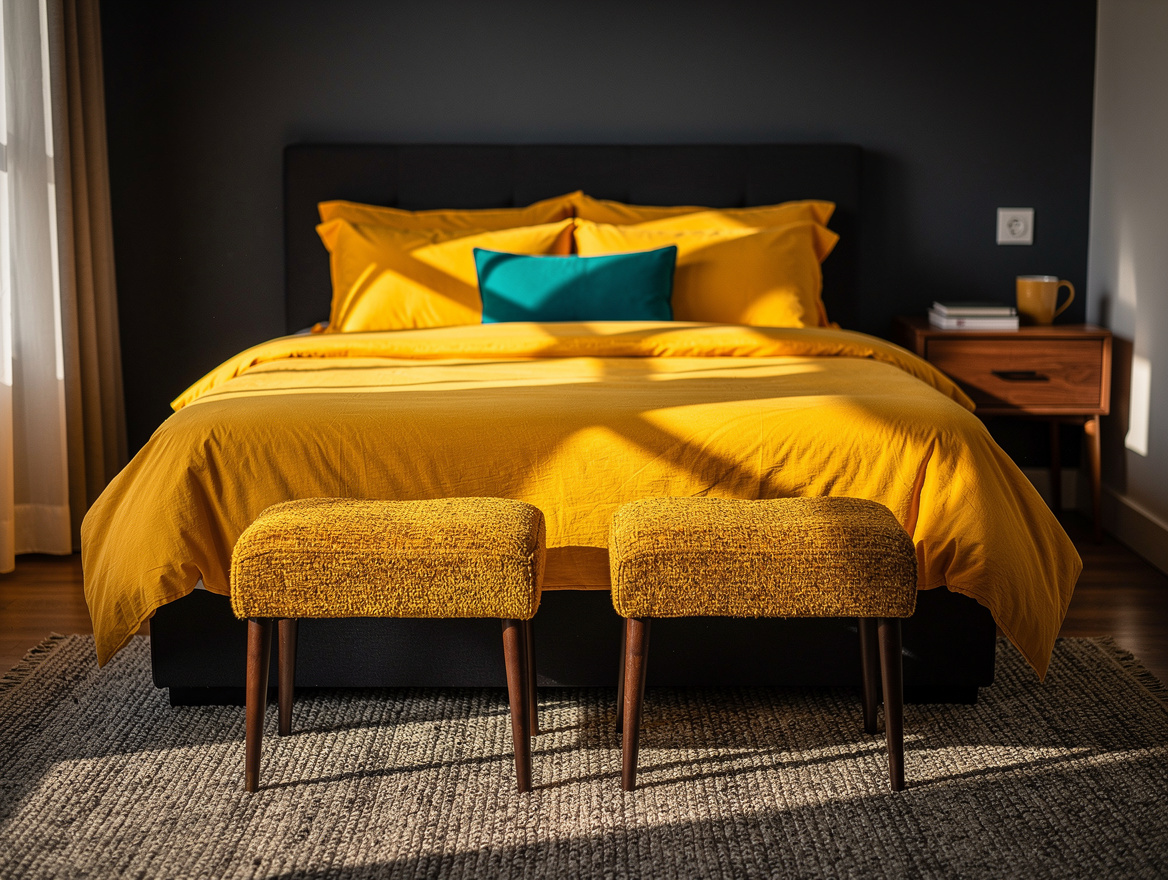
For a smaller room, skip the full-length silhouette and try two compact Target upholstered stools instead. They offer a place to sit while preserving more floor space and are easier to move for vacuuming.
Start with a tape measure, then protect the aisle before falling for fabric or tufting. The right padded bench should solve one daily problem and leave the bedroom easier to move through.
Mia Carter writes about small-space living and budget home makeovers. She has restyled three rentals and tests most ideas in her own 45 sqm flat.