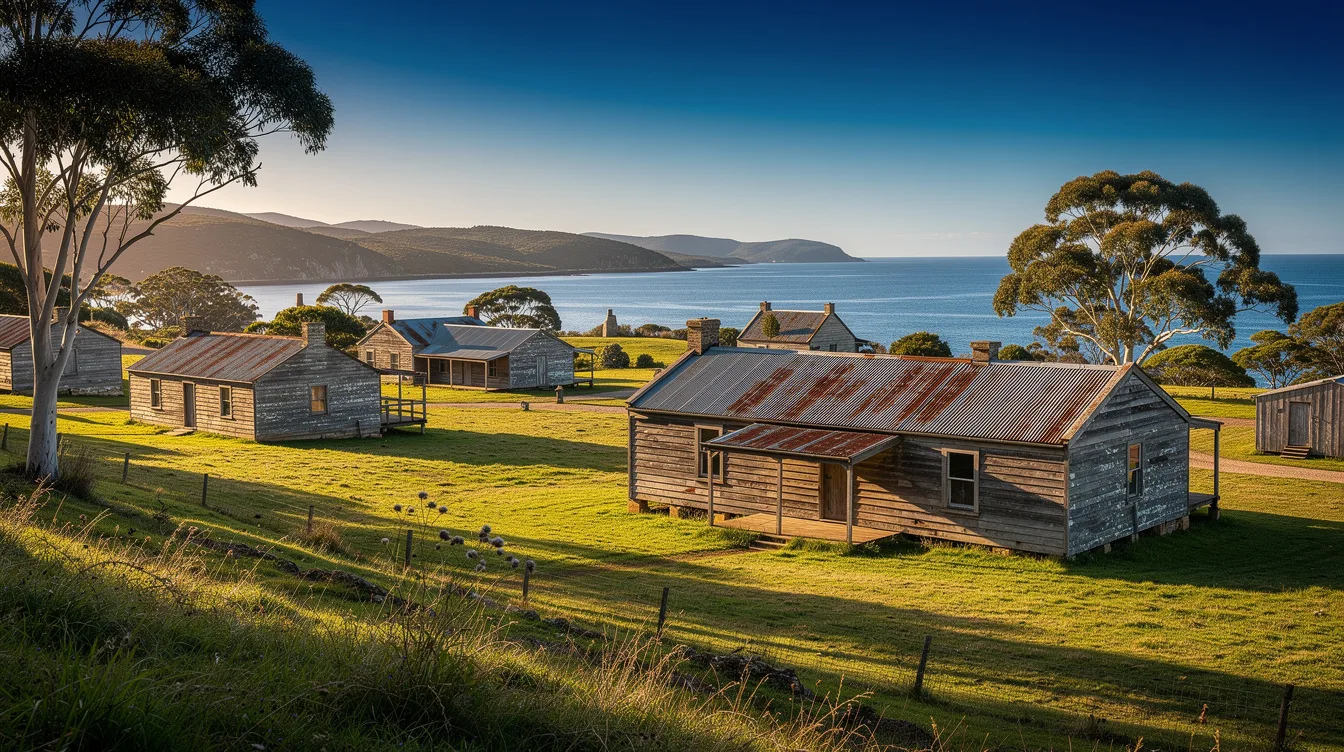
Maria Island sits off Tasmania’s east coast, and its strongest pull isn’t a beach or a summit. At Darlington, 13 convict-era buildings and structures still stand within the Australian Convict Sites World Heritage listing, making Australia’s penal past feel close enough to touch.
You arrive without a car, which changes the pace immediately. The ferry slips away from Triabunna, the sea air turns cool, and the island asks you to walk or ride rather than hurry.
Darlington makes the past feel physical
Darlington is the island’s only settlement, and it has no permanent residents beyond a few park rangers. That quiet gives the former penal station an uneasy clarity: old walls, open grass, and a place built for control now used by travelers with backpacks.
But this isn’t a museum arranged behind ropes. The remaining structures belong to two convict periods during the first half of the 19th century, so you can move through a real settlement rather than stare at a reconstructed version of one.
The Commissariat Store dates to 1825 and now holds the park reception and visitor center. The former penitentiary, completed in 1828, now accommodates visitors. That reversal is striking, even if the overnight setup is simple rather than luxurious.
A 45-minute crossing changes the whole day
The passenger ferry from Triabunna takes about 45 minutes to Darlington. And Triabunna is about 75 minutes by road from Hobart, so Maria Island works from the city, though a day trip can feel tighter than the map suggests.
You’ll need ferry reservations and a valid Tasmania national parks pass. There’s no vehicle access after arrival, which means your plans need to match your feet, your bike, and the weather you find that morning.
That limitation is the point. The island has the low-infrastructure feel many travelers say they want, but it also means bringing water, food, weatherproof layers, sun protection, a torch, and a power bank is sensible.
Walk beyond the old station
From Darlington, the shore walk to the Painted Cliffs leads to banded sandstone shaped by weather and water. Go near low tide for the best access around the cliffs, when the rock patterns sit exposed above the wash.
But don’t treat the island as a history stop with a quick scenic add-on. Fossil Cliffs north of Darlington has marine fossils in limestone, while Mount Maria is the demanding full-day choice for views over the Tasman Sea and rugged eastern coast.
The Bishop and Clerk hike is another serious option, especially near its exposed final section. Conditions matter here. Tasmania’s weather can shift quickly, and a bright start doesn’t promise an easy afternoon on a summit.
Wildlife rewards the slower schedule
Wombats, Forester kangaroos, wallabies, Tasmanian devils, Cape Barren geese, and seabirds are among the animals visitors may see. Because there are no private cars and much of the island is protected, encounters can feel unusually close.
And dawn or dusk is the better bet for wombats and kangaroos. You should keep your distance, never feed them, and give grazing wombats room, especially when they have young. The grass may be soft underfoot, but these are wild animals.
Summer holidays bring up to several hundred visitors, so the island isn’t always solitary. Still, an overnight stay gives you the calmer edges of the day, when Darlington’s old buildings sit in fading light and the last ferry noise has gone.